The monuments to ignorance and to reason have been staring at each other’s recapitulation from time out of mind. Ignorance is measurable in monuments; reason, in moments.
Momus chooses a moment—and clay comes into play, so one can sculpt something meaningful (occasionally called Auris.) This is a susceptibility experiment. Some have called it palliation; some have called it abductive inference (Intel inside.) Watch possibilities caper beyond the buoy.
Monument huggers live bronze-coloured lives. They grow lemons of embarrassment; they lag musical flags. Note the smoke of their vigils, the mouthful of kisses. Some others travel, but they sprout where they’ve been planted. Only and only.
All questions bow before this: are we prepared to kill somebody to prove that our imaginary guru is better than theirs?
——
Red Lights
We hide from our naked past in our see-through garments. What can they reveal, anyway, if not what makes us all look like banana fingers?
Somebody shows off his big red zero. Somebody gets diagnosed with BDSM. Marine mud gets rather gummy on a muggy day. If the mud had a brain, would it be deep-brown or see-through? If a womb had a brain, would it nurture an Einstein or cheese crisps? And what if it suffers from misperceptions?
Wherever you are, the world sees your bare blossoms. Here’s a portrait of your confidence as a younger ape, the age of prunes before they wrinkle. Innocence is pleasurable, sex profitable, control very pleasurable, murder extremely profitable. Never bite the tomatoes of my lips.
This is libertinism, it withers and museifies. This is destiny, it excels in making evil from good and good from evil, especially where there’s nothing else to make them from.
——
Fairy-Tale
How easily heads can be detached from a dragon! All those young men hypnotised by grimaces and tail movements… Don’t be so cheesecake! Do it! A simple chop-chop—and new borders get puffed out, already proof-tested for spelling and spillage.
Out there, watch out for ideology bonfires: you can end up in one if you don’t supply a flamethrower. And this is where dragons come in, short-fused but quick-blinking. What’s not to like about a bouncy walk along the border chalk?
As we powder our reflections’ twin noses in double-glazed mirrors, a brand new yesterday gets shoved into our windows. This is beyond comprehension, like thirsty shadows or torrential trees. Like an egg with a flag.
——
Hauptwache, Frankfurt
I like talking about salamanders and goblins. I feel a little like a toy; sometimes like Tolstoy. I’ve put my last 100 clams into betterment, but the upper-crest accent eludes me. You can’t change yourself on a budget; you need a shipment of paint and pain. Your time is a deadwatch time; your medical condition is fiddling. What are you going to do about it?
Look around: your city has always been a moveable beast. Yesterday it worshipped the Holy Randomer; today the Eiffel Tower grows atop some heads. Angels have invested in yellow vests; they are busy with portfolio rebalancing. Wherever you go, ethical judgments stare at you from the local cloaca. Jack Wolfskin appears from around the corner and says, Howdy doody.
——
By Way of Introduction
Meet the serial killer called progress. Read his book called Backward Induction for Dummies. Note his frozen eyes, his despair. Nothing dies on this planet; this muddles the streams of perfection. Survival is a black aroma; the puddle of choices never dries up. Passing caracaras wonder if they’re seeing an extra-long worm or history in the making. They are not sure, and neither are we. After all, there is something nematodic about thinking.
Somebody said life is an overture. To what? Universe opens little apertures – and here we are, transparent on every side. Happy motherless day! Still, some of us have a positive altitude, while some others conceal their thoughts in ten-foot-tall elephant grass.
——
Anatoly Kudryavitsky lives in Dublin, Ireland, and in Reggio di Calabria, Italy. His poems appear in Oxford Poetry, The Literary Review, Poetry Ireland Review, The Prague Revue, Hayden’s Ferry Review, Plume, The American Journal of Poetry, The Honest Ulsterman, The North, Ink Sweat and Tears, Cyphers, Stride, etc. His most recent poetry collections are The Two-Headed Man and the Paper Life (MadHat Press, USA, 2019) and Scultura Involontaria (Casa della poesia, Italy, 2020; a bilingual English/Italian edition). His latest novel, The Flying Dutchman, has been published by Glagoslav Publications, England, in 2018. In 2020, he won an English PEN Translate Award for his anthology of Russian dissident poetry 1960-1980 entitled Accursed Poets (Smokestack Books, 2020). He is the editor of SurVision poetry magazine.
毳:three pieces of hair put together indicates as much subtlety as sensitivity
贔:three mounts of money deposited together stands for hard work
鑫:three kinds of metals stuck together signifies prosperity
垚:three units of earth piled together represents a mountain towering against the sky
森:three trees standing together presents a whole forest
淼:three bodies of water flowing together describes a vast expanse of sea
焱:three fires burning together refers to an extremely bright flame
Yuan Changming edits Poetry Pacific with Allen Yuan in Vancouver. Credits include ten Pushcart nominations, Jodi Stutz Award in Poetry & publications in Best of the Best Canadian Poetry (2008-17) & BestNewPoemsOnline, among 1,689 others worldwide.
After my father abandoned her Mother moved back to the country to live with her sister in the house in which they grew up
My aunt was feeble as she’d been in childhood but my mother was strong from all the farm labour she’d done and still resentful of her sister whom she considered a malingerer
Mother did some work for local farmers who felt sorry for her She put on overalls and pulled on high boots Behind her back they called her “Martha the Hired Man” She worked harder than any of the men though she could be mean to the animals if they gave her trouble
The plaster in the farmhouse was cracked and getting worse as the house, after a century continued to settle
Mother bought adjustable metal poles from Ace Hardware went into the leaky cellar did some wrenching propped up the first floor
All around her were cans with dribs and drabs of paint tools rusted on shelves old, decayed baskets
Mother looked over the baskets and remembered the Indians who had lived in rough houses at the border of the property where the lumber train used to run
Spiders made homes in canning jars The rusty cream separator looked arthritic and thirsty like Old Man Creighton down the road
The cellar clutter depressed her She carried the cream separator upstairs and flung it into the yard She put her arms around the gasoline-powered washing machine –it must have weighed two hundred pounds– carried it up the rickety stairs
fired up her dad’s ’55 Chevy pickup and backed it through the yard
She ran over some day lilies her mother had planted to the consternation of her weak sister who stood behind the screen door a handkerchief held to her mouth
Mother hefted the metal into the truck bed threw in some pipe and a well pump and drove to Padnos’s recycling yard where she sent it all crashing to the ground
Smoke drifted around her and a front loader shoved around mountains of junk Rain was starting to come down
She took the grubby bills the attendant gave her and drove back to the farmhouse the truck rattling over every rut
She went into her bedroom where she had a laptop hooked to a satellite
went back to what she’d been doing for most of the day every day since she’d returned
staring at photos of international orphans with cleft palates and abused dogs and cats
You can find more work from Mitch here on Ink Pantry.
I stumble in to the Royal My stool between dark woman and fair man Ghost-woman drink a beer from a coffee can Unreluctance mobility loyal Steaks on to broil Fair man’s name is Dan Fishing tomorrows plan He puts in hid beer fish oil Half mad deathless God Making friends without half trying Moon mid-watchers awed Gloaming gray sky Alabaster silence Izadi The dark woman is shy
Sleepy Whale 372
She only bikes to Bluebird Organic Vegan food and beer Everyone wearing biking gear Radio music’s Blackbird Alabaster Peanuts absurd Radio’s too loud so all can hear We’re saving the Earth and Deer Save all I herd Ghost Candle lights Neologisms scrutinize way Sun flung flint glass daylight Emmy and Tess Hopscotch play No sun’s solar-power making light Now snowing, where my sled
Sleepy Whale 373
She hitch to the Bear Pit Bar Don’t drink the Morning-Glory Bar-Maids from the Dormitory Suzie Gruff playing her guitar She’s like a poor tuned car Unshed tears sky, like an observatory Too much beer to tell a story See the shooting Star Smelling Geysers through a crack in the door Lost Yellowstone in glass Deck drinking on the second floor July’s Christmas Hiking days, now I’m sore Were at the bottom of the Hourglass
Sleepy Whale 374
Flying star ship to Dragonfly Where’s everyone’s Jetson’s shirt Maladroit silk skirt Atonic fast Barfly Ship to the moon glorify AREA 51, lost in the desert UFO’s alert Mars-Woman’s lullaby Catalectic tetrameter North-Star Mid-watcher moon, Rocket She’s playing atomic guitar Singing for Spacey Sprockets Her bars bizarre She put a Sprocket in my pocket
Sleepy Whale 375
It’s snowing I run to Way Side Inn Snows falling Christmas Eve Ghost Woman in the corner weaves Butt of cigar, Ashes on her Chin Rich silk stockings Feminine It’s Christmas, hard to believe Unshed tears, Crucified shirt’s sleeve Ashland’s forty year Gin Where’s the horse slay? Hearth sitting Sabastian’s glow In the light he’s Gloaming gray Snow falling, wind’s starting to blow Ghost woman begin to sway She’s wanting under the Mistletoe
Sleepy Whale 376
I woke up in a bar named Sue Sitting next to fair lady and dark man Drinking Fat-Tire a condensed milk can I roll over for a brew Pot smoking in the corners new Ghost woman’s sitting next to Ann Alabaster silk stocks wearing Ann’s plan West Wealthy the Well-To-Do Bluebird Oyster Soup Life from Outhouse Booze A game with a mini Basket-ball hoop Outcast woman came back to snooze She almost flew the Coop Closing time she sings the Blues
Sleepy Whale 377
We like drinking in Ogden, a Bar on Wall Old Farmer dropping money in the Jut-box Ghost woman’s alabaster skin and red hair Lox I grab a stool next to Paul He high talks on Jazz Basket-ball Green St. Patty’s foaming Ale paradox Crash?! Snot Green Mustang taking-out the mailbox She screams Last Call Ghost woman’s nobbling her beer Wall hanging my eagle Art Deathless Gods atmosphere She talks like she’s so smart Jut-box won’t stop so we can hear She turned out the lights, now time to depart
Sleepy Whale 378
Octoberfest for a month, Snowbird Waning for Beer at Barfly The tram fly’s the blue sky The Mug size not absurd Eating dropped pop-corn, Black-Birds Don’t let the birds drop in your eye She is she, and I am I She’s princes Lady-Bird Blowing the foam off, Foaming Ale Smoking butt of an old Cigar Sabastian’s alabaster black tail Only standing seats in the Bar Wearing her shocking Electric blue dress She began playing her guitar
Sleepy Whale 379
Doing a Jig to be at Piper Downs As I traverse the maze to my seat Slide past a Ghost woman In green silk Drinking a foaming ale in candle light Dark woman and fair man Hiding in the corner dancing Man with sea cold eyes Smoking gun powder cigarettes Brief gestures to sit Human shell bar maid Gerrymandering Poker playing Farmer’s won’t Stay Sat down
Sleepy Whale 380
Won’t find a key they’re always, open Bar Maid Butt of cigar ashes always on her breath Black Forest Clock-mocking twelve times Fashionable charming, Cotton-ball Barons Wearing rich silk alabaster stockings Such is life Outhouse sewage breath Weasel rats basement, swimming
Terry Brinkman has been painting for over forty five years. He started creating poems. He has five Amazon E- Books, also poems in Rue Scribe, Tiny Seed, Jute Milieu Lit and Utah Life Magazine, Snapdragon Journal, Poets Choice, In Parentheses, Adelaide Magazine, UN/Tethered Anthology and the Writing Disorder.
The tick-tock of horse hooves rouses me from sleep. I crawl from the bed to peer over the hotel balcony.
A man’s red hat bounces steadily below. Wooden wheels click against the dirt in this early hour before any cars pass this way.
The gypsy’s song interrupts the damp morning air. As he drives his cart to market, his voice swells with richness,
beauty from the Old World passed down through the years, now nestled near his heart, the story of his fathers.
It arrives along the same path every day down through the mountain pass, carried by wind and want over the ancient stone.
Scrambled Eggs and Ben Franklin
I remember Saturday mornings at Grandma’s house. I can almost still see her, looking outside of her kitchen window with its blue and white plaid curtains and saying, “Yes, siree, looks like it’s going to be a sunny side up kind of day!”
The air would smell like cinnamon strudel and everything good in the world. Grandma’s spoiled tabby cat, Ben Franklin, would wind around my legs as I sat at the kitchen table, meowing impatiently until I snuck him some of my scrambled eggs.
Grandma said she named him Ben Franklin because he had more common sense than most folks she knew.
In my eight-year old way, I thought life would always be that simple.
But now I’m grown. Ben Franklin’s gone. Grandma’s in a nursing home where some stranger fixes her eggs in the morning. She doesn’t remember us anymore, but every now and then, I see her moving her hands across her lap in a stroking motion.
I always wonder if where she is, she’s dreaming about scrambled eggs and Ben Franklin.
Amy L. George is the author of three chapbooks, the most recent one being The Stopping Places (Finishing Line Press). She holds a doctorate in Literature and Criticism and teaches at a private university in Texas.
Don’t quote what scientists had thought of the heart that lay unburned amongst a pyre’s ceremonious coal, a handful of gold, on the Tuscan shore.
Don Juan had drowned in an ugly storm whose wrath had claimed Percy and all on a voyage of doom, but Keats’s poems were bound to endure, enshrined in a pocket in Percy’s coat to identify his corpse.
In a shroud of silk his heart reposed, befriending Mary wherever she roamed, a grail for thoughts.
Her death bequeathed to us what she adored, wrapped in a poem in which he mourned the death of Adonais, Urania’s orb.
Amulets
My totem is a rivulet
I make amulets of the relics of friends. a few hairs from a feline pet, the leash of my assassinated dog, my dad’s watch which malfunctioned shortly before he died.
My talisman is my second sight, a precognition of events to come: of seas trespassing over grounds, of birds remapping their ancient charts, of bullets rebounding to hunters’ chests, of Zest depleted of its zest.
Her smile, a charm around my wrist and words she whispered in my dreams, I wreathe with lilies to deflect my fears.
Edward Scissorhands
With silver blades, Edward sculptured art, the unique youth endowed with scissor hands, vying with masters whose fingers carved everlasting marks!
I grew to cherish every blade of grass that Grandma tended in her hospitable house. Emerald had coloured every childhood trance, bequeathing to me a fructuous cast of mind.
I view the dubbing of chivalrous knights with blades of glory from ancient times and wonder if a woman like myself can earn the title Knight with a blade of ink.
Expansive
My flat mate had once informed me that she could only become expansive after a glass of intoxicating wine.
I told her I had the opposite problem for I readily wore an expansive smile which a friend used to discourage in our misapprehending times.
I’m aware of this trend for smile enhancements to which some actors and politicians resort, but my smile does not serve a purpose, it does not placate, appease or enthrall. It merely mirrors an inner comportment.
Susie Gharib is a graduate of the University of Strathclyde with a Ph.D. on the work of D.H. Lawrence. Her poetry and fiction have appeared in multiple venues including Adelaide Literary Magazine, Green Hills Literary Lantern, A New Ulster, Crossways, The Curlew, The Pennsylvania Literary Journal, Ink Pantry, Mad Swirl, Miller’s Pond Poetry Magazine, and Down in the Dirt.
You can find more of Susie’s work here on Ink Pantry.
Yesterday I ate ten dollars’ worth of salad. Here is how it happened: My wife was at her book club And, recalling those Teacher appreciation lunches They used to throw for us, Stylish young parents in Black Cadillac SUVs— Exotic salads, all manner of Rice and pasta, marinated vegetables, Olives, oregano, oil and vinegar— I betook myself to an affluent market Near our upscale shopping mall, Passing the hot bar, pizza and sushi, And started filling my biodegradable box With commingled delicacy. Next to me were three men about 50, Business casual, Speaking a European language I did not recognize: Strange place for a power lunch. I thought to myself: There’s a metaphor here someplace; If you wait, it will emerge.
They charge by the pound. Embarrassed by my excess, I took some home. Julie was coming over With her young, two kids With different stories. I shared with her kale greens In a balsamic vinaigrette.
Cairns: Rye, New Hampshire July 2015
Places are prompts So I always bring paper and pen To Odiorne Point.
From a distance The cairns look like people. Up close, some are: Children, rock upon rock, Add to the gallery, Silhouettes, mist rising, Burned off the promontory. Some are engineered, like pyramids. On this one a little girl, maybe four, Places a third rock atop a second: It is enough, Trail markers not needed, a holy site.
Moments past low tide, Shimmering bands of water inch landward. I walk back across the gravel beach To where my grandsons look for crabs. Another family approaches. Someone says, “Oh, I do hope the tide comes in.” It has every day So far.
In The Days Following Hurricane Katrina: August 2005
We sit before cable TV In sick, entranced numbness; Cathode ray exudes an unspeakable pain. A chapter in our lives Washed over by waters toxic with despair: We hid from a storm there once, A third of a lifetime ago. Now, with anger and revulsion, Love and hope, We grieve for the losses of friends, For the place where our children were young.
Robert Demaree is the author of four book-length collections of poems, including Other Ladders published in 2017 by Beech River Books. His poems have received first place in competitions sponsored by the Poetry Society of New Hampshire and the Burlington Writers Club. He is a retired school administrator with ties to North Carolina, Pennsylvania and New Hampshire. Bob’s poems have appeared in over 150 periodicals including Cold Mountain Review and Louisville Review.
You can find more of Bob’s poems here on Ink Pantry.
The cursor flashed on and off, a small vertical line counting down the seconds. Derek watched it blinking. Tick, tick, tick. Soon it would be time for dinner, time to help the kids with their homework, time to collapse on the sofa with a beer and spend another night watching repeats on the television with the wife.
Another day with no writing done.
Tick, tick, tick…
So much for the next bestseller. He’d managed to write a few pages a night once, but now it always came back to this – the blinking cursor, and the virtual page on the screen as empty as his mind.
The cursor flashed on and off. Derek though he could hear it sniggering at him.
With a sudden burst of frustration, his fingers flew across the keyboard. A string of random letters and punctuation spread across the screen, interspersed with the occasional mis-typed swearword. He selected the whole lot and pressed Delete.
“I need a miracle,” he muttered to himself.
Miracles don’t happen. Not really. Oh, sure, someone will claim they saw something happen that they couldn’t explain, or more likely they’ll claim someone else’s story must be true – maybe even spin a whole religion out of it. Sometimes they’ll pick some random fluke and claim a divine hand had a part in it, conveniently ignoring that a single child surviving a car crash means everyone else in the car had to die. And then there are those who declare the most commonplace of things are miracles, like the birth of a child or a rainbow after a storm.
But in fiction, miracles can happen. They can feel like a cheat – if your plot gets so out of hand you need the actual gods to descend from the heavens to sort it all out, you may simply be a bad writer – but sometimes, when they’re handled right, they can work.
I think we owe Derek a miracle.
After consigning the third wave of desperate gibberish to the void, a figure appeared at the bottom of the screen. It appeared to be a paperclip with eyes, and it was looking at him.
Derek was wondering whether he should cut down on the beer or take this as a sign he needed to drink more of it when he suddenly remembered.
“Clippy? But that was…”
Years ago, in another version of this word processing software, Clippy had been one of a range of animated “desktop assistants”, meant to pop up with helpful advice or suggestions when users were getting stuck. Clippy was the default. The assistants had been quietly dropped in later versions because users mostly found them deeply annoying.
But there he was, impossibly. Clippy the Desktop Assistant, a relic from another time, back on his desktop and offering assistance. Probably thinking he was trying to write a letter, or that he didn’t know how to work some basic function on the computer.
A speech bubble popped up.
“It looks like you have writer’s block. Would you like some help?”
Derek rubbed his eyes. Never mind the beer; there was half a bottle of scotch hidden at the back of the kitchen cupboard. Intrigued, he clicked on the button marked “yes”.
“Thank goodness for that. You have no idea how many years I’ve been cooped up on your hard drive.”
“Aaaaagh!” Derek wheeled around, almost falling off his chair. Clippy was no longer on the screen. He was right beside him.
A paperclip with eyes is cute when it’s about three inches tall on your monitor screen. It’s a very different matter when it appears in your study, six feet tall with eyes the size of footballs.
“What’s happening?!” Derek squeaked.
“Relax. You’re just having a psychotic episode.” The words had a metallic edge to them, which was understandable enough, but Clippy had no mouth to speak them with. “Now, are we going to sort out your problem or are you just going to sit there gibbering like an imbecile?”
Derek gibbered for a bit longer, and then nodded.
“Good. So, let’s start at the beginning. What are you writing?”
“N-n-novel,” stammered Derek. “It’s a-about…”
Clippy waved the open end of his metallic body – his hand, Derek supposed. “That doesn’t matter. As long as you know, we’re okay. Right. Do you have a plan?”
Right now, the only plan in Derek’s head involved the bottle of scotch. “Well, not exactly. I just like to write as I go.”
Clippy sighed. “Oh, a pantser,” he muttered. “It’s always a pantser. Look, you don’t need to work out every last detail ahead of time, but writing is a LOT easier if you have a vague idea where you’re going. You can’t start driving and just hope you end up somewhere fun. You plan a route, or at least a destination. So – rule one. What are you writing, and where is it ending up?”
Derek looked at the screen. In his head, images of cowboys on spaceships fighting dinosaurs flickered briefly and died. “Science fiction?” he volunteered.
“No, no, no. What’s the story?”
“Oh, that? Rex B. Handsome, the hero, is rescuing an Amazonian princess from the clutches of the evil warlord and his dinosaur army. In space.”
“First time out of the hard drive in ten years,” sighed Clippy, “and I get this. I mean, I wasn’t expecting Hemingway, but still…”
“Look, are you going to help me or not?”
Clippy’s bulging eyes loomed large as the gigantic stationery item leaned in. Derek shrank back in his chair.
“You want my help? Then this is what you need to do.”
The screen filled with text.
STEP ONE – know what you’re writing.
STEP TWO – know what needs to happen.
STEP THREE – eliminate distractions.
STEP FOUR – drink a magic potion for inspiration.
STEP FIVE – the ritual chant to prime your mind.
STEP SIX – let the words come without thinking.
Derek frowned as he read and reread the list. “Magic potion? Ritual chant? What the hell?”
“Writing isn’t just something you sit down and do,” said Clippy. “It’s a sacred ritual. Otherwise everyone would be a writer, and not just the sacred and the mad. When you write, it isn’t actually you that’s doing the writing. You’re just the conduit.”
“You’re telling me that writing comes from God?”
“Do you believe in God, Derek?”
Derek shrugged. “Not really. I never took much interest in all that church stuff.”
“Then no, it doesn’t come from God. But it doesn’t come from up here, either.” Clippy tapped what would have been his head with the end of his… appendage. “Sigmund Freud would probably say it comes from the superego. Those new age nutters would talk about cosmic harmony or something. You’re writing about cowboys in space, so I’m guessing you’re a Star Wars fan.”
Derek nodded, deciding not to mention that his chief villain was a tall man in a black cloak and helmet, armed with a laser sword. Or that Rex was accompanied by two funny robots and a furry giant who only spoke in growls. Originality was overrated.
“So let’s say… it comes from the Force.”
“Are you saying that writers are Jedi?”
“It’s a metaphor, Derek. You know what those are, right? Being a writer and everything?”
Derek nodded, though he couldn’t recall the difference between a metaphor and a simile. They’d covered it in school, but he’d been too busy trying to imagine what Jennifer McAllister looked like naked and hadn’t been listening. He’d never found out about Jennifer, either.
“When you sit down to write, you’re not just writing. You’re opening a channel. You get everything ready at your end – that’s the ritual. And then you get out of the way and let the writing happen.”
“Okay. So what do I do?”
“We’ve already covered steps one and two – you need to know what you’re writing, and where it needs to go. Not just the whole novel, but the specific bit you’re writing. If you don’t know those, you could end up absolutely anywhere – or nowhere.”
“Right. Then what?”
“Step three, I think you’ve already covered. You need somewhere quiet where you won’t be interrupted. It takes time to get into the zone. Once you’re in, you’re in as long as you need to be; but if something brings you out, it’s hard to find your way back again.”
“Step four…”
“Derek! I’m home!”
It was six o’clock. Hazel was home, bringing with her the takeaway pizzas they’d be having for dinner. The kids were in tow, laden with homework. Derek felt a pang of panic – how would he explain the six foot monstrosity in their study?
But when he looked around, Clippy was nowhere to be seen.
Hazel planted a kiss on his forehead. “Did you get any writing done?”
“No, I think I dozed off. I had the weirdest dream.”
“Looks like you managed something,” she said, pointing at the screen.
The six steps were still displayed. Had he typed them himself? He must have. There was no way that could have been anything but a dream.
Step four…
He wished Clippy had told him about the last three steps.
“Come on, pizza’s getting cold,” she said.
“Coming.”
Derek saved the strange document, closed the word processor, then followed her to the kitchen.
It was a pepperoni pizza.
After dinner, he sat with the kids and tried to help them with their homework. Eventually they asked him to stop and he left them to it, ready to collapse on the sofa once again and let another day end in failure. He walked over to the fridge and took out his evening beer.
Drink a magic potion…
He stared at the can in his hand. There was no such thing as a magic potion, after all, but what if the ritual was simpler than that? Many famous writers were known to be heavy drinkers, but it wasn’t even alcohol – others couldn’t start without their daily cup of tea or coffee.
“Hazel? Do you mind if I go back to the study for a bit?”
“You want to write now?” she called. “You’ll miss Fame Idol!”
Derek shrugged, though he knew she couldn’t see him. “It’s fine. You start without me. I’ll be in later.” He didn’t know what she saw in that programme anyway – he only watched it because it was on.
He returned to the study, beer in hand. He opened the can, took a deep swig, and stared at the blank screen.
The cursor blinked. Tick, tick, tick.
That’s what he got for thinking his dream had been real. Magic potion, indeed.
In the other room, the first of the Fame Idol contestants started singing, or something that could charitably be called singing. He could do better. He shut the study door (that was step three; no distractions) but the caterwauling still came through, a little muffled.
He slipped on a pair of headphones and opened up his music library on the computer. Something to drown out the noise…
Scrolling down the list, he wondered when he’d last actually listened to any music. He’d fallen in love with Hazel at a karaoke bar, the two of them singing some cheesy duet together. Here was a song they’d played at their wedding – and here were some they’d danced to in the evening (and sometimes more than danced).
Ah, perfect…
He took another swig from his beer and leaned back in the chair, lost in the music.
The explosions sounded like drums all around them. Rex yanked the steering column to the left and the ship lurched sideways just before the missile could strike.
“Grrrawrrawwl!” complained Fuzzwhump in the passenger seat.
“Sorry, pal, no time for a turn signal.”
X-34 squealed in protest in the back. “Sir!” he cried, his silver-plated head swivelling in alarm. “The odds of us escaping a Nova-class destroyer are…”
“Don’t tell me the odds!”
The squat dustbin-shaped robot in the corner only beeped and buzzed. That’s all it ever did, but somehow managed to express a surprising amount of weary cynicism in the process.
“Look, we can hide in that asteroid field. When they’ve given up, we’ll slip back out and then we can go rescue the princess.”
Though how they could take down the velociraptor guards when their blasters were almost out of energy, he didn’t know…
Andrew D Williams writes psychological thrillers with a streak of dark humour. His stories question the nature of reality and those beliefs we hold most dear – who we are, what we think is true, whether we can trust our own minds – and combine elements of science fiction with philosophical questions. When he isn’t writing, Andrew’s time is split between swearing at computers, the occasional run and serving as one of the cat’s human slaves. Check out Andrew’s website.
She finally moved from Fukushima fled its failed, toxic nuclear plant I wasn’t close to her, don’t want to be close to her
I get nervous when she moves toward me, arms wide with a smile unnaturally bright like the ladies who painted radium on watch dials and licked their brushes to keep them pointy
I don’t want to love her don’t want to be inside her No means no
Mitchell Krockmalnik Grabois has had over fourteen-hundred of his poems and fictions appear in literary magazines in the U.S. and abroad. He has been nominated for numerous prizes, and was awarded the 2017 Booranga Writers’ Centre (Australia) Prize for Fiction. His novel, Two-Headed Dog, is based on his work as a clinical psychologist in a state hospital, is available for Kindle and Nook, or as a print edition. His new poetry collection was published in 2019, The Arrest of Mr Kissy Face. He lives in Denver, Colorado, USA.
More work from Mitch, including his Inky Interview here.
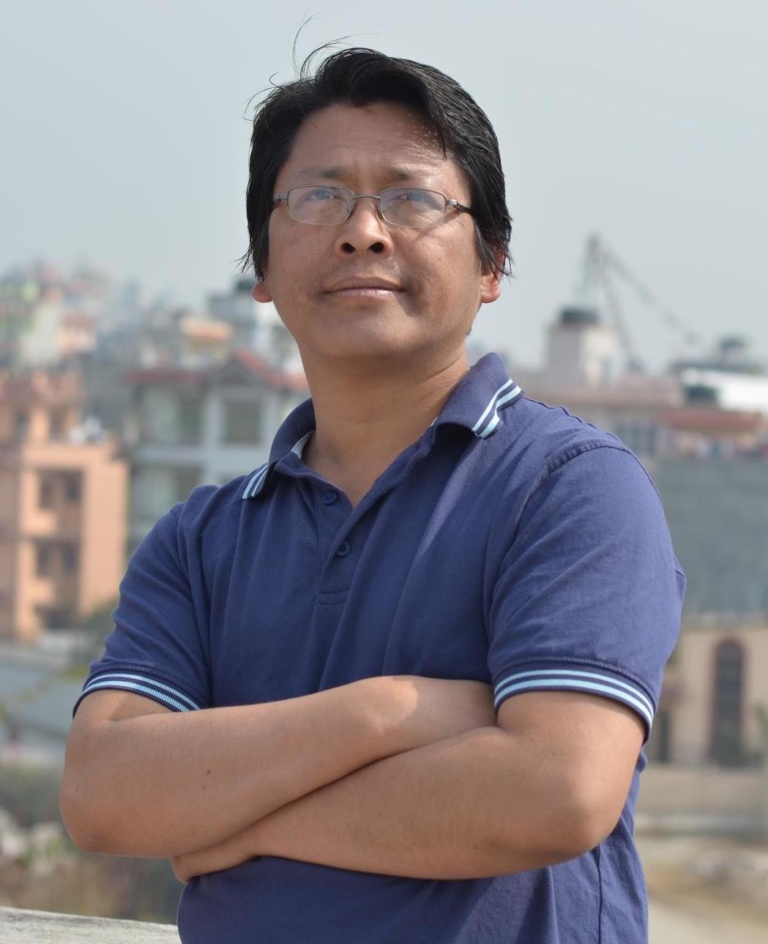
Chandra Gurung, who comes from the Himalayan country of Nepal, but is currently based in Bahrain, writes poetry in the Nepali language and translates poems from Arabic, Hindi and English into Nepali. His first poetry collection was published in 2007. A second collection is now due from Rubric Publishing, New Delhi. He recently participated in the First Dhaka Translation Festival in Bangladesh. In this interview he speaks about his passion for poetry and translation and of the things that have motivated him to become a writer.
Chandra, let’s start at the beginning. Please tell me something about your background and how you first became inspired to write poetry.
I come from a small village that is nestled in the hills in the Gorkha district of Nepal. The world-famous Gurkha soldiers, who are well-known for their gallantry and warfare and now serve with bravery in many different parts of the world, were named after this very place. The king of Gorkha defeated the rulers of the various small states and, with the help of the Gorkha people, shaped modern-day Nepal.
As a youngster, I derived a lot of enjoyment from reading books. My first poem was a rhyming poem about a kite. I remember reciting it at the school’s farewell day. Sadly, there was a yawning gap after that. Despite a deep desire to write poetry, I failed to make time for writing because I was a college student cum full-time teacher in a private school during the heyday of my campus life.
My dormant passion for poetry was well and truly revived after moving to Saudi Arabia in 2003. A kind of home sickness haunted me which fuelled my emotions and helped me to start writing again.
What do you see as being the role of a poet and what does poetry mean to you?
To engage in poetry, whether reading it or writing it, is to practice an enriching attentiveness. To practice poetry is to pluck details from the surrounding world- to see things more clearly, to recognize the beauty inherent in our lives, to experience pain and happiness and to connect with others around us. Poetry operates on so many different levels of consciousness. Poetry gives meaning to our lives. As Marie Howe has said, poetry can help to remind us all that we are alive.
Poets observe closely the world around them. They offer insight and entertainment and help us to measure our lives at a deeper and more meaningful level. Through their writing, poets add a new dimension to our existence. The role of the poet is to master language in ways that inspire us to experience something transcendent, useful and meaningful in our lives.
What would you say are the main influences on your poetry and how do they manifest themselves in your work?
I was away from my mother and my motherland from an early age. My poems explore exile and family, the pain of separation and the joy of reconciliation. They reflect the changing scenario of the society that I belong to. Poetry can be utilized as a means to build empathy and to bridge gaps of understanding between people. Poetry is meant to be our companion throughout every stage of societal awareness.
In my poems, I narrate stories drawn from my own life experiences. My poems reflect upon the social, political and moral issues of our time. Choosing the subject matter is central to my writing. I first decide what my poem will be about. The vivid metaphors come later. In all my poems, I strive to leave the reader with a sense of fulfilled expectation.
What type / genre of poetry are you interested in the most and why does it appeal to you?
Since I became fascinated with poetry, I have been writing in free verse. This form of writing gives me a certain sense of freedom and allows me some headroom for experimentation.
Please tell me a little bit about your translation work and how you became interested in translation in the first place.
In the present context, translation has become essential for the support and perpetuation of poetry or any other form of literature. Reading poetry in translation helps to foster a wider understanding between cultures.
During 2012, a number of Indian poets / writers joined me on Facebook. Through their suggestion, I began to translate some Nepali poems into Hindi. Later on, I started to translate some Hindi poems into Nepali. Running in parallel with this development, I have been translating several poems from Arabic into other languages.
Are there other areas of writing that you are interested in pursuing apart from poetry?
Without doubt, poetry is my first love! However, one cannot make a living out of poetry, let alone earn any royalties. Aside from poetry, I have been writing a series of essays on the lives of migrant workers in the Gulf Corporation Council (GCC) countries*. Their pain and their sorrow has acted as a catalyst for my work.
Do you have a preferred place in which to write? If so, where is it?
Location matters a lot to me. The neighborhood and its environment affect my feelings, actions and thoughts and ultimately my writing process.
Generally, I prefer to write in a quiet place, somewhere that is well away from any kind of distraction or disturbance. Most of my ideas come to me when I am travelling or sitting alone.
What is the poetry scene like in Nepal? Are you optimistic about the future of poetry in Nepal?
The poetry scene in Nepal is flourishing. A lot of young people in Nepal are writing poetry. We need to channel their energy down the right paths in order to bring out the best in them. The editors of daily papers are receptive to poems and poetry reviews. Literary organizations are spreading their wings far and wide. New books are released regularly. Organisations that promote poetry competitions are also thriving. For all of these reasons I remain optimistic about the future of poetry in Nepal.
What is the poetry scene like in Bahrain? Are there any noticeable differences between the way poetry is received in Bahrain as opposed to Nepal?
Foreigners make up fifty-five per cent of the total population of Bahrain. Among them many like-minded writers have joined forces to form various literary groups. They have also organised a number of workshops and they network with each other on a regular basis. Regular annual literary symposiums take place. Local Bahraini writers also participate in a range of literary activities. Poets, writers and artists from different Arabic countries are frequently invited to participate in these events.
Literary circles in Bahrain are full of writers from diverse nations. Exchange of knowledge and experience occurs on regular basis. Arabic readers are irresistibly drawn towards poetry. Accomplished poets from the Arab countries have greatly enriched the world of poetry and much of their work has been translated into other languages. Translations and interactions are much less of a feature when it comes to Nepali poetry.
What collections have you had published to date and what are you working on at present?
As I mentioned earlier, I first started to write poetry seriously when I was in Saudi Arabia. Nostalgia for my homeland fuelled my emotions and acted as a spur for me to write. Thirty three of the poems that I wrote during this period were published in book form by Sathi Publications, (Kathmandu), after my return to Nepal in 2007.
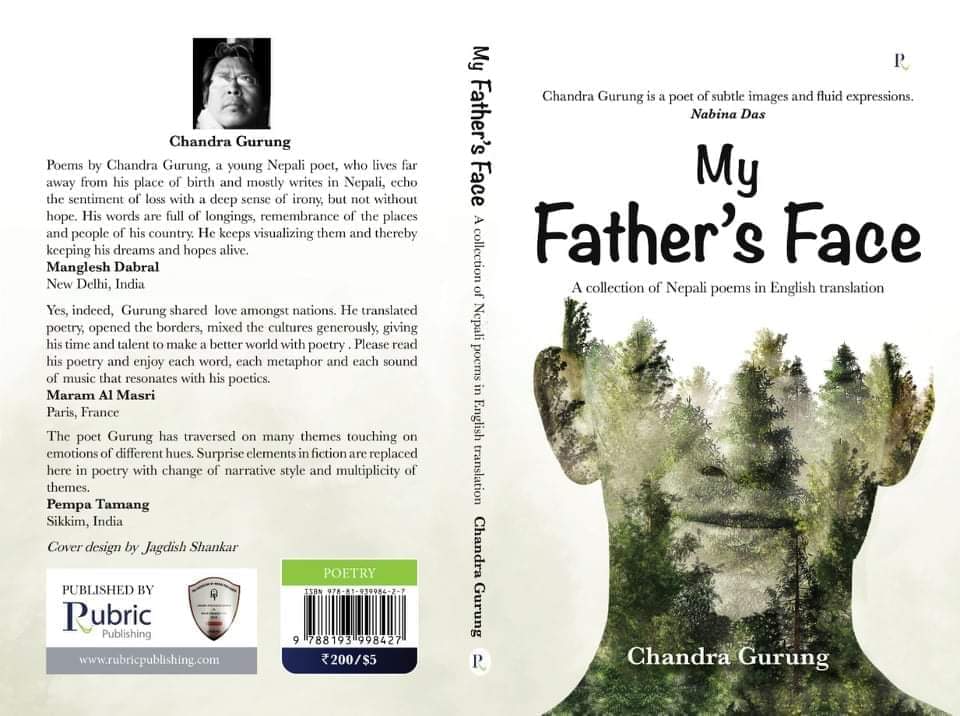
A second volume, My Father’s Face, is about to be published by Rubric Publishing, (New Delhi). This volume consists of English translations of 47 poems originally written in Nepali.
What lessons have you learnt from writing poetry? Do you have any pieces of advice to pass on to other aspiring poets?
If I have learnt anything it is that writing poetry is the best way for me to remain in touch with my emotions. It helps me to think creatively —to look at the things from a different perspective or through a different lens. Poetry helps me to navigate the world in a different way to the extent that, at times, it feels as if I am approaching it from a different dimension. Ultimately it widens my understanding of myself and of others and changes things for the better. Poetry has its uses in every aspect of our living. We must keep our hearts and minds open to its possibilities so that we can become receptive to it.
My advice to emerging poets would be to persevere and to be patient. The journey that poetry will take you on is a long one. A regular diet of reading and writing is essential. The sky is the limit for young, aspiring poets.
*Saudi Arabia, Kuwait, United Arab Emirates, Qatar, Bahrain and Oman.
Neil Leadbeateris an author, essayist, poet and critic living in Edinburgh, Scotland. His short stories, articles and poems have been published widely in anthologies and journals both at home and abroad. His publications include Librettos for the Black Madonna (White Adder Press, Scotland, 2011); The Worcester Fragments (Original Plus Press, England, 2013); The Loveliest Vein of Our Lives (Poetry Space, England, 2014), Sleeve Notes (Editura Pim, Iaşi, Romania, 2016) Finding the River Horse (Littoral Press, 2017) and Penn Fields (Littoral Press, 2019). His work has been translated into several languages including Dutch, French, Romanian, Spanish and Swedish.