Shadow limbs of the dead tree stretch across the barren dirt in search: they descend into burrows where dark meets dark, reaching for a neighbor but the sun moves so touch never happens.
Shadow limbs rotate sunrise to sunset; a sundial ticking seconds like bug tracks stitching hourglass sand.
Snagged
It’s painful for the cottonwood tree to grow beside the wooden fence.
Posts planted in the ground with no hope of spreading roots. Planks nailed like fake branches with only splinters as leaves.
When the wind blows, when the boughs brush against lifeless boards, the tree caresses the fence and doesn’t mind leaving snagged leaves behind quivering on splinters.
Below Morning
Sunset on top of the clouds shines brightly like snow-capped mountains with darkening valley in gray below.
Below in the cornfield rows of irrigated ditches reflect last rays of sun stretching toward the highway; car headlights brighten like shafts of morning attempting dawn.
Leaves Down
Over the bridge across the river to stand under trees where leaves fall down.
Squirrels scamper up wrinkled tree trunks when rafts float on top of rapids following gravity beneath cliffs jutting outward in a valley seen from above.
Stand Still
If I stand still, will my feet sprout roots and dig into the soil? If I raise my arms, will bark crust over my skin and branches solidify? Will my open eyes change into knot holes staring at cousin trees? Will my hair grow leaves or pine needles depending on my choice of trees? Will I hear a tree fall if I stand still?
Diane Webster lives in western Colorado. Her poetry has appeared in North Dakota Quarterly, New English Review, Studio One and other literary magazines. Her haiku/senryu have appeared in failed haiku, Kokako, Enchanted Garden Haiku. Micro-chaps were published by Origami Poetry Press in 2022, 2023, 2024 and 2025. Diane has been nominated for Best of the Net and three times for a Pushcart. Diane retired in 2022 after 40 years in the newspaper industry. She was a featured writer in Macrame Literary Journal and WestWard Quarterly. Her website is: www.dianewebster.com
You can find more of Diane’s work here on Ink Pantry.
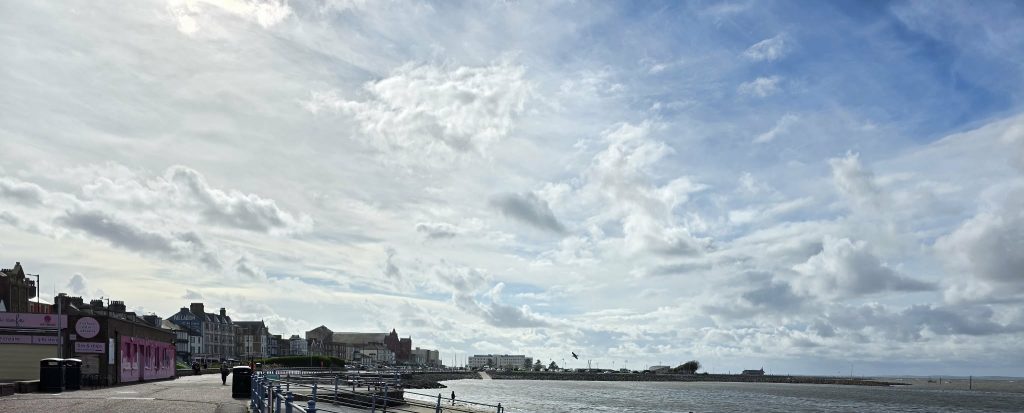
The ocean is like us It carries storms inside its chest and still learns how to shine. It holds whole cities of feelings Beneath a calm face, Seeing the sea wearing sunlight Like a crown of blue daylight, Tides pull the way memories do, Back and forth, and never gives up Just watching for the moon to speak.
JoyAnne O’Donnell is author of five poetry collections on Amazon. JoyAnne loves to go out in nature and write poetry. Her latest poetry is in Ultramarine Review.
Before I wake, the crawling dreams learn to sleep. In the rain shadow of mind, light becomes a shade of darkness.
Wild flowers dance on graves, unbothered, and I carry the wreath with thorns, unperturbed. Grief, bright as a bug zapper, glows in my room like religion.
The voice inspects the house, then leaves — noisy breathing, unfinished thoughts. Only memory remains, pacing.
Border/lands
Seeing the child draw a squiggly chalk line, I realise that borders are just squiggly lines, drawn on maps from a hundred years ago. A hundred years ago was before radio, before phones. The squiggly lines remain like mountain ranges. Cutting people into shapes, slices, into teams, into enemies. The child erases the squiggly line with the back of his hand and I’m amazed. All borders are dotted lines. There are gaps that we are trying to squeeze our way into, And out of, aspiring for a better life, beyond the bottleneck of borders.
Falling with Buoyancy
Where others sail with ease, I strain to stay, choiceless tides deciding my course.
Hope, once bright, dissolves in moth-white spray, a ghost of faith dispersed upon the air.
Like turtles turned, I flail against the ground, yet learn to fall before I dare to glide.
Wrists clasped close, lest brittle bones be found; odd snow-angels mark where dreams have died.
Still I drop as autumn petals drift, as fading blooms whose sighs dissolve in frost.
A silent grace, the only final gift, when sound and shape in winter’s hush are lost.
If fall I must, let the end be mild, as though the earth embraced her fallen child.
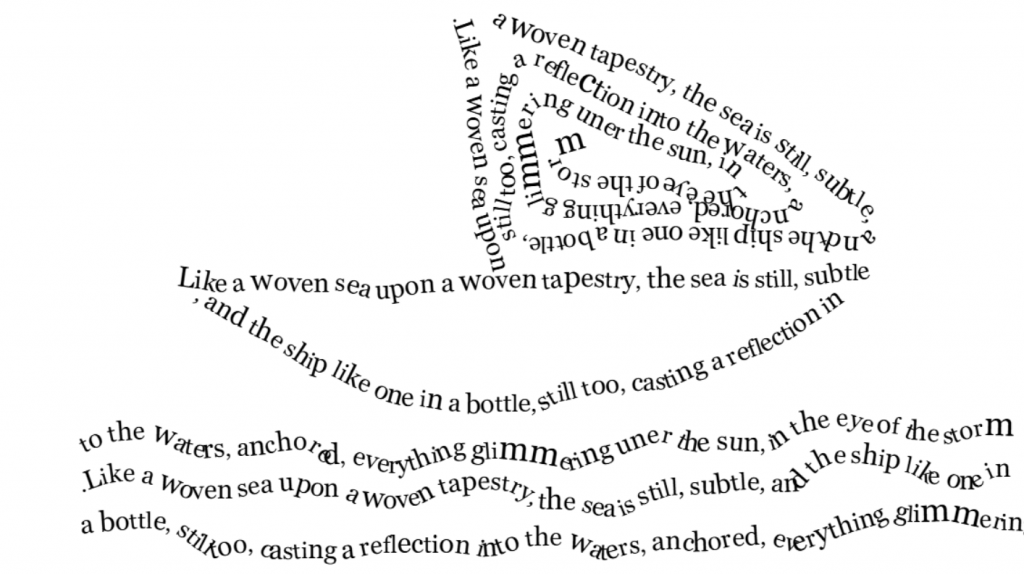
The Ship
Vaishnavi Pusapati is a physician poet nominated for the Touchstone Awards. Her work has appeared in Dreich, Prole, Roanoke Review, Presence, Ink Pantry, Molecule, among others. Her haiku book, Afterlife:haikus, is forthcoming.
You can find more of Vaishnavi’s work here on Ink Pantry.
From a place of trust I glimpse your magnificence, your harnessed race of complexities in harmony, slow moving, more powerful than a hundred suns conjoining.
From a place of faith, being wrong is just as exciting as being right – a longing to know you, knowing I will never know you only know the minute aspects that flip and twist and rewrite as my knowledge grows, while keeping some laws fundamental.
From a place of love, your love is gathering in bright awe-inspiring displays, terrifying in their brilliance and in their magnitude. Nothing is personal. Everything is individual, overreaching galaxies into galaxies, twin dreams.
From a place of exploration, finding inspiration where paradox consumes, invigorates, illuminates all places, gloriously shifting.
Surrendered
In the middle – steady, harsh waves, salty flavoured ocean, stranded, treading. Love comes smiling. It is a ghost. Joy comes and passes by. Purpose comes but floats by like a jellyfish riding the momentum.
In the middle, tired of treading, no escape, just the ebb and flow, surging, retreating waters. What lies beneath makes no difference because nothing is above except the burning brutal sun, cloud cover occasionally, and only air to eat.
Skin cells, bloating. Eyes, unable to keep open. In the middle of an endless abyss, all my happy days behind me.
I hold my hands in prayer position, arms raised over my head. I stop struggling to not go under, I go under and let that weight, the peace at last, take me down.
She
Fear is splendid in making the body inflamed, bloated on trepidation at the news of many meadows burning.
She hurried and found a healer inside herself, willing to go the distance and forfeit personal power for a greater acquisition. She understood the traveller and the sit-at-homer as one in the same, especially on a stormy day or a year of upheaval.
Faith is the bullseye with no point-marks gained unless hit dead-centre, directing every focus to only that centre. Faith is the wave to ride to the shore, removed from other moving sources, like wind and arm-strokes.
She opened herself to fear not denying it but seeing it as just another entity under the canopy, smaller than the giving sun.
Out
I asked to be let out from that unwanted accomplishment. I asked to shed my shame, my duty and the hard-core call of doing time.
It was taken down and away from me, along with so much more. Guilt, and worldly bondage also fell along with security, along with a strange, twisted pride.
Knuckles down, hands still folded. In my head are ghosts of patterns dissolved but are still haunting. Ways of being I don’t have to carry are dropped, but my empty arms are stalled in position, humbled by uncertainty. Set free and starting over, but not yet started, just starting to try to etch out different possibilities, a solid surging becoming.
Whiffs of passing currents, rich aromas that entice briefly then fade. Whiffs I cannot capture and keep, not now, maybe never, let out, dumbfounded, helpless, screaming, just born.
Allison Grayhurst has been nominated for “Best of the Net” six times. She has over 1,400 poems published in over 530 international journals, including translations of her work. She has 25 published books of poetry and 6 chapbooks. She is an ethical vegan and lives in Toronto with her family. She also sculpts, working with clay;www.allisongrayhurst.com
You can find more of Alison’s work here on Ink Panty.
Deep, dark chocolate the shade of walnuts with a hard, shell exterior, when bitten down on, cold brushes the tongue— the chill of fresh, sweet strawberries.
Frosting like a heart—pink and red atop a brown, foiled pastry, and adorned with sprinkles on each curve and the elevated centre. Sprinkles like hearts, shades of red.
Small, carmine sausages in a thick bread roll had darkened edges and crispy tips. Altogether, gathered in a white, stubby bowl, like pigs in a blanket, rolling in the snow.
Maroon and aureolin mingled in the beaker, and when raised to the shimmering, shining sun, every bit of pulp is palpable to sight. Ice cubes jostled, fruit slices swirled.
Alongside candles, forks, flowers, and wrappers, the plates were placed on a cerulean checkered blanket, enveloping the mat, like a nourishing, fulfilling labyrinth of desserts and blossoms.
The blanket rested atop a soft, fluffy patch of grass, and the maple tree above, with bunches of leaves like clouds, shaded the desserts before me, and the flowers around— a picturesque, sunny, tranquil summer day.
Spry and Bright
Ten candles on a ten-layer cake A cake so tall a dentist wouldn’t approve Each flame the shade of rouge So I blow out the candles
Then the year after, eleven candles The flames are spry and bright I blow out the light
Next year, the cake will be crowded Lighting twelve candles seems like a chore, But extinguishing feels like rejuvenation Inhale, exhale, I blow out air
The year after will be thirteen Then fourteen, fifteen, and sixteen It may seem like a chore, But I will blow out each one.
Pulled In
Maroon red, lilac purple, amber gold. Aurora colours on the swooping wings Of fragile butterflies. It jumps from leaf To leaf and flashes its grand wings to watchers. A beautiful bright view, the watchers say.
If only their eyes shifted to the side: A moth with dull greyed wings sits on a wall. It is the dark sky—twinkling stars surround it. It is the canvas on which butterflies shine.
Its eyes spot flickering red flames on candles With shining vivid shades like sunset glow. Dull wings take flight, petite feet land on the Melting wax stand. It tiptoes closer, then Too close.
Flame touches, then spreads, then envelopes it. Fire eats its wings, thus forming deadly sheens. Fire steals its limbs in a colossal blur. Remains then sprinkle down as smoky ash. A startling bright view as it fully burns.
Now, I approach the dark tight alley that May be my flame. My mind is on fire, and My daring burns away. But people flutter Around me, mingling, giggling, and make me A shadow like dull gray smoked ashes, yet I am pulled in.
Grace Lee, a high school student in Seoul, South Korea, is passionate about words. Whether crafting stories or poems, she blends her unique perspective with Seoul’s vibrant culture. Excited to contribute to the literary landscape, Grace’s writing reflects the universal themes of adolescence in a big city.
You can find more of Grace’s work here on Ink Pantry.
Rosie, Rosie O’h stared back at her in the grubby mirror. She wasn’t an unclean person but she didn’t invest in the proper materials or possess the inclination really to do the due diligence on an awkward surface, like a mirror. In any case, the reflection peered into her world, thin, not as in ‘skinny’ but like hollowed out, a whittled down version of herself (ready for some craftsman to use a more supple tool on, to add some defining detail, a maker’s mark or patent).
A thoughtless exhalation escaped her frame, measured breaths couldn’t accommodate the weight of her preoccupation. It had felt heavy coming out of someone that slim.
A grunt of acknowledgement from her other half (a relationship that had sustained itself three months to present). They’d only toyed with the idea of co-habitation a little while. They got on well and bills are crippling, it had to be a win. She’d given her future some thought and it’s easy enough to change personal pronouns from ‘Me’ and ‘I’ to ‘Us’, and to ‘We’.
‘Shall I just order?’ He reclined his head right back against the throw, thoughtfully tucked into the creases of an otherwise rough and decomposing sofa, he could feel the stuffing inching in and out of place beneath him as he sat, completely vulnerable to it, his jugular region tenderly exposed, extended yet at ease toward her back, and facing the other Rosie in the glass.
‘Sure’, Rosie reacted slowly, patting then gripping at her notably flat belly gently and repetitively, still somewhat staring into the inverted room. She eventually recoiled from her own gaze, turning to him properly, with a miniature ball point change onto her tip toe from the hall to the living area they’d made, to lean over the back of the same sofa- stowing a hand familiarly between his poised neck and the top of the sofa to corner off what might have been a harsh angle.
She’d grazed the trail of a now healed burn on his neck with the action, from a one-year stint on the other side of the planet, fruit picking. The sap had oozed from above as he interfered with the plants, hacking at whatever was in reach to amount to the quota. It was then left to rot against him in the sun, keenly acidic, until the last of the bounty was collected for that day and he’d got to the shower. Needless to say, it festered but the high temperatures were hard to distinguish from fever, he’d pointed out to Rosie, and it hadn’t bothered him much, just left him with the wish it was a more lucrative trip. Others had worse infections although he’d never caught up with them properly about it. The thought of them being carted from the main accommodation building, lingered on his brow sometimes.
He smiled back at her, ‘I fancy a Pizza but I’m easy’.
‘I need the calories I guess’ probing at her inners again, this time harder. He pulled up the relevant app and clicked through to order, taking her hand from her stomach and putting it playfully behind her back, as if she couldn’t reengage it herself to form the same habit. She radiated warmth on account of the contact, pleasant friction of skin on skin.
They tracked the Delivery rider, keeping his phone out with page loaded, so as not to miss him. The video breathed through the phone’s microphone, the advert, was becoming familiar now. The tone had been refined from what was originally a bit creaky and Jehova’s Witness-ish to something that packed a bit of punch, drew on a half-formed thought and completed it in a hue you couldn’t have painted yourself without some time and stamina. Words swung loosely around a concept that gave a tip of the tongue effect, words rang out something tuneful along the lines of,
Health Optimization and Precision Economics:
If you could contain and commit the most valuable, but equally that basest portion of yourself and all its impulses, to absolute shrinkage. The part that deludes itself with passing fancies, idealises others yet ultimately undermines itself on a daily basis in the modern rush to have it all, to provide digital ticks against some inventory lacking any concrete, sustainability; That part, secured instead for the time when you’ve achieved its gratification.
Clinically reduced, it can be, until you can afford to be monetarily present, without suffering the loss of any of your physical vitality. So, between guaranteed shifts (of higher purpose), duty streamlined by this medical process- emotionally. Welcome to the Health Optimisation and Precision Economics pathway.
Anxiety, depression, self-induced crises spiralled by
Drink, drugs, worse even debt, gambling and such, coffees, brunches, flights and exploration (distractions) overseas, the Japanese and Kiwis, avocados, family- before you are truly ready, making work for idle hands, a life time of struggling financially, for what? Appearances? Escaping,
The road to consistency and therefore, happiness- Scientifically.
All these drains on your resources avoided convenient and easily- safety, ready to spring in spring, stowed for safekeeping under the umbrella of a truly respectable company, a 9-5, a family, of course all leading to when, one fine morning, you clock out and make the commute back to a home, not rented, not mortgaged-
your very own. Stamp Duty and taxes all accounted for,
Immune from the sticky claws of expectation where it’s not due, beaks with social media presences, hope-less competitions for historic houses, chain smoking or vaping under the duress of unsustainable social niceties- Long neglected as defined Privileges
It is sweet and natural, that these are elusive to you at such a tender age, and will be forever if you continue your wreckless course, pretention and anarchy, exposing your moral vulnerablilty on whims, matcha and oatmilk Lattes, so readily in ‘down-time’?
Wouldn’t you too, make that two to a mere five-year plan, your reality? Compressing all your most valuable qualities for when they have the proper place and timing to flourish, comfortably, affluently. A measured, a holistic vision,
The reasonable kind of newspapers all call it: A Triumph! An economic advance unbridled by lagging infrastructure that allows every Worker to feel, real, true and authentic -benefit.
Routine Economics and PPE
There were conspiracy theories floating about that graduate interns were being drugged? Kept in some kind of human meat packaging, until work rolled round for them to earn a decent living. Rejigged for the 9AM with zero expenditure, debt- the green.
It played during new movie releases, even at those artsy cinemas that would ordinarily maintain a distance from any thing remotely, or at least explicitly, political. It was a collective feeling. Dawning on them painfully slow, inevitable and big, even within the confines of the small domestic bliss where bills kept dropping in.
‘You think I don’t know what goes on wid you an’ all dem boys you have comin ere all the hours of the day and night?’
‘Mind your own business. You live on your side of the yard, and I live on mine.’
‘Ah gwine call the police. A big white man like you behavin’ in such a low brow way. You should be ashamed of yourself.’
David Hawkins pulls up in his car outside Michael’s front door.
Michael invites him in. Holds up a half bottle of gin. ‘Care to join me?’ David shakes his head ‘No’.
‘It’s not like you to miss a rehearsal Michael, and you’ve missed two.’
‘She’s gone’
‘I thought you were expecting it.’
‘She didn’t recognise me.’
‘But that was part of her condition.’
‘It all feels like such a waste’.
‘What do you mean?’
Ten years ago, my father had an accident, and needed help looking after my mother, I thought it was an opportunity for us to finally live together as a family.’
‘You have never really spoken about your family to me. I only know that your mother was in the sanitorium after your father died.’
‘My Grandparents disapprove of my parents’ marriage. they thought my father was beneath her socially and he had no money.’
‘You mentioned that your father was a doctor and your mother’s mental health had always been fragile. Medicine is a highly respected profession, surely, your father would be seen as ideal.’
‘In those days psychiatry was new and suspect and very poorly paid (pause). I’m sorry if I’m going on. I just feel the need to talk.
‘I don’t mind listening,’ said David. ‘But as the director of the extravaganza, you can’t miss anymore rehearsals.’
‘When I was born, I was never the child they expected. I liked playing ‘dressing up’ in my mother’s silky undergarments. I didn’t like playing ‘rough and tumble’ with my male cousins. Instead, I liked to play ‘dolls house’ with my cousins Mable and Jane.’
‘I guess they all were at a lost as to what to do, and how to react to you. And you must have been bewildered as to why you were so different to everyone around you.’
‘Things came to a head, when I made an entrance at a Christmas party dressed up in my mother’s pearls, and a pair of her high heeled shoes.
‘I think I will join you in that drink Michael. Not gin, something soft.
After taking a long drink, David asked; ‘So how did your parents end up in Jamaica without you?’
‘As I grew older, and all attempts to interest me in manly pursuits failed, my mother’s health deteriorated.’
‘Were you ostracized within your own family for it? How did they treat you?’
‘They blamed me and I blamed myself. But they offered to help, by paying my fees for boarding school and getting a post for my father in Jamacia, where they felt the climate was more agreeable for her health.
Michael wiped his cheeks on his sleeves. He takes a deep breath.
‘I was bullied at boarding school. I just did not fit. I was a leper. I thought Cambridge would be an improvement, but I was wrong. That’s when I thought of suicide. As it turned out I was good at figures, and the war intervened.’
He pours another shot of gin. Drinks.
‘I got into intelligence, due to my talent with numbers. I enjoyed the war’.
‘You enjoyed the war!’
‘I was assigned to the Ghost Army, which was a technical deception unit that used inflatable tanks, fake aircraft, sound effects and fake radio transmissions to mislead and confuse the German military.’
‘The Ghost Army conduced more than twenty deception operations in Europe after D-Day, often working just miles from the front line. I went on twelve of those missions, completely confusing the enemy with fake radio transmissions, that resulted in victory for our troops well beyond D-Day but while other officers who participated far less than I did, got recognized for their efforts, I was overlooked with the filmiest of excuses.’
‘That must’ve been tough. Poor you.’
The experience was another blow to my self-esteem, but I learnt I had other talents; entertaining the troops. I found I could use the knowledge gained in the Ghost Army for stage craft. Set design, stage management, props and lighting.
‘Did you decide on the theatre as a career after coming out of the army?’
‘I had found my calling. And, of course, that’s where I met Kevin. The love of my life. The first meaningful relationship I ever had. But I believe Kevin loved being an actor more than he ever loved me.’
‘It’s great that you stayed together after all these years.’
‘He went to New York as an understudy to the lead in a major West End play and stayed on. He’s still chasing his dream.’
‘Was that about the time you left for Jamacia?’
‘It was. He said we would be closer.’
‘I get the impression that Kevin loves you as much as he loves acting. Afterall, he moved to New York, so he would be closer to you. And he’s kept faith with you all these years.’
‘Do you really think that?’
‘I got a letter for you; I picked it up from the theatre.’
‘Why didn’t you say? Only Kevin writes to me there’.
‘You were in such a state, I forgot.’
Michael reads the letter, a smile spreading over his face as he does so.
‘Kevin has landed the lead in a Broadway Play and expresses the wish that I could join him in New York on his journey to becoming a star.’
Tears rolled down his cheeks, and he wipes them away with the back of his hand. He collects the gin bottles from the kitchen cupboard, and pours the gin down the sink.
Veronica Robinson is Jamaican/British. She started writing in Jamaica for the evening newspaper, producing stories, articles and an advice column. She contributed in two short films and a flash fiction story to City Lit magazine ‘Between the Lines’. For the past ten years, she has been attending a writers’ group and focusing on writing short stories and flash fiction.