Inky Interview Special: Rosie Garland

credit-absolut-queer-photography-1

As In Judy (Flapjack Press) is your new collection of poetry, which is out in December. What kind of themes did you explore and what inspired you at the time?

I’ve always been something of a cuckoo in the nest! And that’s what gets my mojo working. I write about people who won’t (or can’t) squeeze into the one-size-fits-all templates on offer and the friction that occurs when they try.

I’m not interested in creating narrow worlds. Increasingly, we seem to inhabit a world where ‘queer’ or ‘unusual’ is anything that strays a millimetre from mom ‘n’ pop, church-sanctioned procreative sex. Personally, I don’t think ‘normal’ exists. It’s not real, it’s just common.

Sarah Waters described you as a ‘real literary talent’. As well as novels, you have written many award-winning short stories. Can you talk us through your creative process? Do you have a clear idea of what you want to say, or does your writing evolve organically? What is it about literature that you love?

I am very grateful for the wonderful things people have said. I’m trying very hard to let the compliments sink in.

However many #MyWritingProcess blogs I read, I’m inspired and warmed at the variety of creative strategies we use to get ourselves writing. I don’t think it matters at all if someone is a morning/afternoon/nocturnal writer, or whether you prefer a pencil, an iPad or grind your own ink from freshly roasted acorns.

It’s more important to find what works for you. I don’t have a single process. I’m pretty flexible. Let’s face it, there are 1000 ways to derail my writing (shopping, housework, TV, social networking, etc, let alone my inner critic screaming how useless I am and stopping me hearing those compliments!). Anything that gets me writing and not putting it off is the key.

I’m not alone in being terrified of the blank page and a routine with small steps helps get the creative juices flowing. I’ll start a writing day with warm-ups (e.g. journaling, free writing). Then it’s easier to take on a heftier task like editing a chapter. An athlete wouldn’t run a marathon from cold. My take is that a novelist functions in much the same way.

palace

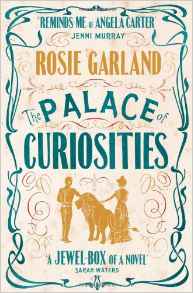
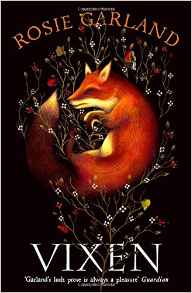
Your novels The Palace of Curiosities and Vixen are beautiful works of art, inside and out. I remember seeing Vixen for the first time at the Darkness and Light: Exploring the Gothic exhibition at the John Rylands Library in Manchester last year, thinking, what a gorgeous cover! After I read Vixen, the cover seemed to encapsulate the emotions portrayed throughout the novel. How important do you think book cover design is and do you always have a clear idea of each cover?

Thank you so much! And you’ve guessed it: I am passionate about book cover design. Ezra Pound said ‘a book should be a ball of light in the hand’. Why limit that to the words? A good book delights, engages, surprises, and even challenges a reader. I love it when a cover does that too. It can intrigue, press itself into the imagination, and stand out on the shelf. It can whet the appetite. Follow you around. Not to mention spur the action of picking the book from the shelf…

vixen

The cover of Vixen is a beautiful example, designed by Alex Allden at HarperCollins from an original painting by Scottish artist Lindsay Carr. I am not a designer so I steer well clear of that department. I have absolutely no input into the design – I simply want to love it. My task is to get the words right, and that’s what I stick to.

The cover for my next novel, The Night Brother, is proving to be very exciting – the cover design commission was chosen for the Bridgeman Studio Award 2016. It is rare and exciting to have a new piece of artwork commissioned for a work of fiction. I was stunned to discover that the callout received almost 1000 entries, with 20 countries represented. I’m moved that so many artists found their imagination sparked and wanted to see their work on the cover of my book.

I am delighted that Romanian artist Aitch has won the commission. I really warmed to the interplay of darkness and intense colour in her work. After all, night can be the backdrop against which fireworks burn their brightest.

night-brother

You have been described as ‘one of the country’s finest performance poets’. Can you please tell us about your journey as a performance poet? What advice would you give to aspiring performance poets?

One of my happiest memories is of being read to as a small child by my grandmother. I like to offer that simple pleasure to grown-ups, where words leap off the page and take on a magical life of their own. Personally (and it is my personal opinion) all I ask from a poem is that it speaks to me. I don’t demand that it rhyme, or not rhyme. Just that it connects with me in a way that touches me as a human being.

I know it’s not every writer’s cup of tea, but I love the buzz of interacting with readers, whether that’s at a festival, in a bookshop, or a museum at midnight. So, one suggestion for aspiring poets is to get out there and support spoken-word events (throw a rock and you’ll hit a poetry or live literature event where you are). Learn from the good poets as well as the not-so-good ones. Take a deep breath and read at an open mic. Keep going.

And as for advice, to quote W.P. Kinsella: ‘Read! Read! Read! And then read some more.’

Which themes keep cropping up in your writing? What do you care about?

I guess this connects with question 1!

There always have been, and always will be, creative folk who explore alternative themes. It’s never been an easy path, and that seems to be part of the territory. However, I don’t explore these themes as some kind of pose, or to be challenging for the sake of it. I write what I write because that’s what comes knocking.

Sure, I can produce something that doesn’t fire me up (I’ve tried), but my heart’s not in it. There’s the rub: I write where my passions reside. I’ve chased myself in circles trying to second-guess what a publisher ‘might’ want and it was a disaster. There’s no point twisting yourself into shapes trying to please. Maybe it’s one of the reasons it took me so long for my novels to get published.

If you could change one thing about the world, what would it be?

Be excellent to each other. Never more important than now…

Excellent

Palace of Curiosities is set in the 1850s. How did you start researching the period? Have you any advice for new writers? What is it about Victorian life that appeals to you?

Ah, the ‘research’ question! Research is fun, fab, and, like high-fat food, best taken in moderation. The way I see it, the art of good research is when the reader barely notices its presence, only that everything feels right. Of course, the basics must be in place (no iPods in Victorian times). Of course, I need to research the period assiduously. But it’s vital to know when to stop.

Personally, I don’t care if an arrow is fletched with swan feather, eagle feather or magpie feather. I want to know who is shooting it, who dies, and why I should give a damn. To quote Tom Clancy: ‘Tell the goddam story’.

What are you reading at the moment? Can you recommend any book diamonds?

I love recommendations from friends, and here are two recent ones. Sharon Olds has just published a collection of Odes. Oh my goodness – I am blown away by them.

And at the other end of the scale, I’m reading a sci-fi classic Grass by Sheri S. Tepper. I’ve never come across this author before, and she writes wonderfully. I’m already drawn in by the characters, and I’m only three chapters in.

Can you tell us a bit about your forthcoming novel The Night Brother, which is out in June 2017?

Thank you for asking! My next novel, The Night Brother, is due out June 2017, with The Borough Press. To say I’m excited is the understatement of the year.

The novel is set in Manchester. I’ve wanted to write a novel based there for a long time. I love the place, with its industrial heritage, amazing architecture, and radical history.

Once again, I have created a story that takes place in the past; this time in and around 1910. In the early part of the 20th century, Europe was teetering on the edge of the upheaval of a World War, the rise of new political movements, not to mention the struggle for women’s rights. I’ve picked a moment right before it all tips over. I’m fascinated by times when the world is on the cusp of change.

The two central characters are siblings: Herbert – who prefers the nickname Gnome – and Edie. As in my previous two novels the characters speak in first person. I like to let my creations tell their own story, rather than getting in the way myself.

I do feel shy about bigging up my work (surprise!) so I’ll let my editor take over – ‘Edie and Gnome bicker, banter, shout, and scream their way through the city’s streets, embracing its charms and dangers. But as the pair mature, it is Gnome who revels in the night-time, while Edie is confined to the day. She wakes exhausted each morning, unable to quell a sickening sense of unease, and confused at living a half-life.

Reaching the cusp of adulthood, Edie’s confusion turns to resentment and she is determined to distance herself from Gnome once and for all. But can she ever be free from someone who knows her better than she knows herself?

Exploring the furthest limits of sexual and gender fluidity, this is a story about the vital importance of being honest with yourself. Every part of yourself. After all, no-one likes to be kept in the dark.’

And it is already available to pre-order! Here’s the link (blatant plug alert):

Night Brother

Have you a favourite memory of your days as a vocalist with The March Violets?

It’s a difficult question as there are so many to choose from. But as you’re twisting my arm, here goes. In 2007, three of the original four band members – myself, Si Denbigh and Tom Ashton – talked about reforming the band to record some new songs and put on a one-off show.

We had no idea if anyone out there was interested. After all, it was 25 years since the last March Violets gig. Let’s face it, if no-one had turned up, we’ve had got a clear answer. But the Homecoming gig in Leeds, December 2007, was an astonishing success. Hundreds of people, all happy to see us back on stage, and none of them shy about showing their appreciation. They loved the old numbers, and even more delightfully, the new material too. What’s not to like?

Added to that, our fans old and new made it very clear that they weren’t about to let us go away again. So we started touring and recording, and the rest is history. To this day we haven’t seen or heard a bad review. Or even a lukewarm review. That’s a hell of an achievement – and a clear message that people are pleased to see us back. Very pleased indeed.

Tell us about one of the best days of your life.

It’s got to be the day the editor of Mslexia, Debbie Taylor, phoned to tell me I’d won the Mslexia Novel Competition with The Palace of Curiosities. Not because I think it’s the best thing I ever wrote (it isn’t), but because it was the day that changed everything.

Because it’s been a long, and at times demoralising, trek to publication.

Here’s the short version: I was with a reputable London agency for twelve years, and gave them four and a half novels. But however hard I tried (and did I try), nothing seemed good enough. My stuff was too weird, too odd. My agent stopped replying to my emails. My confidence was shot. I was at the point of giving up on writing fiction.

I realised that if I was going to get anywhere it would be under my own steam. In 2011, Mslexia magazine announced their first ever Novel Competition. Go on, I said to myself. One last fling. I dusted off novels #3 and #4 and sent them in. Both made the shortlist of ten. I was astounded: maybe I could write fiction, after all. Then novel #4 (published as The Palace of Curiosities in 2013) won outright. Within a week I had an enthusiastic new agent. Within a fortnight she had seven publishers in a bidding war over a novel I’d been told was unpublishable.

If I learned anything it is to keep going, especially when it’s tough. Someone out there loves your work – but they need to see it. So get it out there. Do it now.

Who inspires you and why?

How long have you got? I’ve been asked this question a gazillion times and I’ve yet to find a snappy answer. It’s impossible! Which is good. I’ve been inspired by so many people working in such a variety of art forms that there simply isn’t room to list them.

What is next for you? What are your plans?

2017 already looks like a busy year and I wouldn’t have it any different. I’m not happy unless I’m engaged in a number of projects – although I’m still learning the art of getting that number right…

From December 2016 onwards there are launch events across the UK for As In Judy.

As In Judy launch event

There will also be a book tour to launch The Night Brother in June 2017. I can’t wait.

I’ve also just found out that I have been awarded a Hawthornden Fellowship for 2017! It’s a great honour. I’ll be in a Scottish castle on a writer’s retreat during March and April. Who knows what I might come up with. Watch this space!

If I didn’t sing, I’d be miserable. As well as The March Violets, I’m working on a brand new musical project with multi-instrumentalist Éilish McCracken (Rose McDowall, Sgt Buzfuz, Slate Islands, Ida Barr). We are calling it the Time-Travelling Suffragettes! I’m inspired by the enduring influence of Music Hall and its power to subvert whilst being thoroughly entertaining. So, armed with banners, a twinkle in the eye and a spanner for throwing into the works, we have travelled to the present day to perform updated versions of nineteenth-century classics such as ‘The Boy I Love Is Up In The Gallery’, ‘I’m Shy Mary Ellen’ and ‘Hold Your Hand Out, Naughty Boy’ – and many more. We had our debut in November at Cherie Bebe’s Burlesque Revue, and the audience loved it. There will be more.

Drop by my pretty new website and check out the gig page!

Rosie Garland’s website


Inky Interview Exclusive: Award Winning Performance Poet: Bakita KK

bakita-kk

Can you tell Ink Pantry about your journey as a performance poet?

Performance poetry is something that has been a relatively recent step for me. I tried in 2013 and was quite overwhelmed (because I had a massive public speaking fear) so after a handful of performances, I stopped and didn’t perform again until March 2016. 

I think I will always be (first and foremost) a poet who dives between the page and the stage. I have been writing on and off for many years. What led me down the performance poetry route was when I started to shift my poetry from being a ‘Dear Diary’ (self-indulgent) type of expression to a social commentary. The aim of my poetry is to encourage people to reflect on their position in the world and how they contribute to it.

What are you working on at the moment?

At the moment I am working on two (audio) poetry collections: L Words and Childlike.

Childlike looks at six different situations/experiences through the child’s perspective. I feel that children see and experience so much but their points of view and feelings are rarely considered or are often dismissed. I want to explore this through the collection. 

L Words is inspired by the different types of love we all feel… some of which are easier to express, acknowledge and admit than others.  

In December I will be recording the collection at The Truth Sessions’ studio. 

What themes keep cropping up in your work? What do you care about the most?

A recurring theme in my poetry is definitely identity. A perfect example is ‘Black + Female’, the poem that I performed at the Worlds and Music Festival (which meant I met you guys at Ink Pantry). I am constantly forced to consider my identity (and the labels that are associated with it) as I navigate myself through life. In my poetry I explore the tensions between expectations/stereotypes, my internal dialogue and social constructs. 

Who inspires you?

Poetry wise the person who most inspires me is Anthony Anaxagorou. I love how he challenges what it means to be a poet and how he incorporates history into his pieces. He is a reminder that poetry and expression need not be solely (or at all) self-indulgent and that there is a duty to shine a light on misinformation and injustice even if/especially if it does not directly affect you. Anthony Anaxagorou provokes thought and encourages his readers and listeners to do their own research – every time I hear him perform I just want to soak up all the knowledge he has shared! I discover so much and he makes me hungry for more information.

Another inspirational person is Chimamanda Ngozi Adichie; her TED talk ‘The Danger of a Single Story’ is the main reason why I decided to be more open and critical of events in the world and how I am complicit in contributing to them. Watching her talk was also the catalyst for me giving my first ever talk (at the Female Speaking Academy). That talk has led to an incredible year for me (numerous poetry gigs, delivering my first creative writing workshop and receiving a commendation in the Words & Music Festival poetry competition). She is also an incredible writer. I especially love Americanah

Both Anthony and Chimamanda (calling them by their first names is my way of claiming that one day we will be friends!) confront me with the fact that to be silent is to be complicit. I don’t know if that is always their aim when they speak or write, but that is the impact they have on me. I strive to use my voice to speak out; I often fail, but it doesn’t mean I will stop striving. 

Can you give a couple of examples of your work and walk us through the ideas behind them?

Well I touched on ‘Black + Female’ earlier, so I may as well continue! ‘Black + Female’ is my response to all the black women who are asked to choose – choose between their race and their gender. In this often hostile world, there are movements fighting to combat injustices, but they often neglect intersectionality and ask black women to choose.

‘Should I tear my pigment from my uterus? Carve my cervix from my melanin?’

As the above line suggests, to separate my gender from my race is impossible, ridiculous and painful, but people do often insist that a choice be made, or insist that we ignore or prioritise one element over the other. ‘Black + Female’ sheds light on the biological benefits that come from being both black and female – why should black women be called to choose when our combination is so wonderful?!

The second poem is inspired by mum and is called ‘I Am’. In 2013, my mum pulled me up on my overuse of the phrase ‘I can’t wait until…’ She told me that I was always trying to skip, hop and jump to the next thing/grand event without taking note of what I had achieved. I was ultimately wishing my life away with ‘I can’t wait’ because I was trying to speed through days (sometimes weeks) until the next big thing. Her words roamed around my mind for a very long time (and still do). I say ‘I can’t wait’ much less nowadays. Although I didn’t truly embrace what it meant to be present until 2015; my mum inspired the poem ‘I Am’, which I wrote in 2013. 

‘I had has had its time; it lacks the knowledge of I Am

I will be is dependent; it longs for the certainty of I Am

I Am has the greatest perspective

I Am is where the decision can be made

Immerse yourself in Yes I Am.’

(Extract)

If you could change one thing in the world, what would it be?

I would change the internal dialogues that we have with ourselves. I want people to reflect on and challenge the internal dialogue that they have with themselves, about who they are, their place in the world and how that internal dialogue affects their interactions with others. 

What are you reading at the moment?

Anthony Anaxagorou’s Heterogenous and Roxanne Gay’s Bad Feminist.

Have you got any advice for aspiring performance poets?

Talent (or at least our idea of it) is overrated. Talent is often tied to a notion of being naturally gifted at something. This year there have been numerous occasions when people have told me ‘you are a natural, so talented’ after they have seen me perform. They have no idea that I avoided any type of public speaking for about eight years, because it terrified me so! It’s the reason I have left ‘shy poet’ in my Twitter bio, as an acknowledgement of how much practise (and many ‘umms’ and stutters on the stage) I had to put in to not feel like a shy poet on stage – sometimes I still feel like a shy poet, I just manage to hide it better and sometimes I find it impossible to hide at all!

Aspiring performance poets, if you see someone you aspire to be like do not be daunted by what seemingly appears to be ‘natural performing talent’. A talent is a skill, which needs to be honed and practised. Set aside time for writing and be prepared to read/perform your pieces when you don’t ‘feel’ ready. My advice is, if you’re in two minds about performing, just go for it. Sign up to open mic nights and seek out spaces where you will be with like-minded poets.

Tell us about one of the best days of your life.

One of the best days of my life was last year, when I fully embraced ‘I Am’ and went on a month’s solo tour of Western Europe. I learnt so much about myself, I dived into being truly present and I learnt what it meant to go with the flow (I am typically the type of person who makes a plan to be spontaneous)! It was incredible.  

What plans have you for the future? What is next for you?

Over the next few weeks, my main focus is on completing and recording the collections L Words and Childlike.  

Earlier this month I delivered my first creative writing workshop, so hopefully there will be more opportunities to deliver workshops. Next year I am going to travel around Eastern and Southern Africa (which I am incredibly excited about, but I can wait)!

Twitter

Upcoming Events


Special Inky Interview with author Mark Sheeky by Kev Milsom

Click here for Mark’s Inky Jamboree interview video with Andrew Williams

Hello Mark, it’s a great pleasure to meet you! Many thanks for making time for this interview and I’m sure our readers will derive much benefit from your thoughts and insights.  

I’d like to start by asking you about your earliest literary inspirations. What writers and writing genres inspired you as a young soul and who/what currently inspires you within your own writing?

I read constantly as a child; Enid Blyton, Roald Dahl, the Dr. Doolittle books, Agaton Sax, everything I could absorb, then as a teenager loved Steve Jackson and Ian Livingstone’s Fighting Fantasy books (I wrote a few in that style, just for fun back then) but tailed off from reading; computer gaming became my obsession. I’ve loved imaginative writing most, things that pushed boundaries in creativity and added intellectual colour. It was really a very roundabout route to get back to writing and reading at all, with computer programming, music, and visual art all coming first.

Immediately, I’m intrigued, Mark, as I remember the highly imaginative works of Steve Jackson, Ian Livingstone, and other writers in this unique style with great fondness. Do you think that exposure to this specific form of fantasy-adventure writing sowed early inspirational seeds for future literary plans? Did this genre allow you to view writing in a new way…perhaps in less generic, more open-ended styles?

My first interest was gaming, and back then I thought of the books as games and often thought the prose was incidental! Now I think the opposite, and yes, I have thought of using techniques like those in these titles for artistic effect. It’s heartening that the books are now popular again after they died off in the nineties. This at least shows that technology isn’t the end of books, even for books that have dice and scores! I wonder if one could write a novel with dice and scores? It was the interaction, the effort invested in reading that made those books much more engaging than others.

As a 17-year old who once attempted to write a fantasy book armed only with a notebook, basic mathematics, and a 20-sided dice, I can utterly relate.

I’d like to ask you, as an established artist, do you find that the creative process is similar for your writing, Mark, especially in terms of personal inspiration? Are there familiar processes that take place both for your art and writing and, if so, have they changed or altered dramatically over the years? Also, to expand this notion to the creative max, do you find that there are similar inspirational cues and formats that you utilise for your musical compositions?

This is interesting. Yes, I think all of those arts do fuse and have common routes. I’m very organised and like to plan things. Many writers don’t, I find! But my ideas for paintings and stories often come in instantaneous flashes, like complete ideas. I sketch both down; with paintings it’s a tiny sketch, and with prose it’s a step by step list of what happens, just a sentence or two for each chapter with the essential details. This plan, maybe a page long, forms the essential skeleton of the work. I can refine it, add links between chapters or characters, switch things, all to create unity. Unity in structure is important in art, both visual, musical, and literary.

I feel that if I started writing without a plan, I’d spend too much time going back and smoothing off various ‘sharp corners’ to hone the final result. This sort of tweaking can take 90% of the time – and so is best avoided! The way I aim to do it is like painting everything so that it’s largely finished after a first draft. Ideally, it is this skeleton that contains the essence of the work, the feeling, the meaning, and the characters.

Music is similar too. I much prefer to quickly get down ‘the whole’. The actual composition, creation, painting, writing; those things then become like joining the dots, always sticking to the essential feel and shape of the original plan, and so even a large complex work can have unity.

You asked about music…which is a little different. I have written far more music than prose, and I do have several techniques that have varied a lot. Initially my music writing was very formulaic, always starting 4/4 with similar chords, any old melody. It’s easy to write pleasant tunes in a snap like that, but to write good music, I think now it’s a matter of a similar process with a root in emotion. Music is much more emotionally evocative and direct than other art-forms. You can’t convey much intellectual information with it, you’ll never convey a complex narrative (try writing Ikea furniture assembly instructions using only a recorder!) but you can convey feelings really explicitly, to an extent that the feeling of assembling that furniture can be conveyed in a way that others can recognise! Thus, music must start with emotion. Ideally, all art must, but narratives need intellectual direction too. There are only so many emotions out there, so narrative adds another dimension to an artwork.

Has this changed over the years? Yes, a little, but even in my earliest stories I liked to know how they would end before I started. The spark of the idea contained what happened, rather than writing and worrying what was going to happen! Authors who ‘make it up as they go along’ seem quite brave to me!

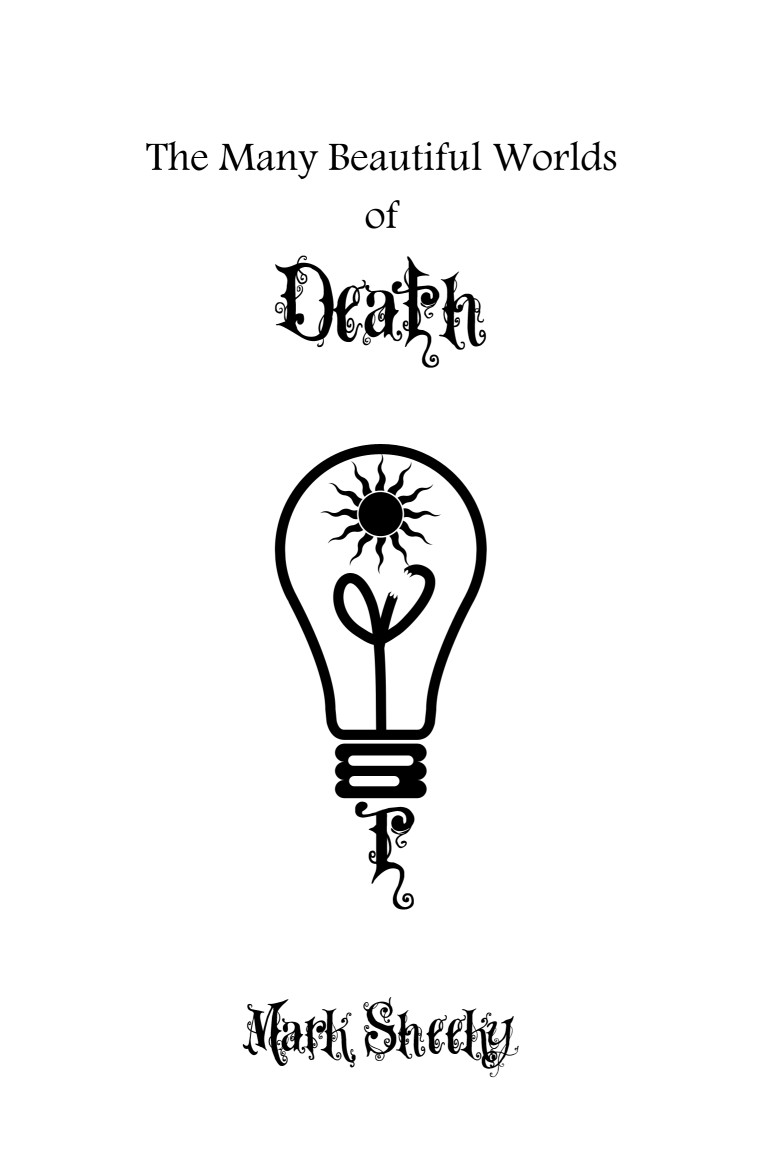
Concerning your recent novella, The Many Beautiful Worlds of Death, can you share some thoughts on the initial sparks that ultimately led to the creation of the story and characters? Also, was this a relatively smooth process, or was it something that slowly took shape over time, with inspiration arriving from many different sources?

I had the idea on November 20th, 2009, with the title ‘Mike and His Tumour’. Sometimes concepts just come to me and I’ll quickly write out the idea, and I did so here; 88 lines that describe in paragraphs what happens. I wanted to write something about the nature of life and death, akin to Ingmar Bergman’s Seventh Seal (I love Ingmar Bergman films; maybe I was watching it on the 20th? Who can say?), and with other cinematic references, some moods from the panicked final scenes in Brazil (and, indeed, there are many ‘Gilliamesque’ feelings in the story, the images that the story paints in my mind). Each paragraph was about five lines, and each became a chapter in the final novella. Back then, I’d never thought about writing a novel or anything nearly like that. I think 2009 was my first year writing stories at all, so I just left it there. I’ve got several other ideas written in a similar style, but this was/is probably my most detailed synopsis. In 2012, I looked back at it and thought ‘I must write this!’ so I took a month or so out to write it! For those few weeks it absorbed me completely, but it was done relatively quickly and certainly enjoyably.

tmbwod-plain

Regarding the specific genre of The Many Beautiful Worlds of Death, how much fun is it to plan out and piece together a science-fiction literary work? Do you find that this gives you a more creative, less-restrictive freedom within your writing structure?

The joy of this type of writing is the complete freedom. There are characters that are robotic, gaseous emotion clouds, locations change in time and space, reality has no rules. Perhaps this very lack of rules can lead to a sense of unreality, so it can be important not to push things too far, to avoid Deus ex Machina. The reader must at least care about the characters and see the world as real and rational. However, the story is a surreal allegory, and like the surrealist art that I paint and love there are elements that were spontaneous and could act on people’s minds in unconscious ways. There is a scene about the two dots on an LED clock blinking in which the dots are compared to life-rings in a sea of time, cast overboard, from a ship sailing on a cold and ink-black sea of time, gone forever. My writing is all about images.

Your focus on highly-descriptive narrative is intriguing, especially for young, imaginative minds and reminded me at times of scanning a series of visual paintings, taking in many details and observations. Did you physically draw many pictures/illustrations throughout the planning of your book to aid personal inspiration, Mark, or did all visionary cues remain within your mind?    

All of the images were in my mind, but imagery was and is, a crucial part of how I write. I like to tell a story by picturing a scene, and then describing how it looks and feels. This should give a sense of immediacy and intimacy, as though the reader is transported there, into the realm of the characters. I feel as though I am there when writing – and I should. That way I can describe how I feel, and the reader will feel it too.

In an essay written in June of this year, you described art as ‘emotional communication’. Do you view your writing in the exact same way, or are there subtle differences between the way a piece of visual art and a written book connect with an audience? Also, in terms of your personal philosophies on life, the universe et al, do you see yourself as someone who seeks to plant specific psychological messages and meanings into your creative output?  

Yes, I think writing like painting (and music!) is emotional communication. I suppose writing has even more power to convey more information. Isn’t it strange, the sheer power of the combinations of words and letters, the things that writing can convey? I could type ‘eterwvwr’ and just those eight letters could be read like a word, or letters. The shapes themselves create a unique look and feeling. You might think of eternity or waves, or so many things, all of these possibilities from just eight letters that on the surface don’t even mean anything! The power a writer has is immense (and that’s just the power of the language, never mind the innumerable variations of typeface, paper colour and texture, smell, thickness, and every sense used when reading a real book!). A book is far more stimulating intellectually than a film for these exact reasons, just as a painting is far more stimulating than an image on a screen.

On the last question, I don’t try to implant specific messages, but my creative process means that lots of subconscious thoughts and ideas will creep into the work to help convey what I’m trying to. Art is communication, so the ultimate way to create it is to feel the feeling and idea, then beam it out quickly; and with luck, you’ll shine that exact feeling and idea to everyone who experiences it!

Many thanks for your personal thoughts and insights, Mark. To conclude, now that The Many Beautiful Worlds of Death is complete, do you currently have further plans to create more literature for a younger audience, or are you more inclined to follow a spontaneous writing pathway; acting/reacting as inspiration arrives, regardless of genre or audience type/age?  

That’s a good question. I’m not sure what I might write. This idea was one of my first and I’ve not been writing long, so my motivation until now has been learning to write and pushing myself creatively to learn the craft. That’s how I work on any artwork, the joy of the craft, pushing to new challenges. This is one of my primary motivations. As I become more experienced I might start to think about targeting a story or idea at a specific demographic…but in art, when I try to please an audience, it rarely produces good results. In art, the best work is written when inspired, I think, when the artist is inspired by a great, amazing thought. Perhaps the audience picks up on that ‘wow’ feeling.

My hero is Beethoven. An odd thing about his career is that many famous works, the violin concerto, the 4th symphony, were written quickly as passing whims while he worked seriously and intensely for months on his commercially targeted, yet largely forgotten opera.

Get your copy here

Ink Pantry are hosting a special book launch with Mark Sheeky and his wonderful novella The Many Beautiful Worlds of Death in Leicester on Saturday 22nd October from 1pm at Café Mbriki. We invite you to come and meet Mark, who will be signing his books on the day, and the Inky elves who work behind the scenes. Come and join our Inky Jamboree and eat cake!

Special Inky Book Launch: The Many Beautiful Worlds of Death by Mark Sheeky: reviewed by Kev Milsom

tmbwod-plain

“About six weeks,” says the doctor. “It’s hard to say. We don’t like to say. Everyone is different. But not long. Not six months. Although that happens sometimes. Rarely. Six weeks is typical.”

With this opening paragraph, we are soberly introduced to the world of George and a medical diagnosis that would strike fear into any individual, brought to us by Mark Sheeky in his book, The Many Beautiful Worlds of Death.  

True, George is apparently not long for this world. Yet George is not a soul to accept this news and decides to fight back against his fatal prognosis; his major weapon is in the knowledge that he can utilise his talents as a successful inventor, to create ‘Plan A’: namely, the construction of a time machine. Once successful, ‘Plan B’ will involve travelling back through history to consult with the most brilliant minds ever born in the entire universe, with the ultimate goal of defeating his terminal illness.

Following George’s journey, the reader is transported into a delightfully surreal future world. We learn that George shares his world with Pauline, a wife who spends more time and conversation with the flowers in her garden than with her husband – along with the attentions of a handsome neighbour, Roger. We’re also quickly under no misapprehensions as to George’s inventing talents, as their house is also shared by a robotic son, Adam, constructed by George.  

Within this family trio, it’s impossible not to feel sorrow for George’s predicament at his most desperate time – a wife who loves him, yet seeks guidance from sunflowers, along with a robot son who lacks emotional empathy and understanding. This book is George’s personal journey, and we are swept along with it, including how his illness affects himself and those closest to him.  

‘The curtains blew into the room once more, waltzing graciously for one dramatic curl before being sucked back, pulled towards the window, covering it with their cotton film, showing each angle and sharp edge of the window frame. Marking the contours of the architecture like a brass rubbing that grasps at reality but never attains it. The light outside was now dim, and rain had begun to fall heavily, casting streaking shadows on the thin yellow drapes and hissing, dripping, making a periodic yet irregular tam tam sound on the glass panes of the open window, unseen.’

The writing style of The Many Beautiful Worlds of Death is often intriguing. As a very successful and talented artist, the descriptive elements of Mark Sheeky’s book are reminiscent to me of viewing – or being inside – a massive painting; something I personally found fascinating. At times, Mark is literally ‘painting with words’ and the effect draws the reader into each scene with further depth and interest with well-constructed sensory observations.  

Also, I have to say that I adored the opening chapter – essentially a short poem, along with musical notation, so that the poem could be played, or sung – once again demonstrating Mark’s musical creativity as a composer. Inserting this as an opening chapter is genius…and yes, I both sang and played it on the piano; something I would highly recommend.

In many ways this opening musical piece sets the scene for the rest of the book, as the author demonstrates creative freedom and expression on every page. What I enjoyed most about the book is that I’ve never come across a book written in the same style. It’s unique and different; something I adore within any creative genre.  

Visually inspiring, highly imaginative and often deeply moving, touching on psychologically thought-provoking and metaphysical elements. Love it.   


Get your copy here


Ink Pantry are hosting a special book launch with Mark Sheeky and his wonderful novella The Many Beautiful Worlds of Death in Leicester on Saturday 22nd October from 1pm at Café Mbriki. We invite you to come and meet Mark, who will be signing his books on the day, and the Inky elves who work behind the scenes. Come and join our Inky Jamboree and eat cake!


2016 Inktober Winner for Spoken Word: Nelson Mandela by Helen Kay

In a warm ward, gently you slip away
but what an empty space when you are gone.
The press, in love with easy stories, paves
the way with clichés comfortable, stable,
critical, awaiting the volcano of lament.
You outlived Thatcher and her legacy,
and, safely distanced by a sea of years
from words like communist and terrorist,
we all bow down to your integrity.
The barbed wire of apartheid has been cut.
There are some who will pay respect,
omitting to admit allegiances
to groups that wanted you to swing.
But you have taught us not to cling to grudges.
You shaped our youth, hungover misfits.
In a town square, begging signatures,
posters for AA gigs on boarded houses,
hosting SWAPO speakers on the floor
amongst the Merrydown and Rizzla papers,
debating dropouts, Trots and battered miners.
While the blood of Soweto stained the earth,
we learned about Rivonia, and laws
that thinly masked white fear; you learned
to cradle sanity in concrete walls.
Events outside were somehow dripped to you:
Your mother’s death, the raid on Lillesleaf farm,
and Winnie’s punishments. Your greater
suffering shrank our suffering down,
though still significant and somehow linked.
Exposed to labour, torture, hunger
you led inmates to fight with dignity.
For every clenched fist holds the bigger fight.
The world rejoiced the moment you walked free.
Small step, big step, holding Winnie’s hand,
a simple act amidst complexities
which you well understood, sought to pick through,
to wash the language of resistance clean,
while dreams of family life were swept away.
Now illness is your final prison, but your love
and legacy have been released and grow
upon the fertile soils of hope and peace.
We raise a fist and let Mandela free.

2016 Inktober Winner for Prose: Tunnel Vision by Donna Day

tunnel

I can’t remember now when the first time he appeared was, but it was obviously some time after he had died.  

He comes all the time now. I sit there, in my toll booth at the end of the Kingsway tunnel, handing out change, over and over, and he appears, out of nowhere. I don’t even jump anymore. He says, ‘What are you doing with your life, Lauren?’ I say, ‘Leave me alone, John,’ and he vanishes.

It’s particularly cold and wet tonight. There are two kinds of drivers on nights like these. The ones that all wrapped up in their car, cosy and cheery, just thinking about that nice cup of tea at the end of their journey. They have a smile for you. Then there’s the grumpy ones, annoyed at the world, the rain, everything. They’re especially annoyed at having to pay in order to get through that ‘stinking tunnel’. It’s after they drive off that John appears.

It’s two years now since my older brother left us. He had been sick for so long that, well, he wasn’t in pain anymore, and I guess that’s something. He had said to me that he couldn’t remember what it was like to not be in pain. To not hurt all over every single day. He wanted it to be over.  

But when it happened, everything fell apart.  

I was in the middle of writing my dissertation at the time. It was something like three weeks before it was due in. From Brooks to Moss: How Party Girls Changed Fashion. I was granted an extension, obviously, but every word I’d written seemed so superficial, ridiculous. The musings of a silly ignorant girl who went to university to drink and, well…

I thought about going back at one point. Maybe study medicine. See if I could save lives, stop someone else going through the pain I was living with. But I’m not clever enough, definitely not rich enough. So I got this job. It’s boring, but it pays the bills. Plus, I work a lot of nights. It’s quieter, and I don’t have to come up with excuses not to see people, because they know I’m working. I just can’t face it. Going out, getting pissed, getting laid. What’s it all for? Nothing. If I’m going to drink I’d rather have a nice malt, neat, by myself in the quiet and the dark where I can appreciate it.  

‘What are you doing with your life, Lauren?’

‘Leave me alone, John,’ I say, rubbing the tears out of my eyes.

‘No, not tonight.’

What? That’s new. I dry my eyes with the back of my sleeve and look at him, in the corner of my booth, smiling. He looks exactly the same as he always did. Well, the same as he always did, before. I’m hallucinating. I’ve lost it. I pick up my phone and stare at it. A distraction. That’s what I need to clear my head.  

‘That’s not going to make me go away, Lauren,’ John says. ‘Besides, no-one ever texts you or anything now anyway.’

‘Wh-what do you want?’ I stammer, the screen blurring through my tears.

‘Ah, first night memories,’ he says, leaning back laughing. ‘Are we going to go through it all again, or do you remember it as fondly as I do?’

I put my head in my hands and can feel my breath getting quicker. I feel sick. This can’t be real. It isn’t happening.

‘Come on, Lauren,’ John says, pleadingly. ‘Please don’t be like that. I thought you’d gotten used to my visits by now. I thought if you could get used to me, you would talk to me. You’d started to seem so flippant about it and –’

‘Shut up!’ I yell. ‘You’re not here! You’re dead!’

‘Yes, I am,’ John says. ‘I’m dead. My life’s over, done, finito. Everything I had, everything I was, everything I wanted, gone. Just like that. And you’re here wasting the time you have.’

‘You’re not here, this isn’t real,’ I whisper to myself, over and over. I rub my eyes with the back of my hand. I look in the corner of the booth and John’s still there grinning widely. ‘What do you want?’ I ask, slowly.

‘I want my little sister to live her life. I want her to stop sitting about in the dark. I want her to stop avoiding everything and everyone,’ John says, quietly.

‘I’m doing OK,’ I say.  

John laughs ruefully. ‘Do you know what’s at the other end of that tunnel?’ he asks, nodding towards the small window.

‘’Course I do,’ I say. ‘Liverpool.’

‘No, Lauren,’ he says. ‘At the end of that tunnel is the world. What are you doing with your life, Lauren?’ he asks. ‘What are you doing with your life?’

‘I get by,’ I say.  

‘Nothing, nothing, nothing. Nothing at all,’ John says, as if I hadn’t said anything. ‘You’re throwing it away living in a box at the end of a tunnel. But that tunnel could take you somewhere, if you would just let it. Come on, Lauren. When you got this job you told Mum and Dad it was temporary. You just needed some time and then you’d go back to university. Fashion, medicine, whatever. Fuck’s sake, no-one even cares if you want to work in here for the rest of your life, but you don’t. You’re miserable. People only want you to be happy. What happened to your dreams, Lauren? Why have you given up?’

‘When you got sick,’ I stammer, tears streaming down my face.

‘When I got sick, I died,’ John says. ‘You didn’t.’

I look up at him. My big brother. How he was, before. Strong. Always taking care of me. ‘I have responsibilities,’ I mutter.

‘No, you don’t,’ he says, laughing. ‘What? Mum and Dad have each other. Their only worry is you. You rent your house. You and Tom split up last week.’

‘How do you know about that?’ I ask.  

‘All seeing, all knowing,’ he says, tapping his temple. ‘Comes with the transparent complexion.’

I frown at him. ‘You haven’t changed,’ I say.

‘No, neither have you,’ he replies. ‘That’s the problem.’

‘Are you real?’ I ask.

John just smiles at me and reaches out his hand. ‘Come on, kid, this is your last chance. I don’t think they’ll let me come again.’

I glance out of the tiny window at the cars passing through the tunnel. Everyone’s going somewhere, and he’s right. I’m going nowhere.

‘No-one’s been to my booth for ages,’ I say, confused.

‘Don’t worry about them,’ John says. ‘They don’t need you anymore.’

He reaches out, and I take his hand. It’s cold but surprisingly solid. He gently pulls me up and then we’re in the tunnel, passing over cars as if they aren’t even there. I can see a light ahead, but it’s not the light my brother went through two years ago.

I cling a little tighter to his hand. He smiles at me, and says, ‘There I was thinking you wanted me to go away.’ And he laughs and I laugh. I hear him whisper ‘You’re going to be fine’ in my ear before I realise that it’s daylight and I’m walking into John Moores Uni, for the first time in forever, my nails embedded deep in my palm.


2016 Inktober Winner for Poetry: In Credit by Pat Edwards

hourglass

In Credit

Measured like pocket money,

time is best saved up and stored,

or at least never spent all in one go.

Unless, of course, there is something

you have craved for ages, and the urge

to flash the cash is worth the risk.


At ninety-two Dad had eeked it out

and got off pretty lightly, given

cigars and gambling and their tendency

to nibble away at human resources.

Horses for courses, but the flat season

has given way to not such great odds.


At fifty-seven I had just a small stash

of cash in the attic. I should be sitting

pretty as the bus pass and pension

draw near but how many times

can you start and re-start the sand

as it trickles to a conical heap below?


We all make our withdrawals like

there is no tomorrow, or like the

rainy day is a myth, never to dampen

our blithe spirits or offend our

investment in forever. But sooner

or later the nasty stuff hits the fan.


Borrowed time is no time like the

present and being in the moment

is the universal currency. That will

do nicely says the man at the till

as you chip and pin your way to

the very edge of your allowance.


Inky Interview Special: Poet Emma Purshouse

emma

Can you please tell Ink Pantry about your journey as a performance poet?

I’d always written ever since I was a child. My first poem was published in the ‘Brownie Magazine’ when I was about six or seven. I remember the excitement of seeing my name in print, of feeling that something I’d done was valued.

I’ve only been performing my poetry for just over ten years. A work colleague knew I wrote and asked me to read at a charity event he was putting on. He was very persuasive, and I said yes. I was sick with nerves the first time I read, it was almost like an out of body experience. However, the audience laughed at the punch line and that was me hooked. That’s the best sort of buzz for me, making someone laugh.

From there someone asked me to perform somewhere else, and so I did. And that just seemed to keep happening.

Have you any advice for budding poetry slammers? How do you prepare for a slam? 

Don’t take slams too seriously in terms of the winning and losing. They are very subjective. I’ve gone out in the first round with the same poem that I’ve also won a slam with. In my opinion, it’s best to treat slams as a chance to showcase for three minutes, six if you’re lucky, and nine if you’re very lucky. Plus, it’s a superb way to network and meet other poets. The poetry scene is lovely and supportive in my experience. I always prepare for slams by putting in the work to rehearse my pieces over and over. I also time my work, including anything I want to say about the poem. Slams have strict time limits for the rounds, so you need to get it right.

What do you care about? What themes keep cropping up in your writing?

I care about people and how they live. I like to write in character a lot. I love to experiment with voice. Homelessness is a recurring theme in my work, and the creation of an underclass in this society. The outsider is a constant source of fascination for me, as are the people and dialect of the Black Country which is where I’m from.

You received Arts Council Funding for your one-woman performance poetry play. What was it about and what inspired you to create it?

I was inspired to write my first one-woman show by watching Jeremy Kyle and thinking it was like some kind of horrible bear baiting phenomenon. I started to see parallels between that TV show and the traditional Punch and Judy show, so I ended up taking the characters from Punch and Judy and creating a performance piece where they were telling their stories as people might do on the Jeremy Kyle type of TV show. It was called ‘The Professor Vyle Show’. It had poetry, puppets, quick changes, Burberry punch hats, a blow up doll, a full size Punch and Judy booth. It was a mad show, but really fun to do.

Where did you do your MA in Creative Writing? Please tell us about your experience during this time and what you gained from it. Do you think it is worthwhile for a writer to complete an MA and for what reasons?

I did my MA at Manchester Met. I did the novel route though, not poetry. I enjoyed a lot of the experience. It was a good way to network and a good way of making myself write to a deadline. I guess it depends on the individual whether this type of course is relevant. I’m not sure if it’s helped me in my performance career as such. I sometimes teach as a visiting lecturer in universities so maybe I wouldn’t get that type of work without having done the MA.

Who inspires you as a poet?  

All sorts of people. This changes on a regular basis. Originally I was inspired by a book of poetry that my Granddad wrote. Everybody used to look at it with such respect. I never really knew him as he died when I was still very little, but I felt the sense of pride when family members talked about his book (I’m not even sure anybody except me read it). Roger McGough inspired me when I was at school. That was the first poetry I came across other than my granddad’s.

I’m currently into Liz Berry in a big way. I think she’s given people permission to write beautifully using dialect. There are so many brilliant performers who I love to watch and learn from. I love Holly McNish, Jonny Fluffypunk, and Brenda Read-Brown. There are also people who I enjoy working with like Heather Wastie who I’ve done a few bits and pieces with over the years.

Can you tell us about the Write On project?

That was a schools project run by Writing West Midlands. Now much of their work with young people is done through the Spark Young Writers’ groups. They run lots of them across the West Midlands region. I run the group in Stoke-on-Trent. I love it. We get up to twenty youngsters turn up and write their socks off for two hours once a month on a Saturday. Great fun.

You write for children. Have you any advice for writers who are new to this genre?

Listen to what children tell you about what they like. I sometimes ask children for subjects and then write poems to order. Get gigs reading to children so that you can see what works and what doesn’t. There aren’t many places to send work that you write for kids. ‘Caterpillar Magazine’ in Ireland is beautiful, and I’ve had a couple of poems in there in the past. Go and see some children’s poets in action, you can learn a lot from what others do.

Tell us about one of the best days of your life.

I’ve lived on a narrow boat for the past eight years. One of the best days ever was when we went to fetch it after having moved heaven and earth to have pulled off that dream. We didn’t know anything about boating. It was a fantastic learning curve.

What is your creative space like?

I don’t have one particular space really. I move about a lot and write wherever I am. I just take my notebook and pen or my computer with me in a bag. I’ll write on buses and trains. I’ll write in pubs. The day before yesterday I worked on a bench by the river in Bewdley (the library was shut!).

What is it about poetry that you love?

The sounds, the puzzling through when you’re trying to make a poem work, the joy when the poem gets a response when you perform it. The fact that there truly are poems for everybody. The diversity. The fact they can make you think, laugh, cry. The intimate connection between reader and writer. Wow, I’m bigging it up here! I’ve just read all that back, but I do genuinely believe those things.

What is next for you? Have you any plans?

I’ve just completed a rather long project, so I’m in poetry free fall at the moment. No plans. None. I’m open to offers. 😉

Emma’s Website

Exclusive Inky Interview: Poet Dr Mike Garry

wolfgang-webster-1

Click on the link above to listen to Mike’s phone interview. Towards the end, he kindly performs one of his poems.  

Firstly, Mike, many congratulations on being awarded an Honorary Doctorate in Education from the MMU. You are very passionate about promoting reading to young people. What kind of things have you done to promote reading?

I was a librarian for fifteen years and I focused on young people. I believe reading is a way out for lots of young people, especially working class kids who never have a voice, and I think that once they get the bug of reading, they learn to communicate better, and ultimately, as a fourteen year old kid, your head is pretty fucked up as it is, so if you can’t communicate, it doesn’t help much, does it? The more we read, the more we learn to communicate, and also, we all know the smartest kids read. It’s a crusade to get schools, education and parents to be aware of just how important it is. It’s not about getting a sticker on a chart, it’s about their major development, and the more they read, the smarter and happier they are, and that’s why there has been a crusade about it.

So I do lots of different things. I work with about ten thousand kids a year in schools. That’s why I got a Doctorate more than anything else. I do events where I do live poetry to young people, conferences, book awards, ceremonies, and I still do bits and pieces with libraries, when I get the time. I still think libraries are probably one of the most important institutions in the UK.

Can you tell us about your journey as a performance poet? When did you first realise that you loved poetry?

I first realised I liked poetry when I started talking and I loved the rhythm of language and the feel it gave me, the sound of words in my mouth, saying weird words and being addicted to words and discovering words. This highly influenced me in music as well. I was brought up in a house with six kids. I was second youngest, so I had big brothers and sisters who were into Tamla Motown, Punk, Bowie. From a very early age I was spoon fed Bowie lyrics, a lot of Tamla Motown stuff, Billie Paul, Marvin Gaye, Diana Ross and the Supremes and The Stranglers. I was influenced by these people whilst reading poems from school. One of the first poems that I read that made me realise that poetry talks about the other side was ‘Timothy Winters’ by Charles Causley which is about a scruffy kid, a trampy kid, basically, and I saw a lot of myself in Timothy. I loved the simplicity of poetry, how it was laid out. It didn’t take ages to read. It looked good on the page. It sounded good. It was moving. I thought the people who were doing it were cool. Most of the stuff we read as children were poems. Most of the stuff we read as we are learning how to speak are poems. Think about Bear Hunt. Think about Michael Rosen. Think about The Tiger Who Came To Tea. All those things are incredibly poetic. I wasn’t a great fan of reading big fat books, to be honest. I’d avoid them like the plague, so I thought a poem was perfect, so I’d read poems and I’d just find it a lot easier and a lot more fulfilling. You can get as much from a haiku as much as you can from a 500 page novel. So that was the beginning, more than anything else, and I’d start writing my own lyrics and words.

There’s a bit of a bad press about poetry, sometimes, isn’t there, about it being inaccessible and snobby, but it’s not really like that, is it?

I find a lot of poetry is inaccessible. I find the most successful poets are inaccessible, but also there is a whole gamut of poets that are very accessible. So, I started reading them and I started reading more poetry, and I went for a GCSE thing doing World War stuff, and just kept poetry very close to me. Then I discovered that a lot of these artists like Ian Dury, like David Bowie, were spoken word. They were talking for a lot of the songs. Just take the music away, and it’s a poem. Then the whole Liverpool thing and the Lennon thing. Music has always been there in the background, as an influence.

Very similar with John Cooper Clarke, through music. I came across Johnny through the punk scene, and things like that, and punk was brilliant for me because it gave me an opportunity to be the upstart I was already, and justifiably. I had a label to tag it to. Then I started performing things on my own, in my bedroom, reading things. When I first became a librarian, I was qualified and set up a Homeworks centre in Manchester for really rough kids, immigrants in a lot of cases; Asian, Irish, Jamaican, African. I would get them looking at poetry. I’d use poetry for everything. So what I’d do is look at one that they were studying, then I would read one of mine, but not tell them it was mine, and they would always prefer mine. So slowly but surely I gained a confidence to start reading it out. So I actually started reading stuff out in about 1994. I started doing slams pretty quickly. I went over to America and competed in some slams. I got a bit of a reputation in New York for my performance, in the Nuyorican Poetry Café, and my confidence, slowly but surely, grew and grew. I started to do more over here. I started being asked to do my own shows. Then I started publishing. Then I stopped being a librarian, and decided to make this my job, and it has been now for fifteen years.

Did you perform with New Order, Iggy Pop and Patti Smith?

I did, yeah. That was the St. Anthony thing. I wrote a poem for Tony Wilson when he died. I didn’t realise it would take on such momentum. A classical composer called Joe D’Dell heard it, love it, wanted to put some music to it, put some music to it, New Order heard it, loved it, invited me round to his house, and said ‘listen, we’ll go to New York to do it’. A gig for Philip Glass. He said would you like to do this and come with us, and do this, I said ‘yeah!’ and he goes ‘We got a backing singer, Iggy Pop and New Order’. New Order became mates pretty quickly. Heroes to mates. That’s the thing about star quality, I’ve found. Real stars stop being stars after ten minutes. They start to become your mates. So from that, I met Philip Glass. He loved what I did and invited me round, and I’ve been mates with Philip ever since. I’ve done gigs with him, stayed over in New York with his family. Lovely man. Supposed to be over there next week, with him, to do a festival in Carmel, but the forest fires burned down in so many spots, now, it’s deserted. So, I did other stuff with Patti Smith and the National. Oh, it was unbelievable. I sit back and think about it sometimes, and I think ‘how the fuck did that happen?!’ I still work with Phillip and he still champions what I do, and loves what I do, so I just feel very honoured and very lucky.

I like Morrissey and The Smiths. What is your favourite Morrissey lyric? (Mine is the one about the double decker bus!)

Well, I was mates with Morrissey as a kid. I grew up with all The Smiths. I worked with Johnny in Stolen From Ivors in a Saturday job. My brother worked with Mike at St. Kent’s Irish club, collecting pots. I still know Mike really well. I still speak to him on a regular basis and do stuff with him. I worked with Morrissey’s Dad in a hospital. One day, he turned round to me and said ‘have a word with my fella, he’s just like you, you know. Sits in his room and reads poems all the time’. So Morrissey came in for me to have a word with him. Keep in mind I’m five years younger than him, so that’s 17-22. It was just the beginning of The Smiths, as well. So, I love Smiths’ lyrics. It was my wedding dance; There Is a Light That Never Goes Out. I also did a programme for Radio 4 called Soul Music, about that actual tune. Check it out. I think it’s still online. They take a track every week and they look closely at the track and the effect it has on people. There Is a Light That Never Goes Out is massive, isn’t it? I love the lyrics to Girlfriend in a Coma, as well. I think they’re absolutely brilliant. I can’t fail Morrissey with his lyrics. I love the fact that sometimes they are pretty shit and they don’t work, but I actually like that, because he doesn’t care. He’s not looking for the perfect rhyme. I saw Morrissey in New York a couple of years ago, which was great because they were on with The Cortinas, another Manchester outfit.

But music is still important with me, that’s why I still do a lot of work with musicians and bands. I went to Edinburgh with a musical thing I put to poetry. I’ve got my own quartet (Cassia) that I work with on a regular basis. I’m doing Cerys Matthews’ Good Life festival. We’re doing that with Max Richter, a modern classical composer. Music is still really important to me. That’s the direction in which I’m going, making music and doing poetry, side by side. I like it that way.

What is the first thing you would change about the world as it is now?

I’d make everyone vegetarian, even though I have a bit of fish every now and again. That’s only through doctor’s orders, more than anything. God. Light questions!….I’d make everyone socialist, basically. I would ban capitalism.

Go back to bartering?!

Yes, I barter poems. I’ve had tradesmen in my house, plumbers and stuff, and said ‘listen, I’m a poet; do you want to trade or…’ and one person had taken it up.

I hate money. It’s a dirty thing. It brings the nastiness out in us. Yeah, I’d turn the world socialist, I think.

You have been working with John Cooper Clarke, who is coming to our home town of Nantwich, soon, with your good self, which we all can’t wait for. Can you tell us of a funny moment that you’ve had with him, as you’ve done over 500 gigs with him, haven’t you?

Yeah, over six years now. Toured America as well. Good bits were when we arrived in New York and Noel Gallagher came out to greet us. That was good, was fun. Funny bits are daily. They really are. They happen on a daily basis.

So you have a great working relationship with him?

He’s my mate. He champions me. He’s said lots of nice things on radio stations about me. Well, he’s had me with him for six years now, so he must like me in some kind of way. He took me to America with him. Did America. I love the guy. If I stopped working with him in the morning, it wouldn’t bother me. I’ve spent an awful lot of time with him and shared a lot of personal, private things with each other. I mean, there’s things about Johnny I know that nobody knows. There’s things about me that Johnny knows that no one knows. He’s a very bright man. Very intelligent man. He’s very switched on and aware. He’s very good with young people and understands them very well. His daughter’s only 22. He’s still in touch with young people and what trends are. He’s a great reader.

You read a lot as well, Mike, don’t you?

Yeah, only because I haven’t got many friends! It’s a treat for me, reading.

It’s having the time to read, I suppose, isn’t it?

You’ve got to make the time to read.

I’ve got a question from Kev Milsom, one of the elves at Ink Pantry Towers!: The passion for your native Manchester shines through in your poetry. Could you describe how you have sought to inspire young Mancunian poets with your words – also, could you share some thoughts on the Manchester creative scene and how you would like to see it expand & develop in the future? 

It comes through in my poems, a sense of deep Northern pride. It’s not just Manchester. I love Northern cities. I’m in Liverpool at the moment dropping my daughter off at university. I’m excited because the amount of times I’ve spent here as a kid. I compare Mancs to Scousers all the time. They are very similar. But the Manc lads are better looking! The poetry scene in Manchester is bustling. We’ve got a brilliant organisation called Young Identity, which runs out of Contact, which picks up all the young poets and gives them a voice, basically. We’ve got Bad Language, which is a great night run by a kid called Fat Rowland. Common Word are still in Manchester doing loads. Peter Kalu is working really hard to keep the importance of the written word and poetry. I just try and give as much opportunity for young people to work with me and gig with me. We’ve got something on for the Manchester Food and Drink’s festival, the night before National Poetry Day. We’ve got a young poet and a couple of other poets. It’s just the opportunity for them to do that sort of thing. Another thing is, I’m rarely here, though. Most of my work is away from Manchester, which is a good thing in a way, as you can become too part of a scene, I think.

…and it’s inspiring, I suppose, to be away, because you get to see different parts of life and people…

Yeah. I’m a fellow of the University of Westminster, so I’m down there a lot, doing bits in London, playing around with poems and stuff.

I’ve got a question from Inky elf Shannon Milsom: She’d like to ask who were your childhood heroes? Who or what inspired you from a young age?

I’ve got football heroes. I still love football, but reading; I started off with Roald Dahl. He was my hero. He was a massive influence. Milligan. He was jokey and funny. My Mam brought me to see him. I got into Spike Milligan really young. A lot of his stuff is about mental health and the nature of man. Charles Causley. Some of the classic poets. Then the war poets. All of them. It was great last year as the BBC did a series on them. Music. The lyrical music of The Beatles, The Smiths, Punk, The Sex Pistols, The Buzzcocks, Echo and the Bunnymen. I was reading all sorts of stuff at the time; Gerald Durell, and just enjoying it, more than anything else.

What’s next for you? What plans have you got?

I’m doing a lot of work with the quartet, so I hope to have some poems with classical music. I’ve just worked with a couple of mates on a piece called Men’s Mourning, which was featured on Radio 4 last year. I did that up in Edinburgh, which went down really well, so I’m looking at ideas to do things with that. I’m looking at work with the Stroke Association. I had a stroke about a year ago and I was working with the Stroke Association at the time, weirdly enough, but they’ve got a choir, and I wanted to see how a choir and the spoken word works, so I’m interested in doing that at the moment. Do you know, Debbie, I play. I play around and see what comes out of it, and if something good comes out of it, I like it, and if something bad, well, nothing bad comes out of playing around, does it?

You want a poem, don’t you? My son lives in New Zealand. He moved there about 18 months ago. He’s only 23. It’s great because you haven’t got the brain ache of a wayward son hanging around you all the time, but sometimes you really miss him, so this is called:

I Truly Miss My Son Today

I truly miss my son today
I need to hear his name spoken aloud
I scream till I’m raucous when I’m at home alone
I sing whisper it when I’m stood in a crowd
We’ve not fallen out
We’re just miles apart
Makes me feel lost, lonely and astray
My heart slow bleeds as my soul departs
And I truly miss my son today

I’m gonna hold that boy in these two loving arms
I’m gonna tell that boy just how his Father feels
How I’d walk across Europe and Asia in bare feet
Swim naked through the South China Sea
For a moment of his beauty
For a instance of his grace
For a second of his cheeky Northern charm
And I’ll tell him things I’ve never told him before
When I hold my boy in these two loving arms

Mike: So, what do you guys do? Have you got a webpage? Do you do publications, how does it work?

Deborah: What happened was that some fellow students were doing a creative writing course with The Open University, and we thought; how can we promote our work? So we had Berenice Smith, who was, and still is, a graphic designer from Cambridge, and then we had Alyson Duncan, from Motherwell, who is a whizz on the internet. So we set up our own publishing company. We’ve got two anthologies out there with students’ work in them. What we do is promote new writers. We put poems that people send in, on the website, and do interviews…

Mike: So some of you are coming down on the night in Nantwich (John Cooper Clarke and Mike Garry perform at the Words and Music Festival at the Civic on the 15th October)

Deborah: Yes, definitely. There are loads of us going. There’s quite a good poet scene happening in Nantwich. We are all going to enter the poetry slam at the Railway pub on the Sunday, so that should be interesting, and nerve wracking!

Mike: Yeah, I can imagine!

Deborah: Thanks ever so much for doing this, Mike. It’s a fantastic privilege, it really is.

Mike: You’re very welcome. Come over and say hello on the night.

Deborah: Definitely. We can’t wait for you both to come down. Thanks Mike. You’re a legend!

Mike Garry’s Website

Twitter

Facebook

Inkspeak Live: Set Sail by Rory Coward

set-sail-image


Set Sail


Writers’ pens are kissing the paper,

Gliding across the page,

Momentum is in the ascension,

Words billow in the writers’ sails.

Ideas appear from nowhere,

Gifting the writer the speed

To crash on through writer’s block waves

Giving the page what it needs.


And you aim your pens at the horizon,

Fingers flash on the Querty machine, and

Lest your inspiration fails,

Set sail!

Set sail!

Set sail!


Inspiration is thus a strange factor

That urges the pick of pens

Or to rattle away

Intense all day

At the keyboard that suffers no rest, then,

Many different ways to inspire,

Until an idea opens your door,

With catalysts,

To add to your lists

That urge you to write even more.


And the pens are aimed at the horizon,

Fingers flash on the Querty machine, and,

Lest your inspiration fails,

Set sail!

Set sail!

Set sail!


The writer’s sails can entangle,

Sea lashes fully, on the face,

Stinging salt spray, tries to strangle,

As real life gets in the way.

So, sometimes, a writer can stall,

Sailing into a battering storm,

Beaten back by gales and squalls

Abandon ship! Can be the call.


So you aim your pens at the horizon,

Fingers flash on the Querty machine, and

Lest your inspiration fails,

Set sail!

Set sail!

Set sail!


By sleepy lagoons drop your anchor,

Or seek a calm inlet to dock,

Somewhere to carry on scribbling

Without needing to stare at a clock.

Keep all your rigging and masts

Well strung and use every sail,

Slip out of port to write,

To escape any sand bleached jail.


And you aim your pens at the horizon,

and rattle that Querty machine,

Aim that lexis text sextant, and,

Set sail!

Set sail!

Set sail!


So we aim our pens at the horizon

Fingers flash on our Querty machines,

and lest our inspirations fails,

Set sail!

Set sail!

Set sail!