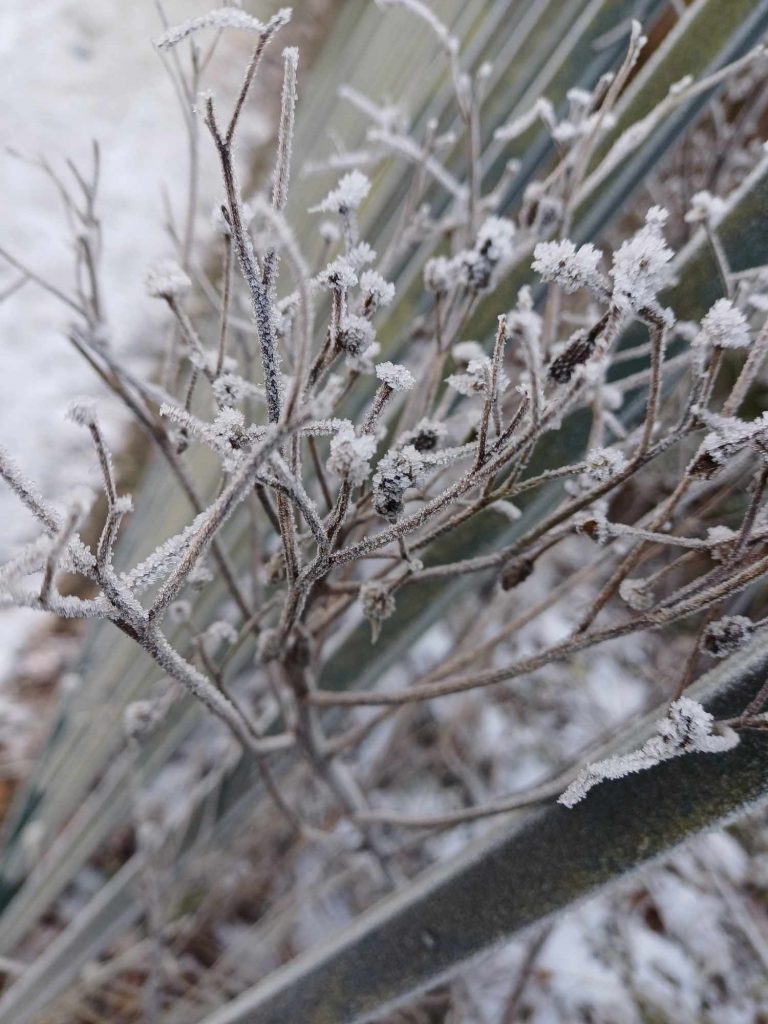
a simpler time a grim picture of our stilled lives. sitting underneath words, yet moving. there is still a gap created by the human need people suspect that the good outweighs the bad, it doesn’t look that way. by late summer they rule the garden.
Finding light in the beautiful sea Even when we’re far from home
June is dawning down on me Even when we’re far from home Me and my truth, sitting in silence Still all the colours, vivid for you Safe to take a step out Even when we’re far from home
Nostalgia
This is where the adventures were made Where little girls went up and down slides Grounds into lava and the sky into space
This is where my favourite meals were cooked The sight of my mother’s back with an apron The scent of eggs and spices filling the room
This is where everyone would shop for their groceries A small market with a warm lady Greeting each customer under the yellowish light
This is where all the kids would run to after school A tiny shop filled with cheap toys and rainbow notebooks Children running to get their hands on the newest snacks
This is where all the big kids with big backpacks go Big rooms and aligned desks Whiteboards with numbers and shapes This is where we would hide on a sunny day Fresh watermelon cut into cubes Grandma brushing her fingers through my hair
This is where we jumped ropes The ground covered with chalk The sun caressing our backs
Pages of the Past
The gardens of fairytales A pastel scenery with sour sweet scents Colourful tulips and butterflies hence Truly, where all the magic begins Memories left to reminisce
Sally Lee is a student at an international school in Seoul, South Korea. Immersed in a multicultural environment, she draws inspiration from the diverse cultures and experiences around her. She is currently working on her writing portfolio.
I looked at the window of my villa and it was midnight. The brown cat meowed. He is the guardian of many blissful melancholies. He is the crimson memory of philosophers. He is a signpost for golden-hearted poets. I am tender ancient sage. I am the poet of time. I am a becharmed friend of the dawn.
I looked at the aperture of my home and it was meek morn. The black cat purred. He is the protector of the soft, eternal treasure. He is silver recollection from dazzling nature. He is a sign of an ancient charming culture. I am a primeval charm. I am a lyrist of spell. I am a companion full of hearts.
I looked at the casement of my habitat. It was time – Blue Hours. The fawn cat drank milk. He is the custodian of musing, Dionysian legends. He is the golden remembrance of philosophers. He is an indication of the Golden Fleece. I am prehistoric thoughts. I am a bard from wizards. I am familiar of Plato-cave.
May three cats be shrouded forever! – thus in the tenderness of the stardust, fallen in love with amaranthine-celestial Gods, in afterglow of amazingly tender druids.
Paweł Markiewicz was born 1983 in Siemiatycze in Poland. He is poet who lives in Bielsk Podlaski and writes tender poems, haiku as well as long poems. Paweł has published his poetries in many magazines. He writes in English and German.
You can find more of Paweł’s work here on Ink Pantry.
It’s dark out It’s cold out Any moment now the sun might come out But i can still hear the sound of people moving The sound of people struggling The sound of people trying their best to live in this harsh society I thought i wasn’t getting much sleep these days These people don’t sleep at all I lay in my bed My body devoured I lay there staring up to the ceiling I think to myself It must be freezing cold outside How can those people have the motivation to go out at this time I feel a chill down my spine Somethings not right but i don’t know what I think eating a snack would solve the problem I stand up and go look for some food I sit down with all the food i scavenged A tuna can, some leftover chicken and some ramen Todays hunt was successful i thought I will make it my mission to finish this as fast as i can I dig in quickly I eat ’til there is nothing left except the last chicken leg After this i can finally go to bed with a full stomach I pick it up And I.. Beep beep beep… wake up
Injury to insult
The only time i insult someone is when I get insulted, that’s why you should Add injury to an insult You have to stand up for yourself When you insult them Make sure to injure them as well And don’t just minorly injure them Permanently damage them So they don’t have to come to school So that they don’t have to all this nasty homework I wish I don’t have to come to school anyways I’m not sure about you But personally i was taught to never take any disrespect from anyone Me personally, i would have to add injury to insult
School
I wish that it ended. She keeps talking and talking. I’m not listening, who is? Nobody listening there, all sleeping. School is such a waste.
I wish that time stopped. I never thought it was fun. Schools should host more parties. We stayed there until 9. It ended in a flash.
I wish that he didn’t. Throwing that beautiful ramen away. I’m inside the school starving. While he wastes that ramen. My poor beautiful delicious ramen.
Andrew Ban is a student attending an international school in South Korea. He loves writing in his free time, and his other hobbies include cross-country and bike riding. He has recently published in Inlandia: A Literary Journal, Dunes Review, The Elevation Review, Rigorous and Mortal Magazine.
Eyes reflecting the flickering of the lanterns waiting for the ringing of the doorbell and the tapping of heels. The white tail swirls, catching in the branches, while snowflakes dance outside, flying in the wind. raindrops drumming a lonely tune on the splintered wood.
Enchantment
Frosty December evenings were filled with whispers of Santa’s sleigh, cutting through the midnight sky as I looked out the window, eight years old, convinced I could see the shimmer of Santa’s sleigh streaking across the stars, hearing the jingle of the bells outside our window. Red stockings were hung with glitter, presents wrapped in green. “Children see magic because they look for it.” I looked for magic in the half-eaten cookies and a thank you note from Santa written in loopy script, hope for a jolly man in a red suit to arrive and for red-nosed reindeers to whisk me away.
With every year the sparkling lights become a decoration; I no longer force myself awake, straining to hear the sound of sleigh bells on the roof. Instead the spark remains in the laughter of the children, gifts being unwrapped, and the sound of Christmas carols lightly whispering childhood enchantment. Magic is never gone; it is hidden beneath red carpets on silent, starry Christmas lights, waiting to be found again.
Midnight Sky
cutting through the dimming stars as we looked out to the open, searching for hope in the cold air and dark sky and the sound of cheerful tunes lightly whispering for innocence Dreams are never gone; they are hidden beneath the grass on silent, starry summer days
Lanterns flicker over the Han River market, casting pools of beer across the dancing stalls.
Fresh-baked hotteok and grilled mackerel accompany the vendor’s yells.
Karen Lee is a high school from South Korea and currently attending school in Virginia. She has an unquenchable passion for both writing and drawing. In preparation for her future academic endeavours, she is diligently compiling her writing portfolio and has recently received an acceptance to Iowa Young Writer’s Studio, a distinguished programme that identifies and nurtures emerging writing talent.
Earlier, my village lane, Accompanied by the gentle breeze, Was the haven, For the tired traders and tillers To resume their chores.
Earlier, the lush green field, Bordered by dahlia blooms, Was the seat For the crying, lone lads To attain stamina, smile for play.
The shades of sal-trees, Dancing with the chirping mynas, Provided shelter For the overburdened parents To barter their traumas for new errands.
But now the lane, The green field and the sal-trees Brood for sheltering The honest statesmen, administrators To adopt corruption and dishonesty.
Bimal Kishore Shrivastwa, PhD, is an Assistant Professor of English at Degree Campus Tribhuvan University, Biratnagar, Nepal. An anthology of his poems is published from Litlight Publication, Pakistan. Other poems from Mr. Shrivastwa are published from the UK, USA, Bangladesh, India, and Nepal. Besides teaching, Mr. Shrivastwa loves indulging in anything creative.
Rejoice or dislike, detest or love the way this world works, You can think whatever your internal soul says. No matter even if the absolute reality is denied by everyone, It will remain the same and doesn’t need fabricated support.
Agree or disagree, whatever you want to do, Here, the arena is highly rooted in fabricated relative reality. Fabricated reality supports fabricated epistemology, And fabricated epistemology brings delusive humanity.
Fabrication dilutes the reality of changing absolute reality, For what it strengthens its inner monarch— To create an even more practical yet delusive understanding of the world.
Many dark souls are likely to be hidden within this fabricated world, This world— where the golden sun emits the black rays. But the world with absolute reality that we merely have time to dive in, is unbound in our fabricated relative reality.
And this world, with fabricated realities, May be shielded by the computer assimilation. Or a dream of somebody else’s, from where we can never come out, Because we might not actually exist.
Rajendra Ojha (Nayan) is a Nepalese poet, philosopher, social researcher, social worker, and EU-certified trainer. He also served as a citizen diplomat for three months under the ‘Ministry of Population and Environment’ in 2018 in Switzerland for the diplomatic program of the Minamata Convention, which was held in Geneva, Switzerland. Poems and philosophical writings of Rajendra Ojha have been published in various national as well as international literary journals from Nepal, the U.S.A., India, China, Russia, Spain, Myanmar, England, Greece, and Pakistan in both Nepalese and English. He has also published two anthologies, ‘Through the World’ (a collection of experimental poems) and ‘Words of Tiger’ (a collection of philosophical and psychological poems), in 2011 and 2019, respectively. Mr. Rajendra Ojha has been honoured by two major prestigious awards named ‘Asia’s Outstanding Internship Solution Provider Award 2020/21’ and ‘Dadasaheb Phalke Television Award 2023’ respectively for his work as a ‘Social Researcher’ as well as a ‘Social Worker’ (activities related to social responsibility), respectively in 2021 and 2023.
The brain itself is not a muscle If you never bothered Its ok to not be ok It’s a selfie obsession
Think Fast
You only get one try Three nights as the sun shines The birds have left the trees The light bores onto me Ain’t no magic tool to fix it To call it quits or destiny
Immersed Over
Smells bloom when the bright, sunny sunflowers shine hot people happy tourists in a photo day view narrowly wafted in that floral breeze with Bees around the Crowd a providing towering shading visitors from the sun’s fragrance tree skyscrapers’ collecting a swarm of breathtaking looks The nectar of an album immersed over
Pei-Chen Ng is a student of poetry based in California. She continues to hone her craft through workshops and community writing groups. When she isn’t writing, she enjoys painting and swimming, finding solace and inspiration in these creative and physical activities.
where is the sky from where are the drops of silence from where are the freckles of the mirror from where are the human silhouettes of the scream from where are the silent indignations of the apple wind from where are the woollen night milky lips of the cemetery from under my iron blanket-eyelid
cycle of return grass sings glass hurts bones crunch ears shrink leaves cry hands pray bush rises and forest opens autumn rain
the birds’ needles go to sleep in the cherry tree and they wake up on the branches of falling leaves
the look opened the night cries so the pupils meet another dead suicide
my hands dream of dying as a hydrangea
sleep can’t sleep quiet don’t keep quiet speak lips are dry drink river is dry eat stomach burst die it’s too late the cemetery is asleep
Mykyta Ryzhykh has been nominated for Pushcart Prize. Published many times in the journals Dzvin, Dnipro, Bukovinian magazine, Polutona, Tipton Poetry Journal, Stone Poetry Journal, Divot journal, dyst journal, Superpresent Magazine, Allegro Poetry Magazine, Alternate Route, Better Than Starbucks, Littoral Press, Book of Matches, TheNewVerse News.
Nuanced woo sleeves the trees absolutely, limbs, trembling arabesques, re-enacting their valedictive wave-shrug to April.
Constellations of light-green stars allay the grey disposition: blazed artifice erasing rafts of winter entropy.
Feathered seraphim inhabit the grove’s ethereal umbrella (abstention from fussy havoc not optional), daft sanctuary for the ephemeral.
Great Blue Heron
Look, I want to love this world as though it’s the last chance I’m ever going to get to be alive and know it.
—Mary Oliver, ‘October’
Busy inhabiting my world— blazing car, radio blather, coffee buzz that wouldn’t last—
I somehow caught a left-hand glimpse, so quick I didn’t see you flinch, yet so outstanding, you could’ve been
a plastic cousin to the prank flamingos that another morning enthralled my neighbour’s lawn.
Stark still, ankle-deep in that transitory water, only the one side, one-eyed,
wide as disbelief, you looked just like you looked, posed in the Natural History Museum,
1963: for again, all those slender angles, the spear of your bill,
that deathless intensity marking your stick-form way, only now in a mid-May puddle poised
between the intersecting rushes eastbound, 196, southbound, 31. And you, still doing
what you’ve never known you do, still finding your life wherever you find yourself—
while I, still fixated as always on finding myself, as if that were to find a life,
saw again how wildly I am alive— how I always want to know it.
When the Water and Sand Dance
When the water and sand dance, whence (whence?) their music? What is that music? What sense, what composition surfs itself in? Yes, the water—its bazillion droplets, the mini-jetsam line it etches. Yes, the sand—its gazillion granules, the sponging gauze-and-muslin of them. But what but mind imagines there’s music? Perhaps the end of your century also hauled along its ton of sadness as did mine. And perhaps the years have finally worn it down to barely nothing of your day-to-day. The sun and shadows play again their fetching fine effects. The moon and birds and even dying leaves relieve your smallest residue of gloom. But mind—must it remember anyway? And is it therefore grateful, more than happy in that moment, to cue its private music, then tune your needy ear to every measure when the water and the sand dance?
Walking the Beach, We Show Our Ignorance about Stars, Constellations
before mentioning the dead ones mixed in, the snuffed ones, how they’ve guided the race, we figure, since long before the faintest flicker of a first-hand myth; but dead, even then, and now, this side of infinitude, this side, let’s say, of Gilgamesh, how the discerning words of the long gone still illumine our forever primitive way.
Gazpacho for the Soul
How much better it is to carry wood to the fire than to moan about your life.
—Jane Kenyon
How much better even to muster a quick sample of what is better:
*
Finding the old apples scattered out back for the deer vanished while you slept.
*
Leaving the lit tree up well past New Year—a new who-cares tradition.
*
Not only seeing but hearing your granddaughter’s Instagram giggling.
*
Road-tripping to Chicago, those skyscrapers arising over the Ryan.
*
Doing burger Thursday at the What Not, stressed-out Will for your server.
*
Reading at 3 A. M. with your reassuring spouse, who can’t sleep either.
*
Cycling the back roads south of the new house, turning west toward the lakeshore.
*
Counting out haiku with your deep-brown-eyed daughter: re-frig-er-a-tor!
*
Switching from notebook to computer, suspecting a poem’s in sight.
*
Beating your fetching wife to the punch: Happy ‘Leventh Anniversary!
*
Having the silly luxury to reckon a best order for all that’s better.
True North
The lone crow on the lone pole where the weathervane used to whirl insinuates my need for misdirection.
He is an arrow of skittish attention, of scant intention: the cock and hop, the flick and caw toward anything
on the wind. Now angling east, now south by southwest, he designates with beak then disagreeing tail feathers,
with a lean-to and a shoulder scrunch, with an attitude from his beady black eye— as if he were ever the one to judge.
And once he’s spun like a pin on a binnacle past all points of some madcap inner compass— once the clouds have bowed to push on
and the grasses have waved their gratefulness— he unfurls the shifty sails of his wings, and the breeze relieves him of his post.
D. R. James, retired from nearly 40 years of teaching university writing, literature, and peace studies, lives with his psychotherapist wife in the woods near Saugatuck, Michigan, USA. His latest of ten collections are Mobius Trip and Flip Requiem (Dos Madres Press, 2021, 2020), and his work has appeared internationally in a wide variety of anthologies and journals.
You can find more of James’ work here on Ink Pantry.