Poetry Drawer: Dios Dame La Fuerza by Clair Chapman


godes

It’s true there is a battle,
But I shall not yet bear arms,
Instead I aim to win you,
With a quiet war of charms.

She knows not of her opponent,
Or even of the threat,
And the amor in my armoury,
Is not collected yet.

But the tools at her disposal,
Are more deadly than a blade.
For my foe has you already,
And she thinks her bed is made.

The battle ground’s uneven,
The odds are in her favour,
She’ll need every scrap of fight,
And all the might God gave her.

For I shall not stop in this life,
Nor even in the others,
And I call to all the Goddesses,
The Gods and all their Mothers.

The ones who know what’s right,
And who I should belong to,
The saviours of my heart,
Who know how much I want you.

I have faith in all their powers,
Even though I am a sinner,
Love, I will have the victory,
But you will be the winner.


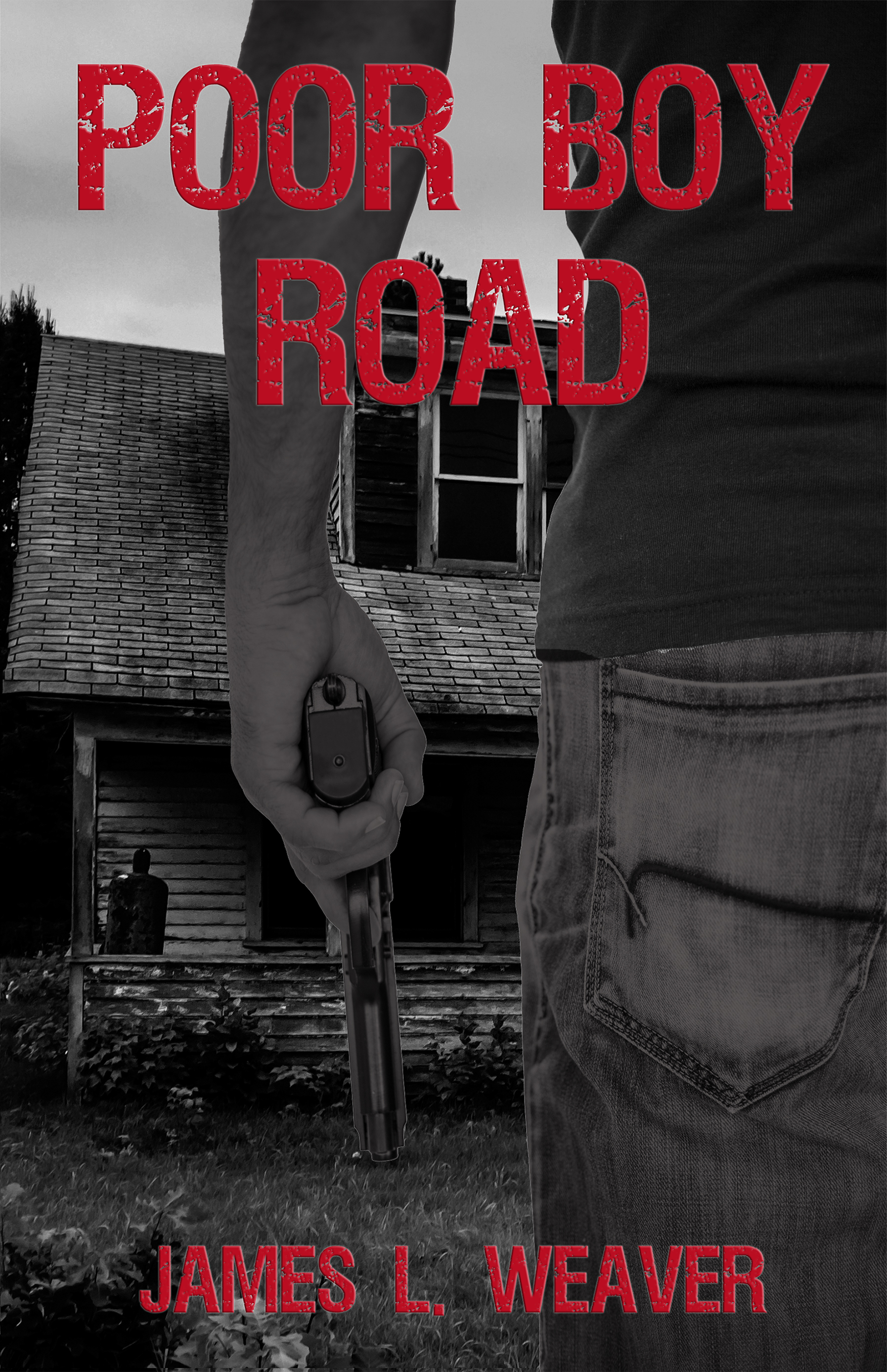
Books From The Pantry: Poor Boy Road by James L. Weaver: Reviewed by Inez de Miranda

PBR

Poor Boy Road is the street where Jake Caldwell, now a leg-breaker for a mafia boss, has grown up. It’s also the place he escaped from, and now, after many years, returns to in this thrilling, emotional, violent and tender story.

Initially, I was reluctant to read this – yet another macho thriller. As I feared, the book started with relentless violence in a hard criminal American environment. And yet, while the violence and general unpleasantness developed I had an odd experience: the protagonist, who was implementing the violence, interested me. Yes, he was the cliché drug-dealer-assisting tough guy, but there was more. Then, just when Jake was preparing to whack his whimpering victim’s kneecaps to useless rubble, he received a phone-call. This call was the start of Jake’s journey back to everything he left behind, and the turn that got me properly hooked.

Poor Boy Road is written mainly from Jake’s point of view, with regular changes of perspective to Willie, a small-time dealer. These different points of view not only help develop the storyline to make it both more thrilling and easier to understand, but they also offer a fascinating peek into the two characters. Jake and Willie have similar backgrounds: both were poor deprived kids in a small American town – and the author very cleverly shows the similarities and differences between the ways they were impacted by this, and how their lives unfold as a consequence of their choices.

Poor Boy Road is a hard crime thriller, with all the features of that genre. Guns, drugs, utterly immoral crime lords and their pathetic henchmen, and a significant amount of violence – it’s all there. But Poor Boy Road is more than that. The main characters have depth, and even though both Jake and Willie have done and are still doing despicable things, their personal emotional struggles are so relatable that I found myself rooting for them. I would have liked to have learned a bit more about the motivations of some of the other characters, in particular Stony, Jake’s father.
Initially I thought that the main antagonist – the drug dealer Shane – was a little too one-sidedly evil, but then I considered that it’s quite likely that he’s more realistic than I’d like to think.

A lot happens in Poor Boy Road. A wealth of characters populates several different plot lines that all intersect and impact each other, but thanks to the easy writing style and clear layout, the resulting complicated story was surprisingly easy to follow. A few plot turns were predictable, but this was not bothersome because the reactions of the characters to the events were just as interesting as the actual happenings.

It surprised me how much I enjoyed reading this book. The concept and setting don’t appeal to me, but the story the characters and particularly the easy, down-to-Earth writing style drew me in to the point that I was sad to have reached the end.

Poor Boy Road offers action, excitement and an engaging story as well as complex characters with relatable emotions and desires and an interesting, although slightly unsettling world. In spite of the uncomfortable topics that this novel deals with, it offers an easy and entertaining read. Even if, like me, you’re not usually drawn to thrillers, I’d suggest you give this one a try – you won’t regret it.

Blog

Facebook

Lakewater Press


Weaver


Inkspeak: The Traveller by Mark Sheeky

icey


Frozen gloves,

crisp with glass

crazed with flakes of transparent wonder.


Snow in cracks on eyebrows bent low.

Light blue eyes look back

at eyes of thunder.


An explosion of mist-breath

curls and dances in cold static air.


Words float like fish

that swim in the winter world there.


”Goodbye…”


The house before is dark brown wood,

roof heavy, with snow and memory.


Each deep look is understood,

as he turns, from ice to sundown’s flood.


Pantry Prose: The Twilight Band by A.K Hepburn

twilight

The first time they came to visit Meggie, she was fast asleep in bed. They hovered outside her window, speaking to each other in low, chattering voices, before sliding their thin spindly fingers under the frame and lifting it open. Meggie awoke to a cool breeze upon her face.

As fresh air began to make her feel a little more awake, she felt a very gentle weight settle on one of her legs; then another and another. She sat upright in surprise. In the darkness she could see three little, glowing figures perched on top of the quilt.

“Who are you?” she asked, frowning, without any real reason to suppose that the creatures should be able to answer. Yet when they did, it seemed to Meggie to be a perfectly logical thing for them to do.

One of the creatures rose up on wings that looked like skeletal, decaying leaves. “We are your friends, Meggie,” said the creature in a light, papery voice. “We have been your friends your whole life. Don’t you remember us?”

Meggie considered this for a moment. She was sure that if she had ever met such unusual creatures before she would have remembered it; and yet now, looking at the strange trio, she felt a sense of familiarity. It was much like when you dream of something, forget the dream, but then have some reminder of it the next day, and the imprint of it drifts through your mind like smoke. Meggie recalled playing in the falling leaves under the big oak tree in the garden the previous autumn and then imagined the creatures dancing in the air around her.         She cocked her head to one side and looked at the creature inquisitively. “Yes,” she said slowly. “Yes, I think I do remember you.”

A low chatter of apparent concurrence issued around the creatures. Another of them rose into the air in front of Meggie. She thought perhaps that this one was boy, if such a thing were possible. He came closer to her face than the first, and she saw that his skin was green-brown in colour and the texture like that of moss. His face was quite ugly.

“We have brought you a gift,” he said with a slight bow and swept his hand in the direction of her dressing table, where Meggie now noticed there to be another faint glow.

She pulled back the covers and tiptoed on bare feet over to the table. On it laid a circle of silvery metal with several tiny beads threaded onto it. The light was emanating from the one in the centre.

“It’s beautiful,” gasped Meggie, and suddenly two of the creatures swooped over and picked it up between them, fastening it around her neck.

The boy-fairy, who had remained behind now spoke again. “There are seven beads,” he said in a flippant tone. “The centre one, as you can see, is now filled with starlight. Every night, another of the beads will become infused with it. On the seventh night, the final bead will light up and then we will return bringing an even greater gift.”

The other two creatures hovered by the open window now, and the third swooped over to join them. Meggie thought they were about to leave, when the boy-fairy turned around with a thoughtful expression on his face.

“Of course,” he said offhandedly, “you must take care of it until then. There’s no telling what the Magic might have in store for you if you don’t.”

Before she could ask any questions, they were gone through the window. Meggie felt excited, but had suddenly become very drowsy. She clambered back into bed, and before she even had time to take another look at the necklace, she was fast asleep.

*****

The next time Meggie awoke, daylight was streaming through the window. It took her a few moments to remember the night’s events, but when she did, she quickly felt about her neck to see whether she had just been dreaming. When she felt the metal, she sighed in relief and happiness. It was real! She felt behind her neck to undo the hook. It was very stiff, but eventually she managed it. The whole necklace was a lot lighter than she remembered.

She took it from around her neck, and to her shock saw nothing like what she had expected. Instead of the beautiful silver curved torque with the star-shine glinting in the middle, she had removed from her neck a bent and rusting length of wire, crudely bent to form a hook at each end. Threaded upon it were not beads of metal but seven mangled wine corks. She shook her head in disbelief and disappointment. However, she did not have time to dwell upon the matter, because at that moment she heard her mother’s footsteps coming up the stairs.

Without thinking, Meggie shoved it under her pillow. Her mother came in and tutted at the open window, saying she’d catch her death at this time of year.

Meggie didn’t think about the necklace again until she went to bed that evening. A few minutes after she had settled herself down to sleep, she remembered, and immediately snatched it from underneath her pillow.

To her great amazement, it had transformed again: the rust was gone, and the metal had regained its silvery sheen and elegant curves. Two of the beads now shone with an unnaturally bright light. Meggie smiled gleefully at her good fortune, and for a long while she sat gazing at her treasure, occasionally glancing up at the window, wondering whether the creatures would come back, although they did not. Eventually Meggie placed the necklace back underneath her pillow and went to sleep.

The following four days and nights passed in much the same way. During the day, the necklace would resume a mundane appearance, whilst at night time it would regain its beauty – each time another of the beads becoming lit. By the sixth night, so much light was being emitted by the necklace that Meggie’s bedroom was almost as bright as in daylight. Meggie put on the necklace and sat down at her dressing table admiring herself. The strange light cast a serene glow upon her face, and to Meggie she seemed a lot less plain; perhaps even beautiful. She sat there for some time, before going back to bed.

On the seventh day, she set the necklace beneath her pillow and went off to school as usual. There was a strange knot in her stomach, which Meggie put down to excitement over what the night would bring. She felt nervous with the anticipation of what the “even greater gift” could be.

That night she sat up nervously in bed, waiting for the rest of the house to go to sleep. When everything was eventually silent, Meggie went to extract necklace from beneath her pillow.

It wasn’t there.

Panicked, Meggie searched the room – in the drawers, under the bed – in a vain attempt to locate the necklace. All the time, the parting words of the boy-fairy echoed around inside her head: You must take care of it, he had said. There’s no telling what the Magic might have in store for you if you don’t.

Meggie suddenly wondered if her mother had been into her room during the day. What if she had found the necklace? What if she had mistaken it for a piece of rubbish and thrown it away? Without a second thought, Meggie tiptoed out of the room as quickly and as quietly as she could and headed downstairs to search the bins. She had to find the necklace before the creatures came back!

After no success in the kitchen, she slipped through the back door to search the dustbins outside. It didn’t take long; as soon as she opened the lid she saw the unmistakeable item resting right on top of the rest of the rubbish – a rusting, twisted piece of wire, threaded with battered corks.

Meggie picked it up, feeling helpless. Where had the starlight gone? Where was the silver?

Something changed in the air around her, and she knew she was no longer alone. Twenty or thirty of the creatures hovered, chattering around her, with the boy-fairy (or one very much like him) at the fore. Meggie could see that his face was furrowed and angry.

“I don’t know what happened,” she cried. “Where has the starlight gone? What can I do?”

The papery voice of the boy-fairy sounded very harsh and rasping now. “You have failed, us, Meggie,” he said, darkly. “You would have had so many gifts. So many beautiful things. But you must come with us now.”

Meggie could tell from the tone of his voice that he did not mean for a short stay or a pleasant purpose. “What about my parents?” she protested. “They will miss me. They will look for me.”

Something of a sneer embarked upon the boy-fairy’s lips. “They will not miss you,” he replied. “They will not find you. Not where we are going.”

Meggie saw something move in the shadows. A figure was emerging; a familiar one. The further protest she was about to make died on her lips. The girl was her exact replica in all ways but two – her expression was completely blank, and her eyes distant and otherworldly. A few of the creatures guided the girl towards the open back door, and Meggie’s move to stop her was halted by the rest of the creatures flying around her in a swarm, driving her towards the trees at the bottom of the garden.

*****

The next morning at breakfast, Meggie’s mother vaguely noticed that her daughter was wearing a silvery beaded necklace that she had never seen before. It seem to give off a faint sort of glow, she mused, although of course that was quite impossible. She was about to comment upon it when Meggie smiled, so beautiful and captivating a smile that her mother quite forgot what she was about to say.


Inky Interview Special: Poet Jim Bennett by Kev Milsom

JIM

Hello Jim. Many thanks for agreeing to this interview. I’m sure that our readers will benefit greatly from your extensive experiences within poetry and creative writing. Can I start by asking you about the earliest foundations of your writing? Were English & English Literature subjects that came naturally to you at school, and who were your very first creative & literary inspirations?

I was adopted by a working class Liverpool family that had no educational expectations for me. I managed to live up to that by abandoning school from the age of eleven. I seldom went and when I did it was in the front door and out of a window. I hated school because I was bullied mercilessly by pupils and teachers but I loved learning and had discovered what I wanted to do at about the age of seven, when I read a book of poetry. I went to my dad and told him that I wanted to be a writer. He thought about it seriously and instead of dismissing it suggested that the way to be a writer was to first read, and that is what I did, and still do. He gave me a notebook and suggested I wrote down things that I thought were well written; this included words I had not come across before and phrases that I thought were very descriptive. So in all respects, my dad provided the seed of my first creative development. I tried to read everything that came to hand. I still do that, and these days average about forty novels each year, 200+ books of poetry and as many poetry journals that come my way. I often wonder how he had thought to give that advice as he had left school at thirteen to work as a tea boy on the docks in Liverpool and hardly read a book in his life, but his insight helped me lay the foundations for my writing. Although I like to recognise quality in what I am reading, I probably learn more from weak writing. That first book of poetry I had read was by John Betjeman, and his publication a few years later of Summoned by Bells kept him very high on my reading list until I discovered Beat and the New York School and moved away from traditional poetry.

In my ’60s & ’70s school days, I remember poetry being largely devoted to the works of Shakespeare and Tennyson. When I heard a poem by the Liverpool poet, Roger McGough, aged eleven, it blew my mind open as it felt like he was talking directly to me. Could you share some words on what it was like to be a part of the massive Liverpool creative scene in the 1960s, and to be writing/performing poetry with a very distinctive, ground-breaking style at such an early age?

For me, the Liverpool style in the early 1960s was much diffused, but became more focused after the arrival of Allen Ginsberg in 1965. I was thirteen when he came to Liverpool on a reading tour, and stayed there for a short time. I had started going to readings in O’Connor’s and other places, long before I was old enough to do so, taking the floor with my early poems – a couple of which have hung around. Roger and Adrian Henri were often there, but they were just part of a much larger scene I was involved with, including music, poetry and spilling over into all aspects of performing and visual arts. So when Allen Ginsberg said that Liverpool was ‘the centre of the creative universe’, there were not many who would have disagreed with him at that time, certainly not me. His visit was during one of my long absences from school, so I was able to hang out and listen to the dark conversations related to Beat; what it meant, how to capture it, bottle it, smoke it, etc. When Allen left Liverpool, he took a lot of people with him to attend the first big Albert Hall poetry event in London. As I was so under age at the time, I was not able to go. It was this event, captured in Peter Whitehead’s documentary ‘Wholly Communion’ that changed the perception of poetry in the UK and began the process of redefining poetry and its relevance.

As for myself, I performed in many of the open mic events around Liverpool and was invited to read in featured spots at some. I was also involved in the folk scene and went to many of the folk nights, still prolific due to the British Folk revival, which again Liverpool had taken to its heart. The other thing to be remembered is that ‘performance poetry’ was ridiculed by many in the poetry world and thought to be trivial, or of little value. Even the Liverpool Poets who had been included in two major anthologies that helped them break through (McGough, Henri and Patten) had a struggle to be taken seriously, and the word ‘popular’ was often applied in an arch way as a put-down.

Even back then I was experimenting with delivery styles and I had a vision of the spoken word as akin to a song without music. I saw poetry as part of the folk scene, a way to engage with an audience with words, and even today I still think about it like that and it continues to inform the way I perform my poems. I sometimes get told that I deliver too slow, or too fast, or exaggerate a pause, but in fact I am delivering the words to an internal melody that I think goes along with it. I can also point detractors to the fact that I have won numerous slams and awards for performance.

Could you share some thought with our readers about the processes involved in the construction of your poetry, Jim? 

Most poems start with the germ of an idea, something seen, heard, remembered, and I collect those together. But then I have to decide what the theme of the poem is to be and how the elements I want to write about will approach the theme. Just as an aside, this is the root of ‘show don’t tell’, as the various elements of the poem need to be informed by the theme. Quite often the theme will not appear in the poem at all although taken as a whole that is actually what the poem will be ‘about’. I look for juxtaposed elements that will bring something new to the idea or illustrate it in a different, unusual or surprising way. I then over-write the poem getting the general feel for it, when I believe that it is approaching the ideas I want to engage then I start to reduce it. This process continues until I have the raw structure of the poem. At that point I start to consider the final form it will take. I have, of course, simplified the process here, but generally some aspects of this process are involved with every poem I write.

The exception to this are commissions; poems written to order or for a specific purpose come from the root idea provided in the commission. I enjoy commissions and see them as a challenge. I also enjoy working with other poets and I often work on collaborations with a friend who is a very fine poet. When I am conducting courses, I feel it is only fair that when I set a task for students I should do the same. So I do have a lot of stimuli and write a fair bit.

Are you a spontaneous writer, whereby inspirational thoughts have to be completed while you are creatively ‘in the zone’, or are you a writer who likes to mull and ponder over ideas, editing and refining them over time?

Well, both at different times, is the only truthful answer. At one time, back in the late 70s, I morphed into a punk poet, and for a while MC’d at Eric’s Punk Club in Liverpool. At that time, I would spontaneously generate poetry improvised from words shouted up by the audience. I carried on doing it in performance for years, and sometimes the results were better than others but it was always entertaining. The results were awful but, thankfully, the nightmares they left behind are fading now. To give a flavour of this, I did it at a reading a year ago. I was challenged (by my son) to see if I could still do it, and it was recorded. And this is it, written down exactly as said with the addition of breaking it into lines and stanza. No further alterations have been made. It has lots of faults, but I was interested in the subtext that in some ways must inform a lot of what I write. So here it is warts and all.


I started writing this on the day I was born

language came and books read

sixty years of sunsets and smiling at strangers

walking maps and dreaming

as I watched my children play this poem grew


and the words settled somewhere

with images of life like protein photographs

of all the people in my life that mattered to me

and the places that I lived and the ebbs and flows

that brought me to this place to write some words


that come in an instant and let me say this is poem

dedicated to everyone who helped me make my way

you are there between the lines with all my life

with everything I came to be

whoever you are perhaps you will know


these are the spontaneous

thought as I touch the cave paintings of my childhood

and the hieroglyphs of adolescence

the monuments of my later years

before they crumble into dust


I have never developed this further but may do so at some point. At the moment it stands with its flaws. This was created in the moments that it took to say it, and the ideas it generates touch on all my writing I think.

More generally I prefer to craft a poem. Develop it and take it through generations to a final product. Poetry is and has always been a way to explain how life works, the big themes, and this is as true today as it was when Donne was writing. The ethos of teaching literature has changed and the available texts have also expanded. Fifty years ago, Hughes and Heaney, although alive and writing at the time, had not broken through into the public consciousness. We have also seen the cross pollination of culture through multiculturalism, so this has also broadened the available texts. For me, though there is still a problem with some aspects of teaching poetry, I think more care should be shown in the selection of texts as popular does not necessarily relate to exemplar.

Can I ask for your personal thoughts on how poetry has changed within the last fifty years? Do you feel that the breadth and range of poetry taught to students has expanded during this time, especially compared to the poetry and literature that children/students were exposed to in the first half of the twentieth century? 

The teaching of poetry in the first half of the 20th century was also supported with a grounding in classics, which made the poetry more relevant to the curriculum. Later, as teaching became modernised and moved away from the traditional method, poetry had less relevance to both teachers and pupils. For me, poetry becomes relevant when the teachers encourage the students to question it in different ways. A poem is a map to an unknown land; what the poet intended is mainly irrelevant, and the students should be encouraged to find their own path to what it means to them. Approached in this way, a poem is an adventure and an expression of creativity by both the poet and the reader.

University courses are a little different. Courses in creative writing and poetry have become very popular in recent years. Many focus on the students’ self-analysis and the production of a portfolio, with the emphasis on some courses being towards the linguistically innovative. In my courses I tend to steer towards the Black Mountain Poets, New York Poets, Imagism and, of course, Beat, together with the Modern British Movement. Many of the online courses I offer through the Poetry Kit (www.poetrykit.org) attract poets of all standards, from beginners wanting to see if there is anything in poetry for them to experience and well known poets who want to give their writing a boost. My starting point with all courses is to find great poems that the student has not read before.

But back to your original question, the start of it asked how poetry has changed in the past 50 years, and for me the main change has been the internet. This has allowed many more poets to find a medium for sharing their poetry; the result has been an explosion of outlets for poetry, and as long as you never expect to be paid for it or for it to be read by anyone, then the world is your bivalve mollusc saltwater clam. If you just want to be published and call yourself a poet then you can, someone somewhere will publish you, or if not you can do it yourself.

Wider development of poetry is also evident in popularity of open floor events, which give much wider opportunities for poets to find an audience.

Poetry in the centuries up to and including the early 20th Century basically followed trends and styles, so you had Romanticism, Symbolism, Imagist, and Modernism. But once you get to the mid and later part of the 20th Century, the proliferation of styles broadens so that there is no real dominant style. Elements of all of those previous styles persist together with Post-Modernism (a catch all for many different styles of linguistically innovative poetry), Confessional Poetry; the list goes on and on. In many respects that makes it a very diverse and interesting time to be writing poetry.

As a teacher of Creative Writing, what are the most important lessons that you seek to get across to young, enthusiastic writers, Jim? 

This is very difficult to answer because there are as many answers as there are people. If someone is taking a course then their enthusiasm for the subject should be taken for granted, though it will express itself differently for everyone. The big problem is to try and guide without blunting that enthusiasm. I suppose the things I find myself saying mostly relate to craft, which is a distinct part of the writing process. Bringing the ideas together that help create the poem or other text is only a small part of the overall creative process. This is the point at which many people stop, thinking that the piece is done but really what should follow is the hard work that enables the writing to reach its potential and its audience, and this means possibly rewriting, revision, editing, tweaking.

I believe that attention should be paid to the tools we use, the most important of which are words. So reading is as important as writing; explore how people use words and find the best word for the job in hand. Listening to the rhythms of speech and how one word sits with others. This does not mean using the most obscure word; for me, the simplest most direct way of saying something is the best, but knowing a variety of possible ways to present what you want to say allows you to explore the possibilities available to you. Having a limited vocabulary limits the way you can express yourself.

I also ask writers to work within limitations of form so that they can learn about how the right words can be used to achieve an effect, so sonnets, villanelles, pantoums all have a place in the development of a writer who is serious about their craft. Doing these as challenges and bringing in some fun elements without being too serious about the outcome seems the best approach. Many poets who work only with free form try to dismiss fixed form as no longer relevant to them, but really there is so much to learn from using fixed forms. It is a bit like an artist painting in oils using a limited pallet, not through choice, but because they do not know about the missing colours. Using a similar analogy, an artist like Picasso first learned to paint in very traditional forms before setting his creativity free; the same is true of Van Gough and many others. So for a poet, even if they intend to write exclusively in free form, learning to manipulate lines through the use of fixed forms can help to develop skills in word selection and use, phase and line to best effect.

Another important aspect is reading good poetry by great poets. There are many to choose from but the ones I always recommend are Bob Dylan, Billy Collins, Charles Bukowski, Frank O’Hara, Allen Ginsberg, Emily Dickinson, Gertrude Stein, Robert Frost, Ezra Pound, Wendy Cope, Liz Lochhead, William Carlos Williams, Elizabeth Bishop… (the list changes depending on the needs of the students and the course.)

From reading a selection of your poems, Jim, I’m immediately struck by the wealth of detailed, mental images that start flowing into my mind. For me, your words have a powerful ability to make this happen. Are you artistic or creative in other areas, such as art and music, and/or do you take pleasure & inspiration from other creative arts?

I do write songs and have done since I started. In fact, the very first thing I ever wrote was a song. Visual art, film, plays are all part of the input that helps me relate to the world. I have written many ekphrastic poems and poems with intertextual relationships to a broad cultural base. If you live in the world and have an interest in hard and soft culture, it is difficult to get away from those influences, and I don’t think I would want to.

I would also add in science, the natural world, and perhaps the fundamental aspects of cosmology, understanding time and our relationship with it. Philosophy and psychology are areas I have studied, and I see the influences of those in my poetry, although I must say that I do not proselytise or try to foist any philosophical viewpoints as that is not the purpose of what I do.

When it comes to writing, do you have a specific location where your creative inspiration feels happiest. Also, are you a writer who feels happiest typing on a computer, or someone who utilises a variety of notebook and pens?

The simple answer is no, I keep to a writing schedule and write wherever I am. I do not have much truck with ‘waiting for inspiration’. For me, that is an excuse for a day off. My problem is forcing myself to stop writing. There are clear and easy techniques to ensure that I am ready to write, and I keep to those. I keep a PUKA PAD notebook with me at all times together with a small pen and this is used to jot down odd ideas, words, conversations, things seen, anything really that takes my fancy. I also collect things, postcards, odd things that pique my interest.

I usually write for several hours each morning, and later in the day deal with correspondence. Most writing starts as notes in my notebook, and it is when ideas start to coalesce that I use a computer.

Poems such as ‘Radio Days’ and ‘It was November’ create a wonderful pathway back to your past memories which, as a writing student, fascinates me by the glorious ease in which you make the words come to life. Is there an aspect of writing that you find positive and therapeutic, Jim, and is this a ‘spark’ that compels you to keep maintaining the creation process? 

Thank you for your kind words, but the answer is no, there is no therapy in writing for me. I am not even sure what that really means. Poetry described as therapy or ‘heartfelt’ is usually a turn off for me. I made a career choice to be a poet and that is what I did and continue to do and I have never really done anything else. All my life experiences, and that includes direct experience and those things assimilated through reading, watching and listening, are all just grist to the mill of my output. I wonder, having written that if it is true or not, but consciously that is how I think it is. I do find it satisfying to be able to earn a living at something I would do anyway and I love being involved with the facilitating of courses. Since 1997, I have been involved with the Poetry Kit website (www.poetrykit.org) and that explores new poetry through the Caught in the Net series, and keeps me in touch with competitions, awards and new magazines.

I’d like to thank you again for sharing your thoughts with our readers, Jim. It’s been a personal joy to read some of your work and to learn from it. In conclusion, could you share some thoughts on what has been inspiring you to write during 2016 and are there any major writing plans for 2017?

I finish between six and twelve poems each month, sometimes more, sometimes less, then after I have the basic poem, I leave it for a while then return to it after a few months and see it to completion, so I hope to continue to do that. I have a suggestion for a pamphlet from a publisher, and I am working on an edition of selected poems for US publication in 2017. I enter competitions and submit to journals each month so I hope to carry on in the same vein. I also enjoy readings and although I do not often turn up at open floor events, I am happy to get invitations and try to accommodate them when I can.

Poetry Kit

Indigo Dreams


Lyrical Craft: Martin Rivers from Different Skies

Different Skies Front Hi

Can you tell Ink Pantry the story behind Different Skies? How did you all meet? What is the meaning behind the band name?

The band came together as a result of recording the album Different Skies. That is a solo project on which I played all guitars and sang. I invited other people to take part and this formed the basis of the band. The band name is eponymous coming from the title track of the album. It is a very personal song about how two people can diverge and end up going their separate ways. It is also about coming to terms with that experience.

You like progressive music. Which band do you admire the most and why? What is it about the style of prog that appeals? Are lyrics important in prog, or does the music speak for itself?

Steve Hackett for the simple fact that he stuck to his guns after leaving Genesis and ploughed his own furrow. Good on him I say. Marillion because again they didn’t give up and created their own business model.

Prog as a movement incorporated a fusion of styles mainly rock with classical influences, but having said that, some artists drew upon other genres, such as folk and others were decidedly avant-garde. Some bands were and are more lyrically adventurous. Pink Floyd were always more politically savvy, whereas early Genesis were more whimsical and Yes were downright surreal. It was a genre the critics loved to hate. It depends on the band whether lyrics are as important as the music. With a band such as Marillion, the words were always very important right from the word go.

Have you written lyrics from a young age?

I started writing lyrics a later than most, probably in my early twenties. It was a long time ago.

Which songwriters have inspired you?

It’s very hard to pin it down to specific individuals. I have listened to everything from reggae to soul, punk to prog, hard rock to folk and pop. It all ends up in the melting pot of the mind. Greg Lake is one songwriter who was an early influence, but through playing covers I have been exposed to a lot of others.

What do you care about? What themes keep cropping up in your writing?

I care about people, and although I wouldn’t call myself a Buddhist, I am trying to live my life by those values. Sometimes it’s not that easy, but I find meditation helps get ease of mind!

Dreams and the weather seem to be recurring themes. There are also songs that reflect major life events like the break up of a relationship or the death of a friend. The best songs arise spontaneously. One that I wrote recently was about problems with anxiety that I encountered about a year or so ago. I was very proud to have played that at a charity fundraiser for MIND.

What is your creative space like?

Very, very, untidy although I have now had a mad “tidy up” and I can actually see the floor!

Do you like poetry? Is it similarly to songwriting?

There are similarities but also significant differences. With songwriting you also have the tune to consider. With songs you can create some interesting contrasts by pairing dark lyrics with  a light melody and vice-versa. A good example of this “Every Breath You Take” by The Police, which often gets played at weddings, but is in fact about a stalker! I have to confess that my exposure to poetry is limited, but I am appreciative of the written and spoken word.

Which book influenced you the most and why?

Oh dear, I’ll satisfy every prog rock cliché now and say that in my early days it was Lord of the Rings; and that was because Professor Tolkien drew upon Anglo-Saxon mythology to create a credible world of his own. Sub-creation I believe he called it. I also found the early Terry Pratchett Discworld novels enjoyable for their subversion of the genre and as a vehicle for satire; and of course Fritz Leiber who provided a lot of the source material for Mr Pratchett. Last but not least Douglas Adams who gave us the Hitchhikers Guide to the Galaxy.

Nowadays I tend to read factual books rather than fiction. The last one I really enjoyed was Attention All Shipping by Charlie Connolly, where the author took a journey around the shipping forecast. This in fact was a vehicle for exploring both history and culture. It’s quite fascinating to find out what is on your doorstep.

Have you any other future projects?

I am currently working with a very good singer by the name of Jaqi Kidd. We are in the process of writing songs together and building up a set list. We recently played a gig at Ethical Artisans which went down extremely well and we plan to do more recording and performing. The adventure is in what comes out of that process.


Facebook

Reverbnation

Artwork by Wendy Jay Roberts


Inkspeak: Love Letter To Heathcliff by Deborah Edgeley: Guitar by Dave Hulatt

wuthering pic


Night.

On the moor.

Ragged as you were.

I saw you

through the cracked window,

where my dead hand touched yours,

where my name was etched in three on the wooden desk.


Your dark long locks fought the wind,

like your soul.

Heathcliff.

MY Heathcliff.

You destroyed everything…..


Yes, I became a lady, yet,

I loved Edgar, not.

It was always you…


Your face I saw

when I tangled in flesh,

trying to make a hybrid us,

with the wrong man


You walk this earth without me, yet,

I walk with you.

In you.


I look into your eyes of pain,

and I weep,

until you return to me.


Poetry Drawer: Pillage and Rape by Faye Joy

empty nest

Five mottled sparrow eggs cushioned inside a breezeblock

with strips of my garden raffia, twig slivers, moss

and odd wing feather sentinels. It is shoulder height.

We tiptoe along the chemin to our plots, smiling, curious.


Today, nesting lies rag-strewn over rough ground,

the breezeblock hollow, empty, black. A baleful pall

hangs in the air, its solicitude unbidden. Then –


I hear cries and flapping wings, a duck fires a volley,

sculling low, seeking to evade three drakes in pursuit..

She rests a moment, the drakes encircle. Her protestations,

her body, are smothered in the long field grass. I wait

until her shaking head comes into view, then turn,

passing marguerites, buttercups and the empty nest.


Inkspeak: Falling Man by Mark Sheeky

falling man


What is that thing,
that flutter of black,
against a white-grey sky
of thin nothing-winter air.
Flickering like a dying bat,
a shattered umbrella thing, falling
down, pulled
to Earth, a man.
A man arms waving
in a panic, a man
flapping, drowning in air, a man
plunging alone
in the cold air
far away,
seen from afar.
Seen.
I see him, in silence,
the falling man.