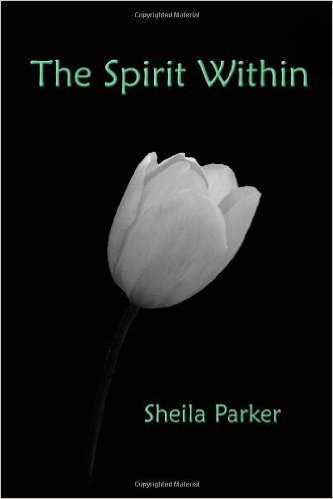
Books From The Pantry: The Spirit Within by Sheila Renee Parker: Reviewed by Kev Milsom

Spirit

  ”Cassy, you’re a really good student. You have a lot of potential to do really great things. Just don’t get distracted, okay?” he said in a sturdy voice.

   ”What do ya mean, distracted?”

   “I think you know exactly what I’m referring to,” he insisted, while staring over my shoulder at Amber. She didn’t seem to notice because she was too busy playing with her cell phone.

    “I’ll be okay,” I said.

    “I’m sure you will, Cassy, but just remember that those who work harder in life get rewarded a lot more than those who don‘t.”

    “Huh?” He confused me. I had no idea what he was talking about.

    “What I’m trying to say is that persistence is effort and I know you’ll go far if you don’t let certain influences get in your way,” he said, not losing sight of Amber.

    “Thanks, Professor Stone, but everything’s gonna be fine.” I smiled as I tried to reassure him.

    “It’s your future. Don’t let anyone interfere with that.”

    “Yeah. Sure. See ya Thursday.”

Although I’m well past the expiry date and my memory is admittedly not what it once was, I’m reliably assured that life as a late teenager can be a confusing time.

This is certainly the case for Cassandra Blakemore (known to everyone as Cassy) – the central character in Sheila Renee Parker’s debut novel, The Spirit Within. When we first meet Cassy, she struggling to cope with various aspects of everyday life in the town of Fairview, Texas; notably her schooling and the frustrating qualities of a best friend called Amber, (mentioned in the above quote), who believes that life should be less about taking it seriously and more about parties, boys and more parties. On top of this, Cassy also has to cope with growing up with the loss of both parents, a well-meaning, but interfering, Uncle called Mitch and coping with her ‘gem’ of a boyfriend, Raleigh Nichols, who likes to drink…and then drink plenty more.

While this would be considered enough for any young soul to deal with, new and odder challenges begin to materialise, when Cassy begins to experience unusual sensations of a paranormal nature which begin to impinge upon her life. When these mysterious happenings put a strain upon her relationship, Cassy is faced with a stack of unwanted questions and some important decisions that have to be faced up to.

The story is told in a first person narrative, which adds considerable weight to the protagonist in this novel. While there is a lot of dialogue throughout the book, the author makes sure to keep events moving along nicely. To aid this, the chapters are each of a reasonable length – each beginning with a simple description which sets the forthcoming scene. This all ensures that the reader is kept firmly attached to the plot as it moves along and allows for good rhythm and pace. The introduction of the ‘weirder stuff’ is gradually introduced and keeps the reader intrigued by what direction(s) the book is going to be travelling in.

This is a key issue with the The Spirit Within as the balancing, juggling act that is required to maintain the central themes associated with growing up, dealing with relationship problems and terrifying paranormal vibrations is a writing challenge that’s certainly not on the easy scale of difficulty. Sheila Renee Parker manages to combine these foundation issues well, adopting a solid writing style which allows the reader to relax into the book and just go along with the literary ride, meaning that when the surprises do occur the reader is not left staring at the page and wondering what just occurred. We know the characters well, because the author has put a lot of work into making them as three-dimensional as possible.

This is certainly a book that younger readers in their tens and twenties would enjoy, but also one that appeals to anyone who relishes tales associated with the paranormal. It’s also clear that the author has done her research into these topics, which furthermore adds a sense of realism to the plot, with forays into ESP, psychokinesis, premonition and more.

A perfect book for the beach, in what’s left of our summer.

Get your copy here 🙂

Poetry Drawer: Soulless Puppet by Elaine Snelson

puppet

Dance to the tune of a satanic fiddle,

Sinew and tendon plucked with pleasured zeal.

Mimic the motions of a soulless puppet.

Temperate, obliging, self assured.

That to be of use

is to exist…to be real.


Turn your cheek against the blindingly obvious.

Protect a fractured sense of worth.

Feeling totally insignificant

against the seductive mask of sincerity.

Crushed, defenceless and hurt.


Inky News: Event: Symposium on Mildred Taylor’s Roll of Thunder, Hear My Cry by Sarah Layzell Hardstaff

mississippi

It’s no exaggeration to say that one of the most exciting moments of my life was receiving the course materials for the Open University’s EA300 module in children’s literature. It was the start of an epic quest that is still ongoing as I work towards my PhD in children’s literature.

One of my favourite things about EA300 was the balance of classic and contemporary children’s literature. One notable novel on the course list which falls into both categories is Mildred Taylor’s Roll of Thunder, Hear My Cry, now in its fortieth year in print.

mild

I’m currently helping to organise a symposium to celebrate Taylor’s novel, which will take place on Friday 23rd and Saturday 24th September at Homerton College, Cambridge. We’ll be taking Roll of Thunder as our starting point for wider discussion on children’s literature, literature in the classroom, and issues such as diversity, representation and authenticity in books for young readers.

We’re also hoping to bring together a broad group of people to join in these discussions, so whether you’re a writer, teacher, student, academic or librarian, why not come along?

You can find out more about the event here:

http://www.educ.cam.ac.uk/events/conferences/rollofthunder40/


Inky Articles: Berenice Smith on Page Design

B book


Berenice Smith is a print and digital designer with a Masters in Graphic Design and Typography. She runs her own design practice in Cambridge (http://www.berenicesmith.com/) and is a partner with Dialogue (http://www.dialoguecreative.co.uk).


We often judge books by their covers but many readers forget to pay attention to the page design. Unlike the shining cover, the page design carries the bags of words, gently helping the reader through the information inside. Dr. Watson to Sherlock’s start, if you like. Just like Watson, it should be reliable, quietly invisible but occasionally challenging. I have been reading The Shock of the Fall by Nathan Filer. In this fascinating first person narrative, the changing format and typography is part of the plot. Many readers and writers are astonished to know that a designer even touched the inner pages. But yes, we do! Even e-books. A reference or educational book requires more navigation and perhaps a ‘how to use the book’ section. Clear titles, section headings and features. Designers will select typefaces according to the hierarchy of content. How the format works in print and the transition to an eBook is an important consideration too. What does the designer do and how can you apply it to your book?

Technical details. A designer will consider the trim of the page and the number of pages. Your printing method and budget may decree a certain number of pages and your designer will keep this mind when looking at typefaces (as different fonts are not equally sized) and overall page sizes. A good designer will know the differences between different printing techniques such as litho and print on demand and how this affects colours and photos.

White space. Margins and gutters (the gap where the book is bound) matter even though they do not contain any text. Does the text require two columns? What is a suitable line length? Does the text have any extracts and should these require indenting? How does this white space affect the balance?

The typeface. I believe that the typeface used in a book can decrease or increase the enjoyment of a book. A book may require more than one but getting the balance right is critical to the success of the page design. Incidentally a typeface is a set of typographical symbols and characters. It’s the letters, numbers, and other characters that let us put words on paper (or screen). A font, on the other hand, is traditionally defined as a complete character set within a typeface, often of a particular size and style. Fonts are also specific computer files that contain all the characters and glyphs within a typeface. • Way finding. Navigating a book can take the form of running heads, folios, page numbers, sets of features such as quotes, tips, mapping end notes or footnotes.

Prelims and endlims (also referred to as front and end matter). Fiction books are making use of what may have been a notes section in the past. Book group questions, extracts from future novels and interviews can be found in this section. How does the overarching page design relate to these important introductions and lasting impressions? Any good book be it written to help you learn or to entertain when you curl up in bed, you can be certain that page has been designed. And if you don’t notice it, then the designer has done a good job!


Inky Interview Special: Open University lecturer Dr John Ridley by Inez de Miranda

JOHN RIDLEY

You currently teach Children’s Literature at the Open University, a module that is popular with both readers and contributors of Ink Pantry.

 
Has the EA300 module changed since you started teaching it, and if so, how?

First of all, thank you for this opportunity to talk about my work with the Open University and also as a school librarian.

I’ve been teaching Children’s Literature (EA300) for six years and the module and set books have changed very little. What does change each year, however, is the inclusion of the latest book to win the Carnegie Medal. This appears in the End of Module Assessment (EMA) options and provides an opportunity to look at new material and how it fits within the tradition of children’s literature. This year we have seen the introduction of some collaborative work as part of the assessment for one Tutor Marked Assignment and this will encourage students to work together.

What do you like best about this module, and do you have any advice for future students?

Children’s literature has always been an interest of mine and this is a wonderful opportunity to look at its history and stages of development. Children’s books are part of our childhood and have often been influential in our lives; reading children’s literature, within the context of academic writing, can bring the books to life in a different way and students find this a really interesting aspect of the module. My advice to those students who are considering studying Children’s Literature is, look closely at the course content, which is quite demanding, and be prepared to take a critical and analytical view of these well loved books.

SWALLOWS

From research, I gather that you have an impressive background in education.
You’ve worked in both primary and secondary education.

What made you decide to teach at the OU?

I’ve been teaching for over 40 years and most of that time was spent in primary schools. I began an MA in primary education with the University of York in 1994 and became very interested in educational research. I was sponsored by the National College for School Leadership and completed a doctorate in education with the Open University in 2010. Following my retirement as a primary headteacher I began teaching with the Open University. Teaching part-time with the Open University was always part of my early retirement plan and I was fortunate to be offered a contract in 2010. The Open University, as its name suggests, is open to all and provides opportunities for students of all ages. It is very satisfying to see students graduate and I always enjoy attending graduation ceremonies.

What do you enjoy most about teaching at the OU? And what do you like least?

For the past six years I have worked with international students from across Europe. Monthly tutorials are held online using the OU’s systems and this allows me to work with students in a virtual classroom. This can have its challenges and also its rewards; the Open University is a world leader in distance learning and, through the internet, students can work together as they prepare for their assignments. I find it sad when some students prefer to work alone rather than engage with the group.

You are also a school librarian at Aysgarth School. What does this entail?

I have just retired from my part-time post as librarian after three years at this lovely school. Aysgarth is a small preparatory school where most of the boys are full boarders. My role was to encourage ‘a love of reading’ and organise and maintain the school library, as well as providing the weekly House Quiz. It was a privilege to work in a school where reading was valued and encouraged.

Aysgarth School is a school for boys aged 8-13, a group that is often considered to be reluctant to read. Is this your experience?

There will always be some reluctant readers and, at Aysgarth, the boys are fortunate to have regular quiet reading sessions in the library where they have access to a wide range of books, as well as daily newspapers and magazines. The boys are encouraged to find books that interest them and they enjoy reading in the comfortable surroundings of the library during planned reading sessions and often in their free time too.

Do you think that being in a single sex school makes boys more likely to want to read?

This is difficult to know without evidence, however, it would make a very good research project for someone. What is clear is that pupils respond well where there is a culture of reading for pleasure and having daily reading sessions in the library really helps the boys to get into reading. It’s very much seen as a normal activity rather than something that is imposed.

What type of reading material is popular with the children?

With boys ranging from 8 to 13 their selection of books is very broad. Popular authors include Francesca Simon, Roald Dahl, David Walliams, Anthony Horowitz, J K Rowling and Philip Pullman. I would always aim to move the boys on to more challenging books when they are ready.

As a result of government cuts, more and more public libraries are closing. As a librarian, how do you see the future of public libraries?

Public libraries are under threat and many have closed. It’s important that members of the public support their local libraries by using them regularly. If you don’t want to buy an expensive book, the public library will get it for you. It’s a great service and it’s free.

Do you think that in our modern society, with internet, Amazon and ebooks, there’s still a place for libraries?

This is the great debate and it is reflected in the boys’ reading habits; there are some who prefer to use Kindles. Libraries may need to embrace new technology and supply ebooks alongside their normal stock. There are still those who love the feel of real books, however, I have to agree that Kindles are best for reading in the dark.

Quite a few of us Ink Pantry-ists are writers.

With your expertise in education and with children’s literature, what advice would you give to those of us who want to write for children?

It’s good to hear that there are potential children’s authors out there. My advice would be to keep writing, don’t give up and always get children to read your work; you will find that they give you an honest view. The Open University also provides popular modules in Creative Writing.

I’ve often considered writing a children’s story in the boarding school tradition, with magical characters and the odd wizard, however, that may have been done already! Thank you for the opportunity to respond to your questions and good luck with your writing.


Inkspeak: What a Waste of My Death! by Deborah Edgeley

flowertype


The clock says two.
So where are you?
Am I the protagonist?
Or antagonist?
I know you’ve worked on me
after your supposed degree.
You say you know what you’re doing.
So,
which point of view are you using?
You foreshadowed me
and left me
in the sea
with death imagery.
Forget your master’s degree
You’ve done a Hemingway
and forgot about me.
Well, fuck that.

Erm, never mind you.
I have been waiting a whole week
to meet my first love, Roger, and he’s not appeared.
I am in tears.

Pah! Pathetic!
I’ve killed someone. Poisoned
by hemlock
in the library with ladders
and am glad that
I will never be found out.

I am a version of Pantalaiman
and I’ve got no bloody Lyra to talk to.
I might as well read Sartre
and be done with it.

To hell with you all!
I’m already dead.
That’s a cert;
because she started writing in flaming medias res.
What a waste of my death.

I’m the magic realism protagonist.
The Merlinesque enchantress.
Who knows
that if she had of written my story
it would of gotten goddam published.


Inky Interview Special: Poet Jim Clarkson

CROW

You have written poetry since you were 17. What do you care about most and what keeps cropping up in your writing?

I suppose it’d have to be death. I know that sounds a bit bleak, but I think that blackness got into me at an early stage and just hasn’t gone. So, death crops up quite a bit, and I guess the cosmos does as well. I don’t really understand all the physics, but I like the idea of the stars, so they appear in a few poems. History makes the odd appearance as well – I suppose being a history teacher it’s bound to. I do like to try to capture a sense of our place in time though; especially in deep time.

I do write about more down-to-earth stuff as well, like birds and kids or being grumpy on a Monday morning. However, even in these poems, I have got a habit of adding something a bit cosmic!

You won the Poetry Rivals 2015 Slam with Things To Come. Can you share a snippet of your winning poem with us? What was the theme and where did you get the inspiration from?

I quite like the bit that goes:


The same fate again and again. No rest and no ending.

Horny little animals, snatching at scraps; living and suffering and passing.

Unbearable. But then again…

just think of the Sahara and think of vastnesses.

Just think of the wasted girdle of stars

spread wherever you look.


I guess you’ve got to give the whole poem a read to really get the meaning of that part, but I like it because that just about sums up what I’m trying to do in most of my poems. A lot of what we experience is grubby and boring and makes us peevish, but sometimes when we look up or around we at least can put all that into context.

The inspiration came from an evening where I did actually get a Chinese takeaway meal, and saw old people being tormented by children – I even made myself better by listening to Jimi Hendrix. I felt pretty bleak when I started writing it, so I decided to put as much dark stuff in as I could as well.

Whilst the initial poem came out fairly easily, it had to be drafted and redrafted. In fact, it underwent several complete re-writes. I also asked my wife and daughter to have a read of it and make suggestions about how to improve it. It was during the time when I was making these improvements that I woke up with the title in my head. Well, with the film ‘Things to Come’ in my head, which seemed like a good title.

I’m not sure any piece is ever entirely finished, but I see my biggest job as trying to get as close to completion – or closure, perhaps – as I possibly can. Sometimes I get closer to that than I do at other times of course.

In your talk at the Nantwich Bookshop, this year, you said that some of your poetry is miserable! Excellent 🙂 Share with us a good example of this and talk us through your process.

I think one of the quietly miserable poems in this collection is one called The Whale.


The Whale

Look again at this shadow

formed behind tins

on the kitchen wall.


Nothing contains it

yet it has boundaries

which it cannot flout.


It is oblong,

fading towards the top

as the light strengthens,


lensed by kettle steam,

which blooms

as a tight line


thickening at the top

where a silver strip angles

presumably reflected off a shelf.


Rotund black

confinement

of form.


In itself it is deep form

and admits the end

that lies in wait for us all,


lying in love

recovering from some

devastation or weakness.


We must find hope

where often

there is only vacancy.


Basically, I was in the kitchen making a brew and listening to the radio (classical music I’m afraid) and this piece called ‘The Whale’ came on and I was struck by its sadness. I was also watching kettle steam make lovely shadows on the wall. Another thing I like to do in my poems is try to capture passing moments, so I wrote a few lines on a bit of scrap paper. The announcer then said that the composer of ‘The Whale’ had just died and that sealed it for me – I went away and scribbled pretty much what there is here. Reading it back I realise just how bleak the last line is. I suppose if that’s how you feel, that’s what you write…

What is your working space like? Do you have a room specifically for writing?

Well, like I’ve written on the back of the book, I’m a bit of a bandit really… I write whenever I can get a few minutes in some dark corner or other. Sometimes it’s on the kitchen table, sometimes it’s in the shed. I do have a downstairs space though which I like to sneak into – it’s quite an arty space; there’s pictures in there and a bookshelf. I quite like taking wine in there too if I’m working on a particularly long poem…

You are a history teacher. Does your love of history feed into your work?

Yes, I think history leaks into quite a lot of the pieces. Sometimes it’s some specific reference, like in ‘Especial Dissolution’, where I mention Sister Aimee Semple-Macpherson and some words from an ancient tribal rite. Sometimes though it’s just general historical stuff like all the weapons and fighting references in ‘Border Dispute’.

I teach Geography and R.E. which often get a look-in as well. I think I use whatever’s to hand. If it’s something historical, then that’s what goes in, if it’s something religious then that goes in. Equally, if it’s the sound of the dog barking next door, then that goes in.

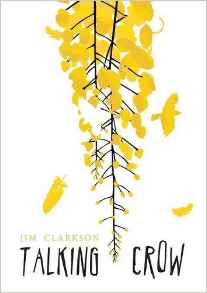
Your poetry book Talking Crow was published in 2015 by Spiderwise. It’s a beautiful book that contains many photographs. Did you take some of these yourself as inspiration for your poems?

Well, thank you for that! It is a lovely-looking book – the team at Spiderwise were fabulous, especially Camilla Davies, who designed the front cover and put the whole thing together. The photos were taken by a mixture of people: me, my brother, my nephew, my daughter and my father-in-law. They’ve all got an eye for a good image and I think each picture compliments the writing quite nicely, but were also good in their own right. In fact, I’ve told a few people to get the book for the pictures rather than the poems!

I wouldn’t say the pictures were inspirations for the poems as such, but I do quite often take pictures of something I might want to write about. I’ve written quite a few pieces where I had to refer back to photographs to remember what it was inspired me in the first place.  Also, looking back at a picture sometimes allows me to see something I might have missed whilst I was taking it. I’ve seen birds or insects, for example, hovering over a landscape which I then made some reference to in the poem.

Have you written any prose? Why do you prefer poetry?

I imagine, like most people who write, I have tried my hand at a few different genres of writing, prose included. Unfortunately the results were a bit rubbish!

To be honest though, I got the poetry bug when I was seventeen and I haven’t been able to get rid of it. As to why that is, I’m not really sure. It’s definitely an itch I have to scratch. I can lay off it for a while – usually when the real world of work is a bit intense – but the urge always comes back and I have to start writing. I don’t really experience that with any other form of writing, and I think that’s why I haven’t stuck at them. I get a bit obsessed with poems, whereas the short story or novel ideas I’ve had I get a bit distracted and I don’t go back.

I am currently trying my hand at a prose-poem though, or perhaps it’s a poem-prose! I’m quite enjoying it, because it’s allowing me to stretch my legs a bit – I’ve included quite a lot of dialogue so far, which I do quite like.

What is next for you? Have you any plans?

I’d love to say there’s another book in the offing – I’ve certainly got enough material and lots of ideas – however, winning the competition was a very big stroke of luck, so I can’t imagine that’ll happen again! I think my plan is to keep writing, keep entering competitions and hopefully do more readings. I really enjoyed my book launch and I think the guests did, so I would really like to work on that and see where it gets me.


Get your own copy of Jim’s poetry collection:

Amazon


Poetry Drawer: Miriam Discovers Machine Embroidery by Faye Joy

embroi

Punctuated with plump full-stops,

and curious apostrophes,

in this uneasy rhythm she

has discovered an untried script.

It encircles, twisting around

the frayed fringes of cut fabrics:

curtain remnants, lace and chiffon.


Appliquéd with hesitant lines,

misaligned edges and crude strokes

disclose changes of direction.

Revisions wriggling and scrolling

are interspersed with large commas.

At times the unconfined point

rushes ahead, the pedal push

too fast. These glyphs and cedillas


are part of her new lexicon,

her concrete poetry. She is

sewing a new orthography.


Poetry Drawer: Dios Dame La Fuerza by Clair Chapman


godes

It’s true there is a battle,
But I shall not yet bear arms,
Instead I aim to win you,
With a quiet war of charms.

She knows not of her opponent,
Or even of the threat,
And the amor in my armoury,
Is not collected yet.

But the tools at her disposal,
Are more deadly than a blade.
For my foe has you already,
And she thinks her bed is made.

The battle ground’s uneven,
The odds are in her favour,
She’ll need every scrap of fight,
And all the might God gave her.

For I shall not stop in this life,
Nor even in the others,
And I call to all the Goddesses,
The Gods and all their Mothers.

The ones who know what’s right,
And who I should belong to,
The saviours of my heart,
Who know how much I want you.

I have faith in all their powers,
Even though I am a sinner,
Love, I will have the victory,
But you will be the winner.


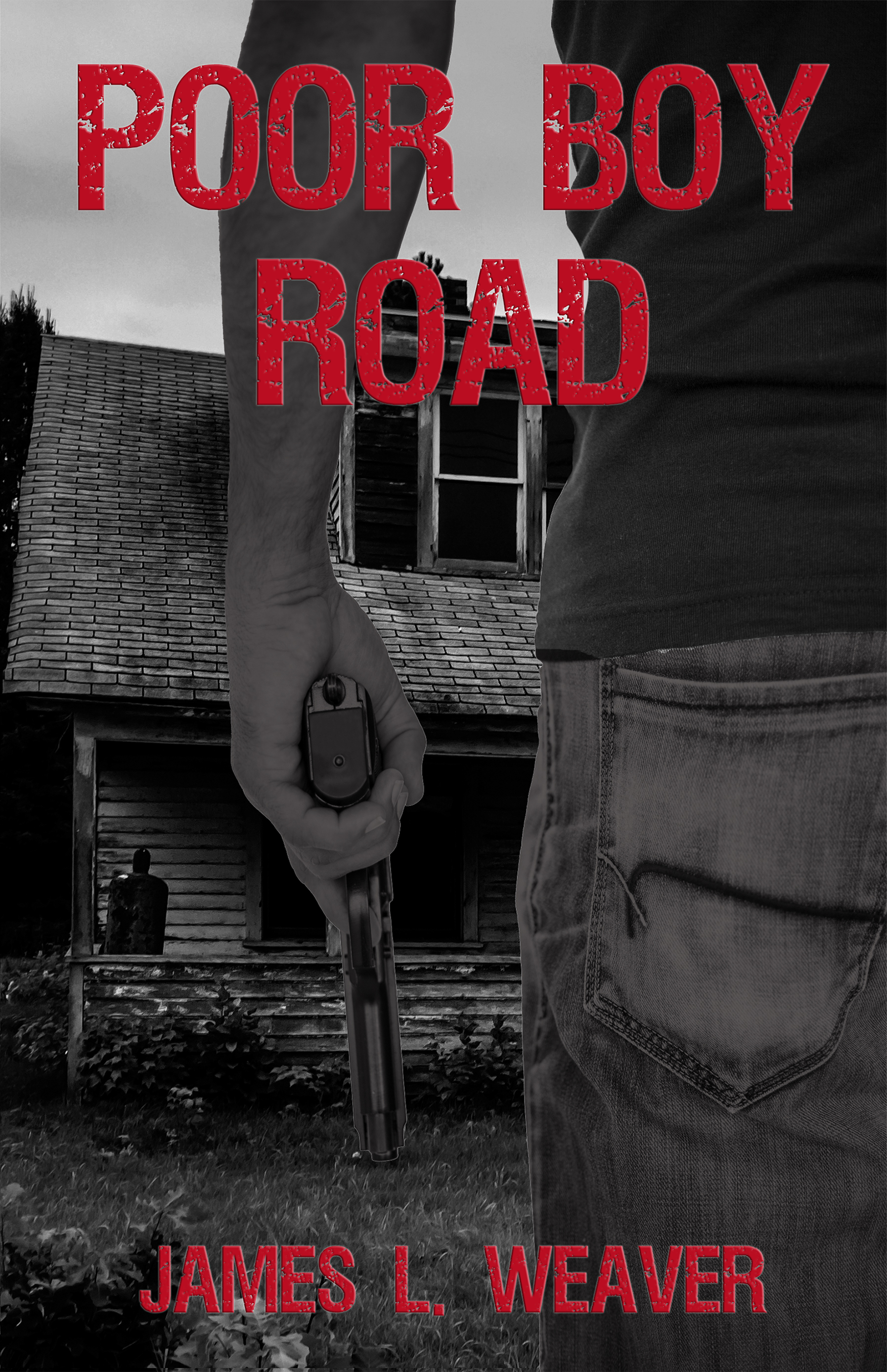
Books From The Pantry: Poor Boy Road by James L. Weaver: Reviewed by Inez de Miranda

PBR

Poor Boy Road is the street where Jake Caldwell, now a leg-breaker for a mafia boss, has grown up. It’s also the place he escaped from, and now, after many years, returns to in this thrilling, emotional, violent and tender story.

Initially, I was reluctant to read this – yet another macho thriller. As I feared, the book started with relentless violence in a hard criminal American environment. And yet, while the violence and general unpleasantness developed I had an odd experience: the protagonist, who was implementing the violence, interested me. Yes, he was the cliché drug-dealer-assisting tough guy, but there was more. Then, just when Jake was preparing to whack his whimpering victim’s kneecaps to useless rubble, he received a phone-call. This call was the start of Jake’s journey back to everything he left behind, and the turn that got me properly hooked.

Poor Boy Road is written mainly from Jake’s point of view, with regular changes of perspective to Willie, a small-time dealer. These different points of view not only help develop the storyline to make it both more thrilling and easier to understand, but they also offer a fascinating peek into the two characters. Jake and Willie have similar backgrounds: both were poor deprived kids in a small American town – and the author very cleverly shows the similarities and differences between the ways they were impacted by this, and how their lives unfold as a consequence of their choices.

Poor Boy Road is a hard crime thriller, with all the features of that genre. Guns, drugs, utterly immoral crime lords and their pathetic henchmen, and a significant amount of violence – it’s all there. But Poor Boy Road is more than that. The main characters have depth, and even though both Jake and Willie have done and are still doing despicable things, their personal emotional struggles are so relatable that I found myself rooting for them. I would have liked to have learned a bit more about the motivations of some of the other characters, in particular Stony, Jake’s father.
Initially I thought that the main antagonist – the drug dealer Shane – was a little too one-sidedly evil, but then I considered that it’s quite likely that he’s more realistic than I’d like to think.

A lot happens in Poor Boy Road. A wealth of characters populates several different plot lines that all intersect and impact each other, but thanks to the easy writing style and clear layout, the resulting complicated story was surprisingly easy to follow. A few plot turns were predictable, but this was not bothersome because the reactions of the characters to the events were just as interesting as the actual happenings.

It surprised me how much I enjoyed reading this book. The concept and setting don’t appeal to me, but the story the characters and particularly the easy, down-to-Earth writing style drew me in to the point that I was sad to have reached the end.

Poor Boy Road offers action, excitement and an engaging story as well as complex characters with relatable emotions and desires and an interesting, although slightly unsettling world. In spite of the uncomfortable topics that this novel deals with, it offers an easy and entertaining read. Even if, like me, you’re not usually drawn to thrillers, I’d suggest you give this one a try – you won’t regret it.

Blog

Facebook

Lakewater Press


Weaver