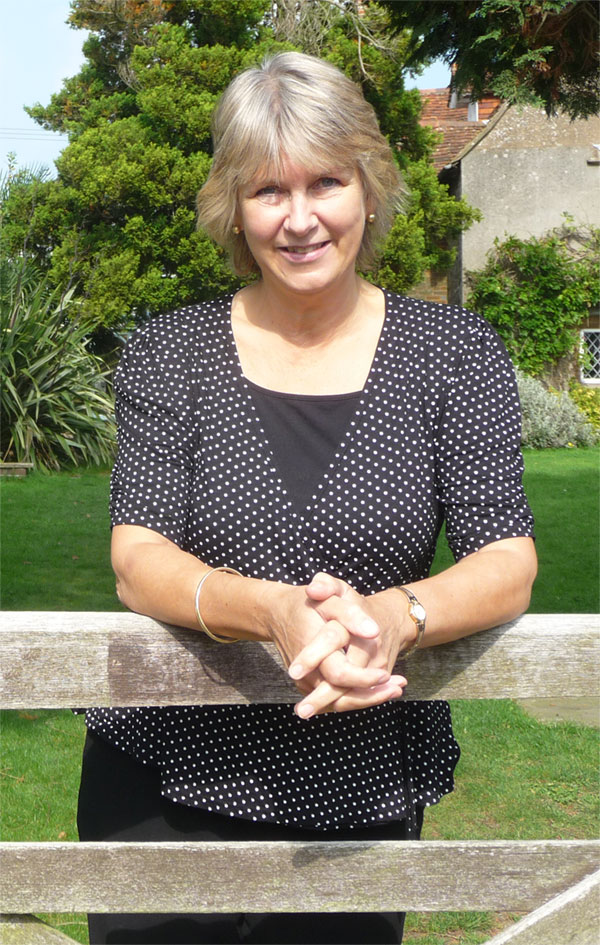
Inky Interview: Horror Writer and English Professor Mike Arnzen: with Claire Faulkner

Can you tell us about your journey as a writer? Where did it all start for you?

I’ve always loved stories, but I think I first started taking myself seriously as a >writer< when I set down a book I was reading – Stephen King’s Firestarter – and thought, well, gosh, I can do better than that! I tried, and failed miserably.  

King is a master. Who was I fooling? But I think we all get started in this business when we get to a point where we start to see the patterns of storytelling, and feel compelled to ‘talk back’ to the world of books through our own writing. That is simply stage one to a long-earned career as an author.

In the Goreletter and on your website you provide writing prompts to help inspire others. What inspires you to write?

What a kind question! I think part of it is obviously seeing the effect it has on other people. Maybe this is why I teach and try to help other writers. It has the benefit of the instant reaction. Writing is a kind of prompt toward an emotional response, isn’t it?

I actually started sharing creative writing prompts with writers in a horror newsletter called ‘Hellnotes’ about a decade ago. It was fun series of things like ‘Describe brain surgery from an awakening patient on the operating table’ and things of that ilk. Now there’s a huge collection of them that people can look into, called INSTIGATION: CREATIVE PROMPTS ON THE DARK SIDE. It’s an e-book only title, but available everywhere those are sold.

And now that I think of it, it seems so obvious: horror, too, is a kind of prompt. I like getting a reaction. Whether a scream or an intellectual response, I’m happy.


Do you have a set writing routine?

I >TRY< to. Habits are double-edged swords. They can make you productive… but they can become uncreative rituals. The whole notion of a ritual is that it is a kind of ‘story we tell ourselves’ by practicing something over and over again, the same way. And that can backfire with writing. But my primary routine is to write in the mornings, when the coffee hits my dream-addled brain and ignites weirdness with hi-octane energy. However, sometimes, deadlines press in, and I find myself binge-writing all night until I drop. Sometimes those caffeine-fuelled, fever dream, writing marathons produce the weirdest ideas, so I’m a bad judge of what works best for my own process, actually. But so long as I’m producing something, or planning the next project, I’m happy. I try to keep different things juggling all at once – a novel, a poem, an essay; that keeps me going if any one thing stalls or gets dry.

I originally found your work through your project gorelets, where readers received weekly poems from you. I’ve been hooked on creative horror ever since. (I have FOTD magnets too.) Why do you think horror works so well in this format?

Less is more! I’ve long felt that horror works best in short forms. This is why Poe works so well, I think… can you imagine a NOVEL from Poe, akin to the whoppers we find on the bestseller shelves today? I can’t. Short forms have the promise of a surprise ending, and the finality is often felt like a bullet to the head. 

You teach writing popular fiction at Seton Hill University; how do you balance this with your own writing?

On the one hand, teaching keeps me primed. I’m always reading, always reflecting on this crazy practice called writing, always talking shop. And I’m doubly lucky that I get to do it with horror writing – my job is unique! But balance? That’s kind of a myth. Work comes and goes – sometimes books take the spotlight; sometimes teaching gets on center stage; sometimes it’s something else altogether. But teaching can murder the creative mind: finding time to write while juggling class preps, sundry meetings, and the massive amounts of grading can seem impossible some weeks. There’s only so many times you can dip into the word well, and sadly, teaching sometimes has wrung all the words out of me by the end of the day. This is why – when all my pistons are popping – I swear by my morning writing routine. And when I’m under deadline, I set my alarm ahead an hour early, just so I can get more done. 

Can you share any details of projects you’re involved with at the moment?

I’m contributing to an academic title for Dark Moon books that studies the short fiction of Steve Rasnic Tem! First in the series of author-studies is ‘Exploring Dark Short Fiction’, run by Eric Guignard, who is an awesome editor to work with. He really wants to put the spotlight on short story writers and help new genre fans and authors understand why people like Tem keep winning awards or why people should keep reading them. I’m on as academic consultant, which means I write commentaries on all the stories in these books, and a longer academic essay. It’s fun to let my academic side out of the box like this every once in awhile. Reading, thinking and teaching are all parts of what make my weird engine run at full speed.

But like I said, I’m always juggling. I’ve got a poetry collection I want to finish gathering together next. Then a short-story collection. There’s a stalled novel I might restart. THINGS A PLENTY! If your readers subscribe to the Goreletter, they’ll know about them as soon as they’re available! Visit gorelets.com

What are you reading at the moment? Who would you recommend to us?

A really cool ‘lost version of Dracula’ called Powers of Darkness by Valdimar Asmundsson, who translated Stoker’s classic into Icelandic but changed the story in a bunch of interesting ways (all of which are annotated in the book!). It’s groovy. I’m heading to Transylvania next week, actually, to attend the International Vampire Film and Arts Festival, so the book is getting me in the mood for the Carpathians! 🙂 I’ll be doing a fiction reading there, as well as curating an academic symposium on behalf of Seton Hill University. Folks interested in doing this next year should visit http://ivfaf.com

Would you like to share one of your poems with us?

This is an example of a ‘gorelet’ from years ago, that everyone seems to remember after they read it:

Fuzzy Bunnies

the eyes roll back
and accusingly glare
when my feet slide forward
and hot rabbit innards
squirt between my toes
only then do I see
why these furry white skins
are called slippers

Have you got anything else you would like to add?

Thanks for the interview! If anyone reading this is looking over my stuff, and wondering, ‘Where do I start? What book is the best?’ then I would recommend looking into Proverbs for Monsters (for a sampler of longer fiction and poetry) or 100 Jolts (for 100 short-short horror stories). Both are in print, and I continue to get great responses from readers. Enjoy!

Poetry Drawer: Rust City by Ali Hepburn


A fissure divides the town.


On one side houses

in perfectly arranged rows,

green spaces

manicured, plants located

by design, straight lines,

undisputed symmetry,

the Garden City laid

according to intent.


Scuttling across the rift,

shoes echo dully

on worn concrete, crossing

between divided lives.

Trains hurtle below

to Elsewhere, screams

resonating the girders,

shuddering the structure

to crack open

the unreality.


The other side:

disused factories tower,

grandiose facades betrayed

by pristine paint now dirty grey

and peeling; a faded

mosaic of tiles motley

and disjointed, stained

with pigeon excrement. Iron

besieged by creeping rust

lays flaky waste to structure.


Sneaking moss paves the way

to colonisation.

Poetry Drawer: Crewe Green by Matthew Waldron


Squirrel intestines,

plucked fleshy harp strings thrum their valediction song across a gum dot constellation of rain-silvered pavement.


Bird scolds metallic,

jolted cutlery in a draw.

Wren zip wires across road,

long chain of chimes follow toward flailed wall of hawthorn through rare punctuations of road-shush cars:

splinters;

sparks of arc weld,

ghosts of colour which shower the senses.

Drone music of traffic flow, all vehicular vibrato and baritone buzz.


Sky,

slab of knife-cut blackcurrant jelly,

thrown,

slap-stuck against a tiled wall.

Roadside smudge-edge yellow bars of paint imprison leathery leaves,

cigarette packet,

a denuded Sylvanian family mouse with arms and legs positioned mid-walk in an oily rainbow-stained wash of gravel

and beckon bony finger twigs.


Profile,

fuzz-mottled with moss,

wind-rubbed by Mother Nature,

grey frieze figures in profile,

stained green;

eyes to the Heavens,

limb-stretched to-the-max,

loin cloths and muscles:

folds in wind-rippled flags.

Time Rewards Industry; Punishes Sloth:

Time? A clock no longer strikes,

hands above heart in permanent prayer.


Jackdaws,

pleated black gowns;

ironed grey waistcoats,

cackle,

crackle in the clock tower,

fire-y laughter and rebuke.

They interplay solitaire with the ‘v’-shape fascia,

pop-in,

pop-out of cavities;

punches of portals;

interpolate,

answer back with a sharp beak crack,

ratcheted-up trills of blue tits` alarm calls,

the muted warning whistle of a nest-bound blackbird.

Jackdaws,

all out,

collect,

straight as skittles,

perch on a taut,

thick liquorice strand of insulated wire.

An anchor drops out of the sky,

falls in deceptive slow spirals and glides, closer, closer;

bright gold,

washed,

sieved at the edges of a black-hearted pool;

its eye.

Books From The Pantry: Midlife Crisis by Jason Whittle: Reviewed by Inez De Miranda

The first time I heard of the concept of a midlife crisis I was a teenager, and my forty-something father had just purchased his very first motorcycle. He rode the thing a few times with either me or my mother panicking on the back seat, and then the machine quietly disappeared from our lives, never to be seen again.

The midlife crisis that Clayton Joyce goes through in Jason Whittle’s novel is a little more invasive.

It all starts with Clayton’s fortieth birthday, which he celebrates with his wife and young son.

Clayton is cool about turning forty. He won’t be having a midlife crisis, he reasons, because midlife crises are for those who are disappointed with their lives and he, Clayton, is doing just fine: running his own company, parenting a bright and healthy son and enjoying a stable marriage in which he and his wife “still had a sex life; they did it at least once a month because otherwise they’d start to think they had problems. In fact, since it was his birthday, this month’s night would be tonight.”

But after this monthly sex act – which is presented in a hilarious scene that in itself is reason enough to read this book – it does strike Clayton that he’s put on quite a lot of weight and he decides to take up jogging. That’s when things start to go wrong.

On the book cover Midlife Crisis is described as ‘a darkly comic psychological thriller’ .

At the beginning of the book, and for a fair bit into it, the comic aspect is most prominent. So prominent even that you might wonder why it’s presented as a thriller.

But that becomes obvious as the cosy, funny story starts to change: it becomes less cosy and a little more tense, and after another few chapters all cosiness had been tossed aside and you will find yourself sucked into a dark and disturbing thriller, so nail-bitingly scary that it will stop you from sleeping.

This change in atmosphere is so gradual that when I was reading the book, I didn’t consciously notice it until I stopped reading and realised I’d become quite agitated. I was anxious to learn what the hell would happen next, so I got back to the book as soon as I could. What happened next was unexpected and, I admit, rather shocking…

Midlife Crisis is a novella, so a fairly short read. The various characters are well-presented and Clayton, the main character, is particularly believable. He is a man to my heart: geeky, clumsy and neurotic, and the life he and his wife have together is an extraordinary depiction of the very ordinary.

With Clayton coming across as innocent and likeable and his life being so (sometimes awkwardly) familiar, the evolvement of his rather dull existence into a full-blown thriller is all the more poignant. Midlife Crisis might leave the reader wondering if something like this could indeed happen to an Everyman like Clayton – and if it could, could it then also happen to someone like them?

Midlife Crisis is not suitable for everyone, and definitely only for adults. There is sex, there is violence, and towards the end there is also a particularly gruesome scene where the two are combined. You’ll need a strong stomach for that one.  

But if you can handle that (or if you just scan over that one scene) Midlife Crisis offers an unusual and exciting read which will have you laugh out loud, gasp with horror and wonder about human nature.

Get your copy here 🙂

Inky Interview: Author Jason Whittle by Inez De Miranda

I know that you studied the level 2 and level 3 writing modules at the Open University. What other modules did you study? When did you graduate?

I worked my way through the levels very gently at first. It began with Start Writing Fiction, which seemed the ideal way in. Brilliant little course that, available for free through Futurelearn now, and I’d recommend it to anyone.

At that stage I wasn’t sure I’d take it any further, but I did alright, so tackled another two 10 point short courses, Making Sense of the Arts and Introduction to Shakespeare, and by then I did have the confidence to go for actual qualifications. The Arts Past and Present and the ‘wild card’ Croeso: Beginners’ Welsh brought me my Certificate of Higher Education, Creative Writing and being part of the very first Reading and Studying Literature intake got me my Diploma (and some very valued friendships), and Advanced Creative Writing and 20th Century Literature completed the English Lit BA in summer 2014.

Why did you choose to study at the OU and why did you choose the modules you actually studied?

Not to put too fine a point on it, it was the only educational avenue available to me. Having been something of a child prodigy, tipped for Oxford or Cambridge from a young age, I succumbed to a teenage depression and dropped out of college without getting anywhere near sitting my A-Levels. For seventeen years I thought that was it for me and education, until it occurred to me that the OU could be a route back in. That’s what I love most about it; it’s a second chance for those whose potential would go unrealised otherwise.

As for the modules, it had to be based around literature and creative writing; that was all I wanted to do. Apart from taking Welsh for my free choice, because a small but significant part of my family history comes from there – my great grandfather survived the 1913 Senghenydd coalmine disaster.

Which aspects of the Open University Modules were useful for the development of your writing, and why/how were they useful? Has your writing changed after doing the OU modules?

Everything was useful in its way, and I do feel that English Lit study can only be beneficial for writers. Ironically, I scored really low on the Creative Writing modules, by the far the lowest of any of my modules (but not bitter, honest!), but that doesn’t mean I didn’t take anything from it. Sorry for the plug, but I think my short e-book Aberfan and Senghenydd, based on the two Welsh coalmining disasters, demonstrates my evolution perfectly. ‘Senghenydd’ was written in early 2010, just before I started at the OU. I’m proud of the story, it’s full of pace and derring-do, with a lot of heart and passion, but it’s also written without any guile or real understanding of the craft. ‘Aberfan’ was written last year and is a much more nuanced affair, poignant and cerebral, with a greater reliance on the subtext.

 Tell us something about your further plans of writing-related studies.

I’m currently battling through the final stages of a Creative and Critical Writing MA from the University of Winchester, and am already pitching a PhD project. No solid news on that yet, but I hope to get started in 2017. Project title is “Exploring the Relationship between Dystopia and Reality in Fiction and Reportage” and it will consist of research into dystopian fiction past and present, how it reflects on the time it was written, and which dystopian visions are already coming true, alongside writing my own novel Overcrowding in which austerity has taken such a firm hold that human life is secondary to penny-pinching.

About your writing: Do you write in a specific genre or do you have a specific focus in your writing? If so, why? Do you write short stories, novels, poetry, something else or all of the above?

I am a real genre-hopper, and vary my project lengths, but have a preference for the novella. Debut novel and some of my published short stories are in horror, and I write a lot in the inter-related sci-fi and fantasy genres (but usually with a real word basis). I have two crime series that I’m working on, one which I’m trying to work out whether it’s suitable for children, and the adult-oriented one which swings back and forth between cosy and hard-boiled. I write poetry, script, and non-fiction, and also dabble in the two very different disciplines of sports reporting (with a recurring page in the Chester FC match programme) and erotic fiction (under a pseudonym, needless to say).

If there are any recurring themes in my fiction, they would be dark humour, and the Everyman who makes regrettable life decisions.

You have recently been contracted by Kristell Ink – Can you tell us a little about the work you’ve been contracted for? What genre is it? Is it a standalone novel, or part of a series? Anything else you can tell without offering spoilers: perhaps the blurb, and/or some info on the setting, characters, story. And when can we buy it?

It’s a standalone novella called Escaping Firgo, due for release next year. I called myself a genre-hopper, but I’m more of a genre ignoramus, because I struggle to put a tag on this. It must be sci-fi or fantasy, I suppose, maybe a bit of both. I prefer to say speculative fiction. The publishers have teasered it as ‘Hot Fuzz meets messed-up Trumpton’, while I would admit to there being a Patrick McGoohan Prisoner influence, in that the main character is trapped in a weird village and trying to find a way out.

But it’s also based on a real incident: there’s an actual place called Firgo, a small hamlet in north Hampshire comprising a single house and some farm buildings. My friends and I had the misfortune to have the car break down there – twice! – and we ended up wandering around the local village on a frosty Sunday morning asking an increasingly eccentric set of locals for help in getting home. I went back there earlier this year, as described on my blog.

Is you novel Midlife Crisis based on personal experiences? If so, how far? Is Clayton, the main character, a lot like you?  If so, in what ways? And in what ways is he not like you?

Like Clayton, I am a jogger, and like Clayton, and many others I’m sure, I sometimes wonder where my youth went. I started writing this at the age of 37 – it was my Level 2 Creative Writing EMA. I was partly inspired by one of the module’s quoted texts, What I Know by Andrew Cowan, which also begins with the main character’s 40th birthday, and the novels of James Hawes, which often feature an Everyman whose life unravels. Clayton is an Everyman with a twist: does his experience really transform him? Or merely unlock who he was inside all along?

The atmosphere of the novella changes very drastically throughout the story. Was that planned? When you started writing it, did you already know roughly how it was going to end, or did the story develop while you were writing?

Yeah, I often have the entire story, at least the main narrative arc, in my head before I even start typing, and that was the case here. The assignment instruction was to write a 100 word summary of the rest of the plot, and I stuck to that completely. This is me at my most Hitchcockian: Psycho starts off as a heist crime adventure before changing tack, and The Birds is ticking away nicely as a fluffy rom-com (with just a hint of foreboding), before the pecking begins, and I’ve always wanted to write something that goes one way at first before shocking everyone with a sudden turning point.

The novella contains grisly and visceral scenes – can you explain how you developed these scenes? Now that the book is published, what are your thoughts and feelings about those scenes, and about the fact that people read them?

I come from a horror background, so edgy content is the norm for me (Escaping Firgo is the exception, with no swearing and minimal violence). So the dark interior of my mind has already been exposed – difference there being that shocking scenes are expected in horror, whereas after being lulled by the opening, this will have maximum impact.

I thought about issuing a trigger warning, but didn’t want to put a spoiler on what I hope is a memorable experience for the reader. Biggest worry is for the daughter of the man who created the house on the cover. As per this blog post, the cover, therefore the book, goes out in his memory, but if his friends or family buy it as a tribute, they might expect something less, well, grisly and visceral.   

Finally, do you have any tips for wannabe published writers? (Yes, you are now at the level of wise and knowledgeable adviser! 😉 )

Just write, as much as you can. Don’t worry about how good it is – the worst thing you’ve written is still better than the best thing you haven’t, and you can make it better later. Also read as much as you can, a variety of authors, a variety of genres, even a variety of quality, and ask yourself, what’s good, what’s bad, and how can I make this better? You can learn as much from a self-published potboiler as a literary classic, and assimilate everything, and make it part of your own writing style. And then you’ve got a chance, at least, of reaching your audience.

Get your copy of Jason’s novel here 🙂

Poetry Drawer: And Now, The Shipping Forecast by Ali Hepburn

Viking: northerly seven, occasionally gale eight

at first showers, good.


Waves toss him:

jetsam frantically

discarded, shipwreck,

a boat pulled down.


Tyne, Dogger: was four, becoming cyclonic seven

to severe gale nine, sleet then showers, good occasionally poor.


We cut a line. Fierce

walls of water slop

onto the deck,

eyes fixed ahead.


Lundy, Fastnet: west gale eight to storm ten,

veering northwest five to seven, moderate.


Salt stings eyes.

In that blink

he’s gone. Mouth

drier than air.


Irish Sea, Shannon, Rockall: cyclonic

severe gale nine to violent storm eleven, poor.


‘Eyes to starboard!’

the shout goes out.

All we see is savage

churning and spray.


Elf Corner: The Marvellous Kev Milsom

Kev Milsom is in the relatively early-ish stages of his 5th decade. After spending years 16 – 49 engaged in various pursuits and careers such as photography, archaeology, driving, tutoring/teaching, administration, civil service, sales and other things, he reached his 50th year and firmly decided that life was far too short – thus making a devout vow to spend his time focusing on things closest to his heart and whatever made him happy. This spawned a path in chasing academic credentials, which gladly brought him into contact with other university folk chasing the same dreams. Even more happily, this led into gaining more confidence within the field of creative writing, leading onward into being published in 2012 with a series of poems. A further promise was made in 2012 to be published at least once a year, which Mr Milsom has kept to date, with a variety of poetry and prose published in various publications around the world. When he remembers (not often enough) Kev updates his creative writing news in a website called Views From An Acoustic Pineapple.

In September 2014, Kev joined the Ink Pantry Publishing team, where he still delights in interviewing writers/authors and reviewing creative works from authors both new and well-established.

In recent years, on the back of his creative output, Kev has also found the confidence to experiment with non-fiction pieces and has been fortunate enough to be published on several websites and within different magazines. This is especially valid within the field of parapsychology and the paranormal, which Kev has been studying for around 45 years. A series of books on this subject are being planned for 2017 and 2018. Kev runs a website called Paranormally Curious and a FB Page with almost 3,000 members. The main purpose of both is to inform and educate, particularly for anyone who is suffering from fear associated with the paranormal – or belief in negative aspects of the paranormal – by looking for rational/explainable answers. 

Another field of interest for Kev lies within metaphysics and spirituality. Recently, Kev has started writing for a new magazine called ‘Empathy’ – a publication which explores human sensitivity and awareness. His first articles there will appear in mid-2017. A further book on elements of parapsychology is planned for 2018/2019.

Long term, Kev is also working on his first novel, a piece of historical fiction set in Bronze Age England.

Outside of writing, Kev has been married to Shirley for 28 years and hails originally from Bristol. He has many hobbies and interests, especially history, photography, astronomy and music, spending a lot of his 20’s engaged in musical composition, primarily within the classical/New Age genres – something he plans to return to in the near future when he can find the time.

Interest in the latter has been fuelled massively in 2017 as Kev has fulfilled a lifelong dream to become a DJ and now runs a weekly show on Radio Winchcombe every Friday evening, playing music from the 1970s & 1980s, in particular exploring key inspirations behind people’s musical choices and examining why music holds such an important role within their lives.

Pantry Prose: War by Andrew Williams

“They’re coming! They’re coming!”

The tunnel turned to chaos as the warning spread along it. Soldiers ran back and forth, on alert for the enemy but unable to see them. The workers milled about in confusion, trampling each other in the dark. Adam shrank back against the wall as three burly soldiers ran past, looking for a way out.

“It’s the Reds!”

Another shout, somewhere near the surface. Adam joined the throng of workers as they fled deeper into the earth, soldiers rushing past and through them to reach the front lines. Another attack! The raids were all too frequent now.

Adam had never seen a live Red before, had never been this close to the front lines before, but he’d heard the stories. About how they fought with poison, so even a glancing blow could leave you dying in agony for hours afterward. About how they broke into the nurseries and stole the children. There were even rumours that the Reds ate their prisoners, but that was probably just a story to scare the young.

But the Reds were ferocious, that much was true. And now they were at war.

“Workers, this way!”

It was one of the soldiers, standing guard by one of the branch tunnels. Adam didn’t question the order; he just followed the crowd and ran for the entrance. Soldiers were expendable. Without the workforce, it didn’t matter how many soldiers they threw at the Red army. Soldiers still needed to eat.

“Adam! What’s happening?”

“Rumin! I thought you were dead!” Adam rushed over to his old friend. “I heard the lakeside tunnel was flooded.”

“It was.” Rumin turned away. “Some of us were able to dig our way out. Most of us… drowned.”

Adam tried not to think about the polluted waters that had broken through during the last rainstorm. The rain made the war far worse – dirt tunnels turned to mud, collapsing and destroying them. Hundreds, thousands of them dying in darkness and terror, because they couldn’t spare the time or resources to fix the tunnels in the first place.

“It’s the Reds,” said Adam.

“Another raid? So soon?” Rumin shook his head. “Did you see them?”

“No. The soldiers rushed us down here straight away. Can’t risk the workforce anymore. We’re too valuable.”

Rumin sighed. “I think we’re losing an entire generation to this war,” he said. “All the Queen wants now is soldiers. Says it’s fight or die out there. Why won’t those Red bastards leave us alone?”

Adam dropped his voice. “Maybe it’s not their fault. Maybe we’re the invaders.”

“Adam, don’t say that! If anyone heard you could get us both executed!”

“Well, maybe it’s true. We’ve been spreading out a fair bit lately. Maybe we’ve spread out into their patch, and they’re just defending themselves.”

“We had no choice.”

“Do they?”

“I’m not listening to this.” Rumin shoved him away. “I’ve got work to do, Adam. They need me down in the stores. If you want to talk treason, go find your Red friends.”

*****

The battle only lasted a few minutes. Most of the Red raiding party was dead; the survivors fled to report back to their leaders. This tunnel was no longer safe. Adam sighed. That meant they’d be digging a new one before the end of the day, and he was already exhausted.

But first, he had a far more unpleasant job to do. Adam and several other workers followed a squad of soldiers back to the tunnel. No-one spoke. No-one wanted to think about what was to come.

The smell hit him first. The tunnel was filled with corpses – some were Reds, but others were not. A thousand bodies. Some of them he’d probably spoken to in the tunnels before now. He might have brought them food. He may have cleared away their detritus. Now they were just detritus themselves.

There was no room for feelings in war. Friend or foe, the bodies had to be removed. There was no time to separate them out, no safe route to the surface for proper disposal. Adam picked up the nearest corpse and carried it down the tunnel.

Down to the pit.

It had once been nothing more than a rubbish dump. Now it was known as the pit. Down here in the dark, you couldn’t make out the difference between the fallen – or even between the corpses and the other waste that still found its way down here.

All you got was the stench.

Adam dropped his burden onto the pile, where it landed with a crunch upon the remains of its forerunners. He turned away, heading back up the tunnel for the next corpse. They didn’t shock him anymore. He’d already seen too many.

The next body was that of a Red. In death, the Reds looked very much like Adam himself. Adam wondered whether this soldier had friends waiting back home. Whether he’d heard the same ludicrous, but somehow compelling stories of eating babies that Adam had heard about them.

Back down to the pit. Another body on the heap. And another.

Wearily, Adam trudged back up the tunnel. He was hungry, but food was scarce, and it would be some time before his next meal. Out on the surface, there was plenty of food to be found – but a lone civilian couldn’t survive up there. Hopefully the Queen would agree to another scavenging run, as soon as she could spare the soldiers.

Most of the soldiers were young now. Younger than him. The veteran troops had mostly fallen to the Reds, wasted on retaliatory strikes. The younger ones – well, they were keen, but they weren’t experienced. They only had a basic level of training to fall back on. Could they actually win this war?

*****

“Adam, I’m so sorry.”

Adam looked up from his meagre meal – little more than a few mashed up leaves.

“What is it, Tru?”

She looked at him for a moment, but she couldn’t hold his gaze. “It’s Rumin,” she said.

“Oh, no.”

“He was shoring up the lakeside tunnel when the waters broke through again. I’m sorry, Adam. He didn’t make it. Not this time.”

“Rumin…” Adam sighed. Drowning was a horrible way to die. Despite his hunger, he no longer wanted the food in front of him. “How bad…?”

Tru shook her head. “No survivors. The Queen is having that tunnel sealed off – we can’t use it now. Adam… they’re saying the Reds did it. That they sabotaged the tunnel. But how?”

“I doubt it,” said Adam. “Just the tunnel giving way. I can’t imagine a Red getting that far into our tunnels without being seen.”

“The Queen is calling for another raid on them.”

That meant no spare soldiers for a food run. Adam looked at his tiny meal again, wondering when the next one would be – and whether it would be smaller still.

Somewhere in the distance, the cry went out again. “The Reds are coming!”

“Adam? Will this war ever end?”

He shook his head. “I don’t know. I hope so.”

Tru dashed away, ready to take the children to safety if the line broke. It hadn’t happened yet, but if the Reds attacked in force, there was no guarantee the troops could hold them.

Adam finished the last few bites of his meal, brushed off his antennae and headed for the tunnels, ready to do his part to protect the nest.

Elf Corner: The Wonderful Berenice Smith

How did you get involved in Ink Pantry?

Many years ago on a rogue unmoderated chat forum called First Class, I met Deborah Edgeley. We were studying the same Open University degree, A210, and battling through gender on the agenda and other weighty subjects. During our intense study chats (yes, really!) we pondered the idea of starting Ink Pantry. We roped in many wonderful students who are still friends and after lots of highs and lows, two anthologies were published and the website you see today, was founded. I am no longer hands on with Ink Pantry, and was very honoured when Deborah asked me to write a few words about what Ive been up to since I graduated from the Open University with my English Literature degree.

What happened after you graduated?

In my IP capacity I think its fair to say I was the designery(!) one. Its my first degree and now proud to say my Masters degree too. After being made redundant in February 2012, I spent the funds on establishing a freelance business and successfully applying to study a Masters degree in graphic design and typography at the Cambridge School of Art, Anglia Ruskin University.

Its not easy, however, balancing a Masters with freelance. When youre studying you think you should be working or finding work, its very stressful. When my former manager headhunted me for the University Press in Cambridge just after I started the Masters, I took the job and spent two years studying part-time and working with them, establishing the design for the print, web, eBooks and branding of a publication list for their UK Schools section. If you have GCSE children in your life and theyve brought home a Cambridge University Press English Literature study book for Frankenstein with a scalpel wielding surgeon on the front, my apologies.

What did you study?

During my Masters degree, I have studied the typography of an Elizabethan surveyor, Thomas Langdon, the work of John Peters who designed the font Castellar, worked on several social design projects including Everyday Hero highlighting the challenges of hidden disabilities which gained best in show at the graduation exhibition at the Ruskin Gallery.

How does a Masters in graphic design benefit you and your clients?

The Masters does teach you how to speak to designers, but with twenty years practical creative experience in leading publishing houses and creative agencies, I felt it added new depths. In a short sentence, a Masters in graphic design and typography brings a greater level of the social and political impact of design through research and study. It also helps with predicting trends and incorporating history. For example, the craze for women with their back to the viewer on book covers, what will happen now thats over? Will design be influenced by film or photography, or will the trend in typography led covers continue? In this climate, I think politics will play huge part and I can see a return to the Atelier Populaire culture of 1968.

What project are you most proud of?

During my time with the Open University, I was also going through IVF. I suspect I was trying to get my brain to succeed where my body was not. Sadly the 6 cycles I went through were unsuccessful and we are coming to terms with a life without a child. Yet I am often told I could just adoptor try surrogacywhen there should be no such flippancy. It make me realise that there is an ignorance around infertility treatment because its just not talked about.

The Masters degree helped to work through the losses and find a route into educating people about this period of my life that was (as it is for everyone who goes through it) the single most hardest and painful experience. Forming part of a module on collaboration, I consulted extensively by holding workshops and talking online with a wonderful support group called Gateway Women. I had three months to pull this together and the notes are extensive but essentially it became a non-gender design piece to showcase the challenges that those who are involuntarily childless face on a daily basis. The website that was established continues today and provides a challenging, educational and confidential way for those who cannot have children not by choice, to talk about their feelings, situations and challenges. Its now grown to include social media channels on Twitter, Instagram and Facebook. Since one in 4 women face infertility and 1 in ten will fall in the category of involuntary childless, Id say its essential reading for everyone. Ive also been interviewed about my story and Walk In Our Shoes by a national newspaper and hope to see my name in print over the summer.

What’s next for you?

I have just started working three days a week at the University Press in order to grow my practice in design. I am busy giving talks about design, working with charities on their branding and occasionally books for self publishers – I offer a complete package that includes setting up an author website, to the entire book production and book launch material. I have many expert contacts in the field and love to see a book through the entire publication cycle. Im coaching a team at the moment and weve just reached the manuscript submission stage!

Im also writing again after a long break. Im developing Walk In Our Shoes into a book based on accounts from the website. Its aimed at those who are journeying from loss to recovery without a child, their friends, family and colleagues. I have found that books like this are very rare. The media put so much focus on the happy ending of adoption or miracle babies which for many men and women simply isnt true. Its about time we were heard. I have two fantastic counsellors working on this with me.

In June, Im holding my first solo exhibition on the life and work of John Peters at the museum at Cambridge University Press.

Do you have time for any other interests?

I do now! I love print making, Ive been taking short courses at the Curwen Print Study Centre in printmaking including lino prints. I do have heady ambitions to own an Albion Press and return to metal type as my husband trained in hot metal setting. I have a huge respect for his skills but that may mean a winning lottery ticket.

Im blessed to live in Cambridge, just streets from Anglia Ruskin and love the culture here. Theres always something to do and see, its changed so much and has a lively arts scene. If there isnt then I can always walk or train my rescue dog Molly who was, along with good friends, my husband and the OU, central to my recovery.
Berenice is offering 30% off her design fees for Ink Pantry followers, just let her know youve read about her work on Ink Pantry.

Find out more about her work at www.hellolovely.org.uk Walk In Our Shoes can be found at http://www.walkinourshoes.org.uk