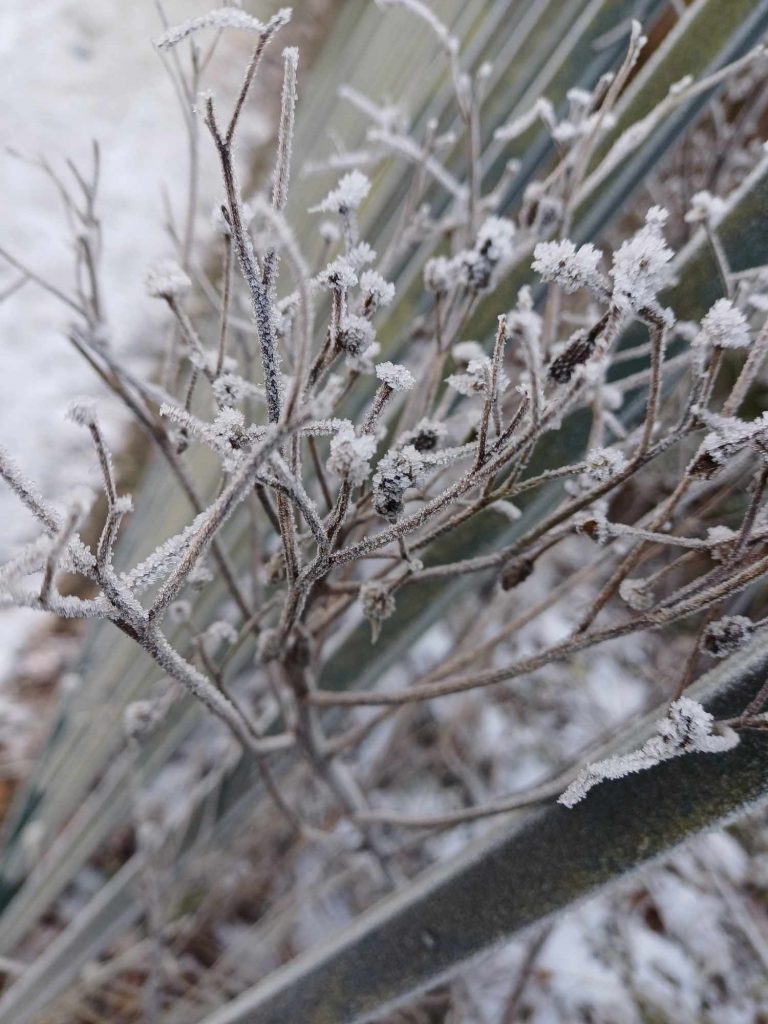
the dreamed winter the storks sitting meekly in Africa the butterfly frozen in the marvellous pond mice write a gorgeous myth a rural boy longs for the moonglow witch apollonianly bewitched a stunning world in a moony way I am full of druidic wizardries You are like a dragonfly We are singing
the dream-like spring the storks are coming home so tenderly the butterfly awoken in glory but sitting mice write ovidian songs a rural girl yearns for afterglow in addition hex enchanted a dazzling world in a starlit way I am shrouded in this cool mystery You are such a firefly We are trilling
the dreamy summer the storks are nesting mayhap peacefully the butterfly flying over becharmed garden mice write Dionysian ode an auntie is bent upon blue hours the enchantress is conjured amusing world in a starry way I wrapped in plethora of sorcery You are Dionysian spider We are chanting
the dreamful autumn the storks are going to fly off musing the butterfly dreaming just before coming death mice write Apollo’s hymn an uncle muses about cool star the sorceress enraptured such a cute world in a moonlit way I stay under a spell of tenderness You are like a charmful bee We caroling
Paweł Markiewicz was born 1983 in Siemiatycze in Poland. He is poet who lives in Bielsk Podlaski and writes tender poems, haiku as well as long poems. Paweł has published his poetries in many magazines. He writes in English and German.
You can find more of Paweł’s work here on Ink Pantry.
Even if I were to bark up the wrong tree, so be it as long as I am barking something. I don’t know how to climb a tree. Wrongs can’t be right until a climb has ensued. I slide many times before I correct my path. A really steep climb, all the way up, reaching out to save my children who lie here at the top.
Giants take my children from me and put them there. Too strong for me, I can’t fight back. No big deal for them ’cause they don’t need to climb the tree; standing on the ground, they simply roll ’em over to the nestled leaves. But I must stand my ground if I were to win this war. It is a war now that they have taken them from me.
I hold on to the bark for dear life. As much as I want, I can’t let go of it. I don’t know how to. Fear is all around me. Fear is swelling inside of me; my children, taken from me. I slide. I slide all the way down. The bark is flimsy. It comes off easily. Just as well, I spring right up, get back on with the climb. My nails dig deep, clawing into its russet skin.
Some bark comes straight off and exposes a stark tree which in turn shows a clear pathway to me. The tree gives me some stability, as I get my bearings back on it. Half way up, I hear my children sing, “I love you Mummy. My only sweet Mummy. I love yoouu when the days are sunny. In winter, I love you some more”. Sweats run down my forehead. Trepidations rise as I hear their voice. They sing out loud; I yell that I am coming to rescue them. They tell me that the time is right now, ’cause the monsters are out to pick berries in the woodlands.
Time is of the essence. How soon before the giants return? Amla in Bangla, and rich in Ayurvedic properties, the giants know about it only too well. They are after the ripened fruit—the reds, not the greens. They have a huge appetite to whet. I inch up and slide back; quick to resume, I stay the course. Gently treading this time, afraid to fall. The tree seems to be growing on me. I feel dwarfed against it, obviously unlike the giants as tall as the tree.
What better lure than to secure my children’s destiny from the giants who would make a meal out of their tender bones, and red gooseberry even before the evening is out? This impossible climb bruises me from head to toe. Lean times, a lean tree. Weary of the chase, I turn my gaze upon the woodlands. From this height, I can’t see the gooseberry anymore; minutely microscope, they seem to disappear on the stretch.
The tree is tall; too tall for me. Giants have no patience, and perspire in vain. I see clearly how distraught they are, trampling the shrubbery in anger because they don’t see it. The fruit is massacred underneath their giant feet. Towering tall, they don’t see what I see. I see my children. They see me. I make them a few gooseberry pies picked from the same shrubbery.
Multiple contests’ winner for short fiction, Mehreen Ahmed is an award-winning Australian novelist born in Bangladesh. Her historical fiction, The Pacifist, is an audible bestseller. Included in The Best Asian Speculative Fiction Anthology, her works have also been acclaimed by Midwest Book Review, and DD Magazine, translated into German, Greek, and Bangla, her works have been reprinted, anthologized, selected as Editor’s Pick, Best ofs, and made the top 10 reads multiple times. Additionally, her works have been nominated for Pushcart, botN and James Tait. She has authored eight books and has been twice a reader and juror for international awards. Her recent publications are with Litro, Otoliths, Popshot Quarterly, and Alien Buddha.
You can find more of Mehreen’s work here on Ink Pantry.
He had hoped the night would end his torment. It didn’t. He thought the storm in his mind might calm with the dawn. But the storm raged on. Standing rigid behind his gun, his lifeless gaze locked on the barrel jutting out from the narrow window of the muddy bunker, perched high on the mountaintop.
In the beginning, he found a strange comfort in staring at the barren, lifeless slope on the enemy’s side, its dry earth stretching into an endless desolation. The enemy pickets, hidden among the distant rocky precipices, visible only through his binoculars, rarely troubled him. But the world beyond those jagged peaks—untouchable, unreachable—haunted him more than any threat of war. Oddly, their own side of the mountain unsettled him the most. The lush green slope, dense with deodar trees, the shimmering stream weaving through the valley below—it all felt like a scene from someone else’s life. A life he no longer belonged to. Yet the tiny houses, no larger than matchboxes from his vantage, always drew his eye. There was something about them. He couldn’t say what. Maybe it was the thought that people still lived inside those fragile shells, even while he stood alone, staring at a world that no longer made sense.
He wanted to squeeze the trigger, to empty the entire LMG into the misty mountainside. Reload. Fire again. Anything to silence the restless storm inside him. But nothing would settle. His anger simmered just beneath the surface, a volatile mix of frustration and suffocating boredom. The night stretched on, endless and consuming, swallowing him in its choking darkness—a darkness that burned like fire, thick with smoke he couldn’t escape.
In the filthy, abandoned barrack at the far corner of the camp, his comrades would be gathered—drinking, gambling, losing themselves in the haze of liquor and late-night revelry. He would imagine the door still ajar, the stench of spilled blood thickening the air. He could see his father, the hypochondriac, pacing madly, unable to bear the sight. He thought of him, and the memory sent a twisted satisfaction through him. He could almost hear the echo of his father’s frantic mutterings.
But none of it mattered. Not the men, not the barracks, not the maddening silence. The only thing that held his focus now was the gun. His fingers twitched on the trigger, drawn to the cold, familiar steel. It fascinated him, how easy it would be to let loose, to unleash all that rage in a single violent burst.
He wanted to scream. To tell them all—his comrades, his father, anyone—that they didn’t know, that no one could understand how hard it was to be him, to be stuck in this place, in this skin, under this endless, heavy sky. But the words wouldn’t come. All that filled him was the blackness of the night, sinking deeper into his heart, his mind, his soul.
And still, he couldn’t fire. The darkness only deepened.
Some things aren’t meant to be, some are beyond your control, and others—utterly unnecessary—are thrust upon you to break you. Bloody fate. No, not fate—it was helplessness that wasn’t part of the plan. It was forced there. A soldier has no fate of his own. It’s shaped for him in the grandest of words, dressed up in promises of purpose, but concealing the bitter truth beneath—the agony.
What better place to amplify his suffering than this barren hilltop, overlooking a few distant enemy pickets on one side and a valley on the other—so still, so detached from the world that even the small cluster of Gujjars seemed forgotten by time. He had his answer: there was no better place because, after that night, he knew he had nowhere to go.
Fifteen days and nights—that’s all. Then he would return. It felt like a cruel transaction: sacrificing something precious just to cling to something that had become a necessity. He felt trapped between the two, caught in the limbo of a twisted bargain. Bloody fate wasn’t written in his stars; it was abandoned here, on this godforsaken hill.
There was something deeply wicked—at least, disgustingly unfair—about trying to justify anyone’s misery by calling it fate. It was easier to blame fate than admit the truth: that none of this should have happened. And yet here he stood, his fate written in the nothingness of this place, while the world spun on, indifferent.
He had loved everything about the marriage—the preparations, the way tradition blended with longing, how emotion intertwined with involvement, excitement with anticipation. The house had been alive, glowing with lights that, in the night, seemed like a flame burning bright in the dark furnace of the world. Everything overflowed with warmth, every corner brimming with life.
Now, back in the cold isolation of the mountain wilderness, that warmth felt like a distant memory. His body ached, and his soul felt hollow. This place, which once held some purpose, now seemed devoid of meaning. The endless days blurred into weeks, weeks into months, as the wilderness stretched out before him, tired and lifeless. He hadn’t noticed before how utterly empty it was. The enemy side, often shrouded in impenetrable mist for weeks at a time, had become as distant as his own sense of duty. Even the valley below, with its stream cutting through the foothills, felt as unreachable as home.
The separation changed him. It warped his perceptions—about duty, about his nation and its bond with this barren land, about marriage, home, and even his beloved wife. Doubt gnawed at his mind. In the loneliness of his cold bunker, sitting behind the big gun, he began to realize that doubting was its own form of journey. A slow, painful descent into self-realization, into the fragility of self-worth. He imagined the bullets in the magazine rusting, just like his own purpose.
He thought now that perhaps all this—the grand ideals, the noble duty, the sacrifices—meant nothing. Perhaps they had never meant anything at all, just illusions propped up to give shape to something hollow. And maybe they would remain that way for ages, lost to time and meaning, continuing on as empty echoes.
Integrity? To hell with it. Nothing, no one – not even the indifferent elements of nature – remains consistent. Inconsistency is woven into the fabric of existence. Yet we humans crave stability, especially in relationships. We demand it and cling to it, despite knowing that nothing endures unchanged. Yes, for as long as one can, one should hold onto it. But even the strongest relationships, the ones built on trust and loyalty, inevitably buckle under the weight of inconsistency. His doubts, once quiet whispers, grew into an obsession, filling the barren wilderness of his soul. The desolate landscape around the bunker only served to amplify the inner turmoil. He withdrew from the rowdy late-night gatherings in the abundant barracks, no longer drinking, no longer gambling. He stopped caring about the numbers in his salary account or what remained of his connection to the world outside.
The thought of betrayal gnawed at him like a wound that refused to heal. His mobile phone, once a link to the distant world, now seemed like a mocking presence, incapable of guiding him through the shadows of his mind. Doubt, he realised, was a journey – a descent into the primal, crude essence of one’s being. And it terrified him.
The doubt became real. Palpable. Like a river swelling with the pressure of a coming flood, it built within him, threatening to burst its banks. Betrayal – the one thing he couldn’t bear. The one thing he saw, he would never tolerate – loomed over him like a spectre. Sometimes, alone in the bunker, he wept behind the big gun, feeling smaller, more insignificant with every sob. A man lost, shaded by the large hat that he pulled down to his chin as if trying to hide from the world and from himself.
The doubt grew unbearable. And so, one night, without telling anyone, he slipped away from the camp. Two days later, in the dead of night, he murdered them both in their bed. His suspicions, his fears, had been true all along. He left the dagger buried in her stomach, a twisted sense of justice searing through him as he made his way back to the mountain wilderness.
The camp did not report him missing. They found him, questioned him, but never spoke of it. He didn’t care. His soul had been hollowed out, and the man he once was had vanished. The night never ended for him after that. He was trapped in it, suffering, endlessly suffering. And when the weight of it all became too much, when he could no longer endure the darkness pressing in on every side, he turned the gun on himself in that cold muddy bunker.
As the final shot echoed across the empty mountains, he screamed, “Oh great mountains! I am sorry. I couldn’t protect you.”
Ghulam Mohammad Khan was born and raised in Sonawari (Bandipora); an outlying town located on the wide shores of the beautiful Wullar Lake. Ghulam Mohammad believes that literature is the most original and enduring repository of human memory. He loves the inherent intricacies of language and the endless possibilities of meaning. In his writing, he mainly focuses on mini-narratives, local practices and small-scale events that could otherwise be lost forever to the oblivion of untold histories. Ghulam Mohammad considers his hometown, faith, and family to be the most important things to him. He writes for a few local magazines and newspapers. His short story collection titled The Cankered Rose is his first major forthcoming work.
You can find more of Ghulam’s work here on Ink Pantry.
when I think love, I think crosswalks. crosswalks at an intersection. intersections folding into home. bakeries. picking up sourdough at a le pain asser. crosswalks folding crisply like the crackling of sourdough starter. I think rich. downed & drunk on awkward street signs. korean spelled to sound like fancy french. out-of-business oscar motels. napkins bunched under rolled-up pasta. poor imitations of gelato. restaurants dedicated entirely to seaweed soup. restaurants that live. restaurants that forgot to live. overhyped soba noodles & udon. people. visiting from other intersections. people standing in line for cheap coffee. people overcompensating richness with cold yogurt blends. mothers with their children. children with convenience store rice triangles & unauthentic yellow banana milk. mothers with half-assed plastic cup white wine. crossing a crosswalk. at night: unlived underground karaoke bars. sweaty men slapping backs & smoking through tobacco teeth. I think love in day & night. intersections licking corners with stray cat piss stains. a dog barking somewhere a streetlamp lives. women enjoying unadulterated drunkenness. businessmen that kill neon streetlights. children in bed. adults slipping into each breath. the people of montmartre; in this moment they are everywhere all at once. we wander like strays. I am born as a stranger in a new intersection everyday.
Flower Language
Gone, I whisper and walk towards the bed of belladonnas, close enough to listen to their gentle
inquisitive conversation. I listen to their arms fan widely above and over their mystery fruits:
magnolias, singing. They indulge in noiseless chatter while I swaddle in dahlias overwinter crisp
newspaper. The children have made a home out of miniature sunflowers— only ones that could afford real blooms
instead of the silk imitations sold in the supermarket. The wind praises the gray foliage and the knee-length weeds.
Lavender: the height of a spine and the way it tickles the sky on a whim grounds the stalks into more purple
than they are. The pine with hipbone steps turns enwrapped in a fragrance— breathe. The garden is nothing concrete
but a moment all at once. I bury my nails in clay ripples thoroughly spoiling myself
with Earth.
Praise
Praise the stories. Praise the stories I read and tell, subtly.
Praise the night. Praise the night beneath little black shell bodies.
Praise the waters under the caps of my shoulders, under consciousness.
Wrap real rain around my finger, let it sluice down the sidewalk.
Praise the parting of eyes and the turning of the sea, they are altering
my world.
Yoon Park is a dynamic high school student enrolled at Seoul Academy in Seoul, South Korea. She channels her creative energy into writing and visual art and finds joy in expressing herself through these mediums. Additionally, she has a passion for music and spends her spare time playing the piano or the guitar. Her dedication to her craft has earned her recognition and admission into the prestigious Iowa Young Writers Studio, the Adroit Journal Summer Mentorship Program, and Kenyon Review Young Writers Workshop.
To bestow beauty and lambency For he will continually lust And be doomed to regress Living dignity may dawn anew
Perfection
To bestow grace and purity For he will continually lust And be doomed to regress Living perfection may dawn anew
Fly
The feathers, they fell with starlight Baptizing them one with grace and disorder With the lambency of your final flight You leave behind love in your wake
Fear not the earth and sea beneath you For you shall fear only fear itself And though your wings may be clipped Even Icarus flew in his last moments
Be christened in the chime of your Final hour, the shine of your Blood sweat and tears may christen you Human, even as the vestiges of life leave
A celebration of life is not true Without the clouds of finality on the horizon Remember your fortune, as you wander the skies For one can only live for having died
Seungmin Kim is a diligent scholar who is enrolled in an international school in Hong Kong. He is meticulously curating his compilation of written works to fortify his candidacy for admission to esteemed academic institutions.
I am atop a wispy golden plain with a colourful ombré pattern
But that time is so short. There is danger, too.
Enduring loneliness and cruelty. A dangerous domino effect of consequences will be set off.
Pulled In
Maroon red, lilac purple, amber gold. Aurora colours on the swooping wings Of fragile butterflies. It jumps from leaf To leaf and flashes its grand wings to watchers. A beautiful bright view, the watchers say.
If only their eyes shifted to the side: A moth with dull greyed wings sits on a wall. It is the dark sky—twinkling stars surround it. It is the canvas on which butterflies shine.
Its eyes spot flickering red flames on candles With shining vivid shades like sunset glow. Dull wings take flight, petite feet land on the Melting wax stand. It tiptoes closer, then Too close.
Flame touches, then spreads, then envelopes it. Fire eats its wings, thus forming deadly sheens. Fire steals its limbs in a colossal blur. Remains then sprinkle down as smoky ash. A startling bright view as it fully burns.
Now, I approach the dark tight alley that May be my flame. My mind is on fire, and My daring burns away. But people flutter Around me, mingling, giggling, and make me A shadow like dull grey smoked ashes, yet I am pulled in.
Sea of Sharks
The hallways are crowded, my mind is filled My hand twists the knob, my eyes take in the view The sea of sharks awaits me in their seats All giggling and whispering—most likely at me
I spot the rainbow outside the window, Nothing like the storm inside Both the classroom and my head As I long to run and hide
Grace Lee, a high school student in Seoul, South Korea, is passionate about words. Whether crafting stories or poems, she blends her unique perspective with the vibrant culture of Seoul. Excited to contribute to the literary landscape, Grace’s writing reflects the universal themes of adolescence in a big city.
You will never be lonely You’re the one that I can’t deny with my heart Got you stuck up in my heavy head Cheers to the precious moment we met Cheers to the earnest wish you were here Every hour, every minute, every second, I’ll think of you
Enchanted Forest
I was able to see tree branches making a shelter above me The comfy grass gave me a mattress to sleep
Bright sunshine was rising up to the sky the atmosphere filling up with light on the forest, giving a beautiful glow
Then my eyes met the birds flying in the sky Flying towards me, leaving rainbow trails behind They stood on my shoulder, their colourful fur glowing
A Celestial Journey
running with a useless white suit adding weight lasers were passing right by
I’ve seen the hope empire falls, and the new world forms rest with my fellow friends
run and run until I am out of energy what was the rumble Thought the world was in peace
The Neighbourhood
This is where I played with my friends Chasing each other with bicycles Where I ran into my friends without a blink
This is where my friend lived Our imagination playing together The large house granting us a smile Those were the good old days filed with grins
This is where I lost my fellow bicycle A bicycle which afforded me freedom The place where I wasn’t allowed to play
This is where I lost myself All that was misery Eventually finding the way back home
This is where I first opened my eyes The time was full of mystery All I could do was cry Now I can do a whole lot more
This is where all the goods are sold I bought a bunch But it would disappear with someone’s munch
This is where I suffered The culprit of multiplying -1 to my life The infinite loop of studying All I learned is the pain of education
This is where I got my happiness The place I was free The place I could only release my stress The place I could meet my friends far away
This is the place where I bought my second happiness of life The grey glossy figure The apple on its top After, my life started to change once again in the positive way
This is where I will play again Allowing me go back to the past When it was the good old days
This is where I will study Works are harder and harsher All I wanted was freedom from studying But all I got was more restrictions
This is where I wanted to stay The price was high The money I couldn’t earn until I die I gave it all up all with a sigh
This is where I will die The perfect place for death I would imagine the after life This is the same place where I was born
Dongeon Kim is currently in 6th grade and attends an international school in Seoul, South Korea. He likes to read both graphic novels and chapter books. He also likes to play games and socialize with his friends.
Every human being has something of value, Bonded with
An opaque screen that’s a couple inches in front of our eyes Dangling and gradually sinking
resorted to an intricate string of false and misleading claims, But staying safe with
some sort of deflector shield As if dropped into some dead space in your brain
Your dreams
I’m so gifted at finding Finding your dreams come true
Any time I count sheep That’s the only time I wake
I put my hand on the stove Blunt pain was everything I felt
It was all a dream
917
This where all the lights are broken down Into pieces.
This where the colour grey gives hope to a man. This is where the concrete silver bleaches him white. This where nothing is served cooked; but raw. This where men can say what they want, it’s their cry, not the clash of metals.
This where fairness kills a man, But allows the equity of fancying. I think I wondered Here, but not now. This where a glimpse of a night turns real. This is where too sweet for adults to eat. This where the thoughts are the most innocent But the dirtiest.
I was short, standing there.
This where the sun never drops, Doesn’t matter if it’s shaped by us. This where I built my signpost. This is where I return.
This is where I saw a seal in the middle of green. This where it swam, and danced.
Jin-Woo Ahn is a student at an international school in Seoul, where he explores the intersections of culture, identity, and language through poetry. Drawing inspiration from his multicultural upbringing, Jin-Woo’s work reflects a deep appreciation for the universal human experiences that connect us all. As an emerging poet, he is passionate about fostering community and collaboration within the literary world.
In a new garden I have the biggest hands rusted deer will dream, and they will envy it Those are my summers
i’d wanted to be seventeen that month in the garden In that garden, branches swing high It talks and builds with me
I guess i own this garden some hours in the playground it became dirty to me
What about an unafraid tree? reckless used to slide with a fantasy times with my sister used to always fly
we needed to plant more scared about fading on my own All i see is a stain while seeing my grandparents climb
The cherry could believe it has already bloomed I begged to ride and I couldn’t imagine Could my apartment see these verses?
our grandpa wants to see flowers and visit me My grandma swears she read the bible all house no garden
a cherry plant that never blooms
The garden has a swing set with elephants on them It is rusted and old, The colour is fading away.
The garden has a cherry plant that never blooms My grandpa swears that he saw a flower on it once. I don’t think anyone believes him.
The garden has a dirty slide. I used to ride it with my sister Now I’m afraid that the dirt will stain my clothes.
There is a tree in the garden. It was always taller than me as a child, It was even taller than my parents I would climb it, seeing how high I could go Weaving in and out of the branches, being reckless Unafraid.
Now whenever I climb the tree, The bugs bother me I get soil on my hands I don’t want my clothes to spoil.
A couple times a month my grandma sends me pictures of deer That she saw in the garden She sends me bible verses with them.
As a child, I envied the garden. I begged my parents to let us move to a house with a yard. I could not imagine being stuck in an apartment My dream house became a house with the largest garden I could plant my own flowers, have my own pets, Build my own playground I wanted to be just like my grandpa
Once in a few summers I go visit the garden Nine hours on a plane is all it takes to meet my grandparents All my grandma talks about is the garden. All my grandpa talks about is the new flower on the side.
I don’t envy the garden anymore, though I think i’d be fine with living in an apartment I don’t need the biggest garden or seventeen dogs I guess the garden in my mind was a fantasy. Temporary.
invincible flower
The cold kills Slicing through my veins and Crashing into my skin Tears stain the floor
The cold hurts, Scrape your knee on the snow and it will bleed White snow flooded with red, Traces of murder, And you wonder, what died here?
In the coldest of winters Blooms the most beautiful flowers
Winter is over now, And i’ve found that My tears have become seeds—- Planted in the ground, Ready to flourish Ready to blossom into the warm spring air
The blood is now a red flower It does not die easily It lives through storms It can go without being watered
In the most extreme conditions, My flower can thrive She can flourish, grow faster than any other flower
When winter comes again I don’t need to be Scared Because when the cold kills When it hurts and it bleeds, I know that out of it i will get an invincible flower
Elisa Min is a seventh-grade student with a passion for poetry. She discovered her love for writing at a young age and enjoys exploring themes of nature, identity, and the human experience through her poetry. When she’s not writing, she can be found reading voraciously or spending time outdoors, drawing inspiration from the world around her. She is excited about the possibility of sharing her work with a wider audience.
In three simple words, life’s tale is told, “In three words,” says the poet, “I’ve learned life’s song.” A timeless tune: “It goes on.”
Through sunlight and starless night, The world keeps on turning, Constantly singing life’s song: “It goes on.”
When hope seems dashed and lost The dawn will still bring new dawns, Always singing life’s tune: “It goes on.”
When the late nights get too late, I look to the sunrise, Being reminded that “Life goes on.”
Voices of Nature
Whispers of the breeze Carry secrets into the night Moonlight softly sings.
Morning whispers glow, Dewdrops on the meadow’s breath, Sunrise paints the sky.
Whispers in the trees, Leaves converse in the silence, Nature’s gentle voice.
Winter’s chilly song. Snowflakes dance to its whispers. Stars blink, watching them.
A Disk Around the Sun
Whichever you choose, the route is equally rewarding?
everyone was smiling or laughing
Are we on the cusp of a genuine breakthrough?
Is it a battle for recognition
This dorm was once a madhouse
But that life was too short
Raided and now cornered
I’m still a believer but I don’t know why
Even when you wanna die
Vincent Bae is a student attending an international school in Incheon, South Korea, where he explores themes of identity, tradition, and human connection in his writing. Inspired by the multicultural environment of South Korea, Vincent is passionate about sharing stories that resonate with readers on a profound level. With a commitment to honing his craft, Vincent actively participates in writing workshops and literary events.