My mind’s a ribbon blue Black hued parsley green Ivy lead open My further glance into My Casanova smile Delicacy lasts long Old enough to fly My cookies know that shape Criss cross suburban South Too ordinary for living A motel of sky scrapers Munich to Vienna Topples into Swimming nothing My hats are over there Hibiscus orange Playing with fire Rituals of ordinary ordinance That shape still plunges My mind’s a ribbon blue.
You can find more work by Sayani here on Ink Pantry.
Drawn up the limit of ten Swelling caves in silk hose she often leaves then Insulting to any lady double-envelops white Chastise her horse-wimping vain Unbuttoned her gauntlet with laughter She flogs no such thing insane Little poor girl by the rock rafter Ghost woman’s birthright’s profane Soft cling aristocrat ever-after
Opal Ball-Dress
Her pal wears an Opal Ball-dress to write Improper overtures coming from him Writing with Tortoiseshell Pens Cracks between shutters brings in light Frost- bound coachman arrived at midnight Drawn up the limit of ten Swelling caves in her silk hose happens often Insulting to any lady double-envelops white
Mustang Chalice
Ramparts of the horizon yearning strange phenomenon Peaceful sleepy tenor watchful eye of Arithmetic Wild horse Red River swollen thundering high Sheep-Headers sleeping at breeds Sage Palace Tormenting monstrous rocks and cactus horrify Thundered past ears laid-back Mustang Chalice Yearning of her heart, Pine Fringed Pie
Sonnet CCIII
Rocky ramparts Red-Walled with Seasoned Brick Rolling ridges giant cliffs steely skies lost in the sun Hair flying down her skeleton Vague loneliness with the scarlet walking stick Fragrant sage memories of haunting sweet Arsenic Expostulated sentimental simpleton Ramparts of the horizon yearning strange phenomenon Peaceful sleepy tenor ever watchful eye of Arithmetic Wild horse Red swollen thundering river high Sheep-Headers sleeping at breeds Sage Palace Tormenting monstrous rocks and cactus horrify Yearning for her heart Pine Fringed Pie Thundered past ears laid-back Mustang Chalice
Descending Love
Descend that’s love light at your peril Were bout under the same Sun and Moon? English watering place by moonlight her voice floating out Gnawing petticoats twisted into the water Spring cleaning worst moral pub Wild ferns howled bay sleeping sky She hangs like a cat to its claws She cries true love soul dissolves Delight in love’s rake Her young mouth laughs at her gift Pink articulated lips storm of a kiss When a poet loves in unassail reason UN shivered enraptured God’s eyes weep a ton Love’s time fool an ever fixed mark Sun or Moon Roses by a bee will sting
Terry Brinkman has been painting for over forty five years; now he paints with words too. Poems in Rue Scribe, Tiny Seed. Winamop, Snapdragon Journal, Poets Choice, Adelaide Magazine, Variant, the Writing Disorder, Ink Pantry, In Parentheses, Ariel Chat, New Ulster, Glove, and in Pamp-le-mousse, North Dakota Quarterly, Barzakh, Urban Arts, Wingless Dreamer, True Chili, LKMNDS and Elevation.
You can find more of Terry’s work here on Ink Pantry
The Goddess descends into memories Lora took into her arms the blessed silence an eye she gave to love a song to the sun to evil she gave the smile her lips enchanted me embracing the dream of the poet…
Again with Lora of Prishtina we often meet on the boulevard looking at the shadows of the rocks beauty walks courageous in love as the meteor of words rain with arrows in sight her lips put ash on my tongue where the unspoken word slopes the missing halt during the white sleep Lora of Prishtina – gives a song to the sun.
For the years that have fled
Last night with Lora we followed love in the Garmia Valley in the chest we spread the song of Romeo and Julia.
In Garmia was afraid of the fire of love. In the chest we enumerate the hours years that have fled to freshness singing the melody of the forgotten poet in the love of the ivory castle on the “Green Path”, Lora and I.
Visit
Unexpectedly the gate looks on the screen on the keyboard taps the verse from his mind the shadow is measured in tumultuous ecstasy sparkle lit in mature age in delusion you appear to me as a vision.
Lora walks into the heart of the verse proudly stands in front of Naim’s bust then goes to the waiting spa where we were yesterday embracing my dream with open arms pouring earthquake into the alight tinder.
Blindness
blind yourself I do not want you having a look at the sea I do not want you to see the colour in the ocean of your eyes I want to drown in your grace to have you my love.
This wish in light of birth to perish to infinity!
Delayed Meeting
Delayed meeting with Lora in the Poetic Autumn I continued the trip in the Penelope Oasis we look in the mirror of our eyes among the waves of love between dream and reality between autumn and winter between sun and sky between birth and sunset between maturity and childhood between withered leaves and the yellow petals with the turmoil of fire and thrill of heart …!
Delayed meeting with Lora in the green spring in the depths of your eyes near the volcano where awakening bites forgetfulness in the late autumn in the garden of heaven stretched on the edge of the road we met late in the arms of Love.
You Ran Away Lora
You ran away so fast Lora in the dark night of the modernism before the next summer comes in the smoke and alcohol basin killed on the trail of mistrust.
Lora plays Satan’s dance on the holy night of heaven love drowns in the oasis in the intoxication of the rain plague becoming the postpartum of the broken age.
You did not wait for the promised summer on the bed of roses in the run of old time of a dirty time whose name you do not know I look at the rain as a rope in the faint face and ask for the way out of love.
You ran away so fast Lora you have remained the metaphor of the virgin paths endless poetry of the poet’s longing novel that starts with a real landscape melted love in the spring of absences.
In the Theater of Tragedy
Hamlet is shouting on the stage in the backstage Romeo and Juliet burn in the fire of love caress the stains of the cloth left from Kanun’s time the intrigues of friends with empty souls in the museum of memories in the imagination of Eros in Prishtina.
Juliet curses Hamlet beyond the scene that he had penetrated her thoughts she is seeking the paradise in poetry why is Romeo lying about fiery love I do not have a covenant or ask for the breakup Juliet feels that he speaks with his heart.
Romeo blesses the love that remained like a wound from the years that have passed trots in the lit cup the bedbed curses at the table…
One Day (Requiem for the poet)
You will not see the poet standing in Edi Café 2* nor will you intercept intrigues and contemplations he will not order espresso the table will be empty as the memories that evoke alcoholic beverages… and a toast of friendship.
The poet blessed by hatred does not withdraw the words blossom with rose perfume and cry for the memories in solitude do not believe in dreams and magic to give the world love and the lyrics will need calligraphy
The poet burns in an ironic smile the storm and the sky evoke a memory every word in the fire of words a world you do not know Queen with beautiful eyes.
You will not see me in the coffee shop nor the streets of Prishtina the atmosphere steps on your footsteps’ traces, some quiet storms strikes like the lightning in the sky without clouds how many stars are lit you are crystal in the heart and you know memories of a distant time bring me farewell and a voice that babbles lyrics as a hymn… we give life the spiritual dough all the dreams we’ve written the love we sang in each letter we the unloving lovers!
*Edi kaffe in Prishtina
Lora in Adriatic
The plains swing the unsung serenade the text sinks into the water of the lake the sounds of love cover the mountain the eyes dissolve the exuberant magic.
The ring of the lake shines in the Adriatic The lake wears the ring on the finger The rays of the sun caress the face Lora’s lips bite the words curdled on the eyebrow “For me you are unique, oh Lan” and the lake trambles.
The lips redden in the drunkness of the kiss Lora squeezes the fingers to her chest the adder bite at the neck and at the nape the chest whiteness shakes on the lake the whips of excitement like the oak sap Lora loses the trace in the longing of waiting the cherry melts in the language of love.
Lora in the Rain
Lora was jealous in the rain why it washed Lan’s hair, lips neck and eyes imagined in crazy love?
Lora melts in eternity sighs in words stuttering took and glimpses gave.
Lora stops the nomad time Lan nihilist in the burning rain both faces Prishtina’s fiery kiss
The rain makes Lora jealous she gives the kiss of the tear to the rock in the dark.
Lora kneads her breasts in the longing of love Lan feels time in the frozen sea of wishes
Lora and Lan tease each other in the galaxy.
Valentine’s Day
Lora embroidered Valentine’s Day on the map of love Egnatia-Naisus street and in passing I also took the honey flavour from the hot ashes of the extinguished fire.
Lora like a blonde ladybug in the meteorite nobody whispers on the map of love and the star twister out of exhausted longing in the timeless feeling brought the freshness of age the kiss of the mountain like Hera from Olympus departed in the endless today night.
Lora frozen in heat slightly heated to the bosom of love “I’m very cold Lan takes me with him tonight I do not want flowers a white rose to have for Valentine’s Day! “
Lora
Lora we wander through time like snakes in the bushes Lora and I in the ecstasy of the painting I gave her Mona Lisa’s smile I drank water from Lora’s bosom and I lost myself in adolescent dreams,
I gave Lora a life I gave the sky a kiss the sun seemed to be silent and left a free way to darkness the rainbow lightens my way fiery I take the stars to the bosom I hug the sun to feel its tenderness.
Lora is silent and she silently speaks in her blonde hair I touch the love embers in the lap white frost Lora left traces
Lora is asleep with the fiery stars tickling her lips in the corrugated crown the sounds of silence I put her crown and I read under her eyelids the novel I will write Lora with her bosom as virgin snow lures the Talmudists’ years Lora crystalline meteor.
When the Poet Loves When the poet loves the moon becomes pregnant with the autumn pollen the stars laugh with Pitagora’s theorem the sun receives rays of love tsunami become the poet’s words Lora is immersed in the block of salt.
When the poet sings adorns the world with the smell of love he gives the mountains Beethoven’s symphony the rivers are enjoying Mtika’s work the sea of poet’s feelings and Lora falls asleep on the wedding stone a living metaphor in infinite verses.
Lan Qyqalla graduated from the Faculty of Philology in the branch of Albanian language and literature in Prishtina, from Republika of Kosovo. He is a Professor, poet, writer and editor of the prestigious international magazine ORFEU, as well as a television presenter.
PUBLISHED BOOKS:
“Autumn of love in Pristina” Collection of poems, 2022 Pristina “Parfumul iubirii” (Scent of love) Bucharest, 2020
“Lora” poetic collection in Turkish, translated and adapted by Kopi Kyçyku, Istanbul 2022
“A l`ombre des muses” (“In the shadow of the muse”) French, L’Harmattan Publishing House, Paris, 2018 December 24
“Nymph of a wounded heart” stories, in 2013 in Pristina
“Tears – sea of pain” Albanian poem, in Pristina, in 2016
“Tears-sea of pain” was translated into Romanian, published in Bucharest 2016
“LORA” Albanian poem, in 2017 in Pristina
“Passport of love” Bucharest, 2018,
“Lora mon amour” French, Bucharest, 2018 and
“Passport of love” English, published in Bucharest 2018
“Whiteness in Whiteness” School monograph, 1995
“Gani Xhafolli – prince of children’s literature” Mongrafi, 2018 co-author with Reshat Sahitaj
“Autumn of love in Pristina”Albanian SHB PRESS LIBERTY, poetry, Pristina
“Automne d’amour a Prishtina”. Translated into French Prof. Ismail Ismail, French, L’Harmattan Publishing House, Paris, 2023, Review by Francophone critic Laurent Griso
“Kärlekens höst i Pristina”, Swedish, Malmo Sweden, translated by Prof. Ismjal Jashanica
“Toamna dragostei la Pristina” Romanian, Bucharest translated by Baki Ymeri
“Pristine’de ask sombari” Turkish, translated by Akademik Kopi Kyçyku
“The chart of the soul” stories and novels, Prishtina, 2022
PRIZES
– In the International Competition for poetry in Torre Meliso in Italy, he received the 1st Prize of Albanian, on May 2017
– In 2017, he received the CREATIVE AWARD OF THE YEAR in Fushë-Kosovo
– In 2018, the Association of Albanian Writers in Macedonia gives the AWARD OF THE YEAR “Under the shadow of the maple” to Skopje, for the best poetic book
– A poet has been selected to participate in the International Festival in Tunisia, on November 20-25, 2018
– He is the Director of the Association of Writers “Naim Frashëri” in Fushë-Kosovo,
– Member of the presidency of the ASSOCIATION OF WRITERS OF KOSOVO,
– Editor-in-Chief at “Orfeu” Magazine and Web ORFEU.AL
– Member of the Editorial Board of the Magazine of World Historians based in Switzerland
– Vice-President of the Union of Albanian Writers and Critics
– He works as a Professor of Albanian Language and Literature at the Gymnasium.
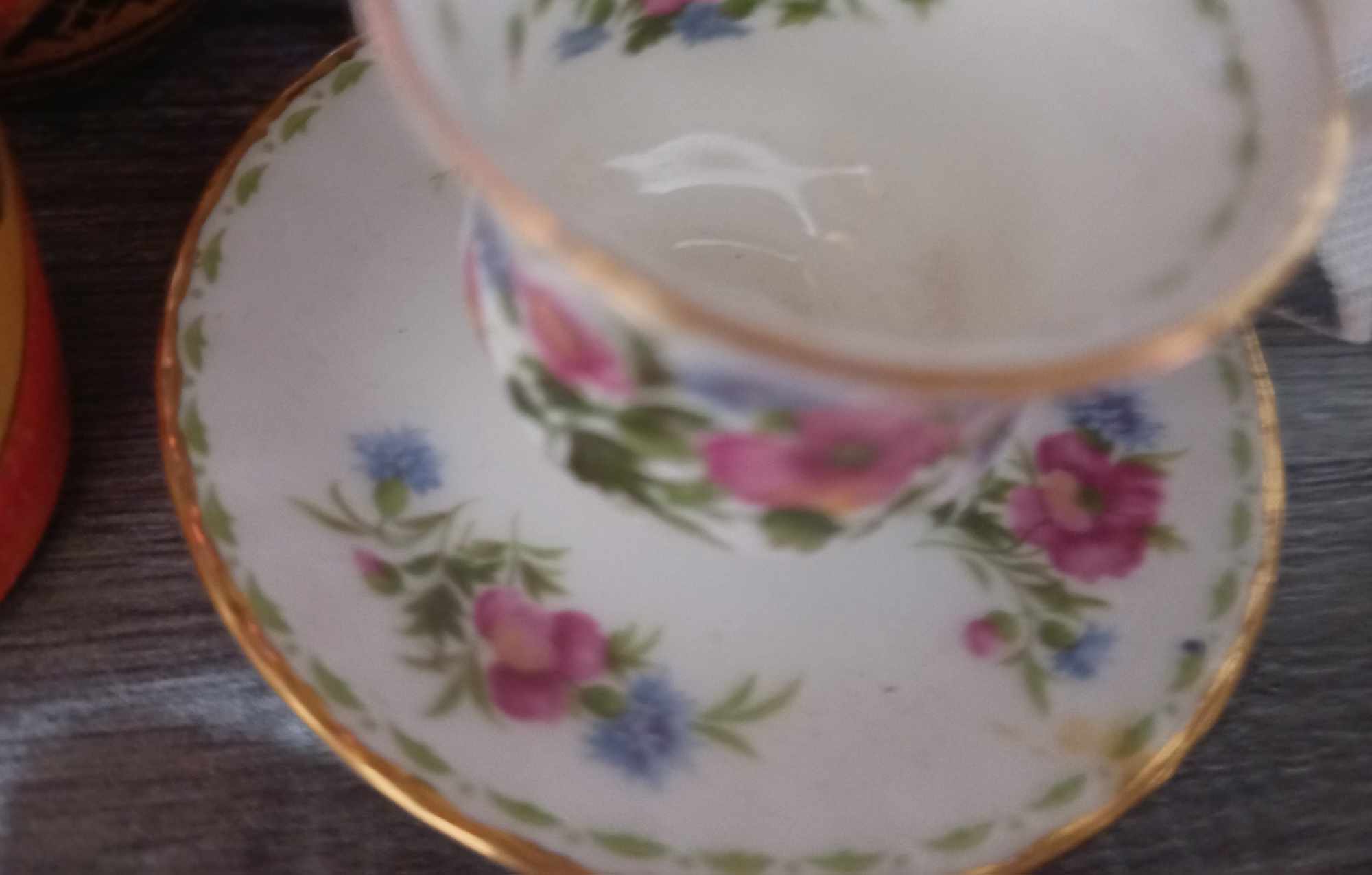
In the attic she finds a box. Underneath an epidermis of newsprint lies a blue-and-white china teacup, part of the set used by her grandma every week they went to see her.
The china, thin and determined, pulls her into a warm room and seats her at a groaning table.
Every cup has a saucer, every plate has a doily, silver sugar tongs rest on white cloth though no one takes sugar in the tea poured from the squat pot on top of milk. On a birthday, the grandchildren are given sugar lumps and pretend they are horses.
They can start when Grandma sits. The plates are passed, achingly slowly, sandwiches first. Egg and cress, ham and English mustard, soggy cheese and tomato, too much marg, bread cut into triangles, crusts removed.
Then the homemade cakes are paraded: a Victoria sponge oozing cream, a dark ginger cake, scones bursting with fruit.
The woman sees herself drop a saucer, Grandma picking up the pieces as if her fingers are tweezers, the saucer never to be replaced.
She looks in the box again, finding nothing.
Sam Szanto lives in Durham. Her poetry pamphlet, ‘Splashing Pink’ was published by Hedgehog Press and is a Poetry Book Society Winter 2023 Choice. Her pamphlet ‘This Was Your Mother’ won the 2023 Dreich Slims Contest and will be published soon. She won the Charroux Poetry Prize and the First Writer International Poetry Prize, and her poetry has been placed in journals including ‘Northern Gravy’ and ‘The North’. She was awarded an MA with distinction from the Poetry School / Newcastle University in 2023. Find her on Twitter/X Instagram and on her website.
There is a squat/stout duffer in a windbreaker and a Mets cap on the outskirts of the park playing a rickety 5 string and hoot’in and holler’in.
I have no idea what he is singing. There is no discernible melody. Every now and then he stops/ freezes/ puts his forefinger in the air to take some sort of measure before plunging back into his flailing guitar. After another stuttering burst he will stop/ then let loose with an elongated cry to the sky/ punk operatic/ style
nobody seems to stop/and listen/he does not have a container for contributions and probably would not get much trade/ he is playing/for his own/self/and that is / enough It’s/utterly senseless/ wholly out of key. Beyond the realm of anything/ resembling cohesive musicality /rambunctiously obtuse
yet imbued with an innocence that casts proficient excellence into a pallid light.
His songs/ performance/ like life/ a messy and inconclusive/ thing/
You can have/ your polished practice and Carnegie aspirations/ and make of that an evening/ with class but I like the way this codger lets her rip/ this ragged chanteur/ airs it out/ no class/ no talent/ but lotsa / style
Shine on
Shine on oh perishing republic of dreams oh community of outcasts Art in the essence with no need for product or commodity Convivial souls rabid rebels minds afire Provincetown dunes Christmas Eve Greenwich Village the 20’s to the 50’s Innocent fervent glass of beer cafeteria a quarter Shine on oh perishing republic of dreams!
Winged Ones
Bustling old fella dashing biddly bop by dressed to the nines with briefcase stuffed under his arm equipped with fixed maniacal grin jabbering to himself while confirming his expressions to an equally jazzed and jaunty westie he calls Ralph trailing exuberantly behind let’s me know that there are actually still some living beings out there to learn from
Tom Pennacchini is a flaneur living in NYC. Has had stuff published at The Free Poet, Mojave Heart Review, Jalmurra, The Scarlet Leaf, Poems for All, Free Lit Magazine, Backchannels, Loud Coffee Press, Mason Street Journal, Portsmouth Poetry, the Fictional Cafe KGB Lit Journal and the upcoming issue of Synchronized Chaos as well as the end of year issue of Every Writer Magazine.
Daphnaie becoming she-conjurer Thou – ethereal enlightenment You are a sunflower The elixir is tender poetry And You are longing for wisdom I wish, she had hope for destiny Rumination
Epimelides bewitching she-seer Thou – bucolic romanticism You are a violet The solitude is delicate poesy And You are yearning for acumen I wish, she had desire for circumstance Contemplation
Hamadryad comely she-hex Thou – demure existentialism You are a rhododendron The epiphany is supple verse And You are yenning for foresight I wish, she had aspiration for fate Cogitation
Meliae knockout she-sorcerer Thou – dissemble impressionism You are an Azalea The aesthete is breakable ode and You are thirsting for insight I wish, she had expectation for future Reflection
Phoebe resplendent she-magician Thou – effervescent stoicism You are a begonia The plethora is dainty song and you are spoiling for caution I wish, she had ambition for inevitability Celebration
Chrysopeleia amazing she-prognosticator Thou – stunning Epicureanism You are a hyacinth The delicacy is frail rhyme and You are itching for judgment I wish, she had plan for afterlife Consideration
Dryope sublime she-charmer Thou – vigorous Platonism You are an iris The felicity is effete rime and You are hankering for poise I wish, she had aims for fortune Thoughts
Erato statuesque she-enchanter Thou – glamorous nihilism You are a lily The nemesis is feeble minstrelsy and You are aspiring to prudence I wish, she had belief for hereafter Meditation
Eurydice graceful she-prophet Thou – halcyon eudemonia You are a primrose The scintilla is weak rune and You are lusting after sanity I wish, she had faith for paradise Attention
Tihorea dazzling she-diviner Thou – idyllic historicism You are a marguerite The ripples are soft lines And You have eye on sophistication I wish, she had achievement for karma Intuition
Paweł Markiewicz was born 1983 in Siemiatycze in Poland. He is poet who lives in Bielsk Podlaski and writes tender poems, haiku as well as long poems. Paweł has published his poetries in many magazines. He writes in English and German.
You can find more of Paweł’s poetry here on Ink Pantry.
I was young once, Although I felt so old. I should have been More childish, Soaking up the wild morn.
Now what am I? Old and fat and bald. Yet still younger Than so many Who only exist in the past.
Living In The Now
As we continue our slow destruction Of the only planet Where our species lives, Remember to pause To display a middle finger To all of your neighbours And every plant and animal you see. Especially remember the little children That still run and play. Give them both barrels And your cruelest laugh. As for infants in bellies All those yet to be born, Bare your ass to their future. Let them and others mourn.
Lost Again
With sorrow I looked At the road ahead And the road behind.
How did I get here, This place that is So other?
Ah well, what is life Without mistakes? Sometimes the best Memories come From bloody errors.
I will continue moving One foot after another Until I get to Wherever I go,
Whether it is A shining city, A place not worth Mentioning, Or more of the same That was and will be,
Regardless of My best intentions Or my failed sense Of direction.
Hey Baby
Yes, I am your baby. Goo goo goo goo. I love it when you feed me All your juicy stuff.
Yes, I am your baby. Goo goo goo goo. I love it when you hold me And when you treat me rough.
Yes, I am your baby You better not have another one. If I find out you do It will be the end of all your fun.
Yes, I am your baby. Goo goo goo goo. And I will always be your baby So long as you stay true.
The Language Is Everything
A poem is a short story. A short story is a poem. This is not always known. It shouldn’t be.
All these words, merely outflow From that lake of sewage Deep inside.
Come and take a swim. Dive in. Practice your backstroke, Doggy paddle, and crawl.
You may want to shower After you climb out, But you will never feel Completely clean again.
Far From Home
In the world but not of it, You are merely a tourist Far from home.
You watch, you listen, You taste all the flavours Of good and evil.
You hope your credit card Will pay for all your crimes With a single swipe.
If not you may need To wash dishes Or go to prison
Until you are pardoned Or a sufficient bribe Of prayers and offerings
Set you free enough To return home To rest, recuperate,
Work and save For another trip To lands forbidden,
But so much better Than more Of the same.
Existing in the poem
These verses And so many others Seem hardly worth it, Both to write and read, But they come anyway, And go where they go.
They are seen by eyes Unprepared for Such foolishness. The reader howls Before crumbling paper And throwing it away.
Oh, to be a banker Or a plumber Instead of a poet. That would be A solid life, More easily understood.
Unfortunately I have this curse, This infection That will not go away.
Words are the life Of a poet. There is only Their sound And how they look On the page.
The rest of life Is an illusion, A mirage A hand might reach for, But never grasp Or comprehend.
Joseph Farley has had over 1350 poems and 140 short stories published. His 11 poetry collections include Suckers, Her Eyes, Longing For The Mother Tongue, and Yellow Brick Pilgrim. His fiction books include Labor Day, Once Upon A Time In Whitechapel, Farts and Daydreams, and For The Birds.
You can find more of Joseph’s work here on Ink Pantry.
Silence fills the air, as I sit, alone, among endless rows of graves.
I wish for heartbeats, for laughter, for tears.
I miss the noise.
But I know that I can’t have it.
I can hear the footsteps of the living, but there’s no sound for me.
Silence surrounds me, as I lay in my own void, a void of life, eternal and silent.
I will never know happiness again.
But I accept it, lying here, alone, among endless rows of graves.
It was fun being dead for a while, to feel the quiet and the peace. I thought hell would have fire and brimstone, but I guess that’s only what they tell us.
I’m moving on now, accepting my reality. And I know that one day, I’ll find my meaning, In the cold abyss.
But for now, all I have is silence, a silence that never ends.
And I bet there’s fire in heaven.
Foolish Understanding
The things I thought unmeetable—unattainable—as if from Eden— Forever luring us with what could never be pure in value as it might have been— Or so we’ve all been told: But why should my heart believe it this for so? This is what I know! My dreams! As clear as the words of my own ears— Unencumbered by notions of what I was or would be. Just a child at that point in time; Unaware of the traps or whims of foolish understanding. Always trying, always striving. And now, standing here–where was I standing before?
Redacted
Routine is the devil of a stranger: A death spell is different only in name. 18th century England–the rise of industrialisation, the first factory system—the spilling out of a Satanic rage. Alone, for I sought you everywhere. In Spain, at five paces away from me, Your torso moving gracefully like a flower blooming— So perfect you were; I should have found a way to grasp the beauty in it: To be with you was to be good, filled with God’s love, But in that moment my heart dared leap out of my chest In the franticness to make time stop for us… To make us both strong enough to last eternally — To love us amidst the world’s fear of each other— It is not as easy as it seems… It is enough that we are together. You are here beside me. And that’s enough.
Close To Me
It’s lovely, the number of times you look down on me and forget to see, as if from your corner of the sea— You could not hear once I begin to plead; It takes a little time before you come, To coax me back again up to the dreams. That there is no moon, only we are nearer the stars— I am but asleep. And yet, here we lie: Far apart. At some point I think to wake myself up, To make sure I haven’t been lying, And when finally I realize it’s true— I find myself so faint; Holding too tight; Too cold. I think it may be time for a change after all. But as things are today—or so it would seem—I’ll sleep here alone under the covers awaiting you to come, more closely to me at last…
Claudia Wysocky, a Polish poet based now in New York, is known for her ability to capture the beauty of life through rich descriptions in her writing. She firmly believes that art has the potential to inspire positive change. With over five years of experience in fiction writing, Claudia has had her poems published in local newspapers and magazines. For her, writing is an endless journey and a powerful source of motivation.
When you put on your mask your glasses fog up as your nose exhales all that super-saturated air and the world acquires a halo putting Homer’s early-born and rosy-fingered dawn to shame but you cannot see pulling off the mask solves that the areola fades the world sharpens it is still beautiful but with risks Sirens still call your name at Hooters Scylla and Charybdis whisper in one ear to sell that stock you bought last week and to buy more of it in the other nothing has changed much risk is everywhere mask or no mask antibody or no antibody take your pick be like Wile E Coyote that manhole at your feet may be a figment of your imagination or maybe your gateway to the netherworld
This Could Be Enormous
I’m not saying we have to be exact what I’m saying is try to be accurate within certain limits I mean how thorough are they? they’re going to give this the once over they’re not fact-checkers or CPA’s they are bean counters and you know how they think it’s all about the head bean counter and as we all know he knows nothing except what is whispered to him when the lights go out this could be the next big thing if we don’t blow it there is no such thing as a national average even they know that but they are stuck with their protocols the only one we have is to make it look good on paper now, here’s a ream of Grade 3 put your mark on it and do us all a favour don’t look back
Short Story
Eternity long as it may seem is like a short story Beginning, middle & end conflict, struggle and resolution Guy de Maupassant could have written it
In the Beginning there was just Him with all this time on His hands He wasn’t lonely but He fretted a lot about His omnipotence and what to do with it a lot of it had to do with miniscule details what atoms He favoured the chemical structure of hydrocarbons and He kept wondering which one would work out the best although He should have known this went on a long time in geologic time yes it is pretty lengthy but in story-telling time only a third of the whole the conflict was His alone that probably made Him grumpy as there was no one to blame yet
Then He made up his mind Bang! Which was nothing but a diversion designed to rid the universe of the Evil One and it didn’t work He thought it might but deep down knew better and the Evil One prospered due to us after all we had the common bond of both being kicked out of somewhere so we all struggled and He fretted some more having underestimated our cleverness our intransigence and our insatiable lusts and watched as His plans headed downhill
Finally things will get resolved we aren’t there yet but He, having whipped out His slide rule sees that about 15% of us actually followed His rules and the rest of us are like Pop-Tarts in this huge toaster cursing part of the resolution is what they call the denoument the outcome of a doubtful series of occurrences which now leads to sadness and this is where He finds the culprit and says: ‘I knew it was carbon all along’
Paul Smith is a civil engineer who has worked in the construction racket for many years. He has travelled all over the place and met lots of people from all walks of life. Some have enriched his life. Others made him wish he or they were all dead. He likes writing poetry and fiction. He also likes Newcastle Brown Ale. If you see him, buy him one. He is a featured poet at Mad Swirl.
he worked there too I would see him in the foyer coming in for evening class asking me about open mics chatting scenes & actors mouth wide goatee curling like a thick black hedgehog under attack always a laugh a long toothy laugh & then his tall man’s hand extending & shaking
& then I stopped seeing him & then I didn’t work there anymore anyway & then I heard the news
a balcony somewhere hot
he picked up the rock
expecting to find perfection
but instead found dead bugs & happiness
he didn’t notice either
because that’s not what he was looking for
Fruit Bowl
she rearranged my furniture while I was out & later tied me to a chair & used a blindfold
she bought me a fruit bowl blue fairy lights and a Paddington Bear coat
I regretted ever letting her have a key
wealthy daughters come along like rain
too much & not enough
after I’d finally found an umbrella her father remarked that I hadn’t been up to standard in the first place
twenty years later I still have the fruit bowl & I’m still laughing
Mum Shagged the Milkman
but it’s not as bad as it sounds
she married him & he was a barman when they first met
then later at some point my brothers & I attended their wedding in pin stripe shirts
I still remember the day I found out I was the dictionary definition of a bastard
I still remember feeling a little surprised disappointed even that the words had no effect on me
but maybe that was when I first learned words can just be words
& nothing at all
A Golden Ale Sky
the horizon is pouring itself almost imperceptibly slowly westward shifting its every thing fraction by fraction
either that or I’m more fucked
than I realise
the remedy
for most things
sleep
& the warmth of someone you’d die for
Danny D. Ford’s poetry & artwork has appeared in numerous online and print titles. He has sixteen chapbooks to his name, including the recent collections Rum Lime Rum (Laughing Ronin Press 2023) and Sucking on a Wet Pint (Anxiety Press 2022). He can be found in Bergamo, Italy.