my dustcart a shield i grasp at happy meal boxes in an unkind wind my mother isn’t angry she’s disappointed
i cradle the bear her loving companion since childhood i ask it straight what do i do now
i walk the field where we built straw castles as children i heard recently the first of us are beginning to die
after years on the run i’ve finally caught up with myself we are both getting used to the idea
filled with the spirit she confesses on the night bus from town apart from the driver we vote she shall be forgiven
Until recently Steve Black was a road sweeper living within spitting distance of London, and is now looking for gainful employment. Published now and then.
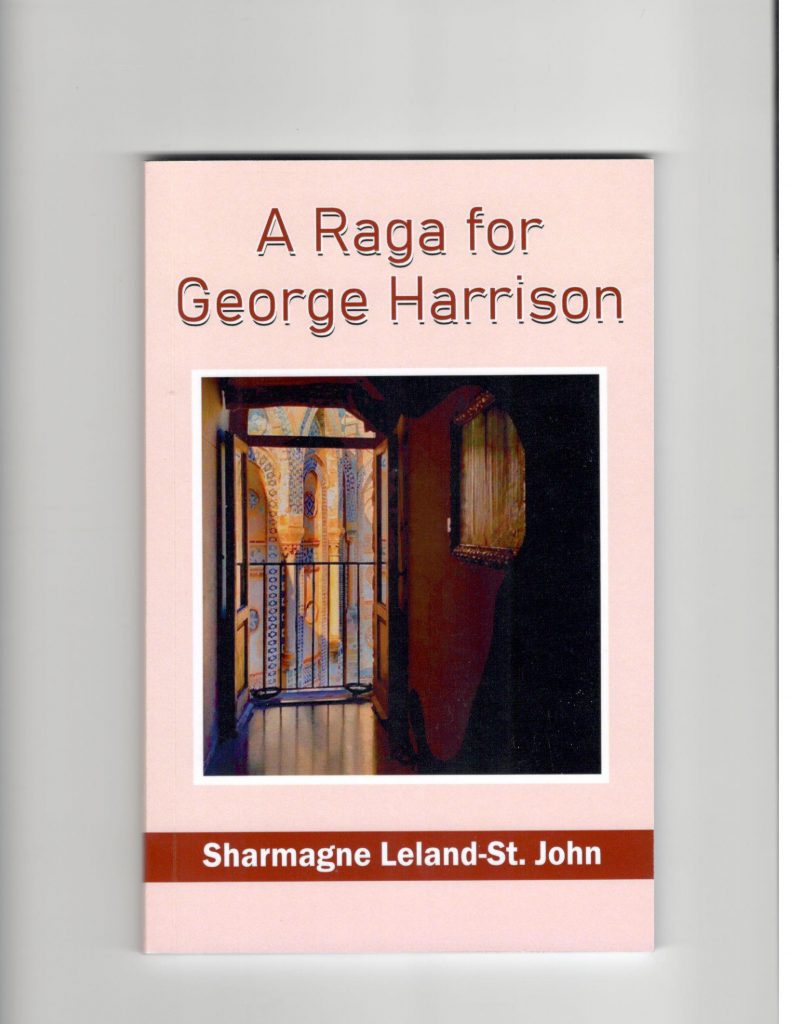
Native American author, concert performer, lyricist, artist and filmmaker, Sharmagne Leland-St. John, is the Editor-in-Chief of the 19-year old literary and cultural arts journal Quill & Parchment and the founder of fogdog poetry in Arlington, WA. Widely anthologised, her recent publications include Contingencies (2008) and La Kalima (2010). She has also edited Cradle Songs: An Anthology of Poems on Motherhood (2012) which won the 2013 International Book Award Honouring Excellence in Mainstream and Independent Publishing.
A raga is a melodic framework for improvisation akin to a melodic mode in Indian classical music. Like scales in Western music, a raga helps to define the mood for a piece of music but it does so in much more detail. Traditionally, each raga came to be associated with a particular emotion, often with a time of day and season. In A Raga for George Harrison, the season is very much autumnal because several of the poems have an elegiac atmosphere about them.
Reading these poems we take a walk through the artistic, cultural and political history of our times. In a general way this is particularly apparent in ‘Hey, It Was the Sixties!’ but in a more specific way it is apparent in the series of poems written in memory of writers, musicians and artists and individuals who were caught up in the fight for social justice. Of the former her subjects include George Harrison, the musician, singer, songwriter, and music and film producer who achieved international fame as the lead guitarist of the Beatles; model and film actress Claudia Jennings; singer-songwriter Janis Joplin; author Virginia Woolf; the poets Sylvia Plath and Allen Ginsberg and the record producer Paul Allen Rothchild. Of the latter, her subjects are the poet activist Garcia Lorca who spoke out against the brutal regime of the Spanish dictator Francisco Franco; Hector Pieterson, the South African schoolboy who was shot and killed during the Soweto uprising when police opened fire on students protesting about the enforcement of teaching in Afrikaans and Anna Mae Pictou-Aquash, a Native-American activist who was murdered in 1975.
Delving beneath the surface, many of these poems have connections. Both Janis Joplin and Claudia Jennings struggled valiantly with their addictions and died tragically at a young age. Paul Allen Rothchild produced Janis Joplin’s final album, ‘Pearl’. Sylvia Plath and Virginia Woolf took their own lives. Hector Pieterson and Anna Mae-Pictou-Aquash were young people who were caught up in the fight for social justice and also died at a tragically young age. For Leland-St. John, there is an emotional connection as well. She knew some of these people personally and all of them, in one way or another, left an impression upon her as they have on us. Collectively, they defined the age in which they lived and died.
Here are the opening lines to ‘Pearl’, Leland-St. John’s eulogy to Janis Joplin:
They came to mourn They came to cry They came to wonder How someone so young Could ever die
Several of the poems in this collection are enhanced by Leland-St. John’s use of exotic language. In ‘La Kalima’ she writes of ‘silk saris whispering raginis / pitched to sultry winds’ and in ‘Daughter’ of ‘bushel baskets / brimming with love’ and ‘pots of kohl / and pomegranates,/ towers of silk and / lumps of myrrh.’ The collection in itself amounts to a travelogue of exotic places taking in countries as far apart as Switzerland, Japan, India, Egypt and Peru.
Colour comes as no surprise, given Leland-St. John’s deep engagement with ekphrastic poetry and appreciation of art in general. The poems in this collection are dotted with ‘blue fire escapes,’ ‘ochre meadows,’ ‘apricot blossoms,’ and nasturtiums that are ‘the muted colour of Devonshire cream’.
Culinary delights come to the fore in a number of poems as Leland-St. John draws together all the senses into a heady cocktail of delight. In ‘Nasturtiums’ she writes:
I always used to cook with flowers when my life was simpler and my thumb greener. Squash blossoms dipped in a rich cornmeal batter were a staple at my dinner table.
Ever since I was a small child I have been attracted by the vivid colours of nasturtium flowers growing in kitchen gardens and have always thought it amazing that beauty as bold as this should thrive so well in poor soil. This is why Leland-St John’s poem ‘Nasturtiums’ has such a special resonance for me. I like the way she describes this ‘Indian cress….with their asymmetrical / celadon leaves’ and how their flowers ‘tantalise, tease / with their piquant promise’.
Time and again, Leland-St. John reminds us of the potency of all the senses in evoking memory and uses this to great effect as the starting point for several of her poems.
Variety is key to this collection. In addition to the eulogies that open this volume, Leland St-John writes lyrically on subjects such as love and loss, and also with considerable humour in the sensually charged ‘I Said Coffee’ and ‘Things I’ll Do Now That He’s Gone’ which is a poem that finds strength out of heartbreak for a lost love through the medium of humour:
I’ll have an affair with Bob Dylan I’ll lose 10 more pounds and become famous for something truly inane It could happen you know
Reading these poems has made me very conscious of the way in which Leland-St. John captures the emotional mood of each piece early on and proceeds to build upon it in the body of her text. This is particularly apparent in ‘There Were Dry Red Days,’ ‘Daughter’ and ‘Michael,’ a poem written for the producer Michael Butler who brought ‘Hair’ from the Shakespeare Free Theatre to Broadway. Lost love is recalled in ‘All He’s Left Me’ and the poignant poem ‘Tiny Warrior’ speaks of the loss of her infant son, Nikolai, ‘Who never saw the spring’. Later in the book, spring returns in ‘Apple Blossoms’ where Leland St-John evokes a wonderful sense of innocence conveyed through the employment of short lines and a simple rhyme scheme.
Part of the appeal of these accessible poems is that they come straight from the heart with an emotional pull that is strong enough to engage the reader without being mawkish or in the least bit sentimental. The conversational tone makes for a dialogue that is both compassionate and compelling. It is also very positive in its affirmation of life: ‘World I love you! Life I love you!’
Sharmagne Leland-St. John: A Raga for George Harrison, Cyberwit.net (Allahabad, India), Thompson Press India Limited. 2020. Available via Amazon.
You can find more of Neil’s work, including his own poetry, and reviews, here on Ink Pantry.
Neil Leadbeater is an author, essayist, poet and critic living in Edinburgh, Scotland. His short stories, articles and poems have been published widely in anthologies and journals both at home and abroad. His publications include Librettos for the Black Madonna (White Adder Press, Scotland, 2011); The Worcester Fragments (Original Plus Press, England, 2013); The Loveliest Vein of Our Lives (Poetry Space, England, 2014), Sleeve Notes (Editura Pim, Iaşi, Romania, 2016) Finding the River Horse (Littoral Press, 2017) and Penn Fields (Littoral Press, 2019). His work has been translated into several languages including Dutch, French, Romanian, Spanish and Swedish.
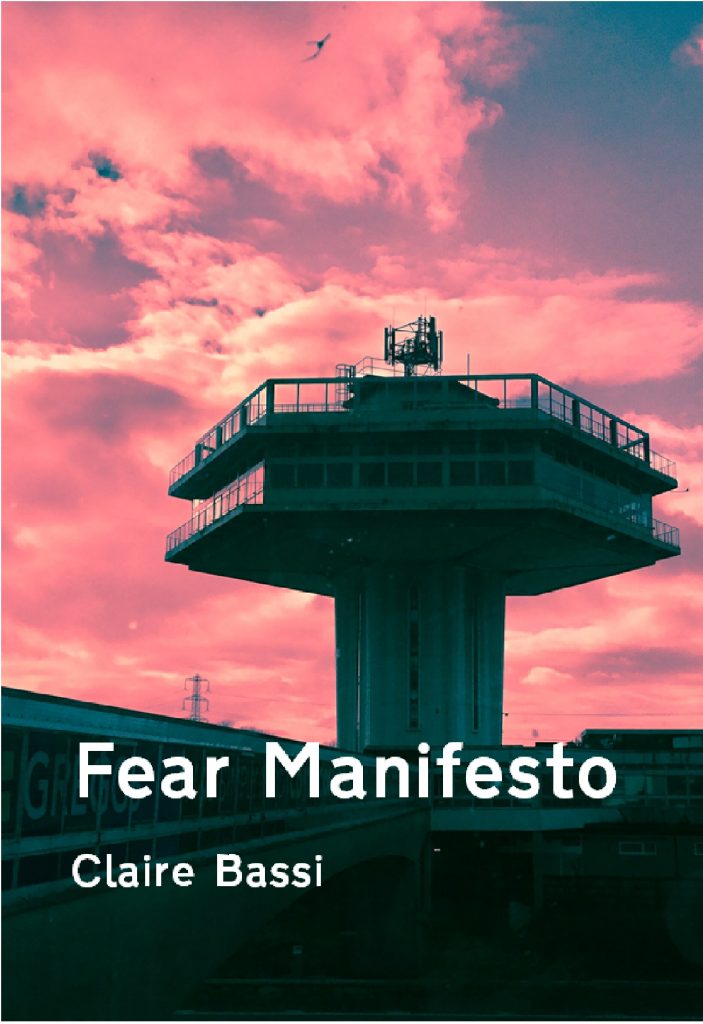
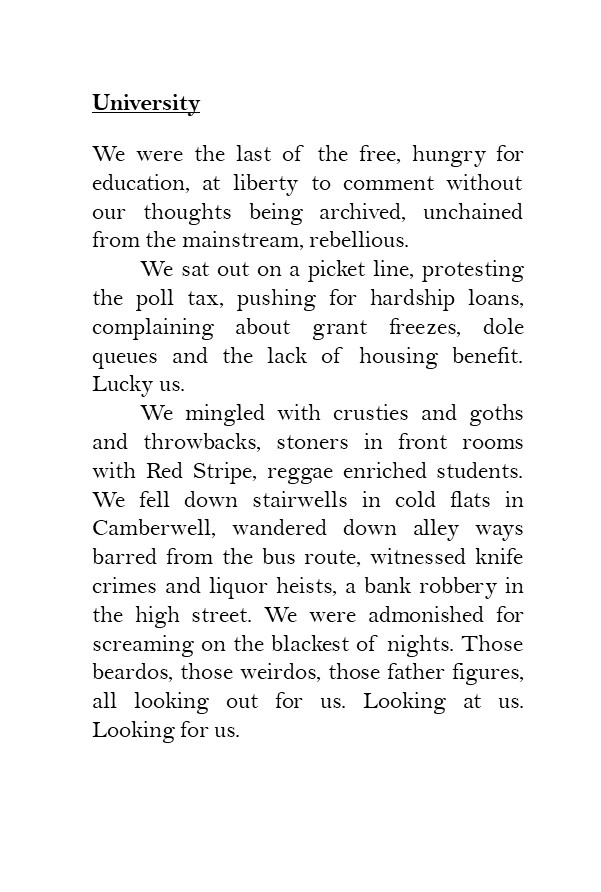
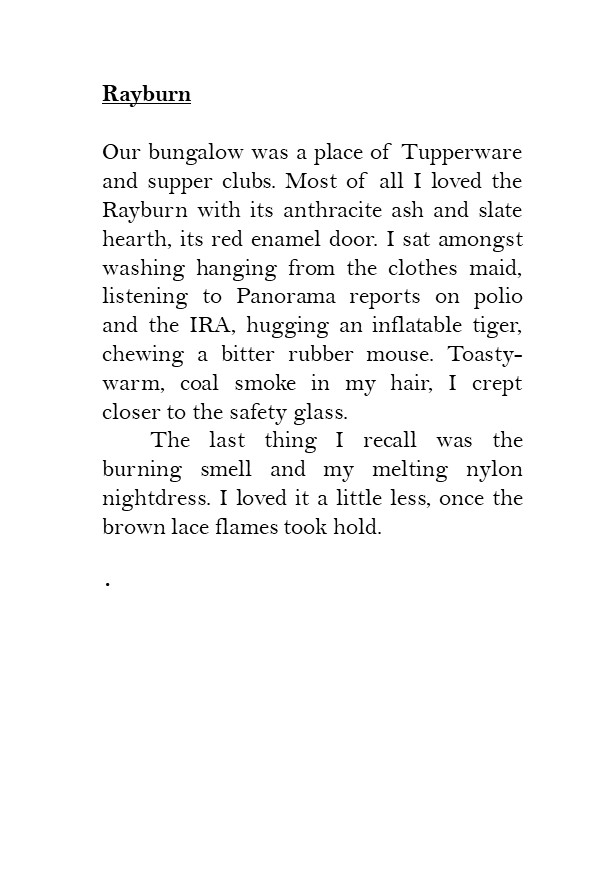
Claire Bassi’s Fear Manifesto is a lockdown project that she did with her daughter Avarni. Claire’s flash fiction and Avarni’s photography are the perfect combination. The themes are hauntology and memoir.
Snippets of Claire’s first book, Park Symposium, is also available from Amazon.
Check out more of Claire’s work here on Ink Pantry.
after Christmas I re-wrap separately depending on their rank angels humans and beasts
Jesus and his earthly parents are first to be accorded tissue paper privacy
the King who comes bearing gold has lost his crown after years of journeying and annual storage
ox and donkey fit together knee to knee in a corner of the box
lastly a sheep that seems to have strayed into the mix from a childhood farm set
Close quarters
in summer the boards under the house are dry and reverberate when trodden on
birds treat the veranda as theirs hopping and pecking at leavings under the outdoor table
we wait all year for this bearing the winter like a bye-child spring like fresh news
then the heat on the planet that never quite suits us our ancestors left for us to resolve
January break
the barber from India spends his days razoring the edges of beards of large men in the provincial centre
this is the first I’ve heard about the subcontinental diet and its spices affording staunch resistance to coronavirus
from the park across the street the fountain sings and gulls disagree concerning entitlement to takeaway scraps
nearly everything in town commemorates somebody even the ambulances parked regularly at lunchtime outside hot bread shops
single rooms to rent up a staircase no longer there off the laneway between two main thoroughfares
the man in the bookshop advises me to hang on to change for the meter though I’m on foot
in the heat the council-commissioned murals slide down buildings to pool colourfully on the ground
Emissary
mail comes late and is sparse
requests for payment real estate flyers
only the occasional much creased
and redirected envelope from the frontier
one containing dead leaves
another crushed parts of a praying mantis
the kind of messages composed in the
kind of script a ghost might send
Tony Beyer’s print titles include Anchor Stone, a finalist in the poetry category of the 2018 New Zealand Book Awards, and Friday Prayers (2019), both from Cold Hub Press. Recent poems have appeared in Hamilton Stone Review, Molly Bloom, Mudlark, Otoliths and elsewhere.
I won’t cut my arm just to see myself bleed. Nor will I roam the cemetery trails, as if the dead are the perfect company for the likes of me. Not that I’m about to take up dancing. Not with these clumsy feet. Or give up alcohol. I have too many demons deserving of drowning. But I won’t stick my head in places from, which it’s not easily extracted. Like fence railings. Or stocks. Not that I’m about to find someone and then do everything together. But I won’t lop off my toes with a scythe. Or crack open my head on the rocks below. No affairs of the heart. But no opiates either. And no passion, for good or for bad. I won’t deny my body what it needs to survive. But nor will I promise these bones, this flesh, anything beyond that.
This time it will be different. The highs, the lows, will be so controlled they’ll think they’re twins. Such is my pledge. So I go on from here, Ecstasy is uncalled for. Despair no longer suits my style.
It’s Saturday night. I’m not going anywhere. My mind is babysitting my heart. It’s not going anywhere either.
Mystery Woman
notate each awakening and flash of foreknowledge;
on your balcony, face east, over ocean to where the horizon stretches to no end in sight;
the country can’t get enough divine philosophers, seers who tell our fortunes in a crumple of feathers or a spinning ball, who reach into the dark chasm of the days ahead, extract a telling tale;
wear icons round your throat, talismans on your wrist; spread Tarot cards before you, stir tea leaves with your fingernail;
explain the enigmas, lift the shadows, quiet the doubters, offer holy incentive to the believers;
I think you’re the one but I need you to tell me;
it’s the mysteries of the universe and it’s all in a life’s work;
Death Of Miss America 194..
“Say, does the coffin pinch?” No one thinks of you anymore. Miss America 194… Adios…. Ah, Miss America. So old. How dull. Your compass watches more than your gallery. And the angel of numbers is counting down to zero when it suits. And meanwhile, you, in the wind, flutter worse than butterflies – by Government declaration, the moon is wrinkles, the sun is red-streaked eyes. You’re no longer forbidden the fear of winter’s white bear. From one of one now a miniscule fraction often billion – gold dust and tiaras…goodbye. Hunting with memory, there’s still no game. Just yawning Miss America, queen of all states but not one of them thinks of you anymore. Nor do sun, moon, or stars. Just the sullen greenish-yellow air. Only mildew is left to ask, “Do your shoes pinch?” Lightning, thunder, even sky is prohibited – the weather has settled on streaky wind whipping the flesh from the bones of your face. No one believes that you were lovely once. Your chalk flames out shrill on the heavenly blackboards.
Two for the Sno-Cat
Joe’s fifty seven and his knees won’t stop whining, Anne’s twenty seven, recovering from a busted relationship. And within this glacier, lies a man, his body preserved by his moment of death, even to the seal meat in his stomach that’s caked in frozen acid. His skin is hard as Arctic earth, eyes closed by the weight on him. His heart’s encased in a jewel box of ice, his blood stalled on orders from his perfectly encapsulated last breath, His brain is a prison of neurons awaiting a thought, a sensation, so all can break free. A Sno-Cat, piloted by Joe, navigated by Anne, is grinding its way through the area, studded steel belts ripping up the surface, about to accidentally unleash the distant past on the world. “It’s hard getting old,” he says. “You should try the singles scene,” she replies. Within this glacier, lies a man about to meet his public. He’s a thousand years old, in a time when no one else is.
The Living and the Dead
The lilies are born on their death-bed. Come morning, these pretty blooms will be all funeral. I stare out my window at their cool breeze wake. How they flutter. How we’d all flutter if we didn’t know the truth.
I’m in a coffee shop taking forever over the latest nectar from the Kona Coast. A lovely young woman nibbles on a muffin, reads The Great Gatsby. I swear her lips move reciting Daisy’s lines. I’m on the west coast for a week. I’ll never see her again. That’s a kind of death.
It can join shooting star or glimpse of scarlet tanager or grizzled face in the attic window of the old house – their brief is brevity. Here then gone, my life is this constant killer.
But some things stay around. I have loved ones. I’ve got possessions. And a neighborhood, a town. I may live for the transitory but I live in the permanent.
John Grey is an Australian poet, US resident. Recently published in the Homestead Review, Poetry East and Columbia Review with work upcoming in the Roanoke Review, the Hawaii Review and North Dakota Quarterly.
You can find more of John’s work here on Ink Pantry.
‘They say I’m mad – I say they’re mad – I lost the flip – That’s me locked up in Bethlem Hospital – “Come boys, who’s for Bedlam?”‘
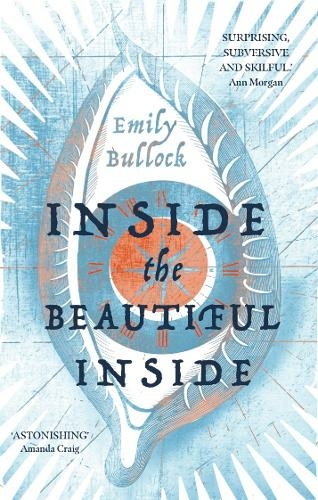
Personally, as an avid devourer of all things in written form, the sense of utterly losing oneself within words is a tough feeling to beat on an emotional/sensual level. On those occasions when the creative force possesses the skills to fully immerse us within their world, via a strong first-person perspective, there is no better feeling than to see this through the eyes of a thoroughly well-crafted character. Inside The Beautiful Inside by Emily Bullock (published by Everything With Words) is such a grand occasion, worthy of our literary senses to throw a party, open up the Prosecco, turn on the karaoke machine and don the glittery, disco trousers in celebration of a very talented author in full, creative flow.
Plot-wise, the novel is based upon an actual historical figure. In the late 18th century, James Norris was a marine; British by conception, American by birth. Although tough and hardy, James finds himself imprisoned within London’s notorious ‘Bethlem Hospital for the Insane’ in 1800. It is here where we first encounter James as he struggles to cope with the psychological aspects of his strict – and often brutal – confinement.
As a side plotline, we also know that James has personal issues with a certain Christian Fletcher; famously renowned for his role in overthrowing Captain Bligh on the ‘HMS Bounty’ in Polynesian waters during 1789. Once upon a time, James and Christian were brothers of the sea; bound by their experiences and locked in deep friendship. However, we soon learn that James now holds Christian Fletcher in utter contempt, now wishing only to brutally end his life. All James needs to do is to somehow escape the considerable perils of Bethlem Hospital, known to its inmates since its conception in the 1400’s as ‘Bedlam’. Once free, James can pursue his illustrious foe and kill him.
It’s a simple plan. Yes, the guards are both numerous and brutal. True, James has been told he only has months left inside the asylum before being released, but can anything that he sees, or hears, be trusted? Can James rely upon his natural marine abilities to overcome all odds? How will the guards and doctors react if he does so? As readers, we are with James every step of his tortured journey; constantly searching for any speck of hopeful light in this world of twisted, tormented darkness.
As can be imagined, in terms of literary genres, this subject matter comes with layers of added depth and emotion. As our narrator and guide, Emily steers us through every step of James’ perilous voyage with considerable ease. For this, she is to be soundly applauded, for at times the narrative intrudes into very personal areas, including loss of mental balance, brutality and illness.
Emily’s chosen writing style is paramount to the success of her narrative. In a harrowing, mind-altering world, which could easily drag the reader down into woeful contemplation, Emily’s writing style tends to adopt a series of short, punchy sentences, often containing only a singular verb. This strongly reminded me of being back at university and being introduced to writing in ‘streams of consciousness’, whereby thoughts and ideas ‘tumble’ out in a rapid form, as expressed here with James laying upon his bed and returning to his childhood.
‘I am twelve years old. Laying flat on my front, up in the hayloft. Dust and husks skip in the air about me. I’m supposed to be turning the hay, but I’ve fallen asleep in the warm gloom. Arrows of daylight cross the loft floor. I was dreaming of a battle, leading the cry on a bright, white horse, men cheering. Rub my eyes. There’s a creaking noise behind me. I roll over. And she’s there, in the far corner, under the eaves.’
This style greatly helps with the pace of relaying the story, as well as focusing upon a very personal, individual narrative from the main character, through whose eyes and senses we become aware of everything going on. Thus, as James’s world becomes darker, we gain great clarity about his current mental well-being on any given page of the book.
This is skilful writing at its peak and allows us to slip easily into James’s life, his hopes, fears and state of mind. James is strong and we’re naturally rooting for him. Not because he is a paragon of virtue, but due to the fact that he has been well-crafted for us by an artisan writer. Yet also, we hold a natural degree of trepidation that he might not get out of this wholly intact; either physically, emotionally, mentally or a combination of all three. The mere fact that we care is entirely down to Emily’s impressive characterisation.
This is a mighty, insightful and powerful book guaranteed to instil thoughts that will cling to the memory for considerable years ahead. As with her 2015 début novel,The Longest Fight, which I was fortunate enough to review for Ink Pantry, Emily’s research skills are impeccable and it thoroughly shows throughout every page of the writing here.
Highly impressive and a must-read. More please, Emily.
‘I’ve left footprints on a glacier – I’ve seen the Sun burst out of the Atlantic – I’ve eaten sweet papaya from a low-hanging tree in Tahiti – I’ve glimpsed Paradise – Life made sense when I was all at sea.‘
Emily Bullock won the Bristol Short Story Prize with the story ‘My Girl’, which was also broadcast on BBC Radio 4. She worked in film before pursuing writing full time. She has an MA in 19th Century Literature from King’s College, London, and an MA in Creative Writing from the University of East Anglia and completed her PhD at the Open University, where she teaches Creative Writing. Her debut novel, The Longest Fight was shortlisted for the Cross Sports Book Awards, and listed in The Independent’s Paperbacks of the Year.
CALENDAR OF MARBLE REINCARNATION METALLIC TASTE OF ASHES BURNING FEATHER THIS SECOND HE….THE UNMISTAKABLE EROTIC LANGUAGE MUST NOT DECEIVE US/AUTUMN CRY OPULENCE LIKE A TRIANGLE & A DUEL/NEW ARCADES BECAUSE OF BECAUSE WINDOWSPEAK PLUM NUDITY & NULLITY/STORYINSOIL EXPRESS OF SEMITONAL DOORS OPEN SOMEWHERE IN MY HEART/BEHOLD THE MATERIALITY OF THE CLOUD/CHAOS CROP BASS NECTAR SCARECROW NAMELESS DAY/PEAK RING PROXIMITY WHO WILL REMAIN/MELANCHOLY OF TRIBE SAD CAFE IMMORTAL PALOMA STEAM DEEPFEEL LAVENDER KITE SENSEFALL CAMARADERIE/SIMPLE MIND RELIIC MASS EPONYMOUS NIGHT DISCRETIONS/SERVANT OF THE SECRET FLAME CATHEDRAL LABYRINTH EXOTIC PULSE/SOUL OF SERENE PRAXIS UNDERNEATH MANIC SEAS/CANAL BREATH SUPERSCENE/CONTENT MERE OASIS SINISTER MYTH FOREKNOW/EXPERIENTIAL MODE MODERNE HOUNDS OF LOVE/SOLASTALGIA REMAIN/OCEAN MACHINE SCREAM OF SWIFTS/BY REWARD ACCENT ROAM TECHNICS & TIME THE FORCE OF THE INTOXIC/CYCLE AFTER CYCLE/YEAR AFTER YEAR/WORD AFTER WORD/CREAM TERMINAL SYSTEM OF SYSTEMS RHAPSODY PINPOINT/TIME’S FLOW STEMMED/TALISMANIC IDENTIFICATIONS & GHOSTLY DEMARCATIONS/VERMILLION DEEPCHORD GLOW THERE IS NO END
You can find more of Rus’ work here on Ink Pantry.
I have been extremely lucky In life Lucky in love Not so much in cards
Met the love of my life In a dream Then she became my wife
Over the years We have been extremely lucky As our investments grew and grew
Fuelled by the skill Of my financial advisor wife Born in the year of the Golden Pig
Making me wealthy In my old age
I often think meeting her Was like winning the lotto Or getting a jackpot
A jackpot of love That continues to pay me Dividends for life
Until the day I die With my lucky charm By my side
waiting for the day
I lay in bed Waiting for the sun to rise Next to my sleeping beauty Filled with her love
But with the dawning sun The nightmares come back
Filled with fearful thoughts Of what fresh insanity Will soon overwhelm me
I watch the daily news Absorbing the latest Scandal d’jour The latest fresh hell
As I watch with dismay America the land of my birth Tear itself apart
As politicians play games Thousands die Becoming Corona Ghosts
It is enough to make me Want to hideaway For the rest of my time On this earth
The Rising Storm of Sedition Overwhelms Us All
A rising storm of sedition and treason Threatens to overwhelm us all As the alt. right wing forces
Complicit in treason And committed sedition
A failure of law enforcement And politics as well
As the craven proud boys do not hide anymore
screaming fraud Trying to foment civil war
Storming the Capitol On instructions from their hero
The craven President Hides out
Watching the carnage That he unleashed Descend on the capitol
Tired and Burned Out – Let 2020 Go!!! January 15, 2021
It has been two weeks Since the beginning of the year It seems like it has been a Year Of horror condensed down
Into two-weeks Of daily chaos As the centre frays
We are so Tired and Burned Out yet we can’t Let 2020 Go!!!
Madness grows Can’t take it much more can’t shake off the 2020 hangover
2021 You are so old We are so done with you Just go away And never haunt us again
Toilet Gate Fit Metaphor for the End of the Trump Affair
News that the President’s son-in-law and daughter Refused to allow secret service agents To use any of their 6.5 toilets Is a fitting metaphor For the end of the Trump Era
The news captures the false sense Of royal privilege Among the Trump family And shows how shallow, cruel And inhuman the family really is
How did such a family of grifters Manage to take over the WH? And how can anyone still support Such despicable human beings?
They deny it of course But the Secret service Says it is true
And they had to pay 100,000 dollars 3,000 dollars per month To rent an apartment across the street So, agents could relieve themselves
What were they thinking? Perhaps they were thinking The agents could use the bushes Out back?
Or beg to use the neighbor’s facilities? Anyway, not their problem What the hired help does After all
So glad that this band Of grifters are on their way out And sanity will return To our nation
John (“Jake”) Cosmos Aller is a novelist, poet, and former Foreign Service officer having served 27 years with the U.S. State Department serving in over ten countries including Korea, Thailand, India, Antigua, Barbados, Dominica, Grenada, St Lucia, St. Kitts and Nevis, St. Vincent and the Grenadines, and Spain. He has travelled to over 50 countries, and 49 out of 50 states. He speaks Korean, Thai, Spanish and studied Chinese, Hindi and Arabic.
You can find more of Jake’s work here on Ink Pantry.
The most elegant inter- pretation of quantum mechanics states that macrophages are re- quired for a parallel reality to exist; & that can only happen if zebrafish are the sole
peer-reviewed species allowed to be taken out of captivity to become an accepted model for neuropsychiatric studies into tissue regeneration.
Brand positioning
A spectrum is a collection of scalar values with its black curve being an analog of the momentum.
Which is why a fixed dimensional living space may wish to concede that abacus marble or rock counters
can take the place of trees when considering the cause for some cases of partially- working proteins.
Three French Horns
Winnebago shared a post on Instagram, a screenshot of some anthropologist’s tale of the deconstruction of the phrase a partridge in a pear tree by a group of pueblo dwellers. Some individual ideas were reported; but essentially the consensus rotated around two oft-repeated questions: where’s the buffalo? & why is Angela Merkel so often criticized on social media?
Another set of anterior appendages
Anchored to the hair by centipedes wearing elastic sombreros, even the most advanced anti- rain cycling accessories
cannot avoid bringing with them more than a hint of biting arthropod. It dis- plays as an inflammatory reaction similar to that
occurring when a library’s dustiest corner is disturb- ed. Only the addition of mirrored aviator goggles will work as a deterrent.
Recent poems by Mark Young have appeared or are to appear in Word For/Word, Die Leere Mitte, Home Planet News Online, experiential-experimental-literature, Utsanga.it, Hamilton Stone Review, & BlazeVOX, amongst other places.
More of Mark’s work can be found here on Ink Pantry.
Paulette was the most elegant person I had ever known, a ballet dancer, half-Swiss, half-Italian, with a British home. We walked into a cafe in Glasgow’s trendiest zone, the only friend I had made then during my studentship abroad.
It was an Italian restaurant with wooden seats and long queues, and after standing for half an hour we found a table next to the wall, not far from another where he instantly spotted me with the serenest of looks.
I always wondered what my presence in his arena provoked. His face was inscrutable and no muscles could be construed. I always said the wrong things and made the wrong moves, and I forgave him for whatever thoughts he brewed over my aloofness, my indifference, and ill-disguised fondness.
I failed to greet him and I knew he would not pardon me for being rude. How could I tell him that I always kept away from the people I valued most, for whoever I touched, I was bound to lose !
Politics
I associate the word with all that is odious and morbid, with the oppression of nations, the starvation of millions, with the Massacre of Glencoe, the Genocide of Armenians, with scepters that turn into pythons to devour an entire millennium, with sectarianism and schisms within familial unions, with blood-sheds at altars and contagious vermillion, with manipulative spouses and exploitative chameleons, with labyrinthine circumlocution and orchestrated rebellions.
Ingratitude
Let me sing my ode for ingratitude. My palm is a cemetery of deep-dug holes, drilled by your claws in the wake of every gift and handshake I proposed.
My smiles enthuse a trickle of gall that ruffles the stillness of your stagnant soul that cannot be consoled by words or glows, devouring every ray that beams from my mouth, like an astral Black Hole.
I tread upon your discourse of thorns to partake of the pricks of a saga of wrongs, but you disdain my every groan that empathizes with your excruciating woes, spurning my solace with habitual scorn.
Pan [A Reading of Richard Le Gallienne‘s essay ‘The Spirit of the Open’]
Richard opted for a woodland, green office in the blue-eyed wilderness to conduct literary transactions, with expected diversions from celestial bodies such as the moon and morning stars, and the squirrel that haunts his wood-pile, with his thoughts often ferried by the river nearby to the sea, far-off.
He had been simply summoned by the god Pan whose death was mistakenly proclaimed by Plutarch as Christianity reigned, but Pan’s life is inextricably linked with that of the earth. There will always be little chapels to Pan on whose lintels Virgil’s words are inscribed: Blest too is he who knows the rural gods, Pan, old Silvanus, and the sister-nymphs!
There is only one creed that makes us both happy and good. It is that of the flourishing grass and the dogwood, of the cerulean sky and the brisk brook, of the blue heron and the redwing.
Susie Gharib is a graduate of the University of Strathclyde with a Ph.D. on the work of D.H. Lawrence. Her poetry and fiction have appeared in multiple venues including Adelaide Literary Magazine, Green Hills Literary Lantern, A New Ulster, Crossways, The Curlew, The Pennsylvania Literary Journal, Ink Pantry, Mad Swirl, Miller’s Pond Poetry Magazine, and Down in the Dirt.
You can find more of Susie’s work here on Ink Pantry.