Inky Interview with OU tutor Kevan Manwaring by Lesley Proctor

Kevan

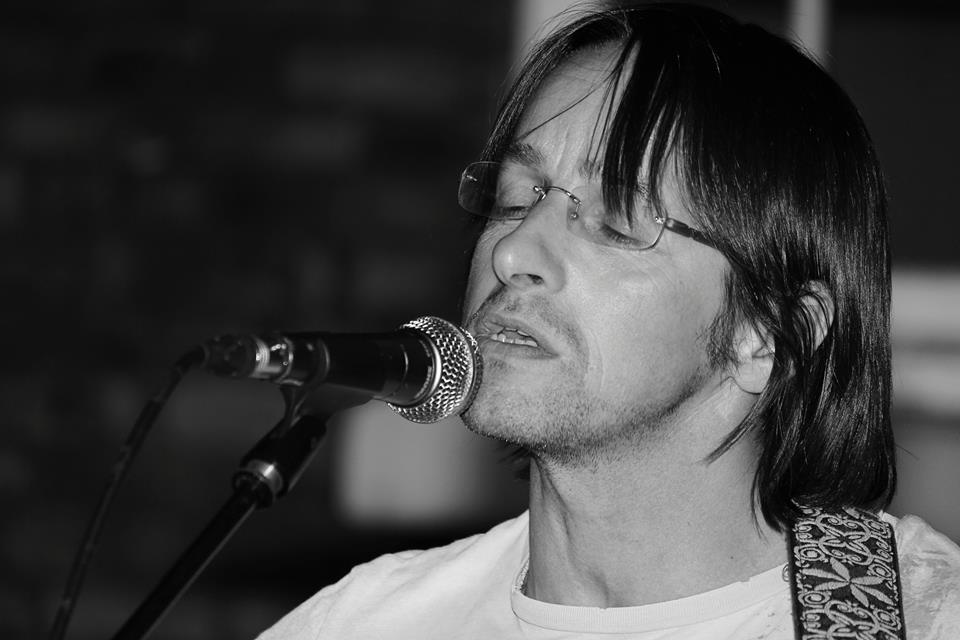
Kevan Manwaring is a writer, storyteller and performance poet.  He has also taught on all three Open University creative writing modules.  Other projects include The Cotswolds Word Centre.

To start off, please tell us a little about where you are based.

I live in Stroud, Gloucestershire, on the edge of the Cotswolds – I moved here end of 2010. It is a small town with a great community feel – and a vibrant creative scene. There are a lot of poets, storytellers, writers, musicians, free-thinkers, etc. The ‘Green’ scene is big, and it’s surrounded by gorgeous countryside, where I love to walk.

Having taught A174, A215 and A363, what do you find most rewarding about teaching with the OU?

When I see a student have a breakthrough – when something sinks in, the penny drops (in terms of the theory); or comes together (in terms of their practice). When I hear of a student’s success, eg publication or winning a competition (I’ve had students get book deals with major
publishers and win national competitions). With some students returning for A363 I’ve seen them develop over two academic years – so it’s satisfying to see this fuller arc and the development of their writing.

Many of the Ink Pantry staff and its readers are budding writers.  What would you say is the most common mistake new creative writers make?

Overwriting (in terms of density of style, purple prose, exposition, etc).
Under-writing (in terms of not writing every day and not writing the thousands and thousands of words you need to hone your practice).

In poetry: focusing on the meaning of the words, rather than the sounds.

In prose: poor structure, viewpoint slippage, and lack of telling detail. Most good writing comes down to sufficient visualisation. So many stories I read/assess seem ‘out of focus’ – and it’s frustrating, as you know something interesting is happening there, but you’re cut off from it. As someone who trained in art originally this has fed into my writing. I have a very visual imagination – experiencing cinematic dreams most nights! – and I write what I see in my mind’s eye. You need to make it vivid for the reader.

You were commissioned in 2010 by The History Press to work on a collection of folk tales.  Why do you think it is important to preserve folk tales?

Well, in the risk of being pedantic this project was more about reviving folk tales – rather than preserving them in an academic, set-in-amber, way (if it is possible to capture an authentic definitive telling, as each teller does it differently). The History Press commissioned professional storytellers like myself to gather together the best tale of our chosen county and, critically, retell them in our own words, with a sense of orality – i.e. for  performance; not that these are verbatim transcripts, but they capture the flavour of a live telling and the style of a particular teller/author. Many were cobbled together from fragments of local history, folklore, archaeology, field-work and imagination – so they were very distinctive creations, rather than ‘historically accurate’ versions. Being a writer rather than an anthropologist, this creative freedom engaged me more. I had the opportunity to write 80 short stories – and that’s how I approached them.

A couple of the Ink Pantry team members have been asked to perform their own poetry at special events.  We’d love some pointers on how to capture an audience when performing poetry.

From early on as a performance poet I quickly realised that if you made an effort to learn your poem off by heart then you’re going to gain the respect and attention of the audience more than just reading it. Plus you can maintain eye contact, use both hands, and not have any barrier between you and your audience. Other tips – cut the pre-amble, don’t apologise, project. Connect to the core emotion of your poem and transmit that to the audience. Enjoy yourself!

One of your recent projects led to a show called ‘Tales of Lust, Infidelity and Bad Living’.  This sounds like something we should hear more about!

This was a show based upon my life. No, seriously, it was one of a series of performances based upon The New Penguin Book of English Folk Songs, edited by Steve Roud and Julia Bishop. Bath Literature Festival wanted to create a series of storytelling performances of the ballads and that was the one that happened to still be available. I performed it in the Guildhall in Bath – there were a lot of French language students in the audience, who seemed to like it!

There are a lot of sexual politics in those traditional ballads – something I’m exploring in my new show, The Snake and the Rose (based upon my two folk tales collections) in collaboration with my partner Chantelle Smith who is a folksinger.

You are behind the Cotswold Word Centre initiative.  Please tell us about the Centre and the philosophy behind it.

It is a platform for language, literacy and literature based at Hawkwood College, near Stroud. We launched on World Book Day this year and our patron is novelist Jamila Gavin. The idea is to provide a focus for the plethora of spoken and written word-based activity in the area: poetry readings, book launches, storytelling cafes, writing workshops, literary rambles, showcases, competitions, small presses, and so on. It is early days yet – but there’s some exciting stuff in the pipeline. Folk can find out more by following the link below.

You have said your new book, Desiring Dragons Creativity, Imagination & The Writer’s Quest, is the culmination of 13 years’ teaching creative writing.  What kind of things will readers learn from the book?

They will have to read it! But it’s more about process rather than particular techniques. I didn’t want to write another ‘how to’ book, of which there are many (some better than others). It explores the creative process; and strategies for what I call ‘long distance writing’. Many writing courses focus on teaching skills that will lead (hopefully) to publication – but what happens after that? How can you keep going through the long-haul of writing a novel (or several – as someone who wrote a five-volume series, The Windsmith Elegy, over ten years)? Through the ups and downs of a writing life – the setbacks and successes? This is for the writer who wants to be a ‘marathon runner’ rather than a ‘sprinter’.

Finally, you are organising a symposium on the Dymock Poets this year.  Our readers would be interested in hearing more about this event.
The Dymock Poets, as they became known, were a group of friends who gathered in a small village in Gloucestershire just before the First World War: Lascelles Abercrombie, Wilfrid Gibson, John Drinkwater, Edward Thomas, Robert Frost, and Rupert Brooke. For a while they enjoyed long walks, cider and poetry, publishing 4 editions of New Numbers (an anthology which included the first publication of ‘The Soldier’: ‘If I should die think only this of me…’). Frost and Thomas mutually empowered each other to go on to become the great poets we see them as today. When War was declared the Dymocks’ idyll was irrevocably shattered. Frost and his family returned to America. Thomas and Brooke went off to war and did not return. I wanted to celebrate the centenary of their creative fellowship – on the eve of the First World War when they gathered in Dymock (June-July 1914). I have co-organised (along with poet Jay Ramsay) a day-long symposium in Stroud on Saturday 26th July. We have some great talks throughout the day and in the evening, a showcase of modern Gloucestershire writers responding to the themes of the Dymocks. It is this creative response to conflict that interests me more than the whole glorification of War thing. You can book through the Stroud Subscription Rooms website. I find the Dymock Poets story touching and inspiring – to the point of co-writing a feature-length screenplay about them. At the moment, it looks like a drama-documentary will be made. Anyone interested in the Dymock Poets should check out the Friends of the Dymock Poets site: http://www.dymockpoets.org.uk/index.html   Many thanks to Kevan for taking the time to speak to Ink Pantry.  Links to Kevan’s books and some of the projects he is involved in can be found below.

www.kevanmanwaring.co.uk

http://www.compass-books.net/books/desiring-dragons

http://www.literatureworks.org.uk/Book-Features/Special-Features/Creative-Fellowship

Cotswold Word Centre: a platform for language, literacy, and literature

Inky Interview with Ali Hepburn


Ali Hepburn page photo

Can you tell our readers a little something about the piece that you have had published in Fields of Words?

The first of my pieces to feature in ‘Fields of Words’ is the poem ‘The Crow People’. It was inspired by Quentin Blake’s book, ‘The Life of Birds’, which features illustrations of numerous anthropomorphic avian species. ‘Exit Fragments’ is my second piece to feature and is a work of fiction inspired by my fascination for the Arctic.

When it comes to writing, what is your preferred genre?

On the whole, I tend to write dramatic fiction, but there is usually a tendency for speculative or fantastic elements to creep in!I

Why do you write? Who or what inspires you?

I write as a way to explore my imagination; I’m constantly conjuring up new worlds and new characters in my head and I need write them down before I lose them.

As a writer it is also important to be a reader. What are you reading right now? What are some of your favourite books?

Currently, I’m reading ‘The Eyre Affair’ by Jasper Fforde. My favourite books include ‘Cloud Atlas’ by David Mitchell, Emily Bronte’s ‘Wuthering Heights’ and anything by J.R.R. Tolkien, Iain Banks or Neil Gaiman.

Which of the Open University creative writing course have you taken, and what are your thoughts about them? Any advice for future students?

I have taken both A174 and A215. My advice for future students is to write lots – even if some of what you produce isn’t your best work, it could still be useful for drawing ideas from in the future. Don’t throw anything away; I’ve still got everything I’ve written since I was three years old.

Tell us one interesting fact about yourself!

I like to run around the countryside with a cloak and a sword in my spare time.

Five Favourite Things. Tell us your favourite meal, movie, song, colour and place!

Meal: Venison steak. Movie: Pan’s Labyrinth. Song: ‘Rainy Night House’ by Joni Mitchell. Colour: Indigo. Place: Lochinver, Sutherland.

Share with us what you are currently working on.

I’m currently working on a collection of poetry.


Facebook Page- http://www.facebook.com/alexandra.hepburn.writer

Twitter – http://www.twitter.com/a_k_hepburn

Website – http://lastfallingstar.tumblr.com

Pantry Prose: A Visit From The Fortune Teller by Carol Forrester

Fool

“I can explain everything,” Susan promised. “But first, I think we should get out of here.”

Pinned against the wall by her body, Jeremy nodded. In all honesty he was more concerned with the Ford Mondeo currently sitting in the middle of his living room than what was being said to him. Had it really just come crashing through his patio window? Had some random woman really just hurled herself at him to save his life?

“We really, really need to go,” Susan insisted, extricating herself from his lanky frame and grabbing hold of  his hands. She tugged him forward, stumbling as his torso came away from the wall but the rest of him didn’t.

“Oomph!”

She dropped his hands and grabbed his shoulders.

“Okay, okay,” she said, strain showing in her voice now. “Let’s stand up properly shall we?”

Jeremy nodded again, still staring at the car sitting where his coffee table should be.

“It was an antique,” he mumbled, managing to move his feet this time when Susan pulled him forward.

“I’m sure it was lovely,” she soothed, patting his shoulder distractedly while she scanned the ceiling above them. “Oops. Wrong way!”

Jeremy felt the air leave his lungs as he landed, Susan crunching down beside him on the glass a second later.

“What ar-” he was cut off as the ceiling gave a creak, and then a groan, before deciding to give up altogether and simply plummet onto the spot where they’d been standing the moment before.

“Oh,” he said. “You just saved my life.”

“Meh,” Susan shrugged. “Only twice. Trust me, today you’re going to require a lot more than twice.”

Jeremy’s features crumpled into a frown.

“What do you mean?” he asked, finding himself quickly being pulled to his feet and steered back towards his own front door.

“I quite like the philosophy of crossing that bridge when we get to it,” Susan said, gripping him by the elbow now and hurrying him forward. “Granted it does help when one has some for-warning of what those bridges might be.”

Jeremy’s eyebrows squirmed.

“What bridges?” he asked. “Where am I going? Who are you?”

“No one, no one,” said Susan, waving away the question with one hand. “Well not really a no one per say I suppose, I’m someone, but not someone you really need to know. Does that make any sense?”

“No,” said Jeremy. “None at all.”

“I didn’t think so,” Susan sighed. They’d reached the door and she was opening it, shooing Jeremy out of his own house.

“Hey! I think I deserve some answers here!”

Susan hummed at him and pulled the door shut behind them.

“I’ll explain everything. I did promise,” she reminded him.

“Yeah, so you can start with what you were doing in my house!”

“Saving you,” she said.

“But why?” Jeremy demanded.

Susan shrugged.

“I was bored I guess.”

“Bored?” repeated Jeremy.

“Yeah,” said Susan. “Bored.”


Picture courtesy of Wikipedia

Interview with Joseph Delaney by Kev Milsom

spooks pic

Could we start by asking you how your passion for creative writing emerged? Have you been writing since childhood, or did it take until adulthood for the writing ‘bug’ to kick in?

I didn’t start writing until I was in my twenties. I read a lot and every time I read a book that I really enjoyed I’d think: ‘I wish that I’d written that!’ So I started writing in the mornings before work, and after ten years and over 97 rejections I finally got published.

You’re internationally known for the extremely popular 13-book series, known as the Wardstone Chronicles, which began in 2004 and has been sold in 25 countries. I wonder if you might share with our readers the foundations for the inspiration behind this wonderful series, Joseph. Also are there any more Wardstone Chronicles adventures planned for the future?

I had to come up with an idea at short notice and I checked back through my notebooks. This was the Year 2000 and I had to go back all the way to 1983 where I found I’d jotted down a story idea about a man who dealt with boggarts. This was because in that year I’d moved to a Lancashire village called Stalmine which has a boggart. I developed this into The Spook’s Apprentice, the first book in the series. From then on, I drew upon the folklore of Lancashire, which I tweaked and modified to create my fictional world.

Is there a reason why you set the Wardstone Chronicles around the year 1700, Joseph?  Does this period of history hold a particular fascination for you (along with the subject of history itself)? Or is the time-setting purely random?

The film people came up with the seventeenth century as they needed some context for the costumes and set design, but in my writing I have deliberately kept the books free from any specific time in history, rather it is set in a mythical Lancashire. I didn’t want to be trapped by dates and facts. I have always been interested in Lancashire and world mythology and have a particular love of the fantasy and horror genre, so all this informs my writing.

Each of the 13 books in your Wardstone Chronicles begins with the message, ‘For Marie’.  Could you enlighten us as to the identity of Marie and the importance of this dedication? 

Marie was my wife who died in 2007. She was very supportive and believed in me despite all the rejections, so I continue to dedicate the books to her.

As a former teacher of English, what were the most common pieces of advice that you gave to your students? Now, as a hugely successful author, what additional advice would you impart to your students today?

There are three main pieces of advice that I have to offer. Record all your ideas and don’t censor them. At the time you may not be able to judge their worth. I sat on the idea for The Spook’s Apprentice for over eighteen years. Second, make time to write. Too many people dream about becoming writers but don’t actually do anything about it. It is hard when you work and have a family, but it must be done. I got up early and wrote before I went off to my teaching job. Third, read widely; the process of reading fiction teaches you to write fiction.

Is there a particular set routine that you employ whilst writing, Joseph? A favourite location to write? A certain type of background music…or complete silence? How important is this routine to you and has it altered much over the years?

As I said previously, when I was a teacher I used to get up before work and write from about 6.15 to 7.30 every morning. That way I could write a book in a year – which promptly got rejected! Now I write to meet deadlines, but my working day is erratic. Sometimes I do what’s required in a couple of hours; on other occasions I pace about most of the day. I am anything but a 9-to-5 writer. Most of my writing is done when I’m neither holding a pen nor tapping the keys of my computer. I can be watching a movie or sitting on a railway station but I’ll be writing in my head.

Thank you for sparing your time to share these insights with us, Joseph. Finally, how important do you believe it is to develop a strong sense of creative imagination within the minds of young children? Is this something that you positively encouraged within your own children – and now with your grandchildren?

Yes! I think that reading is the key. Reading fiction transports you to other worlds and that experience (for me) is better than any film. Creative imagination results from reading. The best thing you can give any child is a love of that.


Picture courtesy of fanpop.com

The Element Encyclopaedia of Fairies by Lucy Cooper reviewed by Inez de Miranda

Fairy pic
I want to write that this is my first review of a work of non-fiction, but I’m not sure if that’s the case. True, The Element Encyclopaedia of Fairies is not a  novel or a collection of short stories, but it’s still fiction. Or is it?

The Element Encyclopaedias series boasts books on topics like witchcraft, fantastical creatures, secret societies, and many other fascinating subjects. The Element Encyclopaedia of Fairies is a reference book on, you guessed it, fairies.

Lucy Cooper, fairy expert and author/editor of this encyclopaedia, has dipped into the history of fairies and the folklore of civilisations all over the world, and she has collected stories and descriptions of mythical beings. In the encyclopaedia, Cooper has included fairies from the British Isles, but also those from other cultures in Europe, Asia, Africa, the Americas and Australia. The stories are not only fascinating in their own right, but they also offer an insight into workings of the cultures that created them. This book has taught me that there are more fairies than I had ever imagined.

I recognised some of the entries, like those about the kelpies, the Green Man, and the Bucca, but others, like the Kirnis, the Bongas, and the lovely African Jengu, were entirely new to me. I suppose that nowadays anyone who is at all familiar with folklore and/or fantasy fiction knows that not all fairies are cute tiny females with wings, but The Element Encyclopaedia of Fairies proves this beyond any doubt. In fact, the vast majority of fairies are unlike anything I ever imagined. They’re not all friendly either. Some, like the Gashadokuro from Japan, are downright terrifying. I was particularly pleased to find that the encyclopaedia included the Bakru, a large-headed spirit of flesh and blood from my native country of Suriname.

The encyclopaedia contains more than mere descriptions of fairy folk. Some of the descriptions include background information about the entity in question, or even the traditional stories about them. There are also entries that deal with human authors, like Marie-Catherine D’Aulnoy, a French countess who penned traditional folk tales in the late 17th century. There is the chapter on fairyland, one on how to connect to fairies, and another on Elementals and flower fairies. And there are pictures!

The encyclopaedia is easy to read and entertaining, much like a collection of stories, but unlike a story collection. This work provides the reader with an insight into the fables and myths of a variety of cultures as well as with a myriad of fascinating creatures.

Obviously, The Element Encyclopaedia of Fairies is a wonderful resource for writers of speculative fiction, but it’s equally wonderful for anyone who has an interest in fairies, folklore or just in the workings of the human mind.


Picture courtesy of Wikipedia

A Ghoulish Poem by Rachael Steward

Halloween piccy

The scenes were set all the way down the street

With ghouls and zombies dragging their feet

Children knocking on each neighbour’s door

Not content with one sweet, they asked for one more

The sweet baked smell of fresh pumpkin pie

Make up like blood falling from their eyes

Skeletons, ghosts, a dark princess

All make for a ghoulish night of success

Night terrors, shaking, crying and screams

The ghosts follow children into their dreams

It’s all been a fantasy here in my head

There isn’t a ghost at the end of my bed

What’s that tapping at my bedroom door?

I hear footsteps on the floor

A witches cackle, she’s casting a spell

Please wake me up to end this hell

2nd halloween piccy

Pics courtesy of:

www.familyholiday.net

designbolts.com

A Ghoulish Poem by Rachael Steward

Halloween piccy

The scenes were set all the way down the street

With ghouls and zombies dragging their feet

Children knocking on each neighbour’s door

Not content with one sweet, they asked for one more

The sweet baked smell of fresh pumpkin pie

Make up like blood falling from their eyes

Skeletons, ghosts, a dark princess

All make for a ghoulish night of success

Night terrors, shaking, crying and screams

The ghosts follow children into their dreams

It’s all been a fantasy here in my head

There isn’t a ghost at the end of my bed

What’s that tapping at my bedroom door?

I hear footsteps on the floor

A witches cackle, she’s casting a spell

Please wake me up to end this hell

2nd halloween piccy

Pics courtesy of:

www.familyholiday.net

designbolts.com

World War Z by Max Brooks reviewed by Steve Voyce

Max Brooks is the son of Mel Brooks and Anne Bancroft and he honed his craft working as a writer on Saturday Night Live, which is as good a place as any to start as a writer. His second book, World War Z: An Oral History of the Zombie War (to give it it’s proper title), was first published in 2006, and tells the story of a global war against zombies by using a series of oral interviews conducted by a narrator, who is part of the United Nations Postwar Commission. It is the follow-up to Brooks’ 2003 novel, The Zombie Survival Guide.

Firstly, an admission: I’m not one for fantasy novels. I drew the line after Dracula and Frankenstein, and I’m happy to say I’ve never been near Twilight. And I’m also not a big fan of disaster novels either (I’m not going to say post-apocalyptic as technically you don’t get post- an apocalypse).

I loved Cormac McCarthy’s The Road, but it was so harrowing I promised myself, as the father of a young son, I’d never read it again. I’ve also never read a comic book. But I’ve fallen for the TV series, The Walking Dead, so when my wife read World War Z, she told me I might enjoy it and should give it a go.

I think in some ways we’re all drawn to the idea of a global disaster that would test us individually and as a species. There’s perhaps something messianic in us that makes us feel that we could be the chosen ones, the survivors, and these stories help us live it out. World War Z can work as a companion piece to Walking Dead, a sort of what-happened-before, if you like, but it also stands alone.

World War Z’s story of a zombie pandemic, begins with tales of “patient zero” and outbreaks of the misunderstood “African Rabies”, through to the effect the plague has on individuals, nations and the planet as a whole, told through the words of survivors, be they politicians, soldiers, astronauts, or regular people. We trace the outbreak, the denial, the cover-ups, the quarantines, the deaths, the migrations, the wars that are a by-product of the pandemic and finally the “defeat” of the zombies and the subsequent new world order that is the result of the global upheaval. Brooks has taken on a huge task and has used an interesting narrative ploy (the multiple interviewees) to tell his story. On the whole I think he is successful.

The idea of a species threatening global pandemic is nothing new, and neither are zombies. So Brooks’ approach, to focus on the tales of the survivors, is an original take. It enables him to cover a whole trope of ideas and wax lyrically on such matters as government ineptitude, corporate corruption, and human short-sightedness, while always keeping the living dead lurking in the background (and often the foreground); a lurching virus that exists to kill and can only be stopped by being, literally, lobotomized.

Brooks manages to make mass-migration to the South Pacific, an oil field beneath Windsor Castle, a war between Iran and Pakistan and the rise of a Russian Christian Empire – amongst other plot points – sound as realistic as he does the initial reactions to the plague and the way that resourceful humans finally deal with it and its repercussions. He has a good ear for dialogue and internal monologue as well as the technological, cultural, economical and political issues that the story throws up.

There has been criticism of the novel as some feel the different narrative strands (some last for many pages, others are little more than a paragraph) make it difficult to develop momentum. But I feel that they’ve missed the point, as there seems to be an unwritten agreement between author and reader that we understand what he is trying to achieve and that we need to go with him and fill in the blanks ourselves, to notice and imagine what is going on at the edges of his snippets of stories, that we can understand what has happened, or will happen, without it being spelt out to us.

I did enjoy this book, it was good entertainment and escapism, and from a creative-writing point of view it shows some good technique; as mentioned above, Brooks employs showing-not-telling to great effect, with his second-hand narration we’re never really shown directly the linear story, instead we dip in and out from various points of view, receive good and bad reports and the opinions of reliable and unreliable narrators. I liked this technique and thought that on the whole, it worked.

World War Z is not a literary masterpiece, but an interesting read that should appeal to fans of the genre and general readers alike.

The Secret Agent by Joseph Conrad reviewed by Steve Voyce

The cover of my copy of The Secret Agent shows an illustration of turn-of-the-century London at twilight in winter with lights just beginning to show on the buildings and bridges and skeletal trees black against the grey winter sky. This is a story wrapped in the cold fog of a winter’s day, with all its gloom and mystery, deep in the dark streets of late-Victorian London.

Published in 1906, but set twenty years earlier, with most of Europe in fear – real or imagined – of socialists, anarchists, Russians, Germans, Jews and countless others, we see trouble lurking around every corner and trust no one. This was a time when assassination attempts were made on the French President, and – successfully – the Russian Tsar, and bombs were exploded in capital cities, including London, and Conrad brings his own brand of journalistically observed fiction to these issues.

The Victorian London that Conrad paints so vividly feels astonishingly familiar and contemporary: A Conservative government justifying its new Aliens Bill, extremist groups placing agent provocateurs among the population and suicide bombers controlled by shady puppeteers. The Secret Agent is a brutal depiction of the absurdities and futilities of people and the deceitful institutions that some serve. It is often comic and always thought provoking.

However the true tragedy of this story lies at its core, with the domestic drama that is the family life of the protagonist, Mr Verloc, the secret agent of the title and self-proclaimed anarchist. When the façade of his marriage is torn asunder by a shockingly violent act, he and his family are altered for good, and the true nature of his “business” comes home to roost. Throughout Conrad successfully juggles the various threads of his story, managing to say as much about the human condition as he does world politics and the brainless violence of conflict.

Despite once in a while slipping into one too many Victorianisms for this reader, Conrad really gets into the heads of his subjects and manages the enviable task of creating each one equally as sad, familiar, attractive and, ultimately, human as one another, independent of which side of the blurred legal line they sit on. He ratchets up the tension when necessary and twists the story to keep the reader on the edge of his seat, cumulating in a climax I didn’t see coming. Conrad also has created a really strong female character, Winnie Verloc, a rarity for a male author of those times.

The Secret Agent is an interesting and compelling read, a real page-turner that demonstrates good characterization, plotting and old-fashioned story-telling and feels both of its time and timeless simultaneously. It is probably not Conrad’s best book, but it’s at least as good as many by his contemporaries that are regarded as classics. And beyond that, The Secret Agent blazed a trail for the copious spy, thriller and crime novels that would become ubiquitous during the following century.

The Long Goodbye by Raymond Chandler reviewed by Steve Voyce

The first time I laid eyes on The Long Goodbye was twenty-odd years ago, somewhere in the north-western suburbs of London, on a warm day with a cloudy look of rain on the horizon. I broke the silver-coloured spine and gulped the book down in close to one day and it was the damnedest thing that I had read in a long time. Philip Marlowe, Chandler’s erstwhile private detective, had been my guide previously through The Big Sleep and Farewell, My Lovely, but this story poked me in the teeth and socked me in the cranium.

There are detective novels and detective novels, if you walk through an airport bookshop its almost a joke nowadays. All of them have their points. There are the Victorian potboilers that straight-arm you with twists. The tweed-wrapped forensic puzzles that lurk in country-house corridors. There are the detective novels that emerge out of a downtown fog and leave you feeling like a hot shower. There are the ones that crack open a rib-cage, that strip out the veins, that saw off the top of a skull like a boiled egg – the kind of book that revolts and intrigues you in equal measures. There are those that chase you all over a European capital, teasing you with talk of God and mystery before racing off to pocket that huge royalty. And there’s the showpiece detective novel that outlasts us all, with its sharply drawn hero, intriguing plot and voice as clear as mountain air.

The Long Goodbye is none of these, it’s a novel packed full of charm and style and wit and pace and a sense of time and place, with a plot more direct that anything that Chandler had written for Marlowe previously. It sizzles through its tale of friendship and loyalty and honour, crackling like thunder with a passion unseen before in Chandler’s work.

Marlowe walks the mean streets and golden hills of Hollywood wrapped in the irony of both his disgust at the failings of the human race and his romantic opinion that everyone, and anyone, can be saved. He is our hero, our knight, as much a protector of those that society has discarded as a persecutor of those who twist it for their own ends. He will lose his personality in the felony cell so as not to renege on a friendship, but he wont take advantage of the disturbed wife of a man he dislikes; he’ll stand up to a multi-millionaire who could squash him like a fly before committing adultery with the millionaire’s daughter.

At the novel’s beating heart is the story of three men and three women: an (autobiographical) alcoholic writer who is supposed to understand what makes people tick, but doesn’t understand a thing about anybody; a strange, pampered, empty, war-veteran, torn between the dark and the light; and Marlowe, the unlikely and unwilling hero, a man for whom trouble is his line of work; and an heiress with five ex-husbands who all married her for much more than her money; the wife of the writer dragged down by the weight of her past; and a woman who may be the one to save Marlowe.

But ultimately this is the story of money, the kind of money that buys everything, that insulates and protects, but also the kind of money that cannot hide the futility and emptiness of life.

The Long Goodbye drinks a gimlet in an oak-paneled bar in early evening, waits alone in a darkened office for a phone call that will never come, is as out of place in a joint like this as a pearl onion in a banana split, and knows that to say goodbye is to die a little. With its turn of phrase, wit and reflection it is much more than a simple whodunit.

In all its sordid, bruised, hard-boiled, cool, beauty The Long Goodbye is the greatest of Chandler’s enviable canon, gritty with brutality and metaphor, and is in my humble opinion the best crime novel ever written, and one of the best books of the twentieth, or any, century.  They really don’t write them like this anymore.