Inky Interview exclusive: Dr Ben Masters from the Open University

ben masters

Dr Ben Masters is a novelist, critic and lecturer in Creative Writing at the Open University. He was born and raised in Northamptonshire, attending a state school in the area before receiving his BA and MSt in English from the University of Oxford, and his PhD from the University of Cambridge. He was a Senior Lecturer at Manchester Metropolitan University from 2013 until taking up his post at the Open University in October 2014.  His first novel, Noughties was published in 2012 with Hamish Hamilton and Penguin in the UK, and Hogarth (Crown) in the US.  He has written articles and reviews for the Times Literary Supplement, Guardian, New York Times and Five Dials.

noughties

Could you please tell Ink Pantry about your first novel, Noughties ? Also, what were the highs and lows of such an undertaking?

Noughties is a comic novel about university life.  One of the challenges was to write a flawed and often unlikeable narrator who has anti-heroic qualities yet maintains the reader’s engagement.  Just as Eliot is a voracious and slightly bemused reader of books, he is also an over-reader and mis-reader of reality, which creates lots of potential for comedy and tonal awryness.  That was energising from a writer’s perspective.  Noughties is very much a voice novel, so the writing of it was led by the voice and the momentum it generated – this becomes a self-perpetuating way of writing, which is useful for the rookie novelist, I think.

One of the biggest challenges came after the actual writing.  As is probably the case for a lot of first-time novelists, I felt like I had moved on from the book by the time it came out. Growing pains, perhaps.  As a writer you’re always thinking about the next thing and hopefully continuing to evolve.

Your forthcoming book The Ethics of Excess is about exploring the relationship between style and ethics in fiction, considering writers such as Nabokov and Angela Carter. Could you please give us brief examples of this concept, with regard to these particular authors? 

The Ethics of Excess is basically a defence of stylistic flamboyance and the art of overwriting, as well as an exercise in lyrical close reading.  I’m interested in how a writer’s style (ranging from language choice to rhythm, syntax, imagery, wordplay, tone, point of view) might embody or enact ethical concerns and commitments, which I interpret broadly – whether it be a commitment to curiosity, to individuality, to choice, to complexity, or even to discomfort.  So I re-evaluate extravagant stylists like Anthony Burgess, Angela Carter and Martin Amis, who have often been dismissed as morally shallow or circumspect precisely because they privilege style over character and plot, and probe at how their writing styles perform ethically challenging and renewing ways of thinking (how they think in style) and how this might then act on the perceptions of the reader.

You hold talks and read at literary festivals, including the Edinburgh Book and Port Eliot. Could you share your most memorable time?

The first festival talk I ever did was disrupted at the start by a rogue mouse, which sent the audience into a bit of a panic. Like any young writer, I was just pleased to have another audience member.

You have written articles and reviews for the Times Literary Supplement, The Guardian, and the New York Times. What would be your advice for new writers who are looking for a career in that area?

As with all writing advice, it begins with reading.  You’ll already be reading widely if you want to write literary essays and reviews, but I would advise new writers in this form to make sure they read lots of other critics.  Just like novelists and poets, the best critics have their own distinctive styles and priorities.  Find those who speak to you most (or even who animate or agitate you most) and think about their artistry as much as their ideas (the two are likely to be inextricable).

Have you any advice for our Ink Pantry followers on the motivation to write? Have you had writer’s block, and, if so, how did you deal with it? 

I’m not sure about motivation.  It makes me think of someone in colourful Lycra bursting into my study with a whistle and making me do star jumps.  If writing is the thing for you, it will be more of a compulsion or necessity.  (If you do ever need a pep talk, that’s what other books are for.)  That’s not at all to say that it comes easily – in my experience there are days when writing can be excruciating work, especially if you get as easily distracted as I do.  But there should be something about putting words on the page that is essential to how you think and express yourself.

I’m not much of a planner.  I like to make discoveries in the act of writing.  I find that I think in and through writing (I suppose you could classify that as a motivation or reason for writing).  So writer’s block is something to be staved off at all times.  There’s a lot to be said for just making sure you sit down at your desk every day.  But I also find that I solve lots of problems when I’m away from my writing – going for a walk, watching basketball on TV, going to the cinema.  However, that’s all different from searching around for something to write about in the first place.  If writing is for you, a shortage of subjects or ideas hopefully won’t be a problem.

Which authors have inspired you?

When I was a teenager the Beats were the first to get me really excited about ‘adult’ literature outside of the classroom. Reading Amis when I was a student led me to giants like Nabokov and Bellow.  Then there’s Virginia Woolf, Angela Carter, J.G. Ballard, William Golding, Martha Nussbaum, James Wood … too many to name really.

Picture credit: Angus Muir

Amazon link to Noughties

Books from the Pantry: Divergent by Veronica Roth: reviewed by Kev Milsom

roth

For people of a ‘certain age’ (myself included), there may be fond memories attached to school years, especially being assigned to a special school house – very handy for Sports Days, in which we competed against fellow classmates to secure a win for our school house and earn a chance to gain some precious popularity.

Remember also, the time in that final year of school when the Careers Officer would make an appearance and suggestions as to your future job.

Now imagine a scenario whereby your school house not only meant how many points you got in the Sports Day egg and spoon race, but actually dictated your entire life from birth to death; ranging from everything you owned, your style of clothing and the type of foods you were allowed to eat, along with your politics, your social behaviour, your friends, your career path, the types of housing you could inhabit, and even how you were allowed to decorate such dwellings.

At the age of sixteen, instead of a Careers Officer, you would be sent for an intense bout of psychometric testing, which would determine which house, or ‘faction’, you should become a part of during adult life.

Herein lies the conceptual basis of Veronica Roth’s 2011 debut novel, Divergent – the first in a series of three books based on the characters within post-apocalyptic Chicago, along with a series of five short stories based on characters from the book. It is also the source of a 2014 movie.

The story, told from a first-person perspective, is seen through the eyes of Beatrice Prior – a sixteen-year-old girl. The opening pages focus on her mental turmoil as she faces the challenges of the tests to find her ideal faction, along with her inner thoughts on how she personally wishes to spend the rest of her life.

Beatrice’s family all consist of members of the faction known as ‘Abnegation’ – a selfless group of people whose sole purpose is to devote their whole lives to the welfare of others, via kindness, compassion and service. As such, Beatrice has only known the values of her own faction, including dressing in shades of grey so as to not stand out in a crowd and draw any attention to the self, not to focus upon learning or education, but simply to find ways to serve others. All politicians are from this faction, as they are believed to be incorruptible.

At the ‘Choosing Ceremony’, Beatrice would be expected to fall in line with the wishes of her parents, although the choice is hers.

Therefore, within the very early stages of the book, we reach the first dramatic conflicts – will Beatrice stay true to her upbringing and serve the people of Chicago, or will she choose another role in life? – thereby disconnecting herself from her family, forever.

There are five main factions in this dystopian, future Chicago. Alongside Abnegation, there is ‘Erudite’ (The Intelligent) – people who live only for knowledge and education. At the Punk rocker edge of the factions are ‘Dauntless’ (The Brave) – people who would not look out of place in a ‘Mad Max’ movie and act as the security and bravado of the city. Beatrice’s other choices are ‘Amity’ (The Peaceful) – people who dress in bright colours and serve the city as counsellors and diplomats, or perhaps ‘Candor’ (The Honest) – the most truthful of all factions who generally work within law.

Outside of these groups lie the poor, unfortunate souls of the ‘The Factionless’ – people who do not fit into any faction, or those who have failed the initiation and training of their former factions. These people live outside of society and generally as vagrants, only deemed suitable for the most menial of tasks.

Only one other type of person remains – ‘The Divergent’. Those rare souls who appear to fit not just into one faction, but cross over into several different ones.

From the early pages, we learn that Beatrice Prior is such a rarity.

The writing style of the book is simple and direct, and it’s clear that Veronica Roth knows exactly how to put a compelling story together. Because of the first-person perspective, the reader is pulled more directly into the action, and the author does an excellent job of relaying all of Beatrice’s greatest hopes and fears. The situations of the characters, along with the locations, are all utterly believable, thanks largely to the descriptive writing talents of the writer. The action is steadily paced and never leaves the reader standing about for any length of time. In short, there is always something going on; invariably, it’s exciting and pushes the story forward at every opportunity.

For all fellow students of the writing craft, it may also draw large dollops of hopeful inspiration to learn that, having written a bunch of best-selling books, along with a movie (with several more on the way) and the winner of assorted literary awards, Veronica Roth is still only 27 years old.

It may also be of interest to know that she wrote Divergent while attending a creative writing program at university, aged just 22.

Truly, there is hope for all of us.


Inkspeak: Piano by D H Lawrence: guitar by Dave Hulatt

piano pic


Softly, in the dusk, a woman is singing to me;
Taking me back down the vista of years, till I see
A child sitting under the piano, in the boom of the tingling strings
And pressing the small, poised feet of a mother who smiles as she sings.

In spite of myself, the insidious mastery of song
Betrays me back, till the heart of me weeps to belong
To the old Sunday evenings at home, with winter outside
And hymns in the cosy parlour, the tinkling piano our guide.

So now it is vain for the singer to burst into clamour
With the great black piano appassionato. The glamour
Of childish days is upon me, my manhood is cast
Down in the flood of remembrance, I weep like a child for the past.

Poetry Drawer: Acts of Creation by Ted Eames

APE

In dark caves the hand draws floating creatures

with finger-paint grace and smoky pigment:

half is ground quartz and manganese dioxide,

half is calcium phosphate, pestle-powder

remains of the beasts’ own bones and blood.


In the Paris Jardin des Plantes sits Nabokov’s ape,

trained and coaxed month on month on year

to recognise images and to use the pencil:

free at last with blank paper and charcoal

he immediately sketches the bars of his cage.


All these symphonies, these ballads, sculptures,

tragedies, comedies, dances, films, poems,

string quartets, paintings, novels, songs:

from fecund compost of our own bones and bars

creation springs, cage defined and marrow-deep.


http://www.maintenantman.wordpress.com


Poetry Drawer: Coming Back From Hope by Ian M Parr

……and Ewan sang, “I found my love
by the gasworks croft,”
and we both knew
salt smoke choke our nostrils,
coke grit between our teeth
and believed
and Ewan sang, “kissed my girl,”
and we both knew
kiss and fondling homeward
down some cobbled alley.
…..and Ewan sang, “I am
a freeman on Sunday,”
and we both raised our eyes to Werneth Low
finding life’s stepping stones to Kinder
via Jacob’s Ladder,
grey Grindsbrook.  
Days on Crowden,
frozen Bleaklow,
bright Mam Tor to Rushop Edge,
beloved Mount Famine,
larks and curlews for companions.  
Begin at whatever place you please.  
But always we come back from Hope.
Wherever we hiked, we always came back
……..from Hope
.”   

“Hope” is in Derbyshire as are most of the places named.

Italics are from the voice of Gladys Axon, wife of John Axon GC and subject of the 1958 radio programme, “The Ballad of John Axon”.

Inkspeak: Medicine Man by Deborah Edgeley: guitar by Dave Hulatt

ice cream lady


Here comes

the medicine man,

With his glittering box of clefs

Like the ice cream lady

in the Odeon

Pass me a quaver

Care for a treble?

Like to try a madrigal?

Two for the price of one!

Want to taste

some harmony?

freshly made

this morning

Maestro,

be a love

and fetch some more octaves,

we’re running low….

Oh dear, this coke is a bit flat….

Medicine man

mediates

between your senses

and spirit.

Medicine man,

the combiner,

the diviner

With his sacred invisible tongue

Delicate as china

Speaking words,

without words

Expressing the inexpressible

After the silence…..

A deeper understanding,

how low can you go?

Let the cattle cry, ‘Death Row’

Rock-a-bye-baby-your-soul

Or RAGE AGAINST THE MACHINE WITH ME!

Lay-lady-lay-as-the-wind-cries-Mary

Spread your patchwork blanket on the green

And picnic on the food of love

Eat the music

Give me excess of it

Hey, medicine man

Pass me another quaver!


Inky Interview: Joanne Hall by Inez de Miranda

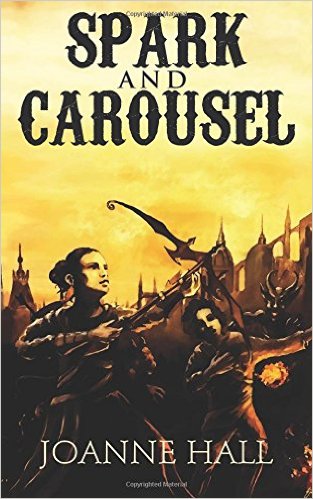
spark carousel

You are an editor, chair of BristolCon, a bestselling writer and very active on social media in all those functions – how do you manage to combine so many activities?

I am a wearer of many hats, and to be honest, I’m not entirely sure (other than by avoiding housework wherever possible). I’m lucky that I really enjoy everything I do, so it doesn’t feel like work, and if I get tired of, say, editing I’ll go and work on a novel for a couple of hours. It is hard work, though – anyone who tells you that full time writers spend their afternoons sipping gin in the garden has never been one! I work every day, including weekends and holidays, and often on into the evening if I can.

You became a full-time writer in 2003. What made you take this decision and are you happy with how it is working for you so far? What would you do differently if you knew everything you know now?

I was in a job I hated and I could feel it sapping my creativity every time I walked in through the doors, so I saved up a bunch of money and told everyone I was taking six months off to write. Then I kind of accidently on purpose never went back to work… I would say I’m very happy with it – there are times when it’s been financially very tough, and I’ve felt like a terrible person for putting myself and my long-suffering partner through what was essentially a decade of fairly dire poverty, but we’re coming out of that a bit now. It’s not something that I would recommend everyone to do – if you’ve got children or you need the security of a regular wage I’d absolutely recommend NOT giving up your day job. But I wouldn’t change it – I think it’s helped me to become a better writer, more confident, and it’s also made me aware of just how far a person can stretch very little money, which is a useful life skill!

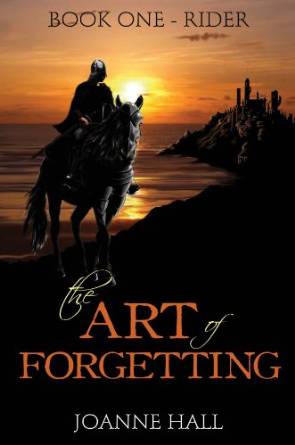
It was only a few days before I sent you this interview that your novel The Art Of Forgetting: Rider is now an Amazon bestseller on both sides of the Atlantic. Many congratulations! Did you eat cake to celebrate? Oh, and, do you have a theory about how you managed this achievement? (Bragging is allowed.)

We didn’t have any cake but I did have a big bar of Dairy Milk and a little boogie around the lounge. The number one on Amazon came off the back of a big Bookbub promotion organised by my publishers, Kristell Ink, who have to take most of the credit because they work incredibly hard. It’s nice that it managed to stay at number one for a few days, and it’s had a knock-on effect of driving sales of my other books, so that’s all awesome.

You are one of the editors of the recently published anthology Fight like a Girl, a collection of short fantasy and sci-fi stories featuring female fighters. What is your personal opinion about the representation and characterisation of different genders in SFF? Does this opinion impact your own writing and if so, in what way?

I confess, it wasn’t something I paid much attention to until I started looking for it, but now I’m thinking more about the representation of genders in my own work, it stands out like a sore thumb for me when I read a book that has no female characters, or a book where all the women are relegated to roles as tavern wenches or prostitutes, or exist only as a prize for the hero. What I want to see when I read fantasy and SF is women with agency, doing stuff and making their own decisions, and when I read a book where that doesn’t happen, it annoys me. It’s lazy writing, to relegate an entire sex to bystanders in your story, and it’s not hard to include Women Doing Stuff. Even if you’re writing about a strict patriarchal society, it doesn’t mean that women don’t exist, or that they don’t have opinions to be expressed.
Luckily there aren’t as many books like that published now as there were, say, in the 1970s, which makes the odd book that has no active women in it stand out even more.
It’s made me more conscious than ever, not only of trying to make sure I include a variety of women in a variety of roles, but also making sure that some of the more traditionally ‘female’ roles are occasionally taken by men. Because why not?

Continuing the women in SFF topic: as a female fantasy author, what are your thoughts about the position of women authors in the fantasy and sci-fi genres?

This might get long, sorry in advance…

We have come a long way, again, since the 70s. I don’t know why I tend to default to the 70s, probably because I was born then and it seems like a long time ago. 😉 But we still haven’t come quite far enough. Just this morning there was yet another ‘List of Essential SFF’ going around on Twitter that comprised of seventeen men and one woman, and this happens on a pretty-much monthly basis. We KNOW there are heaps of incredible women writing heaps of incredible SFF, but they’re not getting on these lists; they’re not getting onto the display tables in big high street booksellers; they’re not getting on awards shortlists (or not nearly as much as they should). And when I speak to male friends (predominantly) and ask them to scrutinise their own reading, even those that are passionate supporters of women in SFF have come back to me and confessed that they tend to read far more men than women. So my two big issues are – why is this happening, and what can we do about it?

It’s my belief, based on no scientific basis whatsoever beyond observing the industry from all sides for a very long time, that in the first place women don’t put themselves forward as much. They don’t submit as many novels and short stories, they don’t put themselves forward for panels or readings as much as men do. And this might go right back to ‘little girls should be seen and not heard, and little girls certainly shouldn’t show off’. It might not. Whatever the reason, there appears to be an intrinsic reluctance for women to put themselves forward, which leads to less women on panels, less women being published, less female best sellers, less female award nominees – it just goes on and on.
In the last ten to fifteen years it’s got better, and more people have made a conscious effort to promote women’s SFF writing, but still, when you see lists every month telling you that all the important, cutting edge SFF has been written and continues to be written almost exclusively by men, it’s disheartening and demoralising to women as a group. That’s why representation is so vital – to demonstrate that there ARE women out there at the cutting edge of SFF writing brilliant things and saying brilliant things on panels and winning awards and selling millions of books.

Which brings me in an extremely roundabout and rambly way to the second question of ‘What can we do about it?’ And the answer to that one is a bit simpler. Read women. Review books by women. Talk about female writers you have enjoyed. Encourage women to submit stories, and then publish them. Make sure women are represented; in your reviews, in your anthologies, in your awards shortlists, in your reading. It’s really not hard. I’ve been running a Discoverability Challenge on my blog (www.hierath.co.uk) for about three years, challenging people to read 12 new-to-them female authors per year and review the ones they have enjoyed. If you love reading and you read loads of books, it’s not hard to read twelve new female authors a year. And it gets people talking and making recommendations, which is great.

Can you tell us about how the anthology Fight Like a Girl was conceived and put together?

Fight like A Girl was born on Twitter and instigated by Danie Ware. It was born out of frustration with those issues addressed at length in the previous answer, and Danie said how great it would be to have an anthology on the subject of fighting women that was entirely written by women. And it kind of snowballed from there – it’s not only a collection that’s entirely written by women, it’s also edited by women (myself and Roz Clarke), the cover is by Sarah Anne Langton, and it’s published by Kristell Ink, who are a publisher owned and run by two women (Sammy HK Smith and Zoe Harris). So it’s like a stick of rock – there’s women all the way through!

About your most recent novel Spark and Carousel – the old cliché questions: what was your inspiration for this story?

Well I’d recently finished writing The Art of Forgetting and I wanted to write something that was a bit lighter and more of a romp, with more magic in, and I knew I wanted to set it in a city because I hadn’t really done that before. Every book is about looking to see if I can stretch myself in a slightly new direction and try things I haven’t done before.

I have read this book, and my favourite character was Allorise. Without giving too many spoilers, can you tell us how she was developed? I love her name, too, did you make it up?

Yes, I made it up. It just sounded right in my mouth for a frilly, flouncy, spoiled posh girl who wants her own way – though the way she went about getting her own way was obviously pretty dark and nasty! I didn’t want her to be out-and-out bad, she needed to have some motivation for the way she acted, and just because she’s well-off doesn’t mean that she has that many more options in life than a street kid like Carousel. So they had that similarity between them, of being shut in and deprived of agency, but Allorise obviously handled her situation in a much more extreme and dangerous way. It was fun to see how far she would actually take things. I think that’s what’s entertaining about her, is that nothing is too far for her, there’s not a point where she’ll take a breath and go, ‘hey, maybe this is a bad thing I’m doing’! She’s a very extreme character, which makes her tremendously fun to write. I enjoy writing characters who aren’t overburdened with morals…

And finally, are you working on or do you have plans for a new novel or novel series at the moment? If you are, can you give us a teaser?

I’m working on a few things at the moment, but the next thing I have coming out is The Summer Goddess, which is due out this winter from Kristell Ink. It’s kind of a stand-alone sequel to The Art of Forgetting and it’s set in the same world.

Blurb:

When Asta’s nephew is taken by slavers, she pledges to her brother that she will find him, or die trying. Her search takes her from the fading islands of the Scattering, a nation in thrall to a powerful enemy, to the port city of Abonnae. There she finds a people dominated by a sinister cult, thirsty for blood to feed their hungry god.


Haunted by the spirit of her brother, forced into an uncertain alliance with a pair of assassins, Asta faces a deadly choice – save the people of two nations, or save her brother’s only son.

Thank you for having me!

Amazon

Facebook

Twitter

Inky Interview: Joanne Hall by Inez de Miranda

spark carouselforget

You are an editor, chair of BristolCon, a bestselling writer and very active on social media in all those functions – how do you manage to combine so many activities?

I am a wearer of many hats, and to be honest, I’m not entirely sure (other than by avoiding housework wherever possible). I’m lucky that I really enjoy everything I do, so it doesn’t feel like work, and if I get tired of, say, editing I’ll go and work on a novel for a couple of hours. It is hard work, though – anyone who tells you that full time writers spend their afternoons sipping gin in the garden has never been one! I work every day, including weekends and holidays, and often on  into the evening if I can.

You became a full-time writer in 2003. What made you take this decision and are you happy with how it is working for you so far? What would you do differently if you knew everything you know now?

I was in a job I hated and I could feel it sapping my creativity every time I walked in through the doors, so I saved up a bunch of money and told everyone I was taking six months off to write. Then I kind of accidently on purpose never went back to work… I would say I’m very happy with it – there are times when it’s been financially very tough, and I’ve felt like a terrible person for putting myself and my long-suffering partner through what was essentially a decade of fairly dire poverty, but we’re coming out of that a bit now. It’s not something that I would recommend everyone to do – if you’ve got children or you need the security of a regular wage I’d absolutely recommend NOT giving up your day job. But I wouldn’t change it – I think it’s helped me to become a better writer, more confident, and it’s also made me aware of just how far a person can stretch very little money, which is a useful life skill!

It was only a few days before I sent you this interview that your novel The Art Of Forgetting: Rider is now an Amazon bestseller on both sides of the Atlantic. Many congratulations! Did you eat cake to celebrate? Oh, and, do you have a theory about how you managed this achievement? (Bragging is allowed.)

We didn’t have any cake but I did have a big bar of Dairy Milk and a little boogie around the lounge. The number one on Amazon came off the back of a big Bookbub promotion organised by my publishers, Kristell Ink, who have to take most of the credit because they work incredibly hard. It’s nice that it managed to stay at number one for a few days, and it’s had a knock-on effect of driving sales of my other books, so that’s all awesome.

You are one of the editors of the recently published anthology Fight like a Girl, a collection of short fantasy and sci-fi stories featuring female fighters. What is your personal opinion about the representation and characterisation of different genders in SFF? Does this opinion impact your own writing and if so, in what way?

I confess, it wasn’t something I paid much attention to until I started looking for it, but now I’m thinking more about the representation of genders in my own work, it stands out like a sore thumb for me when I read a book that has no female characters, or a book where all the women are relegated to roles as tavern wenches or prostitutes, or exist only as a prize for the hero. What I want to see when I read fantasy and SF is women with agency, doing stuff and making their own decisions, and when I read a book where that doesn’t happen, it annoys me. It’s lazy writing, to relegate an entire sex to bystanders in your story, and it’s not hard to include Women Doing Stuff. Even if you’re writing about a strict patriarchal society, it doesn’t mean that women don’t exist, or that they don’t have opinions to be expressed.
Luckily there aren’t as many books like that published now as there were, say, in the 1970s, which makes the odd book that has no active women in it stand out even more.
It’s made me more conscious than ever, not only of trying to make sure I include a variety of women in a variety of roles, but also making sure that some of the more traditionally ‘female’ roles are occasionally taken by men. Because why not?

Continuing the women in SFF topic: as a female fantasy author, what are your thoughts about the position of women authors in the fantasy and sci-fi genres?

This might get long, sorry in advance…

We have come a long way, again, since the 70s. I don’t know why I tend to default to the 70s, probably because I was born then and it seems like a long time ago. 😉 But we still haven’t come quite far enough. Just this morning there was yet another ‘List of Essential SFF’ going around on Twitter that comprised of seventeen men and one woman, and this happens on a pretty-much monthly basis. We KNOW there are heaps of incredible women writing heaps of incredible SFF, but they’re not getting on these lists; they’re not getting onto the display tables in big high street booksellers; they’re not getting on awards shortlists (or not nearly as much as they should). And when I speak to male friends (predominantly) and ask them to scrutinise their own reading, even those that are passionate supporters of women in SFF have come back to me and confessed that they tend to read far more men than women. So my two big issues are – why is this happening, and what can we do about it?

It’s my belief, based on no scientific basis whatsoever beyond observing the industry from all sides for a very long time, that in the first place women don’t put themselves forward as much. They don’t submit as many novels and short stories, they don’t put themselves forward for panels or readings as much as men do. And this might go right back to ‘little girls should be seen and not heard, and little girls certainly shouldn’t show off’. It might not. Whatever the reason, there appears to be an intrinsic reluctance for women to put themselves forward, which leads to less women on panels, less women being published, less female best sellers, less female award nominees – it just goes on and on.
In the last ten to fifteen years it’s got better, and more people have made a conscious effort to promote women’s SFF writing, but still, when you see lists every month telling you that all the important, cutting edge SFF has been written and continues to be written almost exclusively by men, it’s disheartening and demoralising to women as a group. That’s why representation is so vital – to demonstrate that there ARE women out there at the cutting edge of SFF writing brilliant things and saying brilliant things on panels and winning awards and selling millions of books.

Which brings me in an extremely roundabout and rambly way to the second question of ‘What can we do about it?’ And the answer to that one is a bit simpler. Read women. Review books by women. Talk about female writers you have enjoyed. Encourage women to submit stories, and then publish them. Make sure women are represented; in your reviews, in your anthologies, in your awards shortlists, in your reading. It’s really not hard. I’ve been running a Discoverability Challenge on my blog (www.hierath.co.uk) for about three years, challenging people to read 12 new-to-them female authors per year and review the ones they have enjoyed. If you love reading and you read loads of books, it’s not hard to read twelve new female authors a year. And it gets people talking and making recommendations, which is great.

Can you tell us about how the anthology Fight Like a Girl was conceived and put together?

Fight like A Girl was born on Twitter and instigated by Danie Ware. It was born out of frustration with those issues addressed at length in the previous answer, and Danie said how great it would be to have an anthology on the subject of fighting women that was entirely written by women. And it kind of snowballed from there – it’s not only a collection that’s entirely written by women, it’s also edited by women (myself and Roz Clarke), the cover is by Sarah Anne Langton, and it’s published by Kristell Ink, who are a publisher owned and run by two women (Sammy HK Smith and Zoe Harris). So it’s like a stick of rock – there’s women all the way through!

About your most recent novel Spark and Carousel – the old cliché questions: what was your inspiration for this story?

Well I’d recently finished writing The Art of Forgetting and I wanted to write something that was a bit lighter and more of a romp, with more magic in, and I knew I wanted to set it in a city because I hadn’t really done that before. Every book is about looking to see if I can stretch myself in a slightly new direction and try things I haven’t done before.

I have read this book, and my favourite character was Allorise. Without giving too many spoilers, can you tell us how she was developed? I love her name, too, did you make it up?

Yes, I made it up. It just sounded right in my mouth for a frilly, flouncy, spoiled posh girl who wants her own way – though the way she went about getting her own way was obviously pretty dark and nasty! I didn’t want her to be out-and-out bad, she needed to have some motivation for the way she acted, and just because she’s well-off doesn’t mean that she has that many more options in life than a street kid like Carousel. So they had that similarity between them, of being shut in and deprived of agency, but Allorise obviously handled her situation in a much more extreme and dangerous way. It was fun to see how far she would actually take things. I think that’s what’s entertaining about her, is that nothing is too far for her, there’s not a point where she’ll take a breath and go, ‘hey, maybe this is a bad thing I’m doing’! She’s a very extreme character, which makes her tremendously fun to write. I enjoy writing characters who aren’t overburdened with morals…

And finally, are you working on or do you have plans for a new novel or novel series at the moment? If you are, can you give us a teaser?

I’m working on a few things at the moment, but the next thing I have coming out is The Summer Goddess, which is due out this winter from Kristell Ink. It’s kind of a stand-alone sequel to The Art of Forgetting and it’s set in the same world.

Blurb:

When Asta’s nephew is taken by slavers, she pledges to her brother that she will find him, or die trying. Her search takes her from the fading islands of the Scattering, a nation in thrall to a powerful enemy, to the port city of Abonnae. There she finds a people dominated by a sinister cult, thirsty for blood to feed their hungry god.


Haunted by the spirit of her brother, forced into an uncertain alliance with a pair of assassins, Asta faces a deadly choice – save the people of two nations, or save her brother’s only son.

Thank you for having me!

Amazon

Facebook

Twitter

Poetry Drawer: There Is Only One Now by Faye Joy

fire kaye

He’d fashioned two love tokens

and placed them by the bed before he left.

I saw the gleam reflected in those fireballs

as I turned to the morning light, four

tiny globes on the table. I stretched out


to stroke the mercurial forms suspended

on silver lace bobbins, lifting the finials

to my tongue, rotating them gently

in my mouth, lips encasing, caressing

their compressed Jurassic warmth.


Then held the crook, letting them swing,

their slight comforting, reassuring.

The combined weight was a gentle pull

on my lobes, the swing reassuring.

I noticed the inky refractions


whenever I lay them in my palms.

In summer the globes swung untrammelled

on their finialled shafts. In cold weather

and muffled against the numbing cold

of a rural parish church concert,


I left with shoulders hunched, shuffling

through the congregation to the welcome

night crunch and smell of gravel and privet.

Unmuffling later I searched in vain

for the slight my one lobe missed.


Years later I roll the one remaining jet

in my hand and let my lips close again

over dark warmth and cool silver before

once more replacing it in the typesetter’s

shelves alongside other singles.

Poetry Drawer: Get With The Times by Nathan Pleavin


Moralistic tendencies that can’t be truly measured,
twisted, darker side of life that leads you to be pleasured.
What is goodness? What is badness?
What is love but utter madness?
Feelings are but mere illusions,
man-made, fake and pure delusions.
Yet sometimes I still trick myself,
I put my feelings over health,
I let my heart off its lead,
I open myself up, a book to read,
I allow myself to be vulnerable,
yet always end up miserable.
So I use my solidarity as a defence,
loneliness starts making sense.
But in the end I realise,
I just get sick of all the lies,
of what to do and how to be,
that we aren’t ever truly free,
from this backwards, self-harming society.
If just being yourself is no longer allowed,
I no longer wish to be part of the crowd.