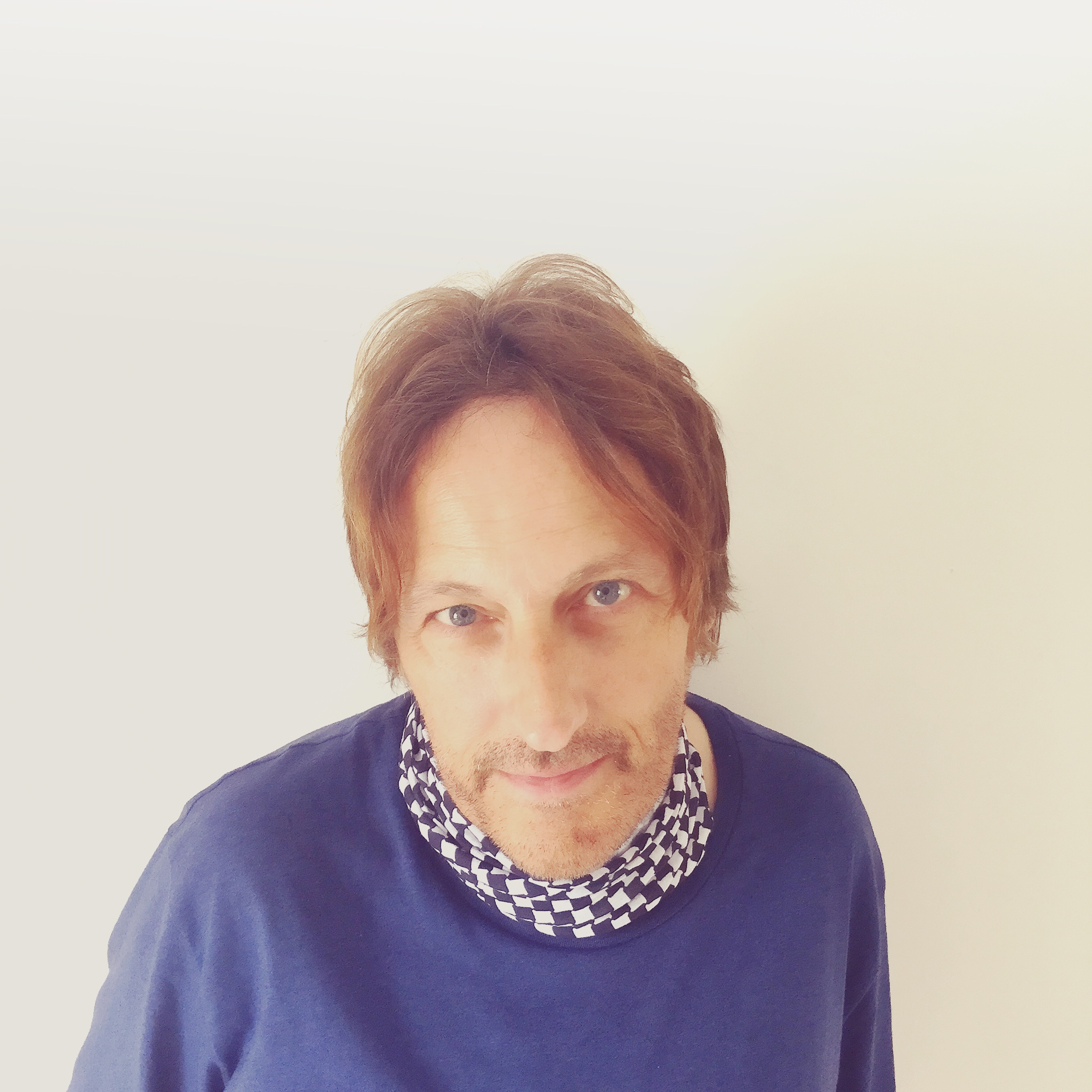
Inky Interview Special: Poet Jim Bennett by Kev Milsom

JIM

Hello Jim. Many thanks for agreeing to this interview. I’m sure that our readers will benefit greatly from your extensive experiences within poetry and creative writing. Can I start by asking you about the earliest foundations of your writing? Were English & English Literature subjects that came naturally to you at school, and who were your very first creative & literary inspirations?

I was adopted by a working class Liverpool family that had no educational expectations for me. I managed to live up to that by abandoning school from the age of eleven. I seldom went and when I did it was in the front door and out of a window. I hated school because I was bullied mercilessly by pupils and teachers but I loved learning and had discovered what I wanted to do at about the age of seven, when I read a book of poetry. I went to my dad and told him that I wanted to be a writer. He thought about it seriously and instead of dismissing it suggested that the way to be a writer was to first read, and that is what I did, and still do. He gave me a notebook and suggested I wrote down things that I thought were well written; this included words I had not come across before and phrases that I thought were very descriptive. So in all respects, my dad provided the seed of my first creative development. I tried to read everything that came to hand. I still do that, and these days average about forty novels each year, 200+ books of poetry and as many poetry journals that come my way. I often wonder how he had thought to give that advice as he had left school at thirteen to work as a tea boy on the docks in Liverpool and hardly read a book in his life, but his insight helped me lay the foundations for my writing. Although I like to recognise quality in what I am reading, I probably learn more from weak writing. That first book of poetry I had read was by John Betjeman, and his publication a few years later of Summoned by Bells kept him very high on my reading list until I discovered Beat and the New York School and moved away from traditional poetry.

In my ’60s & ’70s school days, I remember poetry being largely devoted to the works of Shakespeare and Tennyson. When I heard a poem by the Liverpool poet, Roger McGough, aged eleven, it blew my mind open as it felt like he was talking directly to me. Could you share some words on what it was like to be a part of the massive Liverpool creative scene in the 1960s, and to be writing/performing poetry with a very distinctive, ground-breaking style at such an early age?

For me, the Liverpool style in the early 1960s was much diffused, but became more focused after the arrival of Allen Ginsberg in 1965. I was thirteen when he came to Liverpool on a reading tour, and stayed there for a short time. I had started going to readings in O’Connor’s and other places, long before I was old enough to do so, taking the floor with my early poems – a couple of which have hung around. Roger and Adrian Henri were often there, but they were just part of a much larger scene I was involved with, including music, poetry and spilling over into all aspects of performing and visual arts. So when Allen Ginsberg said that Liverpool was ‘the centre of the creative universe’, there were not many who would have disagreed with him at that time, certainly not me. His visit was during one of my long absences from school, so I was able to hang out and listen to the dark conversations related to Beat; what it meant, how to capture it, bottle it, smoke it, etc. When Allen left Liverpool, he took a lot of people with him to attend the first big Albert Hall poetry event in London. As I was so under age at the time, I was not able to go. It was this event, captured in Peter Whitehead’s documentary ‘Wholly Communion’ that changed the perception of poetry in the UK and began the process of redefining poetry and its relevance.

As for myself, I performed in many of the open mic events around Liverpool and was invited to read in featured spots at some. I was also involved in the folk scene and went to many of the folk nights, still prolific due to the British Folk revival, which again Liverpool had taken to its heart. The other thing to be remembered is that ‘performance poetry’ was ridiculed by many in the poetry world and thought to be trivial, or of little value. Even the Liverpool Poets who had been included in two major anthologies that helped them break through (McGough, Henri and Patten) had a struggle to be taken seriously, and the word ‘popular’ was often applied in an arch way as a put-down.

Even back then I was experimenting with delivery styles and I had a vision of the spoken word as akin to a song without music. I saw poetry as part of the folk scene, a way to engage with an audience with words, and even today I still think about it like that and it continues to inform the way I perform my poems. I sometimes get told that I deliver too slow, or too fast, or exaggerate a pause, but in fact I am delivering the words to an internal melody that I think goes along with it. I can also point detractors to the fact that I have won numerous slams and awards for performance.

Could you share some thought with our readers about the processes involved in the construction of your poetry, Jim? 

Most poems start with the germ of an idea, something seen, heard, remembered, and I collect those together. But then I have to decide what the theme of the poem is to be and how the elements I want to write about will approach the theme. Just as an aside, this is the root of ‘show don’t tell’, as the various elements of the poem need to be informed by the theme. Quite often the theme will not appear in the poem at all although taken as a whole that is actually what the poem will be ‘about’. I look for juxtaposed elements that will bring something new to the idea or illustrate it in a different, unusual or surprising way. I then over-write the poem getting the general feel for it, when I believe that it is approaching the ideas I want to engage then I start to reduce it. This process continues until I have the raw structure of the poem. At that point I start to consider the final form it will take. I have, of course, simplified the process here, but generally some aspects of this process are involved with every poem I write.

The exception to this are commissions; poems written to order or for a specific purpose come from the root idea provided in the commission. I enjoy commissions and see them as a challenge. I also enjoy working with other poets and I often work on collaborations with a friend who is a very fine poet. When I am conducting courses, I feel it is only fair that when I set a task for students I should do the same. So I do have a lot of stimuli and write a fair bit.

Are you a spontaneous writer, whereby inspirational thoughts have to be completed while you are creatively ‘in the zone’, or are you a writer who likes to mull and ponder over ideas, editing and refining them over time?

Well, both at different times, is the only truthful answer. At one time, back in the late 70s, I morphed into a punk poet, and for a while MC’d at Eric’s Punk Club in Liverpool. At that time, I would spontaneously generate poetry improvised from words shouted up by the audience. I carried on doing it in performance for years, and sometimes the results were better than others but it was always entertaining. The results were awful but, thankfully, the nightmares they left behind are fading now. To give a flavour of this, I did it at a reading a year ago. I was challenged (by my son) to see if I could still do it, and it was recorded. And this is it, written down exactly as said with the addition of breaking it into lines and stanza. No further alterations have been made. It has lots of faults, but I was interested in the subtext that in some ways must inform a lot of what I write. So here it is warts and all.


I started writing this on the day I was born

language came and books read

sixty years of sunsets and smiling at strangers

walking maps and dreaming

as I watched my children play this poem grew


and the words settled somewhere

with images of life like protein photographs

of all the people in my life that mattered to me

and the places that I lived and the ebbs and flows

that brought me to this place to write some words


that come in an instant and let me say this is poem

dedicated to everyone who helped me make my way

you are there between the lines with all my life

with everything I came to be

whoever you are perhaps you will know


these are the spontaneous

thought as I touch the cave paintings of my childhood

and the hieroglyphs of adolescence

the monuments of my later years

before they crumble into dust


I have never developed this further but may do so at some point. At the moment it stands with its flaws. This was created in the moments that it took to say it, and the ideas it generates touch on all my writing I think.

More generally I prefer to craft a poem. Develop it and take it through generations to a final product. Poetry is and has always been a way to explain how life works, the big themes, and this is as true today as it was when Donne was writing. The ethos of teaching literature has changed and the available texts have also expanded. Fifty years ago, Hughes and Heaney, although alive and writing at the time, had not broken through into the public consciousness. We have also seen the cross pollination of culture through multiculturalism, so this has also broadened the available texts. For me, though there is still a problem with some aspects of teaching poetry, I think more care should be shown in the selection of texts as popular does not necessarily relate to exemplar.

Can I ask for your personal thoughts on how poetry has changed within the last fifty years? Do you feel that the breadth and range of poetry taught to students has expanded during this time, especially compared to the poetry and literature that children/students were exposed to in the first half of the twentieth century? 

The teaching of poetry in the first half of the 20th century was also supported with a grounding in classics, which made the poetry more relevant to the curriculum. Later, as teaching became modernised and moved away from the traditional method, poetry had less relevance to both teachers and pupils. For me, poetry becomes relevant when the teachers encourage the students to question it in different ways. A poem is a map to an unknown land; what the poet intended is mainly irrelevant, and the students should be encouraged to find their own path to what it means to them. Approached in this way, a poem is an adventure and an expression of creativity by both the poet and the reader.

University courses are a little different. Courses in creative writing and poetry have become very popular in recent years. Many focus on the students’ self-analysis and the production of a portfolio, with the emphasis on some courses being towards the linguistically innovative. In my courses I tend to steer towards the Black Mountain Poets, New York Poets, Imagism and, of course, Beat, together with the Modern British Movement. Many of the online courses I offer through the Poetry Kit (www.poetrykit.org) attract poets of all standards, from beginners wanting to see if there is anything in poetry for them to experience and well known poets who want to give their writing a boost. My starting point with all courses is to find great poems that the student has not read before.

But back to your original question, the start of it asked how poetry has changed in the past 50 years, and for me the main change has been the internet. This has allowed many more poets to find a medium for sharing their poetry; the result has been an explosion of outlets for poetry, and as long as you never expect to be paid for it or for it to be read by anyone, then the world is your bivalve mollusc saltwater clam. If you just want to be published and call yourself a poet then you can, someone somewhere will publish you, or if not you can do it yourself.

Wider development of poetry is also evident in popularity of open floor events, which give much wider opportunities for poets to find an audience.

Poetry in the centuries up to and including the early 20th Century basically followed trends and styles, so you had Romanticism, Symbolism, Imagist, and Modernism. But once you get to the mid and later part of the 20th Century, the proliferation of styles broadens so that there is no real dominant style. Elements of all of those previous styles persist together with Post-Modernism (a catch all for many different styles of linguistically innovative poetry), Confessional Poetry; the list goes on and on. In many respects that makes it a very diverse and interesting time to be writing poetry.

As a teacher of Creative Writing, what are the most important lessons that you seek to get across to young, enthusiastic writers, Jim? 

This is very difficult to answer because there are as many answers as there are people. If someone is taking a course then their enthusiasm for the subject should be taken for granted, though it will express itself differently for everyone. The big problem is to try and guide without blunting that enthusiasm. I suppose the things I find myself saying mostly relate to craft, which is a distinct part of the writing process. Bringing the ideas together that help create the poem or other text is only a small part of the overall creative process. This is the point at which many people stop, thinking that the piece is done but really what should follow is the hard work that enables the writing to reach its potential and its audience, and this means possibly rewriting, revision, editing, tweaking.

I believe that attention should be paid to the tools we use, the most important of which are words. So reading is as important as writing; explore how people use words and find the best word for the job in hand. Listening to the rhythms of speech and how one word sits with others. This does not mean using the most obscure word; for me, the simplest most direct way of saying something is the best, but knowing a variety of possible ways to present what you want to say allows you to explore the possibilities available to you. Having a limited vocabulary limits the way you can express yourself.

I also ask writers to work within limitations of form so that they can learn about how the right words can be used to achieve an effect, so sonnets, villanelles, pantoums all have a place in the development of a writer who is serious about their craft. Doing these as challenges and bringing in some fun elements without being too serious about the outcome seems the best approach. Many poets who work only with free form try to dismiss fixed form as no longer relevant to them, but really there is so much to learn from using fixed forms. It is a bit like an artist painting in oils using a limited pallet, not through choice, but because they do not know about the missing colours. Using a similar analogy, an artist like Picasso first learned to paint in very traditional forms before setting his creativity free; the same is true of Van Gough and many others. So for a poet, even if they intend to write exclusively in free form, learning to manipulate lines through the use of fixed forms can help to develop skills in word selection and use, phase and line to best effect.

Another important aspect is reading good poetry by great poets. There are many to choose from but the ones I always recommend are Bob Dylan, Billy Collins, Charles Bukowski, Frank O’Hara, Allen Ginsberg, Emily Dickinson, Gertrude Stein, Robert Frost, Ezra Pound, Wendy Cope, Liz Lochhead, William Carlos Williams, Elizabeth Bishop… (the list changes depending on the needs of the students and the course.)

From reading a selection of your poems, Jim, I’m immediately struck by the wealth of detailed, mental images that start flowing into my mind. For me, your words have a powerful ability to make this happen. Are you artistic or creative in other areas, such as art and music, and/or do you take pleasure & inspiration from other creative arts?

I do write songs and have done since I started. In fact, the very first thing I ever wrote was a song. Visual art, film, plays are all part of the input that helps me relate to the world. I have written many ekphrastic poems and poems with intertextual relationships to a broad cultural base. If you live in the world and have an interest in hard and soft culture, it is difficult to get away from those influences, and I don’t think I would want to.

I would also add in science, the natural world, and perhaps the fundamental aspects of cosmology, understanding time and our relationship with it. Philosophy and psychology are areas I have studied, and I see the influences of those in my poetry, although I must say that I do not proselytise or try to foist any philosophical viewpoints as that is not the purpose of what I do.

When it comes to writing, do you have a specific location where your creative inspiration feels happiest. Also, are you a writer who feels happiest typing on a computer, or someone who utilises a variety of notebook and pens?

The simple answer is no, I keep to a writing schedule and write wherever I am. I do not have much truck with ‘waiting for inspiration’. For me, that is an excuse for a day off. My problem is forcing myself to stop writing. There are clear and easy techniques to ensure that I am ready to write, and I keep to those. I keep a PUKA PAD notebook with me at all times together with a small pen and this is used to jot down odd ideas, words, conversations, things seen, anything really that takes my fancy. I also collect things, postcards, odd things that pique my interest.

I usually write for several hours each morning, and later in the day deal with correspondence. Most writing starts as notes in my notebook, and it is when ideas start to coalesce that I use a computer.

Poems such as ‘Radio Days’ and ‘It was November’ create a wonderful pathway back to your past memories which, as a writing student, fascinates me by the glorious ease in which you make the words come to life. Is there an aspect of writing that you find positive and therapeutic, Jim, and is this a ‘spark’ that compels you to keep maintaining the creation process? 

Thank you for your kind words, but the answer is no, there is no therapy in writing for me. I am not even sure what that really means. Poetry described as therapy or ‘heartfelt’ is usually a turn off for me. I made a career choice to be a poet and that is what I did and continue to do and I have never really done anything else. All my life experiences, and that includes direct experience and those things assimilated through reading, watching and listening, are all just grist to the mill of my output. I wonder, having written that if it is true or not, but consciously that is how I think it is. I do find it satisfying to be able to earn a living at something I would do anyway and I love being involved with the facilitating of courses. Since 1997, I have been involved with the Poetry Kit website (www.poetrykit.org) and that explores new poetry through the Caught in the Net series, and keeps me in touch with competitions, awards and new magazines.

I’d like to thank you again for sharing your thoughts with our readers, Jim. It’s been a personal joy to read some of your work and to learn from it. In conclusion, could you share some thoughts on what has been inspiring you to write during 2016 and are there any major writing plans for 2017?

I finish between six and twelve poems each month, sometimes more, sometimes less, then after I have the basic poem, I leave it for a while then return to it after a few months and see it to completion, so I hope to continue to do that. I have a suggestion for a pamphlet from a publisher, and I am working on an edition of selected poems for US publication in 2017. I enter competitions and submit to journals each month so I hope to carry on in the same vein. I also enjoy readings and although I do not often turn up at open floor events, I am happy to get invitations and try to accommodate them when I can.

Poetry Kit

Indigo Dreams


Lyrical Craft: Martin Rivers from Different Skies

Different Skies Front Hi

Can you tell Ink Pantry the story behind Different Skies? How did you all meet? What is the meaning behind the band name?

The band came together as a result of recording the album Different Skies. That is a solo project on which I played all guitars and sang. I invited other people to take part and this formed the basis of the band. The band name is eponymous coming from the title track of the album. It is a very personal song about how two people can diverge and end up going their separate ways. It is also about coming to terms with that experience.

You like progressive music. Which band do you admire the most and why? What is it about the style of prog that appeals? Are lyrics important in prog, or does the music speak for itself?

Steve Hackett for the simple fact that he stuck to his guns after leaving Genesis and ploughed his own furrow. Good on him I say. Marillion because again they didn’t give up and created their own business model.

Prog as a movement incorporated a fusion of styles mainly rock with classical influences, but having said that, some artists drew upon other genres, such as folk and others were decidedly avant-garde. Some bands were and are more lyrically adventurous. Pink Floyd were always more politically savvy, whereas early Genesis were more whimsical and Yes were downright surreal. It was a genre the critics loved to hate. It depends on the band whether lyrics are as important as the music. With a band such as Marillion, the words were always very important right from the word go.

Have you written lyrics from a young age?

I started writing lyrics a later than most, probably in my early twenties. It was a long time ago.

Which songwriters have inspired you?

It’s very hard to pin it down to specific individuals. I have listened to everything from reggae to soul, punk to prog, hard rock to folk and pop. It all ends up in the melting pot of the mind. Greg Lake is one songwriter who was an early influence, but through playing covers I have been exposed to a lot of others.

What do you care about? What themes keep cropping up in your writing?

I care about people, and although I wouldn’t call myself a Buddhist, I am trying to live my life by those values. Sometimes it’s not that easy, but I find meditation helps get ease of mind!

Dreams and the weather seem to be recurring themes. There are also songs that reflect major life events like the break up of a relationship or the death of a friend. The best songs arise spontaneously. One that I wrote recently was about problems with anxiety that I encountered about a year or so ago. I was very proud to have played that at a charity fundraiser for MIND.

What is your creative space like?

Very, very, untidy although I have now had a mad “tidy up” and I can actually see the floor!

Do you like poetry? Is it similarly to songwriting?

There are similarities but also significant differences. With songwriting you also have the tune to consider. With songs you can create some interesting contrasts by pairing dark lyrics with  a light melody and vice-versa. A good example of this “Every Breath You Take” by The Police, which often gets played at weddings, but is in fact about a stalker! I have to confess that my exposure to poetry is limited, but I am appreciative of the written and spoken word.

Which book influenced you the most and why?

Oh dear, I’ll satisfy every prog rock cliché now and say that in my early days it was Lord of the Rings; and that was because Professor Tolkien drew upon Anglo-Saxon mythology to create a credible world of his own. Sub-creation I believe he called it. I also found the early Terry Pratchett Discworld novels enjoyable for their subversion of the genre and as a vehicle for satire; and of course Fritz Leiber who provided a lot of the source material for Mr Pratchett. Last but not least Douglas Adams who gave us the Hitchhikers Guide to the Galaxy.

Nowadays I tend to read factual books rather than fiction. The last one I really enjoyed was Attention All Shipping by Charlie Connolly, where the author took a journey around the shipping forecast. This in fact was a vehicle for exploring both history and culture. It’s quite fascinating to find out what is on your doorstep.

Have you any other future projects?

I am currently working with a very good singer by the name of Jaqi Kidd. We are in the process of writing songs together and building up a set list. We recently played a gig at Ethical Artisans which went down extremely well and we plan to do more recording and performing. The adventure is in what comes out of that process.


Facebook

Reverbnation

Artwork by Wendy Jay Roberts


Inkspeak: Love Letter To Heathcliff by Deborah Edgeley: Guitar by Dave Hulatt

wuthering pic


Night.

On the moor.

Ragged as you were.

I saw you

through the cracked window,

where my dead hand touched yours,

where my name was etched in three on the wooden desk.


Your dark long locks fought the wind,

like your soul.

Heathcliff.

MY Heathcliff.

You destroyed everything…..


Yes, I became a lady, yet,

I loved Edgar, not.

It was always you…


Your face I saw

when I tangled in flesh,

trying to make a hybrid us,

with the wrong man


You walk this earth without me, yet,

I walk with you.

In you.


I look into your eyes of pain,

and I weep,

until you return to me.


Poetry Drawer: Pillage and Rape by Faye Joy

empty nest

Five mottled sparrow eggs cushioned inside a breezeblock

with strips of my garden raffia, twig slivers, moss

and odd wing feather sentinels. It is shoulder height.

We tiptoe along the chemin to our plots, smiling, curious.


Today, nesting lies rag-strewn over rough ground,

the breezeblock hollow, empty, black. A baleful pall

hangs in the air, its solicitude unbidden. Then –


I hear cries and flapping wings, a duck fires a volley,

sculling low, seeking to evade three drakes in pursuit..

She rests a moment, the drakes encircle. Her protestations,

her body, are smothered in the long field grass. I wait

until her shaking head comes into view, then turn,

passing marguerites, buttercups and the empty nest.


Inkspeak: Falling Man by Mark Sheeky

falling man


What is that thing,
that flutter of black,
against a white-grey sky
of thin nothing-winter air.
Flickering like a dying bat,
a shattered umbrella thing, falling
down, pulled
to Earth, a man.
A man arms waving
in a panic, a man
flapping, drowning in air, a man
plunging alone
in the cold air
far away,
seen from afar.
Seen.
I see him, in silence,
the falling man.


Inky Interview Special: Poet and Novelist M.V.Williams


ValentineLosing it

You have written many novels, including The Marsh PeopleThe Poison Garden of Dorelia Jones, and a collection of short stories called Unconfirmed Reports From Out There. Your novel Losing It is about redemption, you say, and the dilemmas society faces in ‘treating’ people we have deemed mad or bad, or both. Can you tell us a bit about the ideas behind it?

I wrote Losing It following a training session and discussions with staff from a secure psychiatric hospital. I had worked as a psychotherapist in different settings and it always seemed to me that there was an irresolvable problem at the heart of any ‘treatment’ for people judged by the courts to have committed acts of murder and violence against others, but having ‘diminished responsibility’ for their actions. If, being held securely somewhere and unable to act out their violent impulses, they realise the full horror of what they’ve done, they are then often unable to carry on living. The only available victim is themself, and suicide is often an outcome – Fred West is a case in point.  What struck me was the fact that becoming ‘sane’ would be likely to drive them to self destruct, as they could no longer live with themselves.

The staff I met were caring, understanding individuals who acknowledged the humanity of their patients and did their best to care for them. They thought therapeutic intervention sometimes did more harm than good, as it uncovered disturbing material and the patient and staff then had to deal with the consequences and it had a destabilising effect all round. The patients could not undo their criminal actions and often there was no means of making any sort of reparation. Jane cannot move on from her actions; she’s trapped with the reality and enormity of her past deeds.

People deemed to have personality disorders are not mad in the clinical sense, and we don’t have effective ways of treating them, at least not ones we’re prepared to fund.  Psychopaths exist in and out of institutions. ‘The Army welcomes fit young psychopaths’  a psychologist told me recently. ‘They do well in the S.A.S especially.’  However, I know from working with distressed young ex soldiers, that to carry out some orders they had to become numb and hardened to the effects of their actions on others, ie. psychopathic,  but removed from that situation they often experience a collapse, from which, if they get the right help, they can recover. A diagnosable mental illness, such as schizophrenia, poses a different set of problems.

In Losing It, Jane has unwelcome flashbacks, but it is only by going back and understanding the reality of what has happened that she connects with the emotional content of it, and with her own sad childhood. I wrote it as a first person narrative, and there were times when I had to withdraw and have a break from it. Mad or bad?  This question may never be satisfactorily answered.


Your collection Shark Wrestling For Beginners contains some wonderful poems, the preface of which is: Holding on to the dangerous, slippery elements that make us human is like wrestling with sharks. You will need assistance and you may get hurt. Can you give us an extract from one of the poems and talk us through it?

In Shark Wrestling for Beginners, the poem titled DAMAGED, which won the Hippocrates Prize three years ago, was an attempt to focus on the vulnerability of a baby, possibly with Down’s Syndrome, but stressing the human need of this infant to be held and cuddled and loved. I worked for a while in a children’s hospital and I often walked past the baby unit and felt the urge to comfort these tiny beings. Babies with Trisomy, or Downs’ Syndrome, often have problems with their tongues and find it hard to articulate clearly. Stone, plum and tongue have a sound that replicates these efforts. The ‘lips that stayed blue’ is a reference to the baby’s poor circulation. I wanted the effect of those lines to give the reader a sense of seeing the baby for the first time and noting his appearance.

Here’s the poem:

DAMAGED

He had a stone where his mouth should be,

a tongue filled with a plum,

lips that stayed blue with the effort

of being born.

In the next stanza, I wanted to look past the ‘damage’ to the real child, who smiles and waves his fingers at the nurse. The word ‘fishes’ came into my head as something alive and squirming, connecting tears and laughter. We look past the ‘damage’ and see the tiny human infant trying to make contact with the world.

But when he laughed, later,

the world came alive and fishes swam

out of his eyes across the room

as he waved his stubby fingers at the nurse.

In the third stanza we’re taking another look, this time at his needs and at the basic         frustration and repetitive actions- head banging- that this small child comforts himself with. Autistic children often do this, but I wanted the poem to be more general, about the needs all children have for stimulation, comfort and love. The word ‘butt’ conveys several meanings, deliberately, and the alliteration in ‘cracks and connects’ adds emphasis to the rocking, which is interrupted by ‘poor kid’. We look at him, then look away. The last three words, staccatto-like, are the essence of what he needs, namely attention.

He doesn’t know the time;

only that he’s hungry

and his head hurts.

The butt of many butts,

it cracks and connects,

poor kid,

too many times.

He.

Me.

Want.

I toyed with other endings for the poem, including ‘cuddle me’ but in the end decided I would leave it open, since he can’t articulate what he wants. I had problems with the title, too, giving the child a name in the process – Simon. But I wanted it to be unspecific and about all the children who are born damaged in some way and whose human needs are overlooked at times.

The panel of judges felt it focussed on the humanity of the child, rather than the child-as-patient. I was pleased they recognised this.

marsh people

What do you care about? What themes keep cropping up in your writing?

I care very much about children. We have three, plus a young man who came to us for the weekend aged sixteen and stayed for seven years. They’re all adult now. I’ve written about being a foster parent, about people experiencing mental health problems and about social issues and injustices, though this is cunningly disguised as poetry or fiction, or as humour.

I care about solitude, stillness and wild places. Mindfulness is something I embrace. I care about mankind’s ability to mess things up or get things right, and I have a curiosity about other people and the wider world which has given me privileged insights into people from many different cultures. For this reason I love art, world cinema and music, travelling in out of the way places, and multi-cultural events. I have firm political convictions about equality, human rights and how we need one another to survive. The Marsh People takes this as a theme. It’s a dystopian narrative based on an experiment carried out with dogs kept in wire cages, who were fed, watered, then later offered an escape route, though this meant getting an electric shock. Most dogs unsurprisingly stayed where they were, but a few saw their chance to escape and despite not knowing what lay ahead, jumped out and found freedom. I applied this experiment to humans in a City, feeling that some of us have the ability to seize the day, while others are unable to.

Everyone has a story to tell. Sometimes I’ve been lucky enough to hear it. We can deal with other peoples’ stories in several ways: by allowing ourselves to be affected by them, by showing them to the world in the form of a story or a poem or by blocking our ears. Listening and acting on what we discover is often, I think, like wrestling with sharks.

You wrote two self help books after completing an MA at Edge Hill. How did you move on to poetry? Is it something you have always been interested in, or did it just develop?

I’ve always written poetry, since I could remember. My mother was very deaf, but liked to recite poetry and Shakespeare to us. She paid me a penny for every verse of The Ancient Mariner I could remember – I think I got to twelve – and entered me for verse speaking competitions.

The commissioned self-help books I wrote after my MA were based on my work as a psychotherapist, but before that I trained as a teacher and was lucky enough to have Alan Brownjohn and Martin Bell as English tutors. They encouraged me to write more poetry. I had some work published in poetry magazines and just kept going.

What is your creative space like? Do you write in one place?

My creative space is a cramped office which doubles as an extra bedroom, but it has my computer, reference books and filing cabinets. I have stacks of notebooks which I carry with me to jot things down and raid these for ideas and details. I stay off the internet when I’m working, as it provides too many distractions, but allow myself a limited window at the end of the day to read emails and make use of social media, though I’m not good at that.

Who has inspired you as a writer and why?

Writers who have inspired me recently are E Annie Proulx, Sebastian Faulks, Barbara Kingsolver, Richard Flanagan and Kazuo Ishiguro, for the inventiveness and originality of their writing. I also read a lot of non fiction, poetry and magazines. Private Eye is essential.

I read Clive James’ column in the Guardian and a mix of political comment, reviews and articles in whatever publication comes my way. Being eclectic and wide ranging in what I read has helped me broaden my vocabulary – I wrote a poem once about a scaffolder because I’d picked up a manual with hundreds of scaffolding terms in it and found the language intriguing,  I like to learn something as I read, and something new is always appealing.

A simple phrase can start a train of thought and like pulling a piece of string, writing is born from it. The Greeks have an expression:  ‘Slowly, the cabbages.’  When I learned how to say this in Greek recently all sorts of ideas for a short story came into my mind. It’s stewing away in my mind now and when it’s almost cooked I’ll get it out and work on it. Another phrase that set me off was the old Cotswold dialect word ‘mooncalf’, meaning a thing half-formed. I’m beginning to realise that the vulnerability of young life is a pretty constant theme in my books and poems!

What is next for you? Have you any plans?

I have a number of projects at present that I need to complete. One is to rewrite a historical work I’ve completed for young readers about a travelling menagerie in Victorian England. It’s provisionally titled What Happened to Selina Smith and it’s based on real events. Having had several rejection slips, I had a sudden inspiration that it needed to be a first person narrative.

Then there’s a book about triangular relationships, The Book Of Threes, which I wrote as a comic strip way back when I was working as a psychotherapist. Several publishers were interested but it didn’t come to anything. I feel its time has come.

Lastly, I am 70,000 words into a novel about the Ndrangheda, a branch of the Mafia, but I’ve got stuck at the point where the chief character has been kidnapped. How on earth am I going to write a convincing escape for her? I’m off to London to read at the launch of Lunar’s new poetry press. Perhaps inspiration will come while I’m on the train. I have my notebook just in case!


Check out the links below and get your own copies 🙂

Website

Amazon


Poetry Drawer: All The Mad Women by M. V. Williams

Havisham

Unsettled sweetness clouds her too-blue eyes,

tongues whisper secrets half aloud.

Her clothes are a joke, stolen from Fairyland,

her hair’s raked out like straw; an angle thatch.


She darts about, disturbing sleeping Jane.

What will she do next? They’re after her.

‘Come back to bed now, Bertha.

Put the candle out. You shouldn’t be here in the Master’s room.’


Grace Poole is in her cups. The mad one and the drunken one,

sly devils, work to undermine the man.

The flame seethes under the curtains in the bed chamber,

there’s trouble brewing, something’s caught alight.


Expect nothing, Miss Havisham waits in the corner,

by the cobbwebbed chandelier, plotting, and musty with longing,

though Estella’s long gone, her lover fled away,

and Pip has never cared about her, not really.


There in the children’s quarters, Violet Elizabeth Bott

is screaming the place down and no one will shut her up.

She’s sick all right. Put your hand to your ear.

Can you hear her? Can you hear her?


And the French Lieutenant’s woman on the Cobb,

thinks she has waited long enough.

Her eyes are watering, but not with tears.

Her cloak is spattered with the sea salt wind.


And where the Fens dissolve and meet the sea

that unpleasant old woman, Mrs Ravoon,

squats in the moat and mumbles someone’s name.

Mother, what do you want, sitting there all alone?


They are waking up after a long sleep.

They are all waking up after a long sleep,


and they are mad as hell.


Books From The Pantry: Any Means Necessary by Jack Mars: reviewed by C. S. Evans

Mars

Any Means Necessary is Jack Mars’ debut novel; a political thriller about a terror plot targeting no less than the President of the United States. Nuclear waste has been stolen with the aim of creating a dirty bomb, and Luke Stone, an ex-SEAL now embedded within the ranks of the FBI, is called upon to stop the jihadists.

What follows is a fast-paced thriller with plenty of intrigue and backstory thrown in. We learn a lot about our hero’s past and follow him as he struggles to keep his family safe, while carrying out the task to which he has been assigned – even when that means bending the rules to breaking point.

For a first novel, this is an ambitious and complicated plot. There are many characters to get to grips with; as well as our ‘good guys’, Mars gives us some insight into the lives and motives of the other main players – the terrorists, the politicians, even those within the FBI trying to keep Luke Stone on a leash. The events which unfold rapidly from the first chapter are also quite a challenge to keep up with, and I found myself having to flick back a few pages to stop getting a little muddled at times! In addition to this, you have to suspend belief in what’s feasible when it comes to some of the ‘stunts’ our protagonist has to execute. Somehow, such ideas seem less acceptable from the pages of a book than on the big screen from Hollywood. Incidentally, this novel would probably make a great movie given a decent cast to make it more believable.

The dialogue is mostly snappy, without gratuitous profanity, but the narrative contains excess use of words like ‘BOOM!’ and ‘BAM!’ for my liking. I’m also not sure I can forgive Mars for using the line ‘Come with me if you want to live’ either!

If I had to name the worst thing about this book, it’s the cliff-hanger ending. By all means, hint at the possibility of future visits to your characters, but don’t dangle parts of a new plot in front of us and then cut us off.

For all my criticisms, I did really enjoy this novel. It delivered what it promised – racing action, moments of great tension and shock, and plenty of intricacies and twists to keep you turning the pages in the small hours. For a debut, it points towards a great writing future for Jack Mars.


Poetry Drawer: We Had a Sweep in the Week by Faye Joy

radio times


We had a sweep in the week

and he brought us some eggs

we don’t get another one until

Monday is your car open

the swing seat’s in the garden

if you want to sit down

Tut’s on you like things like that

have you seen this shot of her

she’s got horns she looks sort

of 1940s doesn’t she has anyone

seen the Radio Times

I’ve looked in the bucket

you said they put you to sleep

when you were in hospital that

man the day you came back he

was put into a home oh we’ve just

missed the secret life of the cat

well he might have gone to a nice

home so you quite liked him then

there’s the Great Wall on More 4

China’s secret history you like

things like that did you get any

tips then but it’s a bit embarrassing

when you have hot flushes and you’re

doing yoga and your sweaty feet slip

on the mat it’s in here you know

that man they took to hospital

so have we established

you’ll give me a knock when

you’re finished in the bathroom

oh there’s Dorothy and Charles’s

wedding she’s put some photos on

facebook it’s the family when they came

to stay with her from South Korea

the Chinese suffered under the yoke of Mongul rule

it says Dorothy’s lived here for forty years

near the Catholic church this is heavy

it’s heavier than yours isn’t it yours

is an android fancy posing like that

look at that just imagine living there

in one of those so they used sticky

rice in the mortar what’s that

oh it’s just him boom booming next door

can we establish what order we’re using the bathroom?