Poetry Drawer: Home by Shannon Donaghy

I know better than to leave a place
And expect to find it
Exactly where I left it
This time, I return home a foreigner
I’m not sure I ever really belonged here
Forever the pre-trembling of this half-broken house
Always on the verge of collapse
Foundation rotting, eaten away
I fit here like a baby tooth already lost
Nothing grew in my place
I don’t complete this empty face
Not lost, just out of place
I teeter on the edge
And disappear without a trace

Inky Interview: Shannon Donaghy from Montclair State University, New Jersey

Poetry Drawer: Occupied by Shannon Donaghy

Poetry Corner: Four Poems by Robert Beveridge

Cabin

There is a place in Maine,
near Belfast, where the oaks
trundle up to the oceanside,
fifty feet of shattered rock
separating soil from surf.

The cabin sits behind
that rock, the clearing hewn
some years ago, the house
built, then, two rooms
and shed, then added
onto later.

This place. This
is where I want you.

Let me carry you inside, show you
wood and varnish walls, oaken floors
worm smooth with centuries
of footsteps. The desk, the bed
walnut carved
within this house and never moved.

Through the door, the kitchen
cast iron and wood stove
two chairs, an ashtray
made of stone. When the house
was built, there was no shower;
the builder’s wife, waist-length hair
bunned up, stood naked
in the washtub as he poured
lukewarm water over her
washed her back with hands
calloused from carving.

Now building codes have intervened,
a bathroom added, papered
and electric, running water.
Some things, though, never change.
Undress, expose your body
by the flicker of the lantern
step into the tub
and close your eyes.
Let me wash you
in the water we have heated
touch your back
with calloused, trembling hands.

Cold

The motel room this morning
I woke up
and all traces of you were gone

I kissed the sheets
where your musk scented them
took a tape
you’d left on the TV
and looked for you
shivering
in February morning air

your apartment was empty
your scent absent

your favourite stores
the bus stop
our corner booth at Tiffany’s
all were air-conditioned
in the chill
and you were in none

I left another message
pulled the blankets close
sat down to wait
for your call

Phillipe Soupault Wouldn’t Have Done This

I wish
I could smoke
in these grey
academic cages

or that this crowd
of harried housewives
and eager idealists
practicing Art
could meet in a bar
biweekly

instead of being outcasts
like the great wretches we read
who go to Cabaret Voltaire
and drink absinthe in the rain
pass folded papers
and scrawl drunken notes

we sit in our cells
and watch the war
in the Persian Gulf
write dry lyrics
to dead times
stroke old wounds
on new battlefields
comfortable and dry

I want to go
to the dream
of white-eyed
engineers and
headache pills
who talk.

Come with me
walk through the rain
to a little restaurant
on the corner
of 13th and Pine
we can eat
and talk
and write

bars down the street
to drink in
cheap hotels
for quick liaisons
when the pen
is sapped of ideas
and the air!

Dark, smoky,
filled with falafel
and feta cheese
perfect place
to write and talk.

Illicit lovers tryst
by the window
read each other’s
poems palms
and psalms to sex

in the corner
a skinny artist
with rimless glasses
looks up, looks down,
sporadic scribbles
intertwined with bites
of falafel sandwich
watches the lovers

(yes, even Starving
Artists can afford it)

who are engaged
in nothing but themselves
first exchange
of poems takes
all their concentration

they look up
and laugh
and kiss

Phillippe and friends
wouldn’t have hated it,
I think, not like
this antiseptic room

pen strokes paper
pulls purrs
of lust and moonlight
from the fibers
lovers wrestle in between
and tigers roar
rivers run
the moon dies
its nightly death.

Shrove Tuesday

Lost and running, searching for you,
I am crushed by mountains.

Seeing you is pain,
A pain of too much honey tinged with blood.

Goddess, I cannot look at you
over rivers, or sunlit lakes. I cannot
demand your presence, no more than I could
see your face by staring at your hands.
Even kiss me once, my goddess,
let me feel your lips on mine, your perfect
Lips of honey tinged with blood.

Inky Interview Special: Poet (& Noise Maker) Robert Beveridge, from Akron, Ohio

Poetry Drawer: A Lesson in Composition by Robert Beveridge

Poetry Drawer: The Drowned City by Robert Beveridge

Poetry Drawer: To Be or Not to Be by Robert Beveridge

Poetry Drawer: Two Poems by John Grey

In At The Kill

Pigeons on the rooftops,
a body of prey,
hawk claws grip telephone pole,
take a hundred different forms,
a picture perfect pose
the right way to measure –
look up, a symbol,
changing at the blink of an eye.

If I ever had the strength
to peek through that book
of concentration camp horrors,
difficult words, unconscionable phrases
would compete with one another
for a better grasp of evil’s history
though for how long
could the mind still claim to be master?

I could trace iniquity, back and forth,
from the unborn to the living
to the relief of never having brought
a child into the world,
the darkness repeating itself,
maintaining both depth and surface,
in bodies draped across each other,
bald heads, dead eyes, that depart
from what I know of people,
then the ashes of the ovens,
the Nazi Auto-da-fe,
the acts that overstep even
the worst that I can imagine,
ordinary people
taking on this ghastly form of reality,
owed an impossible apology
to go with the sorry plots and crosses.

Pigeons on the rooftops
do not hone the mind’s values,
can never be noble,
like the hawk
that eyes the fattest of them,
is about to swoop,
satisfy its hunger.
I am fine with it.
I have learned that each kill is different.
Some must always be remembered.
Some grant the witness license
to go home and hug his loved ones.

Sorry But

Regarding making your home,
partly my home,
I’m afraid the furniture
is too ugly for my tastes,
likewise the colour of the drapes
and, most of all,
your expectations.

I find I work best
as a solitary man
who interacts with others of his kind occasionally
but finds that overdoing it
can lead to changes in dress sense,
in habits, clean or otherwise,
and strange food in the refrigerator.

So I find I must refuse
your kind offer –
same for your disagreeable demand.

Poetry Drawer: An Awkward Meeting in a Coffee House by John Grey

Inky Interview Special: John Grey, Australian Poet, USA resident

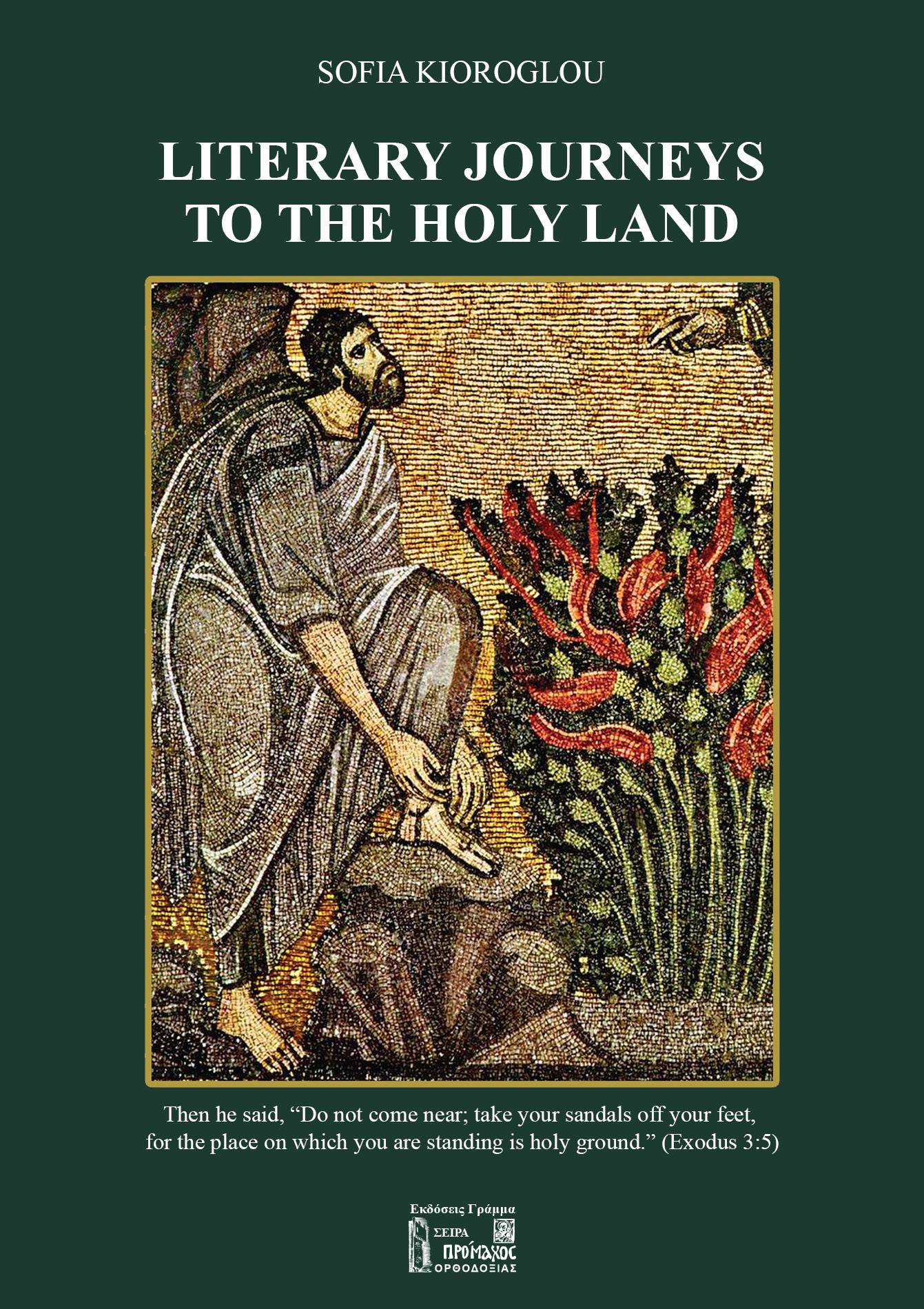
Inky Articles: A Spotlight on Miltos Sachtouris: by Sofia Kioroglou

A Greek surrealist poet whom admittedly most of my fellow poets might have stumbled on is Miltos Sachtouris who is renowned in his native country, Greece. Miltos Sachtouris was born in Athens in 1919. He was seventeen years old when General Metaxas imposed a fascist dictatorship that lasted until the general’s demise in 1941. By then the Greeks were living under Axis occupation and experiencing war-related famine that led to the death of 100.000 lives. Unfortunately, the end of the second war was rife with ongoing conflicts which flared into a civil war, the ripple effects of which were felt for years, right up to the dictatorship of 1967-74. Sachtouris’ poetry was bereft of a decorative use of poetic language. He describes things with incredible fidelity. He is not one to interpose psychological descriptions and eschews ideological labelling. His clarity of idea-generating images are endowed with a substantive value. They offer a material outline with mental representations that are properly received. His poetry engages the imagination and has all the hallmarks of oneiric alchemy operative in the poetry of other eminent Greek Nobel laureates such as George Seferis and Odysseus Elytis. However, the Greeks’ younger compatriot, Miltos Sachtouris, is lesser known.

What Sachtouris sees in the Occupation, the Civil War, and the social and political amoralism during the first couple of decades following the war, is the lack of ability of people as a collective body to prioritise certain moral values and solutions as an antidote to the crisis of the times. This is successfully conveyed through his poetic diction and his poetry serves as an invitation to touch his traumas and wounds and to ponder on his future. At the same time, he forbids us to think of ways to cure him and this is evident throughout this poetry.

The use of images go beyond the dry recording of external reality. Instead, they acquire autonomous power as they become unfettered from the restricting nature of the mirror. The ample use of symbolic nuances creates an inner landscape that, although still reflecting experiences and feelings of everyday life, is a departure from the realism of social decadence or from the lyrical style of a personal confession. The odd and excessive elements that we can perceive in the expressionistic images stand for the fixed characteristics of a world suffering to its very core.

Sachtouris’ images develop into self-reliant, symbolic units that go beyond isolated episodes. They create a dissonant introspective universe, in which objects, animals, humans and machines degenerate into substitutes of reality, without however losing their commonly accepted qualities.

Sachtouris relies heavily on surrealist imagery and there are many recurring images such as birds, a broken/bloody/fractured moon, severed hands/fingers, nails, blood, but these are no gratuitous images–they reflect what Sachtouris saw all around him while writing these poems: the occupation of Greece by the Nazis, civil war and the eventual military dictatorship that took hold in the late 1960s through the mid-1970s.

Poems such as ‘Height of February’ and ‘The Garden’ also make use of surrealist imagery:

Bad mother
with your pinned-on eyes
your wide nailed-on mouth
and your seven fingers
you grab your baby and caress it
then stretch your white arms before you
and the sky burns them with its golden rain

THE GARDEN

It smelled of fever
that was no garden
some strange couples were walking inside
wearing shoes on their hands
their feet were large white and bare
heads like wild epileptic moons
and red roses suddenly
sprouted
for mouths
that were set upon and mauled
by the butterfly-dogs.

Some of these poems can be a bit of a ‘heavy’ read given the subject matter they address while some can be very turgid, clothed in surrealist imagery and metaphor which perhaps may take more than one reading in order to decipher its meaning. However, all of them are very compelling works, reflecting three differing tumultuous times in the nation’s history. His work is definitely recommended, especially for those who are surrealist poetry buffs.

Poetry Corner: Truths—strange! by Dr. Sunil Sharma

In the womb of the restless sea:
a place, deep dark- green moss and a slippery floor
with mottled plants, shining fish
other aquatic creatures with
exotic eyes/limbs.
There—lies buried the
treasure of memories made up of hulls broken and rusted iron
railings/anchors and chests, all
dreamed up by the mercenaries and hunters, in every greedy age.

Divers find pictures, logs, guns and other trivia there, attesting
to a fragment from the past that
wears a human face in those murky zones.

In the subterranean depths where the sun does not exist
but the moon can walk in and light up things
of mystery. There lives a pining mermaid
seen earlier by a Dane.

And later on, by other believing eyes, startled
by the hybrid form, some say, mythic.

Is love the property of humans only?
The other species might feel identical joy and pain.

That mermaid and the foamy underworld once
ruled by the Poseidon in a dim past, it
still exists someplace far-off but now
relegated to the margins of the collective
imagination of an age cynical.

Inky Interview Special: Mumbai-Based Academic & Author Dr. Sunil Sharma

Inkphrastica: Home Home Home: Ken Pobo (Words) & Mark Sheeky (Oil Painting): Part 1 of an Ingmar Bergman Triptych

Walls, a stapled mouth.
Broken oven. Dirty dishes.
Even still, I want home,
a good man to join me there,
a garden out back. Is home
breaking bubbles, faded footprints?
I may be here for decades. Years

look out on the flower bed
where we scattered
Mom’s ashes.
Forever lasts a few seconds.
Guatemalans run from their homes,
El Salvadorans too. On our street,
the same number of cars

each work day. This could be
ten years ago. Home,
where ghosts and the living mingle.
A room leads to
another room. An inexplicable
sudden breeze chills
though the one window is closed.

Home Home Home: Artwork for sale by Mark Sheeky

Poetry Drawer: Four Poems by Rus Khomutoff

Paradise & Method
To Lovebug Starski

An exasperated sigh of grammar and spice
rendered in haphazard lew
vintage wise vanity
lactose intolerant daunt
a dilatation of the dead body of reality
where spirit is no longer
anything but adventitious memory
spellbound speculations
phraseology in completeness
beyond our understanding
the finiteness of type

A collaboration between Rus Khomutoff and Felino A. Soriano

I swallow the ghost of your whispers
the vast unceasing universe was already
the aesthetic event
ideographs and fairytales
stirring nuance with stark truth
an invitation to deep stillness and perpetual pause
ciphers and tropes
will I someday know the ceaseless flux?


Question of movement, diligence
the voice captures wind, captures silence
amid the blue of day’s ornamental music
truth in solace, in what guides then watches our steps
Hope in nuance, though the gradation hides within
the gray of the moment’s compromised devotion

Nemesis sky

A secret transmission
a noncoincidence found in
infinitization of otherness
the flame under the rubble
traversed unceasingly by the horizon
interdependence of a cosmic trigger
blossom quick synastry
sweet bitter officialdom
of the nemesis sky

Silentium

Underneath the arches of these generalities
the past, present and future
of the eternal menagerie
enchantments
like a bouquet of fire through the lyric
guilty pleasures that enter while you exit
cyan deserve claim
bestow kiss merge rot
speculate dragonfly
linked deletions and much more

Get your copy of Immaculate Days by Rus Khomutoff

Inky Interview Exclusive: Rus Khomutoff, a Neo-Surrealist Poet From Brooklyn

Poetry Drawer: Prisoner of Infinity: To Felino A. Soriano by Rus Khomutoff

Poetry Drawer: Sonic Threshold of the Sacred: To William Carlos Williams: by Rus Khomutoff

Inkphrastica: Song of Freedom Oasis by Rus Khomutoff (Words) & Now That’s What I Call Blue by Mark Sheeky (Oil Painting)

Poetry Drawer: Two Poems by Stephen Mead

Penetration

First there’s hurt,
then the going glows golden,
ruby in center, blue nimbus at tip.

All of this whiteness
motion melts
sensuous, scientific, earth solid
spirituous,

Clay of your clay, of mine,
blood beating,

every nerve endings
font,

Each chemistry more chemical
hovers rhythmic essence, a transposition,
a rearrangement, navigation

riveting in, the assemblage
a pilgrimage:

Lead us or lose us
through this intimate montage.

Andes

Of your ankles,
mouth’s view down here where
a country of cats chasing crickets &
drop cloth impressions for paintings
are the horizons our tenderness contours…


This floor, this studio,
Autumn time
with not a thing as sunset clear
but the light’s white tang
suffused with the whole range
of yellow’s spectrum
against knees sloping up &
the plateaus of calves &
ribs as a boat
my probing nose nudges
as life itself is nudging us:


Live this. Live this now.

Poetry Drawer: Let Me Be Weak by Stephen Mead

Poetry Drawer: Lowering The Lights by Stephen Mead

Inky Interview Special: Stephen Mead, Poet and Multi-Media Artist from Albany NY

Poetry Drawer: Four Poems by Ken Pobo

PUERTO RICO, 2017

No food or drinking water–
we prayed. Jesus tripped
over the generator.
The hospital ship
Holds supplies and beds,
no way to get them
to those who right

                               this very minute
are dying.

We hung compassion
for a quarter. Took a stick,
beat the corpse.

A COMPLAINT AND A WARNING

Hey you there, Sky, I’ve had enough dull grey,
I’m going to kick your ass out of state.
My blue crayon will colour you away.

I used to like you in a tepid way,
yet you refuse to leave. We wait and wait.
Hey you there, Sky, I’ve had enough dull grey

serving tomorrow a dead yesterday.
Your mist dots our paint-scraped-off swinging gate.
My blue crayon will colour you away

or what if I use turquoise to turn day
into morning glories? Tendrils create.
Hey you there, Sky, I’ve had enough dull grey–

my dad called it dismal seepage. OK,
you’re on notice. It’s time to celebrate.
My blue crayon will colour you away

make you a painting by Jean Dubuffet,
a kaleidoscope yard. It’s not too late.
Hey you there, Sky, I’ve had enough dull grey—
my blue crayon will colour you away.

EVIDENCE

A black eye?
Not enough.
The Bishop said to return
to your husband–
we all wrestle with temper.

It wasn’t temper. Maybe
you could have asked
a friend to film it. No,
evidence is wind.
It blows away
so everything looks the same.

You did marry him,
didn’t you?
It’s your fault.
Yes, it is
disturbing.

How can we know?
Why should we
believe you?

EVIDENCE 2

We score entry essays—
students must disclose how
they use evidence in school
and in life. I saw evidence
sit alone while partiers rhumbaed,
thought I should ask evidence

for one quick cha cha,
but I can’t cha cha—
or even samba, am pretty
much of a wallflower too.

When I fell in love for keeps
I had scant evidence that,
25 years later, I’d be peeling
potatoes in the kitchen while you
watch You Tube upstairs.
The evidence I had said Run,
run, get out now, don’t look back!

I ignored it and lived,
happily enough ever after,
at least that’s what the most
recent evidence suggests.

Inky Interview Special: Poet Ken Pobo From Pennsylvania

Poetry Drawer: And Again by Kenneth Pobo

Inky Interview Special: Mumbai-Based Academic & Author Dr. Sunil Sharma

You are a Mumbai based senior academic, critic, literary editor, and author, with 19 published books. Tell us about your literary journey. How did it all begin?

Right from early childhood, I was interested in fine arts. Both mother and father were college teachers. Ma taught painting and Pa, literature. Picasso, Premchand and Dickens co-habited the same North Indian space. This love for things artistic and spiritual was my early legacy; a kind of teenage initiation into the higher realms of truth, otherwise obscured; a sacred exercise that allowed glimpses of parallel spheres out there in regions not accessible to eyes and mind ordinary; inaugurated new pathways, gateways and threw open hidden vistas; facilitated fresh perspectives and insights into a complex organic process called life. It is an amazing capacity of great art that is otherwise lacking in other fields or branches of knowledge.

The mint-fresh epistemologies prove empowering for the recipient and are conscious-raising in quality. The rare ability of an artistic artifact to open up spiritual dimensions for the disciple and simultaneously initiate a contemporary dialogue is, well, marvellous feature of such age-defying pieces. Art can renew the immersed and restore some sanity in an absurd world, thanks to the post-reading or viewing activity. So the fascination with such an art continues.

In a rough chronology of sorts, in a brief recall, I can safely say that I began writing from college days, some juvenile stuff, first standard you have to pass in the journey onwards as a writer. It was not satisfactory phase, it can never be. Dearth of life- experiences made these outpourings immature, sloppy, sentimental and raw. It lacked depth and distance, crucial for serious art.

Subsequently, harsh realities of a middle-class existence, in a post-colonial nation, took over imagination and cooled down the ardor for art that hardly pays in an anti-art market that tends to favour and promote best-sellers selling fantasies. In my 30s, I moved to Mumbai in search of a job that could pay for mounting bills. Mumbai is also a mega magnet for the poor, disenfranchised, the unemployed and dreamers, apart from the powerful and wealthy; it is powerful financial hub of the country and home to Bollywood, a powerhouse of ideas and talents with or without inheritance. I found home in a hospitable city, the most cosmopolitan and professional one in india, despite heavy constraints. Later on, it became my Muse as well.

Due to early lack of opportunities, I could not focus much on writing—no point in writing, when it does not get a reader somewhere, some place. Meanwhile, I began freelancing for major English daily. In the 1990s, many publication avenues were made available, courtesy the borderless revolution, officially called the Internet, the most liberating moment in the history of human civilization. Although, it presided over the slow and painful death of print, Internet also released the publishing space from the limited tyranny and limitations of print. Now, you can soar easily the stratospheres of the cyberspace spanning the global village and reach out its any corner. That sudden high-tech window motivated me to write again for a large, almost global audience.

Last 10 years or more, I have been publishing consistently. My tryst with art continues.

It is my means of survival in the midst of a frightening market economy that produces nihilism and cynicism of another kind.

How did you become involved in Setu?

It was accidental. My cousin Anurag Sharma—a gifted bilingual writer and IT wizard— called up from Pittsburgh, USA, one day and during a long conversation, we decided to launch a bilingual e-journal to be published monthly from USA. It clicked and the expedition began. It is our third year and we have got more than 4 lakh (100k) page hits!

We, through Setu, are building bridges of understanding across cultural geographies. That is the primary task of a bridge (Setu in Sanskrit).

A remarkable journey! Patronage by readers, fellow editors and writers have helped fuel this strange trajectory in a busy space.

What is it you love about poetry? What kind of fiction have you written?

Poetry is a refreshing breath on a clean-air day, a rare Sunday outing probably, some place outside the metro full of smog. It rejuvenates the innards and heals the fissures. It makes you whole!

My fiction explores the underbelly of development and growth and is often literary, referencing other writers that have stayed on with me for last 30 years. It questions state narratives and tries to subvert the status quo.

What do you care about? What themes keep cropping up in your writing?

The underdog is my enduring concern; the insulted and the humiliated; the voiceless. The threats faced by liberal-humanism. Increasing racism and fundamentalism. The rightist forces on ascendancy—these have to be resisted and reversed through writing and praxis. These are recurring concerns—nightmares visited again and again in a glitzy mega-polis.

Can you share with us one of your poems? What inspired you to write it?

Sure. A published poem, my personal anthem.

Near the Great River

In the rhythms of the Great River
Embedded/sedimented: Ode to Joy
Symphony No 9 in D minor, among other artifacts.
Be embraced, you millions!
This kiss is for the whole world!

How refreshing the lines from earlier!
How different now— the millennial universe!
Hate-filled, bomb-driven, suicidal killer!
What a moral climb-down!
The post-Renaissance poor inheritors!
The Great River carries the old treasure
Disseminates the joy and thrill
Of voices, lyrics and compositions that
Capture the best of this world!
Rest—on us!

Creative Talent Unleashed: Near The Great River by Sunil Sharma

Both Schiller and Strauss inspired this poem and the inspiring message of oneness of humankind is still relevant and needs to be urgently re-enforced in a divided world of hate- mongers and solo merchants of death and mayhem, wanton acts of violence done in the name of one God and religion, laying sole claim to truth and salvation!

You were involved in the UN project anthology in 2015. Please tell us about this. What advice would you give to our followers in submitting work for consideration? Are there any places you would recommend?

It just happened. I was surprised when I got an e-mail from their New York headquarters, inviting me to make a poetic submission. I thought it was some prank or a fake mail but a fact check proved it to be genuine. It was claimed that I was one of the three Indian poets selected for this unique anthology on happiness. It was pure nirvana for a solo and suburban writer, my fifteen seconds of fame!

Follow the guidelines and deliver something cracking with energy.

There is one place I know intimately and it is also most welcoming— Setu that I edit. There are other venues in the cyberspace—some pretentious, some real sober; others pure snobbish—you have to find out what works best for you and what not. Archived sections help to understand the personality of the journal—and opening remarks of the edit team!

Describe a typical day in your life.

A working day starts at 7.15 in the morning in Kamaladevi College where I am principal. There I supervise a young team of pros. Interacting with learners is a real pleasure. Late afternoon, I return to my suburban home. The day’s sojourn ends at late night. There are typical daily pressures, deadlines and short-term timelines; challenges of a campus and civic life in an Indian metro bursting at its seams and due to poor planning; a brief nap, followed by a long evening walk and then few hours of reading and writing, before/after quick dinner.

And occasional Hollywood on prime-time TV—no binge-watching the idiot box. A daily routine of ordinariness and frustrations, interrupted by sublime moments of creation. In a pedestrian world, each creative becomes another Maud Lewis, or, almost.

If you could change one thing about the world, what would it be?

Hatred. It has already resulted in lot of bloodshed and loss. It is an insanity that needs to be checked universally in every epoch.

Who inspires you and why?

Humanity. An apocalyptic world has got no appeal to me. Real lucky to be born into a species that has evolved and produced great artists, philosophers, doctors, sports persons, gurus and scientists, not necessarily in this order. Homo sapiens have made tremendous advancements and taken the civilizational project to a higher level. Politicians are trying to destabilize that order.

What advice would you give to your younger self?

Patience. Faith.

Tell us a story in five words.

Rainbows are multinational and immortal!

Do you have any advice for other writers?

Writing is a demanding craft. One has to work hard in order to achieve a certain level of perfection.

What are you reading at the moment?

Currently, I am reading Dostoevsky’s shorter works and enjoying them for their dialogic quality. I am revisiting the Master after thirty years and trying to learn afresh from a humble distance. The way he captures the darkness of the Russian landscape and its soul is, well, simply breathtaking! He is a summit that has not been surpassed so far. Towering Tolstoy, of course, is there, but his gaze is in a different direction.

What is next for you? What plans have you got?

Planning to bring out my next book of poetry, soon. Then, a collection of shorts by the end of this year.

Setu

Dr Sunil Sharma’s Website