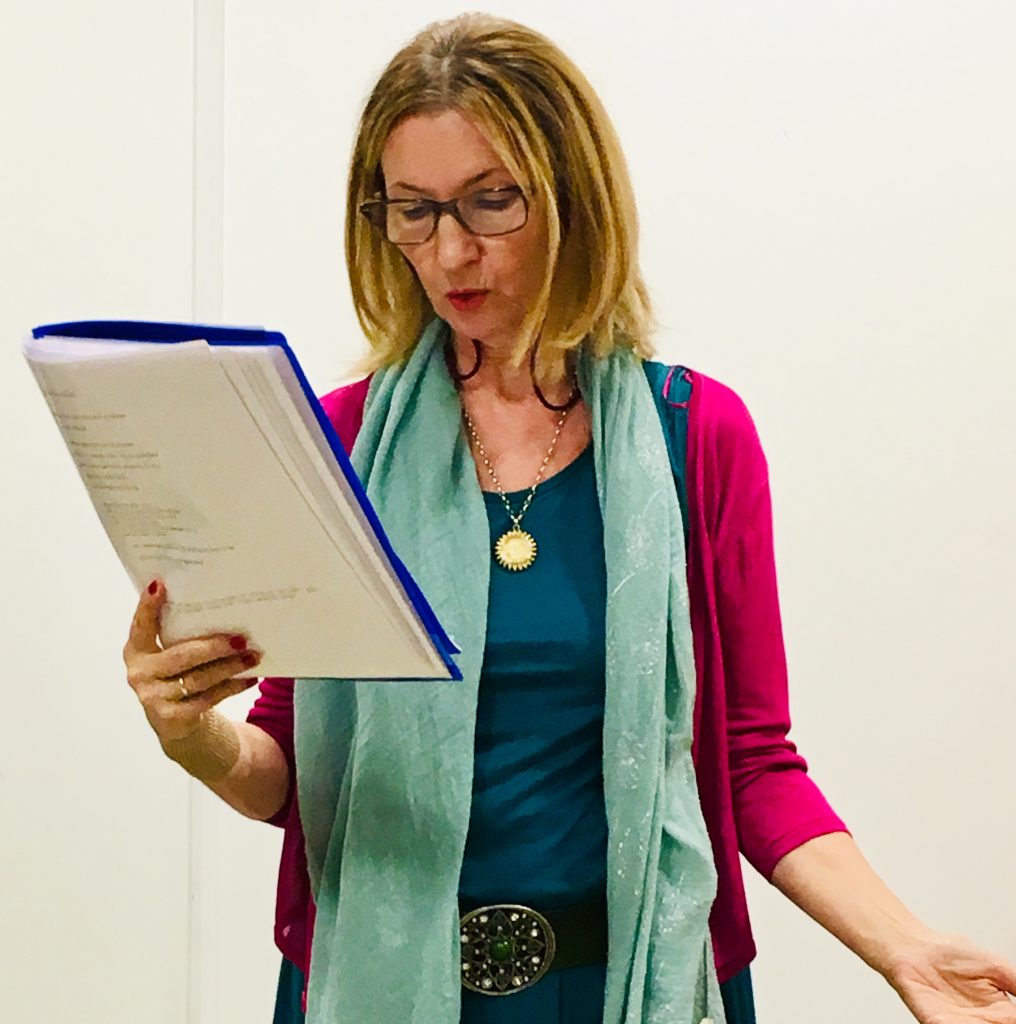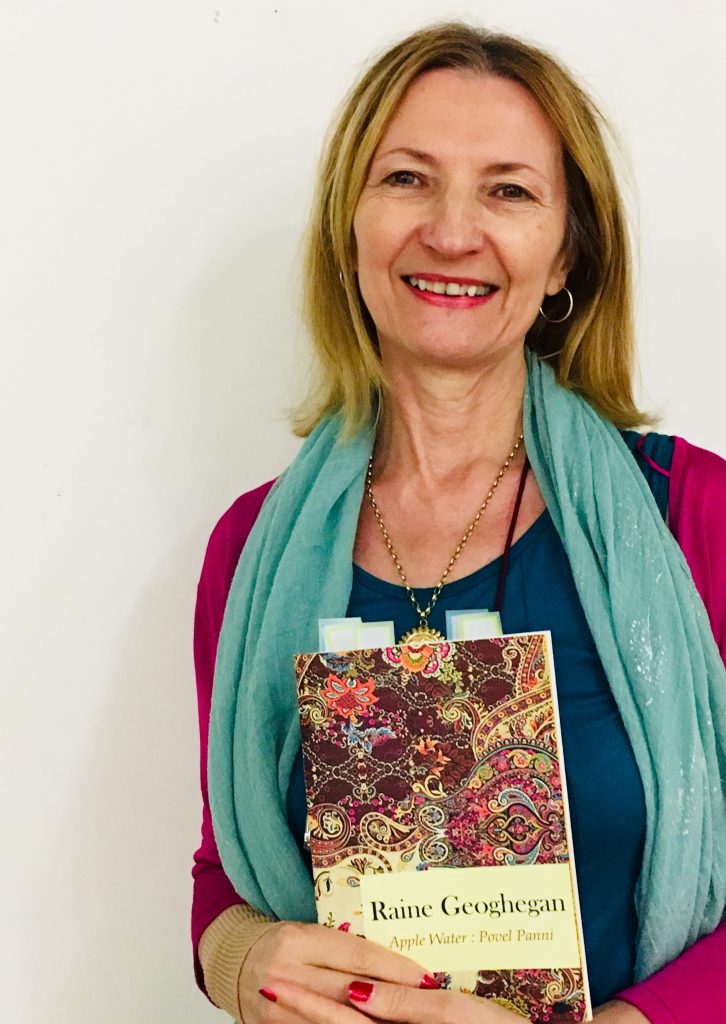
Congratulations on your debut poetry pamphlet, Apple Water-Povel Panni, published by Hedgehog Press, which was previewed at the Ledbury Poetry Festival in 2018. Your collection is based on your Romany family. Can you please tell us more?
I have been working with a mentor, James Simpson, during the last two years. About eighteen months ago we were discussing the idea of working on a sequence of poems based on one theme. I mentioned to him that I was half Romany and that I had written a radio play many years ago about my Romany grandmother, which I had never submitted. His face lit up and he suggested that this was what I should be writing about. Once I decided to write about the Romany side of my family everything fell into place. I wrote poems, songs, monologues, prose poems and short pieces of prose, I couldn’t put my pen down. I remembered many things from my childhood and some of the Romani language (jib). I began speaking with cousins, many of whom were full blooded Gypsies. I listened to a tape recording that I had made of my granny speaking about her life in the 1990’s. I dreamt about Gypsy Travellers, wagons (vardos) and members of my family. I even felt my granny’s presence whenever I read one of her monologues. There was a real power in the work and in the process. It’s still with me now, although changing slightly in terms of focus.
After previewing my pamphlet, Apple Water: Povel Panni, at the Ledbury Poetry Festival in July 2018, I received a lot of positive feedback from both Romany Travellers and non-Roma (Gorgios). I soon became aware of a collective thirst for Romany poems and literature, and also of the many Romany writers who I didn’t know existed. David Morley has been very helpful and I have been inspired by the work of Damian le Bas. Like Damian, I am a didikai, half and half. I was born in the Welsh Valleys, my father was Welsh and my great grandparents were from Ireland. I find that only being half Romany helps me to have a clearer perspective on what I am writing about.
Would you share with us a couple of poems from Apple Water-Povel Panni and walk us through the idea?
Keep movin’
The last weekend in May, a Friday, we pulled up on the poove. We got the fire goin’ and washed the little chavvies ready for bed. Our Ria and me were drinking mesci when our Sammy shouted. ‘Dick-eye the gavvers are comin’.’ All the malts came out of the vados and we stood there. We ‘ad to ‘old the men back as the gavvers started to wreck the site. One of ‘em kicked the kittle off the yog. He shouted. ‘Pack up and get going, you’re not welcome ‘ere.’ I ‘ad to ‘old my Alfie back, ‘e don’t lose ‘is temper much but when ‘e does, watch out, like that time he snoped a guerro in the yock outside the beer shop an ended up in the cells for a night. It rained ‘ard, we got drenched as we packed up all our covels. The chavvies were cryin’, the men swearin’ under their breath knowin’ if they said anythin’ they’d get carted off. Our Tilda was moaning about not gettin’ sushi stew. Us malts started to sing,
‘I’m a Romani Rai, a true didikai,
I build all my castles beneath the blue sky.
I live in a tent, I don’t pay no rent
an’ that’s why they call me a Romani Rai.’
As the men untied the ‘orses, me and Ria cleared up the rubbish. I ‘eard the gavver say, ‘bleedin gypos’. My Alfie called out, ‘the gavvers are grunts, let’s jel on, keep movin’.
We kept movin’ but sometimes we stayed put for a while, like when we was ‘op pickin’ or pea pickin’.
‘I’m a Romani Rom, I travel the drom
I hawk all the day and I dance through the night.
I’ll never grow rich, I was born in a ditch
and that’s why they call me a Romani Rai.’
All together in the poove
the best of times.
Thank the blessed lord.
Poove – field; Chavvies – children; Mesci – tea; Vados – wagons; Dick-eye – look there; Gavvers – policeman; Malts – women; Yog – fire; Snoped – hit; Covels – belongings; Sushi – rabbit; Didikai – half Romany & half Gorjio; Rai – a rough and ready person; Drom – road; Grunts – pigs; Jel on – let’s go.
If you look at the prose poem, ‘Keep Movin’, you will see that it has two verses of a song called ‘I’m a Romani Rai’, author unknown. This is a song that Romany folk love to sing even if they’re not didikai’s. Some time ago I listened to a radio programme about Travellers and how in the 1950’s they were constantly being harassed and moved on from where they were staying. It wasn’t easy to find stopping places, (atchin tan’s). I also remember my granny telling me about this when she was alive and how the policeman (gavvers) didn’t care who they moved on. I used my granny’s voice in this piece, voice is very important and in this poem, we learn what is happening through her eyes. She tells us, like it is: ‘We got the fire goin’ and washed the little chavies ready for bed./ Our Ria and me were drinking mesci when our Sammy shouted. / Dick-eye the gavvers are comin’. Later in the poem the women (malts) start to sing. ‘I’m a Romani Rai, a true didikai, / I build all my castles beneath the blue sky.’
I wanted to show how strong the women were, in fact when I have read my poems to an audience, many women have noticed this. This piece was inspired by my granny as she was a very strong and resourceful woman. Her motto was ‘keep movin’ and she loved to sing. The very last line is something she used to say a lot: ‘Thank the blessed lord.’
‘Hotchiwitchi’ has proved to be a very popular poem. It is gruesome, the thought of eating a baked hedgehog, but in the old days when the Travellers would stop by the roadside, they would have to eat what was available, rabbits, (shushi) and hedgehogs were the most popular. How to bake a hedgehog? This is how its’ done.
Hotchiwitchi/Hedgehog
to bake an ‘otchiwitchi;
roll it in the clay,
drop it in the embers of yer yog.
go and sing a song,
chase a sushi down the drom,
do a little jig, jog, jog.
when you open up the clay,
the spines will come away,
what’s left is sweet and tasty.
chank it while its ‘ot,
it maybe all we got,
giorjio food it’s not
chew yer little jig, jog, jog
chew yer little jig, jog, jog
Hotchiwitchi/jog jog – hedgehog; Yog – fire; Drom – road; Sushi – rabbit; Chank – eat; Giorjio – non Romany.
I have loved experimenting with both form and rhythm and when I read this poem aloud it has a definite rhythm.
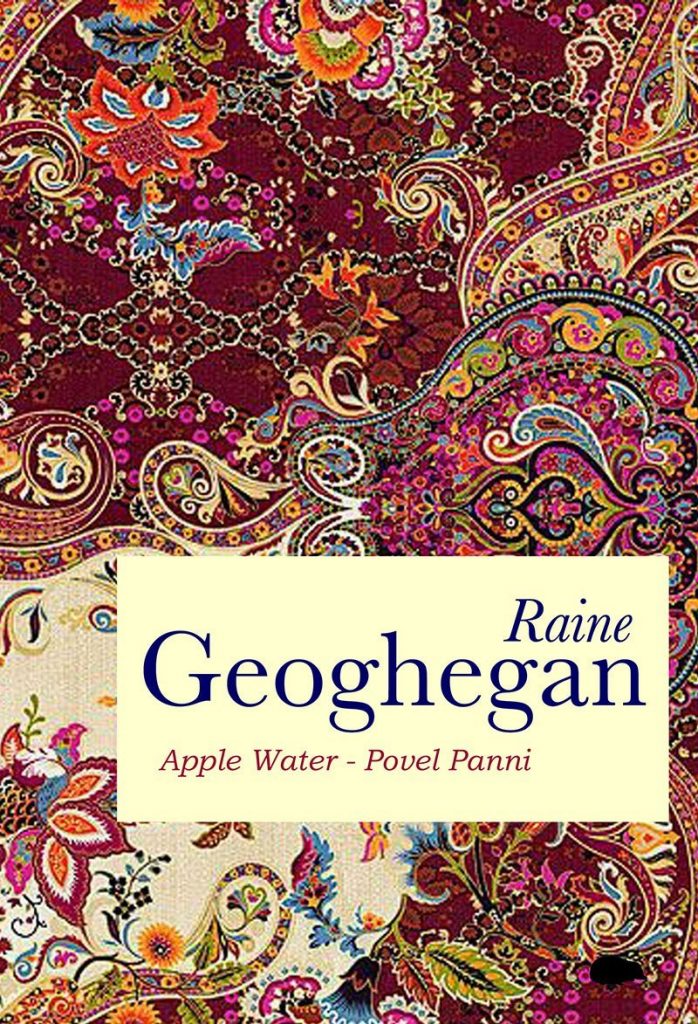
The cover of Apple Water-Povel Panni is breathtaking. Who designed it?
Mark Davidson designed the cover. I absolutely love it. Originally he was going to go for a collage effect, using some of my old black and white photographs, but he changed his mind as he wanted something more dramatic and colourful. The paisley design works beautifully. Deborah Tyler-Bennett wrote a review for Under the Radar, Issue 22. She wrote this about the design of both outer and inner cover: ‘What Hedgehog achieved with the look of the chapbook, was to mimic aspects of a family album – a deeply personal set of poems matched by a cover printed from a Romany shawl, inner-pages with a stunning photograph of the poet’s Mother, and family pictures throughout the volume.’
How did Earthworks come about?
I founded Earthworks in 1992 while I was studying for my first degree in English Literature and Drama at Roehampton University in Surrey. I had already been acting for some years and had always wanted to do something a little different. Earthworks was an experimental physical theatre company. There were five women involved and we also worked with musicians. Our first play was called, ‘Peace’, and was literally about women and peace making. We used some set texts and poems and also wrote some of our material. The opening scene consisted of various poses whilst we were covered with a large black net, a little like a fishing net. It went down really well at the university and we received a small grant from the Drama department. I then suggested that we create a piece based on Wangari Mathaai, a Kenyon Peace activist whose mission was to plant thousands of trees in Kenya as a way to demonstrate against President Moi. She had set up the Green Belt Movement and had a lot of opposition from the government. She was imprisoned many times and beaten. Her story was incredibly inspiring because she went onto become a member of parliament and the first woman in her community to gain a PhD. I called the play, ‘The Tree Woman’. We took the play out to various venues, other universities, London Fringe and had planned to take it to the Edinburgh Fringe with another production from Questors Theatre in Ealing, however two of the members were planning to go abroad and for personal reasons I opted out. What I loved about Earthworks was that it was a collective, we all shared in the writing and acting and two of us directed. For ‘The Tree Woman’ we even had a tree made which looked real and some of the acting took place around the tree. A wonderful experience for all of us.
You are featured in the film, Stories From The Hop Yards, by Catcher Media, which is based on the photography by Derek Evans. How did you get involved in this, and what did you do?
Last year I was contacted by a researcher working for Catcher Media, a film company based in Herefordshire. She had approached the editor of Romany Routes, the journal for the Romany & Traveller Family History Society, asking for suggestions of people who knew about hop picking. One of my poems, ‘The Way of the Gypsy’, had been published in the journal and was about my Romany granny who used to go hop picking in Bishop’s Frome in Herefordshire. After speaking with the researcher, Marsha, I was invited to go to Bishop’s Frome and be filmed. It was a fantastic experience and I found myself quite moved when I spoke about my Romany family, the Lane’s and the Ripley’s who all picked fruit and hops there. My Mum met my Dad who was from the Welsh Valley’s there and they were married the following year. The film was centred on the photography of Derek Evans and was premiered at the Courtyard in Hereford last February, unfortunately I couldn’t go due to heavy snowfall but I did read at Ledbury Poetry Festival at the film screening there. My interview can be seen on Vimeo. The interviews and other information can also be found on Herefordshire Life Through a Lens. It was a very enriching experience and one I would gladly do again.
Tell us about your dancing days.
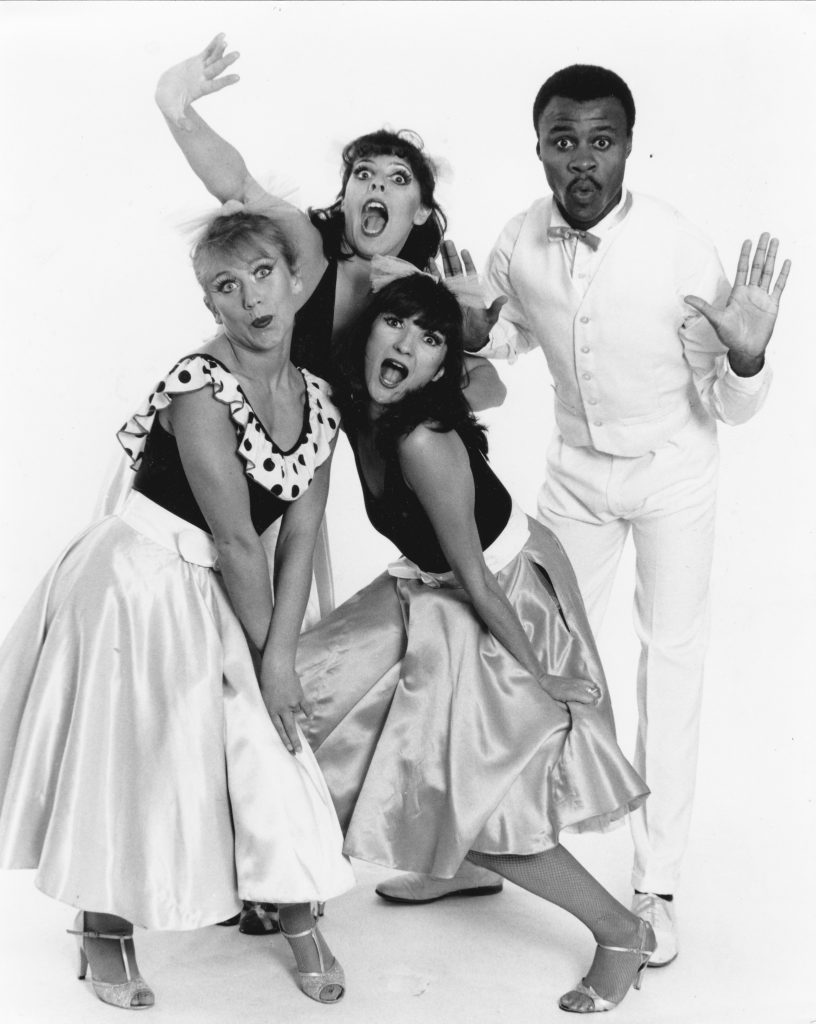
Dancing days. How I loved them. My Mother took my sister and I to dance class when were very young. I was three years old and took to it immediately. I trained in Classical Ballet, Tap Dance and Modern Jazz. My first professional job at the age of seventeen was dancing with Jean Belmont & The Gayetimers. It was one of London’s top floorshows. It was hard work, often we would perform two or three shows a night, arriving home in the early hours exhausted. It did, however, give me a good grounding in the business and I went on to work all over the UK and Ireland. I eventually ran my own dance troupe called Burlesque which was a dance/theatrical unit. We supported acts like Shakatak, Chas & Dave and The Barron Knights. I frequently broke away from dance to focus on acting. I had worked at the Royal Court Theatre when I was sixteen and had performed in other plays too. When I was at Roehampton University studying Theatre Practice and English Literature I also studied Indian Classical dance, Kathak, which I loved. It has fed into my love of Indian Culture and there is a strong connection between today’s Gypsies and their country of origin, India. The Romani language is also based on Sanskrit and Hindi. My dance and theatre work came to an end when I was diagnosed with ME/Chronic Fatigue Syndrome and other health issues. I also fell down the stairs and damaged my femur and coccyx quite badly and am registered as disabled. I love the fact that I can write from my bed if I am tired and I believe that there are always deep lessons to be learned from going through difficult times. I am, and always have been, tuned into my spirituality. I practise meditation and use chanting as a way to ground myself. I have had a good life so far and look at me now, a poet. I am blessed.
How strongly would you recommended doing a Creative Writing MA? What three things surprised you about it?
I received my Masters in Creative Writing from the University of Chichester in 2015. It really did change my life in terms of giving me a structure for my writing and a desire to get published. The tutors were simply amazing, they work so hard and try and give each student as much help and support as they can. What really impressed me was the support that came from my fellow students. We work-shopped each week, trying out new ideas and sharing our work. We had deadlines to keep to and a structure that enabled us to take our work seriously. I still keep in touch with some of my tutors and just recently I was invited to read at the University on April 1st, alongside a poet friend of mine whom I see regularly to share ideas and goals. Many of my colleagues have gone on to great things including getting their novels and poetry collections published. I am really proud.
About your monologues….what themes do you write about? Where can we find them?
I love writing dramatic monologues. Nearly all of my pieces are based on either family members or people that I have come across during my research on the Roma. Finding the right voice is so important but once I have that voice I can run with it and be free to allow the character to bloom. I also love reading them aloud and bringing in my acting experience so that I can embody their personality and have fun with it. One piece is called ‘Under a Gooseberry Bush’. It is based on my Great Grandfather and it is written in his voice. You can find it on Little Toller Books. As well as being published, this monologue is also available on a podcast on The Clearing, a fabulous online journal. Another piece, ‘Great Aunt Tilda, a Funny Old Malt’, can be found on The Ofi Press online site, (look for the 60th Issue in 2018). I heard only yesterday that I will be having another pamphlet published and it will contain my monologues/haibun poems and Gypsy songs. I am over the moon. Life is good. Thank you Deborah for interviewing me, it has been a very pleasurable experience.
Poetry Drawer: There is a River by Raine Geoghegan
Poetry Drawer: The Last Day by Raine Geoghegan (for my father James Charles Hill)
Poetry Drawer: Sunday Mornings by Raine Geoghegan