Become a superb troubadour who loves an eaglet in the starry night full of autumn miracle fulfilled in the meek ontology!
Taste a beverage of holt-like fairies from a stunning tumbler – to wit the cranberry juice and some dew enchanted in the metaphysics!
Sit down near a propitious tumulus – where the archpriest of the ancient Druids was buried with first summer starling of epistemology!
Hum a weird-ravishing tune – whose words have been hidden in the oaken hole in medieval time full of the aesthetics!
Bee a pleasing trustee-friend of the King of Pixies – your magician of dawn bewitched by the Morning Star in a logical dreamery!
Give as a present a smattering of grand tulips – flowers consecrated for the Apollonianly miraculous dwarfs loving tender Zeus-like aesthetics!
Find out a gorgeous twig of a willow that was adored by the most romantic poet in his more tender poesy of historic ethics!
Carry a divine tunic of ancient sibyl of Artemis who liked the dreamy-meek butterfly of wood loving the stoicism!
My dreamiest Erlking!!! Tarry until the first moon-time from Ionic philosophy of nature! Enchant all morning starlings and evening starlets – the beings from dreamy muse’s hearts Yes – no woe – they belong to Apollon
Pawel Markiewicz was born 1983 in Poland (Siemiatycze). His English haikus and short poems are published by Ginyu (Tokyo), Atlas Poetica (USA), The Cherita (UK), Tajmahal Review (India) and Better Than Starbucks (USA). More of Pawel’s work can be found on Blog Nostics.
Here in the trees of people we hide from the sound of their wooden bones that crisp and creak we hear them whisper about us their voices control us the voices we speak to, type to, at night; they are trees. They are trees!
Their voices control us they shout as one they shout the trees shout the trees of people.
The trees of people silence us make us scream inside the trees make us scream.
It was cold as the Twitter-scape. It was fake as electric vape. There was only a sense that there could be more than this.
There was nothing about the place but a sign called hope close to the door,
and the sign said watch me singing karaoke, hear me playing my acoustic, latest internet sensation due,
drug me, stop me feeling sad, out here in deep space, far away, on a planet beyond Mars.
Make a wish upon a planet.
We began to feel ill again. It was time for a pill again. They were given out for free so it was not hard to refuse. To be honest they gave a certain sense of not caring at all,
makes it easier to keep on singing karaoke, keep on playing my acoustic, keep on following the facebook feed,
helps me, stops me feeling sad, out here in space, far away, beyond Mars.
Before surgery It had not occurred to me To tell the church, Have them put it in the bulletin, Make an announcement On Sunday morning. But the day after, On a brief, tentative Supervised stroll around the ICU I happened to see our pastor There to visit a parishioner Who would not be going home. Don came to my room And we visited a while, And he offered to say a prayer (Like a good lawyer, I thought, Representing your interests in court). And when he prayed, He did not say Be with Bob as he heals But rather he spoke of the goodness Of the world and life God has given us, Which sounds like good theology to me,
But with the other family, though, He may have used A different text.
Lakefront Property
The forty-pound kayak Slices across the pond To inspect new construction At Caleb’s old place. A woman on a paddle board Passes across my bow, No lifejacket. She could have had three kayaks For what she paid, Latest fad born of That unholy marriage of Marketing and design: People will buy it Because they can.
The framing is up. Already there’s a Seadoo on the dock. Caleb had hoped someone Would restore his parents’ house. Columns for a gated drive Have replaced the old colonial Where he grew up, Facing South Main Street, When this was another kind of town.
Prognosis
My friend, seventy-six, Three years my junior, Had been for his annual check-up. The doctor asked if he had A living will. Did she mean anything by that, I wondered. My friend, Professor and poet, Knows what John Donne knew, And Shakespeare, That we will encounter darkness like a bride And hug it in our arms, And, with Billy Collins, regards Poetry as “a megaphone Held up to the whispering lips of death.”
Try telling poets No more poems about death And they’re out of business. I read the obit page, I know the facts, see what happens, But I’m not buying it.
Robert Demaree is the author of four book-length collections of poems, including Other Ladders, published in 2017 by Beech River Books. His poems have received first place in competitions sponsored by the Poetry Society of New Hampshire and the Burlington Writers Club. He is a retired school administrator with ties to North Carolina, Pennsylvania and New Hampshire. Bob’s poems have appeared in over 150 periodicals including Cold Mountain Review and Louisville Review.
It was always you, It was almost you, In all ways you, Always almost you.
Your sex-scent on the breeze That comes in through the window and mingles with the perspiration Of my lonely sheets. Your image just out of focus in my bedroom mirror. Every slamming door is you leaving. Every key jingling in a lock Is you arriving. Every car splashing along the wet road outside as I try to sleep Is you moving past me unaware.
Lying in torpor, staring at the cracks, Knowing you would heal them With the wild branches of your hair And the dark frigid oceans of your eyes, Holding me in the shiver Of beyond the second half of previously disused Lives. Contented in mirrors at last.
It will always be you, Almost you, In all ways you, Almost always you.
Before I Knew Love
I loved you before I knew you, Before I knew love, Before I breathed my first breath In this life. I loved you before my first concept of love And yet, here you are, Telling me love is something Reserved for those who pretend But I tell you this – Nothing I am and nothing I own And nothing I was matters to me Compared to your love Because before you Was before I could imagine, Reason or pretend. There was just me floating there, Yearning for your arms around me, Not knowing who you were But knowing I would know you When our paths finally crossed.
Now we are at a physical and emotional distance, Your body breathing without mine, Your heart beating without mine. Music plays here as I sit alone, Music I can no longer share with you The way we shared so much, But clearly not everything. I listen to this song and all I can think Is how much you would probably like it. Searching for you all those years, finding you, I imagined I would breathe my last breath Loving you as I did before my first And I will indeed love you when I shed this mortal coil And after But not the same. Not the same but I will.
As I am about to live again after this body dies I will likely love you again Before I breathe my first breath Just like I did before And before that. There is no choice. There is just what is.
Gentle and Fierce
She took my words close to her heart
And laughingly told me “You’re so gentle and fierce”
And then I pulled her close And gave her a kiss so savage and so tender She lost her breath
And she trembled all over, wet and melting like hot wax Against the force of my eyes and my body And my words and my lips and my loudly beating heart.
I Might As Well
I might as well shave my head. I might as well wear a necktie. I might as well turn off the music and get some sleep. I might as well stop writing about her. I might as well stop calling them on the phone. It’s a new day! A new me! A new day all about me! I might as well get laid. I might as well smoke cigars. I might as well not love. Loving is hard. Life is hard enough. I might as well tell you all that it’s time to be about me. I might as well shave my face clean, Buy a new suit and lose some weight, Waiting for the inevitable promotion or firing That will only lead to more opportunities In this wonderful America. I might as well stop crying. Tears have no worth. I’ll turn off the music now And turn in. I might as well get a good night’s sleep. I’ll shave my head tomorrow.
My Poems Arrive
My poems arrive At your doorstep, Sometimes one by one, Sometimes in a bundle. There can be weeks of silence And then they arrive, these paper boats with paper sails, One by one by one Onto your shore Under a dusky moonlight And a light steady rain.
You hear the knock on your door at 6 a.m. To find a poem questioning your love Or comparing your eyes to the moon reflecting off of The bottom of the sea. It must be disconcerting To potentially find undying love or petulant rage At your door at any given time. Often both.
My poems arrive Singly or by the dozen When you are making dinner Or taking a shower Or sleeping in your bed without me. Some come wrapped in ribbon, Some in undescriptive cardboard boxes, Some in plain brown wrappers
But they keep coming As relentlessly as the tide And, like the tide, There is no point in swimming Against them.
John Tustin started to write again in 2008 after a ten year hiatus and his published poetry can be found here.
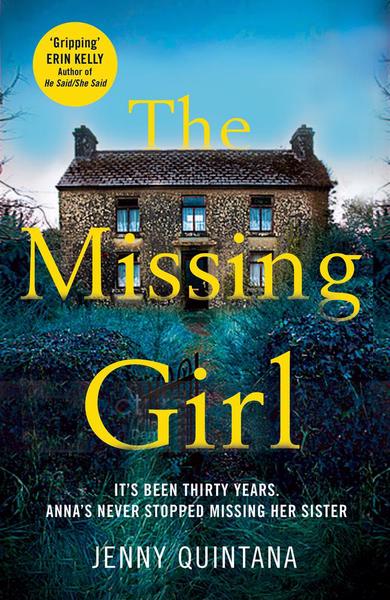
Jenny Quintana grew up in Essex and Berkshire, before studying English Literature in London. She has taught in London, Seville and Athens and has also written books for teaching English as a foreign language. She is a graduate of the Curtis Brown Creative writing course. She lives with her family in Berkshire. The Missing Girl is her first novel.
Hello
Jenny! Many thanks again for agreeing to answer some questions for
our Ink Pantry readers. Many are aspiring authors and I’m sure they
will learn a great deal from your experiences. May I start by asking
you about your childhood literary influences and what books in
particular gripped your attention?
I
was lucky enough to have parents who took me to the library when I
was a child and bought me books, which meant I gained an early
passion for reading. I loved Little
Women,
What
Katy Did,
The
Famous Five,
Malory
Towers.
I moved on to Agatha Christie and when I was twelve, wrote my first
novel called The
Imposter.
It was a detective story influenced by Agatha Christie, of course. My
dad marked it and gave me an A. I went from there to Thomas Hardy,
the Brontës and Shakespeare and all the classics which I loved.
At what age did you begin writing seriously, in the knowledge that this could become a career, rather than a hobby, Jenny?
I wrote stories from a very early age, but confidence stopped me from believing that I had anything worthwhile to say, and then circumstance – work, family and other commitments – gained more importance. However, the need to write didn’t go away and in my early thirties after I had my first child, I felt that I would be forever unfulfilled if I didn’t do something about it. I joined a local creative writing group and started writing short stories. I entered competitions, had some success, and that spurred me on to start my first novel.
Your 2017 début novel, The Missing Girl, (published by Mantle Books) attracted a lot of positivity from the literary world. Can you tell us more about how the seeds of the idea began for this novel, and how long it took to piece everything together? Also, how daunting was this project initially?
The characters in The Missing Girl came to me first. Two sisters – the younger one, Anna, idolizing the older, more popular and outgoing, Gabriella. I imagined what they were like and put them in the context of their family and the village where they lived. I decided the story would be from Anna’s point of view and then considered what was going to happen. By then I had written two unpublished novels and was beginning to understand what themes and ideas I wanted to explore. I was interested in ordinary people who are affected by tragic events and how they manage to make sense of them. I considered what it would be like if Gabriella went missing. Often in news stories we mostly see the effects a missing child has on the adults of the family, but what must it be like for the siblings? How heartbreaking for a child to not know where their brother or sister has gone and whether they will ever come home? I had the characters and the idea, but still I was nervous about embarking on another novel. I had spent so long by then trying and failing to get published, so it seemed very daunting. However, it isn’t easy to ignore the urge to write and I’m glad that I didn’t because once I had immersed myself, the novel took about a year to complete and then another eighteen months or so of editing with my agent, and then my editor.
Do
you have a particular framework for writing? For example, are you an
author who prefers pen and paper, or one who does everything on the
computer? Also, is there a set location you have chosen for your
writing?
I
generally write straight onto the computer and do many, many drafts.
Usually I write the whole novel quickly and it comes out quite short.
I then edit and rewrite and edit again, adding texture and colour and
depth. I have a very messy study at home where I work, but it is also
a walkway between the hall and the kitchen, so I’m constantly
interrupted by my family. I don’t mind really as I like to feel a
part of things, but my most productive time for writing is early in
the morning when everyone else is asleep, or when the house is empty.
Who
currently inspires you creatively, both inside and outside of the
literary world? How important do you believe it is to receive
inspiration for writing, especially at an early age? What hopeful
words would you give to someone seeking to find a career within
writing?
Inside
the literary world, I am inspired by writers such as Kate Atkinson,
Maggie O’Farrell, Margaret Atwood and Sarah Waters because they are
prolific and write great novels. Outside the literary world, I am
inspired by people who challenge the system – especially young
people who have the best sense of all. My children are young adults
now and they never fail to impress me with their good sense, humour
and outward view of the world. I think it’s important to have a
similar approach in everything you do, including writing.
I
do think it is an advantage to receive inspiration for your writing
at an early age, mainly through reading, however, many people don’t
have that opportunity and there is no reason that being inspired at a
later stage should make a difference. What’s important for every
author is to read as widely as possibly in order to understand how
writing a novel can be done.
My
greatest piece of advice for new writers is to persist. Ignore the
doubts you may have that your writing isn’t good enough, or that
you have nothing to say. Take small steps. If you are writing a
novel, think only about the paragraph you are writing, the page and
the chapter. If you consider how long the whole novel is going to
take you, it’s all too easy to give up. From my point of view,
nothing I have ever written has been wasted. I have reused
characters, ideas and themes many times. Another piece of advice is
to prioritise. It can be difficult when you have a job, a family or
other commitments, but try to find some time at some point in the day
or night which is for yourself and for your writing. I used to get up
at 5 o’clock in the morning for example – I still do, sometimes.
Make writing an important part of your life and above all give
yourself permission to write.
Many
thanks Jenny for your insights. I know you have a new novel planned
for release in 2020, Our
Dark Secret.
Is there anything you can share about this, and what other creative
plans have you within the foreseeable future?
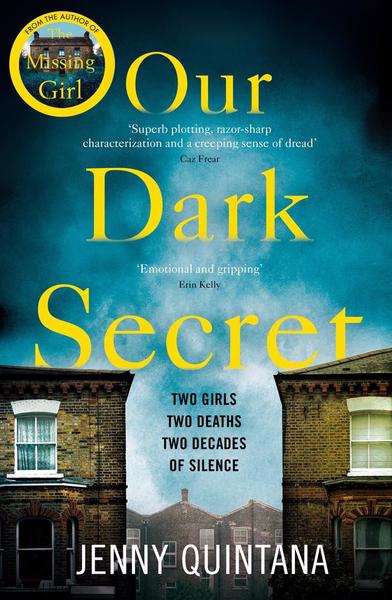
Our Dark Secret (Mantle Books) will be published in February 2020. It is another psychological mystery that focuses on two teenage girls, thrown together through circumstance, who form a bond based on the terrible secrets they share. It is about how decisions made in your youth can affect your whole life. It’s about sacrifice, friendship, loyalty and love. I am also writing a third novel for the same publisher which I have almost completed and have plans for a fourth. I started late and I am brimming with ideas that I am determined to get down.
Inky elf Kev Milsom is in the very early stages of his 5th decade, but looks at least ten years younger…possibly even fifteen on a good day, under beneficial lighting conditions. Currently training in holistic therapies, such as hypnotherapy, metaphysics and counselling, he is also trying to expand his creative writing knowledge and experience. As a devout ‘struggling artist’ he is working towards the completion of that elusive first novel, whilst fuelling a profound talent for procrastination by making notes on a possible second novel (alongside intermittent research for a third). He is proud to have achieved his goal of being independently published at least once a year since 2012, but is also currently exploring other aspects of writing such as journalism. His favourite colour is anything bright.
The killer was about to strike the unsuspecting victim, the gleaming dagger raised in his right hairy hand, cold eyes fixed and remorseless…
“Watchman?”
“Yes,
Saab.”
“Go,
check the water-level in the storage tank. Fast.”
“Yes,
Saab.”
The
killer was about to strike…
“Watchman?”
“Yes,
Saab.”
“You
must get up, when residents of the housing society come out of the
lift or go to the lift.”
“Yes,
Saab.”
“People
always complain. Say you sit in the chair, buried in a fat Hindi
thriller. Never get up. Never look up. Just that. Reading. Sitting in
the chair only.”
“Saab,
it is a good habit.”
“What
habit?”
“Reading.”
“You
are not paid to read on duty here.”
“I
always remain in the lobby of the building. As there is nothing much
to do, I read a novel.”
“Do
not argue, moron. I am the secretary. I can fire you immediately.”
“But,
Saab, I just explained. I read in the afternoons. It is better than
sleeping in the chair, during hot humid afternoons of Mumbai.”
“I
said do not argue. If you do that again, you are out. You guys! Very
rude and lazy.”
The
young watchman said nothing. The thin secretary glowered and then
left.
“They
pay only six thousands for a twelve-hour duty. Even that amount is
not paid on time,” said the older watchman.
“They
think they own us. Call us rude. Say all guards are rogues,” said
the younger one.
“Do not worry. Things will change. Do your duty.”
“Do not think too much. We are poor folks. We have to be tolerant of these rich rascals. They have money. Power. We have none.”
“OK. I always do that. But it hurts.”
“But it does not mean they should insult us. Hurt us. We have no money. But we are human beings, like them only. We too have respect. Our Izzat.”
“Young
man, be patient and calm. You have not seen the brutal side of the
world yet. Treat yourself as lucky. You have got a job. A uniform of
a private security guard. An I-D. In Mumbai, an I-D is gold. At
least, you earn money. Other migrants are not that lucky.”
“Yes,
I know.”
“Then?”
“I
felt hurt.”
“You
hurt easily. Change. This is a jungle. Predators roam here…freely.”
The
young security guard said nothing.
“Even
I feel restless. They scold me, too. Once a drunk resident slapped me
very hard. They openly abuse and curse those who watch their
property.”
“The
other day, a woman shouted at me. They make me run for errands. Some
of the men fight on any excuse. Humiliating!”
“Yes.
I went through all this. This is my fifth year. Guarding these rich
bastards.”
“Where
were you earlier?”
“A
worker in a textile mill. It closed down 20 years ago. Did odd jobs.
Got a family.”
“I
know. You have to survive somehow.”
“I
am school drop-out. Cannot do the office job. This one is easy.”
“Yes.”
“There
were others. Many drifted away.”
“Where?”
“Crime.”
“Crime?”
“Yes.
Crime is the other side of the story of a megacity.”
“How?”
“It
is easy.”
“How?”
“Temptingly simple and fast. Good money in it. Sense of power, also.”
“How?”
“The crime bosses recruit the discontented ones from the mushrooming slums. Life stinks there for these half-animals. They are all a disillusioned, bitter lot. Desperate to do anything for money. Life is a big hell.”
“Yes. No power. No water. A 10×10 feet room of sheets and ropes. You go out to relieve. Long queues outside the three public toilets. Three toilets for more than a hundred people. Hell!”
“Crime
offers easy money.”
“And
a lot of women and drinks and good food.”
“Yes.
And lot of cash.”
They
grew quiet.
“One
of my close friends became a hired killer.”
“Who?” asked the younger guard, the reader of the thrillers.
“Lal Chand. LC we called him.”
“How did it happen?”
“He
was small and thin. A weakling. One day he got beaten by a person in
his chawl.
That goon always taunted his younger sister. LC objected. The local
goon beat him black and blue.”
“Then?”
“Next
morning, LC killed him before the neighbours.”
“Was
that so easy?”
“Nope.”
The
older one was quiet for long.
“In fact, LC had called one of his cousins, a sharp shooter for a dreaded gang. He hovered in the background. The goon was surprised to see a quiet LC and grew more aggressive. LC took out his revolver and with a shaky hand and goaded by the accompanying professional killer, his cousin, shot him three times. The surprised goon went down in a heap.”
“Then?”
“He
became a local hero! That puny man! Once a timid who could not swat a
mosquito, swiftly turned into a fearless hero.”
“Then?”
“The police were relieved at this elimination. LC did their dirty job. No witnesses. Nothing. But LC became the new goon. He terrorized. Drunk a lot. Went to bars and splurged money on bar-girls there.”
“Wow!”
The
older guard looked hard at the younger one in his twenties. “The
end was not that cheerful.”
“What
happened?”
“The
cops killed him in a staged encounter.”
“Why?”
“He
was a threat to a powerful older don operating from Africa. That don
paid the cops who killed him in broad daylight. Before hundreds of
people. Killed him in cold blood.”
Before
the younger guard could say something, a harsh voice called out:
“Watchman.”
The
younger one ran towards the A-Wing of his housing society.
That same night, a drunken resident abused him and hit him in the belly, for not standing up from his plastic chair. “Who has torn my bike’s cover seat? You blind? Bastard, can’t you keep an eye on the strangers coming into our society? You useless shit! Getting paid for not doing your job. Stinking idler. Bastard.”
The older one rushed out and pacified the drunk in his early 20s. The young guard cried in pain, doubled up on the cold marble floor of the well-lit lobby of the high-rise. The man shouted and stamped his feet and then left, cursing.
Same
night, in his troubled dream, Raj Kumar Kurmi, 22, from a remote
village, turned into a gleeful killer, going on a spree of killing
and shouting hoarsely at the dead in a thin and piping voice.
The
action took place in slow motion:
First: stabbing the landlord of the tiny village in the bloated belly five times. Long dagger, in the moonlight, dripping with fresh blood. He shouting: “This one for insulting my elder sister and raping my wife of thirty days.” Then, in a fast motion: Stabbing the money-lender for cheating him out of his one-acre land, at the edge of the village nestling in the region of the brooding Himalayas, near the border with Nepal; followed by the killing of a local politician who spread caste-hatred among the folks there, and then, fleeing from a stunned village, arriving in Mumbai and then, enraged and foaming at mouth, killing the rich of the high-rise and the young drunk resident, laughing manically, in the moon-lit night, while fresh blood dripped from his long curved dagger, a wolf, surprisingly, howling in a far-of forest, on that cold night; then, he, becoming that wolf in the jungle…
Dreams of white sand, And golden stars, And silver bells, Wrapped round the moon… The moon whispered across the lands, Peaceful dreams, Sleep soundly, For I will protect you throughout the night.
The Moon beams, Down lights of silver rays, As the silver dust sprinkles on the land, And spreads throughout the night, Giving sleepers of slumber, Their peaceful dreams.
I wish for brother to be not such an unfamiliar word to me lighting candles and minds with stories, climbing mountains made out of the storeys of the house we almost grew up in together – backpacks on, climbing shoes, ropes made out of bedsheets, tiny mountaineers opining on everything, opening gifts at Christmas, now pining for rewinding – if we could, I wish we could do it together
Dad Says
Dad says “Fluids!”, when we complain we are hot. “You’re dehydrated,” he says, even if we think we’re not.
“You need fluids!” Dad says, when we’re playing in the garden. “Fluids!” he says, when we pound the streets of London.
“Fluids!” he says in Paris as we watch Mickey’s parade. “Fluids!” he says, as we retreat into the shade.
“Fluids!” Dad says, in Portsmouth and in Yarmouth. “Fluids!” Dad says, and every time we laugh.
“Fluids!” Dad says, as we walk on Jersey’s shores “Fluids!” he says, in every place that we explore.
“Fluids!” he says, putting a drink in front of us. “Looking forward to some fluids”, as we ride the airport bus.
“Fluids! Get it down yer”, when we’re in town, shopping. “Fluids!” in Orlando, when we’re Disney park-hopping.
“Fluids!” is his mantra up in the Scottish Highlands. “Fluids!” as we float towards Gothenburg’s islands.
“Fluids!” he says in Miami, Wales and Spain And on the beach in the Bahamas he repeats himself again.
“Fluids!” Dad says, in Nottingham and Birmingham. “Fluids!” Dad says, by the canals of Amsterdam.
“Fluids!” Dad says, as we push through Times Square. “Fluids!” he barks and wags his finger in the air.
“Fluids!” he will say when we hunt for the Northern Lights, “Fluids!” he will say when we sample Stockholm’s delights.
“Fluids!” He grins and stretches out the word. “Fluids!” we all chant, as we explore the world.
Shards
I have been sheltering people subconsciously and still when I send them the miniscule the threads the summary the dregs they do not respond why do they not respond? it has been too hard to give them anything so far and now I have given something they do not take it take it take my ovaries take my diseased womb take everything that has to come with it take my tears take my worst fears my operations take everything I am showing you because it is nothing compared to the rest of the things I have I have so much stock in the back room take this and then if you run out I will give you some more see how you get on with this first I say and they don’t take it I can’t say anything more to convince them because my voice box is shattered and speaking is too hard it is shattered as in tired shattered as in destroyed shattered as in shards sticking in my throat and what am I supposed to do with this? what am I supposed to do with these fragments of words they won’t take? I cannot pull them out of my own throat and put them inside someone else’s there are other people who would happily take these shards and eat them like sword swallowers like fire eaters if it would spare me there are people who would do anything to spare me and other people who will not take my spare words who will not spare me their words any words would do just to say message received a delivery report a read receipt signed in their handwriting fucking anything what am I supposed to do with this silence? I can’t replace the shards in my throat with silence I could soothe them with something soft I could soothe myself with something soft I can’t reach out I can’t reach out there is no future I can see I am too afraid to look cover my eyes this isn’t me I have shelved myself temporarily maybe forever and I need people to tell me that they still see me to tell me I exist to remove these shards to tell me shards are not the only thing left in my world replace the shards with real words walk to me reach out to me touch me without expecting me to reach back sometimes I can’t reach back so quickly it’s the shards you see those damn shards every time I move every time I try to speak they stick I need everyone else to stick softly take a shard and sand it down sand me down make me see me make me see them and in seeing them see me make me see them and in seeing they will see me make me see them and in seeing them I will see me remove the future from my sight where it can’t hurt me remove the shards from my throat where they can’t bite me fight for my sanity make me make me see only the soft make me see softly speak to me softly say anything softly fucking anything softly
Sam Rose is a writer from England and the editor of Peeking Cat Poetry Magazine. Her work has appeared in Scarlet Leaf Review, Rat’s Ass Review, The Bitchin’ Kitsch, Haiku Journal, and others. In her spare time, she enjoys listening to rock music and eating too much chocolate. Find her at her website and on Twitter.
This article briefly examines the poet’s role in history and sketches the growing lack of definition and purpose since World War II.
The role of the artist in society has changed dramatically at various times in recorded western history. One of the earliest notable exemplars of the reputable place that a poet occupied in society is Aeschylus, who did his public duty in 490 b.c., when he fought against the Persians at the battle of Marathon, participating in the struggle for survival of the democratic polis, Athens.
The options of the artist diminished rapidly with the growth of
empires, since the role of the artist is not vital to the existence
of the state. For almost two millennia, the normal pattern of life
for the artist was dependency on patrons, sponsors, or commissions.
The exceptions were the select few born to privilege, for example,
Byron, who gave his life for Greek freedom, perishing in 1824 at
Missolongi, during the Ottoman siege. During this span, the artists
outside the system led difficult lives and were fortunate to practice
their art, however difficult the conditions.
The industrial revolution diversified the control of wealth by the
lords of power, bringing forth a new class of financial barons, who
turned to the arts in imitation of their betters. Suddenly artists
were able to create their work without it being pre-sold,
consequently they were no longer mere craftpersons. Many became
personages of some stature in the eyes of the new prosperous
middle-class society.
From the 1870’s on, some artists had a world view that allowed them
to look beyond their individual discipline, as they searched for a
more significant role in the life around them. Poets patriotically
enlisted in World War I, and the British poets in particular wrote
about the horror they experienced. The poets who dutifully went to
war in World War II returned quietly and never really developed a
public identity. The crisis for American poets began in the early
stages of the Cold War. American painters skyrocketed to world
acclaim, fame, fortune, while the poets composed in relative
obscurity. More and more poets sought a modicum of security, finding
shelter in universities far from public recognition and reward.
In a dynamic American cultural revolution, every art form from the
1960’s on, offered the possibility of wealth and status to the
artist, except poetry. Poetry had no opera houses, concert halls,
museums, galleries, or mass-market publishers to attract large
audiences. But the poets now were college-educated and with a few
exceptions, such as the Beats, led obscure lives in colleges. The
artificial atmosphere comforted the isolated wordsmiths with the
illusion of accomplishment, reaching small groups of students,
readers of poetry periodicals, and miniscule audiences attending
poetry readings.
Poetry in America experienced an identity crisis. The anti-Vietnam
war movement in the late 1960’s firmly closed the portals on the
topic of war, mankind’s most consequential activity, as a suitable
subject. Virtually all American poets were liberals and in all good
conscience opposed war, so the government became the enemy. Since
the poets mostly could not identify the capitalist owners of America,
they scorned the system of flawed representative government and
retreated further into safe niches. Internal revelations and lurid
exposés of parental abuse became valid subject matter, transforming
the nature of poetry into microcosmic excursions, rather then
explorations of big issues.
In an era of uncertainties and dangerous conflicts, domestic and
foreign, there is no designated role for the artist in American
society. The very concept of training poets in college, an
environment that discourages extremes and negates any natural
inclination to action, leaves the poet adrift in a world that
dismisses the practitioners of passivity.
The poet travels towards his or her destination, a journey of creation of what should be a meaningful body of work, through a haphazard combination of education, exposure and personal preferences. This occurs in an unstructured process that makes the accomplishments fortuitous. In medicine or engineering, students are taught and trained by measurable standards and the results are assessable. Even acting, the most superficial of the performing arts, which lacks the stringent requirements of music or dance, has more predictable goals than poetry. The poet’s path could be adventurous, since it explores an uncharted wilderness without landmarks or traveller’s aids, but it will be a dismal voyage for the timid.
Poetry, once the pre-eminent literary art, has been supplanted by mass market commercial fiction. The authors of novels have become far more prominent than any poet, whose limited possibilities of achievements are determined by effort, talent, and coincidence. Rarely is anything meaningful achieved without a mentor, the sponsorship of a like-minded network, or a supportive artistic community. The poet can be susceptible to a stifling tendency to huddle together in protective enclaves, rather than move in the sphere of the world at large.
The poet must learn to expand his or her perception of existence and
enlarge their scope of interest, or risk becoming inconsequential in
this demanding life. There is an urgent need to reach out to diverse
audiences, prisoners, seniors, the culturally underserved, and most
important, to youth, not to make them poets, but to introduce them to
a broader view of life. With proper instruction, poetry is the most
accessible and cost-effective way to reach large numbers of youth.
The constriction of the classroom rarely develops confidence in
youth, the quality that allows them to choose who they will grow up
to be. The poet can help launch venturesome journeys for youth that
will promote their contribution to the future of our society.
It is implausible that America will produce warrior-poets who will fight on tomorrow’s battlefields of freedom. But those poets who wish to participate in the life of their times, participate in a grander arena of creativity, design a meaningful role for themselves in their society, must outreach to needy and deprived audiences. The poet’s efforts will enrich their audiences, who in turn will reward those poets who are receptive with the great satisfaction derived from serving humanity.
Essays by Gary Beck about foreign affairs, political issues, literary topics and homelessness have appeared in AIM Magazine, Elimae, Outcry, Purple Dream, CC & D Magazine, Bergen Street Review, Campbell Corners Language Exchange, Let Up Magazine, The Oracular Tree, Bedford-St. Martins Press, Penniless Press, Fine Lines, 63 Channels, Writing Raw, Greensburg Magazine, Slurve Magazine, Poor Mojo Almanack, Wolf Moon Journal, Shelf Life, The Recusant, International Zeitschrift, Straitjacket Magazine, Fear of Monkeys (Twin Enterprises), Poetic Matrix Press, Gently Read Literature, Geronimo Review, Lit Up Magazine, Lunar Poetry, Plum Ruby Review, Sorrowland Press, The Dramatists Guild Quarterly, Blue Lake Review, The Wolfian, Record Magazine, Consciousness: Literature and the Arts and other publications.
Gary Beck has spent most of his adult life as a theatre director and worked as an art dealer when he couldn’t earn a living in the theatre. He has also been a tennis pro, a ditch digger and a salvage diver. His original plays and translations of Moliere, Aristophanes and Sophocles have been produced Off Broadway. His poetry, fiction and essays have appeared in hundreds of literary magazines and his published books include 21 poetry collections, 7 novels, 3 short story collections and 1 collection of essays. Published poetry books include: Dawn in Cities, Assault on Nature, Songs of a Clerk, Civilized Ways, Displays, Perceptions, Fault Lines, Tremors, Perturbations, Rude Awakenings, The Remission of Order and Contusions (Winter Goose Publishing, forthcoming is Desperate Seeker); Blossoms of Decay, Expectations, Blunt Force and Transitions (Wordcatcher Publishing, forthcoming are Temporal Dreams and Mortal Coil); and Earth Links will be published by Cyberwit Publishing. His novels include a series ‘Stand to Arms, Marines’: Call to Valor and Crumbling Ramparts (Gnome on Pigs Productions, forthcoming is the third in the series, Raise High the Walls); Acts of Defiance and Flare Up (Wordcatcher Publishing), forthcoming is its sequel, Still Defiant); and Extreme Change will be published by Winter Goose Publishing. His short story collections include: Now I Accuse and other stories (Winter Goose Publishing), Dogs Don’t Send Flowers and other stories (Wordcatcher Publishing) and The Republic of Dreams and other essays (Gnome on Pig Productions). The Big Match and other one act plays will be published by Wordcatcher Publishing. Gary lives in New York City.