Journeys & Memories by Mel Woodend, illustrated by Michael John Wardle

unnamed

Mel Woodend:

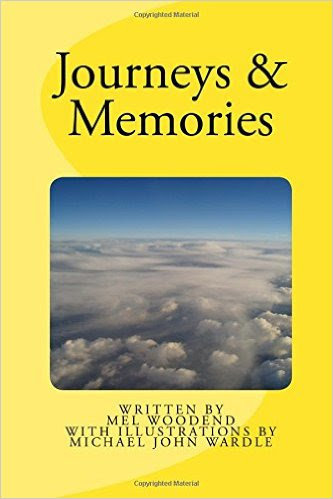
My Dad very suddenly passed away this October & before Dad died we had been working together on a poetry book. This was to be a collection of poems based on the themes of journeys & memories. I had written all the poems for our collection during spring & summer & Dad was still busy drawing the illustrations when he was taken ill. I promised both myself & Dad that I would make sure we got our book published as it is such a special thing to have been able to do together. So here it is! It is available in paperback or Kindle e book format. I’m donating 50% of the first month’s royalties to the Coronary Care Unit at the Royal Stoke University Hospital where Dad was cared for. I’m so proud to have been able to publish this book with my Dad. I would be most grateful to anyone who would like to please buy a copy. It is available on Amazon at http://www.amazon.co.uk/dp/1516925866 or by searching for “Mel Woodend” or “Journeys & Memories” on the Amazon website. Please could you share with others so our book is publicised as widely as possible. With many thanks, Mel.

Poetry Drawer: The Last Day by Raine Geoghegan (for my father James Charles Hill)

grass

On that day, was it pelting down with rain                                                                          like it always did in Bedwelty?

Or was the September sun filtering into the room?                                                            Perhaps the radio was on with Jim Reeves

singing one of mum’s favourite songs.                                                                            Could you hear voices coming from the kitchen

as Nanna kept busy,
flapping the welsh cakes on the griddle ?

I imagine your gaze falling upon my small form,                                                                my mother scooping me up, holding me tight.

Did you notice the creases of anguish in her face                                                              as she let you have one more sip of whisky?

Did you give me one last kiss when she carried me away?                                                Did you know it was the last day?

Resting now,                                                                                                                        on top of the hill, overlooking the valley.

I’ve tried to find you,                                                                                                            but the grass has grown too high.

Raine’s Website

Poetry Drawer: There is a River by Raine Geoghegan

Poetry Drawer: Sunday Mornings by Raine Geoghegan

Kafka’s Accident Insurance Ad by Rachel Miles

kafka

As Kafka actually worked in accident insurance, I wondered what it would be like if he was forced to do one of those tedious adverts on television. According to his friends, he was incapable of lying. So in my mind, it came out something like this:

KAFKA: (Shuffling about on his feet and not looking directly at the camera) Had an accident at work that’s not your fault? Here at the Worker’s Accident Insurance Institute, we stand up for your rights. Well, if you’re believed. Well… I say that, because sometimes people are brushed off… A little. If you come to me, up on the fourth floor, then, of course, I will help you. If I’m given the right file… because… sometimes, the files get a little mixed up. Just last week, I held in my hand a file for an elderly man with burns and standing in front of me was a young woman missing an arm. It just… (ahem) happens sometimes. However, of course, I will do my utmost to see that you get seen; I’ll believe you. But they sometimes don’t believe me, I mean… I can see many things wrong with a person, but they tell me I’m being a hypochondriac on their behalf. “I’m not a hypochondriac,” I say. “There are many things wrong with me and I can see those perfectly.”
So yes, we will make sure you see someone immediately. (Pauses) Initially. But not necessarily the right person. With the amount of corridors, rooms, and floors in the building, people are often sent to the wrong room. “We don’t do that here, go to room 104,” they say, but room 104 turns out to be the broom closet. Then the broom closet doesn’t give any advice, so you’re stuck wandering the corridors.
Then sometimes, if you’re actually given the time of day, you’re analysed by a group of doctors, who look over you like a piece of meat. You’re standing there – sometimes in the nude! – and every part of your body is talked about so as to ascertain whether you are actually injured, despite the fact you no longer have a left hand. Then, possibly, you get to the tribunal, where your case is spoken about – if you get past the week-long queues outside the room. Even when you wait day after day, at the end of each one you are sent away amongst all the others, and you leave like a bewildered herd. You are desperate for a look in your direction, anything that says you may be seen. All the while you and your family are starving because you can no longer work due to your injury, and your wife has been thinking about leaving you anyway but this just about settles it.
And, I sit in my office, unable to change anything in this vast and impenetrable bureaucracy, and some days I come to the conclusion that the only means of escape is insanity.
(Clears throat) So that name again… Is the Worker’s Accident Insurance Institute… for fairness and quick results.

Picture: bbc.co.uk

Buffalo Soldier by Tanya Landman: reviewed by Tina Williams

Buffalo Soldier

‘What kind of a girl steals the clothes from a dead man’s back and runs off to join the army?

A desperate one, that’s who.’

The Carnegie Medal, awarded annually to ‘the writer of an outstanding book for children’, is notorious for selecting novels which confront contentious issues and/or have the potential to spark controversy and debate. This year’s winner, Tanya Landman, is certainly no exception. With her brutally honest report of what it was like to be a young black woman in America’s Deep South during the country’s most troubled and bloody period, she presents her young readers with questions about humanity that would trouble even the most philosophical amongst us.

Beginning her life as a slave girl in the cook-house of the wealthy Delaney family, Landman’s narrator dispenses with her ‘fancy’ given name of Charlotte, just as she had relinquished all knowledge of her age or family history. As ‘property’ of Mr Delaney, she knows the best she and her fellow workers at the plantation can hope for is to keep a low profile and work hard, despite the verbal and physical abuse that has her question why skin colour matters when all blood looks the same.

Civil war between North and South, in which Lincoln’s Yankee soldiers are fighting for a united America devoid of slavery, brings hope to those on the plantation, and they eagerly await the brave cavalry who will set them all free. Although Charlotte doesn’t know what freedom is exactly, she senses it’s something good and clings to that feeling with excited anticipation of its arrival.

Except freedom doesn’t come with the battle-weary soldiers who burn the plantation, kill Delaney and take the workers with them, indiscriminately raping and killing as they rampage across the country. Nor does it come with news of the Confederate South’s surrender, nor with the assurance of an all new Promised Land.

After witnessing the rape and murder of those closest to her, and encountering the remains of atrocities carried out upon black families, Charlotte loses all hope for freedom. Frightened by the soldier’s mistreatment of women, her vulnerability becomes the only thing in the world she can control. By dressing as a man, she discovers that she becomes a man in the eyes of others (‘Folks see what they expect to see’). And so, seeking freedom and protection, she enlists as a soldier. But even here, within the United States Army, Private Charley O’Hara finds racial prejudice is just as prevalent as ever.

As the years pass, Charley witnesses the cruel treatment of her fellow soldiers by a white race unable or unwilling to rearrange the pre-established social order. Battle-hard and world-weary, devoured by hatred and fuelled by stories of savagery, Charley releases years of rage and social injustice on another of America’s ‘nuisance’ races, the Native Indians. She stands by her fellow soldiers as they evict entire Indian communities from land earmarked for new schools and homes for white families. Oblivious to the irony, her distaste for the Indian culture is soon brought into question by the arrival of another frightened soul sheltering for survival within the US Army – one who knows her secret, understands her fight, and with whom she has the greatest chance of finding freedom.

Landman’s novel charts a tumultuous period in American history, straddling both the pre-War barbarism of slavery, and the post-War turmoil that went on long after the Thirteenth Amendment abolished slavery in December 1865. Whilst the American Civil War is often pored over in film and literature, the perspective is predominantly male, claims Landman, and even rarer is the voice of the young black female. As so many writers do, Landman says she heard Charlotte’s/Charley’s voice clearly as she wrote, and this is evident in the narrative that rings out loud and unfiltered from the pages. In her Deep South dialect, Charlotte lays down the truth about the barbarities of that period – first as an innocent child asking all the questions and trying to make sense of the world with only a handful of pieces of the puzzle, and then as an adult, hardened by loss and war, and defying long-buried feelings of truth and justice.

Whilst Buffalo Soldiers charts just one woman’s journey, its themes of freedom and identity relate to all American citizens regardless of race during that period, and indeed all members of the human race before and since. Charlotte asks some heavy questions of her listeners, ones that can have no agreeable answers – certainly not from today’s readers who live in a world striving for equality and a voice for all. Nor does Charlotte shelter her readers from the things she has seen: brutal rape, murder and mutilation – surely the most horrific of atrocities one human can commit upon another. But Landman trusts her young readers with the truth – the truth as she has discovered it during research for this and other novels – and Charlotte is the medium by which that truth is communicated. Through Charlotte, Landman ensures that new generations remember and learn from the experiences of those who have gone before us, and, perhaps more importantly, plays her part in giving those who were once voiceless, a chance to be heard in a world now ready and able to listen.

Find out more about Tanya Landman and her work at www.tanyalandman.com.

http://www.carnegiegreenaway.org.uk/carnegie/recent_winners.php

http://www.theguardian.com/childrens-books-site/2015/jun/22/tanya-landman-carnegie-medal-2015-winner-buffalo-soldier-interview

http://www.independent.co.uk/arts-entertainment/books/news/buffalo-soldier-story-of-former-female-slave-in-us-army-wins-children-s-book-award-10337833.html

https://en.wikipedia.org/wiki/Slavery_in_the_United_States#Civil_War_and_emancipation

Inky Special: Lyrical Craft: Musician Dave Hulatt by Deborah Edgeley

Road Trip pic 4 interviewDave pic

You say that music has its own language. Can you please explain what you mean?

Music has its own modes of expression, gesture and structure, which can also be seen in the structure of verbal language. For example, a sentence can equal a riff. Similarities between the syntax used in conversation can be analogous to the gesturing inherent in various types of musical phrases. Musical conversation can be observed in the ‘question and answer’ motifs often used by duelling in musicians, with blues and rock players who gesture to each other.

Music instantly affects my emotions, as opposed to any other art, but is transient. Is music more about feeling?

Music can be about feeling, it can be about something transient, but also something less so if it stays or lingers in the mind, and perhaps provokes subliminal questions or attitudes that may surface in other forms of communication. For example, if you listen to a sad piece of music, that then translates into affecting a conversation with someone in a way that might have been different if the conversation had taken place after listening to something happy, jolly, up tempo, aggressive etc.

Is there a recurring theme in your work? What do you care about?

.Recurring themes in my lyrics are often connected with philosophy and politics. I think a lot about the meaning and the value of doing things, and analysing this in the sense of fairness, justice, consumerism and escapism. I often comment on the machine like nature of society, how people are controlled without realising it (a good analogy is in the film The Matrix) and the ‘battery hen mentality’ of its citizens, a lyric I used in a song before the concept of the Matrix became available to me.

You attended Dartington College of Art, a specialist institution in Totnes, Devon. Tell us about your concept piece Mind’s Eye.

Minds Eye was a solo album recorded on a Commodore Amiga computer using a Yamaha sound module a few years before I went to Dartington, but it was used to support my application to study there, and was probably the main reason I got an unconditional offer. It was done using purely midi technology, and this skill was eventually to come in useful in my final year project at the college, where I produced a completely automated sound/lighting piece.

Which album has inspired you, lyrically?

One of my favourite albums in terms of lyrics and imagery would be Astounding Sounds and Amazing Music by Hawkwind. The track Steppenwolf particularly expresses the contrast between society and its customs, the individual and the unconscious, and the animal nature hidden beneath the masked exterior of human etiquette.

You have a new album called Sun Daze. What are the concepts behind it?  I love the song title Who Ate My Piecycle!

The idea behind Sun Daze really draws from the concept of escaping to a better place, away from the rat race, perhaps an eternal sunny summer’s day out in the fields with a best friend/lover, which the album photo on the inside cover, taken by a lovely friend of mine, encapsulates. It also is moody and rebellious in terms of notions of a wider idealism generally, and of grappling with the difficulty for anyone to be truly authentic in a modern day world. Who Ate My Piecycle is instrumental, and I think the title reflects its quirkiness, though its meaning is purely an irreverence towards reality, I guess, i.e. escapist creativity.

What would you say is the most important element in your song writing?

The most important element in song writing is firstly the amount of passion/drive you have at the time, and the quality of the initial seed that kicks off your creativity. Then the hardest part to me is in re-arranging and perfecting a composition.

About your creative process. Where do you usually find your muse? And can you summon her?!

The creative process for me can be a combination between catharsis and a desire to create and build something lasting beyond myself. It helps a person escape worries and everyday drudgery and repetition, and the world of sound can have its own sensuous delights to entice.

Can you please share with Ink Pantry a couple of examples of your song writing, from your album Sun Daze?

Spiral Path

In a downward spiral, on an upstairs path, reflect the fantastic, escape the mundane.

In a cool river, lagoon of peace, magic surrounding the sounds, chasing a rainbow inside the dream.

Staring at the Sun

Gazing through a lens of imagined paradise, utopia cannot describe, revelation and childlike wonder, only adulterated by illusions of beauty.

Sun Daze is available on CD Baby:

http://www.cdbaby.com/cd/roadtrip3

https://www.facebook.com/Roadtrip6/?fref=ts


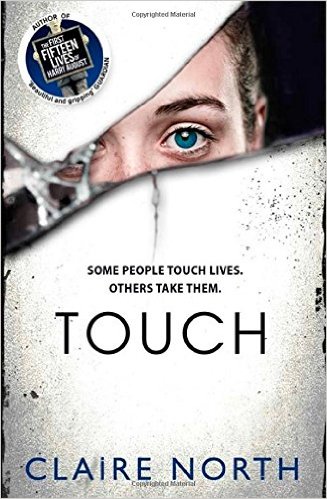
Touch by Claire North: reviewed by Natalie Denny

touch

‘Do you like what you see?’

Imagine you could change bodies at will, experience life in whatever human form you pleased. Would you?

Claire North’s Touch allows us to explore this idea through Kepler, a ‘ghost’ who can ‘jump’ into any body by mere skin to skin contact. Kepler and kin are possessing entities born into human bodies that experienced violent trauma, triggering a powerful impulse to cling to life. In their death throes these souls reach out – leaving their original bodies and jumping into whomever’s they can lay their pores on. Kepler is a special form of ghost, an ‘estate agent’, who is paid handsomely to find host bodies for other souls that share this unique ability.

We follow Kepler from the first terrifying jump and back and forth through a mesmerising ride through history. We are hurled in at the midst of the action from the outset. Kepler is in love with Josephine, a willing host body that Kepler rents for a considerable sum. The death of Josephine at the hands of a skilled assassin fuels a race against time to unmask Aquarius, the organisation that has made its mission to eradicate Kepler’s kind. We meet others like Kepler; most memorable is the lunatic Galileo who uses ghosting skills to wreak havoc and destruction across the world in an attempt to taunt Kepler. Galileo engages Kelper in a dangerous game of hide and seek, utilising Aquarius to destroy the ghost with Machiavellian precision.

Touch is a fast-paced existential thriller with an original concept. The book deals with issues of love, mortality, identity, and the essence of self. On the ghost’s exit, the hosts are minus the memory of the time they were being ‘worn’, which highlights many ethical issues around survival and consent. Kepler is gender fluid throughout, and the book deals with love and relationships in a very inclusive and thought-provoking way. This is the kind of book that keeps you constantly engaged and questioning the main character as well as yourself.

There’s little doubt that Kepler is a monster who uses people with little regard to their welfare but somehow we are sympathetic.

Claire North’s attention to detail is excellent and the grand finale of the book will keep you gripped until the last page. For me, it doesn’t triumph the marvel that was The First Fifteen lives of Harry August, but it is a book that stands proud in its own right. My only criticism would be that I thought the book could elaborate in many areas such as the origins of these bodiless souls.

Overall it is a gripping, poignant, breathlessly imaginative read that was difficult to put down.

touch

Inky Interview with Mike Gayle by David G. Thorne

mike gayle pic

Previously an Agony Uncle, Mike Gayle is a freelance journalist who has contributed to a variety of magazines including FHM, Sunday Times Style and Cosmopolitan. He is the author of ten best-selling novels: My Legendary Girlfriend, Mr Commitment, Turning Thirty, Dinner For Two, His ‘n’ Hers, Brand New Friend, Wish You Were Here, The Life and Soul of the Party, The Importance of Being a Bachelor, and the latest The Stag and Hen Weekend. His ninth book is a non-fiction work called The To Do List, about his own efforts to complete a 1277-item To Do List.

How do you feel about your books being included in the ‘chick lit’ genre? Do you think male romantic fiction deserves a title of it’s own, and what would that be?

There are up and down sides to being included in any genre whether it’s literary fiction, crime or indeed Chick lit. On the one hand it helps to deliver an audience to authors who may not be particularly well known and who otherwise might have struggled to find a readership. On the downside the effect can be quite limiting in terms of its effect on the author’s output but also in terms of readership too. I’ve lost count of the number of times new readers have told me that they’d avoided my books because they thought they were one thing and only realised how wrong they were when they finally forgot about preconceived notions and just picked up the books. In an ideal world there wouldn’t be genre there would just be good books and people would be open to the idea of reading books about anything at all.

Before you wrote My Legendary Girlfriend, you did a lot of writing for magazines. Was it a difficult transition from writing factual articles to writing a novel? 

It was actually a lot easier than you’d imagine. As a journalist I’d long since grown tired of writing what editors wanted me to write and so the opportunity to explore my own imagination couldn’t have been more welcome. As for going from writing 1000 word articles to 90,000 word novels it was simply the case of breaking down the big task of writing a novel into lots of little tasks. People always ask how do you write something as mammoth as a novel and my answer is always the same: write little and often.

Did you get many rejections for My Legendary Girlfriend before it was accepted? And how did you keep up your motivation whilst you were waiting for your ‘big break’?

I’d completed the novel in its entirety before I sent it to agents because that was my primary goal: to prove to myself that I could write a novel. By the time I was ready to send it out I was actually quite confident of the quality of what I’d written and because of that I felt sure it would eventually find a home so you can imagine my disappointment when I received my first rejection letter quickly followed by my second! Thankfully the third letter I received was from someone who actually liked it and so she gave me some very detailed notes and we worked together on making it the best book it could be.

Can you give us a few insights into the way you approach writing a novel, after you’ve had the initial idea? As creative writing students, we’re encouraged to carry notebooks with us at all times to jot down of ideas. Is this something that you do?

It’s a great idea but like most great ideas has positive and negative attributes. The negative is that it leads you to think that everything you write in it is a sharp insight into the human condition and not the product of someone who has a new note book and wants to write in it! The positive is that when you do have a moment of genuine insight it helps to write it down rather than (as I have done) convince yourself that it’s so profound a thought that it will NEVER leave you and then promptly forget about it when you come to your next writing session.

You have a strong internet presence with your website as well as Facebook and Twitter, and seem keen to interact with your fans. How important do you think social networking is to the modern author?

I think it’s essential but then again I think interacting with your audience has always been fundamental. As a teenager I was a huge fan of the band The Wedding Present and they were the most approachable band you could ever hope to meet. Everything I do I pretty much nicked from them. Being approachable, being interested in your readership engenders a two-way feeling of community that can be positively infectious. Who doesn’t want to belong to a club where everyone thinks you’re ace?

Your website contains a lot of tips for anyone hoping to get published, but what is the single most important piece of advice you  would give to an aspiring novelist hoping to follow in your footsteps? What is the most useful piece of advice you’ve been given as a writer?

I’ve already told you it: Write little and write often. Too often new writers set themselves targets that are simply too high. Better to write 500 words and be desperate to get back to your desk the following day then 2000 and fill with dread at the sight of the computer. Writing is a habit. Cultivate it correctly and you’ll never want to stop.

I loved Turning Thirty – it reminded me so much of my own life and circle of friends, but I was a little bit disappointed that Matt and Ginny didn’t get together at the end. Do you think it’s important to occasionally  upset readers expectations like this?

I think you have to do what’s right for the story and for me the main story of Turning Thirty was an attempt to answer the question ‘is it okay to turn thirty and still not have your life sorted?’ For me there could only ever be one answer and that’s why Matt’s still single at the end of the book. That said I do think it’s important to challenge your readers, they might not always like it but I think they do tend to respect it.

You’ve now also written Turning Forty. Can you tell us when this is due to be published, and what was it that made you want to revisit those characters?

Turning Forty is due out June 2013 and has probably been the most difficult novel I’ve ever had to write. I actually finished a draft that I’d spent a year working on back in 2010 but ended up dumping the whole thing because it just didn’t feel right. It was quite traumatic at the time but it was absolutely the right thing to do because sometimes even if you plan you, you only find out what a book’s about by finding out what it’s not about. The new version couldn’t be more different to the previous version, in fact the only thing it has in common is the title and the characters, but it’s absolutely the right story. I absolutely love it and can’t wait for fans of Turning Thirty to get hold of it.

Your latest novel The Stag and Hen Weekend is quite unusual in that it’s really two novels which can be read from front to back or from back to front. How did you come up with this idea, and what did your publishers think when you told them?

I knew that I wanted to write about a stag and hen weekend but didn’t want to write a story that was too obvious. I tried looking at it a million different ways and then finally my wife came up with the idea and the moment she said it I knew that she’d got it. I suppose what that shows is that it’s good to talk about your ideas with the people closest to you but be prepared for their eyes to glaze over once in a while! My publishers loved the idea and immediately rose to the challenge of turning out a book with two covers which is no mean feat!

We see that you liked ‘Late Lunch’, we loved that too? We love Great British Bake Off too and celebrate our writing milestones with cake. How do you celebrate when a book is published?

Ha! I’d forgotten that I mentioned Late Lunch on the website! I used to love that programme. I think I’ve only ever had one proper launch party and lovely as it was I’d rather my publisher spent the money on advertising rather than feeding and watering my friends and family! These days publishers prefer to stick to a nice lunch for the author which I for one am a huge fan of.

Ink Pantry would like to thank Mike Gayle for his time, we appreciate him agreeing to be interviewed for our blog. Mike’s latest novel, The Stag and Hen Weekend, is available now, published by Hodder & Stoughton.

Find out more about at http://mikegayle.co.uk/


Inky Special: Claire North book signing by Natalie Denny

Clare north pic

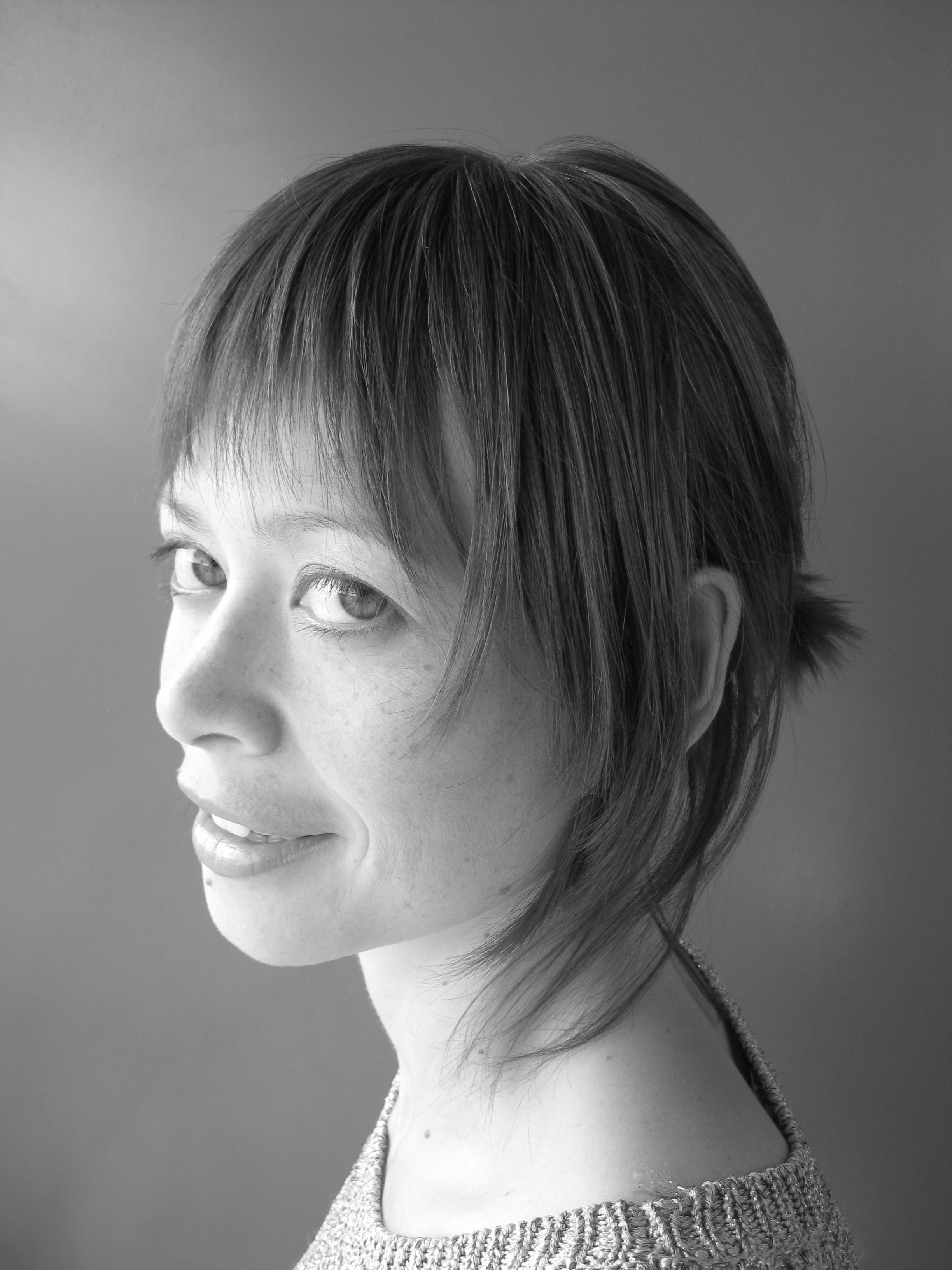
I attended the book signing event for Claire North at Deansgate’s Waterstones. This was to promote her most recent novel Touch, a story about an entity called Kepler that can switch bodies through skin to skin contact. The book has a wonderfully imagined concept and I thoroughly enjoyed reading it.

Claire North, actual name, Catherine Webb, who also goes by the pseudonym of Kate Griffin, is a prolific yet brilliant writer, her experience spans over ten years despite her being under thirty.

Claire North’s first novel, written as Claire North, The First Fifteen Lives of Harry August gained critical acclaim on its release in 2014. Touch is the highly anticipated follow up.

It was quite a small gathering that greeted the author at the bookstore, which allowed for a more intimate event. Claire was charmingly eccentric and engaging. Her enthusiasm for her craft was evident in her language and descriptions. Claire delivered a timeline of her writing career to give us some background on herself, which brought us to the current day and novel.

It was interesting to learn that Claire is also a trained theatre lighting engineer as well as a talented writer. She claims that all writers are crazy, which comes from experience of being raised by two. She stated her lighting job helps maintain her sanity while her writing indulges it.

She took questions on Touch‘s themes around gender, sexuality, love and all those existential ideas that propel humans forward. The concept of the book is original and intriguing. The idea came to Claire when watching someone walk through a park and disappear when they stepped out of the lamplight into darkness to then reappear again.

Claire spoke about the future of the book industry and the positives and negatives of self-publishing. She also spoke about feminism and her support for women in male-dominated professions.

When asked what her favourite novel she’d written is, she diplomatically responded. Whatever one she’s finished last seems to be high in her esteem as she believes each story brings with it a different feeling and achievement.

Claire happily signed my copy of Touch and posed for a picture.

Claire has finished ‘The Gamehouse Novellas’, which are out now, and has a further publication due for release in the New Year, which I will keep my eye out for.

Clare north pic

Poetry Drawer: There is a River by Raine Geoghegan

River Itchen

There is a river
running between us,

wide and deep.
It is dark when I look into it,

like your face.
I long to jump in,

swim across
to where you are

stand dripping before you,
but the current is strong

the rocks jagged,
I want to look into your eyes,

trace the light in them
but my feet are stuck in mud

Here on the riverbank
my legs won’t move.

My words are stones

sinking to the bottom of the river

Picture: http://learning.southdowns.gov.uk

Raine’s Website

Poetry Drawer: The Last Day by Raine Geoghegan (for my father James Charles Hill)

Poetry Drawer: Sunday Mornings by Raine Geoghegan

Inky Interview with OU tutor Emily Midorikawa by Tina Williams

Emily Midorikawa (2)

Hi Emily, thank you for agreeing to this interview. Can you begin by telling us a little about yourself?
Thanks for asking me. I am a writer and writing tutor, living in London. My most recent published work was a piece of travel writing set in Spain, which won the Telegraph’s weekly Just Back competition. I’ve also just finished a short memoir for the Tangled Roots project, which I’ll say more about later, and I am heavily into the editing stages of my second novel. When I’m not writing or teaching, I enjoy reading, and dancing, and riding around the city on the back of my partner’s motorcycle.

We must mention your first novel, A Tiny Speck of Black and Then Nothing, which came joint third in the SI Leeds Literary Prize, and has been shortlisted for the Yeovil Literary Prize. How did the story of Anna and Loll come about, and how much of your own experiences of Japan are in the finished book?

A Tiny Speck of Black and then Nothing ended up coming third in the Yeovil Literary Prize too, which was another bit of good luck. The beginnings of the novel’s story began to form in my mind while I was working in Japan in my early twenties, teaching English to high school students. The narrator Anna is also an English teacher, but my time in Japan was, thankfully, rather less creepy than hers eventually becomes. For the record: I never lived with a nightclub hostess, had a friend disappear, or found myself caught up in the criminal underworld of Ōsaka. On a different note, the traditional tales that my Japanese mother used to tell me were another huge influence that found its way into my book.

Do you have a preferred writing genre given that you have written novels, short stories, and non-fiction?

Novel writing is what I get up and do most days, but I enjoy writing non-fiction and short stories in gaps between drafts or just breaks when I need to take a breather from my main project. Shorter pieces can provide variety, but that isn’t to say that I find them any easier. I’ll sometimes write a short story in a single sitting, but it can take me months, even years, to get it into a respectable shape.

You are also an experienced tutor at City University London, New York University in London, and with the Open University. How do you schedule writing time into your day?
I write in the mornings and do other things – like teaching or admin or the ironing – in the afternoons. It wasn’t always like this. I’ve had all sorts of jobs in the past, working as a bookseller, a dental receptionist and a secretary amongst other things. I didn’t used to have this level of control over my time, but now I’ve reached the stage with my writing and my other jobs that I can organise my life in this way.
What are your favourite books and which authors have inspired you?

The Virgin Suicides by Jeffrey Eugenides, Notes on a Scandal by Zoë Heller, What Was Lost by Catherine O’Flynn and The Secret History by Donna Tartt are novels I could read again and again. Underground, in which Haruki Murakami interviews witnesses and survivors of Aum Shinrikyō’s sarin gas attack on the Tōkyō subway system, provides some fascinating insights into contemporary Japanese society. I’ve noticed that Murakami is very good at drawing out the extraordinary details of seemingly ordinary lives. The Pillow Book by Sei Shōnagon is another favourite, as is anything by Jean Rhys. I first read her when I was sixteen, and after that I never thought about the art of writing in quite the same way again.

Many of our followers are Open University students and/or aspiring writers themselves. Can you offer one piece of advice that you have been given or that you give your students to help stay motivated?
Keep reading and keep writing: it might sound as if I’m stating the obvious, but both of these things are so important. If you were a violin player, you couldn’t expect to be much good if you never found the time to hear other violinists playing, or didn’t bother with any practice yourself. It’s the same for a writer. Your writing can become hesitant and laborious if you don’t keep it up. Even if all you can manage is a matter of minutes per day, that’s better than doing nothing.

Is there anything you are working on at the moment that you would like to tell us about?
As I mentioned earlier, I’ve just put the finishing touches to ‘The Memory Album’, a piece that I was commissioned to write for Tangled Roots – a project of stories and events that celebrate multi-racial families and mixed-race people in Yorkshire. It is being organised by the writer Katy Massey. When she got in touch to ask me to be involved, I jumped at the chance play a part in such a worthwhile scheme. You can find out more about the project at http://www.tangledroots.org.uk/

Once again, thank you, Emily, for your time.

Thank you. It’s been my pleasure.


Website: www.emilymidorikawa.com
Twitter:
@EmilyMidorikawa