Buffalo Soldier by Tanya Landman: reviewed by Tina Williams

Buffalo Soldier

‘What kind of a girl steals the clothes from a dead man’s back and runs off to join the army?

A desperate one, that’s who.’

The Carnegie Medal, awarded annually to ‘the writer of an outstanding book for children’, is notorious for selecting novels which confront contentious issues and/or have the potential to spark controversy and debate. This year’s winner, Tanya Landman, is certainly no exception. With her brutally honest report of what it was like to be a young black woman in America’s Deep South during the country’s most troubled and bloody period, she presents her young readers with questions about humanity that would trouble even the most philosophical amongst us.

Beginning her life as a slave girl in the cook-house of the wealthy Delaney family, Landman’s narrator dispenses with her ‘fancy’ given name of Charlotte, just as she had relinquished all knowledge of her age or family history. As ‘property’ of Mr Delaney, she knows the best she and her fellow workers at the plantation can hope for is to keep a low profile and work hard, despite the verbal and physical abuse that has her question why skin colour matters when all blood looks the same.

Civil war between North and South, in which Lincoln’s Yankee soldiers are fighting for a united America devoid of slavery, brings hope to those on the plantation, and they eagerly await the brave cavalry who will set them all free. Although Charlotte doesn’t know what freedom is exactly, she senses it’s something good and clings to that feeling with excited anticipation of its arrival.

Except freedom doesn’t come with the battle-weary soldiers who burn the plantation, kill Delaney and take the workers with them, indiscriminately raping and killing as they rampage across the country. Nor does it come with news of the Confederate South’s surrender, nor with the assurance of an all new Promised Land.

After witnessing the rape and murder of those closest to her, and encountering the remains of atrocities carried out upon black families, Charlotte loses all hope for freedom. Frightened by the soldier’s mistreatment of women, her vulnerability becomes the only thing in the world she can control. By dressing as a man, she discovers that she becomes a man in the eyes of others (‘Folks see what they expect to see’). And so, seeking freedom and protection, she enlists as a soldier. But even here, within the United States Army, Private Charley O’Hara finds racial prejudice is just as prevalent as ever.

As the years pass, Charley witnesses the cruel treatment of her fellow soldiers by a white race unable or unwilling to rearrange the pre-established social order. Battle-hard and world-weary, devoured by hatred and fuelled by stories of savagery, Charley releases years of rage and social injustice on another of America’s ‘nuisance’ races, the Native Indians. She stands by her fellow soldiers as they evict entire Indian communities from land earmarked for new schools and homes for white families. Oblivious to the irony, her distaste for the Indian culture is soon brought into question by the arrival of another frightened soul sheltering for survival within the US Army – one who knows her secret, understands her fight, and with whom she has the greatest chance of finding freedom.

Landman’s novel charts a tumultuous period in American history, straddling both the pre-War barbarism of slavery, and the post-War turmoil that went on long after the Thirteenth Amendment abolished slavery in December 1865. Whilst the American Civil War is often pored over in film and literature, the perspective is predominantly male, claims Landman, and even rarer is the voice of the young black female. As so many writers do, Landman says she heard Charlotte’s/Charley’s voice clearly as she wrote, and this is evident in the narrative that rings out loud and unfiltered from the pages. In her Deep South dialect, Charlotte lays down the truth about the barbarities of that period – first as an innocent child asking all the questions and trying to make sense of the world with only a handful of pieces of the puzzle, and then as an adult, hardened by loss and war, and defying long-buried feelings of truth and justice.

Whilst Buffalo Soldiers charts just one woman’s journey, its themes of freedom and identity relate to all American citizens regardless of race during that period, and indeed all members of the human race before and since. Charlotte asks some heavy questions of her listeners, ones that can have no agreeable answers – certainly not from today’s readers who live in a world striving for equality and a voice for all. Nor does Charlotte shelter her readers from the things she has seen: brutal rape, murder and mutilation – surely the most horrific of atrocities one human can commit upon another. But Landman trusts her young readers with the truth – the truth as she has discovered it during research for this and other novels – and Charlotte is the medium by which that truth is communicated. Through Charlotte, Landman ensures that new generations remember and learn from the experiences of those who have gone before us, and, perhaps more importantly, plays her part in giving those who were once voiceless, a chance to be heard in a world now ready and able to listen.

Find out more about Tanya Landman and her work at www.tanyalandman.com.

http://www.carnegiegreenaway.org.uk/carnegie/recent_winners.php

http://www.theguardian.com/childrens-books-site/2015/jun/22/tanya-landman-carnegie-medal-2015-winner-buffalo-soldier-interview

http://www.independent.co.uk/arts-entertainment/books/news/buffalo-soldier-story-of-former-female-slave-in-us-army-wins-children-s-book-award-10337833.html

https://en.wikipedia.org/wiki/Slavery_in_the_United_States#Civil_War_and_emancipation

Inky Special: Lyrical Craft: Musician Dave Hulatt by Deborah Edgeley

Road Trip pic 4 interviewDave pic

You say that music has its own language. Can you please explain what you mean?

Music has its own modes of expression, gesture and structure, which can also be seen in the structure of verbal language. For example, a sentence can equal a riff. Similarities between the syntax used in conversation can be analogous to the gesturing inherent in various types of musical phrases. Musical conversation can be observed in the ‘question and answer’ motifs often used by duelling in musicians, with blues and rock players who gesture to each other.

Music instantly affects my emotions, as opposed to any other art, but is transient. Is music more about feeling?

Music can be about feeling, it can be about something transient, but also something less so if it stays or lingers in the mind, and perhaps provokes subliminal questions or attitudes that may surface in other forms of communication. For example, if you listen to a sad piece of music, that then translates into affecting a conversation with someone in a way that might have been different if the conversation had taken place after listening to something happy, jolly, up tempo, aggressive etc.

Is there a recurring theme in your work? What do you care about?

.Recurring themes in my lyrics are often connected with philosophy and politics. I think a lot about the meaning and the value of doing things, and analysing this in the sense of fairness, justice, consumerism and escapism. I often comment on the machine like nature of society, how people are controlled without realising it (a good analogy is in the film The Matrix) and the ‘battery hen mentality’ of its citizens, a lyric I used in a song before the concept of the Matrix became available to me.

You attended Dartington College of Art, a specialist institution in Totnes, Devon. Tell us about your concept piece Mind’s Eye.

Minds Eye was a solo album recorded on a Commodore Amiga computer using a Yamaha sound module a few years before I went to Dartington, but it was used to support my application to study there, and was probably the main reason I got an unconditional offer. It was done using purely midi technology, and this skill was eventually to come in useful in my final year project at the college, where I produced a completely automated sound/lighting piece.

Which album has inspired you, lyrically?

One of my favourite albums in terms of lyrics and imagery would be Astounding Sounds and Amazing Music by Hawkwind. The track Steppenwolf particularly expresses the contrast between society and its customs, the individual and the unconscious, and the animal nature hidden beneath the masked exterior of human etiquette.

You have a new album called Sun Daze. What are the concepts behind it?  I love the song title Who Ate My Piecycle!

The idea behind Sun Daze really draws from the concept of escaping to a better place, away from the rat race, perhaps an eternal sunny summer’s day out in the fields with a best friend/lover, which the album photo on the inside cover, taken by a lovely friend of mine, encapsulates. It also is moody and rebellious in terms of notions of a wider idealism generally, and of grappling with the difficulty for anyone to be truly authentic in a modern day world. Who Ate My Piecycle is instrumental, and I think the title reflects its quirkiness, though its meaning is purely an irreverence towards reality, I guess, i.e. escapist creativity.

What would you say is the most important element in your song writing?

The most important element in song writing is firstly the amount of passion/drive you have at the time, and the quality of the initial seed that kicks off your creativity. Then the hardest part to me is in re-arranging and perfecting a composition.

About your creative process. Where do you usually find your muse? And can you summon her?!

The creative process for me can be a combination between catharsis and a desire to create and build something lasting beyond myself. It helps a person escape worries and everyday drudgery and repetition, and the world of sound can have its own sensuous delights to entice.

Can you please share with Ink Pantry a couple of examples of your song writing, from your album Sun Daze?

Spiral Path

In a downward spiral, on an upstairs path, reflect the fantastic, escape the mundane.

In a cool river, lagoon of peace, magic surrounding the sounds, chasing a rainbow inside the dream.

Staring at the Sun

Gazing through a lens of imagined paradise, utopia cannot describe, revelation and childlike wonder, only adulterated by illusions of beauty.

Sun Daze is available on CD Baby:

http://www.cdbaby.com/cd/roadtrip3

https://www.facebook.com/Roadtrip6/?fref=ts


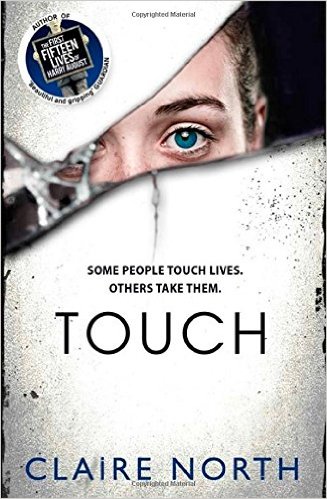
Touch by Claire North: reviewed by Natalie Denny

touch

‘Do you like what you see?’

Imagine you could change bodies at will, experience life in whatever human form you pleased. Would you?

Claire North’s Touch allows us to explore this idea through Kepler, a ‘ghost’ who can ‘jump’ into any body by mere skin to skin contact. Kepler and kin are possessing entities born into human bodies that experienced violent trauma, triggering a powerful impulse to cling to life. In their death throes these souls reach out – leaving their original bodies and jumping into whomever’s they can lay their pores on. Kepler is a special form of ghost, an ‘estate agent’, who is paid handsomely to find host bodies for other souls that share this unique ability.

We follow Kepler from the first terrifying jump and back and forth through a mesmerising ride through history. We are hurled in at the midst of the action from the outset. Kepler is in love with Josephine, a willing host body that Kepler rents for a considerable sum. The death of Josephine at the hands of a skilled assassin fuels a race against time to unmask Aquarius, the organisation that has made its mission to eradicate Kepler’s kind. We meet others like Kepler; most memorable is the lunatic Galileo who uses ghosting skills to wreak havoc and destruction across the world in an attempt to taunt Kepler. Galileo engages Kelper in a dangerous game of hide and seek, utilising Aquarius to destroy the ghost with Machiavellian precision.

Touch is a fast-paced existential thriller with an original concept. The book deals with issues of love, mortality, identity, and the essence of self. On the ghost’s exit, the hosts are minus the memory of the time they were being ‘worn’, which highlights many ethical issues around survival and consent. Kepler is gender fluid throughout, and the book deals with love and relationships in a very inclusive and thought-provoking way. This is the kind of book that keeps you constantly engaged and questioning the main character as well as yourself.

There’s little doubt that Kepler is a monster who uses people with little regard to their welfare but somehow we are sympathetic.

Claire North’s attention to detail is excellent and the grand finale of the book will keep you gripped until the last page. For me, it doesn’t triumph the marvel that was The First Fifteen lives of Harry August, but it is a book that stands proud in its own right. My only criticism would be that I thought the book could elaborate in many areas such as the origins of these bodiless souls.

Overall it is a gripping, poignant, breathlessly imaginative read that was difficult to put down.

touch

Inky Special: Claire North book signing by Natalie Denny

Clare north pic

I attended the book signing event for Claire North at Deansgate’s Waterstones. This was to promote her most recent novel Touch, a story about an entity called Kepler that can switch bodies through skin to skin contact. The book has a wonderfully imagined concept and I thoroughly enjoyed reading it.

Claire North, actual name, Catherine Webb, who also goes by the pseudonym of Kate Griffin, is a prolific yet brilliant writer, her experience spans over ten years despite her being under thirty.

Claire North’s first novel, written as Claire North, The First Fifteen Lives of Harry August gained critical acclaim on its release in 2014. Touch is the highly anticipated follow up.

It was quite a small gathering that greeted the author at the bookstore, which allowed for a more intimate event. Claire was charmingly eccentric and engaging. Her enthusiasm for her craft was evident in her language and descriptions. Claire delivered a timeline of her writing career to give us some background on herself, which brought us to the current day and novel.

It was interesting to learn that Claire is also a trained theatre lighting engineer as well as a talented writer. She claims that all writers are crazy, which comes from experience of being raised by two. She stated her lighting job helps maintain her sanity while her writing indulges it.

She took questions on Touch‘s themes around gender, sexuality, love and all those existential ideas that propel humans forward. The concept of the book is original and intriguing. The idea came to Claire when watching someone walk through a park and disappear when they stepped out of the lamplight into darkness to then reappear again.

Claire spoke about the future of the book industry and the positives and negatives of self-publishing. She also spoke about feminism and her support for women in male-dominated professions.

When asked what her favourite novel she’d written is, she diplomatically responded. Whatever one she’s finished last seems to be high in her esteem as she believes each story brings with it a different feeling and achievement.

Claire happily signed my copy of Touch and posed for a picture.

Claire has finished ‘The Gamehouse Novellas’, which are out now, and has a further publication due for release in the New Year, which I will keep my eye out for.

Clare north pic

Inky Interview with Christina S Johnson by Lesley Proctor


starlight

Christina is based in Georgia in the United States.  Hello Christina and thanks so much for agreeing to this interview.  You’re a full time educator, a published writer, a mum and a creative writing student.  How do you manage to fit it all in? 

There is something I learned recently. It’s called the Law of Priorities. It means the important things are the things which will get done, while the things which are less important will not. “Sleep” has fallen down this list terribly in the last year.  Ironic that my novel is even called Slumbering! Of course, there are a lot of people who help me out, too. People who look like they have it all have a lot of people behind them. No man is an island, but plenty of us out there are icebergs.

Your first novel, The Starlight Chronicles: Slumbering, is out now.  Tell us about it and how you got published.

It’s an epic fantasy novel, and the first in a series which follows the hero’s journey. It centres on the life of Hamilton Dinger, a narcissistic teenager who is reluctant to save his city from danger after he finds out he is a ‘fallen star,’ and capable of supernatural abilities. Slumbering describes his origins as a ‘superhero,’ emphasizing his call to belief and adventure. The mix of Tetris, schoolwork, and teen culture just makes it more fun and confusing and awkward.

I entered into a manuscript writing contest from Munce Magazine, sponsored by Thomas Nelson and WestBow Press. I won second place, and publication resulted.

How would you describe your writing style?

Witty-whimsical is the term I most frequently use to describe my writing style; it’s too fluffy to be completely ironic. My goal as a writer is to get people to think without allowing them to realize it.

The hero in Slumbering is Hamilton Dinger.  Dinger has a high opinion of himself, hasn’t he?!  How did you come up with him? 

I started writing the story while I was in high school. I was not popular.  I say this because there are some out there who would easily see themselves in my portrayal of the ‘ultimate popular guy,’ but the truth is much worse than they think it is: Hamilton is modelled after me. He’s smart, intelligent, and competitive. He is goal-oriented, determined, and largely logical.  He is also ambitious, manipulative, and sceptical of most things.  However unlike me, Hamilton has confidence and charisma. I joke with people all the time that it’s a good idea I don’t have much of either of those things, or I’d have taken on the world by now.

After talking to a range of people who read Slumbering prior to publication, the teenagers and young adults loved Hamilton, even if he is completely all about himself; it was the adults who didn’t like him! Sadly the ‘tragedy of youth’ is just that: we believe life to be all about ourselves. And my own personal growth in that area can be seen throughout the changes to the story: my first draft was mostly about revenge, for people like Hamilton being mean to me. But it ended up being an act of restoration in the end. As a person, and a Christian, it is my hardest challenge to love people where they’re at, rather than who they were meant to be. Seeing Hamilton’s beginnings, and working my way through to his end, it made all the difference in the world to me.  It was life-changing to fall in love with him.

Did you find teenage dialogue difficult to represent?

It was a little hard. I remember a great deal of it, and turns out my college education was worth something, having worked in several high schools as a teacher. But teen communication is something which is hard to keep up with! Communication changes every day, and teenagers are the gatekeepers to language, whether they realize it or not.

You published a charitable anthology for Sandy Hook with your fellow MA Creative Writing students from Southern New Hampshire University.  What was the theme and how did you get on working collaboratively with others?

Our anthology has a theme of heroism despite reality, largely with a paranormal twist. The ‘mild-mannered werewolf accountant saving a child from a burning building’ was the example sum-up we were given by our project leader, Patrick Donovan. He’s really the one who is responsible for getting us together and editing it all for us. We also had a couple of great professors chime in to help.

Your latest novel, Soul Descent, is an adult thriller.  We’d love to hear about it. 

It’s currently awaiting judgment on Nextnovelist.com (would love some votes!)  Having experienced bullying myself at school, both as a teacher and a student, I began to wonder why all the people who go into schools and shoot everyone were boys. Don’t girls need a ‘hero’ like that too? (That’s the irony talking.)

Seeing some of the statistics on rape, bullying, and cyber-bullying in particular, I was outraged. Reading news reports about teen girls getting drugged then raped bring this out too. And thus, Scrags, my protagonist, was born. She has been bullied for years – and the trick is you never really know exactly why.  She is teased for her skin, her weight, her sexual orientation, learning disorder, gender, etc. Then something terrible (terrible terrible!) happens.  She watches the subsequent outpouring of pictures, texts, emails, teasing and then the unfolding of everything that follows it. Anti-spoiler alert! I’m not going to tell what it is.

You have said that ‘the rise of zombies is more real than people know.’  Care to elaborate? (Should we be worried?)

Zombies are walking among us now. In fact, they are us! Think about it. Insomnia and sleep conditions are on the rise (zombie = the living dead, insomniacs = the sleeping wakers).  These are tied to physical as well as mental side effects including depression, irritability and purposelessness. The body needs sleep to look great – doesn’t your skin seem greyer when you stay up late?

The majority of people who hate their jobs/situations automatically go on auto-pilot. Communication is harder than ever despite the accessibility and availability of communication devices. People are desensitized to pain and suffering. We thirst for violence when stressed out; caffeine is the only thing keeping a lot of us from cannibalism some days. A lot of us feel dead inside.

What does all this add up to? The ultimate surprise zombie attack: our own bodies waging war against humanity!  If you can relate to at least two or three of those statements, you know what I’m talking about. We are being zombified by the busyness of our culture.

Share with us some of your favourite books.

Harry Potter series, Hitchhiker’s Guide to the Galaxy series, Mere Christianity, Out of the Silent Planet,

Star Wars series, Hunger Games series, A Ring of Endless Light, Till We Have Faces, Blue Like Jazz, Astronomy for Dummies, Firebird trilogy

Thanks for taking part Christina, and good luck with all your writing projects.

starlight

Inky Interview with OU tutor Ian Nettleton by Lesley Proctor

Ian Nettleton

Ian Nettleton has been named as the 2014 Bath Novel Award runner up and the Peggy Chapman-Andrews (Bridport First Novel) Award runner-up.  Ian is an experienced creative writing tutor, teaching with the Open University as well as other institutions.  He has also written and presented for the BBC and co-written an independent short film.  Ian is interviewed by Lesley Proctor.

Hello Ian and congratulations on your success with your novel, The Last Migration.  Please tell us what it is about and what inspired you to write it. 

Thanks. Well, the main plotline is about two naïve brothers living in an outback town who are asked by a retired gangster to bring back a cousin of his who has run off with a week’s takings from his nightclub. It’s an adventure/thriller novel, for the most part – the elder brother messes up and kills the gangster’s cousin, and the younger brother, Lee, has to go on the run to Melbourne. It was initially inspired by an anecdote about a friend of mine who hit a dead deer in his car, one night. As is often the way, the tale changed and changed till I had a couple finding a burnt out car with two bodies. I didn’t know why the car was there till I dreamt about these two brothers. That was a gift. The dream was like a film. I saw the brothers so clearly that it was easy to write about them because they already existed imaginatively for me.

The Last Migration is set in the Australian outback and was judged to be “is a well-crafted novel, using spare prose to evoke a powerful sense of place”.  How integral was setting to the overall novel?

Very. I saw the location in a cinematic way. The outback is pretty raw. There are roads that lead into the desert and it’s easy to get lost out there. This seemed to fit with the awful moral situation the brothers find themselves in and since the novel is like a road movie, I needed the long roads between towns that you don’t get in the UK. The sandstorm at the end is also a way of adding a dramatic, elemental finale. Well, I hope that’s what it does.

How long did the novel take to write?

I’d been writing scraps for a while, but it really got underway in 2006, after I revisited Australia. So, aside from some additions last year, the novel took around five years to write.

Are the names of your characters important?  Do you find names easy to come up with?  

Sometimes, but sometimes not. Sometimes a name will just seem immediately appropriate. It’s easy to name someone in a way that undermines plausibility.

Which Open University courses have you taught, and what do you find rewarding about teaching this subject?

I’ve taught the now-defunct three month introductory course (A174), and currently teach on A215 and A363. Teaching on A363 has been very interesting, because it opens the writing process up to other genres – screen, stage and radio. This has helped with my writing. Meanwhile, there is a lot of satisfaction in seeing writers develop their craft. I get to be involved in people’s development and their pleasure at achieving new levels of creativity. That’s a very rewarding experience for me.

Many Ink Pantry readers are aspiring writers.  What do you find is the most common mistake made by new writers?

One of the most common ones is beginning in the wrong place. New writers’ stories often start with an everyday situation, like waking up in bed or looking in a bathroom mirror. There’s nothing wrong with establishing the everyday, but the reader wants a reason for reading on – the promise of a story. I often find a story submitted to me really gets going half way down page two. My advice is to lop off those first paragraphs and drop the reader into the events. Then worry about establishing the everyday once you’ve got the reader’s attention.

Creative writing students are often encouraged to keep a daily journal in order to develop the writing habit.  Do you keep a journal, and do you use it daily?

No, not really. I use a small book to write fiction in and I carry it about with me and I occasionally note things I observe and overhear. I should do more of this. To be honest, though, I think every writer has to find their own route to effective writing.

Please tell us what you are working on at the moment.

I’m having fun at the moment working on a novel about a boy whose father is an exorcist’s assistant. It’s actually inspired by some of my childhood experiences, and I’ve thrown in a dangerous escaped criminal and a satanic cult. The usual, everyday stuff.

Finally, which books do you enjoy reading?

This varies. I enjoy books that are full of jeopardy and really rattle along but more than that, I need the writing to be beautifully phrased. Plot is only one element. Excellent descriptions, layered dialogue and strong characterisation are what keep me reading. So I’ll enjoy a Cormac McCarthy as much as a John McGahern or an Annie Proulx. Ultimately I love fiction that is somewhere between literary and popular.

Thanks your time and the helpful weblinks, Ian.  We wish you continued success with your writing.

www.iannettleton.com

https://www.facebook.com/pages/Ian-Nettleton/1458539637743108

https://twitter.com/IanNettletonUK

www.bathnovelaward.co.uk

www.bridportprize.org.uk

https://www.youtube.com/watch?v=x2E9qGU6AaM

https://www.youtube.com/watch?v=Q2a6DLlZaYA


Picture by Martin Figura


Interview with Joseph Delaney by Kev Milsom

spooks pic

Could we start by asking you how your passion for creative writing emerged? Have you been writing since childhood, or did it take until adulthood for the writing ‘bug’ to kick in?

I didn’t start writing until I was in my twenties. I read a lot and every time I read a book that I really enjoyed I’d think: ‘I wish that I’d written that!’ So I started writing in the mornings before work, and after ten years and over 97 rejections I finally got published.

You’re internationally known for the extremely popular 13-book series, known as the Wardstone Chronicles, which began in 2004 and has been sold in 25 countries. I wonder if you might share with our readers the foundations for the inspiration behind this wonderful series, Joseph. Also are there any more Wardstone Chronicles adventures planned for the future?

I had to come up with an idea at short notice and I checked back through my notebooks. This was the Year 2000 and I had to go back all the way to 1983 where I found I’d jotted down a story idea about a man who dealt with boggarts. This was because in that year I’d moved to a Lancashire village called Stalmine which has a boggart. I developed this into The Spook’s Apprentice, the first book in the series. From then on, I drew upon the folklore of Lancashire, which I tweaked and modified to create my fictional world.

Is there a reason why you set the Wardstone Chronicles around the year 1700, Joseph?  Does this period of history hold a particular fascination for you (along with the subject of history itself)? Or is the time-setting purely random?

The film people came up with the seventeenth century as they needed some context for the costumes and set design, but in my writing I have deliberately kept the books free from any specific time in history, rather it is set in a mythical Lancashire. I didn’t want to be trapped by dates and facts. I have always been interested in Lancashire and world mythology and have a particular love of the fantasy and horror genre, so all this informs my writing.

Each of the 13 books in your Wardstone Chronicles begins with the message, ‘For Marie’.  Could you enlighten us as to the identity of Marie and the importance of this dedication? 

Marie was my wife who died in 2007. She was very supportive and believed in me despite all the rejections, so I continue to dedicate the books to her.

As a former teacher of English, what were the most common pieces of advice that you gave to your students? Now, as a hugely successful author, what additional advice would you impart to your students today?

There are three main pieces of advice that I have to offer. Record all your ideas and don’t censor them. At the time you may not be able to judge their worth. I sat on the idea for The Spook’s Apprentice for over eighteen years. Second, make time to write. Too many people dream about becoming writers but don’t actually do anything about it. It is hard when you work and have a family, but it must be done. I got up early and wrote before I went off to my teaching job. Third, read widely; the process of reading fiction teaches you to write fiction.

Is there a particular set routine that you employ whilst writing, Joseph? A favourite location to write? A certain type of background music…or complete silence? How important is this routine to you and has it altered much over the years?

As I said previously, when I was a teacher I used to get up before work and write from about 6.15 to 7.30 every morning. That way I could write a book in a year – which promptly got rejected! Now I write to meet deadlines, but my working day is erratic. Sometimes I do what’s required in a couple of hours; on other occasions I pace about most of the day. I am anything but a 9-to-5 writer. Most of my writing is done when I’m neither holding a pen nor tapping the keys of my computer. I can be watching a movie or sitting on a railway station but I’ll be writing in my head.

Thank you for sparing your time to share these insights with us, Joseph. Finally, how important do you believe it is to develop a strong sense of creative imagination within the minds of young children? Is this something that you positively encouraged within your own children – and now with your grandchildren?

Yes! I think that reading is the key. Reading fiction transports you to other worlds and that experience (for me) is better than any film. Creative imagination results from reading. The best thing you can give any child is a love of that.


Picture courtesy of fanpop.com

The Element Encyclopaedia of Fairies by Lucy Cooper reviewed by Inez de Miranda

Fairy pic
I want to write that this is my first review of a work of non-fiction, but I’m not sure if that’s the case. True, The Element Encyclopaedia of Fairies is not a  novel or a collection of short stories, but it’s still fiction. Or is it?

The Element Encyclopaedias series boasts books on topics like witchcraft, fantastical creatures, secret societies, and many other fascinating subjects. The Element Encyclopaedia of Fairies is a reference book on, you guessed it, fairies.

Lucy Cooper, fairy expert and author/editor of this encyclopaedia, has dipped into the history of fairies and the folklore of civilisations all over the world, and she has collected stories and descriptions of mythical beings. In the encyclopaedia, Cooper has included fairies from the British Isles, but also those from other cultures in Europe, Asia, Africa, the Americas and Australia. The stories are not only fascinating in their own right, but they also offer an insight into workings of the cultures that created them. This book has taught me that there are more fairies than I had ever imagined.

I recognised some of the entries, like those about the kelpies, the Green Man, and the Bucca, but others, like the Kirnis, the Bongas, and the lovely African Jengu, were entirely new to me. I suppose that nowadays anyone who is at all familiar with folklore and/or fantasy fiction knows that not all fairies are cute tiny females with wings, but The Element Encyclopaedia of Fairies proves this beyond any doubt. In fact, the vast majority of fairies are unlike anything I ever imagined. They’re not all friendly either. Some, like the Gashadokuro from Japan, are downright terrifying. I was particularly pleased to find that the encyclopaedia included the Bakru, a large-headed spirit of flesh and blood from my native country of Suriname.

The encyclopaedia contains more than mere descriptions of fairy folk. Some of the descriptions include background information about the entity in question, or even the traditional stories about them. There are also entries that deal with human authors, like Marie-Catherine D’Aulnoy, a French countess who penned traditional folk tales in the late 17th century. There is the chapter on fairyland, one on how to connect to fairies, and another on Elementals and flower fairies. And there are pictures!

The encyclopaedia is easy to read and entertaining, much like a collection of stories, but unlike a story collection. This work provides the reader with an insight into the fables and myths of a variety of cultures as well as with a myriad of fascinating creatures.

Obviously, The Element Encyclopaedia of Fairies is a wonderful resource for writers of speculative fiction, but it’s equally wonderful for anyone who has an interest in fairies, folklore or just in the workings of the human mind.


Picture courtesy of Wikipedia

A Ghoulish Poem by Rachael Steward

Halloween piccy

The scenes were set all the way down the street

With ghouls and zombies dragging their feet

Children knocking on each neighbour’s door

Not content with one sweet, they asked for one more

The sweet baked smell of fresh pumpkin pie

Make up like blood falling from their eyes

Skeletons, ghosts, a dark princess

All make for a ghoulish night of success

Night terrors, shaking, crying and screams

The ghosts follow children into their dreams

It’s all been a fantasy here in my head

There isn’t a ghost at the end of my bed

What’s that tapping at my bedroom door?

I hear footsteps on the floor

A witches cackle, she’s casting a spell

Please wake me up to end this hell

2nd halloween piccy

Pics courtesy of:

www.familyholiday.net

designbolts.com

A Ghoulish Poem by Rachael Steward

Halloween piccy

The scenes were set all the way down the street

With ghouls and zombies dragging their feet

Children knocking on each neighbour’s door

Not content with one sweet, they asked for one more

The sweet baked smell of fresh pumpkin pie

Make up like blood falling from their eyes

Skeletons, ghosts, a dark princess

All make for a ghoulish night of success

Night terrors, shaking, crying and screams

The ghosts follow children into their dreams

It’s all been a fantasy here in my head

There isn’t a ghost at the end of my bed

What’s that tapping at my bedroom door?

I hear footsteps on the floor

A witches cackle, she’s casting a spell

Please wake me up to end this hell

2nd halloween piccy

Pics courtesy of:

www.familyholiday.net

designbolts.com