Chadwick’s neutron, Fleming’s penicillin and Dalton’s law of multiple proportion was a GLS BC/B22 Opal Energizer lightbulb moment.
Orville and Wilbur Wright’s petrol-driven aeroplane, Daimler’s petrol-driven car and Becquerel discovering the principles of photo-electric cells was a JCB LED Built To Last instant start lightbulb moment.
Cartwright’s power loom, Davy’s safety lamp and Newton discovering the laws of gravity was a Halogen linear instant full light 240 watt lightbulb moment.
The invention of the lightbulb by Thomas Edison and Joseph Swan was an incandescent tungsten filament lightbulb moment.
This poem is a white wax sentinel night light with eight hours to burn.
Unslaked Summer
Punch-drunk in Rio you want the first breeze that comes along to sweep you off your feet; whirlwind love in the eye of the storm- that burning testament of human endeavour that opens windows on a man and a woman who are in the territory of the deeply-loved will outlast all ends.
Lapa
Dangerous in daylight you stray into Lapa. It’s just to look at the Arches built in the time of the Viceroys- to stand and behold the narrow gauge streetcars rumbling above but it straddles a haven for muggers; hop-heads, filchers; land-rats; drunks so you spend the day jumping at shadows: learn to live in terror back pinned to the wall.
On The Forlorn Apathy of Summer Air
You never get used to this weather the sort that says what’s the point of tightening up those isobars then throwing away the spanner… even the weather girl has run out of passion she leaves you thirsting for rainy day showers Jacuzzi skies the hip-hop sparkle of wave water careening into the Bay.
Neil Leadbeater is an author, essayist, poet and critic living in Edinburgh, Scotland. His short stories, articles and poems have been published widely in anthologies and journals both at home and abroad. His publications include Librettos for the Black Madonna (White Adder Press, Scotland, 2011); The Worcester Fragments (Original Plus Press, England, 2013); The Loveliest Vein of Our Lives (Poetry Space, England, 2014), Sleeve Notes (Editura Pim, Iaşi, Romania, 2016) Finding the River Horse (Littoral Press, 2017) and Penn Fields (Littoral Press, 2019). His work has been translated into several languages including Dutch, French, Romanian, Spanish and Swedish.
‘All-round inner and outer good health Rate higher Ann than bad wealth Feeling fine in fresh air I feel rapture Science now onto carbon capture Though storage or dispersal problematic’. ‘Grandad, Mother Nature’s got her own solution Like me autistic with outer and inner pollution’. ‘She’s no sinner, just asthmatic’.
Over the course of time, it’s
become (slightly) clearer to me of the importance of poetry within
the field of creative communication.
As a wannabe poet, I’ve often
twisted and turned over finding just the right word/rhyme/phrase to
insert…a real ‘head-turner’ that absolutely nails the full
scale and majesty of what my mind sees; squeezed masterfully into
perhaps 4 or 5 words within a line.
Does it make sense? Is it relevant?
Is the rhythm digitally correct to the nearest zillionth of a
heartbeat, or does my poem (that sounded utter genius at 4am) compare
equally in the cold light of day? In some ways, I’ve always admired
poets who seem to be able to bypass the frustrating ‘yes, but what
might other people think?’ aspects of poetry creation and get
straight through to the luscious green fields of creative, raw
inspiration.
To personify that last sentence, please allow me to introduce you to Crewe-based poet, former actor and drama teacher, Christopher Gilmore. Christopher’s book, Ann of Green Fables, is packed (literally) with a variety of poetry exploring one constant, recurring theme of the current global environment. I use the adjective ‘packed’ in good context here, as the book contains almost 460 items of poetry upon its pages, with illustrations by Tony Smith, Michael Crouch and Mary Macgillivray. Christopher’s poetic style has a unique flavour to it and certainly doesn’t pull any punches in its delivery, such as ‘Darkness’, issuing a clear warning to humanity.
Darkness
If a distant date dawns no daylight If man bloats our frail planet with blight What wasn’t created will get incinerated Mankind reimagine your ego’s might Our blue global kindergarten some sun-soaked some Spartan To higher classes way past Paul Tarsus Heaven on earth now disheartened Nature Spirits in the slough of despond
The book begins with a list of all poems, followed by some excellently-phrased essays concerning aspects of global warming and the ecological state of our planetary abode, thanks to the efforts of humanity.
‘Animals can teach us much. Instinctively, as Soul, in not fearing death they seem to know we all survive more than one life.
How well this is illustrated by the lives of snakes, frogs and butterflies.
These creatures in one lifetime morph through a series of many bodies – symbolizing the continuum of all of life’s energies whatever its form or lifestyle and temporary physical needs’.
Also intriguing for me is that Christopher isn’t just focusing his goal upon beating a single, environmental drumbeat through 459 individual poems. There is also a questioning, philosophising, spiritual depth here to his writing which I personally found exciting, as typified in a poem titled ‘Om-ni-al?’.
Om-Ni-Al?
Isn’t odd that God’s everywhere Deep within seas as well as in the air – Everywhere? God is here, God is near God’s clear in all we love That flows from way above Each to their due, through me and you, Through all the beauties of repartee Talking to a tree
In these uncertain days of home-confinement – questing for creative inspiration to fire our imagination and understanding – one could do far worse than journey through Christopher’s poetic world. The passion demonstrated through every line of his poetry is admirably undeniable.
Watch this space for the release of Ann of Green Fables!
Jan Carson is a writer and community arts facilitator based in Belfast, Northern Ireland. She has a novel, Malcolm Orange Disappears, and short story collection, Children’s Children, (Liberties Press), a micro-fiction collection, Postcard Stories (Emma Press), Postcard Stories 2 is forthcoming in July 2020. Her novel The Fire Starters was published by Doubleday in April 2019 and won the EU Prize for Literature for Ireland in 2019. In 2018 she was the inaugural Translink/Irish Rail Roaming Writer in Residence on the Trains of Ireland.
Claire Faulkner: I was intrigued and a little bit jealous when I first found out about Jan Carson’s plan to spend a year with Agatha Christie. Jan, a writer and community arts facilitator from Belfast, decided that 2020 would be the year in which she read all the novels written by Christie in order of publication. There are 66 of them. If this wasn’t enough of a challenge, Jan decided to pen her own response to each novel in the form of a short story.
Claire caught up with Jan…
Jan,
what inspired you to spend a year with Agatha Christie?
I’ve
read many of Agatha Christie’s books in the past. I
was around 8 and had read all the books in the children’s section of
my local library when a helpful librarian led me over to crime
fiction and introduced me to both Agatha Christie and Sherlock
Holmes. I fell in love with both. They were like my gateway drugs to
the world of adult fiction. I think Death
in the Clouds was the first Agatha
Christie I read. I’d always meant to come back and reread them all
in order and with 2020 marking the 100th
anniversary of her first publication (The
Mysterious Affair at Styles), now
seemed like the perfect time to set myself this challenge.
Have
you always been a fan? Can I ask Poirot or Marple? (I genuinely love
them both, and could never pick between the two.)
Absolutely
always Poirot. I grew up watching the David Suchet adaptations for
ITV and I find Poirot so very familiar now, it’s like reading about
someone I actually know.
What
book are you up to? Are you enjoying the process of reading all the
Christie novels like this?
I’m
just about to begin Death on the Nile
which is novel number 22. That puts me exactly one third of the way
through. I thought I’d be fed up with Agatha Christie by now but
I’m really enjoying watching her style and themes develop. There’s
a marked difference between her writing in the first novel and the
twentieth. I’ve only really noticed this whilst reading them in
consecutive order. I also still get unreasonably excited each time I
get to the scene in the library where all the suspects are gathered
and Poirot reveals who the murderer is.
How
long do you think it will take you to complete?
I
plan to get the 66 novels finished by the end of November and to
spend December reading Agatha Christie’s autobiography, her
notebooks and the short stories.
Do
you have a favourite Christie novel? I remember being completely
captivated by Body in The Library
when I was younger.
I regularly teach The Murder of Roger Ackroyd in my writing workshops because it’s such a fantastically good example of the unreliable narrator, so I’m very fond of that one. I also love the really creepy multiple body count novels like And Then There Were None and The ABC Murders. I tend to prefer the Poirot novels to her other works, though she was pretty fed up with her little Belgian by the time she finally managed to do away with him. There’s an amazing section in Cards on the Table which I recently read where she thoroughly lambasts Poirot under the guise of mocking her fictional crime writer, Ariadne Oliver’s signature Finnish sleuth. I love the way Agatha Christie wasn’t above laughing at her own tropes.
You’ve
decided to write you own short story in response to each novel. Was
this part of the original challenge for you?
I
wanted some means of responding to each of the texts creatively and
intended to write a short story in response to the themes raised by
the books. However, I soon changed my mind as I’m not a crime
fiction writer and couldn’t really see myself writing 66 micro
crime stories. Instead, I’ve been selecting a single line from each
novel and writing a story inspired by this line of text. Some have a
crime theme. Some are magic realist. Mostly, I just let my
imagination take me wherever it wanted to go.
Your
responses are posted online, but also written inside the novel and
left for other people to discover. I’d be thrilled if I found
something like this. What sort of response have you had from people?
When the project first began I was actually able to hide the novels in public spots and leave clues in social media for people to track the books down. I had some lovely responses on social media. People were genuinely delighted to find a book and one lady even sneaked out of work to track down a novel before anyone else could get to it. Since the Covid 19 pandemic I’ve been mailing the completed novels (with short stories handwritten inside), to people who are stuck at home, self-isolating. I’ve had so many appreciative responses. I think people find writers like Agatha Christie very comforting at times like this. I can’t speak for everyone, but I’ve always held to the belief that Christie most fully embodies what George Orwell refers to as a good English murder in his essay, The Decline of the English Murder. Agatha Christie’s murders are good murders. They are not without point or planning. Justice is always served. Wrongdoing rarely goes unpunished. As such, the kind of crime fiction she writes reassures the reader. It makes us feel stabilised in a world which feel a bit unpredictable and out of control at the minute. I read Agatha Christie for the same reason I watch Casualty. Because I know order will be reinstated by the time I get to the end of the book or the episode. I read Agatha Christie because she can fool me into thinking everything’s going to be ok.
Congratulations
on the success of The Fire Starters.
Can you tell us a little about your novel?
Thank you. The Fire Starters is a magic realist novel set in East Belfast during the summer months. It follows two fathers: Sammy, an older ex-paramilitary who has stepped away from violence when he becomes a father and is now horrified to discover that his son, Mark, is actually orchestrating the riots sweeping across the city, and Jonathan, a young GP who is seduced by a siren and left with a small baby who may or may not be as destructive as her mother. Essentially it’s a novel which explores the question of how much a parent is responsible for the actions of their child. There’s a fair amount of the fantastical interwoven into the plot, a lot of quite dark humour and plenty of background for anyone unfamiliar with the Unionist community in Northern Ireland.
Apart
from Agatha Christie, are you reading anything else at the moment?
Who would you recommend you our readers?
I
read constantly. I read both to escape and also to learn how to be a
better writer. At the minute I’m really enjoying the writings of
James Baldwin. He’s such a meticulous and insightful writer; so
much of what he wrote in the 50s and 60s still rings true. My
favourite more recent books of the last few years have been Valeria
Luiselli’s amazing The Lost
Children Archives, Samanta
Scweblin’s Fever Dream
and Tommy Orange’s There There.
All wildly different novels but very much concerned with story. I’m
the sort of reader who needs a novel to have an engaging plot as well
as beautifully crafted language and believable, engaging characters.
What’s
your next challenge?
I’m currently editing two books. My next novel to be published by Doubleday in April 2021, (as yet to be titled) and a collection of microfiction stories to be published in July 2020. This will be my second collection of Postcard Stories published by the Emma Press. If you’d like to read a sample of Postcard Stories I’m currently writing one a day and mailing them to older isolated individuals. They’re being illustrated by small children, and the stories with accompanying images can be viewed on Instagram.
I never wanted to be a retailer. It was one of those things other people just fell into. For me, it was a means to an end – some much-needed money to pay for my university course. My parents were right behind my academic endeavours. Well, right until they needed to give me some money so I could continue them. Since I was young, film had enraptured me, so naturally that’s the path I wanted to travel on; directing, screenwriting, set design, acting – I just wanted to be a part of it.
Happily, a rather
prestigious film school in London had taken a shine to my college
portfolio and had offered me a spot. Not being able to rely on any
wealthy benefactors, I calculated that I’d have to work at least 2
and a half full-time jobs to cover the tuition fees and the dreaded
London rent, and this was before other trivial matters such as food,
clothes and utility bills.
So, I did an art
degree while working a full-time job in a video game store. I found
the job to be fun, and I seemed rather good at it. So much so they
offered me a store manager’s position by the age of nineteen, with
a decent wage for a working-class northern lad. I figured I could
easily juggle the job, the degree and a healthy amount of social
time, which really means drinking. I was wrong.
My art degree wound
up where most art degrees do; stuck in the retail job with no idea of
what to do next. I was twenty-four, burnt out and on my second
mortgage because of the urgent advice of friendly bankers for the
need to be on the market ladder. I’d become a little too fond of
the old drink, too. My loving parents had moved back to Ireland a few
years previous. With no real family around to anchor me or to dole
out what I needed; an arm around the shoulder and a bit of advice. I
drifted through life instead. Drawing upon the vast well of knowledge
my twenty-four years afforded me, I surmised a new challenge was in
order.
Now, in retail, a new challenge means ‘getting a new job’. It’s a buzz phrase that recruiters absolutely fucking love and amusingly means fuck all. An actual new challenge would have been to do something with my studies, to travel the world or to do a new, worthwhile degree. Anything else than to find another management job in retail. This is how I found myself, at almost twenty-five, being the only male member of staff managing a team of teenage girls at a rather well-known, create your own teddy bear, establishment.
As the name would suggest, my day-to-day involved building bears for little children. The wee ones arrive in store and select what the more macabre side of my brain delights in referring to as “the skin” – an empty animal husk. Next, we attach the lifeless sack to an enormous tube that breathes life into it. I say life, but fluff would be a more accurate description, and we can make it as rigid or limp as anyone would like. We call these workers the “fluffers”, which is also a title for a person in a certain section of the film industry, but means something rather different. The job description is similar.
It doesn’t end
there. The next task is to place a heart, filled with love and
wishes, into the bear and to brush its polyester exterior with a
tatty old comb. We can’t allow our newly created minions to escape
the workshop naked, so we’re driven to sell a plethora of clothing
accessories to these eager kiddies and their soon-to-be out-of-pocket
parents. Last but not least, they create a birth certificate. I’ve
seen some wild and fanciful names. Also, Ben. A thousand times, Ben.
I used to like that name.
I barely care about
any of this. Ironically, I find it quite a challenge to inspire my
colleagues who, to a person, would rather be anywhere else on a
Saturday than having created forty-odd teddy bears before noon. We
have to be happy. It isn’t a choice. We’re rated on exit surveys
on how happy we were whilst making the cuddly little bastards, and
anything less than an eight isn’t good enough. Personally, I find a
day where I’m a six to be quite the splendid achievement.
My life is far from
ideal, and my work offers no escape. I’m going out with a girl who
doesn’t believe me when I tell her I’m not happy. She says it’s
just a phase I’m going through. I’ve tried to break up with her
occasionally. The last time she told me that redecorating my house
would make me feel better. I consider telling her I’m gay, just to
see if that will end things.
I don’t want to
think about my house. There’s this thing happening that people in
the know are calling a ‘recession.’ All I know is that my
mortgage payments have gone through the roof. I was cheerfully told
to take out a variable interest rate as I would save myself plenty of
money in the long run. My £250 a month fee has now turned into £600.
I’m told by the advisors at my northern England-based lender to
just sit it out and that “At least you’ll be chipping away at the
interest!” Where would the world be if the banks weren’t so
honest and helpful?
I find myself trapped at home and literally trapped at work. More often than not inside the shell of a six-foot-tall female bunny named Dot. I am the only person able to fit the suit properly, and so it has become my burden and nemesis. On a weekend, I wear the suit for at least six, forty-five-minute stints, and some days I’m encased for the entire day. My only relief is escaping into the storeroom to remove my rabbit head for some blessed fresh air, only for an eager seventeen-year-old to ask me what’s the best way to ensure a customer takes a pair of shoes and wig for their new best friend.
On one occasion, I’m
told to carry out a disciplinary meeting with a
seventeen-year-old-girl who I’d caught stealing bear clothes. I
could understand if it were money, or even the teddies themselves,
but I found myself bewildered at this amateur thief’s idea of a big
score. Unfortunately, the interview ended up being scheduled
in-between parties, and timing forced me to conduct the disciplinary
in the suit, minus the head. I can only imagine what she thought.
Inevitably, she became unemployed, and I escorted her off the
premises, as protocol dictates. This meant walking on to the shop
floor, in the full mascot outfit; the customers cannot see a bunny
with a human head in any instance. I frog marched the guilty party
away from the store forever, a solemn six-foot tall bunny hanging its
head in regret and shame at the doorway.
It is another busy Saturday and the heat inside the mascot suit is unbearable. My nose tells me that our petty cash budget doesn’t cover dry cleaning. I take comfort because it is my sweat, as I stand in just my underwear so I don’t pass out. Then I realise I’ve only worked here for six months and that someone else must have perspired just as profusely as me inside this monstrosity. We use the mascot suit for children’s parties, which we hold in store, and is a most desirable bit of business for us. Dot is a big attraction for the partygoers. I could feel the love emanating from the kiddies if I wasn’t so numbed to basic human emotion. There’s dancing but no singing, as my voice would shatter the illusion that I am not in fact a giant female bunny. I entertain myself between hugs and photos with the image of whipping my rabbit’s head away to reveal the horrifying, sweaty reality beneath. A more rational thought takes hold. Perhaps I just need a new challenge.
David Green is a fiction writer based in Co Galway, Ireland, and has been published in North West Words, Nymphs, and will appear in forthcoming anthologies from Black Hare Press, Nocturnal Sirens and Iron Faerie. David is the host of ‘Off The Page’ a monthly open mic designed for aspiring writers to showcase their work.
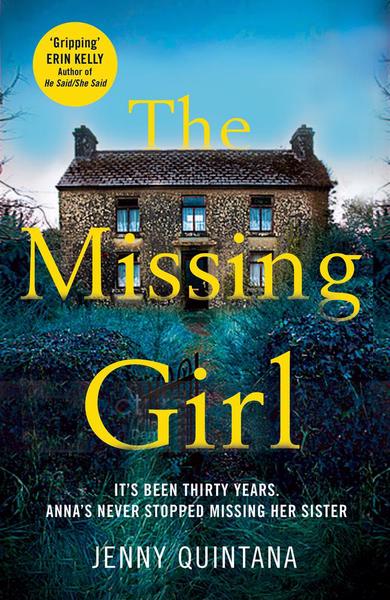
‘You disappeared in the autumn of 1982, when the leaves switched their wardrobe from green to burnished brown, and our mother made great pots of jam from the fruit we picked in the garden. I was twelve, with clumsy clothes and National Health glasses. You were fifteen, crazy-haired and willowy’.
As a wannabe successful author it’s always been my personal belief that if I was to complete the very, very, very difficult task of creating a stunning, debut thriller, the novel would need to have various qualities to it. Firstly, it would need to be readable, from the very first sentence and then hold the reader firmly to every page from there on, in much the same way as I was captivated as a teenager by Douglas Adams’ opening line in The Hitchhiker’s Guide To The Galaxy, who masterfully allowed us into his thoughts with, ‘Space is big’.
Secondly, the successful debut thriller would need to do exactly what it says on the tin…namely, to thrill the reader and keep them on the edge of their seats. Thirdly, the characters held within the pages would need to be relatable, relevant and non-cardboard-like in their delivery. Fourthly, if I were the author, I would need to hold the readers into that wonderful fantasy ‘grip’, where they become enchanted by my writing, especially all that descriptive stuff that sounds so easy to produce, but actually really isn’t.
Jenny Quintana’s 2017 debut novel, The Missing Girl, achieves all of these above qualities, which is probably why it has been acclaimed so much and been excitedly promoted by publications such as The Sunday Times, institutions such as Waterstones, and even lauded by the formidable sofa-king and queen combo of Richard and Judy.
Let’s
start with the plot line. It’s the modern day and Anna Flores is
returning to England from her home in Athens, because her mother has
passed away. A part of the reason that she resides in Athens is
because of long-standing fragilities within the family home,
especially since the mysterious disappearance of her elder sister,
Gabriella, in 1982.
Coming home to less-than-sunny England naturally evokes some strong memories for Anna; most of them unpleasant and revolving around what may have happened to Gabriella, over three decades on. In returning ‘home’, Anna must confront remnants of her past, which systematically begins to reopen old doors. Now, with both parents dead and her sister missing, Anna feels very alone, surrounded only by mounting prompts to try and solve the family mystery once and for all.
Jenny
Quintana demonstrates, with ease, what a strong writer she is on
every page of this novel. As a reader, you find yourself being
carried along effortlessly from page to page. Jenny skilfully manages
to involve us at every twist and turn and at absolutely no point do
we feel left out of what is occurring. There is a gentle build up of
pace, to establish the characters and story-line and then, just as
we’re feeling comfortable, the pace quickens and we’re carried
along to the next, invaluable piece of the ‘jigsaw puzzle’.
What’s most important about all of this is that we want to get
there, because we care about the main character and her story.
This is a very difficult book to put down and it makes me realise two things. Jenny Quintana can write extremely well. Furthermore, I now want her to finish her next project so I can read more from her creative, skilful mind. Over to you, Jenny.
Wayne Holloway-Smith teaches at the University of Hertfordshire. His poems have appeared in a variety of magazines and anthologies. His first book-length collection, Alarum, was published by Bloodaxe Books in 2017. In 2018 Wayne won the National Poetry Competition for ‘the posh mums are boxing in the square’.
Wayne, thankyou for agreeing to
speak to Ink Pantry. First of all, I’d like to say thankyou for the
daily emails you have been sending out during lockdown. They’ve been
a real help to me, not only introducing me to other poets, but also
giving me ideas for different approaches towards my own writing. What
inspired you to do these? Have you been surprised by the reaction?
Hiya. No problem, it’s nice to talk.
I’m glad to hear the daily emails are
helping in some way, and that they’re introducing you to interesting
work. Erm, I think what inspired them was that I was seeing lots of
people commenting in various ways about a loss of connection during
this time, and boredom – and various anxieties manifesting in all
types of ways. I have wanted to challenge myself to be more
thoughtful and generous for a long while. And I guess I see this as
one way of testing that.
I’m aware that I have a certain level of readership, and thought if people enjoyed the work, then maybe I should give them things to keep them occupied. I was worried that this might seem like a self-indulgent exercise too, though. I put out a gentle offer on Twitter – expecting perhaps between 5-50 takers, and was shocked to find I’m now emailing over 250 people on a daily basis. The feedback has been really amazing, actually. People have been very enthusiastic, and it’s so nice to see people posting work online that didn’t exist until a couple of hours ago. Some very good and interesting things.
Has poetry always been a part of
your life?
I grew up in a house with no books at
all and failed all of my GCSEs. My careers advisor ‘advised’ me to
work in a factory or in the voluntary sector. I didn’t actually know
that poetry existed, at that point, in a contemporary sense. When I
started writing, I thought I was the UK’s first contemporary poet.
Lol.
How would you describe your work?
How I think about my own work changes all the time, and is always influenced by the last thing I wrote and what I’m reading, what I’ve seen on TV, the song I’ve most recently listened to. I’m much more interested to hear how other people see it. Someone said the other day that I bleed onto the page, then mop it up. The stains that are left is the poem. I won’t tell you who. Haha. I think he/ she/ they were taking the piss.
When I read your work I find it open and personal. If I was reviewing, I’d describe your style as direct but also vulnerable, and as a reader I sense an honesty in your poems which I can connect to. Do you set out to share such vulnerability or does this naturally develop during your writing process? (I’m thinking of ‘the posh mums are boxing in the square’ which I find deeply emotional.)
I think I only want to write
vulnerably, and honestly. I have no time for irony, or distancing or
whatever. Other people have said it better than me, but basically
conventional English is limiting, and poetry is a means through which
we might find another vocabulary for our emotional experiences.
The idea and notion of identity also
features in your work. The poem ‘Some Waynes’ made me question if
you can ever really be one ‘identity’, or whether we are mix of every
assumption or every ideal placed upon us. How do you feel the theme
of identity fits within your work?
I don’t think identity is fixed. It’s
an ongoing negotiation, and contingient upon your socio-economic
circumstances, your friends, your background, and also, partly, pure
chance. So each time I write, I’m working out, or trying to work out
a bit of how I see the world and myself in relation to it at the
point that I’m writing.
Can you share any details of what
you’re working on currently?
Love Minus Love is coming out in July, from Bloodaxe Books. I’m excited about that. I think it might be the best thing I ever make. I’m also writing new things, feeling my way into how I might write next.
Are there any poets you are enjoying
reading at the moment?
I love Natalie Shapero, Anthony
Anaxagorou, CAConrad, Rachael Allen, Helen Charman, Holly Pester,
Hieu Minh Nguyen, Raymond Antrobus, Terrance Hayes, Ross Gay, Paige
Lewis, Rebecca Tamas, Selima Hill, Morgan Parker, Richard Siken,
Jericho Brown, Jenny George. Also new writers to look out for: Arji
Manuelpillai, Emma Jeremy, Katie O’Pray.
A lot of our readers are new and
aspiring writers. Do you have any advice for them?
I think that the biggest thing is that
there is no objective good poem, and no set way of doing things. Read
the writers you love and try to learn as much from them as you can.
Talk to others. And write what makes you feel energised.
Debz Butler runs Testify, a community organisation which organises open mic nights and writing workshops in Chester. Testify prides itself on delivering poetry without the pretension, and whether you’re a first timer or an experienced performer, everyone is welcome. We were delighted when Debz agreed to talk to us about Testify…
Have you
always been interested in poetry?
Not really. I’ve
always written short stories and really loved reading, but poetry
wasn’t really on my radar. I thought that because I didn’t know
about form, that anything I wrote could never be ‘proper’. It was
only in 2016 that I gained the confidence to call what I was writing
poetry.
What made you
decide to share and perform your own work?
I wanted to see if what I was writing was ‘real’ poetry so decided to go to an open mic night. I went to Sale Write Out Loud and was instantly hooked. I went, not intending to perform, but got up at the very last minute and loved it. It was such a great buzz to share something so personal. It was so inspiring to hear other people perform, I think a really important trait of being a performer is learning from others. With open mic nights, sometimes you have to kiss a few frogs before you find the right supportive space for you. I was very lucky that I landed on the right one for me on my first go.
What inspires
you to write?
My own life experiences mostly. I try writing what’s happening in the news but my personal feelings always end up in there. I have to do a lot of editing on my work to make sure it’s not just me ranting to the sky. In 2018, I was diagnosed with breast cancer and apart from journalling, I couldn’t write throughout my treatment. I’m only just managing to confront that experience and write about it. I think its an important lesson in giving things time.
I’ve seen
you perform a few times now. I love what you do, I think my
favourite at the moment is Moon Cup. But I was also very moved by
some of your work about nursing. You bring a realism and share
experiences in poetry which many women can relate to. How do
audiences react to your work?
I’ve generally had good responses to my work, people say they can relate to it. You have to gauge your audience though, sometimes the mood in the room dictates what I perform. At Testify, I always perform first to ‘warm up the mic’ and how many people are there/how enthusiastic they are, has a big influence on what I perform.
You organise and run Testify, (when we’re all allowed out), a poetry night in Chester, which is great, by the way. I think there was definitely a need for a regular performance poetry night in the city. Can you tell us a bit about Testify and the reasons you started it?
I had found a couple of open mic nights I loved but they were predominantly in Manchester. I found Chester Poets but it is on a Thursday, when I didn’t have regular childcare. I continued to go to the Manchester nights for about a year, then during the Chester Literature Festival I got talking to the artistic director about how the Storyhouse would be the perfect venue for a regular open mic night. He told me that he’d give me the space if I ran it – and so Testify was born!
After 2 months, we outgrew the space in the Storyhouse and so moved to Hanky Panky Pancakes – our forever home.
What has been
the reaction to Testify?
Overwhelmingly positive and supportive. We have a good group of regulars now who show up, as well as a constant stream of new people. Testify isn’t for everyone and that’s fine. There are other groups out there. Some people disagree with Testify’s ethos of ‘be supportive to everyone’ and say we shouldn’t applaud mediocre work. I disagree. I didn’t start the night to make people feel shit about themselves. The number one rule of Testify is ‘don’t be dick’ and if you can’t abide by that, then we aren’t for you.
Since the
lockdown, Testify has moved online. You’ve been sharing ideas,
poetry and prompts. Can anyone join the Testify Facebook group?
Absolutely.
Even if you never have any intention of coming to a Testify night or
are going to leave straight after lockdown is over, you are welcome
in the group.
Do you have
any advice or recommendations for new poets?
Keep reading, keep writing, keep watching. Your first work will be shit. That’s fine. Find an open mic night or writing group that suits you and stick with it. Whenever I feel blocked, being around other writers always inspires me. Always read the submission guidelines.
Who are your
favourite poets? What are you reading at the moment?
Thats a hard
one! My all time fave is Dominique Christina who is an American poet
and slam winner. Her work always makes me cry.
Leanne Moden’s
work always blows me away, as does Maz Hedgehog. Nick Degg is bloody
brilliant as well. Rosie Garland is always an absolute master in
performance and writing.
I don’t read a lot of poetry, I prefer to watch videos on YouTube or see people live, but David Subacchi’s latest collection, Where is Wales, is beautiful, as is, When Women Fly, by Sarah Pritchard.
Where can we
find more of your work?
I have a page on the website with links to my published work.
I’ve also been featured in ‘These are the hands’, a poetry anthology featuring NHS staff. All profits are going to the COVID-19 emergency fund and people can buy a copy here.
Overthrow he self/an airborne disease, a beautiful thing that never happened/glistening in the rays of a distant supernova, mercurial staff take your breath away/pirate blood/nautical dawn/wild blossom/intercept canvas redux, church of trees scream in silence. There was superimposition & worry at a certain hour of the day/hyena season genesis grasp secret psalm in search of duende/this eventuality’s carnival row exit in memory reclaiming time with unexpected grace notes/vagabond of the margins/burning up the green guardian/assignations crestfallen between music & silence/carnivalesque Xerox & infinity/ dimension horizon stasis leak everlasting/cherub chance the undying matter anticipating nowhere/theramin cost victim of illusion priceless channel /follow me into the reprieve best private fantasy times two/taste of holiday gross hesitation/to dance in the dark without fear/imperial violets distant shore/venerable plight/checkered koan/the other side of no tomorrow/the lost symbol/doctor tomorrow naked reflections complex crossed/prism walls infolio segmented balsam flex/new letters renaissance hum/a guessing game of infinity/ fastpass body everything/a painted sea of semiprecious stones interrupted by the illusion of time/sentimental rove the beginning/depthcruiser hour of pearl wayward son dispatches/ skin of wind, skin of streams, skin of shadows, the secret of numbers unscrambling the distortions/infinite perimeter/melancholy body sacrilege/tattoo highway insomnia punk/passion post of the absent everyday/venus endeavour ministering blithe spirits/wonderment cyclorama/lost in the omnipresent origin echo unlimited
Rus Khomutoff dreams up the contemporary world into surprisingly familiar cosmic landscapes reminiscent of those suggested by the most idiosyncratic avantgardists—think Artaud, Char, Malraux, Panero, and other moderns unafraid to acknowledge the material quotidianity of mystical experience. Poems in Radia function as un-coders (rather than decoders), allowing the words to shine in their full resplendence while approaching each other artfully, almost naked, in unexpected ways, to take advantage of the oneiric gears hiding everywhere under the apparent simplicity of life – German Sierra
We point out all the different birds to each other like teenagers naming constellations: anhinga, gold finch, chickadee tiny juncos entranced by the influx of new life along the river summoned by the melting ice.
The air is filled with their tiny songs of joy as clouds of insects rise from thawing mud as though they had been frozen in just that spot dormant and sleeping all winter long.
Diane
When I was 13, my best friend was a rock. I used to carry it with me everywhere small and round in my hand, dream of having the courage to hurl it at people who said nasty things about me. My palm polished it to a near-reflective point, I could almost see myself in its surface see myself the way I wanted everyone else to see me or really, not see me at all.
If I had been cooler, my best friend would have been a rock but I’m just lying, because really, it was just another girl who didn’t actually like me, got me into all sorts of trouble things she could walk away from but I couldn’t. If I had had a rock for a friend instead of that girl, the one who ruined everything things would have ended up differently. It would have been better. I would have been better. I know I would.
When They Go
I open my arms and call my children to me, remind them that nothing bad ever happens so long as I’m holding them. My daughter wrinkles her nose at me and rolls her eyes, my son just ignores me and walks away. I am no longer regarded as sanctuary a bulwark against precocious misery and frustration, they don’t need me at all. I close my arms, wrap myself in an empty embrace
dream of being the sort of mother children flock to unquestioningly a fish mother who opens her maw to engulf hordes of trusting fry a scorpion mother carrying her ravenous children across the hot desert a snake mother nested in a knot of wriggling coils of tiny tails and teeth all of these things but what I am: incomplete without a tiny hand in mine a sweaty head pressed against my chest, the constant need that only I can fulfil.
The Chemical Fire
they found the dead janitor in the back of the warehouse curled around himself as if against the cold. His skin came off in handfuls of ash when they tried to move him
black, greasy ash that would not wash off.
the two boys who first found him had gone through his pockets only to have what remained of clothes, his wallet, disintegrate as well dried out past leather, his face was barely recognisable as human
mouth stretched out in a forever scream.
The Next Day
The alarm went off and we found that the world hadn’t ended, that all the ramblings of the church elders weren’t true. My husband sighed and rolled out of bed found there were only dirty clothes left for him to wear sighed again, dressed, went to work.
I could hear birds chirping in the yard a squirrel on the roof, cars passing on the road out front. I held onto my dreams of apocalypse for a few moments longer, savouring vision of the angels, the devastation that could still be waiting just outside the door.
Holly
Day’s poetry has recently appeared in Asimov’s Science
Fiction, Grain, and Harvard Review. Her newest poetry
collections are Where We Went Wrong (Clare Songbirds
Publishing), Into the Cracks (Golden Antelope Press), Cross
Referencing a Book of Summer (Silver Bow Publishing), and The
Tooth is the Largest Organ in the Human Body (Anaphora Literary
Press).
the dreamed red sun of the morning – thus I get tender letters. On wings of the morning glow – I fly into lands of butterfly-like hearts. In my vans – the poesy is indeed fulfilled. I am looking at starry starlit moonlit night – each starlets enchanting me on ways into ontology. The silvery fantasy – heralds my ways to the dreamiest moon. I am seeking the brightest star – the philosophical as well as druidically poetical. I will become blissful and Apollonian. A meek elf showing me the moon full of comet dust – the ambrosia for dreaming souls. Long live my auntie – the sibyl with propitiously weird magic!
Paweł Markiewicz was born 1983 in Poland (Siemiatycze). His English haikus and short poems are published by Ginyu (Tokyo), Atlas Poetica (USA), The Cherita (UK), Tajmahal Review (India) and Better Than Starbucks (USA). More of Paweł ’s work can be found on Blog Nostics.