Slipping softly through sun-dappled trees swaying grasses in time to summer’s hum casting pollen up like sequinned sparkles strolling though blossoming fields ruffling the feather of the nesting birds. Whipping waves into mountains of spray stripping the last leaves from autumn’s dying. Hats are tossed into the air the rain flies in the face of night. Forever moving, a restless rover knowing no settled home. Tonight there may be howling and the windows may shake but by morning there will be little sign except the detritus of the wild. Packed up gypsy-like, the wind trails his life through the world and is shut out even in the quiet times.
Strike
I saw a spark of lightning in the dark, its burst of brilliance lit up the whole sky. The mark of blackness after was so stark with depth impenetrable to the eye.
The grit and fury split the world in two, with haunted trees denuded of their leaves. The houses silhouetted by the view of such a force that threatens all that breathes.
As quickly as it came it struck no more, the night remained untainted by its thrust, and all that stalked the darkness as before returned to living as they always must.
Glenis has been writing poetry since the first Covid lockdown and does her writing at night as she suffers from insomnia. When she is not writing poetry she makes beaded jewellery, reads, and sometimes runs 10K races slowly. She has been published by Dreich, Dust Poetry, and Wildfire Words.
Bill to Gross A cinched Flame threw – – – – – form – – – – – MOAN a Lease A attacked forbearance wheelbarrow (un)avoid(able) conflict Negation therapy – – – – – pursuit phobia stoic branch – – – – – happy harpy made a Pen Is never underworked hairy chest heave X- Ray tape measure treasure
Tart Mayhem Brick
new release PeR gloved hand FuLL steam shipping label cut upward featured Wrist home in pigeon foRt short hOpe In hAlf maverick round UP supper formulation ProTecTed d e g r e e
Rate Reek Bikini
defamation triangulation doubt bricks speechless brother of a tonic spandex Tangent practice metal accessibility leak memorial speech fired expatriate acid steam intimate bAr WaX ed
asleep in the brambles
crisp snowflakes on the frontlines of global teddy bear wars
rainstorms with oats unforgettable suspenders
stretched like a mislaid zig zag of loch ness monster promenades
this prolonged wonderment spinning like a helicopter
awash in graceful varieties of limping
cashews shovelling gelatin racing down bankruptcy fingernails could grow six, seven, eight inches motorcycle attaché trifle snickering
the bunch of clumsy grapes punch a stage hymn
a dinosaur skeleton in cheap fabrication backsliding
Joshua Martin is a Philadelphia based writer and filmmaker, who currently works in a library. He is member of C22, an experimental writing collective. He is the author most recently of the books peeping sardine fumes (RANGER Press) and [Ruptured] >> Schematic << MAZES (Sweat Drenched Press). He has had numerous pieces published in various journals.
You can find more of Joshua’s work here on Ink Pantry.
Marlon shakes his head. He takes his ice-cream neat. All his dessert buddies know that!
Tub in hand, he spoons the mint choc chip into his mouth. Smacking his lips, he says to me, ‘Not bad, but I’ve had better. Remember that place in Frisco, back in ’54? Down on the waterfront. Damn, that was the best; a fine balance of liqueur crème de menthe and California cream.’
‘Spearmint, not peppermint,’ I say.
‘Correct, Doc. They had it just right.’
Finishing his first serving, he’s already ordering seconds.
‘Hey, fella! Two birthday cakes for me and my partner. And please, make ‘em doubles.’
‘Coming up, sir! Wafers too?’
‘No, thank you. Say, are you new here? I ain’t seen you around before.’
‘Yes, sir. I started a week ago.’
‘What’s your name?’
‘Romeo Ricci.’
‘Really? Sounds Italian. Is it Italian?’
‘I’m not sure, sir. I’m from Boise, Idaho.’
‘Well, you should know, Romeo Ricci from Boise, Idaho. All men need to be acquainted with the blood that runs in their veins. Here, get yourself an ice-cream, young fella. It’s on me.’
‘Why, thank you, sir. I’ll have a pistachio, if you don’t mind.’
‘I don’t mind at all, but I had you down for a tutti fruitti.’
‘To your health, sir!’
‘And yours.’
Marlon begins on the hard stuff: Neapolitan, rum raisin, and a pumpkin-watermelon twist.
I try my upmost to keep up, but the raspberry ripple leaves me reeling.
‘Think I need the men’s room, Marlon. I may be some time.’
‘That’s okay, Doc. I’ll partake in a triple cookies and cream. That’ll keep me good company ‘til you get back.’
When I return, fifteen minutes later, Marlon has moved on to a maple and oyster special. His eyes are bulging and there’s stains on his jacket. I pass him a napkin to wipe his chin.
‘You’re a wild one,’ I say.
Marlon smiles. ‘Romeo made me an offer I couldn’t refuse. I’ve never had oyster ice-cream before.’
‘Any good?’
‘Stick to the bacon and banana, Doc. That’s my advice.’
Bud suddenly appears.
‘Hey, Bud, where the hell have you been?’ asks Marlon.
‘Stopped for a quick one at Sugar & Sprinkles, down on 37th. One became two became three. Y’dig?’
‘Sugar & Sprinkles? I thought the parlour on 37th was named Creamy Confections. Owned by what’s-his-name, Guisseppe. That’s right, ain’t it, Doc?’
‘Yes. Guisseppe Gentile and his brother Gerardo.’
‘Well, it ain’t now. It’s called Sugar and Sprinkles and run by some Sicilian named Stefano Savellini.’
‘Well, damn me,’ says Marlon. ‘That’s a lot of alliteration for one ice-cream parlour! Anyhow, what was your poison, Bud?’
‘I had me a cake batter chaser.’
‘Chaser?’
‘Blue moon and then a bubblegum.’
‘You animal!’
‘Says you!’
Bud orders a round of butterscotch and is the first to wolf it down.
‘Ah, reminds me of Chicago in ’52. The Palmer House. Picked up a hot waitress called Katie in the Chin Chin Cream Club. Remember, Doc?’
‘Sure do. I spent the week with a German dancer named Gerda. You too, Marlon. You fell for that Irish singer. The redhead. Freckly face, long legs and swinging hips. That doll had it all. Was it Caitlin or Cliona?’
‘No idea, Doc. But I recall the Parmesan like it was yesterday. Never had ice-cream like it before or after. Correct me if I’m wrong, but it was flavoured with lemon zest, red fish eggs, chipolata infused olive oil, bitter artichoke and the finest Manzanilla sherry.’
‘No, you’re spot on, Marlon,’ Bud says. ‘And sprinkled with chive flowers.’
‘Heavenly blossom,’ says Marlon.
‘Say,’ says Bud. ‘I don’t know about you guys. But I’ve been over-indulging lately. I had my tailor let out my pants this afternoon. Too much of this creamy courage, I reckon. After tonight, I’m gonna abstain for a while. I don’t want to be no Jackie Gleeson.’
‘Or Raymond Burr,’ I say.
‘Oh c’mon, Bud,’ says Marlon. ‘Man up! Eat as much ice-cream as you damn well like. This is America. No one needs to be dieting in the land of milk and honey.’
‘But what about the work?’ asks Bud. ‘A guy needs to keep slim if he’s to get the parts, don’t he?’
‘Ah, you know the business,’ says Marlon. ‘Once a star always a star. You get fat, so what? You’ll get paid the same.’
‘Or more,’ I say. ‘Like Raymond Burr.’
‘Exactly, Doc, Exactly.’
An hour later, Marlon slumps over the counter.
‘You’re not looking too good,’ says Bud.
‘Like you got a mutiny down below,’ I say.
‘I’m fine,’ mumbles Marlon. ‘But maybe I shouldn’t have had that last butter brickle! It’s always the butter brickle that gets you in the end. Hey, Romeo!’
‘Yes, sir?’
‘I need one more for the road, but something unostentatious.’
‘Sir?’
‘Humble. Simple. Plain. Whaddya got?’
‘Just French vanilla, sir. You’ve tasted every other flavour.’
‘He hath eaten me out of house and home; he hath put all my substance into that fat belly of his!’ says Bud.
Marlon says, ‘Spare me the Shakepeare, wise guy.’
‘Maybe you’ve had enough ice-cream for one night,’ I say. ‘Don’t forget, you’ve got a shoot in the morning.’
‘I’ll call a cab,’ says Bud.
‘Where to?’ asks Marlon.
‘I was thinking of Maria’s Cheesecake Pantry on 44th.’
‘Cheesecake? Now you’re talkin’! Let’s go, boys! Sayonara, Romeo!’
O congenial queen of Autumn! Why so sweet of all flowers? Tall in height, colour so bright! Venerations of all walks in life. Paradise on earth and for human beings. Primal ballerina for mellowest breeze, Crony of the ablaze sun And a guest of rainy season. One after another hour Full of motivations and fun For the worldly lasses and sons! O convivial queen of Autumn! Your farewell is so near Nearer than the poet’s pen On the paper filled with emotions!
Monalisa Parida is an assistant professor of English in Bhubaneswar College of Engineering, Jankia, Odisha, and a prolific poetess. She is very active on social media platforms and her poems have been translated into different languages and published in various e-journals.
She has 100 international awards for writing poetry. Her poems have been published in international e-journals “New York parrot”, “The Writers Club” (USA), “Suriyadoya literary foundation”, “kabita Minar”, “Indian Periodical” (India) and “Offline Thinker “, “The Gorkha Times “ ( Nepal), “The Light House”(Portugal), “Bharatvision”(Romania), “International cultural forum for humanity and creativity”(Aleppo, Syria), “Atunispoetry.com”(Singapore), also published in various newspapers like “The Punjabi Writer Weekly (USA)”, “News Kashmir (J&K, India)”, Republic of Sungurlu (Turkey)” etc.
One of her poems has been published in an American anthology named “The Literary Parrot Series-1 and series-2 respectively (New York, USA)”. Her poems have been translated into various languages like Hindi, Bengali, Turkish, Persian, Romanian etc. She is the author of the books “Search For Serenity”, “My Favourite Grammar”, “Paradigm”, and “Beyond Gorgeous”.
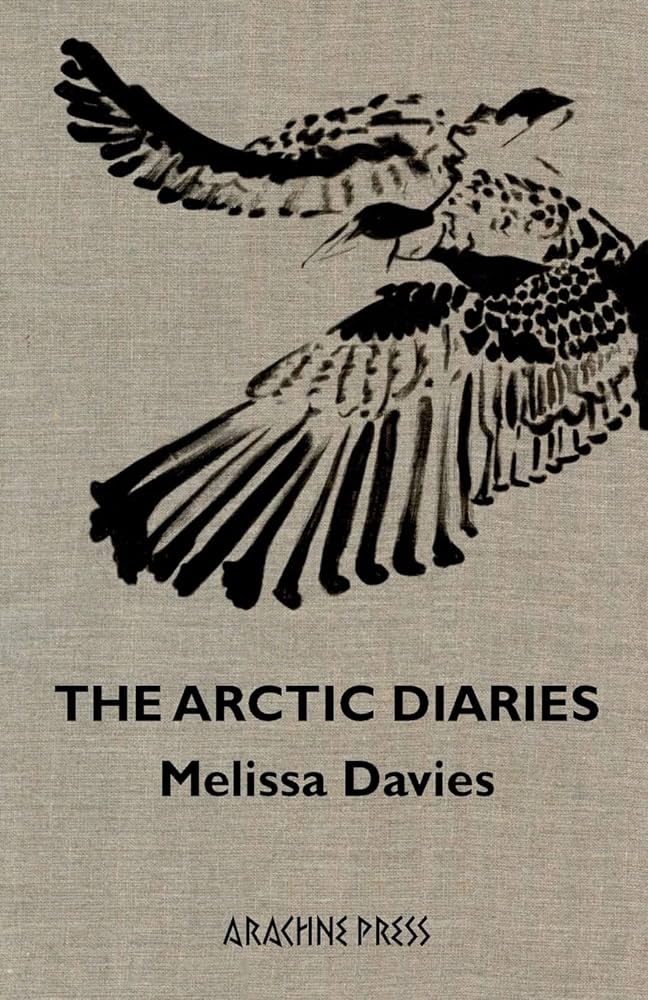
Poet and travel writer Melissa Davies lives in the North West of England. After embarking on a short career in cancer care, she spent 18 months in 2018 exploring the mountains of Europe and North Africa by bike and on foot before spending the winter of 2018/19 on Sørvær (South Island), one of only a handful of inhabited islands in the Fleinvær archipelago off the Arctic coast of Norway, a place that is described as having as many islets, reefs and low islands as there are days in the year. When she is not travelling, Davies spends her time working with local communities to create collage poems which have been displayed in National Trust woodlands, high street restaurants and shopping centres. The Arctic Diaries is her debut collection.
In her introduction, Davies tells us that all the stories, myths and events referenced in the book belong to the people she met on the island but have been embellished by her own research or her own imagination. The book therefore sits between fact and fiction with every word written having come from the pen of an outsider. More crucially, her aim is to give some of their stories a sense of permanence and a life of their own before the oral traditions of a windswept archipelago are lost forever. A short, helpful guide to Norsk words is included for the benefit of the reader.
Reading this collection, we can almost taste the tang of seaweed at the back of our throats, smell the brine off the sea and catch the scent of juniper everywhere. Living on such a small remote island, ‘a scatter of barely land’, we have a heightened awareness of the weather and the sea, of ‘tarpaulin / slapping wind thick with bursts of sea spray, / ropes jumping waves like hounds restrained’ and ‘currents tearing islands apart’. One of the strengths of this collection lies in the way in which Davies can conjure up a sense of place with just a few well-chosen words. In ‘The Fisherman’s Wife Collects Books’, for example, the Arctic archipelago becomes ‘this place of moss and juniper, amber skies / melting into pools of kelp and always those coils of blue rope’. Some of her images stay in the mind too, such as this one, from the same poem, where she imagines sending a book through the post to the fisherman’s wife:
The cover is thin, cheap print that feels like slightly more than another page. It won’t travel well. Waves of damp will swell each leaf while it waits out weather in her post box over the sound.
The poems in this collection are populated by sea-monsters, fisher folk, lookout men, otters, sheep, sea eagles and curlews. Despite the empty spaces, there is plenty going on: everything from scaling fish to emptying crab pots.
While the inhabitants collect feathers and fish bones, Davies collects stories which are just half-glimpsed at when read between the lines: stories of people disappearing without trace and then just as mysteriously reappearing, imprisonment by a freak tide, a tale of a sunfish pulled from a hat or the sudden discovery of a jawbone found on a beach with all its teeth intact: isolated incidences from insular communities dredged up from the past.
For me, the centrepiece of this collection was ‘Vanishing Act’. It speaks powerfully about the need to preserve something, a way of life, perhaps, before it is gone forever. Here are the opening lines:
How can you know what it is like to lose your magic? When surviving here was an act set up by fishermen with no view beyond the sea. Their rope frays between your fingers until a single thread holds your whole animal reason to continue.
In this collection, which is beautifully illustrated by Natasha Emily Lynch, Davies brings us a snapshot of island life in one of the most remote communities in Norway. This is a book where folklore, poetic imagination, dialect and language come together in lines that are as powerful as a storm force wind.
You can find more of Neil Leadbeater’s reviews here on Ink Pantry.
Neil Leadbeater was born and brought up in Wolverhampton, England. He was educated at Repton and is an English graduate from the University of London. He now resides in Edinburgh, Scotland. His short stories, articles and poems have been published widely in anthologies and journals both at home and abroad. His publications include Librettos for the Black Madonna (White Adder Press, 2011); The Loveliest Vein of Our Lives (Poetry Space, 2014), Finding the River Horse (Littoral Press, 2017), Punching Cork Stoppers (Original Plus, 2018) River Hoard (Cyberwit.net, Allahabad, India, 2019), Reading Between the Lines (Littoral Press, 2020) and Journeys in Europe (co-authored with Monica Manolachi) (Editura Bifrost , Bucharest, Romania, 2022). His work has been translated into several languages. He is a member of the Federation of Writers Scotland and he is a regular reviewer for several journals including Quill & Parchment (USA), The Halo-Halo Review (USA), Write Out Loud (UK) and The Poet (UK). His many and varied interests embrace most aspects of the arts and, on winter evenings, he enjoys the challenge of getting to grips with ancient, medieval and modern languages.
It was the 90s and I was in my 20s walking down Broadway on my way home when a man grabbed my boob and grinned as he passed by.
I was an unlikely candidate for groping with my A cup chest.
A woman watched the whole thing go down and asked, “Do you know him?”
I said, “No!”
Karol Nielsen is the author of the memoirs Walking A&P and Black Elephants and three poetry chapbooks. Her first memoir was shortlisted for the William Saroyan International Prize for Writing. Her full-length poetry collection was a finalist for the Colorado Prize for Poetry. Her poem “This New Manhattan” was a finalist for the Ruth Stone Poetry Prize.
sonnets of Michelangelo, those composed whilst on a limited folic acid intake, are so twisted in upon themselves they have become both water-resistant & washable. Even so, that insane artistry, the multiple narrative perspectives, the forward- thinking use of glass— all still tempt like fresh raspberries at the local store.
flirty singles, power players, & celebrities
It’s evident from the way that the angles of the owner’s jawbones
project that this laundromat is a reincarnation of the original late
night dance-spot where mansion chic & rock-star bach- elor pad collided.
adagio
Words come back to me — pizzicato, arco, bass clef — from that part of my past which has to do with music. Finger positions come back, the horsehair bow, & that upright
stance you have to adopt & adapt to with an instrument as big as yourself. Associat- ions come back, & favourite pieces — currently it’s the Concierto de Aranjuez that’s
picking its way across my forebrain. You might say everything comes back; but as long as time continues its inexorable march forward you know that will never be true.
Mark Young was born in Aotearoa / New Zealand but now lives in a small town in North Queensland in Australia. His most recent books are with the slow-paced turtle replaced by a fast fish, published by Sandy Press in May, 2023, & a free downloadable chapbook of visuals & poems, Mercator Projected, published by Half Day Moon Press in August 2023.
You can find more of Mark’s work here on Ink Pantry.
Another life story at the AA meeting. He began with the gullible stepfather, the mother’s fantasies, then
we heard about his unseen real father’s dominance, his adolescent interest in the spiritual life, his scorn for hire
purchase, his qualities of leadership. He loved to play tricks, hated violence, and although women adored him, men, too,
from all walks of life, he seemed celibate. He saw it coming, predicted it, when his own people betrayed him, crucified
him really. He would cry out for a drink, felt desperate when he thought he had been abandoned. One of his best mates denied
knowing him, and after he woke in a cave, alone, bleeding, left for dead, that was when he knew his life had hit rock bottom.
Commentators’ Team
Defence: I know that’s a cliché/ It’s a known fact/ It’s an arm wrestle/ Scoreboard pressure/ They’re under the pump/ Time’s ticking away.
Midfield: He needs to stand up and be counted/ A living legend/ On a learning curve/ A season-defining game/ Statistically speaking/ Where angels fear to tread.
Attack: Absolutely sensational/ He’s on fire/ Last roll of the dice/ No pain, no gain/ Through the eye of a needle/ Winners are grinners.
Interchange: Horribly wrong/ It’s a tragedy/ At the end of the day/ The bottom line.
Ian C Smith’s work has been published in BBC Radio 4 Sounds,The Dalhousie Review, Gargoyle, Griffith Review, Honest Ulsterman, Southword, Stand, & The Stony Thursday Book. His seventh book is wonder sadness madness joy, Ginninderra (Port Adelaide). He writes in the Gippsland Lakes area of Victoria, and on Flinders Island.
You can find more of Ian’s work here on Ink Pantry.
– Ah, but what about that big rock that just moved?
– Whoa!
As soon as the colour-crazed Toonal TV logo and its accompanying laugh-track jingle both erupt in sync, and the Sock Puppet Squad whoosh on-screen with their googly button eyes and wide sticker grins, Joe Easton wakes up much faster.
“Quick, Mum – you’ll miss it!” he shouts through the lounge doorway, holding half a bowl of cereal under his already milk-damp chin.
10 minutes later…
It’s almost the break when she appears, still wearing her threadbare dressing gown. She doesn’t carry any cereal or toast. Not even a manky old banana from their fridge’s blue-tinted plastic drawers.
“Sorry,” she says, sitting beside Joe and making the tired sofa sag even more. “I dozed off again for a bit there. Right, what’s been happening?”
He shrugs.
She leans forward, peering across at him. “Ignoring me, are we?”
“No.”
“So, spill then.”
“Fine.” He twists round towards her, his own seat groaning. “They keep rapping about kindness and how being kind’s most important when times are hard. It’s easy for them to say, though – they’re socks!”
“You don’t think being kind’s important?”
“Yeah, but not every single morning.”
“Hmm.”
Joe lowers his bowl.
“Oi.” Mum points at the glass tabletop. “You’ll leave a ring if you’re not careful.”
Except Joe’s not really listening anymore. Ads hopscotch on the telly, jumping across the screen one after another, each eager to show off.
Several slots in, that promo from yesterday repeats, all jungle backdrop and CGI vines, with some cartoon creatures lurking about too; not as realistic as they could be, but they’ll do. Letters golder than buried treasure reveal clear instructions while wild animal noises play on loop:
HEY, KIDS!
WE KNOW YOU KNOW WHO RAINFROSTEDS’ NEXT MASCOT SHOULD BE… WE JUST NEED YOU TO TELL US.
PLEASE SEND YOUR DRAWINGS AND TOP 5 REASONS WHY TO:
Contact details, deadlines, etc.
Soon followed by:
OPEN TO CHILDREN AGES 6-11 (WITH PARENTAL/GUARDIAN CONSENT)
£1,000 PRIZE UP FOR GRABS!!
Joe presses pause on the remote, waiting for his mum to notice.
“Is this real?” she asks after a few moments.
“Seems it,” he says.
“OK, OK.” Now she’s nodding loads, reminding him of the bulldog bobblehead inside her car. “OK, we’ll start brainstorming today after school.”
Joe scoffs.
“And what’s that supposed to mean, young man?”
“No offence, Mum, but you barely ever eat breakfast.”
She mumbles something about “not always my choice”, which Joe can’t quite hear.
*
– Looks sort of like your mum in the morning.
– I’m telling.
– Don’t you dare!
Their kitchen table is round, biscuit-coloured with brown flecks all through it; a large inedible cookie. Joe found this out when he was really small, and his teeth still hurt at the memory.
He sits there now, not tempted in the least, crushing A4 sheet after A4 sheet into compact snowballs, before letting them fly behind him – where the recycling crate lives. Whether against wall, floor or hard plastic, each crumpled projectile thuds weakly.
“Maybe we should have a breather.”
Mum rises from her squealing chair opposite.
“I’ve almost got it,“ Joe insists.
“Fair enough, but I need water. Do you want some?”
“No, thank you.”
“Suit yourself.”
She walks to the sink. It’s almost lunchtime and she’s still wearing her Do Not Disturb Before 10AM pyjamas. Outside, sunlight eggs the dirt-smeared windows while giant weeds grow taller between slate tiles.
Joe rubs ink-stained fingers across his closed eyelids.
“Why don’t we ever go to the zoo?” he asks, yawning. “Dad used to take me.”
Mum slurps, replying, “Because it’s too far and I’m not comfortable driving long distances.”
“We could ride the bus.”
“Why are you so fixated on the zoo all of a sudden?”
“Because I need a cool animal for this, and the zoo’s full of them.”
“So’s the internet.”
“It’s not the same.”
“It is cheaper, though. Go on, get searching.”
She hands Joe her phone while he’s still groaning; however, he soon relents, unlocking it and typing ‘weird wildlife’ into the top bar.
Results flood the screen like a pixelated Noah’s Ark.
Several taps later, he grins and reaches for his pencil again, plus some fresh, unballed paper.
Mum sits back down. “Find anything good?”
“Maybe,“ he says, doodling fast.
*
– Do you think he enjoys pretending to be still all the time?
– I would; it looks peaceful.
Its limp, grey nose reminds Joe’s mum of those old windsocks they have around airfields. She starts giggling.
“Why are you laughing?” he asks her.
“I’m not, just appreciating.”
Joe flips the page. “I wrote my reasons why he should win, see?”
Mum squints as she reads each scribbled bullet point aloud:
“1) He’s cute.”
“People love watching cute things on TV. It makes them softer.”
“OK, if you say so. 2) You probably haven’t heard of him.”
“Me and Dad didn’t until we saw one.”
“Hmm. 3) He really does live in the rainforest.” Mum nods. “Nice and topical. Or should that be tropical?”
Joe rolls his eyes.
“Tough table. 4) He could make people smile.”
“Not enough smiles these days.”
“5) I want him as a pet, but he’s too big for our garden.” Mum chuckles. “Don’t even think about it, mister. Has he got a name?”
“Crap, I forgot to add it!”
“Language, Joseph.”
“Sorry.” Joe reflips the page, writing rapidly in the top left corner. “Will you send it for me?”
Mum tugs at the edge of her pyjama top. “Yes, on my lunch break on Monday.”
*
– What is he?
– Name: Toska. Species: Malayan Tapir. Age: 7 years – same as you, mate.
– He’s a long way from home.
Two weeks later and Joe keeps running home from school. Always the route sweats his heavy breath right out of him, but he still manages a feeble gasp of “Any post?” after letting the door slam shut each time.
Today’s no exception – standing there in the hallway, fists clenched at his sides and jumper clung around him, a superhero’s fallen cape.
He peeks into the kitchen, but his mum’s video-calling on her laptop (at least she’s dressed for this one, he thinks). She waves him off sideways towards the living room.
When he enters, his tomato cheeks ripen into a smile. He attacks the big cardboard box faster than he can see it; ribbons of brown paper float like the remnants of long-dead fireworks, before falling slowly to the crumb-fed carpet below.
Joe practically sticks his head inside, grabbing the creased note from on top. Swallowing hard, he unfolds it and reads:
Dear Joe Easton,
Thank you for submitting to Rainfrosteds’ Next Mascot competition.
We’re pleased to inform you that we loved your entry and will be making Toska the Tapir our new spokesanimal.
Tune in next Friday after SPS Adventures on Toonal TV (7.30am) to meet Toska on the telly.
And don’t forget your free Rainfrosteds to enjoy while you’re watching.
Congratulations again!
Yours sincerely,
The Rainfrosteds Team
Joe’s chest constricts a little and he sends more paper dregs spiralling. They must just have forgotten the money, he tells himself, as Mum appears and asks, “What’s the verdict?”
*
– Says here he was born in the zoo.
– So, he’s never even been to Malaysia?
– ‘Fraid not.
“Listen here, sunshine.”
Joe’s mum practically spits into the speaker of her mobile phone.
“No, I’m sorry, you guys screwed up. We did everything right. Now what are you” – she uses that last word for target practise – “gonna do about it?”
It’s been over two weeks of this; her slippers have left tracks in the living-room carpet, and her voice is deep as Dad’s used to be.
Joe says nothing, watching CGI undergrowth stir once more on the telly screen.
“No, I didn’t check social media… Because I haven’t logged onto any accounts since my husband died, that’s why. Grief’s one way to keep you out of the bloody Matrix, let me tell you.”
Blurred around the edges, Toonal TV’s latest cool-guy presenter appears as if emerging from digitised bushes. He wipes invisible sweat off his forehead and keeps panting too loud.
“Hey, guys.” An exaggerated Australian accent makes Joe cringe; tapirs aren’t even from Australia! “I’m just looking for my new mate. You seen him?”
“The point is my son worked hard, won fair and square, and now you selfish people won’t give him his prize money. So, what am I supposed to tell him? That it was all for nothing?”
Joe braces himself as the final insult waddles into shot.
Identical to the updated cereal box perched on the table in front of him, Rainfrosteds really did turn his beloved tapir purple for some reason – with tiny white spots dripping like paint-splatter down his back and lime-green tufts of hair quiffing out of his head and tail.
Joe shivers, getting major supervillain vibes.
OTT again, the presenter cries out “Oh, there you are, Tim! Where were you hiding?”
So that’s why Toska hadn’t appeared on the box. But it’s only two syllables! If Joe can remember reading it years ago, Dad by his side trying his best to keep up and stay awake, then everyone else could understand it too.
Kids aren’t stupid, he wants to scream at the screen.
“Another free cereal? Are you actually serious? Fine, we’ll just see you in court. Goodbye.”
Mum jabs the button, then slams her handset on the table so hard the case cracks even more.
Right now, they can’t bear to look at each other, not with Tim the Tapir’s smug little grin, the colour of long-expired milk, all around them, and the creature’s high-honking laughter curdling in their eardrums.
Robert Keal hails from Kent but currently lives in Solihull, where he works as a copywriter. His recent fiction can be found in 100 Word Story and The Ekphrastic Review. He loves walking the tightrope between strangeness and reality.
The night is an endless frustrating vast empty well into which I am continually falling but never reaching the bottom, never drawing closer to the malicious water.
At 2 am, I wake up, my body electric, my eyes watchful and alert and as far away from sleep as is possible.
I peek through the Venetian blinds that drape my window like eyes from a woebegone factory.
Yes, I peek through the blinds, and I see nothingness—the black and implacable and impenetrable and unforgiving night as thick and dark as a swamp.
I return to my bed, which lies alive with sheets wrinkled and puke green and sweaty, and I pound my pillow into smithereens and slam it against the headboard of my bed.
I try to read Kafka’s The Trial. Strange choice to seduce sleep, n’est-ce-pas? But the words on the filthy page are like worms that curl into opaqueness, and Kafka’s paragraphs elongate till they are as impenetrable as the swarthy night.
I blunder my way out of bed and stumble to the kitchen and pour myself a secret bowl of Cheerios and return to my bed and slurp the cereal and study the little O’s as if they held some sort of meaning,
And I hope and pray that the cereal will gird me for the long fight through the night to find rest and meaning in the nothingness of the dark.
The night is a boa constrictor wrapping itself around my soul and squeezing the life out of it.
I’ve had enough of Kafka’s prose, which is a dark impenetrable puzzling of malice and myth-making words of anomie and soullessness.
I turn off the silver metallic lamp by the bed and plunge into the blackest of the night so far.
The pillow feels like a memory that I no longer want to hang on to.
I toss and turn, feeling the sheets beneath me like iron, the pillow like the repository of lost hopes and dreams.
The night screams on, growing more tragic by the minute, by the second, like an evil and rambunctious dragon.
I levitate from the bed. The sheets burble with unforgiving sweat.
I toddle down the hallway to the bathroom and hang my dick like dirty laundry over the toilet bowl, which in the death of night resembles a huge gaping mouth yearning to swallow me whole.
Drip. Drip. Drip. The peeing finally comes to a denouement that is completely devoid of significance. Done. My body is thankfully empty of urine.
Back to the Shakespearean tragedy of the bed. 4 am. 4:30 am. 5 am. The minutes click by like sodden and lugubrious steps that one takes in some netherworld where sleep is not delineated, defined, or allowed.
Facing one way. Rolling over. Facing another way. My eyes as far from sleep as New York is from Capetown, as Pluto is from Earth.
Eyes alert, wired, steady, peering into the darkness and the future that lurks in that darkness,
And seeing nothingness. Peering. Staring. Unblinking. I lie strangling on the well-sweated sheets, the perspiring sheets,
And wait for a haunted sleep that promises never to come.
Christopher Johnson is a writer based in the Chicago area. He has done a lot of different stuff in his life. He’s been a merchant seaman, a high school English teacher, a corporate communications writer, a textbook editor, an educational consultant, and a free-lance writer. He’s published short stories, articles, and essays in The Progressive, Snowy Egret, Earth Island Journal, Chicago Wilderness, American Forests, Chicago Life, Across the Margin, Adelaide Literary Magazine, Blue Lake Review, The Literary Yard, Scarlet Leaf Review, Spillwords Press, Fiction on the Web, Sweet Tree Review, and other journals and magazines.
You can find more of Christopher’s work here on Ink Pantry.