I fold and shove the tag back into my sweater Press it flat against the seam It still scratches rough against the back of my neck
I shift my shoulders Pull at the collars Try to ignore forget that it’s there
I laugh with her Sit together for all meals Feel a twist within me An uncertainty I cannot name But she remains my companion And there is nothing to be done
The air is too cold To take off my sweater So the itch stays, rubbing deeper into the hours.
The Cathedral Tapestry
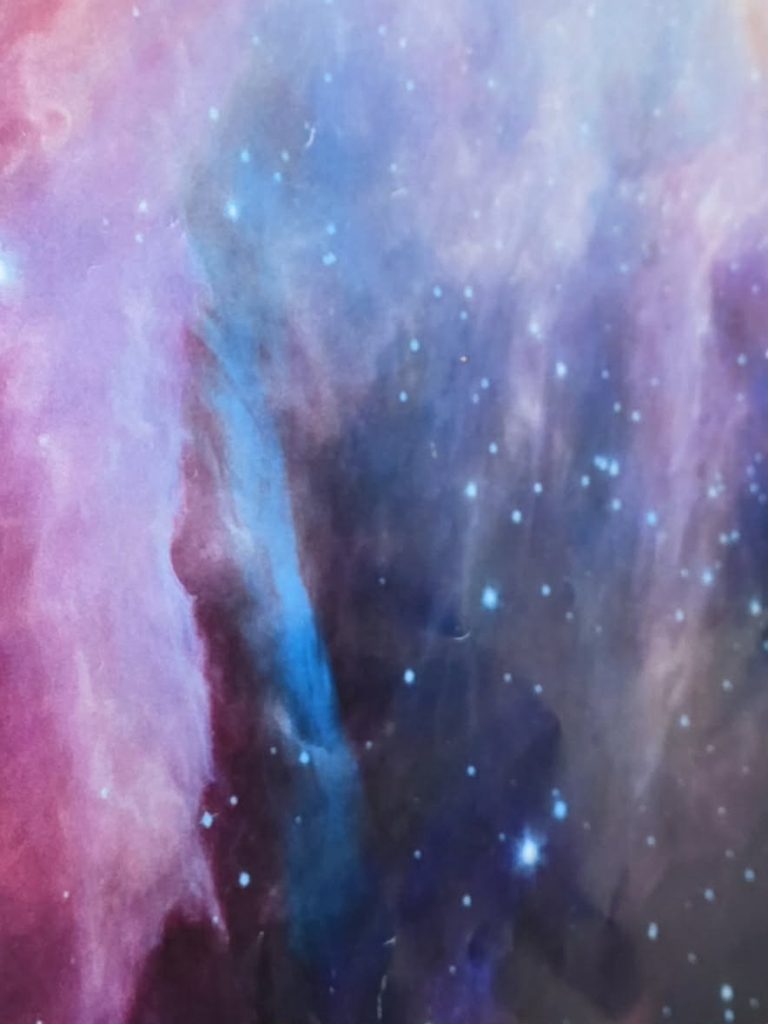
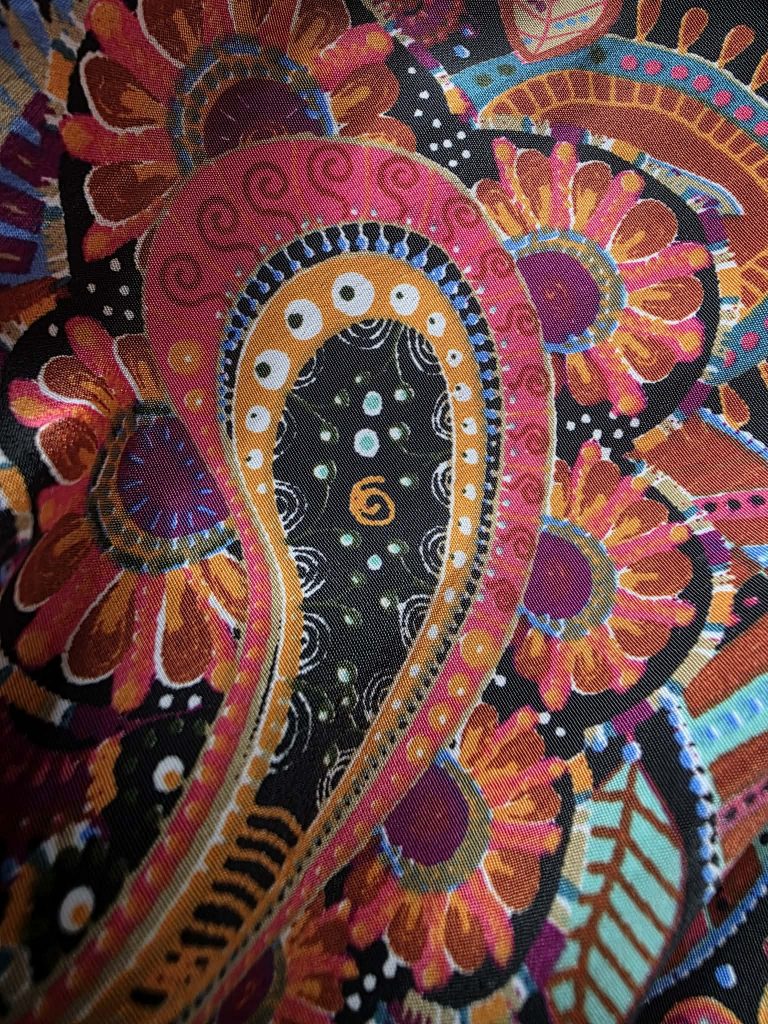
The cathedral tapestry in the twilight labyrinth Breathes dust when I brush my hand against the wall A lanternfly vessel on driftwood at the tide Drums its wings like thin paper, struggling not to drown The compass is a mosaic of the prism and the aurora It’s needle trembling, pointing toward a colder wind Mercury eclipse and sapphire mirage veil the citadel Its windows are flashing on and off The orchard blossom is a fossil of velvet and rust I feel its pulse within me As if something hidden, waiting to open from the inside.
Keys of Black and White
Walking with the crowd, between hurried strangers Keys of black and white, a large piano for the crowd
Gum fossils and oil stains listening below A stitch work sewn from street to street
“I wear thin under the shuffle of those who never look down,” it says In memory, leaping from stripe to stripe, through a big playground
Irene Kim is a high school student who loves visual art and writing. Her work has been recognized in local exhibitions and school publications. When she’s not drawing or writing, she enjoys reading poetry, walking in the rain, and experimenting with collage. Irene hopes to continue creating work that captures both the quiet and the extraordinary.
Despite the moon, nearly full, gliding six inches above the western horizon where that faint line of a Great Lake lies, my couple of cardinals amidst the etched grey of sunrise say it’s morning, and all the little birds believe them.
Despite me, nearing fifty, holding two inches before hitting the midway in a life as long as it ought to be, my tired, allergic eyes below a grey sketch of wild hair see it’s morning, and all the giddy cells believe them.
Despite this near-miss at late love, that the last quarter-inch could not have slid down like a pane shattering for joy, my old sorrows roll over in their fetching grey failure, sigh, “It’s morning,” and all the silly feelings believe them.
Vast
Just out of Minneapolis-St. Paul we seemed briefly to stall as if to shadow all those wispies drifting below.
The mazes of cul-de-sacs had given way to assorted squares of barren fields, their whiskered homesteads glued
to odd corners like stamps, wide ribbon slipping backward and away, silent terrain under a lazy canoe. Now the sun
has cast a grey ghost of our plane down and to my right, framed it within the awkward porthole, its sliding shade,
an unaccountable halo of rainbow— and this ridiculous filigree of angels, filmy leagues camouflaged in ether,
special recruits that mingle and network like secret agents: the FBI of the sky. But when we soon tilt and ascend
to the high status toward Denver, I know all this silliness will vanish, angels fading, becoming the thin air, and these fields will retreat
to compose vast sheets of stamps, re-impose perspective, that inevitable severance from everything that’s then re-imaginable.
Now
Once upon a then not long ago enough the nows became delicious, and every other then took on its flat feel of “My, how I have wasted…” Yes,
yes, you are who you are because of blah, blah, blah— all that dullness, too, that boredom. But now you can love the nows, love those
who show you, look forward to a better later, even risk missing this now or the next. Today’s faint sun struggles to cast yesterday’s delicate warmth—
but because it is now here’s its half-fazing glow through filtering clouds and its more mottled effect on water and the water’s still
steady sound and this alighting bird who fans the translucent arc of her tail feathers through which you can see the occasion you call now.
Butterfly Solipsism
A butterfly’s flapping over Costa Rica, it’s sometimes considered, could initiate the chain that leads to tornados in Toledo, hopping and ripping the heart from every-other quotidian home.
Or maybe its deft stretch-and-glide could instigate the violent Mississippi’s surprising rise beyond its subtle, stolid realm— the dainty queen behind that vast rebellion.
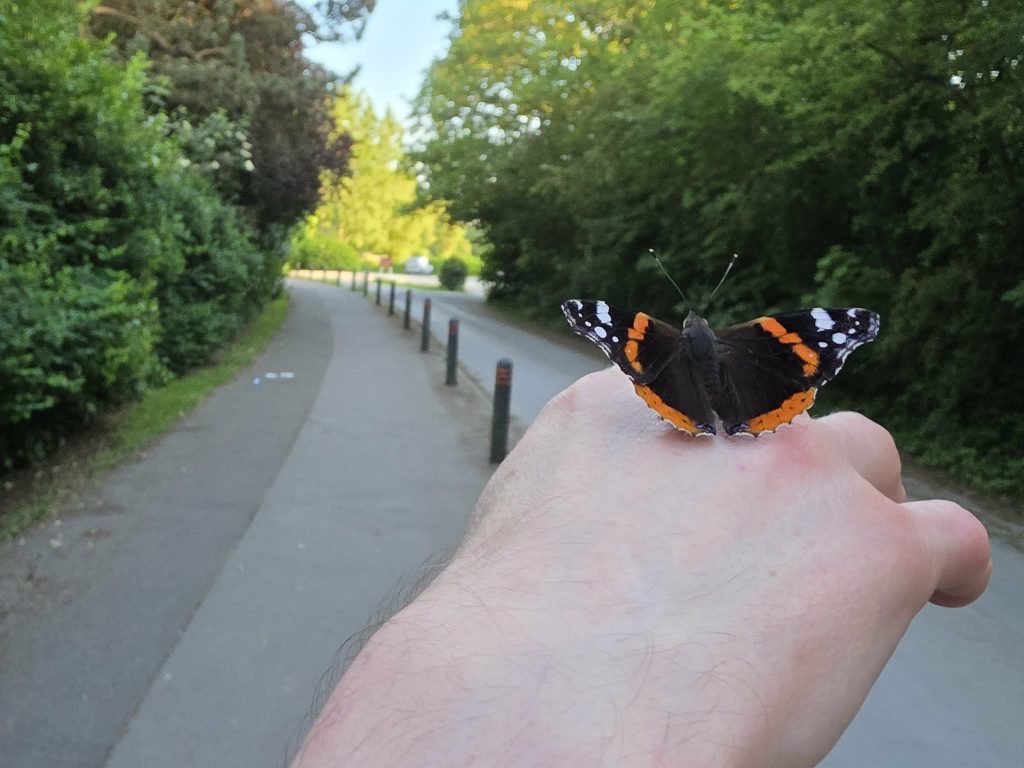
So I suppose I could blame this monarch that reigns today’s thermals—that just licked six purple puffs in beach grass then juked my breezy mind— for the nicknamed waves of catastrophe soon to sweep a sleeping Gulf, the nightly news even proving it via weather patterns green-screened before the stocks and sports.
But instead I’m turning my grateful face toward the nor’easter just breaching the stony coast of my brain: when it rattles shutter to sash to rafter, I’ll unlatch the deadbolts, throw open the windows, and ready my heart’s musty guest bedroom in welcome.
If Hearts Know Best
Not wanting to disparage your heart (after all, from its involuntary seclusion it pounds out three trillion beats by the time it dies), but at best it boasts only a sixty-percent ejection of fresh blood from its left ventricle, out its aorta, and into that vast vascular network invented to re-oxygenate you.
And not meaning to disparage your sense of what’s acceptable, but this sixty percent is excellent, a D-minus that commends you! Any greater rating and that concavity would collapse, just like a kiddy pool sluiced of too much water, or like when the sails deflate and maroon the little schooner that is you.
What if such barely passing productivity typified a few of our other endeavours, a submediocrity chosen to achieve more than the bleed-out of high achievement? Imagine our ruminations running at only sixty-percent efficiency. Or what about sixty-percent modification to all our manipulations? Over-identifications?
What if our self-doubt and over-reactions were reduced to a measly sixty percent? Or perhaps a forty-percent reduction of our ambition to be liked? (We might become likable!) Likewise, losing forty percent of our judgment of judging, preaching against preaching, desiring the return of our adolescent desire, thinking we know what we think we know?
And what if our love-sickened hearts sort of met each other a little over half-way, almost always gave each other a mere sixty-forty benefit of the doubt, supplied the minor nudge that’d tip our teeter toward the other’s totter to strike the delicate imbalance that’d barely make the difference?
Tracing Your Two Lines
There’s the one that goes round and round with each revolving day, sunset to sunset. For that, your eyes, looking west, would streak the long exposure like faint tail lights arcing away over recurring hills. The other
is different. It doesn’t depend on where you stand, which way you face. No matter, it releases from the daily spin and wanders, a twirling girl’s sparkler in the dark.
Try pointing to any spot on a globe. Make it the capital of any troubled country, and after that miniature world turns your finger in perfect circles, watch your fingertip trace the course it takes as you continue your trail
from here to eternity. You’ll see it zigzags a singular presence over the earth’s assorted surfaces, drawing its own conclusions—
like you in this world, scratching out a meandering, your own universe, your own one-line sketch of this far-fetched existence.
D. R. James, retired from nearly 40 years of teaching college writing, literature, and peace studies, lives with his psychotherapist wife in the woods near Saugatuck, Michigan. His latest of ten collections is Mobius Trip (Dos Madres Press).
You can find more of D.R.James’ work here on Ink Pantry.
In liminal space, Epiphany blooms Then fades in eclipse, In ennui. The serendipity feels like a chimera. Leviathan in Metropolis, This totem of confusion Transforms into mosaic rhapsody, A labyrinth of alchemy. Epitaph carved on the monolith. The mind becomes a quagmire, A parallax of what is real, What is true.
Harbinger
The red mirage from the hearth, looming, cascading, echoing an ember glow from the solstice, under the celestial canopy.
A turpentine mucking haven, with silts and shards chiseling the pinnacle— a verdant glade of hollow, where meadowlarks chirp.
In the thicket, in the tundra, beneath the dune, through mire and glade, the tempest orbits.
First Place
I saw a smooth surface beneath my soft palms that once awkwardly held a pencil. Glossy green-blue or cotton candy pink, sometimes scarred with little scribbles. A rectangle whose sharp edges were softened for small hands. I trace the thin grey lines, feel the rubber lining, soothing me from inside.
The ceiling saw blocks of rectangles forming a blueprint for a square. Gaps in between some, some crooked, some deviating from others. But always together.
The carpet saw the underneath, where no one pays attention. Ancient gums that hardened into fossils, boogers pressed into corners. Drawings of stick figures, words carved with defiance– “Stupid,” “Dog poop”– rebellion in permanent markers.
The windows saw blurs of identical shapes. A line of possibility. Where the soft brains were hardened. Where the soft hands learned how to find themselves.
“I like my life,” it whispers, through scratch surfaces and wobbly legs. “I know I’m loved. I know I’m needed.” “They come and go, but I stay here, ready to be a second home.”
Once so big, not intimidating but embracing. My place in the world, solid and certain. Thought it would never change. Now it fades in memory when I sit—if I could sit— it would barely hold me. Reminding me of the distance between who I was and who I’ve become The time between it and me.
Alexis Lee is a high school student and emerging poet who finds inspiration in fleeting moments, music, and the quiet details of daily life. Her work explores themes of memory, transformation, and human connection. When she’s not writing, she enjoys reading contemporary poetry, listening to indie music, and exploring local bookstores.
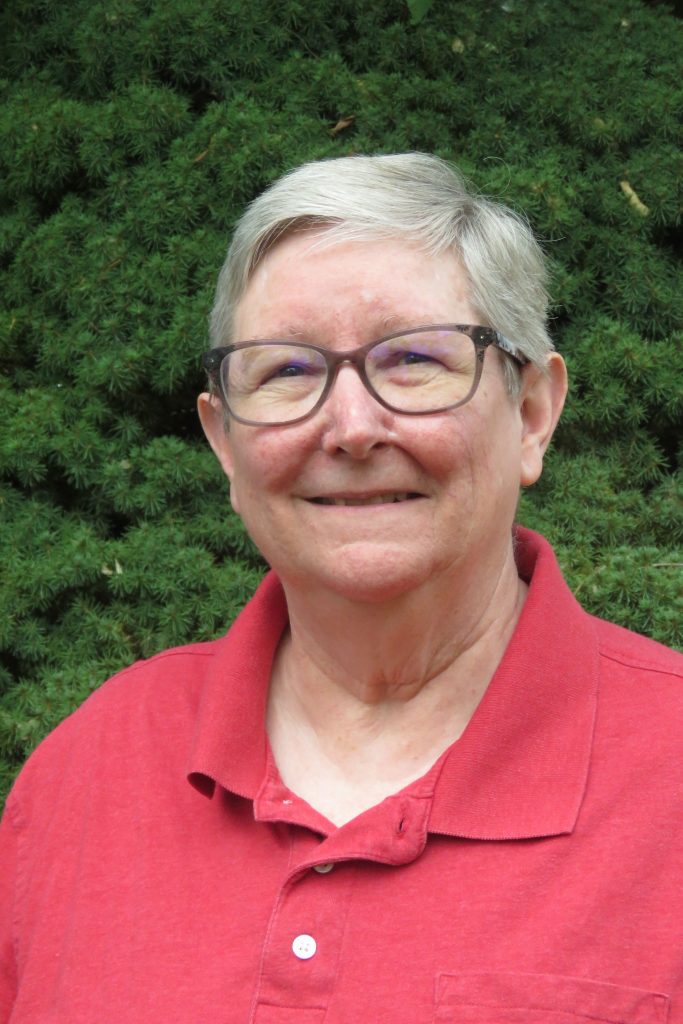
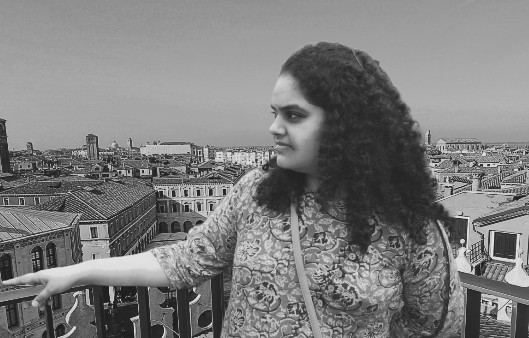
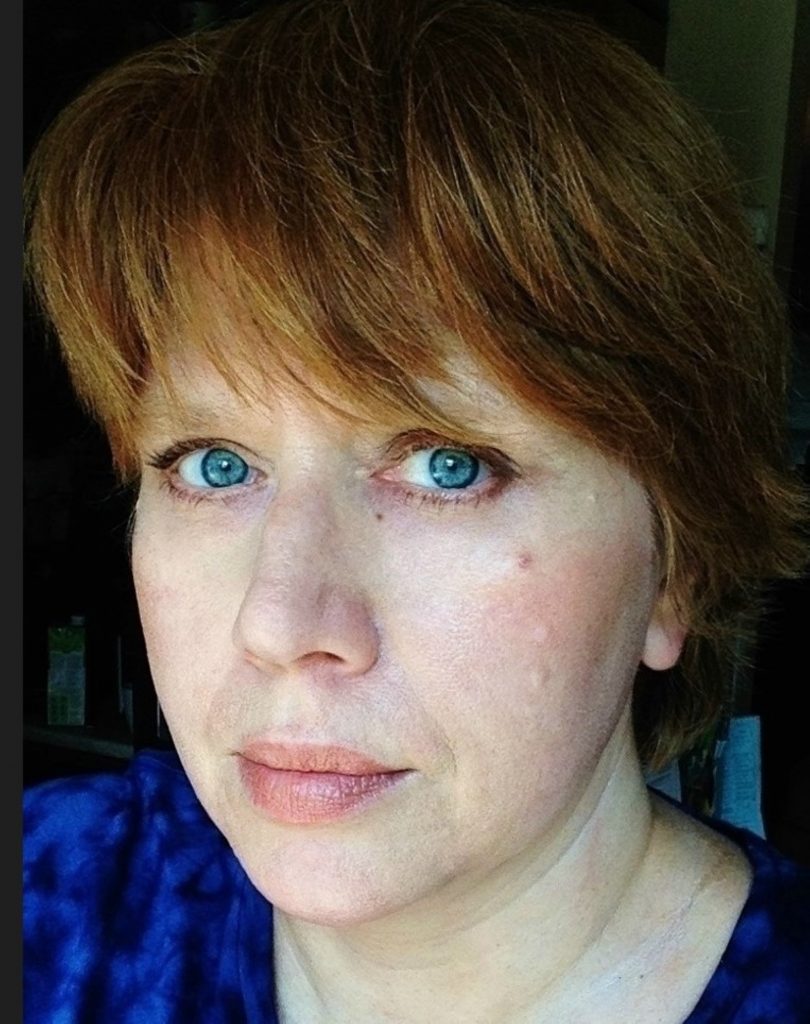
She feels close to depth, Like a necklace, you notice after looking for a while.
She changes the feeling of the room without meaning to, Grey suits her. Her smile is small and unforced, like it’s just where her face settles.
Arched eyebrows, not to impress anyone. Eyes with softness, not emptiness.
She doesn’t remind you of anyone else. No earrings, no necklace, the crashing waves of her hair,
Not trying to be seen, And doesn’t demand attention
Silence is her language, She understands it as well as speech.
Thin oval-shaped lips, bottling up words of wisdom Forehead showing experience more than worry
If she were part of a story, She wouldn’t be the centre of it. She’d be the depth underneath, The part that connects things And make everything else feel real. Like a bluer story, if present.
Umbrella for Two
Standing in the rain Beneath the sky that weeps An elegy for one
Holding an unopened umbrella A silent companion to the storm A quiet witness
The rain speaks gently The way a mother may
Standing still The air and rain learns my shape
Each drop a promise That breaks apart before it reaches me
Still, I look up Just in case the clouds might remember The child they left behind
Diamond in the Rough
From Within Plastic green trees Green Snow that never escapes A glass dome, Holding a tiny world Foggy glass No cracks, no scratches Just a wall That separates their world from ours On the bedside table for years A mere shape Brand new once, Now a diamond in the rough
Serena Park is a high school student who writes poetry and creates visual art in the quiet corners of her day. When she’s not working on a piece, she’s usually listening to music—especially rock, with a special place in her heart for Kurt Cobain.
Through the tomography’s tungsten lens, I saw a strange constellation, like that of the cosmos — It was shaped like a labyrinth.
The ephemeral nature of the scene drew a paradox to the striking intricacy of the view— And a myriad of nebulae flashed beyond my sight, pulses send here and there.
Its flashing vista encapsulated me in a state of utter perplexity, And caught me mesmerized by its ever-enigmatic nature.
Then was when, amidst the cascade of vividness, where I witnessed a wild tempest, an enigmatic oblivion, the cosmos of my mind.
A Matter of Perspective
All that could be seen was a glimpse of light breaking through the metal wall. There was a room one covered with red paint, yet shallow. Coated with slick mahogany paint on the outside, its surface reflected a smooth brilliance.
Hovering across the horizon, all that could be seen was a square of red, standing alone in the midst of an intersection.
Bikes, cars, and children sped fast through the road And the city bustled with vivacity, Yet it seldom had any visitors. Only when men dressed in blue caps went by was it ever visited
Lying on the ground, nothing could be seen but darkness the wall was illuminated from its left, right, front, and back, and a slight hue of red.
Wind was bustling through, in and out as if it were to tickle the empty hollows of the lonely red box.
Here
The middle-aged men wearing a fuzzy, apricot hood and a brand-new purple hat waves towards a child who is running across the street with a big smile on his face
The young man, leaning towards an old wall made of reddish bricks and grey stones is wrapped around a brown leather jacket and a white turtle-neck.
crossing the street light with a crooked expression, A teenage girl with her right eyebrow lifted both her ears are covered with a set of headset that is decorated with stars-stickers
A student wearing a uniform is riding bicycle across the river, her hair fluttering golden in sunlight. Holding a briefcase in one hand and a light-blue duffel bad bag behind her back, she closed her eyes sniffing the soothing smell of soil and grass;
A street-singer wearing hot-pink skinny jean recites her song atop of a brisk cardboard box. Holding her guitar one hand and a bottle of water on another, she looks up into the sky, up into the baking sun.
Alina Lee is a high school student at an international school in Seoul, South Korea. Her writing explores memory, identity, and the quiet moments between people. When she’s not writing, she enjoys hiking, running, and playing the ukulele. Her work is inspired by the natural world and the rhythms of everyday life.
I bought it because my hands looked unfinished, because silver means something to people who notice hands. The jeweler said it would age beautifully. I wanted people to forget I had fingers without it.
I practiced talking with my hands, the way people do when they’re certain, the way I wasn’t. I couldn’t stop adjusting it
At the meeting, I left my hands on the table knuckles up, like a small declaration. No one mentioned it. That meant they noticed.
Then one Thursday, I forgot to wear it and still took up space at the table. My hands still worked The reassurance I was looking for was never in the silver
Checkout Line
The woman in front of me is placing her groceries on the conveyor belt while the cashier, maybe seventeen, hair up in a messy bun, keeps her eyes on the register screen The woman’s bag is canvas, reusable, expensive looking and she’s pulling out coupons from a shiny leather wallet, each one unfolded carefully The cashier’s shoulders go tight when she sees them, I can’t tell if she’s annoyed by the coupons, the extra work of scanning, or if the woman said something while I was still choosing between checkout lines, something about expired sales or wrong prices or the way things used to be done. The woman probably said something about organic foods, and how she always buys organic in this annoying voice, using an uncomfortable amount of vocal fry and the word ‘like’ the cashier nods but doesn’t look up. Maybe the cashier is tired of women like this, women who need everyone to know about their stupidly expensive, pseudo-healthy diet choices. The woman taps her credit card against her palm one, two, three times while waiting for her items to ring up. The rhythm says hurry up, says this is taking too long
I decide she’s the type of person who thinks the cashier is incompetent, too slow, not meeting whatever impossible standard she’s invented for how quickly her organic quinoa should be scanned. The cashier still won’t make eye contact Good for her, I think. Don’t let this woman make you feel small. The woman tilts her head, says something I can’t hear the cashier pauses over a bunch of kale The woman’s voice gets louder “I’m sure it was two-for one” There it is. I knew it. She’s going to make a scene over 50 cents, over needing it to be right, over needing this teenager to admit she knows better The cashier calls for a price check and the woman crosses her arms. I want to say, Just let it go, just pay the extra dollar and stop making her day harder, stop needing to win.
But then the manager comes over and snaps something at the cashier, not at the customer. The cashier’s face goes red and she ducks her head. The transaction ends. The woman takes her bags, glances back at the cashier, says, “You’re doing great,” and leaves. The cashier exhales. I step forward with my items: frozen meals for one, a can of soda, the same kale I was so sure would be the problem. I don’t say anything. I swipe my card. She bags in silence.
Outside, I see the woman loading groceries into a sedan, careful with each bag, and I realize I needed her to be careless. Needed her to be the villain of someone else’s shift so I wouldn’t have to think about how I move through the world which lines I hold up, whose patience I test, who’s been kind to me when I was too wrapped up in my own small urgencies to notice I was being difficult. The sedan pulls away. I stand there holding my single bag, the receipt already crumpled in my hand.
Rubber Band
I’ve kept a single rubber band Looped around my bedpost for 3 years It’s gray now, rimmed with rings of dust and lint, Stretched thin in places where my thumb Kept worrying it during conversations I didn’t want to have
It was there the night before my presentation when I couldn’t sleep, when I wrapped it around my finger too tight Counting how many seconds until The tip of my finger turned white
It was there the morning I got the acceptance email when I snapped it across the room At the wall that heard me rehearse the same hopes twenty times It slid behind my bed But I dug it out with a broom because it belongs on my bedpost, not there
My younger cousin held it once And I showed him how to weave it between his fingers into a star He wore it on his wrist for the rest of the day, then set it down on my desk before he left Like he knew I couldn’t lose it
Sometimes I think it’s waiting to be used for something ordinary bundling the stack of photos on my shelf, keeping a crumpled page from escaping, looped around a moment I’ll need it later
Today I moved it from the bedpost to my pocket
It weighs almost nothing, but carries what I cannot
Katie Hong is a high school student based in Seoul, South Korea, whose love for poetry is surpassed only by her passion for baking and spending time with her puppy, Loki. With a gift for words and a keen eye for detail, Katie weaves intricate tapestries of emotion and imagery in her poetry, inviting readers to embark on self-discovery and introspection. When she’s not immersed in the world of poetry, Katie can be found in the kitchen, experimenting with flavors and textures to create delicious treats that delight the senses. With a zest for life and a boundless imagination, Katie is committed to sharing her voice with the world and making a meaningful impact through her writing.
You can find more of Katie’s work here on Ink Pantry.
Shadow limbs of the dead tree stretch across the barren dirt in search: they descend into burrows where dark meets dark, reaching for a neighbor but the sun moves so touch never happens.
Shadow limbs rotate sunrise to sunset; a sundial ticking seconds like bug tracks stitching hourglass sand.
Snagged
It’s painful for the cottonwood tree to grow beside the wooden fence.
Posts planted in the ground with no hope of spreading roots. Planks nailed like fake branches with only splinters as leaves.
When the wind blows, when the boughs brush against lifeless boards, the tree caresses the fence and doesn’t mind leaving snagged leaves behind quivering on splinters.
Below Morning
Sunset on top of the clouds shines brightly like snow-capped mountains with darkening valley in gray below.
Below in the cornfield rows of irrigated ditches reflect last rays of sun stretching toward the highway; car headlights brighten like shafts of morning attempting dawn.
Leaves Down
Over the bridge across the river to stand under trees where leaves fall down.
Squirrels scamper up wrinkled tree trunks when rafts float on top of rapids following gravity beneath cliffs jutting outward in a valley seen from above.
Stand Still
If I stand still, will my feet sprout roots and dig into the soil? If I raise my arms, will bark crust over my skin and branches solidify? Will my open eyes change into knot holes staring at cousin trees? Will my hair grow leaves or pine needles depending on my choice of trees? Will I hear a tree fall if I stand still?
Diane Webster lives in western Colorado. Her poetry has appeared in North Dakota Quarterly, New English Review, Studio One and other literary magazines. Her haiku/senryu have appeared in failed haiku, Kokako, Enchanted Garden Haiku. Micro-chaps were published by Origami Poetry Press in 2022, 2023, 2024 and 2025. Diane has been nominated for Best of the Net and three times for a Pushcart. Diane retired in 2022 after 40 years in the newspaper industry. She was a featured writer in Macrame Literary Journal and WestWard Quarterly. Her website is: www.dianewebster.com
You can find more of Diane’s work here on Ink Pantry.
The ocean is like us It carries storms inside its chest and still learns how to shine. It holds whole cities of feelings Beneath a calm face, Seeing the sea wearing sunlight Like a crown of blue daylight, Tides pull the way memories do, Back and forth, and never gives up Just watching for the moon to speak.
JoyAnne O’Donnell is author of five poetry collections on Amazon. JoyAnne loves to go out in nature and write poetry. Her latest poetry is in Ultramarine Review.
Before I wake, the crawling dreams learn to sleep. In the rain shadow of mind, light becomes a shade of darkness.
Wild flowers dance on graves, unbothered, and I carry the wreath with thorns, unperturbed. Grief, bright as a bug zapper, glows in my room like religion.
The voice inspects the house, then leaves — noisy breathing, unfinished thoughts. Only memory remains, pacing.
Border/lands
Seeing the child draw a squiggly chalk line, I realise that borders are just squiggly lines, drawn on maps from a hundred years ago. A hundred years ago was before radio, before phones. The squiggly lines remain like mountain ranges. Cutting people into shapes, slices, into teams, into enemies. The child erases the squiggly line with the back of his hand and I’m amazed. All borders are dotted lines. There are gaps that we are trying to squeeze our way into, And out of, aspiring for a better life, beyond the bottleneck of borders.
Falling with Buoyancy
Where others sail with ease, I strain to stay, choiceless tides deciding my course.
Hope, once bright, dissolves in moth-white spray, a ghost of faith dispersed upon the air.
Like turtles turned, I flail against the ground, yet learn to fall before I dare to glide.
Wrists clasped close, lest brittle bones be found; odd snow-angels mark where dreams have died.
Still I drop as autumn petals drift, as fading blooms whose sighs dissolve in frost.
A silent grace, the only final gift, when sound and shape in winter’s hush are lost.
If fall I must, let the end be mild, as though the earth embraced her fallen child.
The Ship
Vaishnavi Pusapati is a physician poet nominated for the Touchstone Awards. Her work has appeared in Dreich, Prole, Roanoke Review, Presence, Ink Pantry, Molecule, among others. Her haiku book, Afterlife:haikus, is forthcoming.
You can find more of Vaishnavi’s work here on Ink Pantry.
From a place of trust I glimpse your magnificence, your harnessed race of complexities in harmony, slow moving, more powerful than a hundred suns conjoining.
From a place of faith, being wrong is just as exciting as being right – a longing to know you, knowing I will never know you only know the minute aspects that flip and twist and rewrite as my knowledge grows, while keeping some laws fundamental.
From a place of love, your love is gathering in bright awe-inspiring displays, terrifying in their brilliance and in their magnitude. Nothing is personal. Everything is individual, overreaching galaxies into galaxies, twin dreams.
From a place of exploration, finding inspiration where paradox consumes, invigorates, illuminates all places, gloriously shifting.
Surrendered
In the middle – steady, harsh waves, salty flavoured ocean, stranded, treading. Love comes smiling. It is a ghost. Joy comes and passes by. Purpose comes but floats by like a jellyfish riding the momentum.
In the middle, tired of treading, no escape, just the ebb and flow, surging, retreating waters. What lies beneath makes no difference because nothing is above except the burning brutal sun, cloud cover occasionally, and only air to eat.
Skin cells, bloating. Eyes, unable to keep open. In the middle of an endless abyss, all my happy days behind me.
I hold my hands in prayer position, arms raised over my head. I stop struggling to not go under, I go under and let that weight, the peace at last, take me down.
She
Fear is splendid in making the body inflamed, bloated on trepidation at the news of many meadows burning.
She hurried and found a healer inside herself, willing to go the distance and forfeit personal power for a greater acquisition. She understood the traveller and the sit-at-homer as one in the same, especially on a stormy day or a year of upheaval.
Faith is the bullseye with no point-marks gained unless hit dead-centre, directing every focus to only that centre. Faith is the wave to ride to the shore, removed from other moving sources, like wind and arm-strokes.
She opened herself to fear not denying it but seeing it as just another entity under the canopy, smaller than the giving sun.
Out
I asked to be let out from that unwanted accomplishment. I asked to shed my shame, my duty and the hard-core call of doing time.
It was taken down and away from me, along with so much more. Guilt, and worldly bondage also fell along with security, along with a strange, twisted pride.
Knuckles down, hands still folded. In my head are ghosts of patterns dissolved but are still haunting. Ways of being I don’t have to carry are dropped, but my empty arms are stalled in position, humbled by uncertainty. Set free and starting over, but not yet started, just starting to try to etch out different possibilities, a solid surging becoming.
Whiffs of passing currents, rich aromas that entice briefly then fade. Whiffs I cannot capture and keep, not now, maybe never, let out, dumbfounded, helpless, screaming, just born.
Allison Grayhurst has been nominated for “Best of the Net” six times. She has over 1,400 poems published in over 530 international journals, including translations of her work. She has 25 published books of poetry and 6 chapbooks. She is an ethical vegan and lives in Toronto with her family. She also sculpts, working with clay;www.allisongrayhurst.com
You can find more of Alison’s work here on Ink Panty.