I
bought this book on a dark and rainy day in Birmingham last year, and
although I’ve dipped in and out of it during that time, now seems
like an ideal time to share my thoughts and review it.
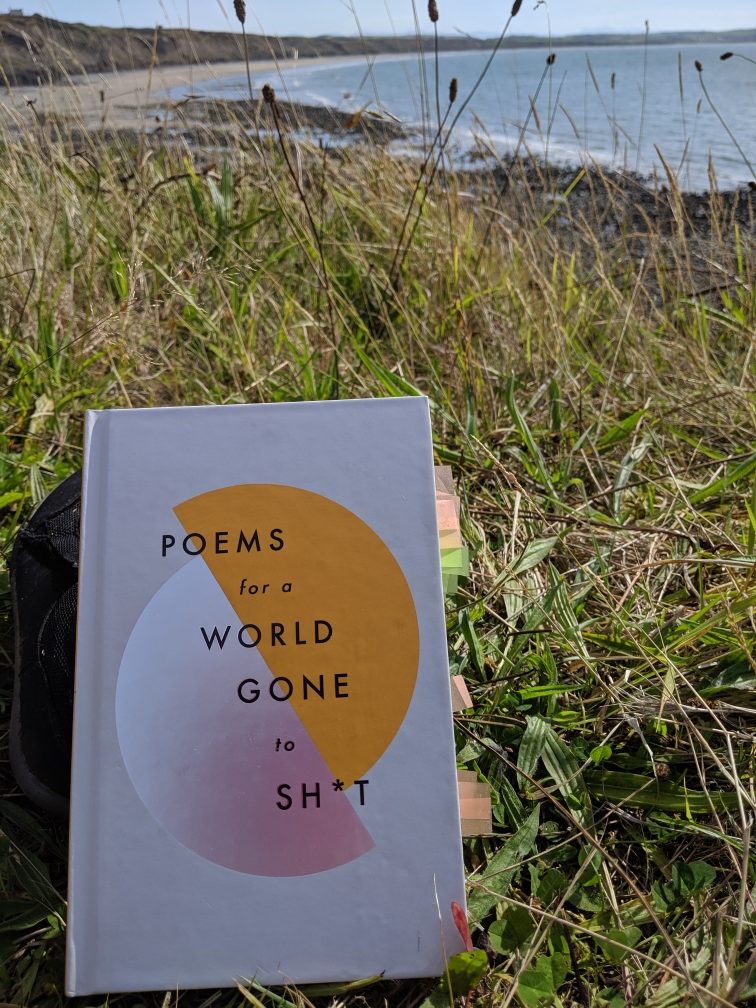
Published by Quercus, Poems for a World Gone to Sh*t, is a lovely anthology containing classic and contemporary poems. Each remind the reader that whatever they may be going through, however difficult or dark life might seem, that they are not alone, and things will get better.
It’s
a collection which you can easily pick up and read depending on your
mood. Some of the poems you may already know. Some maybe completely
new to you. You can read one at a time, go through each chapter, or
if you felt like it, attack the entire book in one go.
I
like the mix of writers this the collection offers. Included are
verses from; Lemn Sissay, Margaret Atwood, D.H. Lawrence, Rudyard
Kipling and Hollie McNish.
Subjects
are varied. Some more relatable than others. In ‘Soup Kitchens’,
Hollie McNish expresses her anger and frustration at politicians who
decide policy about charitable aid. “…I’ve had enough.” She
says, “…I can’t even be arsed / to rhyme if these people are
leading the country.”
Some
of the poems are enthusiastic and many are inspirational. The
positivity in Maya Angelou’s ‘Still I Rise’ always lifts my
spirits. As does this extract from ‘Little Things’, a poem about acts
of kindness by Julia Carney. “Little deeds of kindness, / Little
words of love, / Help to make earth happy / Like the Heaven above.”
I
liked the poems about nature. ‘The Moment’ by Margaret Atwood is a
beautiful and thought-provoking piece about the environment
reclaiming itself from humanity.
I
found ‘Tall Nettles’ by Edward Thomas positive and uplifting. Most
people hate nettles, but Thomas admires their strength and beauty.
They survive and grow to cover everything else. “This corner of
the farmyard I like most: / As well as any bloom upon a flower / I
like the dust on nettles, never lost / Except to prove the sweetness
of a shower.”
I
enjoyed reading this collection. Some of the poems made me laugh,
some made me reflect, and others made me want to shout out in
agreement. There is something for everyone in this book.
On
the back of this book, the blurb says “Discover the amazing power
of poetry to make even the most f**ked up times feel better.” It’s
a good sales pitch for a good book. Poetry is powerful, and sometimes
the world does feel like it’s gone to sh*t. So what better way to
pick yourself, take a breath and read this anthology.
Knowing that I enjoy reading poetry my Mum mentioned a book of poems written by children from schools in the local area. ‘Would you like to read it?’ she said, ‘I can get you a copy.’ I agreed, and a few weeks later, as I was leaving my parent’s house following Sunday dinner, Mum handed me the book. ‘It’s very good’ she said, I’ve enjoyed reading it.’
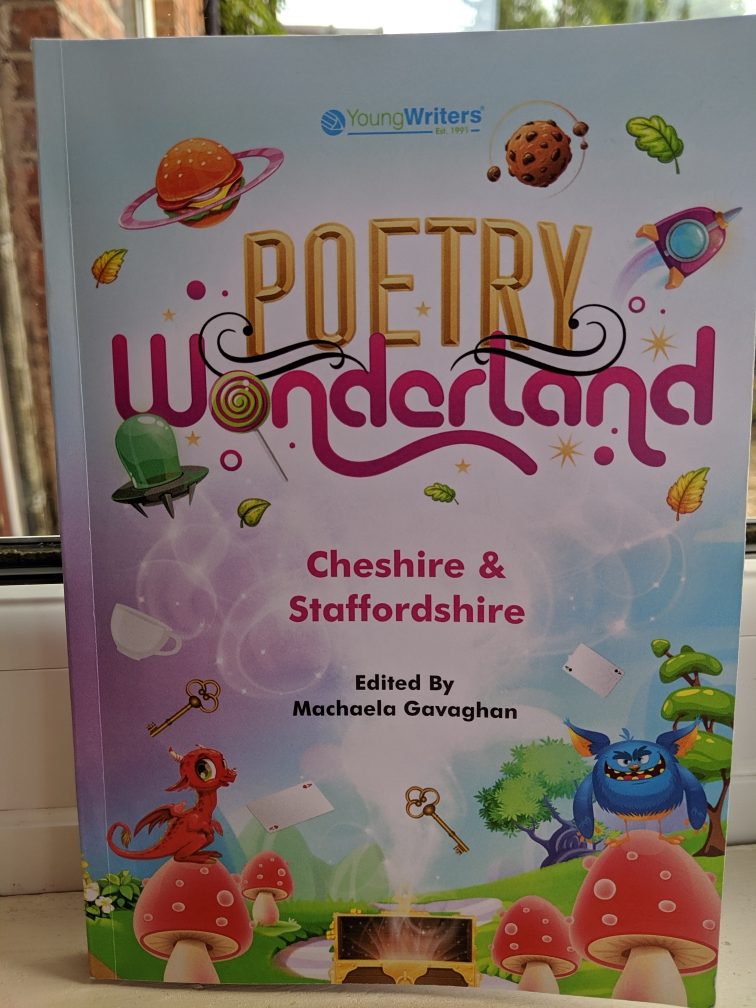
Poetry Wonderland is an anthology edited by Machaela Gavaghan. The book was published and organised by Young Writers, a group who run competitions and work with schools up and down the country.
For this competition and publication, Poetry Wonderland invited primary schools from Cheshire and Staffordshire to create wild and wonderful poems on any topic they liked, the only limit was the limit of their imagination.
In an age where funding of the arts in schools is decreasing it’s a real joy to see children in primary schools being encouraged to use their imagination and enjoy the experience of writing poetry.
On a personal level, I find that there’s something very honest in poetry written by children. It’s expressive, truthful and open, Poetry Wonderland had some great example of this. There is a full range of poems in this book, a mixture of styles and structures, some rhyming and some following a set pattern.
If I Had Hope is by Lily-Mai Jackson aged 9 from Wistaston Academy in Crewe and describes hope through each of the senses. It opens with:
If I had hope I would touch the falling hearts that are far away and fill them with magical tears…
This beautifully written poem finishes on a dream:
…If I had hope
I would dream of smiles and perfume for
Christmas
The freedom of imagination in these poems also makes me smile. The Picnic On The Moon by Millar Anderson aged 11, from The Ryleys School in Alderley Edge, is just brilliant in its approach and explains what might go wrong if you decide to go to the moon:
The picnic on the moon, It was a nightmare…
The tea was cold, The drinks floated off, The aliens ate all the sandwiches…
Determination and positivity also come through in many of the poems. One example of this is, I’m Walking On A Rainbow by Poppy-Jane Powell aged 8 from Burton Manor Primary School in Stafford:
Imagine if you could walk on a rainbow, Who said you can’t? W is for walk A is for another rainbow L is for learn to walk on the rainbow…
Creative writing also gives a platform for freedom of expression, and I think we can all relate to Tired by Grace Ivell, aged 9 from Broadbent Fold Primary School in Dunkinfield:
My neighbours alarm clock is loud…
…they need to get a new one
A bit quieter, I think.
To me, anthologies like this show how important it is to develop interest in the arts for younger children. Hopefully all those involved in this project will have had fun and this will encourage them to read and write more poetry in the future.
My Mum was right. I have enjoyed reading this book. It’s reminded me to have fun with my own creative writing, be more open with ideas and to read more children’s poetry. For more information on Young Writers and Twitter
A new metaphor is as useful in the climate fight as a new solar panel design. We need poets engaged in this battle, and this volume is proof that in fact they’re in the vanguard!
Bill McKibben, Schumann Distinguished Scholar at Middlebury College and leader of the anti-carbon campaign group 350.org.
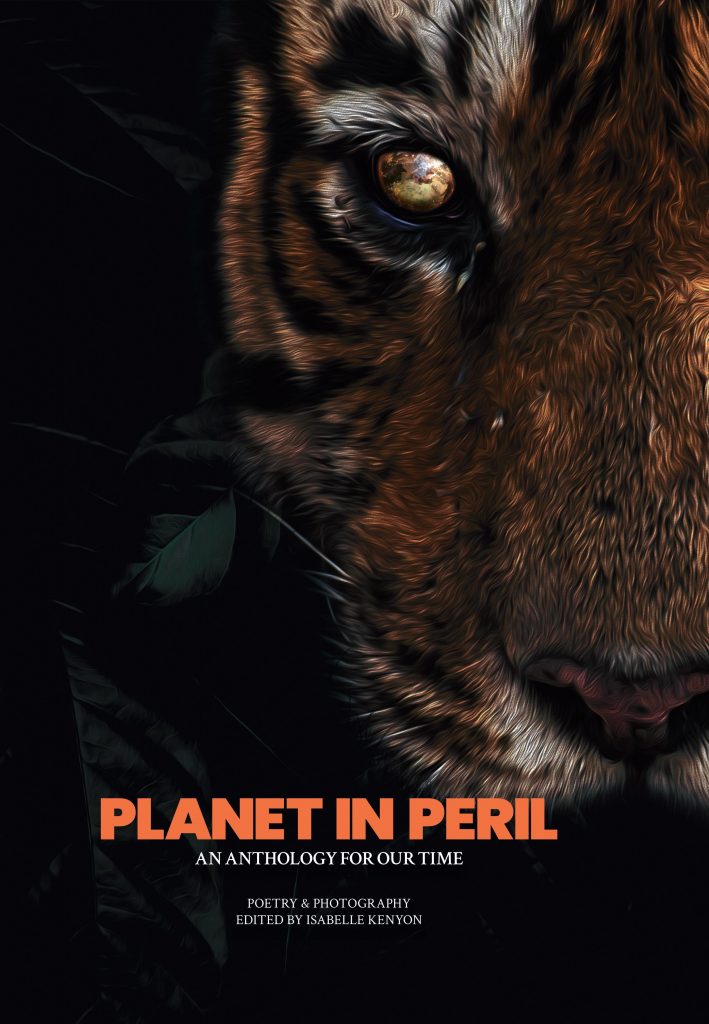
Editor Isabelle Kenyon speaks about brand-new anthology of eco-poetry, photography and art: Planet in Peril.
“Fly on
the Wall as a Press aims to talk about the most pressing issues of
our time, and I knew that there is possibly nothing more urgent than
our current fight against the rising temperature of our planet.
Anthology “Planet in Peril” is founded upon the belief that words
have the power to change and I have been extremely heartened and
emboldened by the passion and heart of the creatives featured, aged 8
to 80. I believe that no book can ever come close to describing the
devastation which climate change is currently causing and will
continue to cause to many ecosystems. However, in my humble opinion,
this anthology certainly comes close. Divided into sections of vital
ecosystems and continents, the artists weave the world as they see
it: the beauty, the intricacy, the devastation and the vulnerability.
Some imagine a dystopian future, or perhaps what is now becoming a
reality, for our future generations.
For this
project we will be fundraising for WWF and The Climate Coalition. Dr
Michelle Cain (Oxford University), has kindly written a foreword
which really brings home what this book aims to do: interweave
scientific research with artistic disciplines. The former Derbyshire
Poet Laureate, Helen Mort, and Brazilian based wildlife photographer,
Emily Gellard have been commissioned and really bring a sparkle to
the book.
This project will extend beyond print media, however. Our children and our children’s children will have to live with the potentially irreversible effects of climate change. Consequently, I have decided to run several initiatives intended to involve and educate children of all ages in this project. First, the anthology showcases a section for twenty poems submitted by writers under the age of 18. Two poetry workshops have taken place and so far, three school visit are planned, designed to engage them in poetry writing and art inspired by the book and its themes.”
Further details can be found at Fly On The Wall Press. Enquiries should be addressed to IsabelleKenyon@hotmail.co.uk
Pre-order your copy of Planet in Peril. Special discount code to Inksters: INKPANTRY10 (valid until the 4th of August 2019).
Extract from Kittiwakes by Sue Proffit
Bursting from the cliff-face in an urgency of light, catherine wheel of wings flinging its spirals seawards
over glittering water, they pocket the cliff in hairs-breadth nests where chicks stick, smudge-eyed –
the growing silence is sucking them out of rock, water, rapturous air, leaves me bereft –
so few of you left.
Extract from ‘where she once danced’ by Anne Casey
she is drowning in a sea awash with cobalt deadly metals fill the channels where she breathes
her lovely limbs are shackled down with plastics her lungs are laced with deadly manganese a crown of thorns to pierce her pretty head a bed of sludge to lull her in her dreams
The
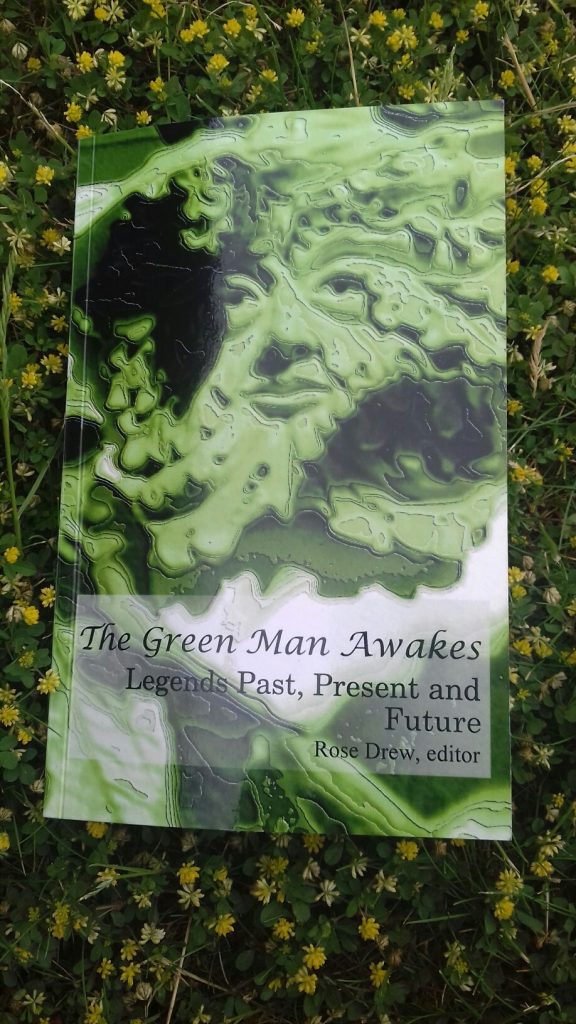
ancient story of The Green Man has always fascinated me. Whenever I
visit a new church or woodland, I always look for his face. When I
recently found him in Manchester, on the cover of a poetry book in
the middle of a stall at a publisher’s fair, I knew I wouldn’t be
leaving him behind.
The Green Man Awakes: Legends Past, Present and Future is a wonderful collection of verse published by Stairwell Books. Edited by Rose Drew, the collection covers the myth, symbols and stories associated with the ancient pagan forest deity.
There
are some beautiful poems in this anthology. I enjoyed how each poet
expressed their own vision and interpretation on the myth. Some
investigate old Norse rituals or ancient belief; some offer a more
recent interpretation. The Green Man by Andy Humphrey is one of my
favourites in the collection. A present-day setting for the ancient
god.
Each evening, his labours at an end, the green man catches the number ten bus and makes his silent way through the glistening, lamplit streets.
I
like how this poem sets the Green Man living in the now, and I love
how the poet describes looking at him.
…I sneak a glance when he’s not looking, try to make out stray twigs poking from under the cap, the stubble-fuzz of lichen on his jowls, the weatherbeaten crags of brows.
Some poems relate to a darker, deeper presence. Green Man by Pauline Kirk, describes the still powerful god trapped, not only in stone, but also in our collective memory.
You barely glance upwards but your ancestors knew me, changed me to new faith, and into stone…
Kirk
encourages the reader to keep searching for the lost in order to
rediscover forgotten knowledge.
…Look up! towards arch and ceiling boss. Find me, and I will show you what lingers still, deep in the groves of your mind.
Another of my favourites in this collection is The Green Man by Dave Gough. In it the god speaks directly to us. And he’s waiting. His world was cleared for stone buildings. ‘Let them come,’ he says, because he knows the power he holds over people, and that one day he will return.
I moved the hand that carved my face… ..The great forest will return with the seasons and the stars the sun and moon and rain.
Poems
about superstition and forgotten history also weave through this
collection. Midsummers Eve, 1840 by Tanya Nightingale is a magical
poem, with beautiful descriptions of friendship and youth.
It
describes two young girls walking through a graveyard to perform a
ritual to help them find husbands.
Suddenly they are both circling, spinning, Throwing fern and hempseed And saying words They don’t believe in and have always heard.
Boxing
Day by John Gilham examines how we perceive and remember ancient
earthworks. Although we can never truly understand the true meaning
of such monuments, Gilham concludes that we should accept
…that the gift of God is the land and the people and the voices whispering through the last leaves.
If
you enjoy reading about myth and legends, and have a passion for
poetry, then this collection is definitely for you.
The Green Man Awakes. Legends, Past, Present and Future is published by Stairwell Books.
In this last book of the Hidden Sanctuary series, the Tribe face their greatest threat yet. With Prosperity intent on expanding their city of excellence footprint into every corner of Brumont, the mass clearing of the abandoned industrial units begins; part of a regeneration that will leave no place for the Tribe left to hide. More than that, Prosperity’s methods of eviction are swift and brutal, meaning hiding has become a deadly option, one with only time as its protector – and that is fast running out. Just as Jacob was beginning to fit into his role as mentor, it falls to him to ensure the survival of those he’s been entrusted to take care of. The only options left are to leave Brumont City behind altogether, or return to their old lives in the city under Prosperity’s watchful eye. Either way, it will mean going their separate ways, and the abrupt end of their once peaceful existence.
Themes of mental health run through this final book as they have done throughout the series. In Unmasked, we see one of our characters descend into depression while another tries to fight their way out of it. Also depicted are issues resulting from PTSD such as panic disorder and anxiety.
“There’s another option… We go back.”
The city closes in on Jacob and the tribe he has sworn to protect.
With nowhere left to run, will they be forced back to the lives they had once escaped?
As the city grows ever more unstable, those living on its outskirts fear their once peaceful existence is almost at an end. In the shadow of this fear the members of the tribe connect on a level they haven’t before, defying the doctrine to share stories of their past. But for Jacob the time is drawing close when he must decide to put their safety above all else, a move that would see them go their separate ways and bring about the end of the tribe for good.
Sada has returned to her old life in the city to stay near her daughter. But its grip on her is as suffocating as it ever was. Yearning to be free from the glass confines of her husband’s penthouse, she seeks out reasons to meet with Jacob and the tribe. Even though doing so puts all their lives at risk.
UNMASKED is the third and final book in the Hidden Sanctuary urban dystopia series. Check out T.L. Dyer’s website.
“There are babies.” I looked up.
I hadn’t expected to hear another word out of her. I took her
hand again. Her eyelids flickered open. “Babies? Where?” I
asked. “At bottom of garden.” I frowned at her. Maybe this was
a sign that she as at the end now. “No, Grandma. Fairies.” I
said. “You’ve got fairy statues at the bottom of the garden.
The ones I used to dance around when I was little.” There wasn’t
a pause on her part. “Not fairies, babies,” she said firmly.
“Look after my babies for me.”
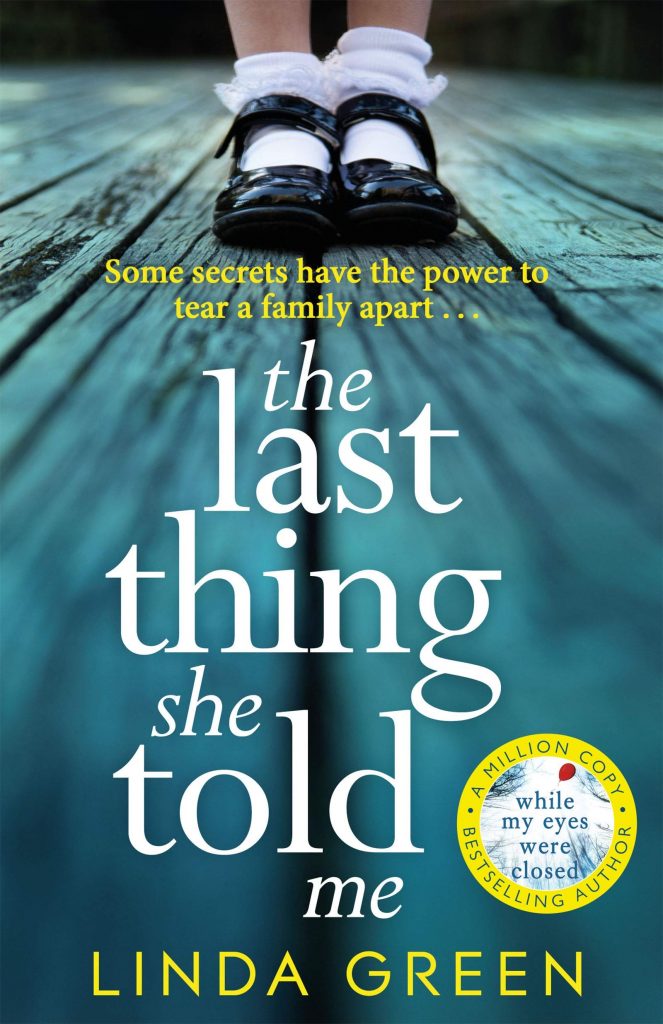
I always get a huge thrill out of reading books that perhaps initially I have glanced at and thought to myself ‘Oh no, this isn’t going to be my thing at all’. Followed, three minutes later, by being completely awed by the author’s writing and, by page two, knowing for certain that I’m reading something very special. Linda Green’s book, The Last Thing She Told Me, is such a treasure.
Linda’s plot weaves a superlative
trail across the pages of her novel. Written from a first person
perspective, we follow Nicola, a wife and mother to two girls.
Initially, we meet Nicola as she gently cares for her grandmother,
Betty, who is experiencing her final moments of earthly life. Before
her grandmother slips away, she tells Nicola that there are babies
buried at the bottom of the garden. From that mind-blowing
revelation, Nicola’s world is turned upside down, as she
investigates her grandmother’s bizarre claims.
This is my first experience of meeting
Linda Green and it’s very clear from the opening page that she is
an excellent writer. Her carefully chosen words weave everything
together very tightly and the fast pace of the action keeps readers
on their toes, or at the very edges of their seats. The sense of
mystery is maintained right through to the concluding chapters; again
a firm testament to the author’s literary talents. The balance
between ‘show and tell’ is absolutely on the mark, meaning that
all characters, and their wide range of expressions & actions,
are very memorable; living on in our minds beyond the final page.
Each character’s voice is strong and depicted with utter
believability. Furthermore, each chapter is separated with a thread
that goes back to wartime Britain in 1944. Over time, this thread
becomes a vital part of the overall plot and helps the reader to gain
further insights into the actions of the characters.
‘He had woven a web and I was
trapped in it. It was my stupid fault for getting caught in the
first place. When the knock came, I walked to the door, opened it and
let him in. He wasn’t carrying flowers this time. There was no
need for pretence. We both knew what he had come for. “Best get
the kettle on, lass” he said. He drank his tea, then wiped his
mouth with the back of his hand. “Right then.” he said. “Better
go upstairs, unless you want world and his wife watching.”
Linda’s ability to portray realistic
voices is another testament to her impressive writing ‘toolbox’,
with characters ranging from small children to much older facing the
end of their days. The secrets that many characters clutch painfully
to their hearts is a vital aspect of the story, as Nicola turns
detective and seeks to uncover many skeletons; both metaphorically
and literally. The links and connections between all characters are
made clear and the reader is left in no doubt as to who is who and
what is happening; again a display of fine talent for a story line
that bobs and weaves at a steady pace throughout the novel.
It’s very clear that Linda has
researched this novel extremely well. It’s also a nice touch to
have a short explanation from the author at the end of the book,
describing her initial reasons behind writing it.
Because Linda has achieved a fine
balance in the action and portrayal of characters, the pages turn
very quickly and, for me, it is a literal definition of a ‘page
turner’. We care about the characters because Linda makes them
important to us, ranging from the background characters to the main
protagonist who is relaying the story to our eager eyes.
This is a brilliant read across all
three hundred and sixty-five pages and I thoroughly recommend it. I
would also dare you to put it down, once it has utterly gripped your
literary mind.
A reluctant leader, Jacob fights to remain loyal to the tribe’s doctrine.
But in an unpredictable city, how far should they go to bend the rules?
With their mentor gone, Jacob promises to care for the Tribe – its members and its values. But as new threats dog the city backstreets, the men are open to flexing the doctrine to serve the fallout as well as to meet their own needs. Fearing he is losing control of the tribe entrusted to him, Jacob is pushed toward despair and the person he used to be.
In the city, Alex bears the scars of rebelling against their corporate-run government and can’t afford to step out of line again. Jobless, paranoid and alone, he considers leaving the city behind altogether. But then he meets Alice, a new reason to stay, even when in the weeks that follow he’s drawn closer to danger than ever before.
In this second book in the series, protagonist Jacob has been passed the role of Tribe mentor. Not a natural leader – or at least not perceiving himself to be – this is not a position he wants, but is obligated to carry out as their previous mentor’s dying wish. To make matters worse, life in the city is becoming more dangerous for those who don’t comply or fit the mould, and in response the men of the Tribe start to challenge their own doctrine and the values they govern their lives by. For Jacob, such challenges are dishonourable to the man who established this alternative and supposedly pressure-free lifestyle for them all, and what follows is a battle of wills that he struggles to win. Torn between loyalty to his former mentor and maintaining the trust of the other men, Jacob sinks further into despair, one exacerbated by his own perceived inadequacies and prediction of inevitable failure. In this second book, Jacob retreats to a state of mind he hasn’t visited since before the Tribe, but which he slides back into easily and which leads him down the path to self-destruction.
Like the first book, Hidden, this one carries themes of mental health – such as anxiety, depression, imposter syndrome, panic disorder and paranoia. It also depicts addiction and drug use.
‘The further I venture abroad, the deeper I travel within.’
Across the years with Ink Pantry
Publishing I’ve been fortunate to read and review a wide variety of
literary genres. Yet, to my knowledge, I’ve never reviewed a book
that focuses upon travel writing. Thankfully, any sense of cautious
trepidation at confronting this unknown genre has been somewhat
lessened by the knowledge that the author is one I am familiar with,
and whose words have genuinely touched my mind and heart in the past.
The book begins with a poem and a
foreword, both of which immediately whet my appetite for what lies
ahead, for Mr Forester is a writer who seeks not only to educate the
mind, but also to touch the heart. His foreword immediately nails a
variety of exploratory colours to his mast.
‘Here are four voyages, ventures
undertaken simultaneously into the soul and into the outer world,
undertaken over a period of fourteen years:
A confrontation with the devastation
of the Amazon rainforest and the unceasing exploitation of its
resources and people.
An encounter with the power of
forgiveness in South Africa, fifteen years after the ending of
apartheid.
A pilgrimage of self-exploration and
enlightenment to Nepal and the Himalayas.
A learning and teaching tour of the
Philippines, evaluating the impact of rapid economic modernisation.’
Thus begins a series of four, lengthy
journeys across the world, with the author as our trusty guide.
Within each journey, Michael transports us into the heart of each
community, allowing the reader sincere samplings of worlds far beyond
our daily comprehension. From each country, we are dropped into rich
cultures of society; although ‘rich’, in terms of financial
security, is often far from the reality of what we are exposed to.
What makes this a truly enlightening experience is that Michael
Forester isn’t just taking the reader on a physical journey, he is
seeking to find the true soul of each location he visits.
‘Yet, as I look up at an
electronic advertising hoarding, I see a young Nepali couple beam
down indulgently on their two-year-old son in his ‘I -❤-Nepal’
t-shirt. The same dreams of love and happiness have brought this
couple together as are dreamed by young lovers throughout the world,
as were dreamed by my generation and throughout all of history. And
now, these stereotypical parents dream their dreams for their son,
who, when the time comes, will dream of happiness and love, from
which will come another generation to be beamed down upon,
indulgently.’
This doesn’t mean that physical
descriptions within the book aren’t abundant, for within each
village, town, city and country, we are served sumptuous portions of
descriptive text, along with a variety of Michael’s personal
photographs; more than enough to feel us mentally walking alongside
the author as he seeks to unravel the inner truths of each place.
Most importantly, Michael gives detailed insights into the people he
encounters, from shopkeepers who chase the author through several
streets in order to sell him their wares, to enlightened Buddhist
monks feeding pigeons in a town square.
‘Lost in thought, I take the
departure gate to the car park. On the ride back into the city, my
driver asks where I am from in the UK, for he has spent three years
in Hastings, learning business studies. I do not ask why, after such
training, he is driving a taxi. He and I both know his time is yet to
come.’
Michael’s writing style throughout
the book portrays both his depth as a formidable writer and also as a
caring, spiritual human being. His words drip with honesty and
curiosity, as we are taken to the Rain Forests of South America, then
onward to South Africa, Nepal, Thailand and The Philippines. Within
each place, we are treated to the highs and lows of the location,
with a special emphasis on the native people; how they think, how
they act and how they dream. The themes of spirituality and global
conservation are common within the book and Michael addresses these
issues truthfully, leaving the reader to make up their own minds on
the matters addressed. At no point does the reader feel pressured
into adopting the author’s personal stance on anything we observe.
We are merely there as witnesses and Michael’s words makes us feel
like we are his friends. Along with each part of every journey, we
are treated to Michael’s changing perceptions on the world around
him, such as a piece of self-internalisation when wondering whether
to buy a stone pendant.
‘The questions I habitually ask
myself are ‘Why do I want this? Will it enhance or retard my
journey?’ The inner answer is surprising. I want it because the
energy around me is changing, and yes, this stone is indeed on my
route map. I buy. I have long been aware that my journey is taking me
in directions I could never imagined. But change brings the
opportunity for newness and growth. I am open to change. I am open to
growth. I am open to the journey’s moving into new territory.’
I’ve glanced at several travel books
in the past, usually the kind of fare one finds within hotel rooms,
or laid neatly upon coffee tables in self-catering cottages. In
truth, I’ve never felt the urge to pick one up and read it from
cover to cover. However, One Journey is a definite exception
and, like Michael’s previous books which I have had the pleasure to
read, it is likely one that a reader will return to many times after
it is complete.
‘Please Hear What I’m Not Saying’, published by Fly on The Wall Poetry, is a stunning and unique collection of poems about mental illness.
The
book is divided into sections, the idea being that the sections grow
with positivity, and that by the end of the book, you will be able to
see the light at the end of the tunnel. The sections are untitled,
and the reader is invited to name them.
I wasn’t sure how I would react to this collection. How would it make me feel? Would I enjoy it reading it? Mental illness can be a difficult subject, and as this collection shows, it affects us all in different ways. The poems cover a wide range of topics including; depression, anxiety, self-harm and suicide.
If I had read the poems individually, and at different times, the collection may not have had such an impact on me. But brought together and presented this way, I found the anthology powerful, inspirational and at times quite emotional. I can guarantee that there will be at least one poem included in this collection which every single reader can relate to.
It’s
a strong and beautiful book. Thoughtfully and courageously edited by
Isabelle Kenyon. The more I read, the more I appreciated the poets
who contributed their words, emotions and bravery.
The
opening poem ‘Battle’ by Bethany Gordon, highlights the unwanted
struggle, and is a poignant introduction for this collection ‘Mental
illness / is a battle I never agreed to fight.’
There are so many outstanding poems, to mention only a few seems to do an injustice to the others which I can’t fit into a single review. I enjoyed the strong imagery which runs throughout the anthology, and I found Angela Topping’s poem ‘Deferment’, about bereavement and personal belongings, particularly effective. ‘Grief is a cruel handbag – / its catch snaps shut like jaws.’ The poem makes us question how we deal with grief, and if we opened that bag what we might find. ‘…It cannot be thrown away. / Best hide it in the bottom of the wardrobe / an unexploded bomb.’
‘Black
Rot’ by Andrew Barnes describes the onset and ongoing fight with
depression. ‘She throws her arm around my shoulder, / pins me down
until action weeps from me, / creeps back in the morning to stop me
rising. // Depression is a friendly face, / she takes her time with
me, / lets me shuffle on.’
‘On
the Shelf’ by Jacqueline Pemberton is about escaping unhealthy
thoughts and relationships. Emphasising finding inner courage and
strength. ‘And I knew he’d got it wrong, / He was the damaged
one / Made small with spite, / He wasn’t worth the fight.’
Some of these poems, by their very nature and subject, are a challenging read. However, you will also find some that they are inspirational, courageous and many have important messages about mental illness and societies’ reaction to it.
‘Blue
Square with White ‘F’ in the Middle’ by Jade Moore is one of my
favourites from this collection and details the impact and addiction
to social media. The language used is direct and unapologetic,
powerful and effective. The poem cleverly recognises our love hate
relationship with social media, our desire to belong and our fear of
failure. ‘There’s a button with the whole world on its face /
and I click it and wonder if I’ve stopped the human race.’
I’m
glad I read this collection. It was thought-provoking and inspiring.
Proceeds from the sale of ‘Please Hear What I’m Not Saying’ go to UK Mental Health Charity Mind.
(The cover photo shows one of Kevin Morris’s clocks with him in the background, close to a window).
The Writer’s Pen
You accuse me of hiding in my ivory tower. I answer that I have no power, Other than my pen Which, when It scratches, Sometimes catches The truth of the matter,
That is the opening of the title poem and it is a perfect introduction to the collection. Kevin casts a sharp eye at the modern world while drawing heavily on the rhyming style of previous centuries; that opening poem continues,
The wise well Know that those who go Down that path Oft produce great art.
When I say that Kevin casts a sharp eye over the world in which we live, mine and Kevin’s paths crossed a long time ago. We were students at Swansea University at the same time. I was sighted and he was, and still is, blind. I remember seeing him and his guide dog at the Junior Common Room bar, though never thought to go speak to him … and now here we are and I too have lost my sight, so it is a delight to be a blind person reviewing a blind person’s poetry, utilising our sharp eyes!
In the wood’s dark heart, The breeze Whispers in the trees Words that I cannot comprehend. May God send Me peace And this breeze Never cease.
Kevin’s poems, frequently a single stanza or two, hark back to the days when poets celebrated the countryside and revelled in the sights, sounds and scents of the great outdoors. Blind people do not, contrary to many people’s assumptions, have superpower senses; but we learn to pay more attention to the ones we encounter or whose absence we notice. The poem, Wisteria, exemplifies this for me:
Wisteria
Wandering around Hampton Court In late May, a thought, Prompted by Wisteria hanging on a wall. A few purple flowers, their scent Already spent And ready to fall, Did to me call.
There are myriad examples of how the world sounds, from a bird singing in a tree (Autumn Bird) the sounds of clocks (The Hands Are Almost at Half-Past, and This Ticking Clock Calms), all of which are one after another, ending with the hum of a fridge.
The fridge’s hum And the clock’s tick tock For the most part run Unnoticed, as background Sound Until they One day Stop.
This collection of succinct poems can metaphorically lift the blindfold from a reader’s eyes and point out the things that maybe had stopped being noticed because of the domineering sense of sight. It is an accessible and delightful read.