With very slow frost-free words, he mimes to them that his heart. like day old sour dough toast has become a plopped rock settling slowly to the bottom.
They shake their heads almost birdlike and regard him in asphalt indifference.
His heart becomes the taste of someone chewing aluminum foil. He says nothing more. He begins walking with a cane while his heart becomes an autistic child.
It has served him well in love and now, on an afternoon in the park, it kills him.
They buried it with him as a minor tremor begins in each of them.
Nautical Miles
He moves with the instinctual wisdom of alley cat balance. His doctrine follows an iceberg principle. His eyes see more; his chapped lips say less.
Today, he takes his trawler deep into the ocean a simple apostle of the earth’s last frontier.
Pungent Rubbish
Our love- a white garbage bag fitted to the top of the garbage can. Inside – dead roses I bought as a surprise for no special occasion; the greasy pizza box we splurged on because the day was just too long; the blood stained bandage you used to cover my cut hand when the knife slipped; the tear stained tissues because you just needed to cry and the burnt omelette when your single kiss ignited so much more.
On Sunday, when I take the bag to the curb, you shake and replace it with another one to start all over again.
R. Gerry Fabian is a retired English instructor. He has been publishing poetry since 1972 in various poetry magazines. He is the editor of Raw Dog Press. He has published two poetry books, Parallels and Coming Out Of The Atlantic. His novels, Memphis Masquerade, Getting Lucky (The Story) and Seventh Sense are available from Amazon, Apple Books, Barnes and Noble. He is currently working on his fourth novel, Ghost Girl.
More of Gerry’s work can be found here on Ink Pantry & Twitter.
The last year has been tough for many people. Whilst I have struggled to write, I have been able to take advantage of a lot of online readings and performances. Has the pandemic changed your creativity or the way you access poetry at all?
That is a great question and yes on both accounts! Whilst it was a shock in 2020 to have to cancel our ‘real ‘ festival due to the pandemic, we have literally transformed the way we work and how we offer a feast of poetry to our audiences. We now run Zoom poetry events several times a month – a mixture of workshops, literary lounges, open mics – and our audience, and guest poets are truly international. We have been able to book exciting names such as- American poet Kim Addonizio and Ankh Spice from New Zealand, Rob Kenter from Canada to name just a few. Our audiences are global too. Plus we have been able to offer free creative opportunities to those who are shielding throughout the UK.
I have been busier than ever but have found time to write – I try to spend one day a week on my work or at least a few hours.
I think the pandemic has fuelled my work in some ways, the need to emote, and be creative has been even stronger for me in these times. And that is saying something – as writing is already an addiction!
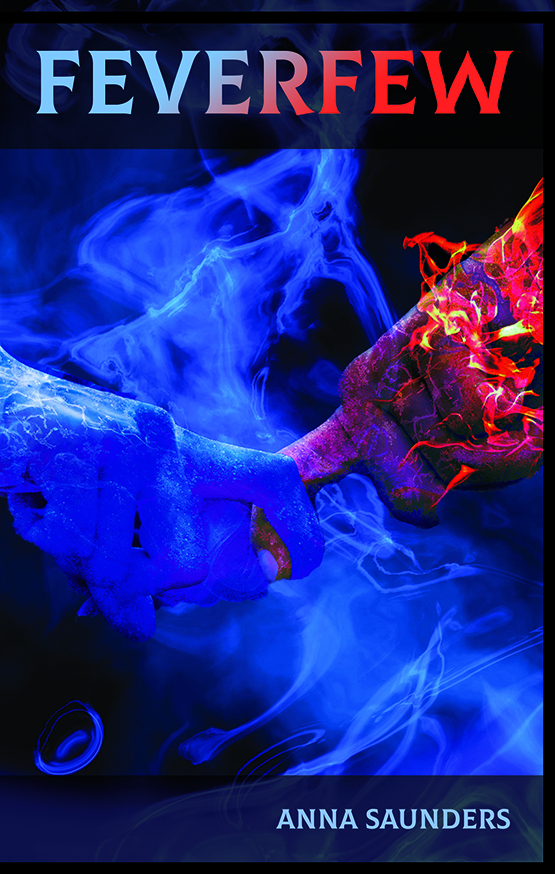
You have just released your latest collection, Feverfew. What can you tell us about it?
Feverfew is my 6th book, just out with Indigo Dreams and it is very much a book for our times. It explores, ‘all that haunts sleep’ ( from the poem ‘What I learnt From the Owl’)– isolation, a fear for the future of our planet, political corruption and cronyism, plus more personal themes such as desire, heartache, grief. Feverfew has been described as ‘medicine for whatever may ail you’ by Helen Ivory, and in it I offer both the herb of the title, and poetry itself, as an elixir and antidote. It has been described as passionate, vivid, creaturely, and full of magic, and it is celebratory of life whilst recognising that we can suffer challenging and adversities on the world stage and in our own lives.
Myth and legend appear in the collection. What draws you to these stories?
The richness and poetic nature of myth and legend and their deep truths can offer a perfect setting for writers’ themes. I often reinvent these timeless stories to address contemporary concerns – for example in ‘Prometheus Speaks’ – wherein I use the story of the man damned by the gods for stealing fire as a vehicle for a poem about heartache:
In spring, like Prometheus I stole fire and enflamed my lover’s dark bed. I carried it – a blazing creature sprouting wings, gauzy feathers, twitching as fast as a maniac’s tongue.
I also draw on the myth of Phaeton who drove the sun into the earth, and Icarus, who flew too close to the sun to talk about the aggressive way we treat the planet. This is from the poem ‘Phaethon’s Carriage Burns Up the World’:
Icarus didn’t listen either wasted the wings his father crafted and when he hit the sun, the feathered sky wept.
I find our ancient stories fascinating and full of lyricism, and I love working with them – and using them to generate very contemporary epiphanies.
Gloucestershire poet, Anna Saunders. Picture by Clint Randall (Pixel PR Photography)
You’re involved with the Cheltenham Poetry Festival. What can you tell us about it?
I have been running the festival since 2011, which kicked off with a sell-out performance by iconic punk poet John Cooper Clarke at Cheltenham Town Hall. It has since gone from strength to strength with audiences growing rapidly.
In the last ten years we have offered events featuring our greatest living poets, spoken word artists, musicians, actors, dancers, writers and film makers.
The festival also offers an extensive outreach for those who suffer economic, physical and other barriers to cultural inclusion.
I would suggest reading as much as possible, and not just writers you love. We can learn from poets we don’t quite understand, or who are very different to us. Also write daily. I recently attended a workshop with the American writer Carloyn Forche who said even if you can only find 30 mins a day, take that time – it will keep your creative fire burning.
What are you reading at the moment? Any recommendations for your readers?
I read a lot of poetry so by the time this is published I may well have other writers to rave about. But currently I would highly recommend the incredible Arrival at Elsewhere (Against the Grain – ed Carl Griffins) – a book length pandemic poem which is really a foray into the psyche in many ways. It explores how the self is coping, adapting during a time of pandemic. I am also loving A Commonplace (Smith Doorstop) by Jonathan Davidson which includes his own beautiful work and, in an act of writerly generosity, he includes other poems by writers he admires, plus Michael Brown’s Where Grown Men Go (Salt)– it’s really haunting and reminds me of Rilke. Impermanence (May Tree Press) by Colin Bancroft is another recent, much relished read – a very finely worked book.
Can you share any information about what you’re currently working on, or working towards?.
I am currently working on what will be my seventh collection – All the Fallen Gold, the title alludes to all that we have lost, but still cherish – perhaps people, places, ways of life. It will be in some ways an elegy, but in others a poetry party celebrating all that we still have. A few unusual people and creatures have reared their heads– Agent Cooper from Twin Peaks, Jung, the artist Samuel Palmer, the infamous arsonist Thomas Sweatt, Van Gogh, Sean Penn, a man who murders a puppeteer, Rapunzel (who is struggling with lockdown), AE Houseman, the painter Degas .. my head is a busy house!
Feverfew by Anna Saunders reviewed by Claire Faulkner
I struggled with creativity in 2020. For a few months I didn’t read or write anything. It wasn’t just writers’ block, it was something else. Something more. Like the rest of the world, I was confused, a little bit lost and completely out of sorts. So it’s apt that a poetry collection called Feverfew, written by Anna Saunders, has helped me get back into my stride. Growing up I was taught that feverfew was a useful plant to have in the garden. It’s a cure all. Connected to the moon, with myths and legends of its own, feverfew can help you with almost anything.
Is Saunders trying to heal through verse? ‘Surely these white stars will heal?’, the title poem ‘Feverfew’ asks. The answer from me is yes. Sharing experiences and emotions through poetry can sometimes be as powerful as taking any medication.
As a poetry collection, Feverfew feels relevant. Saunders writes deep. She has a strong and clear voice, and I found this collection more focused than some of her previous work. Part confessional, part story telling but always straight from the heart. The poems feel intensely personal yet invite the reader in to take part in their discovery and ultimately witness their conclusion. I found the verse in Feverfew exceptional. Themes of myth, magic, healing, and new beginnings run through the pages with ease.
It was difficult to choose a favourite poem from Feverfew. I had many marked out.
I found the poems mentioning nature and the environment quite beautiful. I enjoyed reading ‘For so long I have been wanting to write about my mother’s garden’. It gives a sense of time and place. Full of colours and textures, I can picture the foxgloves and goldfinches and recognise the relationship between mother and daughter.
‘What I Learnt from the Owl’ is powerful and exact. Reading it, I wasn’t sure if I was watching the owl, or becoming it:
‘…how to be outcast and avenger / spectre and seraphim, winged god and ghoul / bladed angel dropping from the sky./ What I learnt from the owl…’
‘…how to drop from heights, / heart-shaped face falling to earth/ as if love itself were plummeting’
Saunders makes the reader question everything. Her poetry invites you in and I like this about her work.
Saunders also has a gift of being able to retell myth in a new voice. ‘Leda, by the River’ and ‘Sisyphus in the Psychiatrist’s chair’ are both great examples of this. The poems are thoughtful and clever. I will never tire of reading these kinds of works by her.
I really liked ‘Hades Justifies His Off-Roader’ which could reflect societies’ materialistic greed and the environmental damage caused by it. Saunders makes Hades recognisable, full of energy and traits we have all witnessed in people we may know:
‘Hades drives his huge cart, head held high. / He says he needs this tank / because down there/ the lanes are sticky as treacle.’
‘…Hades defends the emissions which plume / and unfurl like a scribble at the end / of a Death Warrant…’
I enjoyed reading Feverfew. I found it to be a strong collection with a mix of verse which has renewed my love for reading and I can’t wait to read what Anna Saunders writes next.
With special thanks to Isabelle Kenyon from Fly on the Wall Press.
I wonder if they know – as much as chlorophyll can know anything other than the sweetness of the energy of sunlight and rain on its tongue — that as they perish into winter’s dead sleep, these inside, these rich relations, will live on, all wide awake and wide-eyed, glowing in the warm glow of their winter palace. I wonder if they knew, would they then demand their own entry there, or like a revolution’s mob, break every pane with bricks and cobblestones?
At a Reading
After the last poem, the poet, clearly drunk, answered questions. A student asked him how he made a poem. There was a wide smile and a long silence. Then, “Fuck the muse and wait nine hours.” There was laughter, some embarrassed, some self-consciously loud. Then the student said, “But Mr. C___________, according to that metaphor, isn’t it the muse who makes the poem and not the poet?” There was a narrow smile and a short silence. “True enough, but poetry has always been a messy business,” he said, a drop a spittle dangling from the corner of his mouth.
Capital Punishment
Should a seventeen year old be put to death for murder?
was the question under discussion. No, he argued, the psychologist,
because, he said, the limbic system, which, in a seventeen year old,
overpowers the neo-cortex, so it must be life in prison for such,
to be, without the possibility of parole, imprisoned with his
limbic system and his neo-cortex, to play, for life, the Play of Everyman,
to doubt, for life, between devil and angel, to live, for life, in the capital of punishment.
Doodle
The phone at the ear listening to the recorded music to keep the temper assuaged and diverted while you wait for the customer service rep to help you with your problem to answer your simple question you decorate the number you jotted down on the pad with filigree and curlicue with alphabets in arabesque with gargoyles and this poem… … cut off.
J.R. Solonche has published poems in more than 400 magazines and journals since the early 70s. He is the author of 22 books of poetry and co-author of another. He lives in the Hudson Valley.
We do not have a rain gauge. You can look it up on the Internet If it matters. Or you can See how the dock sits in the water. The pond is up two inches, I would say, Maybe three. We have one of the last wooden docks on On the east shore, The top still slick after the storm, Maybe a little spongy in places (Barry will give us a quote) But it will dry.
Caroline and the kids Will come down in a while This kind, warm afternoon, Float in innertubes, read magazines, And joke of things known to them, Their sense of family palpable This kind, warm afternoon. They are leaving in the morning And the dock will revert To its customary solitude. Now and then Martha and I Will gingerly ease 80-year-old bodies Into cooler August waters.
Where They Have To Let You In
Across our New Hampshire pond The pink and purple Of dawn and dusk On brisk September days. Someone asks if I grew up here. For years we were summer people Except my father worked. Skipping pebbles on the inlet By the rented cottage, Clearing the land for our own place, Steamy summer jobs at the laundry. Watching children then grandchildren Take a first plunge Off the dock. Since retirement I think of us as Three-season residents, Crisp blue mornings, September into October, foliage trips To the Third Connecticut Lake. Shorts and sweatshirt weather, A day to get apples. People ask if I grew up here. I have started saying yes.
Year of Covid
Almost a year Since that last public gathering, The women’s basketball tournament At the college near Golden Pines. I have a picture in my camera, my phone, Girls in teal shorts Bringing the ball up court, Captured in time. Their season will end in 20 minutes. The losers know this already, But the winners don’t, their hopefulness Captured in time, In my camera, my phone.
In the months since We have learned how to work The drive-up app On our phone. We get groceries early on Sundays, We take classes on Zoom That we would skip In person. Out walking, I cross the street To avoid people without masks, Valuing some things more Than neighborly companionship. For that we have each other, Susan and I. It wears well, As one would hope it might After 57 years.
In my camera they have not moved, The girls in the teal shorts, The other team, the pep band, The handful of people, probably parents, Who have driven up for the game, Captured in time, their looks of Hope and expectation, Those girls from Pompeii In teal basketball shorts, Bringing the ball up court.
Robert Demaree is the author of four book-length collections of poems, including Other Ladders published in 2017 by Beech River Books. His poems have received first place in competitions sponsored by the Poetry Society of New Hampshire and the Burlington Writers Club. He is a retired school administrator with ties to North Carolina, Pennsylvania and New Hampshire. Bob’s poems have appeared in over 150 periodicals including Cold Mountain Review and Louisville Review.
You can find more of Bob’s poems here on Ink Pantry.
As a teen, I wore a T-shirt quoting Chief Seattle. ‘The Earth is our mother,’ it said. ‘Man did not weave the web of life; he is merely a strand in it. Whatever he does to the web, he does to himself.’ Looking back, I can see how I turned away from the depth and clarity of that insight. I listened to other stories of my time – stories so commonplace that I did not even see them as stories.
Professor Jem Bendell, from his essay, ‘Extinction Rebellion’.
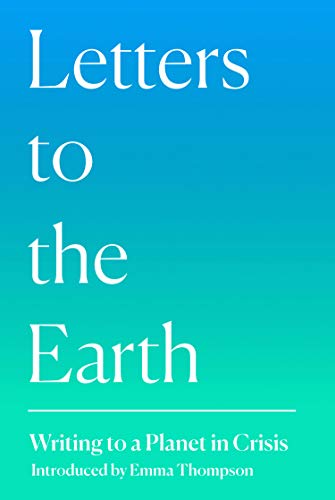
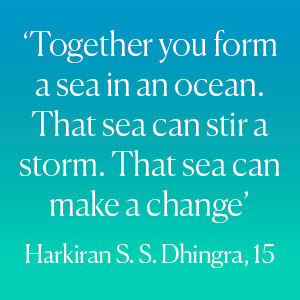
Letters to the Earth: Writing to a Planet in Crisis (Harper Collins) is a collection of one hundred essays, written in response to the growing fears of climate change, global warming and concerns about how life for every inhabitant of our beautiful planet Earth may change quickly within future years, unless strong change and transformation is undertaken by the leaders of our world.
The key elements throughout each essay are awareness, education and genuine concerns for the future of – not just this current generation existing in 2021 – but for generations to come.
Each essay is thoughtfully forged and crafted, with the intention of spreading this awareness to every reader; to open our eyes, hearts and minds to the harrowing dangers which face our world.
Many of the essays originate from people within the public eye, or those with experienced opinions concerning various aspects of destructive climate change.
Others are powerful in their simplistic expression, such as Ollie Barnes, aged twelve – someone at an age likely to experience the potential worst elements of climate change throughout his life.
To the people who think that there’s no point in trying, to the people who think that because we have done this we deserve to suffer the consequences. There’s no point in giving up! In the past we have decided to turn away from Mother Nature’s screams but not today! We will not let the earth we live on be destroyed so easily, we will try hard to save it from the very threat we created and see the world for its glory and its beauty. Don’t be the person who is standing back watching other people as they do the work. Join the fight to save our world. If you don’t then everything that we love about the world will slowly disappear.
Ollie Barnes, from his essay, ‘Everything’.
Other essays within this mind-opening publication originate from very respected, academic sources, such as Professor Stefan Rahmstorf, a German oceanographer and climatologist and also Head of Earth System Analysis at the Potsdam Institute for Climate Impact Research.
Sometimes I have this dream. I’m going for a hike and discover a remote farmhouse on fire. Children are calling for help from the upper windows. So I call the fire brigade. But they don’t come, because some mad person keeps telling them that it is a false alarm. The situation is getting more and more desperate, but I can’t convince the firemen to get going. I cannot wake up from this nightmare.
Stefan Rahmstorf, from his essay, ‘False Alarm’.
While common expressive tones throughout each of the one hundred, separate voices within this book are strongly focused upon educative awareness, it’s also noticeable that these tones are also capable of expressing understandable elements of frustration and anger beneath the surface of the words employed, such as an essay from award-winning author, Matthew Todd, entitled ‘Sorry’.
What is it they say – ‘Sorry is the hardest word’? Well, I’m sorry. I am… I’m sorry that I put my trust in the media that is more obsessed with fashion and football, and reality TV, with where the Dow Jones is, with game shows, with baking, with putting a positive spin on 71 degree heat in February with a ‘Wow, what a great opportunity for ice cream sellers’. I’m sorry that when I first heard about what was happening, I looked away…I heard someone say on the radio news, on a Monday morning, that ‘Scientists are concerned that the world is heating up due to a build-up of so-called greenhouse gases emitted by the burning of fossil fuels that may warm the earth to potentially dangerous levels,’ and I thought, That’s scary! And then they added, ‘But there is disagreement from other scientists who say, ‘There’s no need to worry, it won’t happen for hundreds of years and will most likely benefit the planet and make the UK as warm as the Costa Del Sol.’
While these expressive, creative tones are naturally concentrated upon the frustrations that so many feel about a lacklustre response from the Earth’s nations, the words that flow from each author are also written to draw us into the full nature of what is being expressed, rather than any attempt to create separation or conflict. The commonly-used phrase (especially from the lips of politicians), ‘we are all in this together’ has perhaps never been more relevant when focusing upon the current world problem of climate change.
As an observer, I found myself nodding along with every part of this book, because – in the strictest terms of common sense and logical reasoning – it’s just really difficult not to.
These series of enlightening essays are written not only from emotive, caring hearts, but from cognitive, intelligent minds.
Each essay promotes open thought, and discussion; ultimately leaving the reader with a genuine sense of wondering when the leaders of our gorgeous home planet might do to tackle contemporary issues of climate change, thus addressing the fears of so many from within a global population of over seven billion people; their children, grandchildren and beyond.
They (the young) are our best hope and listening to them always makes me feel powerful once again. Plugging into that energy will recharge even the most tired of batteries. Read this book and pass it on. Hand on your passion for the planet to the next person and never, ever give in. Convert your rage to action and your grief to love. I think the planet feels us as we do this. Perhaps it will even help us.
my dustcart a shield i grasp at happy meal boxes in an unkind wind my mother isn’t angry she’s disappointed
i cradle the bear her loving companion since childhood i ask it straight what do i do now
i walk the field where we built straw castles as children i heard recently the first of us are beginning to die
after years on the run i’ve finally caught up with myself we are both getting used to the idea
filled with the spirit she confesses on the night bus from town apart from the driver we vote she shall be forgiven
Until recently Steve Black was a road sweeper living within spitting distance of London, and is now looking for gainful employment. Published now and then.
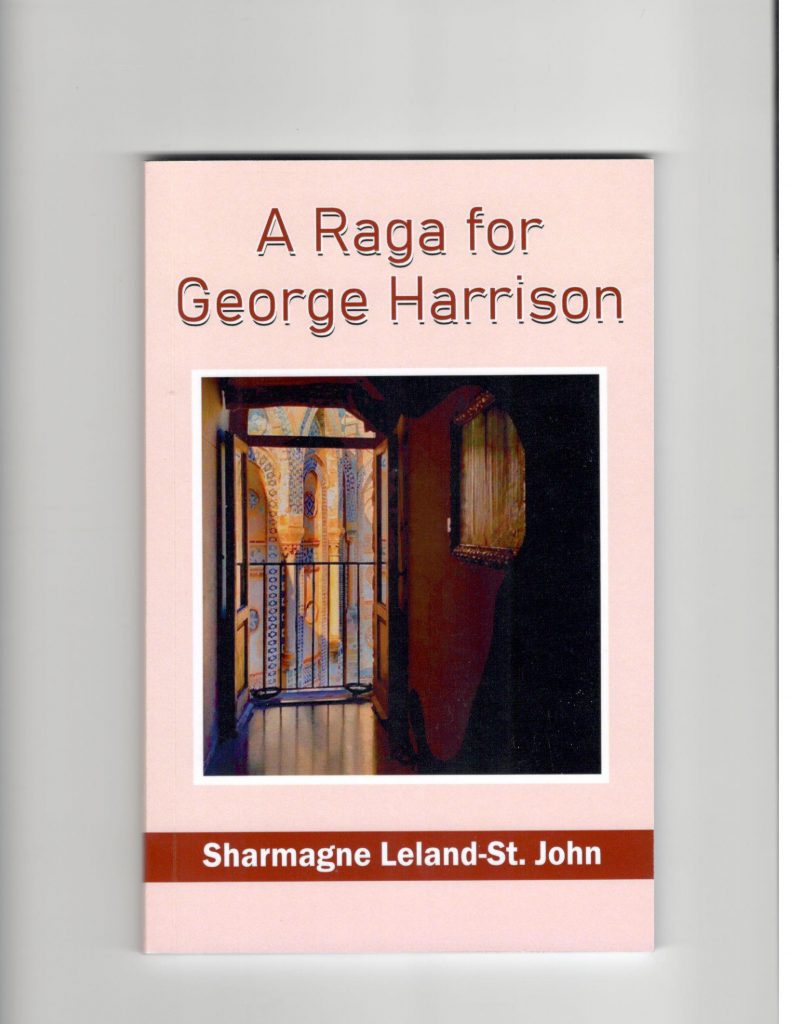
Native American author, concert performer, lyricist, artist and filmmaker, Sharmagne Leland-St. John, is the Editor-in-Chief of the 19-year old literary and cultural arts journal Quill & Parchment and the founder of fogdog poetry in Arlington, WA. Widely anthologised, her recent publications include Contingencies (2008) and La Kalima (2010). She has also edited Cradle Songs: An Anthology of Poems on Motherhood (2012) which won the 2013 International Book Award Honouring Excellence in Mainstream and Independent Publishing.
A raga is a melodic framework for improvisation akin to a melodic mode in Indian classical music. Like scales in Western music, a raga helps to define the mood for a piece of music but it does so in much more detail. Traditionally, each raga came to be associated with a particular emotion, often with a time of day and season. In A Raga for George Harrison, the season is very much autumnal because several of the poems have an elegiac atmosphere about them.
Reading these poems we take a walk through the artistic, cultural and political history of our times. In a general way this is particularly apparent in ‘Hey, It Was the Sixties!’ but in a more specific way it is apparent in the series of poems written in memory of writers, musicians and artists and individuals who were caught up in the fight for social justice. Of the former her subjects include George Harrison, the musician, singer, songwriter, and music and film producer who achieved international fame as the lead guitarist of the Beatles; model and film actress Claudia Jennings; singer-songwriter Janis Joplin; author Virginia Woolf; the poets Sylvia Plath and Allen Ginsberg and the record producer Paul Allen Rothchild. Of the latter, her subjects are the poet activist Garcia Lorca who spoke out against the brutal regime of the Spanish dictator Francisco Franco; Hector Pieterson, the South African schoolboy who was shot and killed during the Soweto uprising when police opened fire on students protesting about the enforcement of teaching in Afrikaans and Anna Mae Pictou-Aquash, a Native-American activist who was murdered in 1975.
Delving beneath the surface, many of these poems have connections. Both Janis Joplin and Claudia Jennings struggled valiantly with their addictions and died tragically at a young age. Paul Allen Rothchild produced Janis Joplin’s final album, ‘Pearl’. Sylvia Plath and Virginia Woolf took their own lives. Hector Pieterson and Anna Mae-Pictou-Aquash were young people who were caught up in the fight for social justice and also died at a tragically young age. For Leland-St. John, there is an emotional connection as well. She knew some of these people personally and all of them, in one way or another, left an impression upon her as they have on us. Collectively, they defined the age in which they lived and died.
Here are the opening lines to ‘Pearl’, Leland-St. John’s eulogy to Janis Joplin:
They came to mourn They came to cry They came to wonder How someone so young Could ever die
Several of the poems in this collection are enhanced by Leland-St. John’s use of exotic language. In ‘La Kalima’ she writes of ‘silk saris whispering raginis / pitched to sultry winds’ and in ‘Daughter’ of ‘bushel baskets / brimming with love’ and ‘pots of kohl / and pomegranates,/ towers of silk and / lumps of myrrh.’ The collection in itself amounts to a travelogue of exotic places taking in countries as far apart as Switzerland, Japan, India, Egypt and Peru.
Colour comes as no surprise, given Leland-St. John’s deep engagement with ekphrastic poetry and appreciation of art in general. The poems in this collection are dotted with ‘blue fire escapes,’ ‘ochre meadows,’ ‘apricot blossoms,’ and nasturtiums that are ‘the muted colour of Devonshire cream’.
Culinary delights come to the fore in a number of poems as Leland-St. John draws together all the senses into a heady cocktail of delight. In ‘Nasturtiums’ she writes:
I always used to cook with flowers when my life was simpler and my thumb greener. Squash blossoms dipped in a rich cornmeal batter were a staple at my dinner table.
Ever since I was a small child I have been attracted by the vivid colours of nasturtium flowers growing in kitchen gardens and have always thought it amazing that beauty as bold as this should thrive so well in poor soil. This is why Leland-St John’s poem ‘Nasturtiums’ has such a special resonance for me. I like the way she describes this ‘Indian cress….with their asymmetrical / celadon leaves’ and how their flowers ‘tantalise, tease / with their piquant promise’.
Time and again, Leland-St. John reminds us of the potency of all the senses in evoking memory and uses this to great effect as the starting point for several of her poems.
Variety is key to this collection. In addition to the eulogies that open this volume, Leland St-John writes lyrically on subjects such as love and loss, and also with considerable humour in the sensually charged ‘I Said Coffee’ and ‘Things I’ll Do Now That He’s Gone’ which is a poem that finds strength out of heartbreak for a lost love through the medium of humour:
I’ll have an affair with Bob Dylan I’ll lose 10 more pounds and become famous for something truly inane It could happen you know
Reading these poems has made me very conscious of the way in which Leland-St. John captures the emotional mood of each piece early on and proceeds to build upon it in the body of her text. This is particularly apparent in ‘There Were Dry Red Days,’ ‘Daughter’ and ‘Michael,’ a poem written for the producer Michael Butler who brought ‘Hair’ from the Shakespeare Free Theatre to Broadway. Lost love is recalled in ‘All He’s Left Me’ and the poignant poem ‘Tiny Warrior’ speaks of the loss of her infant son, Nikolai, ‘Who never saw the spring’. Later in the book, spring returns in ‘Apple Blossoms’ where Leland St-John evokes a wonderful sense of innocence conveyed through the employment of short lines and a simple rhyme scheme.
Part of the appeal of these accessible poems is that they come straight from the heart with an emotional pull that is strong enough to engage the reader without being mawkish or in the least bit sentimental. The conversational tone makes for a dialogue that is both compassionate and compelling. It is also very positive in its affirmation of life: ‘World I love you! Life I love you!’
Sharmagne Leland-St. John: A Raga for George Harrison, Cyberwit.net (Allahabad, India), Thompson Press India Limited. 2020. Available via Amazon.
You can find more of Neil’s work, including his own poetry, and reviews, here on Ink Pantry.
Neil Leadbeater is an author, essayist, poet and critic living in Edinburgh, Scotland. His short stories, articles and poems have been published widely in anthologies and journals both at home and abroad. His publications include Librettos for the Black Madonna (White Adder Press, Scotland, 2011); The Worcester Fragments (Original Plus Press, England, 2013); The Loveliest Vein of Our Lives (Poetry Space, England, 2014), Sleeve Notes (Editura Pim, Iaşi, Romania, 2016) Finding the River Horse (Littoral Press, 2017) and Penn Fields (Littoral Press, 2019). His work has been translated into several languages including Dutch, French, Romanian, Spanish and Swedish.
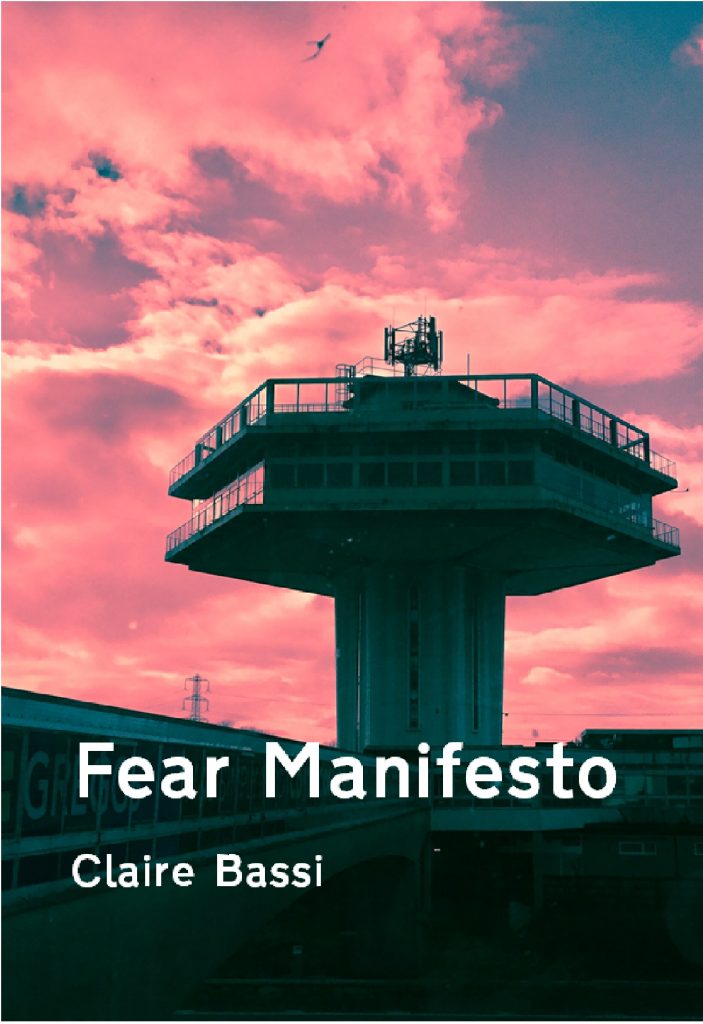
Claire Bassi’s Fear Manifesto is a lockdown project that she did with her daughter Avarni. Claire’s flash fiction and Avarni’s photography are the perfect combination. The themes are hauntology and memoir.
Snippets of Claire’s first book, Park Symposium, is also available from Amazon.
Check out more of Claire’s work here on Ink Pantry.
after Christmas I re-wrap separately depending on their rank angels humans and beasts
Jesus and his earthly parents are first to be accorded tissue paper privacy
the King who comes bearing gold has lost his crown after years of journeying and annual storage
ox and donkey fit together knee to knee in a corner of the box
lastly a sheep that seems to have strayed into the mix from a childhood farm set
Close quarters
in summer the boards under the house are dry and reverberate when trodden on
birds treat the veranda as theirs hopping and pecking at leavings under the outdoor table
we wait all year for this bearing the winter like a bye-child spring like fresh news
then the heat on the planet that never quite suits us our ancestors left for us to resolve
January break
the barber from India spends his days razoring the edges of beards of large men in the provincial centre
this is the first I’ve heard about the subcontinental diet and its spices affording staunch resistance to coronavirus
from the park across the street the fountain sings and gulls disagree concerning entitlement to takeaway scraps
nearly everything in town commemorates somebody even the ambulances parked regularly at lunchtime outside hot bread shops
single rooms to rent up a staircase no longer there off the laneway between two main thoroughfares
the man in the bookshop advises me to hang on to change for the meter though I’m on foot
in the heat the council-commissioned murals slide down buildings to pool colourfully on the ground
Emissary
mail comes late and is sparse
requests for payment real estate flyers
only the occasional much creased
and redirected envelope from the frontier
one containing dead leaves
another crushed parts of a praying mantis
the kind of messages composed in the
kind of script a ghost might send
Tony Beyer’s print titles include Anchor Stone, a finalist in the poetry category of the 2018 New Zealand Book Awards, and Friday Prayers (2019), both from Cold Hub Press. Recent poems have appeared in Hamilton Stone Review, Molly Bloom, Mudlark, Otoliths and elsewhere.