I aim a spray of bleach. the bathroom smells strongly of swimming pools.
expecting visitors, I touch my mask, and scrub the toilet spotless.
an attendant, tired and early morning, long on a hot summer’s day.
One shouldn’t fit
on a bus, and seeing the mind inside each of these people. a lady who smells. a man with a book. a kid looking somewhat uncomfortable. the cone of thought backward, expanding all colours and size – infinite large in shape and not knowing collision. thought in there. there’s so much person in everyone’s head that one shouldn’t fit on a bus. like going to a tent in wexford, in growing season. seeing how sunlight makes strawberries.
The overly personal poems
flying our interest like flags at a football match.
animals hidden amongst other animals;
robins in gardens fighting christmas decorations.
camouflage – the rage and futility of display.
Fear of losing
what you’ve managed to get. or reducing your income. or only maintaining it.
fear that the job will be different next year. fear that it won’t be.
that my girl- friend won’t marry me. that she will. that she will
sometimes. all these thoughts driving nails in the soles of my feet. I sit at a table
outside a cafe eating a fried breakfast sandwich. traffic honks,
snarls and sends smoke through my mouth and they finger my collar.
it’s saturday. the weekend a scramble. the weekdays some eggshell which got in the pan. a truck
could be sideswiped, could come off the road.
I wouldn’t get out
of the way.
The train goes thwacking
grown tired of my novel, I stretch, scratch my legs. everyone here is sat down; sleeping or freezing in snowdrifts of quiet conversation.
it’s late. outside the train goes thwacking like a galloping animal over countryside.
in here we’re all sealed in.
it’s very quiet. steel tore the ground like a tight pair of shoes and left it red and wounded and we run across it together in silence ignoring each other.
DS Maolalai is a graduate of English Literature from Trinity College in Dublin and recently returned there after four years abroad in the UK and Canada. He has been writing poetry and short fiction for the past five or six years with some success. His writing has appeared in 4’33’, Strange Bounce and Bong is Bard, Down in the Dirt Magazine, Out of Ours, The Eunoia Review, Kerouac’s Dog, More Said Than Done, Star Tips, Myths Magazine, Ariadne’s Thread, The Belleville Park Pages, Killing the Angel and Unrorean Broadsheet, and has been twice nominated for the Pushcart Prize. His work is published in two collections; Love is Breaking Plates in the Garden ((Encircle Press, 2016)) and Sad Havoc Among the Birds(Turas Press, 2019).
You can find more of DS’s work here on Ink Pantry.
In the aroma of Madeira in a glass and the incense of tallow she finds her muse in the day’s snug sunshine, painting the birth of a wren by hand, her heart trembling, coming alive, she’s not too far away from the white blossoms of dogwood trees, and she calls her craft the art of seeing, examining the world around her like an artist with a keen eye capturing animal life like she did the blackbird in flight, wings all aflutter eclipsing the sun, the oak and eagle as her witness. Everyday her life is opened up and with the fine strokes of her paintbrush she sparks a red flower to dance brightly, illumines the tiny movements of a butterfly climbing the window glass, sunlight glowing in its wings
Memory of Hope
Raindrops danced on the red brick terrace and rippled the surface of the cerulean birdbath, my world never silent as I listen to the rhythmic tap of rain on my window, on the patio table; the memory of hope I thought I may never know again, a soft-born light I wished would revise itself inside of me, nudge its synergy with the god in heaven to make me want to live again, a potent reminder that without hope it’s too easy to give up and die. My spirit shyly opened when autumn’s shower outside slowly came to an end, leaving behind a luminous rainbow aura on my bedroom wall.
Eyes of the Painter
Elation swirls inside his heart come the half rising dawn when he undoes his tangled layers of thought and lets the life all around him spill from the tip of his paintbrush onto the canvas, a garden brimful of visual delights living inside him in the rains of November, driven by his visions and the taste of tea leaves on his tongue; every arc of colour, every exquisite detail pure as the beauty of an early snow. In his eyes he steals from a childhood memory, the plumb feathers of a peacock; and a quiet healing in the inner layers of his heart calm him while he is alone for hours, the sound of a symphony on his stereo drifting in from the music room. One day he finds himself growing blind and when his eyesight is gone he longs to paint what he sees in his dreams.
Bobbi Sinha-Morey‘s poetry has appeared in a wide variety of places such as Plainsongs, Pirene’s Fountain, The Wayfarer, Helix Magazine, Miller’s Pond, The Tau, Vita Brevis, Cascadia Rising Review, Old Red Kimono, and Woods Reader. Her books of poetry are available at Amazon and her work has been nominated for Best of the Net Anthology in 2015, 2018, and 2020, as well as having been nominated for The Pushcart Prize in 2020.
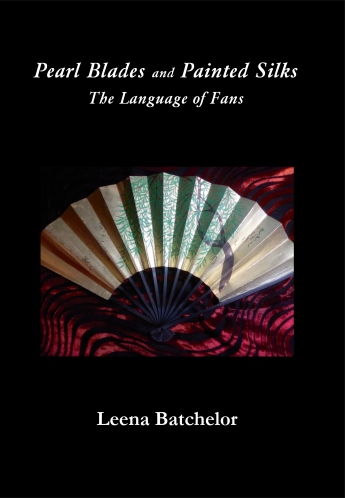
Prior to writing this review I was listening to a recording of Elgar’s ballet ‘The Sanguine Fan’. Written in 1917 for the benefit of wartime charities, the name derives from the fact that the theme of the piece was inspired by a scene depicting Pan and Echo that a local artist had drawn in sanguine on a fan. There are three things in common between this ‘coincidence’ and the book I am reviewing here: the connection with Worcester, the birth of an artistic creation inspired through the medium of a fan and the fact that the proceeds were to go to a wartime charity.
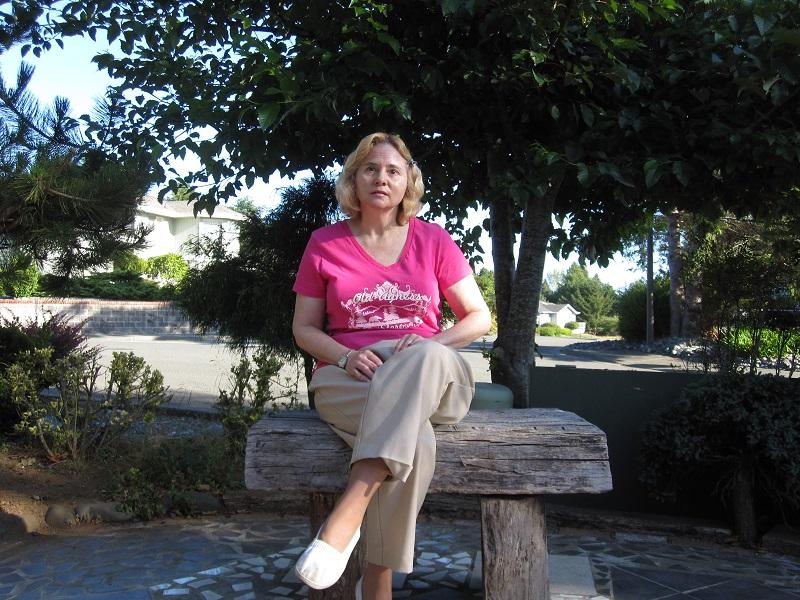
Leena Batchelor is a Worcester-based poet and spoken word artist, Worcestershire Poet Laureate 2020-21 and Poet-in-Residence for The Commandery, a museum dedicated to the Civil Wars. She is the author of three previous solo collections and uses poetry as a medium to raise funds for various charities, including mental health and the armed forces.
The first thing to say about this book is that it is far more than a collection of poetry. Batchelor, who has a particular interest in fans, has researched her topic assiduously. This has involved visiting specialist museums, consulting the Guild of Fan Makers and reading widely around her subject. The result is a fascinating combination of factual history and inspired poetry which is complemented by many beautifully reproduced colour photographs of fans and a useful glossary of fan types.
The collection begins with this quote from Madam de Staël (1766-1817):
“What grace does not a fan place at a woman’s disposal if she only knows how to use it properly! It waves, it flutters, it closes, it expands, it is raised or lowered according to circumstances. Oh! I will wager that in all the paraphernalia of the loveliest and best-dressed women in the world, there is no ornament with which she can produce so great an effect.”
In this collection, Batchelor is quick to point out that throughout history fans have not only been used as a means to send signals, express preferences or emotions, but also as liturgical objects for the depiction of hand-painted biblical allegories, as modesty screens used by both sexes in Roman baths, and as a feature found in heraldry. More surprisingly, they have also been incorporated into a form of T’ai Chi, been utilised for the setting down of a secret language called Nushu which was known only to women and as accessories that determined one’s rank in a French court.
The collection is divided into two parts; the first presents fans across ages and continents which is interspersed with some of Batchelor’s personal memories of dressing up amid her grandmother’s collection of fans, silk Chinese dresses and lace Victorian outfits, and the second presents the stories of the 1860s lady from debutante to dowager through the language of her fans.
The Chinese and Japanese were among the first innovators of fan use and the most common fan in early China was the screen fan used by modest girls when out in society. Batchelor reflects upon this in her poem ‘By Parchment Veiled’:
I wish to hide, My visage is not one for you to look upon, I am not free. I offer you a painted scene, For maiden modesty, An embroidered reflection of my story – The fishing heron awaiting its catch, Beautiful ribbons of water beneath webbed feet.
I wish to hide, My visage is one for you to wait upon.
The image of the heron makes it clear that a fan in a woman’s hand was not exactly a passive accessory.
In ‘Allegorical’ Batchelor’s lines bring together both God and Mammon:
According to the scripture, parables in pearl, painted upon sheaves of vellum, holy writ was learned. According to the market place, parables of games, printed en masse for the mass of material gain. Crying of churches losing ground, how to spread the word? Crying of factories, how much have they earned?
I could not help but notice the judicious placing of this poem between ‘A Pauper’s Offering’ and ‘Dancer’ which inhabit two extreme ends of the spectrum between material poverty on the one hand, and riches on the other.
Flirtatious uses of the fan are summed up succinctly in ‘Elocution and Flirtation’:
The lover becomes a reed in the hands of the one who uses her fan with skill, Pliable and playing her tune, But only when playing society’s rules.
In the second part of the book, which is set in the second half of the 19th century, Batchelor’s “1860s lady” experiences her debutante ball in a poem entitled ‘White Rain’:
The start of the ball, my debutante night, presented to the queen in state. Spied from the stairs, the ladies of the dance trilling, bidding their wares for a dance’s calling card. Showers of pearl and lace float upon clouds of tulle, debutante and dandy guess at meaning, hesitation and trepidation in society’s marriage market hall. The wary captured in pearled starlight as a confetti of fans shower hope and fear across the dance floor.
Far from the innocence suggested by the word ‘white’ in the title, this astute lady seems to be well enough aware of what is going on around her even though she knows she would be experiencing butterflies ‘if it weren’t for the stomacher laced tight.’
Stylistically, the 29 poems / prose poems that make up this collection display as much variety as the fans themselves. One of them incorporates visual elements while others make occasional use of internal or end rhymes and most of them make use of very varied line lengths.
Whether writing about Samurai warriors, a cabaret at the Moulin Rouge, or a Victorian drawing room, Batchelor’s wide-ranging take on the subject is sure to impress fan collectors, poetry lovers and those with an interest in the history of costume accessories everywhere.
Neil Leadbeateris an author, essayist, poet and critic living in Edinburgh, Scotland. His short stories, articles and poems have been published widely in anthologies and journals both at home and abroad. His publications include Librettos for the Black Madonna (White Adder Press, Scotland, 2011); The Worcester Fragments (Original Plus Press, England, 2013); The Loveliest Vein of Our Lives (Poetry Space, England, 2014), Sleeve Notes (Editura Pim, Iaşi, Romania, 2016) Finding the River Horse (Littoral Press, 2017) and Penn Fields (Littoral Press, 2019). His work has been translated into several languages including Dutch, French, Romanian, Spanish and Swedish.
You can find more of Neil Leadbeater’s reviews, interviews, and his own poetry here on Ink Pantry.
“Get out!” The Scholl clog belts the shut bedroom door, its vibration whacks my back.
“I know you’re there, you…you retard, give them back now or I’ll cave your fat head in.”
I suck hard on the sweet, it fizzes on my tongue. I slurp in a deep breath, flick down the door handle and shove open the door. Dangle the red and white packet of Spangles clasped between my thumb and fingers, through the unguarded space, like a flag of surrender.
“Hey Sis, this what you’re looking for?”
I withdraw my arm sharpish and slam the door shut. The second clog bounces off the door, swiftly followed by the door being flung open. Bud catapults herself out the bedroom, clutches my shoulders her swiftness knocks me to the floor. She plops on top of me.
“What’ve I told you about touching my stuff.”
She’s got me in a Big Daddy hold on the narrow landing. I’m flat on my back, her knees squeeze into my ribs, the wind is squashed from my lungs. Her body weight is diverted down her arms to hands that pin my wrists above my head, flat to the golden square-ridged carpet. The force of Bud’s body pressing on me has lodged the Spangle in my throat. The packet of Spangles, my fingers tighten like a vice around them as the sweet ambushes my air.
“Give them back, you bitch.”
My eyes shout HELP. Her eyes scream I HATE YOU. The Spangle red flashes and then black.
“Told you I’d make you give them back.”
The pressure pops off. I’m discombobulated, rolled on my side coughing, in the centre of a golden square a half-sucked Spangle. I stare at the sweet, let it come into focus, the bedroom door clicks. I stretch my arm out, crawl my hand across the contours of the carpet like a crab on Southport beach. I grab the Spangle, a brief fluff check, not enough to put me off. I sit up, press my back against the bedroom door and put the sweet back in my mouth. Enjoy its sharpness as the gravity of what’s happened smacks me in my face. I keep perfectly still for what seems like ages before I go to our swing at the bottom of the garden.
Bud is my twin sister, younger by twenty minutes. When we were born she was so tiny the midwife wanted to send her to the hospital. All the incubators were full of other small babies. My dad had an old heat lamp for chicks. Dad and Mum are in shock they’re expecting one baby, me. So, when my mum thinks it’s over and the final push is for the placenta, it’s an almighty surprise when the placenta has a head, arms, and legs.
Placing Bud in a Pedigree Chum box beneath a heat lamp seemed the right thing to do. That’s where it started, the bond between Bud and Dad. He’d check on her like she was a day-old chick. I was placed into my cot and my mum took charge of me. Mum took care of both of us when our dad was out at work. When he got in from work dad took charge of Bud. Bud got extra feeds and was put into doll’s clothes. I can’t bear witness to any of this, I know it through the stories my dad told us and the many photographs. The Pedigree Chum bed is famous and there are loads of black and white photographs of Bud beneath the heat lamp. The photograph our friends ask to see over and over again is the beer glass one. When Bud is a day-old, dad pops her inside his pint glass. I often laughed to myself as dad took our photographs. Each photograph would take ages and ages as he held the light meter. Our faces ached with smiling for so long. I often wonder how long Bud was in that beer glass. The thing is, she survived none the worse and we became two, until we weren’t.
The Spangles episode is the latest and nastiest of loads of scraps, between us recently, has got me thinking. It used to bug me, Dad and Bud. Like the time a year ago, Nan Goodall had put money in our thirteenth birthday cards. We’d set our hearts on having a pet tortoise each. Bud and me drew a picture of how we wanted the tortoise’s house and run to be. We knew dad would be able to build it and we’d help. What niggled me the most was this, there was one slop jacket, Bud got to wear it, an empty Swarfega tin, she got it, screws needed tightening, Bud got to use the screwdriver. I didn’t make a fuss. The tortoises have a lovely house and run. Mine is called Fred he’s narrow and small, Bud’s is Sam, he’s like a walking rock. In the winter they go in the Pedigree Chum boxes with ripped up newspaper and air holes punched in the sides. They’re lowered through the hatch beneath the coconut doormat in the kitchen. Dad says the constant temperature in the space under the floorboards stops them waking up too early and dying. I wish dad would pick me sometimes to tighten the screws or to get the empty Swarfega tin. I never battered Bud for it, because when it was her and me, well we made a good team.
We’re twins but we don’t look the same and we’re not the same. I’m big and for that reason they call me Lobby and my hair is straight and blonde, Bud is small and has wavy mousy hair. Mum says Bud is determined. I remember when we were small and getting on mum’s nerves, mum went to rattle the back of Bud’s legs. She told mum, “You can smack me, I won’t cry.” I couldn’t do that. I felt safe with her. We shared our toys and we made friends together, so apart from Dad thinking more of Bud than me, being a twin was great. We were best friends and now we’re not.
The swing I’m sat on thinking about all this, Dad made from railway sleepers and the seat once had a rope in the centre so both me and Bud could sit side by side. That rope is gone. I sit and swing back and too. I half expect Bud to come bombing down the crazy paved path waving her precious tin above her head, accusing me of stealing whatever. She doesn’t appear.
The tin sits on the windowsill in our bedroom, above her bed. My bed is against the wall, Bud’s is in the best spot the furthest from the door, she’s got a bedside table and the windowsill for all her stuff. I have a bedside table. We share the wardrobe and drawers, we don’t share a bed anymore. She puts the things she doesn’t want me to see in her tin. The Spangles were in the tin. I saw her hide them, two days before she flattened me on the landing. I took my chance to pinch them during the night when she got up for a wee. I managed to find the tin in the dark, flip off the lid, got my hand stuck for a sweaty-few-seconds, heard the toilet flush, prised my hand free of Spangles and all, lid back on and dived back into my bed. I slid the Spangles under my pillow and there they stayed until the morning. I hid them down my sock as I got dressed. It’s Saturday so I’m wearing my lime green trousers, mum says I ought to wear more dresses, like Bud. It’s the raised lid on the tin that set her off, and me making a dive for the door.
The swing makes me feel better. I’ve located some fluff on the roof of my mouth picked up from the Spangle. I spit it out. I lean forward while my legs scoop the air to swing higher and then I’m still. I’ve hooked my arms around the ropes so I don’t fall. I close my eyes, I don’t know why ‘cos I’m not tired, I’ve only been up an hour. My brain plays a trick on me. It’s not this Saturday, it’s the one two weeks after we get the tortoises. We’re out on our newspaper rounds. It’s my first morning, the bag’s heavy. I can’t read Mr Tootle’s neat handwriting on the tops of the papers of the addresses. I can’t even read the words on the road signs. I don’t know what to do. I get off my bike and sit on a garden wall.
I’m not sure how long I sit there but my bum’s numb and cold. I couldn’t move cos I’m scared until I notice whose wall I’m sat on. It’s Janet Dixon’s gran’s. I lug the bag strap over my head onto my shoulder, get on my bike and start to peddle in the direction of the newsagents.
I’m going to tell Mr Tootle I can’t read properly. I approach the playground where me and Bud loved to play, it’s too early for playtime. I pull on the breaks and rest one foot on the pavement. The roundabout turns slowly. I don’t see anything at first. As the roundabout creaks round two bodies, one on top of the other, come into view. My heart’s going like the clappers. I can’t move, I gawk at the legs that come into view. Flesh-stockinged legs relax beneath his blue jeans. I puff out a load of air, it’s not a murderer after all. It’s teenagers. I feel sick. I recognise those shoes, and the bike up against the slide. I head across the playing field instead of taking the short cut over the playground.
On my way out the shop, I spot dad’s car pulling out of the carpark opposite the playground. Dad didn’t see me, he looked troubled. Turns out Mr Tootle isn’t as nasty as Bud said. He’s going to have a think what job I can do. I meet up with Bud at the top of our road.
“You finished quick for your first time, took me ages to find my way when I started.”
I look at her legs, they’ve got knee length socks on, maybe another girl has the same shoes and bike. Must be that. I don’t mention the incident on the roundabout or seeing dad. As we cycle side by side I’m bursting to tell her about Mr Tootle. When she finally notices I’ve not got my newspaper bag I tell her the whole story about my reading. She stops, turns to me and tells me I was brave telling Mr Tootle. That’s the last time she’s nice to me. As we’re pushing our bikes into the garage something drops from her coat pocket. She’s not noticed so I pick it up, a silk stocking dangles in front of my face. I stand stock still, the thought of the roundabout spinning in my head. I watch Bud as she rests her bike against mine. She turns around, my face must’ve told her what I’m thinking.
“What? What’s up with you?”
“I saw…” she spots her stocking lurches at me, snatches it, “Keep quiet.”
The swing’s stopped. I open my eyes. Later, that Saturday after the roundabout incident, Bud came storming into the bedroom, bounced face down onto her bed screaming. She lifted up her head and turned her blotchy face to me. “Snitch.” I didn’t explain.
I squeeze my eyes shut and make a wish. The swing wobbles as she shuffles in next to me. A Spangle is pressed into my palm.
Sally Shaw has an MA Creative Writing from the University of Leicester. She writes short stories and poetry and is working on her novel set in 1950s Liverpool. She is inspired by Sandra Cisneros, Deborah Morgan and Liz Berry. Published online by NEWMAG, Ink Pantry and AnotherNorth. She writes book reviews for Sabotage Reviews and Everybody’s Reviewing.
You can find more of Sally‘s work here on Ink Pantry.
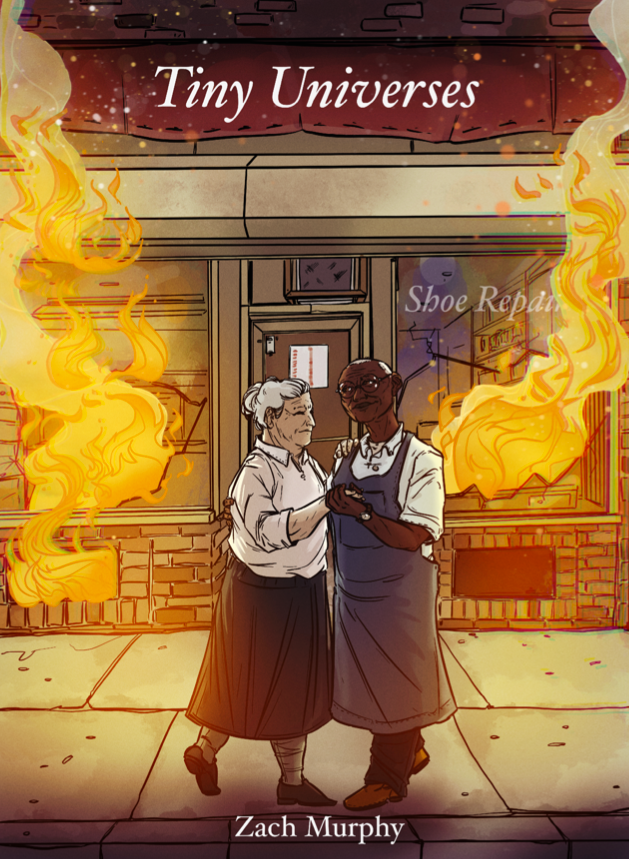
I’ve always been intrigued by flash fiction. Short, micro pieces of writing which cleverly tell impactful stories often leaving you thinking about a bigger picture. Tiny Universes by Zach Murphy (published by Selcouth Station) does exactly this. It’s a wonderful collection, the style is poetic, the language beautiful yet direct. This collection definitely leaves the reader wanting more. Each story, as the title suggests, gives the reader a glimpse into a different life or world.
I get the impression that Murphy takes notice of everything, and inspiration must come from almost everything he encounters in his daily life. One of the joys about a varied collection like this is that every time you read it something different will jump out at you or make you think about something in a way you may not have considered before.
There were a number of pieces in this collection which jumped out at me, and looking back they all seem to encompass a strong sense of place or incident, with themes of hope and survival running through.
The collection opens with ‘Before My Very Brown Eyes’, a piece about identity and self-acceptance. It’s a positive piece, which left me encouraged to read more.
‘A Fair Amount of Ghosts’ is beautifully atmospheric and full of soul. I couldn’t decide if Murphy was telling us a ghost story or recalling memories. Either way, it conjured up a vivid picture in my mind. The description of the house and the lines, It isn’t a place to live in. It’s a place to dwell in, tells you all you need to know.
Demonstrating how impactful flash fiction can be, in just 29 words, ‘Ceilings’ left me with more questions than answers. A clever piece of writing.
I think my favourite piece in the collection is ‘The Garden’, told from the viewpoint you don’t often hear. It may be a short piece of writing, but it tells us such a bigger and important story. A bee in distress feeling the impact of environment change. Truly powerful.
I’m new to reading flash fiction. Murphy’s work is often micro short and punchy, others like ‘In Rotation’, are a bit longer. Each one made me think. Each one has it’s own story, and I liked that. Some I wanted more of. Some left me with questions, but maybe that’s the point.
My book cases are filled with poetry collections and novels. After reading Tiny Universes I would definitely consider making room on the shelves for flash fiction. I recommend you start your flash fiction journey with Tiny Universes by Zach Murphy.
I remain ever hopeful. Just looking for a sign that’s all. Doesn’t have to be a booming voice. Or a bright light through the window. It’s not as if disappointment overdoes the atmosphere. No deep bass notes on the piano, no owls at the window or grim reaper at the door. The failures happen at such ordinary times in such ordinary ways. The flat beer. The lousy gift. The smile that drifts over my right shoulder to the guy behind. So let the better times begin in as commonplace a way as a pool ball sunk off a carom, getting the last outside table at a restaurant on a beautiful summer’s day. The rain’s been used so many times as cliché for the down times, I’d even hoist my sail to its sudden stopping. Like I said before, I don’t need a miracle The keys just need to be where I left them. And maybe the copy machine doesn’t break down. Such are the vagaries of the common man. The horror story that’s really a fairy tale. The wish list that makes its excuses.
Ode to the Gun
The gun sits on the dressing table beside the unmade bed in a ramshackle motel room off the interstate.
It’s cold as death, glints away whatever sunshine dares to come its way.
Without a shot fired, it toughens one guy and trembles another enough to make his knees knock together.
On a dressing table, cold as death, without a shot fired, try telling that gun, it doesn’t kill people.
The True Nature of a Healthy Stroll
A hill shaped like a skull, a lopsided house for a family tilted the other way, a waddling woman with cavernous eye sockets… and that’s just the first block.
A faceless man, an Indian fakir, a klezmer band playing “My Way” in Yiddish… it’s not easy to cross a road around here.
How can I get where I’m going when an albino armadillo crosses my path, it’s raining Rolexes and the fire station’s aflame?
Meanwhile, the pavement’s as green as my stomach, my umbrella won’t open, the zipper of my pants cuts like razor blades and I still have another hundred yards or so to go.
I never make it. The odds are not in my favour. Across the grocery store parking lot, a plastic bag rolls like tumbleweed. A grosbeak alights on a grey wire fence.
Eyeballing the New Estate
Trees line just about everything. Even the trees are lined with trees. This is not foliage left unharmed by the bulldozers. The greenery is imported.
The houses have names like Gardenview or Hilltop. They’re places in a dream town. A windless sunny parody of the way we live. They front a lake studded with swans.
We’re driving on just-paved roads in a new estate that used to be forest. Those with money can’t wait to put down a deposit, to get away from the likes of us.
Once this neighbourhood’s fully occupied we will not be invited back. My mother sighs. But without malice. She’s long since learned to accept her own highway exit.
Goodnight Dear
Typical night of sleeping by subtraction, because the people running are not us, and nor are we the chasers.
Same with the gunshots. We didn’t fire the revolvers. And they weren’t aimed in our direction.
So our neighbours scream. We don’t. They even thump each other from time to time. But only noise spills over into our sanctuary. Not fists.
Those growling dogs can’t bite us. The yowling black cat may upturn a trash can lid but not our good fortune by strolling across our path.
We’re free and clear of our surrounds. The huddled homeless woman doesn’t share our bed. Nor does the sex offender in the room above.
Bad things happen to other people. That’s why we have it so good.
John Grey is an Australian poet, US resident, recently published in Orbis, Dalhousie Review and the Round Table. Latest books, Leaves On Pages and Memory Outside The Head are available through Amazon.
You can find more of John’s work here on Ink Pantry.
Ink Pantry Editor: ‘Hey, I have a new book here that focuses upon female voices and…’
Me: ‘Hmmmm, I’m not sure that’s quite me. Who wrote it?’
Ed: Emily Bullock.
Me: ‘OMG, send it over, tout de suite!!!’
I’ve been so very fortunate to review Emily’s first two novels (The Longest Fight – 2015 – and Inside the Beautiful Inside – 2020 -) for Ink Pantry and both have astounded me with their elite levels of literary va-va voom. Yes, okay…I’m sure that Samuel Johnson or Noah Webster would find more suitable flowing vocabulary, but when it comes to the writing of Emily Bullock I’ll gladly stick with va-va voom. If you’ve not yet had the pleasure of encountering Emily’s novels then I would urge you to seek them out and you’ll understand.
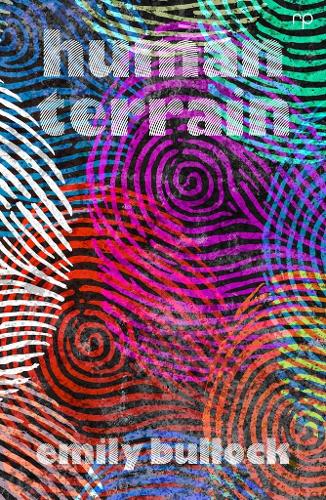
So, what’s the new book about? Well, Human Terrain is a collection of short stories that focus upon the lives and energies of various female individuals, allowing us to observe a small part of their life story, especially when it pertains to emotional bonds of love and loss. In total, we have twenty mini biographies, some lasting less than a page or two, while others stretch deeper and cover a lot of ground. Within this book we meet women who demonstrate strength of character, such as someone known only as ‘Pig Lady’; a woman who delivers food to a chip shop. At other times, the stories are all shades of sad, illuminating, poignant and powerful, such as ‘Back Issues’, where the main character is male and his wife, Barbara, is mentioned only in name, yet the loss of her influence within his life becomes a dominant factor as he slips helplessly into dementia.
Every snapshot within this amazing book is written with a perfect balance of tone, colour and detail, as if Emily is slowly composing an oil painting in deep layers, based on scattered pencil drawing plans and sketches, before the paintbrush even dares to touch the canvas. The characters range in age, from teenagers playing hooky from a London school trip to buy weed in Hyde Park, to Ivy, an elderly widow reflecting back upon her life as it draws to a close. From the opening sentence of Ivy’s tale, we are immediately gripped by her dilemma and can begin to easily visualise the elderly lady and her surroundings.
‘Ivy, who was now two years a widow, lay alone in bed. She gripped the front of her nightshirt; her skin thin and creased as the cotton. Maybe this would be the day. She’d waited long enough’.
Covering such a wide range of human emotions across twenty snapshot glimpses into people’s lives comes with obvious risks. How easy it would be to fall heavily into emotional torment and harrowing tales. Alternatively, to build too many bricks of humour into a fragile, emotional wall of observation, as we look on from a distance. Thankfully, Emily’s writing skills are blissfully adept and it’s clear that her understanding of human behaviour is likely forged from countless hours of similar observations. Yes, some of the tales are sad/poignant, yet at no point do they ever fail to reflect the grey shades of real life. Sometimes, there is no Hollywood, Walt Disney ending, accompanied by Dick Van Dyke in a blazer and singing/dancing penguins. Sometimes, life just plays out its scenarios and we have little choice but to play along with it. How we react, or adapt, is the key. Sure, many of Emily’s carefully constructed characters have lives and issues that we would choose not to adopt. Not one of them ever comes remotely close to being two-dimensional or dull. Spread over twenty separate stories, that’s quite a literary feat in itself.
From the book’s outset, we know we’re in for a journey, as we take a cursory peek into the life of two women; a daughter who boxes for a living, and her mother who is there for her in between rounds of fights, to patch up her daughter’s wounds.
‘My job is to stop the blood, cool her off, wash her down. Who knows her better than her mum? I rub the yellow carwash sponge across her head, smooth my fingers over the braids, sweeping away water with the back of my hand’.
Powerful writing, yet beautifully balanced and honed, like a knight’s favourite longsword, this is an outstanding book and well worth reading from cover to cover. One is eagerly awaiting Emily’s fourth novel.
Longing for the good old days even knowing you can never go back.
As the months and years have rolled by since I’ve retired I’ve lost touch with most of my old coworkers. It’s the nature of the beast I tell myself the natural order of things as you have less and less to do with someone less and less in common, you lose touch it’s simply the way it is, it’s normal. Lisa’s wealthy now, goes biking through the back roads of Tuscany and Scotland, what would I have to say to her, or to Craig who is younger than me, visiting colleges with his son?
Diorama
But I’m not done living! he shouted at the gods shaking his fist.
Strange to think that I’ve lived twice as long as my father lived. He died as a young man. But as my father no matter how much older than him I live to be he’ll always be older than me because time itself at his death is forever frozen unable to move forward. So he’s 36 and I’m stuck at 15 in this timeless diorama forever.
Invisible Man
Don’t take your yourself too seriously. Without humour you’re dead in the water.
Rick was a good guy the handsomest guy I ever knew. We worked together sometimes stopping at a bar at the end of the day. Fascinating watching the ladies buzzing around him winking and waving or coming right over to say hi ignoring me completely even though I was sitting next to him. It was like I was the Invisible Man. “That happen often?” I asked him as a stunning young woman handed him her business card, touched him on the shoulder saying call me. He shrugged and smiled, such a modest guy. Yep. Rick was a good guy the handsomest guy I ever knew. Fun to be around unless of course you were hoping to find a date for yourself.
Scout and Jem
Memory’s the second thing to go you know she said with a giggle.
I remind myself that doing really well at Trivial Pursuit is not I repeat NOT proof that you are smart. But I suppose recalling so many facts pertaining to history, literature, science, sports, even entertainment is cause for feeling pride particularly when you’re a Septuagenarian supposed to have a fading memory. “But before getting too inflated and self-satisfied,” spouts the damn Devil floating in the corner, “I’d be remiss in not reminding you that you did think Victoria Falls was the tallest waterfall in the world and you did forget the nicknames of Atticus’s children in To Kill a Mockingbird, you moron.”
Give or Take
Don’t waste time worrying about what you can’t change or fix, she tells me all the time.
The fancy-pants astrophysicist with the big glasses and crazy hair explains in logical scientific detail that in 5 billion years (give or take) our Milky Way Galaxy will collide with our neighbour the so much larger Andromeda Galaxy and be torn apart. Oh no! I think and begin to worry but abruptly realize – 5 billion years, seriously! Even I can’t be that stupid to worry about something 5 billion years down the road I tell myself as I see the Devil in his corner shaking his head not having to say anything this time for a change.
You can find more of Michael’s work here on Ink Pantry.
A fluffy cat standing at the top of the wooden stairs Grey hair, black- headed sphere, Five claws on each front paws, eight on rear. Relishing the evening sea With white, long moustaches, rolling glee. She lifts her pink yogurt ears To hear- Her unblinking yellow, black- stripes, Smoky eyes, that reply To the wise, to rise, to say goodbyes.
Monobina Nath is a poetess living in Kolkata, India, and also a third year student of English honours in Brahmananda Keshab Chandra College. Poems published in the anthology Chrysanthemum, newspaper International Times, Meghalaya Times, Indian Periodical. Magazines- Evepoetry, Setu Bilingual, TechTouchTalk, Spillwords Press, Ode to a Poetess and various e-magazines. Monobina’s work was selected in the National Bilingual Poetry Competition in 2021.
the vine, it grows like autumn slumber, heroes died along the way
weakness is my fallen glowing, just like villains kept at bay
trick-or-treat the youthful sending, Pleiades owes the warmth come May
velvet houses are my queue unknowing, sway and sway the birds away
Another Dream, Another Chance
An angel fare, my modern scream—a day within a day I lost myself and found you there—within the wild fray
Hope! The return of desperate prayer—luck, anointment, haze Another dream, another chance—one more along the way
Slant Rhyme With Me
Won’t you stay and slant- rhyme with me? Sometimes—lost in omni-pain—I bleed right up the wall, then get doused in stain. Call it what you will, it’s all the same—at times I need what’s in the mud, and all you seized. What’s left in me? Maybe I just need a moment tomorrow to breathe, but not today— today is for slant rhyme. Won’t you stay and slant-rhyme with me?
Joe Albanese is a writer from South Jersey. His fiction, nonfiction, and poetry have been published in 12 countries. Joe is the author of Benevolent King, Caina, Candy Apple Red, For the Blood is the Life, Smash and Grab, and a poetry collection, Cocktails with a Dead Man.