Sunspot on her chin lost in desire Cupid torturing a lover “theft from thyself?” “who are thou?” “thou art that?” an advocate of civil war internal “you will find no quiet” transplant me somewhere safe within nocturnal wayward delirium the essence of memory with but a touch stray soulful portraits of us
Invisible Bones
They’ve made us the type of animals where screams of banal entertainment and the uselessness of bullshit jobs have burnt out our corneas by the grave of existence you shall eat the world’s due of emptiness of the final rot with the scent of musty lust and faintly perfumed laced love unlettered you’ll dig deep trenches in beauty’s field toiling through 40 winter snows looking back through a looking glass there’ll be bones piled on high invisible sunken eyes gazing into empty sockets
Give away yourself
I saw Artemis in the shower flaming palm tress I wasn’t sure what she was with a lack of hunter-prey sacred white fawn drinking from a crystalline brook funny the things we witness outside gas station bathroom nights where the divine and mystical meet at the hazardous crossroads with beings ground in time and dirty space of course I didn’t approach too many dogs scratching and bleeding sensory overload from the central aired chaos
Howl for me
The wolf is dead a line inspired by some Detroit badass graffiti the line is more fitting this time, no? not so rogue any more, or are you? tried putting me through the grinder with your wildflower hell goddess venomous mouths lack of wits drowning in cheap booze I tried to make amends you made a joke about my dead child nothing but a wild stray dog staring in dirty urine filled puddle man bites dog is nothing new crawl into a flaming dumpster where you won’t rise a phoenix multidimensional or not
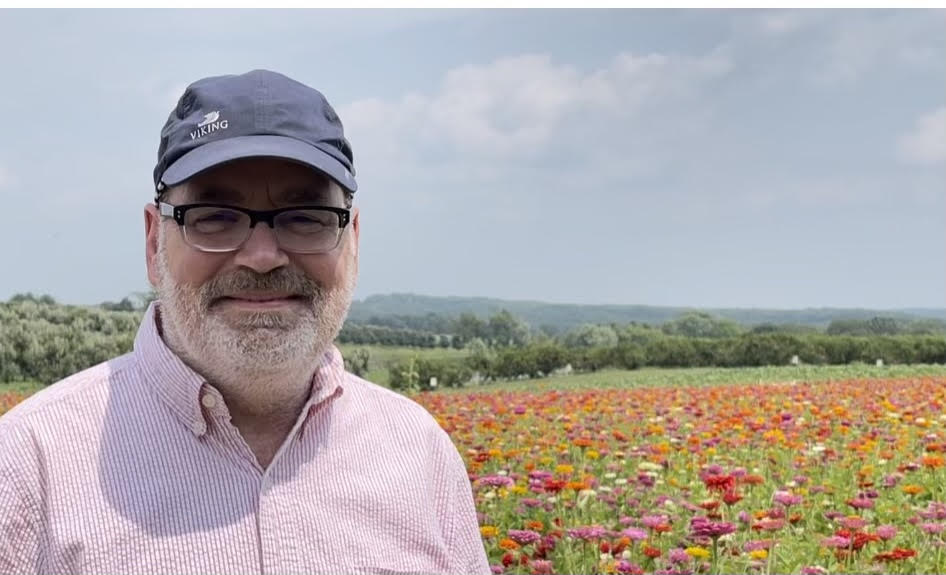
Mike Zone is the Editor in Chief of Dumpster Fire Press, the author of Shedding Dark Places (almost), One Hell of a Muse, A Farewell to Big Ideas and Void Beneath the Skin, as well as co-author of The Grind. Frequent contributor to Alien Buddha Press and Mad Swirl. His work has been featured in: Horror Sleaze Trash, Better Than Starbucks, Piker Press, Punk Noir Magazine, Synchronized Chaos, Outlaw Poetry and Cult Culture magazine.
The greatest regret of my life is to have accepted that stupid, devastating, and chaotic bet. But who could have ever thought, in their right minds, that something so bizarre could actually ever happen? We were a group of six buddies ever since school. We went to the same high school and even college, hanging out at bars, each other’s dorm rooms, and university cafeterias. College was ending; we were going to be mature adults soon, with proper jobs and responsibilities. Some of us were even engaged. Instead of easing into this new way of life, we thought that carefree, goofy, and leisurely days would soon be behind us. Something began to stir in our group, an aching desire to do reckless things, perhaps one most small adventure in stupidity, just to feel alive. It was in this spirit that the fateful bet came into existence, one evening.
We had a whole crate of beers with us at night as we went to our usual ‘adventure meeting’ spot in the city’s outskirts. It was a clearing in the woods, where we lit a bonfire and drank beer cans while sitting on our car hoods. Laughter hung in the air…but then haunting demons were soon summoned with the conversation that followed. There was a graveyard nearby, whose cemetery groundskeeper, Mr. Hudson, would often join our festivities. That night was no different; he must have seen the firelight from a distance. He was a nice old man, friendly and convivial. We all liked him and were respectful towards him. However, that night he came with a different expression than usual. He looked gaunt, and his face had a grim look. We asked him what was wrong, and he said that some wretched spirit had come to haunt his graveyard.
We secretly sniggered behind our hands. Mr. Hudson was deeply steeped in the macabre, which never surprised us, considering his job’s nature. On many an occasion, he would tell us stories about ghosts and spirits. He told us stories about how the human soul’s imprints were often left behind, usually because of deaths under unhappy circumstances. Ghosts of those murdered would weep on graves, silently murmuring their plights into the night.
You get used to it after some time. This job requires an acceptance of the afterlife. He often said.
Obviously, we never took him too seriously. We thought that living in such an eerie place and knowing so many death stories had produced in him a strong imagination for the paranormal.
That night, he told us about the new grave.
It belonged to a very evil man, he said. Ever since he had been buried, a thick mist had permanently settled over the cemetery. All kinds of nasty worms and insects were being attracted to the area, and once or twice, Mr. Hudson had come into contact with the evil spirit itself.
For the first time in twenty years, I am actually scared.
We asked him who was the deceased person.
A soul viler than any demon in hell was all he said, with an edge to his soft voice we had never heard before.
He said that he had come over to warn us to stay away from the woods at this time.
It’s no longer safe in these here parts, boys. So please, leave for your own sake! Come visit during the day; I will have the missus brew a lovely tea for you all.
We really respected him, so we agreed to go away and bid him a good night. I wonder how different things would have turned out, how much psychological suffering and trauma could have been avoided if we had done just as Mr. Hudson had said.
As soon as we were at the periphery of the woods, the old argument broke out. At the time, only Jimmy believed in the paranormal and things like ghosts. We were all skeptics, especially Zack, who was particularly dismissive of such a supernatural phenomenon. He and Jimmy got into a pretty intense argument, which ended with the offering of the bet.
Jimmy said that he would pay for the entire group’s dinner if Zack would climb the cemetery wall, go inside and plant three tent pegs close to the new grave (Mr. Hudson had talked enough to let us know crucial details about the grave).
Zack’s eyes had flickered with uncertainty. His instinct was not in favor of doing this. But, as so often happens, our egos take control of our gut feelings and reason. And so, Zack accepted the challenge. The group was thrilled; they wanted someone to make a video of his journey into the cemetery. Unfortunately, no one volunteered, so Zack decided to do it himself.
We waited outside as he climbed the wall and went in. The graveyard was engulfed in thick fog blankets, and the whole place had an eerie feel to it. Several minutes passed as we loitered around a large birch tree, talking and chuckling. Then…a scream rent the air asunder. We all thought that it was Zack who was playing some sort of a prank. The second scream, however, took away all our doubts. Someone was hurt and in great pain.
We dashed off to the cemetery door, peering through the grills. The haze was simply too dense to allow us a peek. Then, something happened that will haunt me for the rest of my days. A figure materialized from the fog, making a segment of it swirl. But, we only saw the silhouette of something inhuman. A burst of laughter, most cold and raspy, reverberated in the air. My blood ran cold, many of the guys backed off. Then…a rectangular object was tossed in our direction; it sailed over the arched gate, softly landing on the muddy ground. My hands violently shaking, I bent down to pick it up. The screen showed a picture of Zack…his temple lodged with…a tent peg. They told me I was still screaming in the ambulance until they gave me an injection to neutralize me.
Police investigated and never found the body. After several questions and inquiries, the case was closed. All of us lost touch with each other…it has been many years since we talked to each other. Heaven knows if we ever will.
A very literary individual, Ahmad Hassan Nadeem is a 14-year-old Pakistani published author—with several publications in renowned newspapers and magazines, such as Dawn, The News International, and TRT, to name a couple. Especially apt in storytelling, he is based in Islamabad.
Shaun & Charlie in the fosse of a hill talking— Shaun & Charlie sat down in that trough discussing their feelings ’bout those beasts on the hill, why they fear them so
How brooking their beastly ways gets them stalking, but perhaps to never affirm through a sough— to deny their will— deters the brutes from what it is they do
Shine Ballard, lost in longueurs, currently creates and resides on this plane(t).
“I will write to you,” he said. She rolled her eyes softly and replied, “What will you write?” “Answers. You have questions, don’t you?” he inquired, eye brows askew. “I do. Like, was it really love at first sight?” she said with a touch of nihilism in her tone. A lick of his lips and his response was quick, “It was and more. I saw the rest of my life flash before my eyes and every frame contained you.” Warmly blushing, she then asked, “Ok, what confirmed your attraction to me after that? What’s your validation?” With complete confidence, or as she would of said, utter cockiness, he wiped the corners of his mouth and dropped the napkin to his plate. Freshened her near empty red, with unfettered eye contact. Gripped raised and tipped his Scotch neat ladened tumbler, leaned back casually in his chair and began his response. “Your smile first caught my eye, it transformed that tiny dump of an apartment my friend then rented into just the humble, cozy type of place I hoped we could share as our first home.” He paused long enough to sip his Scotch and lean in. With a softer voice and louder smirk he continued, “If I may be a bit crass, as you headed for the door your round little…” ”Ask the waiter for the check, please,” she sharply interjected, cheeks fully blushed. Lips now locked in full grin. She playfully swiped her napkin at him before tipping her forehead to her hand in a giggle hiding salute. Regaining her composure, she looked at him, with his arrogant yet alluring simper and asked, “Now that you’ve told me this, of what will you write to me?” “I will write line after line, stanza after stanza, chapter after chapter, an endless saga about the wonderment of our love and lives.” ”For the rest of my life I will write solely of you. Only to you.” Then, blushing himself and as if frightened by his flagrant vulnerability he surrendered eye contact and lowered his gaze as he raised his Scotch and caressed the back of her hand with his free hand. “I will always love you,” she said with the hint of vibrato only held back tears of sincerity can induce. In an equally capricious voice he repeated, “I will write to you.”
You graduated early from the school of hard knocks complete with several concussions. You sharpened your wits on the whispers and sneers of less intelligent beings. You possess the hands of a mad genius, making everything you touch shine brighter, cut deeper and move faster but ultimately too beautiful to last. Your heavy Viking heart beats too strong, loves too hard and howls like a lone coyote on the hill, pining for the waxing moon. It will be the death of you.
She Left The House In Ruin
Her reasoning cracked like her lip under his fist. She let the children play with his tools. They dipped them in the pool and left them to rust. His other remaining possessions sat curb-side on trash day, Waiting to be picked up then discarded. She went room to room methodically destroying whatever she could. From the outside everything looked normal but the interior, much like her own, was left to rot in ruin.
Renegade
Awake to greet the menacing dawn. Sirens and shadows fill the room. The haunting voices of life in the fast lane.
Mercurial. Somewhat frightening. I watch the world fly by my window at light speed.
We talked about martyrdom and music. Tried to bend chaos into art. I miss those wanton nights when it seemed as if the world couldn’t survive another day.
We send each other rabid greetings from afar. You wrestle your demons to the floor. Trying to keep a lid on the jar before those visions can escape. You and I know they can only scar. May the neon buzz sing you to sleep. Only the moon knows of your isolation.. We never beg if we can borrow. May you rise to fight tomorrow, my favorite renegade.
Kevin M. Hibshman has had his poetry, prose, reviews and collages published around the world, most recently in Punk Noir Magazine, Rye Whiskey Review, Piker Press, The Crossroads, Drinkers Only, 1870, Synchronized Chaos, Yellow Mama, Unlikely Stories Mark V, Literary Yard, Lothlorien Poetry Journal and Medusa’s Kitchen.
He has edited his own poetry journal, FEARLESS for the past thirty years. He has authored sixteen chapbooks, including Incessant Shining (2011, Alternating Current Press).He received a BA in Liberal Arts from Union University/Vermont College in 2016. A new book, Just Another Small Town Story from Whiskey City Press is now available on Amazon.
This is the season when small children write cryptic notes to a white bearded stranger in the North Pole, and dream of lighted Christmas trees with bundles of colourful packages underneath: When the elderly dream of past Christmas dinners packed with relatives and children, and those long past times when the air was pure, and masks were only worn during Halloween.
This is the season when a mystical atmosphere seems to form out of a sense of wonder and want, and a tiny baby in a stable becomes real again: It is a special time when we attend church in the late night to celebrate the coming of a baby who will become a beacon of hope and light.
This is the season when a magical atmosphere develops bringing a sense of peace, and wonder to our hectic lives: When we actually wonder if enemies are really enemies, and if there may be a Saint Nick, that brings happiness into the lives of children.
This is the season when tree leaves fly about like young lads and lassies in their bloom: A time when we welcome the blue moisture of rain, and the whiteness of snow upon the earth to tell us all things can change.
This is the season when husbands and wives fall in love all over again, and the future appears brighter: When families get together in gratitude and love, sharing hugs and smiles.
This is the season we yearn for all year long to do all those wonderful things we should be doing all year long: It is a time when we see each other in a different light, and candles in windows reflect the wisdom of our dreams.
(First published in California Quarterly).
JamesPiatt is a Best of Web nominee and three time Pushcart nominee. He earned his doctorate from BYU, and his BS, and MA from California State Polytechnic University, SLO. He has had four collections of poetry; ‘Solace Between the Lines’, ‘Light’, ‘Ancient Rhythms’, and ‘The Silent Pond’, over 1,550 poems. 35 short stories and five novels, ‘The Ideal Society,’ ‘The Monk,’ ‘The Nostradamus Conspiracy’, ‘Archibald McDougle PI’, and ‘The Carmel Mystery’, published worldwide in over 225 different publications. He writes poetry to maintain his sanity with hopes to succeed someday.
Shreveport 1982: A downtown church on Christmas eve, well loved, well cared for, Worshippers in fine clothes crowd together In the old walnut pews– it is too warm for furs: Married daughters, handsome nephews In from Houston, people we do not know: Of all the places one could be this night, As lonely as any bus station or manger. But there is this: The particular tears of Christmas, The precise fragrances, the harmonies That make it palpable, That release memory’s stubborn catch Differ for us each And for every home far from home. I hear the sound, thin and sweet, O Holy Night, Scored for the voices of teenaged girls, The white light of candles Dancing on their faces.
Raleigh 2008: There are twelve of us for Christmas, three generations, ours the oldest. A benign weariness: Food and gifts, family jokes and tales, Small stresses let quietly pass. Cousins cavort, careen, compete. Our daughters, friends too, consider vegetables; Their husbands assemble a soccer goal While the gravy cools. As we are leaving, I think I see Traces of a tear on Julie’s cheek; Her smile lingers, quiet, faintly moist.
Robert Demaree is the author of four book-length collections of poems, including Other Ladders published in 2017 by Beech River Books. His poems have received first place in competitions sponsored by the Poetry Society of New Hampshire and the Burlington Writers Club. He is a retired school administrator with ties to North Carolina, Pennsylvania and New Hampshire. Bob’s poems have appeared in over 150 periodicals including Cold Mountain Review and Louisville Review.
You can find more of Robert’s work here on Ink Pantry.
I cannot make it cohere above the cigar butts, against this blackness. Here error is all in the not done, what follows within & persistently, funda- mentals in critical moments. These stones we built on to put land back under tillage,
not knowing, beyond that, dry spring, a dry summer, locusts & rain, gates all open. Hot wind came from the marshes seeking a word to make change. To this offer I had no answer.
Letter to a young poet
Setting out to visit all those wonderful places that your mother sends
postcards from is no ex- cuse for not working — remember that travel
is often confused with travail. & be aware that pterodactyls will come at
you with the sun at their backs, tout comme ta maman, whom they closely resemble.
alongside an episode
Bushfires in south-east Australia, thick sea ice thinning in the Arctic Ocean, the British economy — your browser does not currently recognize any of the video formats available. All you can find now are morsels of information about diverse mixing skills in consonance with electronic dance music; & how, due to test-score pressures, the resulting outcomes have been far worse than predicted.
I / tried to / reel her back
After a year of witty banter, the first firemen at the scene said “start the conversation with an open- ended question, otherwise bumps will appear at the injection sites.” It’s really a form of manipulation,
they agreed, but the only other thing that might possibly negate the out- break is the arrival of a new flavour of ice cream, & that’s hard to arrange.
Mark Young’s most recent books are The Toast, from Luna Bisonte Prods, & The Sasquatch Walks Among Us, from Sandy Press. Songs to Come for the Salamander, Poems 2013-2021, selected & introduced by Thomas Fink, will be co-published in October by Meritage Press & Sandy Press. Mark is editor of Otoliths.
You can find more of Mark’s work here on Ink Pantry.
Has a purpose, unless it’s only point is being savoured in its perfection— in the service of teeth, bursting its blue blood like some kind of sacrifice, submitting itself to sustain life or enhance it, both emblem and archetype: avowal of Nature’s deathless bounty.
What can be said of the ripe prize, chosen against its incognizant will; at least not forsaken? Its use being useful, its best self inside a beak or blender, transformed, in effect, into something else, like that first apple, only opposite: its meaning derived from grandeur, not grief.
We enjoy it, extol it, we eat it, paint it, photograph it, write about it.
What, then, can be said for the withered one, neglected, stockpiled, sullied by time, consigned to limbo between vined and corrupted? What does its neglect signify, if Fate forsakes its function—consumed or admired? Not unlike sad men, their pruned, sour skin
a fruitless reminder: now it’s too late.
Knight and Squires, Redux
My inbox is empty, which isn’t to say there aren’t any messages in there. But the one (I know better than to hope for two—or more) confirming something, anything, with regards to my genius (Obvi I’ll use a lower-case-g because only dead people and sociopaths can employ capital letters on their own behalves). Okay, maybe not genius but an affirmation, an acceptance, or the opposite of the formulation every rejected writer reads like a lifelong series of not-so-gentle reminders: you’re not the witness this world seeks. I can’t go on, I’ll go on, one of us wrote, but he could go on since he’d already been admitted entrance, earned the tailwind necessary for something we call a career, an annuity, succour from the squall.
Had Melville used email could he have looked in Hawthorne’s draft folder and seen the unsent missive, declaring, at long last, that he got it, he appreciated it, God-Damn it to Hell, he envied it, which is why he’d never send it, same as all the confederates and critics who had bigger fish to fry, industry events to attend, and cocktails to consume with other insiders and those born or bred with the burden of being a Genius? Believe me, Nathaniel might have said, it’s better to do the work without distraction, without ever trusting who your friends are, sensing that reviews and plaudits and money are all dust once you’re done, and who knows how the world will measure you— and your work once it no longer matters? That’s the story of my life.
But poor Herman could not see, and never knew all the things not awaiting him in classrooms and graduate seminars and reprints, even Movies and Biographies: an entire industry, built plank by plank, salt and blood and belief alive in every splinter—a bible of sorts for us, the ones who seek solace and inspiration, The One we might turn to when we wonder about our own unread messages and the fate that awaits us (no hints, it’s too painful to actually peg the future), fellow mates aboard a bigger boat, where attainment and acceptance mean less than solidarity, or sweat, or something. No, that’s a lie: all of us need a sign that signals, ballast for our belief—or lack thereof—that obliged us to take a pen, find some faith, and compose in the first place.
Dog is God Backwards or Vice Versa
Dogs are never not alive until they’re not; And it’s not that they’re gone so much as we aren’t.
It’s not about earning or appreciating each and every nap; It’s the peace of not needing approval. And who owns whom?
Dogs rely on routine, a reminder they’ve already evolved; Perfected in accordance with man defining what he needs.
Sean Murphy has appeared on NPR’s “All Things Considered” and been quoted in USA Today, The New York Times, The Huffington Post, and AdAge. A long-time columnist for PopMatters, his work has also appeared in Salon, The Village Voice, Washington City Paper, The Good Men Project, Memoir Magazine, and others. His chapbook, The Blackened Blues, was published by Finishing Line Press in July, 2021. He has twice been nominated for the Pushcart Prize, and served as writer-in-residence of the Noepe Center at Martha’s Vineyard. He’s Founding Director of 1455. Read his published short fiction, poetry, and criticism here and on Twitter.
The nature of poetry has evolved since the innovation of free verse and now should allow vast latitude of expression. Too many self-appointed guardians of the realm of poetry presume to righteously define the boundaries valid for exploration, arbitrarily excluding what may not appeal to their particular sensibilities. When some of the French Symbolist poets, in particular Rimbaud, Mallarmé, Apollonaire and Valery, shattered the forms used for centuries and created free verse, resistance was automatic from the academics who scorned them. Those poets are venerated today as a vital part of literature.
The last major disturbance in the tranquility of poetry was caused by the Beats, who were dismissed as ill-disciplined, ill-mannered, disreputable advocates of sex, drugs, and rock and roll. Now they occupy a respected niche in the cathedral of poetry, having survived alienation from the mainstream despite excursions in autonomous verse, or unrevised stream of consciousness ramblings. Their contribution exploded some of the restrictions on style and content, but their accomplishments have become stratified, while their disruption of incipient ossification has been forgotten. They are now as tame as Byron, Keats and Shelly, other forbearers who lifted the torch of rebellion against arbitrary constrictions on subject matter.
Traditionally, the self-anointed custodians of verse attempt to regulate the form, style and content of poetry and deny the validity of differing efforts. Many of the janissaries of poetry, sheltered by universities, grants, or private support, reject the adventurous spirits who seek other directions. The issues of our times are at least as consequential as effusive celebrations of the seasons, laudatory odes on public occasions, or indulgence in self-absorbed introspection.
The ancient Greeks raised poetry to the acme of public attention, with presentations of poetic drama at annual major festivals that were socio-religious-political-artistic competitions, with a laurel wreath for the winner. Today the most energetic presentations are poetry “slams”, crude performances of diverse material in rapid transit deliveries that contradict the fundamental needs of poetry; careful attention, time to consider the meaning and an atmosphere conducive to understanding, rather than raucous burlesque.
The only way to sustain poetry in the Information Age and maintain its relevance is to make it meaningful to audiences conditioned to the internet, ipod, Blackberry and text messaging. The dictum: “Form follows function” is still pertinent. If the duties of the poet can be conceived to include chronicling our times, protesting the abuses of government, raising a voice against injustice, speaking out about the increasing dangers that threaten human existence, it is critical to allow substance not to be shackled by style, content not to be constricted by form.
Rhyme and meter were once the only practiced format of poetic expression. Now they are increasingly marginalized. Perhaps metaphor and simile are not more sacred. We must aspire to emotionally engage new audiences, involve them in the illumination that poetry can transmit, preserve the existence of a vital form of human expression that is being overwhelmed by a saturation of easily accessible, diverting entertainment. We must also develop new voices that may achieve a dynamic readership by offering an alternative to brilliant wordsmiths. We need poets who will offer meaningful and significant truths to a public saturated by confusing information and nearly jaded by ongoing visual assaults on their sensibilities.
Gary Beck has spent most of his adult life as a theatre director and worked as an art dealer when he couldn’t earn a living in the theatre. He has also been a tennis pro, a ditch digger and a salvage diver. His original plays and translations of Moliere, Aristophanes and Sophocles have been produced Off Broadway. His poetry, fiction and essays have appeared in hundreds of literary magazines and his published books include 21 poetry collections, 7 novels, 3 short story collections and 1 collection of essays. Published poetry books include: Dawn in Cities, Assault on Nature, Songs of a Clerk, Civilized Ways, Displays, Perceptions, Fault Lines, Tremors, Perturbations, Rude Awakenings, The Remission of Order and Contusions (Winter Goose Publishing, forthcoming is Desperate Seeker); Blossoms of Decay, Expectations, Blunt Force and Transitions (Wordcatcher Publishing, forthcoming are Temporal Dreams and Mortal Coil); and Earth Links will be published by Cyberwit Publishing. His novels include a series Stand to Arms, Marines:Call to Valor and Crumbling Ramparts (Gnome on Pigs Productions, forthcoming is the third in the series, Raise High the Walls); Acts of Defiance and Flare Up (Wordcatcher Publishing), forthcoming is its sequel, Still Defiant); and Extreme Change will be published by Winter Goose Publishing. His short story collections include: Now I Accuse and other stories (Winter Goose Publishing), Dogs Don’t Send Flowers and other stories (Wordcatcher Publishing) and The Republic of Dreams and other essays (Gnome on Pig Productions). The Big Match and other one act plays will be published by Wordcatcher Publishing. Gary lives in New York City.
You can find more of Gary’s work here on Ink Pantry.