I am too scared to snort so I lick powder off the blade– it numbs my mouth. I want to trust you when you say there will come no harm my way but I’d rather ingest rust. My lungs already cold in gentle snowfall. And I worry about the heart. Why does it feel like impending illness when all I want to do is snort-laugh with you all through the night?
To Sara (From DQ)
Wouldn’t call myself wild. Wouldn’t last a day–
before you, another home I thought’d be forever.
Some call my eyes crystal but I couldn’t predict
a future outside the shelter. I was scared yet still
nomadic to a fault– too eager to attach, I now
purr from afar– me, on a pillow on the carpet,
you, sipping coffee on the couch– just to say I see you, I want to go there, just not yet.
I will never detail my past, its unimaginable
happenings that make me want to spill Cabernet
glasses, scatter shards of red on tile. I’m learning
to be comfortable in my surroundings, to love
and welcome love by others in this space. I leap
atop the cabinets to walk into your world, observe.
And at night I wait for you to lay in bed when,
at last, I can rest on your chest, close my eyes,
and be.
Buzz Burn
glass of prop champagne could
be a three thousand dollar shot
I can’t pay these costs the
moving parts all I want
is to buy you liquor an
André for us to drink
such fine and cheap champagne
in front of the camera I turn
to improv heroes and beg to
break the bottle I am stuck inside
of work yet warm in winter when the bottle breaks I always crave
Shadows
we are shapeshifters we believe in the magic of night we blend into shadows no one knows our lust ogling us glowing knowing yellow eyes watchful this world we make our decisions the love we choose to give and leave (oh, the love we leave) in the light we thought would blend into other light but that is not the way the sun operates it glints off car hot metal to momentarily blind you back into the shadows
James Croal Jackson (he/him) is a Filipino-American poet. He has a chapbook, The Frayed Edge of Memory (Writing Knights Press, 2017), and poems in Capsule Stories, SHARK REEF, and Ghost City Review. He edits The Mantle Poetry. Currently, he works in film production in Pittsburgh, PA.
Some grew the fruit, some paint it. Some grew the fruit. Some eat it.
Hard at work with the harsh sun at their back, the workers toil.
The painter at his workplace or her workplace, paints away.
The hungry with the money to afford it, enjoy it.
The going gets tough and the worker applies his and her
skill to make the fruit grow and gathers it for consumption.
The painter takes a brush to the canvas and makes it live,
the fruit from the fields, from the vine; anoints it with colour.
The consumer buys it at the price that he or she can
afford. The fruit is sweet and delicious, and filling.
Poetry is like fruit. It can rot on the page or be
the nourishment the soul needs. It satisfies and provides.
Keep Your Balance
You try to keep your balance as you are faltering between vertigo and confusion as a shower of light washes out your eyes. The day becomes night, you remain clouded in your mind. You see no clarity in the darkness that rests in your soul. You seek out the sun and the sweetness of fruit. You keep your balance tethering on the head of a pin. You pray the year brings good luck. You are daydreaming. You are coming out of the abyss. You believe the fortune cookie and the wise words it chose just for you. You are the river. You are the chosen one. You are like the tree with the sweetest fruit.
Hammer, Nail, and Wood
While we sleep the hammer is at play, nail and wood, the hammering sounds, a house is being built.
Early in the morning, the sun is still asleep, the hammer does what hammers do, pounds away.
Wooden and metal handle, steelhead, hammer, nail, and wood. Walls, windows, doors and fences being built.
One enchanted evening in Whites: so let us start honestly, without indulging in faux ideological one-upmanship, nor casually pretending that back-in-the-day I sat in snug splendour upon a warm seat of influence as a committee member in the Comintern; or even gigged as junior editor of Lotta Continua. I did, but that’s a whole new scandal, a cast of thousands etc. Today I remain a gentleman, albeit one of diminished means, with precious few foolish accoutrements to declare bar my congenital masculine geniuses- these lamentably on occasion will entrance me into forgetting that discretion is indeed, more often than not, the better part of valour (as so happened recently).
Do
you know those times? We’ve all likely had them- in your local
enjoying a quiet drink most probably after having watched a Chelsea
game; quietly & unobtrusively discussing sedulous thoughts with a
few select spars prior to sensing someone parked up at an adjacent
table, prattling inanely to silly pals, spouting immature
observations based solely on their own two-bob myopic ignorant
blinkered opinions. As the night passes you’ve maybe had marginally
more pints than you’d originally planned or accounted for- slowly
yet ever so surely becoming increasingly pissed. Still you can’t
help hearing that obstreperous background persona non grata making
reckless-imbecilic comments, repeatedly getting louder, noisier,
darker- lazily, carelessly playing to a crass gallery of unkempt
dummies. Forebodingly you gradually become a soupçon over bothered.
Still convincing yourself that you’re more mature than him, you let
it pass: no dramas. Urbane anger management clicks in but tellingly
your mate actually revisits the bar- when you thought he’d
disappeared for a well earned leak- hence unknown to you he offers up
yet another unexpected pint of Punk IPA (one of over the eight) &
indebted you honourably, albeit reluctantly, accept his generosity
(loosely thinking ‘I really must bemeandering home to attend to Mother’)
whilst also imagining this prophetic pint could figuratively tip one
over a rocky precipice. However those stellar Whites ‘homies’
easily assure & flatter you otherwise, as they always seem to do,
so obediently one stays put- temporally muzzled.
Nevertheless
eating away at your customary happy chemically charged mood swing is
a frigging stale banana, sat at an enormous adjoining walnut dining
table, that you’re now certain is looking for trouble. Still you’re
a refined cultured European, a fully-grown renaissance adult- in
stark contrast to this giant wank*r
& tableau vivant of associated gimps. You like to think that
you’re well above gratuitous childish friction, but no, you just
can’t handle it any longer. Full of drunk-wired-bravado, you
suddenly turn around snarling, hot sang
noble arises, adrenalin pumping- a
visceral grievance evident in both expression & body language.
Each moment seems to flow in slow motion: friends cautionary voices
faintly distant- inaudible, as if you’ve cotton wool stuffed into
both cauliflower ears. Clenching fists, you alter states, as if some
chap’s randomly flicked an emergency switch: you flip! Not only
ready but determined to have a right royal tear up & your primary
target’s that Berkshire sat in the VIP reservation. In milliseconds
you abruptly stand, erect, spiritedly up-out from a deep leather
Chesterfield, approaching the targeted ugly boor (multiple frit
knob-jockeys dotted around him) who senses a legitimate anger &
unadvisedly jerks up in quasi self-defence: ultra violence erupts,
loud voices, screams, tears- but noticeably no tiaras.
Diamond cut crystal glasses get smashed, antique teak tables knocked over. You deal with it, delivering a proper straightener- a real one sided row. That annoying unprepared twat’s suddenly on the wrong end of numerous hard knuckled blows; aristocratic blood is spilled, staining your newly tailored clothes, it’s all across his newly decorated boat race too & his pink, possibly Hollister, or similarly inappropriate branded t-shirt’s now claret-red. His fair weather entourage swiftly departed, melting away from one’s testosterone, clearly flustered now meekly mincing, simultaneously with style, into Boodle’s. He alone remains cowering upon a rich Axminstered floor- his effete spindly legs instructed by his brain to no longer support him due to a barrage of vicious heavy punches rained down upon his battered canister. He winces, peeking up submissively to seek mercy. You glare back admiringly down upon your handiwork, declaring yourself victor as nothing’s coming back. And then finally, post-carnage, you make a swift exit. Heading home, strolling down St. James’s with senses heightened, still shaking slightly with rage cum fear, & feeling as if one’s head needs a fucking enema. Piece by piece one truly considers what’s just happened & whom one’s just totally mullered: only the bleeding Duke of Westminster. MOTHER!
Evan Hay exists in Britain & rather than follow spurious leaders- over the years he’s intermittently found it therapeutic to write out various thoughts, feelings & ideas as short stories to be examined, considered, & interpreted by clinical practitioners who may be able to offer him professional psychological assistance.
Of all the people Ollie had wanted to avoid as he trekked across the schoolyard, Darren Malone was sitting not so pretty at the top of a lengthy list. Dazza, as he insisted on being called, (the daft twat), was the year’s resident big-mouthed bully. Like most bullies, Dazza liked to harass people based on his own insecurities – Dazza’s being his looks. A head shaped like an oversized rugby ball, and his features all curiously clustered around his bulbous nose. It gave him a cartoonist cast that would have been amusing if his cranium wasn’t the size of Sputnik and built like the proverbial you know what. Their paths had crossed occasionally. Being good at sports meant Ollie spent time in the company of people he’d rather ignore. Ollie liked his sports but would rather talk about books, movies or video games with the “geeks”. His tactic was to keep his head down, do what he had to do and get out. Not because he was afraid. Because he’d rather not interact with the preening cocks and their gushing teenage testosterone at the best of times.
This
was not the best of times.
Ollie had missed the first month of what was his final year at high school. The big one. The one where it all counts. Or so Principle Fink had droned at an assembly before summer break. Fink was an all right principle, all things considered, but was incapable of anything other than boring students out of any thought of the teaching profession. Thankfully Ollie had missed that too, but had Ted, a kindred spirit, gave him the jist of it during the holidays. He had kept Ollie up to date with all the gossip that usually swirled around any place populated by teenagers. A natural storyteller, even he couldn’t make Finks proclamations anymore exciting than they were.
Ollie
had been in hospital. It hadn’t been a surprise to him, in fact
he’d been waiting for this operation since he was ten. Five years
of dentist appointments, jaw moulds, braces, removed teeth and
anxiety had led him to an operating theatre on a sweltering May
morning in 1998. Never operated on before, Ollie had left his
underwear on under his gown. The last thing he remembered, as the
nurse had counted down from ten whilst they mixed the anesthetic into
his bloodstream, was why did he have to be naked under a flimsy gown
that revealed too much if they were working on his face?
Ollie had a recessive jaw. It’s common. What wasn’t so normal was just how recessive it was. If someone had a gap greater than two centimetres, an operation loomed. Ollie’s was 3.5cm and getting wider because of his developing body. He had been told at one of his many consultations that some parents insisted on the procedure if their child had a gap of a measly centimetre. For cosmetic reasons. ‘Eating’ through a straw, and having a bedpan for company on waking six hours later, Ollie had wanted to hunt down every one of those pitiful excuses for parents and do some reconstructive work of his own.
The
jaw had been pulled forward as much as it could. Placed like the
final piece of a demented jigsaw into the gaps where braces had
manipulated Ollie’s teeth to accommodate the foreign invader. This
meant that the jawbone needed breaking. With a hammer and chisel. In
two places. Then bolted together with metal plates, wired up to
resemble Fort Knox. There were two gaps at either side of Ollie’s
bulldog grin so he could ‘eat’ liquid food. They hooked his left
arm up to a drip that made sure he didn’t dehydrate, while the
nurses attached his right arm to a machine that gave him sweet pain
relief. His visitors asked him how he’d felt, but Ollie couldn’t
say. He really couldn’t as it’s difficult to talk when you’re
physically incapable of moving your mouth.
Truth
be told, it wasn’t the best way to spend an unusually warm summer.
Ollie had been one of the shorter lads in the year, though years of playing football, rugby and Judo had lent him a sturdy physique. He looked like a dwarf from TheLord of the Rings, but less hairy. As fate would have it, puberty had decided that this was the summer to hit Ollie with everything it had. On top of the constant agony from his reconstructed face, downy hair had sprung out on his chin and top lip. As if the position his jaw had been in had held off the onset of fluffy manhood. He grew half a foot too. This would have been a very welcome change, as what boy doesn’t want to be taller? Unfortunately Ollie wasn’t able to eat solid food during his recovery, so what he gained in height, he lost in weight. He now resembled the Scarecrow from The Wizard of Oz. With a jaw like Buzz Lightyear.
The
jaw was unwired at the end of September, a few weeks earlier than
planned, and for two good reasons. First, the smell. Ollie was in
real danger of gagging on the putrid taste of it. Brushing his teeth
was tricky, what with the sheet of metal and rubber bands covering
them. Ollie could quite understand why people had stopped coming up
to his stifling bedroom to visit him. Plus, he wasn’t much of a
conversationalist.
Second,
was the weight loss. It had been four months since Ollie had eaten
real food. Had he known the wait would have been as long and tortuous
as it had been, he would have had something more luxurious than a
medium chicken McNugget meal with a banana milkshake on the afternoon
before his operation. Post-op, his weight clocked in at just under
seven stone. Now, this wouldn’t have as much of a problem if Ollie
was still a tippy-toe over five foot tall. It was a problem because
Ollie was now five foot eight and had been three and a half stone
heavier. Ollie could think of a few people that would welcome that
kind of weight loss, but for his consultants it was quite the drama.
Ollie
had avoided mirrors over the summer. He bit the bullet the morning of
his return to school. He only recognised his eyes glowering back.
People had always said his eyes were pretty. At least he had them to
fall back on. A summer in bed had turned him into a milk bottle. His
dark hair, curling down to his shoulders and across his brow,
exaggerated the pallor. Cheekbones so sharp they could have their own
set at the Edinburgh Fringe Festival. The facial hair, that Ollie
thought rather cool as teenage boys do, looked like someone had stuck
the cuttings from a hairdressers floor haphazardly around his jawline
to fool a weary liquor seller into selling eager teens some cheap
booze.
That
jawline. His eyes kept falling back to it. Buzz fucking Lightyear.
Ollie had dreaded that first day back. It was hard enough returning to school late, all the questions, the guarded looks, the open stares, the glorious rumours. He felt like a newborn horse, leggy and feeble, thrust into a world he didn’t want to be in. Unsure of what his new body could do. He looked like a different person, a strung-out Brit-pop reject desperately needing several hot dinners. It made a hard task even tougher. Ollie wasn’t sure he was up to the test.
“What
the fucking hell happened to you?” cried Dazza, the daft twat,
spotting him like an owl spying a scurrying mouse across a vast
distance. Voice dripping with glee at the prospect of a fresh target.
Someone to pour his teenage angst on. To burn the whole fucking thing
down.
Ollie’s jaw ached.
He was conscious of all the eyes on him. The whispers, the giggles,
the pointing. It was hot. So fucking hot. He hadn’t been cool for
what felt like eons. He thought about doing what he always did around
Dazza. Keep his head down. Don’t engage. Ollie gave it great
consideration, as empires rose and crumbled between the seconds.
“Go fuck yourself, you daft twat!” he screamed. Months of pent up aggression and fury unleashed, Ollie’s fist landed squarely on Dazza’s crunching, formerly bulbous nose.
David Green is a fiction writer based in Co Galway, Ireland, and has been published in North West Words, Nymphs, and will appear in forthcoming anthologies from Black Hare Press, Nocturnal Sirens and Iron Faerie. David is the host of ‘Off The Page’ a monthly open mic designed for aspiring writers to showcase their work.
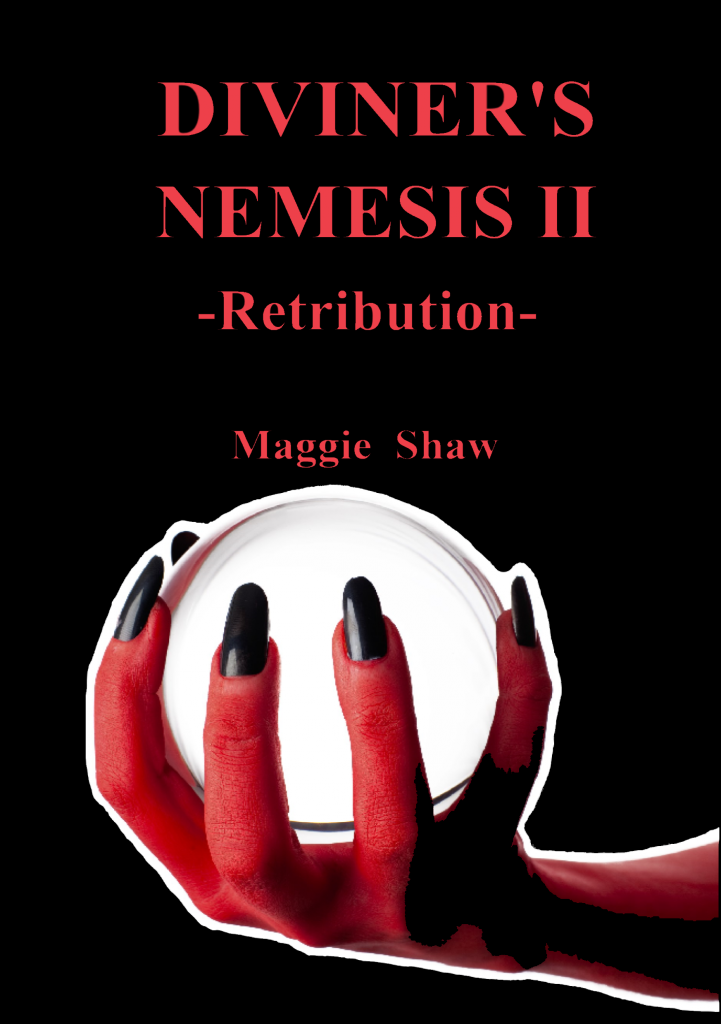
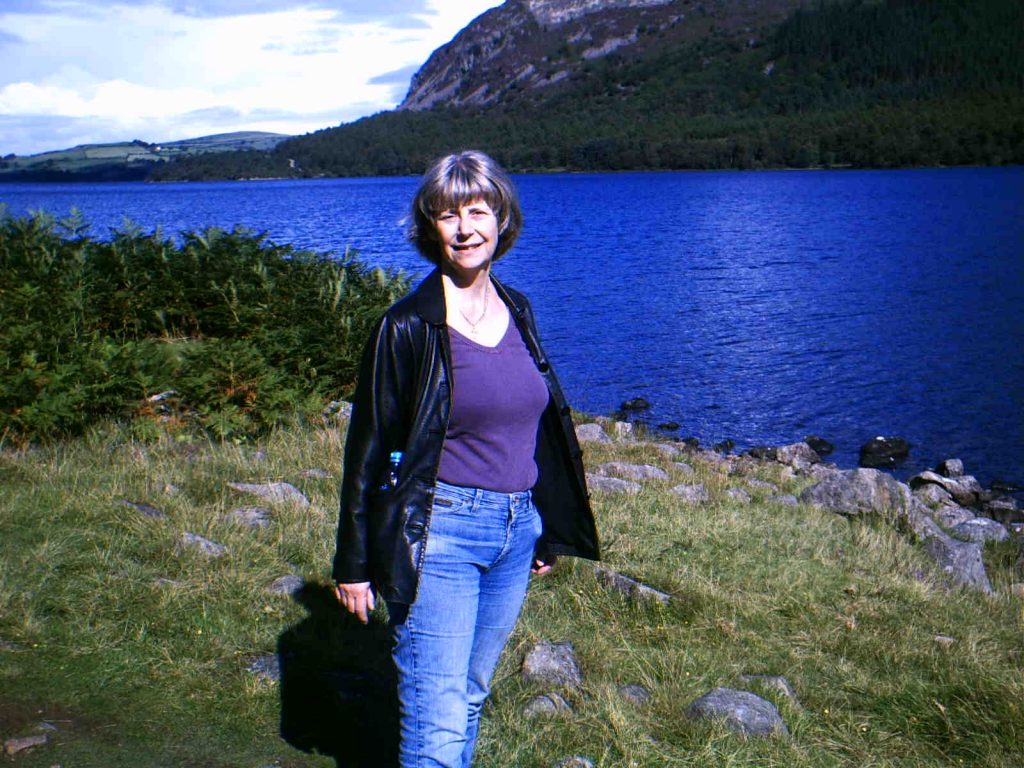
Congratulations on your new novel, Diviner’s Nemesis II – Retribution. Can you tell us about it? Have you an extract that you could share with us?
Diviner’s Nemesis II – Retribution is a sequel to Diviner’s Nemesis I – Avenger but can be read as a stand-alone book, too. Both books are set in 1970s London against a backdrop of occultism and the paranormal. In Diviner’s Nemesis II – Retribution demonic forces are amassing against the protagonist Liz Graham to remove her as head of the psychic society P.S.I. Her husband Alec’s plot to destroy her predecessor Jonathan Keast, leaves her defenceless against Keast’s schemes to depose her. Can Liz destroy the evil powers at work before they destroy her?
A short extract from the book: part of section 3.5:
Outside, the night was cold and damp
and still. The heavy fog deadened the lamplight and the sound of
their footsteps, and enveloped the sloping fellside around them in a
foreshortening grey curtain of silence. Liz confidently led the way
along the streaming path beside the fell wall, at one with the
elements. Though she felt disturbed by the aura of death
overshadowing the crag, the messages from the rocks reassured her
that should anything threaten her in that eerie walk, men would
spring up from the very stones in her defence.
Keast followed her cautiously, using
her as a shield against Alec’s men who he knew would be waiting
among the rocks ready to kill him as mercilessly as he had killed two
of them earlier. The eerie trek brought to his mind another bleak
night when he had followed a woman who had shown him the way to a
darker destination. All the women he had loved had had the power to
elevate and destroy; but he could not understand even now why they
had used such powers so capriciously. He stopped on the path and
spoke to chase them back into the past where they belonged.
‘Liz, how can you live with this
solitude?’
‘I’m a Celt: I am one with these
surroundings. There is no solitude here,’ she said. She turned back
to look at him and laughed as scornfully as he had so often laughed
at her.
‘You thought this night was yours,
Jon, didn’t you; but even you are frightened now. All Hallows Eve
is far older than the syncretic Christianity which adopted it and
spawned your bastard faith. This night is Oidhche Shamhna, Samhain,
when the gates of Hades, Ynys Wair, are open to receive the dying
sun. Tonight the spirits rove the earth again to torment those who
once tormented them. For the next six winter months nature will sleep
with the spirits in the underworld; but if you join them now, you
will not return with them in the spring.’
She turned and walked on down the path,
leaving her unexpected threat hanging in the air. He hurried after
her, knowing not to retaliate against her bizarre tirade because she
could easily extinguish the storm lantern and disappear into the
night, leaving him to the fate she had threatened to bring down upon
him.
A video of Maggie reading another extract, part of Section 1.6.
When did you first discover your
love for writing?
I have always written stories, ever
since my childhood – it’s just a part of me. I wrote my first
story soon after I was able to write. It was about a working horse
that broke his milk-cart traces and escaped to the mountains to live
with the wild horses in a hillside cave.
You are also a musician. Do you
write your own songs?
Yes, I also write songs, and again, I have been writing songs since my childhood. The first song I can remember composing was a sea shanty about a storm. My stories are a good source of inspiration for the songs I write. I am in the process of recording some of them for my new website which is due to go live in the next month or so. It was also good to be able to perform songs like ‘Merry-go-round’ in the ArtSwarm video magazine series.
Who inspires you?
Inspiration comes from the everyday
things around me – a chance remark in a conversation, anger at an
injustice, compassion for those struggling with life. My Christian
faith, recovery discipline and my own back story are all fertile
sources of material for stories and songs. People who have influenced
me include the Inklings writers Charles Williams, J R R Tolkien and C
S Lewis, and from my childhood, Alan Garner who lives in nearby
Congleton. Landscapes that have inspired me include London, Scotland
and the Lakeland valley where my family farmed for several
generations, Ennerdale.
Have you any other projects on the
horizon?
My next project, which I hope to complete this autumn, is to publish my novella Eregendal which I wrote when I was 21. This is a fairy tale-like fantasy about a heroic quest that goes wrong, in the genre of Visionary Fiction. The name of the leading character, Eregendal, is now also the name of my indie publishing house.
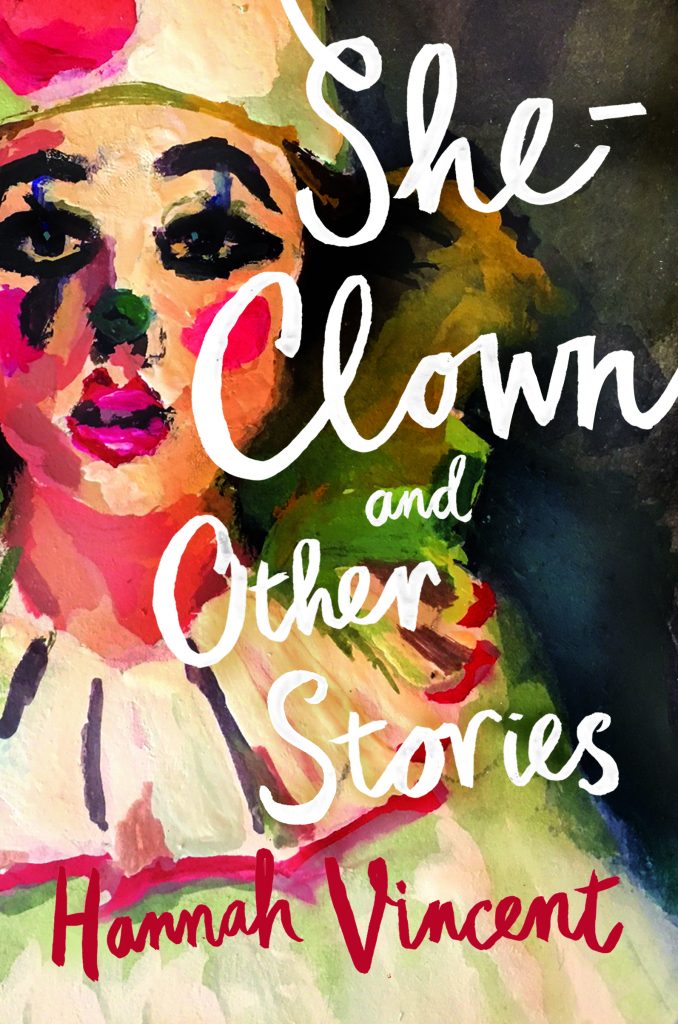
Women are often seen as resilient creatures in the face of adversity. But beneath this façade lies something deeper: vulnerability and the desire to be a better version of themselves. That is what British writer Hannah Vincent hopes to convey in her debut short story collection, She-Clown and other stories. Packed with sixteen fierce and funny feminist stories, this extraordinary collection is a delightful read.
The stories are told from the women’s perspective. They are brutally honest, raw, witty, and at the same time, moving. There is Charlie in the title story, She-Clown, which was shortlisted for the Manchester Writing Competition 2017, and Words & Women Competition 2017. Charlie is She-Clown, a magician who performs magic tricks at children’s parties. When the girls’ mother introduces her to the party guests Charlie realises she knew some of them. They are men who previously treated her with no respect by engaging in sexual acts with her. The ordinariness of the magic tricks she performed emphasises the absurdities of life, as if women are meant to clown around for them. But Charlie is enlightened when the girls’ father, Tony, who first mistook her as ‘She-Clam’, explains that ‘There’s no difference between male and female clams, did you know? No difference in colour, or markings, no mating behaviour. So only the clam knows who’s who and what’s what.’ This metaphorical commentary brilliantly encapsulates what gender equality means.
While Charlie gets a glimpse of reciprocal attraction, others are seeking to find freedom. There is Charlotte in ‘The Poison Frog’, a simple story about an unlikely friendship between a frog and a girl, with a hint of surrealism. First broadcast on BBC Radio 4 in 2016, it tells the story of Charlotte who lives with her mother, even though she’s thirty years old. They are a close pair often seen together for grocery shopping and dental appointments. During their visit to a specialist, Charlotte’s mother discovers there’s a poison frog living in her throat! Over time, Charlotte is strangely drawn to it. After a successful operation, she takes the frog home. She takes care of it like a human companion. She dresses the frog up with a bonnet from one of her mother’s dolls. She even takes it for a walk where her neighbours chirp, ‘Morning, Froggy!’
The unexpected appearance of the poison frog marks as a turning point in Charlotte’s life and she begins to understand what makes her so happy. Fundamentally, the story asks the question of how much does one willing to fight for what they want, achieve it without destroying a relationship?
The collection ends perfectly with the story, ‘Woman of the Year’. It’s achingly funny yet empowering. Written from a second person perspective, the reader gets invited to a formal luncheon in ‘so-called intelligent buildings where no one can hear you when you are inside.’ Everyone is seated at a table according to the first letter of their names. The reader is reminded again the reason behind the invitation that ‘someone thinks highly of you, considers you worth inviting, wants to celebrate you.’ But who invited them?
As
everyone tries to figure out who invited them, the conversations at
the table begin to flow freely around the reader. You listen to their
life stories and their achievements as if you are right there with
them. The luncheon drags on until an impending storm throws everyone
into disarray.
Writing about women takes a lot of courage and sensitivity. In this case, Vincent delves deeper into the feminine psyche, and incorporates them into her characters. With a greater understanding of their emotions and behaviour, these characters become sublime and multi-faceted. She’s a talented writer whose strength lies in turning ordinary stories into something extraordinary. Ultimately, She-Clown and Other Stories is a page-turner, and with every page, it will invigorate your soul. Now, that certainly establishes her as one of the freshest voices in contemporary fiction.
She Clown and other stories is available from Myriad
I called you angel Almost from the beginning. You were No angel, The winds through the trees Have whispered to me, You Dirty devil soul Driving me to the brink Of abdicating Some of My most tender dreams.
I try to think of the Possibilities of the new her And smile But I can’t because You stole that ability Along with my dignity And the bulk of my faith, My heart Shattered
And now bloodless, Sitting slumped At the foot of What was once Our bed.
I will go home tonight, Her voice on the phone So fleet, so tender and so weary Of the world. Her cadence Still in my mind, I will
Open bottle after bottle And imagine her body pressed to mine, Her lips pursed and thirsty for mine, Her ears opened and hungry For the aural dance of my words. I won’t think of you for more than a dry rustling Moment.
Her eyes are there when I close them And I suffer knowing I am Without much hope, Admitting my meritless existence Would only erode her heart Eventually Like water on a stone But maybe Just maybe it’s different This time.
Different than every Other Time.
I contemplate that And I pretend her And I smile But because of you It’s a smaller smile And when I see it in the mirror I call myself A no good Willful Liar.
The Freedom of Dreams
Just in from the rain, Hair dripping down, Popping open a beer And sitting in front of the window, The darkened sky staring back, Wet and tired In a home that does not belong to me.
Beard wet with rain and sadness, The night stalks on. I close the blinds And turn on the music, Hoping the room will vibrate With the clicking of the keyboard, The filling of the virtual page On the computer screen, Knowing it probably won’t But hoping anyway.
Begging for your love Like a beggar begs for coins, A waif begs for bread, A homeless cur begs To see another sun As he shivers through another night On the street.
Your love is a viola From the hallway. Your love is vines of crisp black hair Pulling me toward the light. Your love is tears on the page, Blood on the cage, The freedom of dreams, The vast expanse of fantastical imagining. Your love is your legs stretched out along the bed As I caress them from top to bottom, Knowing I have wanted them before I knew You existed.
My heart bursts in the air In spirals of sparks and colours When you love me. When you love me. But now I am alone.
The rain picks up as the night carries on. The beer is gone. I fall naked to the bed With my snarling mind And my broken feet, My hair dry now, No music in my ears, The words unwritten
As I wait for your eyes to meet my eyes When I close them Until the morning.
I am only free In the dreams I make But cannot remember. Somehow I know You are there In these unremembered dreams And you are holding me And we are safe and home And that is why I am free there And want to stay there Even when another morning Comes.
So Cold Here and There
It’s so cold here And I cannot afford to turn up the heat So I shiver and open another bottle of beer While listening to Caruso sing Je Crois Entendre Encore in Italian then in French And thinking about your own loneliness And how cold you must be Huddled in your bed with small dogs and your Casual loneliness As a wind so much colder Than the wind that freezes my feet hits you As I drink and type, Not knowing what Caruso is singing But liking it as much As I like imagining Your open legs And open smile Even though you’re so cold right now Where you are, Without me.
Your Flanks
Now you are here With your flanks in my bed I imagine While William Bell sings “You Don’t Miss Your Water”. I listen while I vomit, Waiting to finish so I can drink a little bit more.
All this American music coming from the church Or from avoiding church And the Louvin Brothers might have thought That Satan is real But I know better
As I hang upside down Listening to The Christian Life And knowing that, at most, Jesus was a good guy
And I imagine that you are here, Naked and wonderful, Your flanks in my bed And half as beautiful as Parsons and McGuinn harmonizing
In a mere moment Before life does not matter much again For 8 hours
Two reasons to avoid pronouns: First, inclusiveness, Something preachers have learned: God has God’s plan for God’s people. Second, liability. Legal makes you spell things out: Do not take Zoltoff If you are allergic to Zoltoff Or to the ingredients in Zoltoff.
But then new uses for familiar words, A way of saying who you are: She, her, he, him, they, them.
The school association was meeting In Chattanooga. This was 1960. The Latin teachers were packed Into a tiny hotel room To hear a paper on some obscure grammar. A man about 40, a priest, I think, Turned to the group, smiling As if to reveal a monstrous secret: You know the trouble With the relative pronoun, Don’t you: They don’t always agree.
Basket Weave
Memory, that persistent puff of lint Caught on the edge of the kitchen counter, Preserved to no good use: At the supermarket I lurk While my wife considers cleansers, Idly eyeing a shelf of White plastic waste baskets. Where in the world, a clerk once asked, Did you find that beautiful basket-weave? This was 40 years past, In a discount store long since Gone belly up, Many towns and houses ago, Along Route One, Strip malls bulldozed out for condos, Maybe just inside Fairfax County. What has become of the Basket-weave waste can We bought that day And the woman who sold it to us, Remembered out of so much not, How many check-out lines stood in, How many white waste baskets yet to buy?
Robert Demaree is the author of four book-length collections of poems, including Other Ladders published in 2017 by Beech River Books. His poems have received first place in competitions sponsored by the Poetry Society of New Hampshire and the Burlington Writers Club. He is a retired school administrator with ties to North Carolina, Pennsylvania and New Hampshire. Bob’s poems have appeared in over 150 periodicals including Cold Mountain Review and Louisville Review.
Chadwick’s neutron, Fleming’s penicillin and Dalton’s law of multiple proportion was a GLS BC/B22 Opal Energizer lightbulb moment.
Orville and Wilbur Wright’s petrol-driven aeroplane, Daimler’s petrol-driven car and Becquerel discovering the principles of photo-electric cells was a JCB LED Built To Last instant start lightbulb moment.
Cartwright’s power loom, Davy’s safety lamp and Newton discovering the laws of gravity was a Halogen linear instant full light 240 watt lightbulb moment.
The invention of the lightbulb by Thomas Edison and Joseph Swan was an incandescent tungsten filament lightbulb moment.
This poem is a white wax sentinel night light with eight hours to burn.
Unslaked Summer
Punch-drunk in Rio you want the first breeze that comes along to sweep you off your feet; whirlwind love in the eye of the storm- that burning testament of human endeavour that opens windows on a man and a woman who are in the territory of the deeply-loved will outlast all ends.
Lapa
Dangerous in daylight you stray into Lapa. It’s just to look at the Arches built in the time of the Viceroys- to stand and behold the narrow gauge streetcars rumbling above but it straddles a haven for muggers; hop-heads, filchers; land-rats; drunks so you spend the day jumping at shadows: learn to live in terror back pinned to the wall.
On The Forlorn Apathy of Summer Air
You never get used to this weather the sort that says what’s the point of tightening up those isobars then throwing away the spanner… even the weather girl has run out of passion she leaves you thirsting for rainy day showers Jacuzzi skies the hip-hop sparkle of wave water careening into the Bay.
Neil Leadbeater is an author, essayist, poet and critic living in Edinburgh, Scotland. His short stories, articles and poems have been published widely in anthologies and journals both at home and abroad. His publications include Librettos for the Black Madonna (White Adder Press, Scotland, 2011); The Worcester Fragments (Original Plus Press, England, 2013); The Loveliest Vein of Our Lives (Poetry Space, England, 2014), Sleeve Notes (Editura Pim, Iaşi, Romania, 2016) Finding the River Horse (Littoral Press, 2017) and Penn Fields (Littoral Press, 2019). His work has been translated into several languages including Dutch, French, Romanian, Spanish and Swedish.