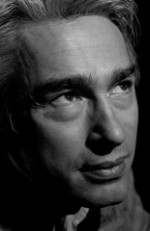
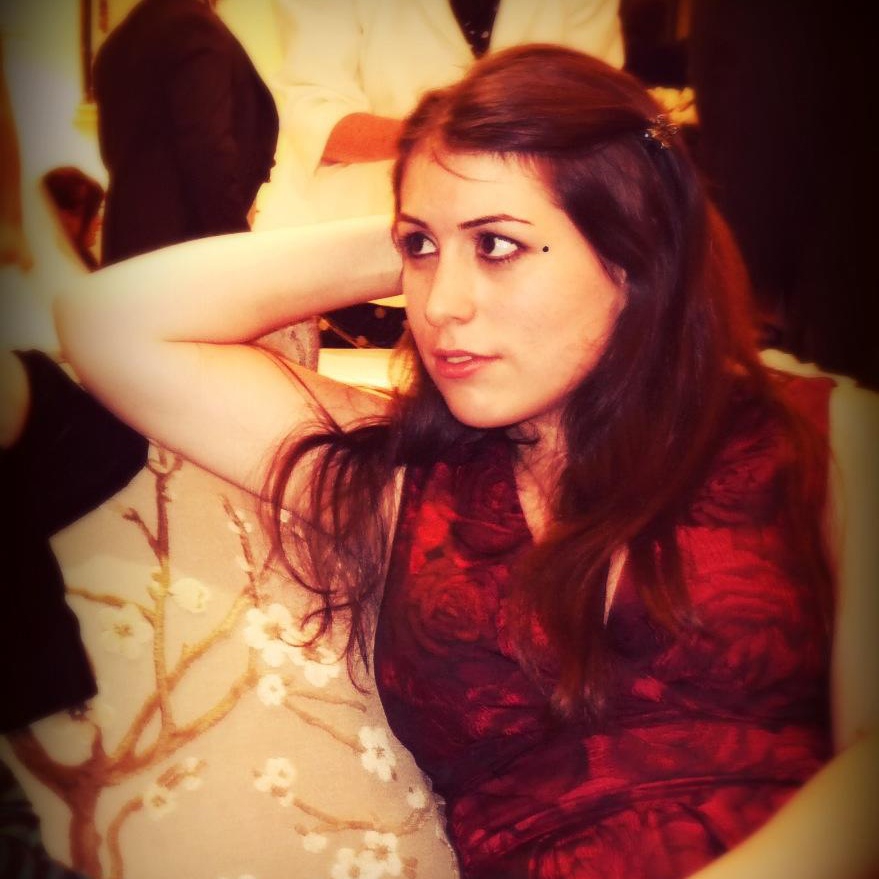
Inky Interview with Christina S Johnson by Lesley Proctor


starlight

Christina is based in Georgia in the United States.  Hello Christina and thanks so much for agreeing to this interview.  You’re a full time educator, a published writer, a mum and a creative writing student.  How do you manage to fit it all in? 

There is something I learned recently. It’s called the Law of Priorities. It means the important things are the things which will get done, while the things which are less important will not. “Sleep” has fallen down this list terribly in the last year.  Ironic that my novel is even called Slumbering! Of course, there are a lot of people who help me out, too. People who look like they have it all have a lot of people behind them. No man is an island, but plenty of us out there are icebergs.

Your first novel, The Starlight Chronicles: Slumbering, is out now.  Tell us about it and how you got published.

It’s an epic fantasy novel, and the first in a series which follows the hero’s journey. It centres on the life of Hamilton Dinger, a narcissistic teenager who is reluctant to save his city from danger after he finds out he is a ‘fallen star,’ and capable of supernatural abilities. Slumbering describes his origins as a ‘superhero,’ emphasizing his call to belief and adventure. The mix of Tetris, schoolwork, and teen culture just makes it more fun and confusing and awkward.

I entered into a manuscript writing contest from Munce Magazine, sponsored by Thomas Nelson and WestBow Press. I won second place, and publication resulted.

How would you describe your writing style?

Witty-whimsical is the term I most frequently use to describe my writing style; it’s too fluffy to be completely ironic. My goal as a writer is to get people to think without allowing them to realize it.

The hero in Slumbering is Hamilton Dinger.  Dinger has a high opinion of himself, hasn’t he?!  How did you come up with him? 

I started writing the story while I was in high school. I was not popular.  I say this because there are some out there who would easily see themselves in my portrayal of the ‘ultimate popular guy,’ but the truth is much worse than they think it is: Hamilton is modelled after me. He’s smart, intelligent, and competitive. He is goal-oriented, determined, and largely logical.  He is also ambitious, manipulative, and sceptical of most things.  However unlike me, Hamilton has confidence and charisma. I joke with people all the time that it’s a good idea I don’t have much of either of those things, or I’d have taken on the world by now.

After talking to a range of people who read Slumbering prior to publication, the teenagers and young adults loved Hamilton, even if he is completely all about himself; it was the adults who didn’t like him! Sadly the ‘tragedy of youth’ is just that: we believe life to be all about ourselves. And my own personal growth in that area can be seen throughout the changes to the story: my first draft was mostly about revenge, for people like Hamilton being mean to me. But it ended up being an act of restoration in the end. As a person, and a Christian, it is my hardest challenge to love people where they’re at, rather than who they were meant to be. Seeing Hamilton’s beginnings, and working my way through to his end, it made all the difference in the world to me.  It was life-changing to fall in love with him.

Did you find teenage dialogue difficult to represent?

It was a little hard. I remember a great deal of it, and turns out my college education was worth something, having worked in several high schools as a teacher. But teen communication is something which is hard to keep up with! Communication changes every day, and teenagers are the gatekeepers to language, whether they realize it or not.

You published a charitable anthology for Sandy Hook with your fellow MA Creative Writing students from Southern New Hampshire University.  What was the theme and how did you get on working collaboratively with others?

Our anthology has a theme of heroism despite reality, largely with a paranormal twist. The ‘mild-mannered werewolf accountant saving a child from a burning building’ was the example sum-up we were given by our project leader, Patrick Donovan. He’s really the one who is responsible for getting us together and editing it all for us. We also had a couple of great professors chime in to help.

Your latest novel, Soul Descent, is an adult thriller.  We’d love to hear about it. 

It’s currently awaiting judgment on Nextnovelist.com (would love some votes!)  Having experienced bullying myself at school, both as a teacher and a student, I began to wonder why all the people who go into schools and shoot everyone were boys. Don’t girls need a ‘hero’ like that too? (That’s the irony talking.)

Seeing some of the statistics on rape, bullying, and cyber-bullying in particular, I was outraged. Reading news reports about teen girls getting drugged then raped bring this out too. And thus, Scrags, my protagonist, was born. She has been bullied for years – and the trick is you never really know exactly why.  She is teased for her skin, her weight, her sexual orientation, learning disorder, gender, etc. Then something terrible (terrible terrible!) happens.  She watches the subsequent outpouring of pictures, texts, emails, teasing and then the unfolding of everything that follows it. Anti-spoiler alert! I’m not going to tell what it is.

You have said that ‘the rise of zombies is more real than people know.’  Care to elaborate? (Should we be worried?)

Zombies are walking among us now. In fact, they are us! Think about it. Insomnia and sleep conditions are on the rise (zombie = the living dead, insomniacs = the sleeping wakers).  These are tied to physical as well as mental side effects including depression, irritability and purposelessness. The body needs sleep to look great – doesn’t your skin seem greyer when you stay up late?

The majority of people who hate their jobs/situations automatically go on auto-pilot. Communication is harder than ever despite the accessibility and availability of communication devices. People are desensitized to pain and suffering. We thirst for violence when stressed out; caffeine is the only thing keeping a lot of us from cannibalism some days. A lot of us feel dead inside.

What does all this add up to? The ultimate surprise zombie attack: our own bodies waging war against humanity!  If you can relate to at least two or three of those statements, you know what I’m talking about. We are being zombified by the busyness of our culture.

Share with us some of your favourite books.

Harry Potter series, Hitchhiker’s Guide to the Galaxy series, Mere Christianity, Out of the Silent Planet,

Star Wars series, Hunger Games series, A Ring of Endless Light, Till We Have Faces, Blue Like Jazz, Astronomy for Dummies, Firebird trilogy

Thanks for taking part Christina, and good luck with all your writing projects.
starlight

Inky Interview with OU tutor Ian Nettleton by Lesley Proctor

Ian Nettleton

Ian Nettleton has been named as the 2014 Bath Novel Award runner up and the Peggy Chapman-Andrews (Bridport First Novel) Award runner-up.  Ian is an experienced creative writing tutor, teaching with the Open University as well as other institutions.  He has also written and presented for the BBC and co-written an independent short film.  Ian is interviewed by Lesley Proctor.

Hello Ian and congratulations on your success with your novel, The Last Migration.  Please tell us what it is about and what inspired you to write it. 

Thanks. Well, the main plotline is about two naïve brothers living in an outback town who are asked by a retired gangster to bring back a cousin of his who has run off with a week’s takings from his nightclub. It’s an adventure/thriller novel, for the most part – the elder brother messes up and kills the gangster’s cousin, and the younger brother, Lee, has to go on the run to Melbourne. It was initially inspired by an anecdote about a friend of mine who hit a dead deer in his car, one night. As is often the way, the tale changed and changed till I had a couple finding a burnt out car with two bodies. I didn’t know why the car was there till I dreamt about these two brothers. That was a gift. The dream was like a film. I saw the brothers so clearly that it was easy to write about them because they already existed imaginatively for me.

The Last Migration is set in the Australian outback and was judged to be “is a well-crafted novel, using spare prose to evoke a powerful sense of place”.  How integral was setting to the overall novel?

Very. I saw the location in a cinematic way. The outback is pretty raw. There are roads that lead into the desert and it’s easy to get lost out there. This seemed to fit with the awful moral situation the brothers find themselves in and since the novel is like a road movie, I needed the long roads between towns that you don’t get in the UK. The sandstorm at the end is also a way of adding a dramatic, elemental finale. Well, I hope that’s what it does.

How long did the novel take to write?

I’d been writing scraps for a while, but it really got underway in 2006, after I revisited Australia. So, aside from some additions last year, the novel took around five years to write.

Are the names of your characters important?  Do you find names easy to come up with?  

Sometimes, but sometimes not. Sometimes a name will just seem immediately appropriate. It’s easy to name someone in a way that undermines plausibility.

Which Open University courses have you taught, and what do you find rewarding about teaching this subject?

I’ve taught the now-defunct three month introductory course (A174), and currently teach on A215 and A363. Teaching on A363 has been very interesting, because it opens the writing process up to other genres – screen, stage and radio. This has helped with my writing. Meanwhile, there is a lot of satisfaction in seeing writers develop their craft. I get to be involved in people’s development and their pleasure at achieving new levels of creativity. That’s a very rewarding experience for me.

Many Ink Pantry readers are aspiring writers.  What do you find is the most common mistake made by new writers?

One of the most common ones is beginning in the wrong place. New writers’ stories often start with an everyday situation, like waking up in bed or looking in a bathroom mirror. There’s nothing wrong with establishing the everyday, but the reader wants a reason for reading on – the promise of a story. I often find a story submitted to me really gets going half way down page two. My advice is to lop off those first paragraphs and drop the reader into the events. Then worry about establishing the everyday once you’ve got the reader’s attention.

Creative writing students are often encouraged to keep a daily journal in order to develop the writing habit.  Do you keep a journal, and do you use it daily?

No, not really. I use a small book to write fiction in and I carry it about with me and I occasionally note things I observe and overhear. I should do more of this. To be honest, though, I think every writer has to find their own route to effective writing.

Please tell us what you are working on at the moment.

I’m having fun at the moment working on a novel about a boy whose father is an exorcist’s assistant. It’s actually inspired by some of my childhood experiences, and I’ve thrown in a dangerous escaped criminal and a satanic cult. The usual, everyday stuff.

Finally, which books do you enjoy reading?

This varies. I enjoy books that are full of jeopardy and really rattle along but more than that, I need the writing to be beautifully phrased. Plot is only one element. Excellent descriptions, layered dialogue and strong characterisation are what keep me reading. So I’ll enjoy a Cormac McCarthy as much as a John McGahern or an Annie Proulx. Ultimately I love fiction that is somewhere between literary and popular.

Thanks your time and the helpful weblinks, Ian.  We wish you continued success with your writing.

www.iannettleton.com

https://www.facebook.com/pages/Ian-Nettleton/1458539637743108

https://twitter.com/IanNettletonUK

www.bathnovelaward.co.uk

www.bridportprize.org.uk

https://www.youtube.com/watch?v=x2E9qGU6AaM

https://www.youtube.com/watch?v=Q2a6DLlZaYA


Picture by Martin Figura


Books from the Pantry: Desiring Dragons by Kevan Manwaring reviewed by Lesley Proctor

dragons


Kevan Manwaring has taught creative writing with the Open University and elsewhere for many years.  He is also a writer and performance story-teller.  He draws on these skills in this guide for aspiring Fantasy writers.

Manwaring states at the outset that Desiring Dragons is not another ‘How to Write…’ book.  Kevan believes a bedrock of knowledge is a pre-requisite to writing Fantasy.  In his experience many student writers produce weak, emulative work from lack of understanding; they ‘copy the shadows on the cave wall; without having a full gnosis of what drives their creation’.

In the first part of Desiring Dragons, using Tolkien as his guide, Manwaring defines and explores Fantasy fiction.  He is keen to distinguish between the works of respected authors such as Tolkien and poorer imitators.  He traces the genre back through time to its roots in story-telling and legend, pointing out that the Gilgamesh, believed to be the first story to be written down, is ‘epic Fantasy of the highest calibre’. Manwaring also considers the function Fantasy serves in our lives. For example, he suggests our desire for Fantasy it is to do with the German idea of sehnsucht; a profound longing for some intangible, indefinable other.

The second part of Desiring Dragons is where Manwaring deals with the processes of writing, this time using the ninth century poem Beowulf as his point of reference.  In this section the student writer embarks on Manwaring’s ‘Writer’s Quest’. They become ‘quester’, armed with a pen as their ‘weapon of magic’.  Each chapter ends with a series of writing activities, or ‘questings’.  These are designed to motivate student writers and to unlock their imaginations.

The third and final section is ‘The Dragon’s Hoard’.  This treasure trove of essays includes a consideration of our fascination with dragons, the acquisition of ‘mythic literacy’, and the ways in which creative writing is associated with well-being (imagination ‘is a spiritual vitamin’).  There is also a discussion on genre and what this means for writers, readers and publishers.  Manwaring closes with a comprehensive list of suggested further reading.

I have no great understanding of Fantasy fiction, but it is clear to me that Manwaring’s knowledge is broad and deep.  It is a book that can be dipped into, or read as a whole.  It will be re-read with enjoyment and the writing exercises will be returned to for inspiration and motivation.  While it is a scholarly book, it is also playful.  In the opening chapters Manwaring invites into his fantasy world asking us to imagine we are following a ‘gruff donnish magician into the Perilous Forest – the glow of his pipe in the gloaming our only guide’.   I believe Manwaring to be that beguiling, learned magician.

Desiring Dragons is out now and can be ordered via the following link;
http://www.compass-books.net/books/desiring-dragons

dragons

Inky Interview with OU tutor Kevan Manwaring by Lesley Proctor

Kevan

Kevan Manwaring is a writer, storyteller and performance poet.  He has also taught on all three Open University creative writing modules.  Other projects include The Cotswolds Word Centre.

To start off, please tell us a little about where you are based.

I live in Stroud, Gloucestershire, on the edge of the Cotswolds – I moved here end of 2010. It is a small town with a great community feel – and a vibrant creative scene. There are a lot of poets, storytellers, writers, musicians, free-thinkers, etc. The ‘Green’ scene is big, and it’s surrounded by gorgeous countryside, where I love to walk.

Having taught A174, A215 and A363, what do you find most rewarding about teaching with the OU?

When I see a student have a breakthrough – when something sinks in, the penny drops (in terms of the theory); or comes together (in terms of their practice). When I hear of a student’s success, eg publication or winning a competition (I’ve had students get book deals with major
publishers and win national competitions). With some students returning for A363 I’ve seen them develop over two academic years – so it’s satisfying to see this fuller arc and the development of their writing.

Many of the Ink Pantry staff and its readers are budding writers.  What would you say is the most common mistake new creative writers make?

Overwriting (in terms of density of style, purple prose, exposition, etc).
Under-writing (in terms of not writing every day and not writing the thousands and thousands of words you need to hone your practice).

In poetry: focusing on the meaning of the words, rather than the sounds.

In prose: poor structure, viewpoint slippage, and lack of telling detail. Most good writing comes down to sufficient visualisation. So many stories I read/assess seem ‘out of focus’ – and it’s frustrating, as you know something interesting is happening there, but you’re cut off from it. As someone who trained in art originally this has fed into my writing. I have a very visual imagination – experiencing cinematic dreams most nights! – and I write what I see in my mind’s eye. You need to make it vivid for the reader.

You were commissioned in 2010 by The History Press to work on a collection of folk tales.  Why do you think it is important to preserve folk tales?

Well, in the risk of being pedantic this project was more about reviving folk tales – rather than preserving them in an academic, set-in-amber, way (if it is possible to capture an authentic definitive telling, as each teller does it differently). The History Press commissioned professional storytellers like myself to gather together the best tale of our chosen county and, critically, retell them in our own words, with a sense of orality – i.e. for  performance; not that these are verbatim transcripts, but they capture the flavour of a live telling and the style of a particular teller/author. Many were cobbled together from fragments of local history, folklore, archaeology, field-work and imagination – so they were very distinctive creations, rather than ‘historically accurate’ versions. Being a writer rather than an anthropologist, this creative freedom engaged me more. I had the opportunity to write 80 short stories – and that’s how I approached them.

A couple of the Ink Pantry team members have been asked to perform their own poetry at special events.  We’d love some pointers on how to capture an audience when performing poetry.

From early on as a performance poet I quickly realised that if you made an effort to learn your poem off by heart then you’re going to gain the respect and attention of the audience more than just reading it. Plus you can maintain eye contact, use both hands, and not have any barrier between you and your audience. Other tips – cut the pre-amble, don’t apologise, project. Connect to the core emotion of your poem and transmit that to the audience. Enjoy yourself!

One of your recent projects led to a show called ‘Tales of Lust, Infidelity and Bad Living’.  This sounds like something we should hear more about!

This was a show based upon my life. No, seriously, it was one of a series of performances based upon The New Penguin Book of English Folk Songs, edited by Steve Roud and Julia Bishop. Bath Literature Festival wanted to create a series of storytelling performances of the ballads and that was the one that happened to still be available. I performed it in the Guildhall in Bath – there were a lot of French language students in the audience, who seemed to like it!

There are a lot of sexual politics in those traditional ballads – something I’m exploring in my new show, The Snake and the Rose (based upon my two folk tales collections) in collaboration with my partner Chantelle Smith who is a folksinger.

You are behind the Cotswold Word Centre initiative.  Please tell us about the Centre and the philosophy behind it.

It is a platform for language, literacy and literature based at Hawkwood College, near Stroud. We launched on World Book Day this year and our patron is novelist Jamila Gavin. The idea is to provide a focus for the plethora of spoken and written word-based activity in the area: poetry readings, book launches, storytelling cafes, writing workshops, literary rambles, showcases, competitions, small presses, and so on. It is early days yet – but there’s some exciting stuff in the pipeline. Folk can find out more by following the link below.

You have said your new book, Desiring Dragons Creativity, Imagination & The Writer’s Quest, is the culmination of 13 years’ teaching creative writing.  What kind of things will readers learn from the book?

They will have to read it! But it’s more about process rather than particular techniques. I didn’t want to write another ‘how to’ book, of which there are many (some better than others). It explores the creative process; and strategies for what I call ‘long distance writing’. Many writing courses focus on teaching skills that will lead (hopefully) to publication – but what happens after that? How can you keep going through the long-haul of writing a novel (or several – as someone who wrote a five-volume series, The Windsmith Elegy, over ten years)? Through the ups and downs of a writing life – the setbacks and successes? This is for the writer who wants to be a ‘marathon runner’ rather than a ‘sprinter’.

Finally, you are organising a symposium on the Dymock Poets this year.  Our readers would be interested in hearing more about this event.
The Dymock Poets, as they became known, were a group of friends who gathered in a small village in Gloucestershire just before the First World War: Lascelles Abercrombie, Wilfrid Gibson, John Drinkwater, Edward Thomas, Robert Frost, and Rupert Brooke. For a while they enjoyed long walks, cider and poetry, publishing 4 editions of New Numbers (an anthology which included the first publication of ‘The Soldier’: ‘If I should die think only this of me…’). Frost and Thomas mutually empowered each other to go on to become the great poets we see them as today. When War was declared the Dymocks’ idyll was irrevocably shattered. Frost and his family returned to America. Thomas and Brooke went off to war and did not return. I wanted to celebrate the centenary of their creative fellowship – on the eve of the First World War when they gathered in Dymock (June-July 1914). I have co-organised (along with poet Jay Ramsay) a day-long symposium in Stroud on Saturday 26th July. We have some great talks throughout the day and in the evening, a showcase of modern Gloucestershire writers responding to the themes of the Dymocks. It is this creative response to conflict that interests me more than the whole glorification of War thing. You can book through the Stroud Subscription Rooms website. I find the Dymock Poets story touching and inspiring – to the point of co-writing a feature-length screenplay about them. At the moment, it looks like a drama-documentary will be made. Anyone interested in the Dymock Poets should check out the Friends of the Dymock Poets site: http://www.dymockpoets.org.uk/index.html   Many thanks to Kevan for taking the time to speak to Ink Pantry.  Links to Kevan’s books and some of the projects he is involved in can be found below.

www.kevanmanwaring.co.uk

http://www.compass-books.net/books/desiring-dragons

http://www.literatureworks.org.uk/Book-Features/Special-Features/Creative-Fellowship

Cotswold Word Centre: a platform for language, literacy, and literature

Inky Interview with Ali Hepburn


Ali Hepburn page photo

Can you tell our readers a little something about the piece that you have had published in Fields of Words?

The first of my pieces to feature in ‘Fields of Words’ is the poem ‘The Crow People’. It was inspired by Quentin Blake’s book, ‘The Life of Birds’, which features illustrations of numerous anthropomorphic avian species. ‘Exit Fragments’ is my second piece to feature and is a work of fiction inspired by my fascination for the Arctic.

When it comes to writing, what is your preferred genre?

On the whole, I tend to write dramatic fiction, but there is usually a tendency for speculative or fantastic elements to creep in!I

Why do you write? Who or what inspires you?

I write as a way to explore my imagination; I’m constantly conjuring up new worlds and new characters in my head and I need write them down before I lose them.

As a writer it is also important to be a reader. What are you reading right now? What are some of your favourite books?

Currently, I’m reading ‘The Eyre Affair’ by Jasper Fforde. My favourite books include ‘Cloud Atlas’ by David Mitchell, Emily Bronte’s ‘Wuthering Heights’ and anything by J.R.R. Tolkien, Iain Banks or Neil Gaiman.

Which of the Open University creative writing course have you taken, and what are your thoughts about them? Any advice for future students?

I have taken both A174 and A215. My advice for future students is to write lots – even if some of what you produce isn’t your best work, it could still be useful for drawing ideas from in the future. Don’t throw anything away; I’ve still got everything I’ve written since I was three years old.

Tell us one interesting fact about yourself!

I like to run around the countryside with a cloak and a sword in my spare time.

Five Favourite Things. Tell us your favourite meal, movie, song, colour and place!

Meal: Venison steak. Movie: Pan’s Labyrinth. Song: ‘Rainy Night House’ by Joni Mitchell. Colour: Indigo. Place: Lochinver, Sutherland.

Share with us what you are currently working on.

I’m currently working on a collection of poetry.


Facebook Page- http://www.facebook.com/alexandra.hepburn.writer

Twitter – http://www.twitter.com/a_k_hepburn

Website – http://lastfallingstar.tumblr.com

Pantry Prose: A Visit From The Fortune Teller by Carol Forrester

Fool

“I can explain everything,” Susan promised. “But first, I think we should get out of here.”

Pinned against the wall by her body, Jeremy nodded. In all honesty he was more concerned with the Ford Mondeo currently sitting in the middle of his living room than what was being said to him. Had it really just come crashing through his patio window? Had some random woman really just hurled herself at him to save his life?

“We really, really need to go,” Susan insisted, extricating herself from his lanky frame and grabbing hold of  his hands. She tugged him forward, stumbling as his torso came away from the wall but the rest of him didn’t.

“Oomph!”

She dropped his hands and grabbed his shoulders.

“Okay, okay,” she said, strain showing in her voice now. “Let’s stand up properly shall we?”

Jeremy nodded again, still staring at the car sitting where his coffee table should be.

“It was an antique,” he mumbled, managing to move his feet this time when Susan pulled him forward.

“I’m sure it was lovely,” she soothed, patting his shoulder distractedly while she scanned the ceiling above them. “Oops. Wrong way!”

Jeremy felt the air leave his lungs as he landed, Susan crunching down beside him on the glass a second later.

“What ar-” he was cut off as the ceiling gave a creak, and then a groan, before deciding to give up altogether and simply plummet onto the spot where they’d been standing the moment before.

“Oh,” he said. “You just saved my life.”

“Meh,” Susan shrugged. “Only twice. Trust me, today you’re going to require a lot more than twice.”

Jeremy’s features crumpled into a frown.

“What do you mean?” he asked, finding himself quickly being pulled to his feet and steered back towards his own front door.

“I quite like the philosophy of crossing that bridge when we get to it,” Susan said, gripping him by the elbow now and hurrying him forward. “Granted it does help when one has some for-warning of what those bridges might be.”

Jeremy’s eyebrows squirmed.

“What bridges?” he asked. “Where am I going? Who are you?”

“No one, no one,” said Susan, waving away the question with one hand. “Well not really a no one per say I suppose, I’m someone, but not someone you really need to know. Does that make any sense?”

“No,” said Jeremy. “None at all.”

“I didn’t think so,” Susan sighed. They’d reached the door and she was opening it, shooing Jeremy out of his own house.

“Hey! I think I deserve some answers here!”

Susan hummed at him and pulled the door shut behind them.

“I’ll explain everything. I did promise,” she reminded him.

“Yeah, so you can start with what you were doing in my house!”

“Saving you,” she said.

“But why?” Jeremy demanded.

Susan shrugged.

“I was bored I guess.”

“Bored?” repeated Jeremy.

“Yeah,” said Susan. “Bored.”


Picture courtesy of Wikipedia

Interview with Joseph Delaney by Kev Milsom

spooks pic

Could we start by asking you how your passion for creative writing emerged? Have you been writing since childhood, or did it take until adulthood for the writing ‘bug’ to kick in?

I didn’t start writing until I was in my twenties. I read a lot and every time I read a book that I really enjoyed I’d think: ‘I wish that I’d written that!’ So I started writing in the mornings before work, and after ten years and over 97 rejections I finally got published.

You’re internationally known for the extremely popular 13-book series, known as the Wardstone Chronicles, which began in 2004 and has been sold in 25 countries. I wonder if you might share with our readers the foundations for the inspiration behind this wonderful series, Joseph. Also are there any more Wardstone Chronicles adventures planned for the future?

I had to come up with an idea at short notice and I checked back through my notebooks. This was the Year 2000 and I had to go back all the way to 1983 where I found I’d jotted down a story idea about a man who dealt with boggarts. This was because in that year I’d moved to a Lancashire village called Stalmine which has a boggart. I developed this into The Spook’s Apprentice, the first book in the series. From then on, I drew upon the folklore of Lancashire, which I tweaked and modified to create my fictional world.

Is there a reason why you set the Wardstone Chronicles around the year 1700, Joseph?  Does this period of history hold a particular fascination for you (along with the subject of history itself)? Or is the time-setting purely random?

The film people came up with the seventeenth century as they needed some context for the costumes and set design, but in my writing I have deliberately kept the books free from any specific time in history, rather it is set in a mythical Lancashire. I didn’t want to be trapped by dates and facts. I have always been interested in Lancashire and world mythology and have a particular love of the fantasy and horror genre, so all this informs my writing.

Each of the 13 books in your Wardstone Chronicles begins with the message, ‘For Marie’.  Could you enlighten us as to the identity of Marie and the importance of this dedication? 

Marie was my wife who died in 2007. She was very supportive and believed in me despite all the rejections, so I continue to dedicate the books to her.

As a former teacher of English, what were the most common pieces of advice that you gave to your students? Now, as a hugely successful author, what additional advice would you impart to your students today?

There are three main pieces of advice that I have to offer. Record all your ideas and don’t censor them. At the time you may not be able to judge their worth. I sat on the idea for The Spook’s Apprentice for over eighteen years. Second, make time to write. Too many people dream about becoming writers but don’t actually do anything about it. It is hard when you work and have a family, but it must be done. I got up early and wrote before I went off to my teaching job. Third, read widely; the process of reading fiction teaches you to write fiction.

Is there a particular set routine that you employ whilst writing, Joseph? A favourite location to write? A certain type of background music…or complete silence? How important is this routine to you and has it altered much over the years?

As I said previously, when I was a teacher I used to get up before work and write from about 6.15 to 7.30 every morning. That way I could write a book in a year – which promptly got rejected! Now I write to meet deadlines, but my working day is erratic. Sometimes I do what’s required in a couple of hours; on other occasions I pace about most of the day. I am anything but a 9-to-5 writer. Most of my writing is done when I’m neither holding a pen nor tapping the keys of my computer. I can be watching a movie or sitting on a railway station but I’ll be writing in my head.

Thank you for sparing your time to share these insights with us, Joseph. Finally, how important do you believe it is to develop a strong sense of creative imagination within the minds of young children? Is this something that you positively encouraged within your own children – and now with your grandchildren?

Yes! I think that reading is the key. Reading fiction transports you to other worlds and that experience (for me) is better than any film. Creative imagination results from reading. The best thing you can give any child is a love of that.


Picture courtesy of fanpop.com

The Element Encyclopaedia of Fairies by Lucy Cooper reviewed by Inez de Miranda

Fairy pic
I want to write that this is my first review of a work of non-fiction, but I’m not sure if that’s the case. True, The Element Encyclopaedia of Fairies is not a  novel or a collection of short stories, but it’s still fiction. Or is it?

The Element Encyclopaedias series boasts books on topics like witchcraft, fantastical creatures, secret societies, and many other fascinating subjects. The Element Encyclopaedia of Fairies is a reference book on, you guessed it, fairies.

Lucy Cooper, fairy expert and author/editor of this encyclopaedia, has dipped into the history of fairies and the folklore of civilisations all over the world, and she has collected stories and descriptions of mythical beings. In the encyclopaedia, Cooper has included fairies from the British Isles, but also those from other cultures in Europe, Asia, Africa, the Americas and Australia. The stories are not only fascinating in their own right, but they also offer an insight into workings of the cultures that created them. This book has taught me that there are more fairies than I had ever imagined.

I recognised some of the entries, like those about the kelpies, the Green Man, and the Bucca, but others, like the Kirnis, the Bongas, and the lovely African Jengu, were entirely new to me. I suppose that nowadays anyone who is at all familiar with folklore and/or fantasy fiction knows that not all fairies are cute tiny females with wings, but The Element Encyclopaedia of Fairies proves this beyond any doubt. In fact, the vast majority of fairies are unlike anything I ever imagined. They’re not all friendly either. Some, like the Gashadokuro from Japan, are downright terrifying. I was particularly pleased to find that the encyclopaedia included the Bakru, a large-headed spirit of flesh and blood from my native country of Suriname.

The encyclopaedia contains more than mere descriptions of fairy folk. Some of the descriptions include background information about the entity in question, or even the traditional stories about them. There are also entries that deal with human authors, like Marie-Catherine D’Aulnoy, a French countess who penned traditional folk tales in the late 17th century. There is the chapter on fairyland, one on how to connect to fairies, and another on Elementals and flower fairies. And there are pictures!

The encyclopaedia is easy to read and entertaining, much like a collection of stories, but unlike a story collection. This work provides the reader with an insight into the fables and myths of a variety of cultures as well as with a myriad of fascinating creatures.

Obviously, The Element Encyclopaedia of Fairies is a wonderful resource for writers of speculative fiction, but it’s equally wonderful for anyone who has an interest in fairies, folklore or just in the workings of the human mind.


Picture courtesy of Wikipedia

A Ghoulish Poem by Rachael Steward

Halloween piccy

The scenes were set all the way down the street

With ghouls and zombies dragging their feet

Children knocking on each neighbour’s door

Not content with one sweet, they asked for one more

The sweet baked smell of fresh pumpkin pie

Make up like blood falling from their eyes

Skeletons, ghosts, a dark princess

All make for a ghoulish night of success

Night terrors, shaking, crying and screams

The ghosts follow children into their dreams

It’s all been a fantasy here in my head

There isn’t a ghost at the end of my bed

What’s that tapping at my bedroom door?

I hear footsteps on the floor

A witches cackle, she’s casting a spell

Please wake me up to end this hell

2nd halloween piccy

Pics courtesy of:

www.familyholiday.net

designbolts.com

A Ghoulish Poem by Rachael Steward

Halloween piccy

The scenes were set all the way down the street

With ghouls and zombies dragging their feet

Children knocking on each neighbour’s door

Not content with one sweet, they asked for one more

The sweet baked smell of fresh pumpkin pie

Make up like blood falling from their eyes

Skeletons, ghosts, a dark princess

All make for a ghoulish night of success

Night terrors, shaking, crying and screams

The ghosts follow children into their dreams

It’s all been a fantasy here in my head

There isn’t a ghost at the end of my bed

What’s that tapping at my bedroom door?

I hear footsteps on the floor

A witches cackle, she’s casting a spell

Please wake me up to end this hell

2nd halloween piccy

Pics courtesy of:

www.familyholiday.net

designbolts.com