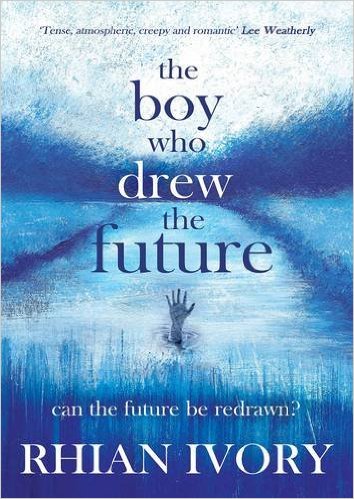
Books from the Pantry: The Boy Who Drew The Future by Rhian Ivory: reviewed by Kev Milsom

Rhian ivory

‘They pushed us onto the street. Maman said they’d called her a “sorcière”, a witch, told her they’d heard the rumours in the village. The fat one pointed at the road to Halstead.

“Look for a tall building with gates and ask to see the Guardians, maybe they’ll believe you when you write ‘widow’! Or maybe they’ll put you in a yellow jacket along with all the other sinners,” he shouted at us, laughing.

They said more things about my father that I didn’t understand, harsh-sounding words Maman wouldn’t let me ask about. She waved my questions away, muttering curses under her breath as we stood outside wondering where to go.’

It’s 1865 and Blaze Ambroise, a mysterious boy of teenage years and French descent – along with his canine companion, suitably named ‘Dog’ – are squatting in an old manor house in Essex, England. Recently orphaned and impoverished, the boy is shunned by the locals, except on rare occasions when they require assistance via his deft skills in herbalism and healing. On other occasions, his unique talent at prophecy comes to light whenever he is given a pencil and a piece of paper. At such times, Blaze and Dog are given food and aid and hounded for psychic answers to the personal problems of the selfish town populace, before once more being shunned by those he has assisted and left alone.

Over a century later, a teenage boy named Noah Saunders is moving around the United Kingdom and enrolling in many new schools, due to his father’s work as a photographer. His one desire in life is to find a sense of routine normality and now, having just moved to Essex, he is hoping to put a troubled past behind him…although a ‘normal’ life always seems to escape his clutches. Could this be due to his mysterious propensity for intense empathy with others, as well as the ability to draw unusual drawings that appear to foretell the future of other people?

And so we are introduced to the two compelling, main characters in Rhian Ivory’s novel, The Boy Who Drew the Future, each sharing similar, eerie qualities and coincidences that bind them quickly into memory.

The style of the book is refreshingly simple, with two sets of first-person narratives being told one at a time. Therefore the reader gets a chapter of modern-day Noah, before switching back to the 1860s with Blaze and Dog in the next chapter, and so on. This structure allows the reader plenty of time to adapt to the similarities and differences between the two characters and their personal accounts; but what really hits home from the very first page is the brilliant standard of writing being demonstrated on the pages.

Simply put, Rhian Ivory’s descriptions are masterful. From describing locations and objects, down to her vivid portrayal of people, Rhian excels at inviting the reader into every scene and using her skill as a wordsmith to alight our imagination. Most importantly, for us student writers who dream one day of attaining success and aplomb within our writing careers, this book is a true masterclass in how to get it precisely right – how to lay out simple words and sentences into truly compelling literature and draw the reader effortlessly into the story with an easy, delightful flow.

‘The inside of the circle was dull and worn with time as if it had rested on many different fingers over the years. I wondered who had worn it last and who would wear it next. I could sense it wasn’t new. It felt weighty as it sat heavy in my hand, full of history. I clutched it, my fingers closing around it like a secret. I imagined the green glowing through my skin, lighting me up, like an emerald fire that could burn, marking me out as a thief.’

As readers, we are effortlessly transported between centuries, alternately following the very real, life-threatening dangers faced by Blaze, before swinging back to the modern day, where Noah’s tensions lie more within school, with new friends and ground-shaking emotions to deal with. As the book unfolds, we are kept wondering on the mysterious connection between the two, young individuals. In achieving this balance, Rhian Ivory doesn’t waste a single line of writing in holding us tightly to her fascinating story.

An absolute gem of a book.

http://www.fireflypress.co.uk/node/162

http://www.amazon.co.uk/The-Boy-Who-Drew-Future/dp/1910080268

https://twitter.com/rhian_ivory


Poetry Drawer: Her Father’s Daughter by Nessa O’ Mahony: reviewed by Natalie Denny

nessa pic
‘My page has been empty for months. Forgive me for filling it.’

Nessa O’Mahony’s ‘My Father’s Daughter’ explores the nature of the imperishable and pronounced bonds between fathers and daughters. We embark upon a poetical journey, combining the autobiographical with the historical through two father-daughter relationships spanning two different periods of Irish history.

Nessa’s poetry is a raw and at times a painfully honest depiction of her family life, especially those memories surrounding her father and grandfather. The finished article is a commentary on love and loss including the reconstructive and subjective power of memory.

From ‘His Master’s Voice’ that looks at life through the eyes of the family pet to the powerful ‘Portrait of the Artist’s Father’ which is a personal invite to observing a dying man, Nessa holds little back in creating her images and exhuming her past.

The poem I identified most with was ‘Those Of Us Left’ which comments on the turbulent aftermath proceeding the death of a loved one. It resonates as it accurately portrays the confusion and stark anger which is very typical of grief but not as often spoken about. The gritty realism in the words leave you uncomfortable but enlightened.

The collection is split into five sections, each focusing on a different area. There is a whole part which utilises nature, weaving rich imagery and juxtaposition to refresh how we perceive sentient beings. There’s a particular reference used to different birds of prey which compares relationships with nature, providing interesting contrasts.

Nessa explores the idea of her own immortality in ‘Walking Stick’ when she details adopting the walking aid that was previously her father’s.The cyclical process of life is a running theme, particularly the role reversal of child to an adult in a parent’s latter stages of life. This is a experience many people have with their elderly parents which Nessa captures beautifully.

‘Her Father’s Daughter’ explores illness in ‘Waiting Room’ and the failing of mind and body while exploring the impact on relationships. It is a body of work that can transcend the ages and has something within that would resonate with many.

Overall the collection is a heartfelt, vivid and moving tribute.

http://nessaomahony.com/?cat=4

https://twitter.com/Nessao

http://www.amazon.co.uk/Her-Fathers-Daughter-Nessa-OMahony/dp/1908836857/ref=sr_1_1?ie=UTF8&qid=1453651415&sr=8-1&keywords=her+fathers+daughter+nessa


Inkspeak: Spoken Word or Poetry? by Vivian Thonger


Inkspeak pic


I’m at the Old Stone Butter Factory in Whangarei, in the Far North district of New Zealand. Craft beer and gourmet burgers feature on the menu, and the clientele is scattered over several battered sofas indoors and out (it’s early summer here). The MC encourages all potential performers (the stage is a slightly raised, black-painted, spotlit corner of the pub) to put their name down for a slot; pen and paper lie on one of the tables. By the time the evening begins, the place is neither full nor empty, but the audience is enthusiastic, clicking fingers to show when they are enjoying phrases and words, as well as whooping and cheering as each piece ends. The atmosphere is encouraging, relaxed, accepting.

The MC breaks the ice by performing first. The amplified words ebb and flow, packed with rhyme, alliteration, extended syllables and high-tempo, rapid-fire delivery into the hand-held microphone. The poet refers on and off to handwritten lines in his battered, folded-over notebook, reciting most of the piece from memory — he may even be adding or rephrasing as he goes — and keeping eye contact with audience members, speaking directly to them. Hand gestures punctuate his expressive delivery, and he is enjoying himself, flicking the mic cord, lunging across the stage. As he finishes the piece, an audience member yells out, ‘Tell it like it is, bruv!’ and they slap hands before he introduces the next poet.

A softly spoken woman shuffles in front of the microphone stand, juggling to extract a single typed sheet of paper from a file balanced in her hand. This is her first time on stage; she is a biologist and has never read out her poetry to an audience before, confesses to being horribly nervous but reads her poem nevertheless. It is a brief and elegant piece in blank verse, and her eyes never leave the page as she reads exactly what is written, her voice neutral. She gets her share of whoops and applause, and leaves the stage smiling.

The flyer for this regular Wednesday-night Dirty Word gig has the byline ‘Poetry and Spoken Word’. Just as well, because although the foregoing two poets could be judged to represent extreme examples of two different genres, most performers, performances and poems are harder to categorise, mixing aspects of both. My own work and style is a case in point. I have participated four times now, performing old and new work each time, including works in progress. No one has asked me whether I am a poet who reads, or a spoken word artist, and I doubt it matters, although my university tutors might disagree.

I graduated from the OU last year. For the first assignment of my Advanced Creative Writing course, I wrote my first poem and submitted it with anticipation. I was astonished when my tutor deemed it a ‘performance poem’ and therefore outside the scope of the course; it was marked low. Although all my subsequent poems satisfied the esoteric criteria of the course, I have gone on to perform those poems and dozens of new ones without considering which genre they belong to, and I am both more carefree and more productive as a result.

Soon after arriving in NZ, I saw the Dirty Word flyer and simply decided it was aimed at me, even though I’d never performed a poem in my life. Those evenings are now a firm commitment and I’m writing more and more to perform. It’s a huge buzz, even if initially terrifying, so I strongly recommend performing (you’ll be amazed how an audience can sharpen up your work and boost your confidence). And to develop your written work, consider creating or joining a poetry crit group where you more actively discuss and critique each others’ pieces. And remember, all poetry is performance poetry, because all poetry is meant for the human voice.

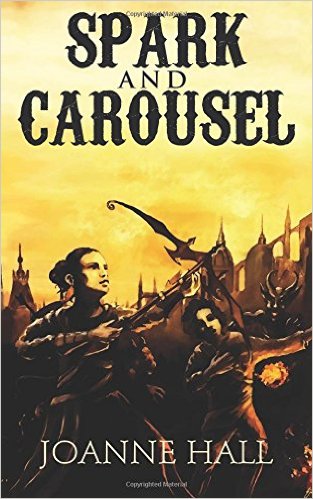
Spark and Carousel by Joanne Hall: reviewed by Inez de Miranda

spark carousel


Spark and Carousel is the first book by Joanne Hall that I have bought and read. It won’t be the last.

Spark and Carousel: the title instantly threw up questions. What spark? What carousel? Was this a story about a fairground? So I picked the book up and read the blurb, which offered an explanation. Spark and Carousel are the main characters in the book. Why they have these names becomes clear. I won’t tell it here; that would be too much of a spoiler. The blurb also says: ‘Spark is a wanted man. On the run after the death of his mentor and wild with untamed magic, he arrives in Cape Carey where his latent talents make him the target of rival gangs.’

Spark and Carousel is a coming-of-age novel, so Spark isn’t a man as much as a confused teenager. Cape Carey is a large grim city, and Carousel, who is not mentioned in the extract above, is a girl – a ‘street rat’ who survives the tough life in Cape Carey by being a member of a gang.

Spark and Carousel is a fantasy novel. It contains magic and demons, but apart from that it’s realistically gritty. The city is riddled with filth and depravity, social inequality is a fact of life, and the characters act and react like real people, in spite of having abilities like controlling rock, or fire, or the weather, or demons.

The characters have flaws, too. No one in the novel is perfect. No one is pure good, and no one is pure evil. Even the demons, however creepy and carnivorous, are ‘only following orders’, and one of the dodgy individuals who gives them these orders is so strong and determined that it’s quite admirable. Admirable in a way that excludes any kind of compassion, yes, but still admirable.

My favourite character was Kayall, a mage with a passion for fashion. Although he irritated me a little in a roll-your-eyes way, I loved how, plastered with make-up and adorned with heeled shoes and dangling earrings, he charms his way through society, bedding random folk of all genders.

There is a fair amount of sex in Spark and Carousel, and on occasion it’s quite explicit. The book is not an erotic novel though – not at all. The sex is functional to the story and to the portrayal of the characters. It’s not particularly titillating or romantic either. It’s just one of the many aspects of life. Sometimes good, often not, as you’d expect in a novel that is set in a big city governed by gangs.

In spite of its grim setting and the difficult lives of the characters, Spark and Carousel is not a depressing read. It’s one of those books that has cost me precious hours of sleep, and that I sorely miss now that I’ve finished reading it.

I strongly recommend this book to any lovers of fantasy and strong, real characters. I’m buying my next Joanne Hall today.

Seasonal Poetry Drawer: Twelve by Matt Hassall

Santas-present-bag

On the first day of Christmas I was beside myself with glee:

I’d bagged a date with a guy who was as handsome as can be.

He seemed intelligent and fun and adventurous and kind!

A combination of things near impossible to find.


We wandered round the Christmas markets, supped on hot mulled wine,

Chatted and laughed – a lot (which seemed a real good sign)

And sweetest of all he bought a little festive gift for me –

An ornate wooden decoration to hang on my Christmas tree.


On the second day of Christmas, a text message asking if I might

Join him for a “winter walk before this day turns into night”.

“How poetic!” I thought as my cheeks began to blush

Like two holly berries at the thought of this winter crush.


When we met to go ice-skating, he produced a parcel from his pocket;

Too small to be a scarf yet too big to be a locket.

It was wrapped with bows and ribbons, on the paper snowy doves

And nestled there inside were some fluffy knitted woollen gloves.


Now, on the third day of Christmas, a request flashed upon my screen:

He wanted to be friends on Facebook – which seemed a little keen.

Both nights had been quite nice and he’d seemed to be quite fun

But to commit to such a gesture felt like he was jumping the gun!


But I dismissed the thought as nonsense and accepted with a click

Then quick as a flash I thought my eyes were playing a little trick…

“A gift for you” he wrote, upon my wall like a confession

Three heart emojis in a row, all beating in succession.


On the fourth day of Christmas, it started out quite quiet…

Before my phone exploded into a notification riot!

He’d followed me on Twitter, liked my pics on Instagram,

Added Snapchat and my Pinterest like some unwanted boyfriend spam!


He’d asked to meet again but I’d got plans to see a friend

But it seemed that to his giving there was no sign of end!

“I was scrolling through your wall” he said “saw you check in on the app,

Sent these four bouquets of flowers straight to you, you handsome chap.”


On the fifth day of Christmas, whilst hopping on the tram

I thought I’d walked into a festive candid camera scam!

There he stood, a grin so wide with placards in his hand;

He was recreating Love Actually – he’d even hidden a five-piece band!


What seemed cutesy in the film, in reality was quite scary –

He had a look running through his eyes – all glossy, fixed and glary.

Then he turned each card in time so I could see what each one said

“You are my one true love, I’m sure! I can’t get you out my head!”


Then the brass band loudly struck up, each player popping out in turn

And the whole situation was starting to really fill me with concern.

Commuters on their way to work, let out cheers and starting clapping,

Whilst one lady yelped as it woke her from her early napping!

That made a man jump and send his morning Metro flying

Then a little baby girl screamed and started crying!


I mean I was speechless, I didn’t know what to say!

Tried to find a way to escape, maybe pretend I wasn’t actually gay?

“You are my one true love” he called “I’ll prove to you it’s true-

With more gifts every day – each especially for you!”


“But” I said in panic “I don’t really see the need…!”

As he dashed right off the tram at lightening reindeer speed.

What started out as cute was now a little overbearing.

It seemed being charmed with gifts was his way to show that he was caring.


So on the sixth day of Christmas, my inbox overflowed!

Six emails sat unread from him, each one of them brightly glowed

With SEASON’S GREETINGS at the top

And all containing vouchers for a coffee shop!


From Starbucks buy a latte and from Costa buy a brew

Then go to Nero, Pumpkin and a trendy place in the NQ.

Next stop: Krispy Kreme for a doughnut combination –

“All this caffeine” I thought, “will give me a Christmas palpitation!”


On the seventh day of Christmas, still determined at his quest,

Seven DVDs were sent each with labels claiming they were the best.

Minions 1 and Minions 2 and Insidious Chapter 3.

Jurassic World and Trainwreck, the complete box set of Glee!


And last to finish off the pile, much to my dismay

Was the super deluxe extended interactive edition of Fifty Shades of Grey!

Now the most ridiculous part of this entire festive con,

I didn’t even have a DVD player to watch any of them on!


On the eight day of Christmas, it started getting very weird –

He’d turned up at my work, dressed complete with Santa beard.

A red fluffy suit and a sack upon his back

With eight electrical goods all nestled in his pack!


A plethora of consoles to play all the latest games upon –

Plus a coffee machine for when all the vouchers were spent and done.

A Blue Ray player and an X Box, Playstations 3 and 4,

An 82-inch plasma and two Wii Fiits left no space upon the floor.


On the ninth day of Christmas, there was no sign that it would stop

As nine new phones came plopping right through my letter box –

A Sony and a HTC, A Samsung Galaxy in its latest make,

Even a Nokia 3310 where I could spend hours playing Snake!


Not forgetting all the iPhones; 4, 5 and 6 plus too.

A Blackberry in ‘Robot Grey’, A Motorola in ‘Smoky Blue’.

A note from him was last to land, one thing he had to stress:

“Charge each one and keep them close so I can always track you down by GPS!”


On the tenth day of Christmas, I was scared of what lay in store

When a delivery from Currys came knocking at my door.

A laptop with a touchscreen, another just with keys,

A third with a detachable screen designed for transportation ease.


And iPads in their multitudes – all light for on the go

But incase I wasn’t satisfied, a ginormous iPad Pro.

A Kindle and a Paperwhite, not forgetting Kindle Fire

And each in turn complete with an extendable charger wire!


On the eleventh day of Christmas, when the postman came to call

I’d nailed up the letterbox, barricaded the entrance hall!

When out in the street came the honking of a horn,

A din breaking through the mist on this early winter morn.


11 cars all lined up, each garnished with a bow!

An Audi, Ford and Fiat had all arrived in tow.

Then a Jeep, a Porsche, a Bentley, a new Picasso Citroen,

Mini, Nissan, Skoda and a BMW brightly shone!


He was sat atop the last, like Santa on his sleigh –

“Each of these” he called “show how much my love does weigh!”

“But, this is getting mad!” I said “I haven’t even passed my test!”

“Then” he chuckled “HO HO HO! I’ll buy you more lessons ‘til you’re the best!”


On the twelth day of Christmas, feeling somewhat flabbergasted,

Surrounded by his tonne of gifts; nearly two weeks this had lasted!

I was feeling scared to leave my flat, who knew what lay ahead…

When out he popped, shouted “Surprise!”, from underneath my bed!


I yelped, I screamed, I leapt with fright whilst running for the door

“I hope” he said “you like your gifts – as I come bearing just 12 more!”

Tickets for a worldwide trip – to take in all the sights

The Barrier Reef, The Taj Mahal, the Rockefeller Christmas lights!


China, Italy, Sweden would be next along the way

Then Chile, Poland and Kenya for the entire month of May!

Australia and Mexico and last stop the North Pole

“By plane and boat and limousine” he sung “that’s how we will roll!

All these gifts and so much more are what I give to you

To prove that you’re my one dear love, it’s undeniably true!”


“The gesture is very nice,” I said, “but I don’t understand the need

To show someone you care with a mountain of such greed!

I don’t need these things to understand a gesture of goodwill

And my brain hurts to even imagine your next credit card bill!”


Christmas is for giving, yes, but does that really mean

We need more than one computer and a tonne of fresh caffeine?

It’s easy to spend a wad of cash as a flash way to impress

But there are lots of other ways to do this that will cost you a lot less.

Receiving lots is lovely but there is another way –

The little things are the best to receive on Christmas Day.


He sighed and nodded – “It has cost an awful lot of dough…

And I had 14 animals all lined up for the day after tomorrow

But it must seem a bit too much – all the gifts I started to bring”

(Luckily he’d kept all the receipts so he could return almost everything.)


“How about we start again and go for a nice long walk?

We’ll take in all the sights we see – and even better we’ll actually talk…”


And with that recognition, a snowflake gently drifted down

As we began to think of other ways to spread festive cheer all round.

In each house and street and town, the frost created a shimmer

And being truly connected to each other is the way to make Christmas glimmer.


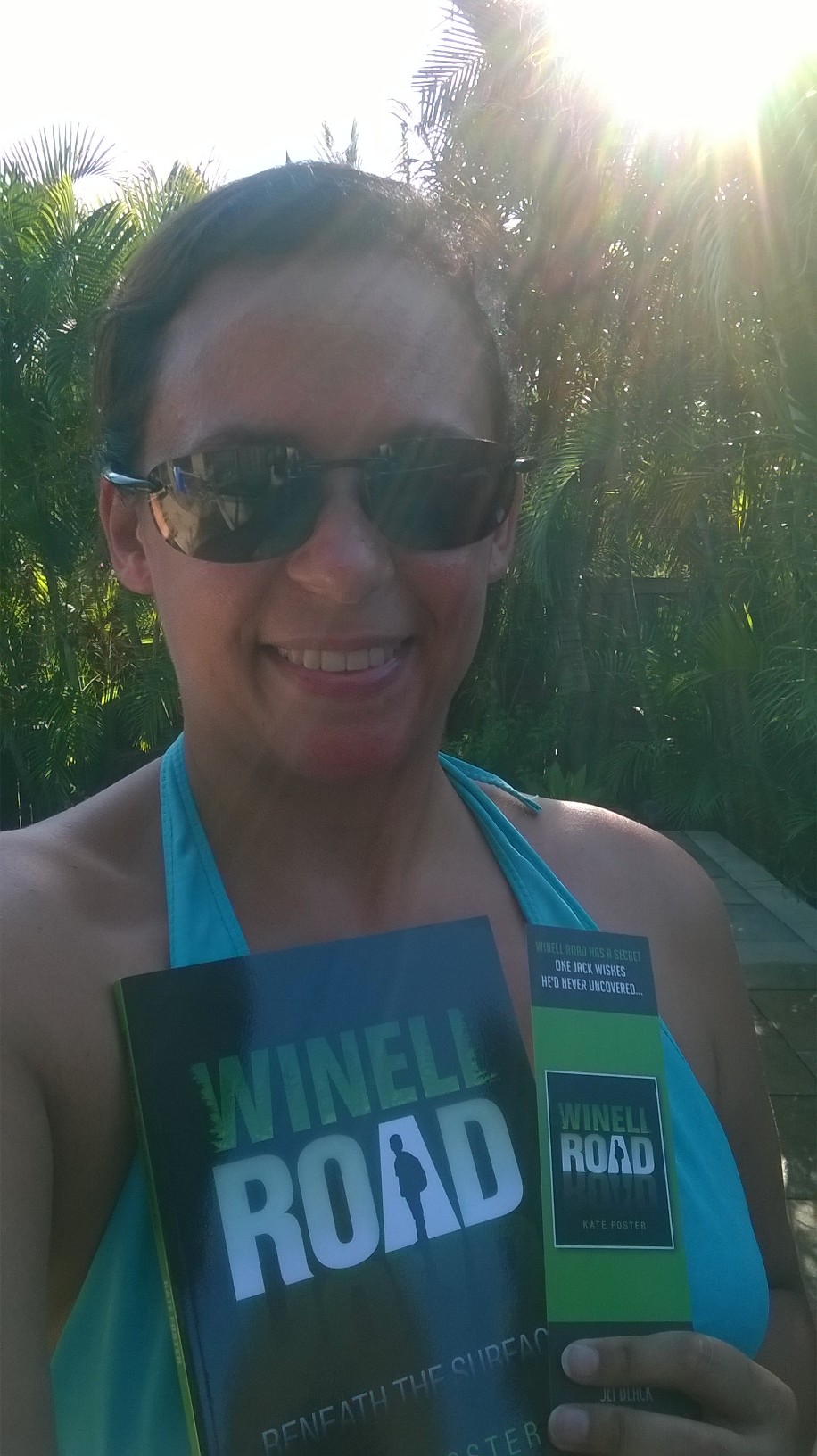
Books from the Pantry: Winell Road: Beneath the Surface by Kate Foster: reviewed by Kev Milsom

winell

‘He had to run. Whatever was about to happen, he didn’t want to find out. This was huge.

Massive. Ginormous. Ginormassivous!

One word ran through his mind, over and over.

Abduction.’

Young Jack Mills lives at Number 5 Winell Road – an exceedingly boring cul-de-sac with a high number of empty properties. Amongst the occupied houses are some unusual individuals – including Petula, an extremely nosey, Grade-A curtain twitcher, who never misses a single event in the road, and the very odd Mrs Atkins who never seems to leave her house.

All remains dull for Jack in Winell Road until a life-changing moment when a circular, silver unidentified flying object makes an impromptu appearance, right in front of his eyes.  Suddenly, nothing is dull and everything becomes a potential reason for the arrival of aliens.

Along with the obvious ‘what do aliens want with a twelve year old boy?’ Jack suddenly begins to ask a variety of new questions, including: Why are mysterious cars parked outside two unoccupied, neighbouring houses? What is the significance of the purple-edged, alien collector cards that his father gets for him? Who exactly are the new white-haired neighbours and why are they so unusually tall? Aside from working on totally impractical inventions, such as self-opening windows, why does Jack’s father spend so much time in his office? What on Earth are those strange tapping noises in Jack’s bedroom?

Kate Foster skilfully lays the foundation for a fast-paced adventure in this children’s book, aimed at the nine to twelve reading age. As such, it works perfectly, keeping the action flowing, while introducing the reader to a variety of interesting characters.

As a former English tutor for this age group, what immediately impressed me was the range of vocabulary within each page; a balance nicely given between everyday words and phrases, combined with new words to stretch and improve comprehension and spelling – a task certainly not always easy to achieve.

Kate succeeds in keeping the reader engaged in the action – again, something not always simple to attain. Yet within Winell Road: Beneath the Surface, the reading process is made effortless by good writing.

When I think back to my early reading days, when I first became immersed within exciting fictional stories, I am reminded of what held me glued to each page and how much I wanted to read on. I am also reminded of how memorable these early books were – and remain nearly half a century on. Kate Foster achieves this with ease – hopefully beginning an inspirational journey for many new readers and encouraging them to read more.

‘Three little green men with a story straight out of Hollywood.

How should he play this? Maybe he should just go along with it.

“How do I know that you’re not dangerous aliens?”

A smart question; Jack’s confidence had returned. He looked around the room for signs of a hidden camera.

“Because we are not,” Freond-the-Red said.

Jack waited for more but it seemed to be the end of the answer.

Twitter
Facebook
Editing Website
Author Website
Amazon UK


Inky Elf Interview with Kate Foster by Deborah Edgeley

Bookhuggles

Congratulations on your new book Winell Road, which was published this year by Jet Black Publishing in Australia. As our chief proofreader at Ink Pantry towers, we are all very proud of you. Can you please give us a synopsis and tell us where your inspiration came from?

Thank you so much! Winell Road: Beneath the Surface is the story of typically twelve Jack Mills. Average at most things, bored, embarrassed of his parents, starting to notice girls. The book opens with Jack’s encounter with a flying saucer and a visit from three little green men. But that’s where the clichés end. Jack goes on to discover that what NASA think they know is far from what’s actually going on. Secrets he wished he’d never uncovered. It’s fast, fun and different. I’m super proud of the fantastic reviews I’ve received so far.

The story grew from an idea I had based on a scene from the film True Lies. I then paired this up with other ideas I’d jotted down in my notebook but had never done anything with and the first draft exploded from there. It’s a sci-fi adventure story for mid-grade kids, so really nine years and over. It’s not a deep, heavy and meaningful read at all, more a place for kids to escape.

Winell Road is a series of books. Any clues for book two, or is it in the early stages?

Book two is written and I’m deep in edits. Hopefully a release date will be early to mid-2016. This instalment is also set on Winell Road, Jack’s home, and, also dives straight into action. I’m an evil author, I don’t give poor Jack any time to accept his new life, instead I force terrible dangers upon him, his family and friends, then sit back and watch him suffer! But he’s a fighter with more strength than he realises. Plus, there might just be a romance brewing…

You are a freelance editor and proofreader. Is it tempting to edit as you write?

Not really. I absolutely hate first drafts. Passionately. They are a battle for me from start to finish. There is some enjoyment in that hatred, otherwise I wouldn’t do it, but I become so obsessive and involved in translating these vivid scenes in my head to words that I just focus on winning that battle first. When I get to the revision stage I’m a much happier writer!

What are Pitch Wars and how have you been involved?

Pitch Wars is an annual writing contest hosted by writer and all round incredible person, Brenda Drake. The idea of the contest actually came about several years ago after Brenda watched Cupcake Wars, I think!

Basically, a bunch of mentors – writers, editors, interns, etc – of which I was one this year, donate their time to help one writer who is seeking literary representation, hone their manuscript over the course of a couple of months and then showcase their work for the eyes of agents. Entrants choose four or five mentors in their category based on their likes, dislikes, strengths, etc., and send in a sample, then the mentors spend a couple of weeks reading, considering and eventually picking one writer to help.

It’s an amazing opportunity, with a high success rate of agent/author match ups. But better than this, it connects new writers to a wide and supportive community and offers tips and guidance on writing and submitting. I recommend anyone with a polished manuscript to consider entering next year. There is all to gain.

Living on the Gold Coast must be inspiring for your writing. Tell us about your creative space and routine as a writer.

Oh, it is! I am originally from the South East of England, a beautiful part of the country, and have only lived here a couple of years. The Gold Coast really does have it all: stunning beaches, tropical rainforests, picturesque countryside, and perfect weather. Everywhere you look there’s a beautiful view. But, in fairness, I could write anywhere. And I do! A typical day will include me initially setting up camp in my bedroom, then moving to sit by the pool, then maybe to the lounge, the kitchen and back outside. I often take my work to a new writing hub on the coast called Writers Activation as well; however, I don’t tend to be very productive on those days as there are usually too many fascinating people to chat with! As for routine, although I will work when my kids are at school, I can’t always force or fight when inspiration strikes, so I might be awake early, up late, or writing whilst cooking dinner!

Do you listen to music when writing, or do you need complete silence?

Not usually. I prefer the sounds of the world around me when I write. Birds, traffic, my neighbours, the kids fighting, the washing machine! I love music, but what I listen to usually has me up dancing, which is obviously then counterproductive.

Who inspires you? Give us a couple of your favourite novels.

I’m inspired by so much. My family, strangers, movies, other writers. It’s impossible to predict when that moment of inspiration might come. I could be watching a couple argue in the supermarket, driving home listening to the radio, watching one of my son’s TV shows. Who knows? But I always have my eyes and ears open – and the good thing about living in the sunshine is you get to wear sunglasses all the time so you can watch people without them knowing!

I love reading, obviously, and have a vast list of favourites. But, to name a few, my absolute undying reading crush is Liz Jensen (whom I interviewed for Ink Pantry!). I’ve read and digested, numerous times, all of her books, my favourite being The Uninvited. I also adore The Curious Incident of the Dog in the Nighttime by Mark Haddon, and then throw in some Enid Blyton, The Wishing Chair or The Faraway Tree, and you’re looking at a pretty mixed up bookshelf! Another favourite is by a yet-to-be-published writer I had the pleasure of working with this year, J.C. Davis. Her YA novel Cheesus Was Here is beautiful, spine-tingling and raw. I cannot wait for it to hit the shelves one day. I literally am its number one fan.

Do you like poetry?

Honestly, on the whole, not really. But that isn’t to say I don’t read and listen to recommended works. I love the silly, humorous poems my children write – they have warped imaginations! So much of the poetry I read at school, and since, is too serious for me. I like dark and disturbing, touching on life’s pains, I truly do, but when in poetry it doesn’t have the same effect on me as novels. Maybe I’m approaching it all wrong; maybe I’m simply not looking in the right places. I am always open to recommendations though.

Apart from your Winell Road series, have you any other thoughts about your future as a writer? Would you branch out into film, for example?

I have a bunch of other manuscripts at various stages of polished, mostly middle grade, but also an adult novel I’m really excited about called Breastfeeding Club, which follows five new mums in their first year. I’m always attending courses, and already have a comedy writing workshop coming up in the new year. I’d love to learn a little more about screenwriting too. One day. My editing work comes first, however. It’s where my passion lies – working with new writers. Ask me to choose between writing and editing, it would be hard but I’d pick the latter every time.

Twitter
Facebook
Editing Website
Author Website
Amazon UK


The Spook’s Apprentice by Joseph Delaney: reviewed by Kev Milsom

spooks pic

‘The Spook’s trained many, but precious few completed their time,’ Mam said, ‘and those that did aren’t a patch on him. They’re flawed or weak or cowardly. They walk a twisted path taking money for accomplishing little. So there’s only you left now, son. You’re the last chance. The last hope.’

Although I live in a house where female family members digest fictional books on an industrial level, it can still take me a while to catch on to new reading trends. While aware of regular visits from the postman bearing many book-shaped packages, along with mother and daughter phrases such as ‘it’s the next one in the series, you’d like them’, ‘you really should start reading them’ and ‘they’re right up your alley’, it’s taken me the better part of 2015 to finally succumb to temptation and agree to begin reading a series of books focusing on a shady, supernatural character known as The Spook.

The founding premise for this series of books (known as The Wardstone Chronicles and now totalling thirteen in number, with some spin-off books and a movie) is – like all the best creative ideas – refreshingly simple.

Thomas Ward is born into a Lancashire farming family around the year 1700. As the youngest of seven children, it is unlikely that the farm will ever find its way into his keeping, yet, unknown to him, his canny mother already has a plan. For Thomas is no mere farmer’s son. He is the seventh son of a seventh son…as is his father. Born with such a fine, supernatural pedigree, his mother decides that there is only one clear career pathway open to Thomas – he will become an apprentice to the most frightening man in the county. Therefore, aged thirteen, Thomas is given a month’s trial as an apprentice with The Spook – an elderly man who carries a double-edged reputation.

First, as the person assigned to deal with all supernatural problems across the entire county, The Spook carries immense respect and gratitude from locations besieged by ghosts, boggarts, witches and many other slithering, creepy beasties. Here is a man whose job description includes the imprisonment of evil spirits and cleansing houses of bothersome poltergeists.

Second, as the person assigned to deal with all supernatural problems across the entire county, The Spook is someone to fear; a man who walks the paths of darkness and magic. Here is a man who likely brushes shoulders with Satan himself as a natural part of his daily work and is therefore shunned by the very same society that occasionally demands and pleads for his help.

Thomas Ward is introduced into this eerie world – starting with the very basic elements of his apprenticeship; namely being left in a haunted house overnight, armed with one lit candle to test his courage and mettle against something long-dead and unseen (but definitely not unheard) that still resides within the house’s cellar…mostly.

‘When the clock strikes twelve, take the stub of the candle and use it to find your way down to the cellar…listen carefully – there are three important things to remember. Don’t open the front door to anyone, no matter how hard they knock. Don’t be late going down to the cellar.’

He took a step towards the front door.

‘What’s the third thing?’ I called out at the very last moment.

‘The candle, lad. Whatever else you do, don’t let it go out…’

The author, Joseph Delaney, has a writing style that immediately captures the reader and draws them into his world. In some ways he may remind the reader of Stephen King, in that he writes simply and directly. They also share the honour of being effortless, master storytellers. This is not to say that there is no descriptive content within the pages; far from it. While the reader is left in no uncertain terms about location, the main focus is upon the story itself, along with the development of the characters who inhabit this early 18th century world.

As with all masters of their writing craft, Joseph Delaney instantly sets vivid scenes and fills them with gloriously rich and detailed characters; making the process of imagination an easy and pleasant journey. As such, the story moves quickly, yet, as readers, we never feel a sense of feeling disjointed or being detached from the action.

Everything is related in first-person, through the eyes of an often terrified thirteen year old.  We’re in there from the start and Joseph Delaney makes sure that we stay the course, hanging on to every word of the tale as it unfolds around us.

Accordingly, this set of novels could be used as prime training material and sources of inspiration for all budding authors, of any genre – namely, grasp the reader’s attention from the very first line and never let it drop for a single moment.

It’s a true writing gift and Joseph Delaney demonstrates it with admirable ease.

Thoroughly recommended.

Shifting Sands: Tales of Transience and Transformation by Christine Cochrane

Cockrane


Congratulations to Open University student, Ink Pantry’s Fields of Words author and Mslexia short story prizewinner, Christine Cochrane, who has published her first short story collection.

http://www.amazon.co.uk/Shifting-Sands-Tales-Transience-Transformation-ebook/dp/B0187MJUL2/ref=sr_1_1?ie=UTF8&qid=1449741458&sr=8-1&keywords=shifting+sands+christine+cochrane

http://lumphananpress.co.uk/product/shifting-sands/


Seasonal Poetry Drawer: Fnarg’s Christmas by Kev Milsom

Santa
Fnarg’s Christmas by Kev Milsom
T’was Christmas time up in Lapland, 
Old Santa stood wiping his brow, 
“I hope Farmer Giles will be pleased” said he, 
As he finished gift-wrapping a cow. 
But working nearby in the corner, 
A young helper named Fnarg Applepip, 
Sighed loud and then shouted in anger, 
“This bottle won’t go over this ship!” 
In his rage he picked up the tangled wood, 
And threw it hard, feeling very inferior. 
The ship’s maiden voyage was a sail through the air 
Before it docked, deep in Santa’s posterior. 
The helpers all started to panic, 
And poor Fnarg he went white as a mint, 
While Santa uttered some very bad words 
As his rear went a shocking, red tint. 
His helpers, they rallied and started to tug 
But although their pulling was frantic, 
Protruding from Santa, could be clearly seen 
The propeller and two funnels of the Titanic. 
Mrs Santa was called to the scene of the crime 
Where she screamed and fell down to the floor, 
Screaming again as she fell on some marbles 
And even louder as she rolled out the door. 
“I’ll fix Santa’s wounds!” said a tall man called Norman 
As he jumped down from a very high shelf, 
“Thank heavens for that!” the helpers all cried, 
“For Norman, the National Elf” 
But now they all had a big problem, 
For Santa’s journey of twelve thousand miles, 
Could never take place with a ship in his bum, 
Which was playing merry hell with his piles. 
“It’s your fault, you steaming great nana!” 
Santa’s helpers yelled at Fnarg in a rage, 
“We’re now running 45 minutes behind, 
He should be dashing over Spain at this stage!” 
So young Fnarg was hustled and bustled 
As they squeezed him into a red suit, 
Then glued on some wool for a fluffy white beard 
And finished him off with black boots. 
“You’ve got to get going immediately” 
Said an elderly gnome called Ray, 
“Santa’s having extractive surgery, 
So we need you to leave right away.” 
Just then a door opened and in came a pixie 
Herringbone Twang was his name, 
His eyes rolling wildly with panic, 
His arms full with toys and games. 
“Things are very bad!” said he, with a frown, 
“The kids’ presents aren’t going well at all. 
All the bicycles have got square tyres, 
The swingball’s all swing, and no ball, 
Barbie’s totally drunk in the kitchen, 
Singing a very loud rugby song, 
While Action Man watches her, clapping, 
Shoving Monopoly cash in her thong. 
Ken’s in the cupboard with Sindy, 
”They’re all over each other” he groaned, 
The Pokemon are all playing Russian Roulette 
And Winnie The Pooh just got stoned. 
In the toy hospital it’s total chaos, 
Beds all full of sick Beanie Babies, 
They’re screaming and frothing at the mouth, 
I’m starting to think they’ve got rabies. 
The Playstation 4’s have all gone on strike, 
The paint in each paint box is grey. 
Noddy’s doing a ram-raid in Toytown, 
All in all, it’s a hell of a day!” 
Now in everyone’s life there comes a time, 
When we have to stand up and be brave. 
So they found Fnarg hiding in a flowerpot 
And frogmarched him to the Santa Cave. 
There, down in the grotto, his eyes fell upon 
A pure vision of Christmas delight, 
For the walls were all shiny with magic, 
And the floors speckled with sweet rainbow light. 
There, in the middle, stood a sight to behold, 
A huge sleigh made of gold steel and wood, 
Ready to deliver presents to all girls and boys 
Who’ve been good all year round, as they should. 
And there, the magnificent reindeer were: 
Dasher, Vixen, Comet and Dancer, 
Blitzen, Donner, Bernard then Cupid, 
And eating a cream bun, brave Prancer. 
At the head stood Rudolph the Red Nose, 
So handsome and quick to the last, 
Behind him was Bernard the Brown Nose 
Just as speedy, but can’t stop so fast. 
“Now listen!” said Herringbone Twang to Fnarg, 
“We don’t have time for no twaddle, 
It’s late and we really up a certain creek, 
And we don’t even have any paddle. 
So you go out there and do your best, 
I know there’s no presents to give out 
But there’s enough fairy magic for one big wish, 
This is your fault, you stupid great lout! 
For with Santa disabled, the toys have rebelled 
And all of their magic’s gone bad, 
So you got this small pile of fairy dust 
I want the best Xmas we’ve ever had. 
I want to see billions of happy smiles 
And people worldwide without a care, 
If you don’t then I’ll rip both your arms off, 
And feed them to Paddington Bear!” 
So Fnarg was thrown in the back of the sleigh 
And Rudolph’s red nose twinkled bright, 
As the reindeers and sleigh swooped skyward 
Up into the starry, clear night. 
Young Fnarg stared deep at the Fairy dust 
And wondered quite what he could do, 
An hour ago he’d been making a gift, 
And now he was deep in the poo. 
With just enough magic for one big wish, 
He thought hard about what he should say, 
Perhaps he could try to bring world peace, 
Or make hunger and famine go away, 
Fnarg looked out and saw twinkling lights
As far as his eyes could see, 
And said, “Just make Xmas a perfect time, 
Make it joyful, as it really should be. 
Take away all the stress throughout the world, 
And all things that make Xmas unpleasant, 
Put an end to all the commercial rubbish 
And ban the giving of presents.” 
From the sleigh there came a flash and a bang, 
Then suddenly, nothing but quiet. 
“That was perfect” said Rudolph, turning his head, 
“I hope so” said Fnarg, “…had to try it” 
The sleigh turned east and flew through the air 
As it returned to the chilly North Pole, 
“No more presents?” yelled the Elves, when he told them, 
“Oh great, we’ll all be on the dole.” 
On Xmas morning over six billion people 
Awoke with huge smiles on their face, 
Then closed their eyes slowly 
And said a prayer for the whole human race. 
Not a thought was aimed to wrapped presents 
Or the size of the turkey they had, 
Instead they all thought of their loved ones, 
And sent prayers to the sick and the sad. 
No-one homeless sat on the roadside, 
Those without were invited inside, 
The world was covered in laughter 
Everyone’s heart shone with pride. 
People forgot about religious division, 
And the colour of one’s skin at birth, 
For the first time people truly listened 
To their brothers and sisters on Earth. 
They danced and listened intently, 
While laughing for all of the day, 
Which meant that hatred, fear and ignorance 
Began melting and fading away. 
In the evening as darkness descended, 
A pinpoint in the sky grew bright, 
And all who watched the hovering star 
Agreed that all was perfectly right. 
“How long will it last?” said young Fnarg Applepip, 
To Santa, who stood at this side, 
Both watching the light in the sky grow in strength, 
With eyes and mouths open wide. 
“A day, a month…who can tell?” 
Said Santa, “At last they’re not living in fear, 
In theory it should be forever… 
If not we’ll try again next year. 
You’ve given them hope, and shown them peace, 
In short, now they have a new start. 
It’s their lesson to focus on being closer, 
Instead of ways to keep them apart. 
Let them feel the sensation of true love 
And then let them find their true way.” 
So ended an important day for mankind, 
The most perfect of all Christmas Days.
Picture: telegraph.co.uk