Inky Interview: Author Tom Barter: with Kev Milsom

Hello Tom. You’ve recently released a new book entitled A Murder of Crowe: Something Wicked. Could you share some information on this novel please and where the original inspiration came from for the characters and storyline?

Good to hear from you and thank you for reading my book! I hope you enjoyed reading it as much as I enjoyed writing it. Well it’s actually a sequel! It’s the second book in a series that I’ve started writing about the titular detective, Maximus Crowe. I knew how to finish the first book but I wasn’t sure how to get to the conclusion,, but my mind was bursting with ideas for future novels so I decided to write the sequel then go back and finish the first which will be coming your way soon! Whilst writing Something Wicked I was careful not to give away any serious spoilers for the first book which I suppose in terms of plot function will be a bit like the Star Wars prequels, minus Jar-Jar Binks of course.

Growing up, who were/are your literary heroes and biggest sources of inspiration? Also, what additional authors became endeared to you during your time at Liverpool Hope University, whilst undertaking your BA in English Literature?

As a small boy I thrived on the works of the Brothers Grimm which all children are introduced to via Disney of course. I read the original fairy tales via the Folio Society. Growing up I read Bram Stoker, Mary Shelley, Edgar Allan Poe, Joan Aiken, C. S. Lewis, J. R. R. Tolkien, Robert Louis Stevenson and naturally Roald Dahl, without which any childhood is incomplete and needless to say the same goes for J. K. Rowling. I read Gormenghast by Mervyn Peake when I was nine and around the same time became interested in many of the books already gathering dust on the family book shelves. I read Le Morte d’Arthur and also The Woman in Black and eventually found my way to the works of Arthur Conan Doyle. I enjoyed Sherlock Holmes and The Hound of the Baskervilles was an influence on my book, given the slight supernatural element and the fact that it takes place in the countryside, away from the city of London, which is the detective’s normal hunting ground.

At Liverpool Hope, my passion for the Brothers Grimm and Edgar Allan Poe was rekindled and I read a lot more of his work, including his ratiocinative tales. I tried to channel some of his dark humour and his talent for the macabre into Something Wicked. I also discovered Angela Carter and Truman Capote whilst at university, both of whom I became very fond.

Where is/are your usual, or favourite, writing location(s), Tom? Also, when making notes for literary projects, is your usual tool a pen/paper or a computer keyboard?

I write via the laptop in my dining room, usually accompanied by a pot of tea in the day or a bottle of wine in the evening! I have a separate folder where I write down notes or possible future scenes for whatever book I’m writing. I first started writing when I was thirteen and it’s a habit I’ve kept up since then. If I have an idea out in a café or bar or at a family member or friend’s house where I can’t access a computer, I’ll commit it to memory and hold it in the corner of my brain like a squirrel storing nuts in its cheek for the winter!

You’ve worked in various jobs where you have close contact with the general public. Has this been a rich source of creative inspiration with your writing? Are you a people watcher?

Sometimes, occasionally, but generally speaking I try not to be voyeuristic. Whenever I’m writing a scene featuring a character who will not be significant to the plot, such as a member of staff or passer-by, I try to make them memorably eccentric or at least recognisable as the kind of person whom one would encounter in day-to-day life. If it’s a bank-clerk or shopkeeper, base them either on a charming, funny or difficult and annoying person whom you’ve met in that capacity. It would be so easy to just say “a man” or “a woman” and have them say their lines as though reading off a script, but so much funnier or at least less turgid to make them a person whom you may recognise from your day-to-day life. My main characters are, of course, far too fantastical to be based on anyone I know!

Aside from writing, are you drawn towards any other forms of creativity, such as music or art? What do you do to relax you within life, to move you away from everyday stresses?

I enjoy listening to music and paintings and try to incorporate as many forms of art into my books, either as inspiration for characters or scenarios, or just for characters within the narrative to look at and relate to the plot. It adds to the scenery in one’s imagination and turns the book into a more aesthetic, and indeed, mentally cinematic experience. Nevertheless, I have no talent for painting and still less for music, though I still appreciate both art-forms. In order to relax in life, I’m drawn to the usual stuff; reading, film-watching, secretly plotting to take over the world, cooking, gardening, psychology, philosophy, long walks and getting into lengthy, passionate arguments with mirrors and inanimate objects, either at home or in public. You know, normal stuff.

Thank you for sharing your insights, Tom. To conclude, could you share some thoughts on present & future creative projects? What does 2017 and 2018 hold in store for you?

Well the prequel to Something Wicked will be headed your way very soon as indeed will the sequel. A Murder of Crowe is going to be part of a fairly lengthy series which has all been planned. And to quote Bette Davis, “Fasten your seatbelts!”

Inky Interview: Musician and Poet Simon Ross

Tell us a bit about yourself.

Six-foot-one, eyes brown, early forties, greying hair. No distinguishing marks; Art History and Film Studies graduate from Glasgow University; never considered that I could make a living from the kind of writing or music I make so I have mostly worked in office administration. I have three children: Amber, 17; Lily, 14; and Isaac, 10. Four cats, two dogs, one horse; lots of books and records. Moved from Scotland to Macclesfield eighteen months ago – the hometown of my partner, Jackie.  

Can you share with us a couple of your poems and the inspiration behind them?

This one is about the arrival of the ADP riot tour in Macclesfield last year. It was a conceptual art installation by Jimmy Cauty that toured the UK. It was a sculpture inside a shipping container of the aftermath of a serious riot. It was an attempt to get at the feeling I got from viewing it.  

Container Quartet.

MAERSK

The virus of the object – through the veins and arteries of the island – m23 a666 endless endless.

Arrival of chaos in reverse – its already happened – view the post action – rushes of what was.

Where were you, when were you, who were you, who you were, where you are, are you there

Hamburg sud

The mythic tour coast to coast incendiary Visigoth punk revelation – each town detonated on arrival city smoulders in fake fur and eyeliner – they can take it and use it. A hundred formations and reformations in the wake

K line

Let Freedom ride – going to further – figure of outward never looking back, can’t look back, blinded by vision – eternally reconstructing the fractured narrative until the clock stops and then opens the steel doors to find thirty stowaways suffocated and yet one flicks an eye open at the sunlight piercing the dead interior. The authorities give him a cup of coffee and let him walk away into the streets by the harbour – to begin telling the tale.

CHANG

The audience autograph the star – national debris and albions psychic leakage document of end of euro trip and winning at go and the reduction to yes no for against impossible complexities of indifference and sullen obedience – insurrection contagion captured on highway CCTV– memory and memorial of resistance germ – shaped conscience with an uranium half life – before and after simultaneous arrival/dispersal.

—————————————-

This one is called ‘Hook and Removal’. I think this one is trying to get a feeling of a confusing dream – not exactly a nightmare, more a sense of being stuck in an alternative reality. I like the surrealist painters very much, so this is maybe something like walking through a de Chirico landscape.  

There is always an absence or maybe a blockage I can never decide

Approaching the resolution the film stops

The road suddenly ends

And there is nothing


Occasionally I feel a pull towards form behind or within the end

A subtle gravity

A revelatory attraction that I can never access


Empty stillness is what I expect but in fact it could be almost anything.


Let’s revisit the city, call it London, but it isn’t

Out in a zone devoid of history or culture

There is a river but no one talks about it.

There’s a commercial zone lock ups and railway arches

Cavernous interiors of a dubious economy


Wide streets with parked cars

People intent on getting somewhere else


There is a park with war memorials some of them still to be fought

School children in uniforms walk in twos


Back in the interior the light drips from a fissure in the ceiling

Pools of fading light ripple out and away – soundless light drips


Sudden faces lit up like carriages passing at speed at midnight

Eyes swivel in the death posture

Return to black


Even in the lightest times there can be a sense of this non entity

Weird sentinel of forbidden voyage

Wait, waiting

Unlikely final companion much delayed but elegant excuses

Offered – accepted and so begin.

What themes keep cropping up in your writing? What do you care about?

I have a box full of most of the things I have written in the last twenty years or so. I would say that themes of isolation, stillness and disintegration figure prominently. I am sometimes surprised at the violence in the images and I also have something of a preoccupation with death and altered states. I wouldn’t say I am particularly morbid or a sombre person, so I’m often surprised by what comes out. They are primarily internal imaginings and not much concerned with external descriptions. I like short sentences – space, quiet and movement. I care about the idea that language can be a means to solace and can, when employed in the correct manner, create a meditative insightful frame of mind – searching for the correct manner is an ongoing project.

As well as a writer, you’re a musician. What kind of music do you play and does it inspire your writing, or vice versa?

I like to play improvised music. For some reason, I have never been able to remember chord progressions and lyrics unless they are very simple, so it’s easier for me to play and see what happens. I particularly like playing in improvised groups. The exception to this is electronic music; software means it’s a lot easier to structure and to create and edit. In electronic music, I prefer to work alone. I have to admit that I don’t feel the music inspires the writing – perhaps I am trying to go after a certain feeling that music evokes sometimes, but not often; in that sense, perhaps music is more primary for me. One thing where there is a crossover is in terms of performance. I have been performing music fairly regularly for the last ten years or so but it’s only in the last year that I have been performing poetry on stage. I like the different expectations and anticipations of reading aloud to an audience. For the longest time my writing was only meant to be read so it’s been interesting to speak it out loud and learn more about what the poems might be about.

If you could change one thing about the world, what would it be?  

War has to stop. I genuinely believe that if war stops everything that has been diminished in life and on the planet would be allowed to flourish.

Who inspires you and why?  

People who are unafraid to stand up for what they believe. Even when everyone around them is telling them it’s not working and the world seems indifferent to what they do – they carry on because they know they are right even if they can’t fully describe why. Artists that inspire me the most are John Cage, Charles Olson, Willem de Kooning , William Burroughs, Iain Sinclair, Richard Long, Lou Reed, Stanley Kubrick, Kenneth White… many others, but these ones come to mind first.

Tell us about one of the best days of your life.  

Meeting Jackie in October 1996. My whole life changed forever and for the better – twenty-one years later, it’s still changing in lots of good ways.

What are you reading at the moment?

I tend to read lots of things at the same time and I don’t necessarily finish all of them. Novel-wise, I just finished Neuromancer by William Gibson, and I have just started reading Kafka’s The Trial; I’m also half way through Orwell’s 1984. I don’t read a lot of contemporary fiction; mostly I try to work thorough great books from the past. In terms of poetry, I’ve been dipping into ‘Canterbury Tales’ (the un-modernised text) Blake and David Jones. I like to read philosophy and political theory too, so right now I am going through John Rawls’ A Theory of Justice, Nick Lands’ Fanged Noumena and a bit of Martin Heidegger, who I’ve been trying to get to grips with since university.

What is next for you? What plans have you got?

I want to continue creating and collaborating with others. I would love to set up an electronic music festival in Macclesfield sometime this year. Mostly I want to carry on moving forward and outward into new things.

Inkspeak: The Invention of Sand by Mark Sheeky


We glass sugar pieces
leap in old Syrian wind,
over countless ripples of red ochre, simmering
under yellow sunrays’ gaze.

A billion gemstone lives,
trampled by gawping camels,
unaware of the destiny of silicon;
its conquest of space.
Its conquest of biological life.

The Earth in warming rotation
heating the air, a solar hum,
warm and smoky, perfect
for the robot few,
which will out-perform civilisation.

We minions,
we dead flakes of crust,
of archaic skin.
Dust to dust.
The desert will win.

Mark Sheeky’s Website

Inky Interview Exclusive: Poet Andrew McMillan: with Claire Faulkner

Where did it all start for you? What made you want to be a poet?

I always wrote as a child, as I think a lot of people do, and then when I was about sixteen I started reading poetry again, after moving away from it a lot during my younger teenage years; so I started to emulate what I was reading (we’re all readers before we’re writers) and it seemed to me a great way of distilling the madness and confusion of the world.

How do you balance your writing alongside your job as a lecturer at Liverpool John Moores University? Do you have a writing routine?

I don’t really have a routine; on days when I’m not in my university office I still like to wake early, perhaps writing for an hour, before getting on with the rest of the day; if I have a commission or a specific piece I’m meant to be working towards, then that will often force me to sit down at my desk like a proper writer and try to conjure something up – but usually poetry comes to me very slowly and very unexpectedly – a line coming from wherever that place is that poetry comes from, and I’ll write that down and then just try to let it lead me wherever it wants to go.

Your poems are often personal and intimate. Human nature, desire and relationships are reoccurring themes. How difficult is it to put that part of you and that level of emotion down on paper?

I’m quite a shy, reserved person in many ways and so that level of intimacy is difficult; it just seemed to me that I was interested in relationships, in desire, in the body, and if I was going to write about those things then I had to fully commit and write about them entirely, there was no point doing it half-heartedly, or being embarrassed by it, the poems would only work (I told myself) if I went completely into them, if I told the whole truth (poetic truth rather than what-actually-happened truth sometimes); it can be difficult to visit parts of your life that weren’t particularly enjoyable, or which there is a certain degree of shame about, but that fear and embarrassment and emotion is important to feel – if you’re writing a poem cold then the reader will feel cold as well, there needs to be something transmitted to the reader, almost by osmosis.

Writing is never the hardest part in terms of revealing oneself; for the longest time the poems are just mine, in my notebook, and then the scary part comes afterwards.

Your poems are often lower case, with little punctuation and have fragmented stanzas. Why do you think this style and form works so well? ( I’m thinking in particular of Finally and David after Goliath. Both of which I think are beautiful. Every time I read David after Goliath I get something different from it, and I think that’s partly due to the form.)

It’s a style that developed over time, first lower case (which I began experimenting with after reading Children of Albion, a weird wonderful anthology of underground British poetry from the 1960’s) the fragments, or exploded lyric line with the breath spaces always just felt to me more natural, it seemed to me that people never spoke in correct punctuation, pausing where a comma might be etc., it’s something more led by the breath than that, something more gentle than that.

What advice would you give to new and aspiring writers?

To read, to read and to keep reading, and never lose that joy of reading; even read things you don’t enjoy, just to see why it is you don’t like it, to begin to form some kind of response to it. Remember that joy of reading, never lose that.

Do you think poetry is becoming more accessible?

I think it’s having a moment where it seems to be more popular, and I think forms are perhaps becoming more hybridised; I don’t think its necessarily a question of it becoming more accessible but rather that more people are coming to it – in troubling serious times, people always go to poetry – just as they might for a funeral.

Do you have a favourite poem or a writer whose work you keep returning to?

Always Thom Gunn, my first and always poetic love.

What are you reading at the moment?

I’ve just come out of the other side of all my marking, so slowly getting back into the swing of reading things – I’m looking forward to starting Michael Symmons Roberts’ new collection, Mancunia that Cape are publishing this year, and the great Randall Mann, a wonderful American poet, just sent me his new collection, so I’ve been reading that as well.

Do you have a poem or any recommendations you would like to share with us?

I would recommend that everyone takes out a subscription to a poetry magazine; Poetry(Chicago) The Poetry Review, Poetry London; magazines are a great way of seeing the coal face of poetry, where the really new and fresh poetry is coming out.

http://andrewmcmillanpoet.co.uk

Picture courtesy of Urszula Soltys.

Inky Interview Special: Poet and Visual Artist Ted Eames

What is it you love about poetry?

I love the way that poetry can multi-task. A poem can mean different things to different readers and listeners, and it can simultaneously make you say: “Wow! I see things that way” and also “Hey! I’ve never quite seen things that way before.”

I also love the concise, pared down nature of poetry. A poem gives you something in concentrated form, and I like that you then have to do a little bit of work to flesh it out from your own heart and head.

Can you share with us a couple of your poems and the inspiration behind them?

The first one is a recent poem, inspired by nights out alone on mountain tops in remote parts of the Yukon. From time to time I love ‘overnighting’ on hills and on islands, travelling light and staying awake. You can learn a lot about both place and self:

The Mountain Top: Evening and Morning

Dry-grain rock springs the feet like cropped grass

until, with long final strides across bare boiler-plate slabs,

I am dipping my head

                                      in the high mountain sky,

                                      with fifty miles of elbow room

                                      on either side to spare.

Darkness sumps horizon’s light

and invites me

to stay the night,

to drench my scalp

in small hours indigo,

cryptic counter-code

for day’s blazing blue.


Only silver meteor slashes remind me that things move:

constellations, galaxies and lone stars lure my sanity

                                                                                            to ecstatic edge.

                                                                                            Delirium?

                                                                                            Hold on, for morning.


Yet something was there,

heard in slithering scree,

seen in dark shadow-bulks,

scent of pine revealing

a scent not-of-pine,

animal fear on my tongue,

a sense of tense, stealthy touch

deep within, a pulse to each nerve-end

until silent atoms of light cluster,

then thicken into myriad layers,

reclaiming distance and detail.


Azure day’s dip

was potent, heady.

Violet night’s

was one rational gulp

from drowning.


The second poem relates to a more earthy and human experience in the same part of the world. It is written in the imagined voice of a woman I saw playing piano in a rough old bar in Dawson City, where a Gold Rush population of fifty thousand has shrunk to somewhere around one thousand souls:


The Westminster Bar, Dawson City: Old Joanna Hits Her Stride

I must be losing my grip,

all fingers and thumbs

from the nights of white rum.

But the ivory keys draw me in,

rounded at the edges, smoothed,

rancid butter coloured enamel

like the horse-toothed

bar-buttresses I serenade tonight.

I yellow in sallow rhythm-light

to accompany the décor.

Smoking Compulsory Here.

Thank heaven for the black notes,

I cannot tell my chromatic,

rheumatic, tallowed

fingers from the off-whites.

Still, there is a cooling warmth

to the beached bones

of this smoothened keyboard,

salt-scoured by my earthy tunes.

Only my breasts resist

this gorse-hued coarsening,

this mellow tan leathering.

I flaunt a paleness of them tonight

and taunt the limp, curdling drinkers

with my double-barrelhoused,

clotted cream Milk Cow Blues.

What themes keep cropping up in your writing? What do you care about?

My poetry has several, often overlapping, themes: the natural world (especially the ‘wild’); love and sex; a humanist, anti-religious vein; satirical humour; music and art; story-telling.

Those are the things that matter to me.

Politics also matters to me (I am a socialist) and I love the idea of politically relevant poetry, but I feel frustrated about my inability (thus far) to write good political verse!

Can you tell us about your first novel Pick Up The Pieces?

Pick Up the Pieces is based on a seven month solo journey I made not long ago, an eventful trip around British Columbia, the Yukon and Alaska. I decided to turn my experiences into a novel rather than a travelogue.

I created a fictional narrator who was able to describe my journey via her own observations, via access to my journal, and via interviews with people I met. This device allowed me to develop a plot and to have a commentator who is able to describe a bigger picture, whilst also poking fun at me and revealing her own character.

All the events are true, except for the small matter of my own death. It is a mystery story with rebirth as a theme.

The narrator is based on a character in some paintings by the artist Paula Rego. I am very excited at the moment because, following a recent BBC film about her, I managed to make contact with her and she is reading the manuscript.

If you could change one thing about the world, what would it be?

One thing I’d change about the world?

Handling POWER is not something that we humans are good at. That applies to individual relationships within families and right through to global politics. Power abuse is the root of sexism, racism and all the other forms of oppression and division.

So I would opt for a sea-change in human awareness of how to relate to others without power abuse.

Who inspires you and why?

My son inspires me.

I was a single parent from when he was 11 months old and we are very close.

His presence in my life has changed me for the better, has taught me loads, and has given me a spinal column to my world that will always be there.

Tell us about one of the best days of your life.

So many “best days” (and nights) to choose from!

I could get lost in making this decision, so I will go with the day when my younger sister and I spent a day walking and reflecting on the death of our mum and dad (they died within a year of each other after quite troubled years). We didn’t have the happiest of childhoods, but we were able to make sense of it all in retrospect, and grow from our talking.

As children we had created a fantasy world of stories and music, mainly led by me as the older child.

On our walk she said to me: “Thank you for my childhood”. I can’t think of anything much better than that!

What are you reading at the moment?

At the moment I am reading guide books to the Hebridean Islands. I have visited a few but a recent trip to Berneray, Harris and the Uists has ignited a desire to spend more time there.

I am also re-reading my library of Alice Munro short stories.

What is next for you? What plans have you got?

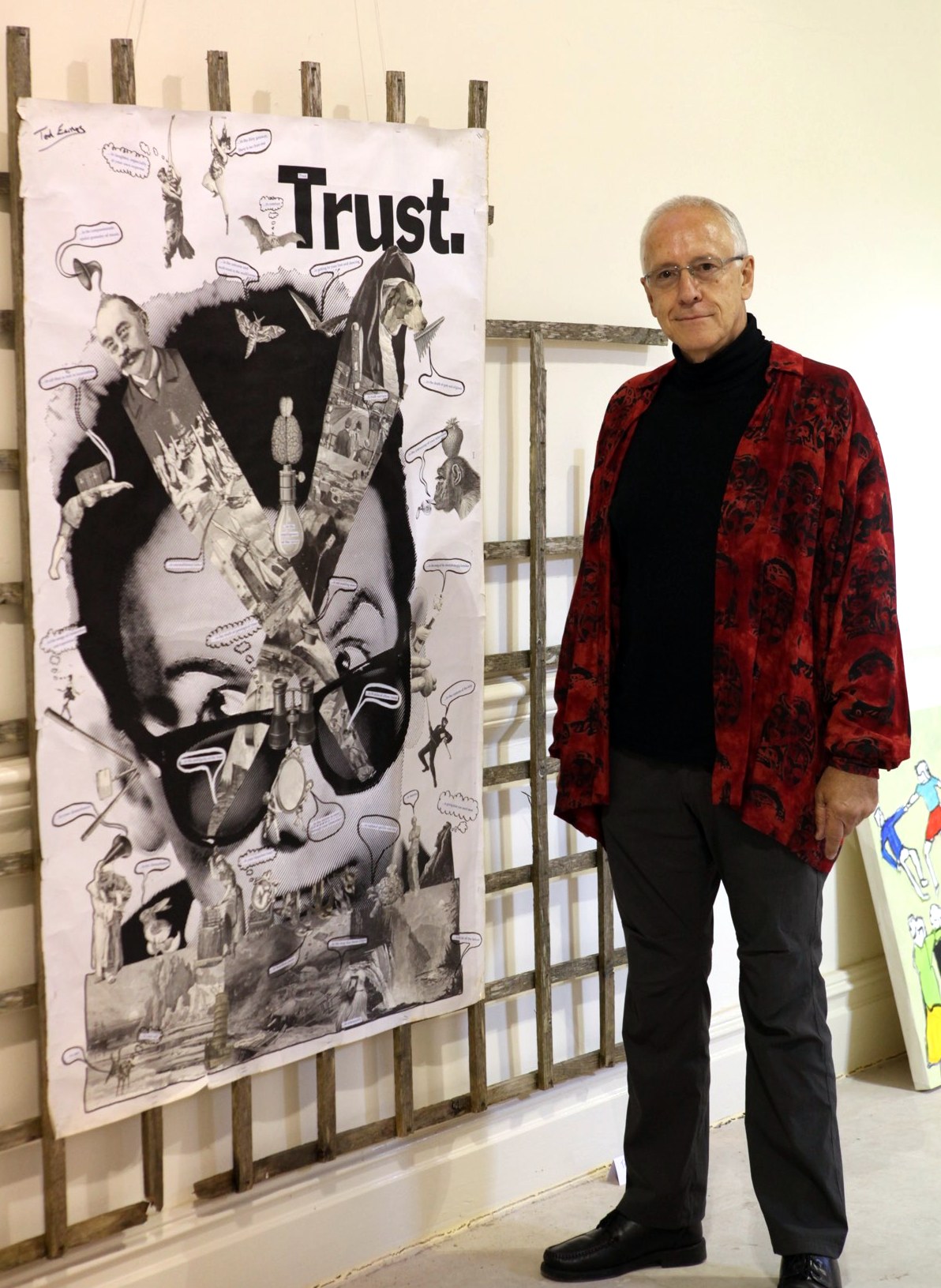
Over the last year or so I have been getting into collage making. It’s something I have had on a backburner for a long time, so I have built up a good collection of images and texts and I am really enjoying a different creative enterprise.

I had an exhibition last summer and am part of a large one in Shrewsbury this month.

Details are on my blog at  www.maintenantman.wordpress.com  

Other than that I am fantasising wildly about what might happen if Paula Rego (and her film director son) like Pick Up the Pieces. Dream on, Ted!

Poetry Drawer: End Of by Ali Hepburn

He was the worst person

who ever lived.


Languid silence brewed

between them, louder

than the everyday drone

of the dishwasher.


Tomorrow he will close the door

with finality, but today

weather the rain

of sharp looks.


Fault left a metallic

taste in the air,

stifling like petrichor

without rain; a November

thunderstorm musty and stale

with the scent of something

not-quite-dead.


Light entered the window

at the wrong angle, always,

defying closed blinds,

hitting possessions scattered

like mocking props from

the lives they had enacted.


Grey words:

I can’t do this anymore.


Tea left on the counter.

Untouched. Tepid.

Inky Interview: Horror Writer and English Professor Mike Arnzen: with Claire Faulkner

Can you tell us about your journey as a writer? Where did it all start for you?

I’ve always loved stories, but I think I first started taking myself seriously as a >writer< when I set down a book I was reading – Stephen King’s Firestarter – and thought, well, gosh, I can do better than that! I tried, and failed miserably.  

King is a master. Who was I fooling? But I think we all get started in this business when we get to a point where we start to see the patterns of storytelling, and feel compelled to ‘talk back’ to the world of books through our own writing. That is simply stage one to a long-earned career as an author.

In the Goreletter and on your website you provide writing prompts to help inspire others. What inspires you to write?

What a kind question! I think part of it is obviously seeing the effect it has on other people. Maybe this is why I teach and try to help other writers. It has the benefit of the instant reaction. Writing is a kind of prompt toward an emotional response, isn’t it?

I actually started sharing creative writing prompts with writers in a horror newsletter called ‘Hellnotes’ about a decade ago. It was fun series of things like ‘Describe brain surgery from an awakening patient on the operating table’ and things of that ilk. Now there’s a huge collection of them that people can look into, called INSTIGATION: CREATIVE PROMPTS ON THE DARK SIDE. It’s an e-book only title, but available everywhere those are sold.

And now that I think of it, it seems so obvious: horror, too, is a kind of prompt. I like getting a reaction. Whether a scream or an intellectual response, I’m happy.


Do you have a set writing routine?

I >TRY< to. Habits are double-edged swords. They can make you productive… but they can become uncreative rituals. The whole notion of a ritual is that it is a kind of ‘story we tell ourselves’ by practicing something over and over again, the same way. And that can backfire with writing. But my primary routine is to write in the mornings, when the coffee hits my dream-addled brain and ignites weirdness with hi-octane energy. However, sometimes, deadlines press in, and I find myself binge-writing all night until I drop. Sometimes those caffeine-fuelled, fever dream, writing marathons produce the weirdest ideas, so I’m a bad judge of what works best for my own process, actually. But so long as I’m producing something, or planning the next project, I’m happy. I try to keep different things juggling all at once – a novel, a poem, an essay; that keeps me going if any one thing stalls or gets dry.

I originally found your work through your project gorelets, where readers received weekly poems from you. I’ve been hooked on creative horror ever since. (I have FOTD magnets too.) Why do you think horror works so well in this format?

Less is more! I’ve long felt that horror works best in short forms. This is why Poe works so well, I think… can you imagine a NOVEL from Poe, akin to the whoppers we find on the bestseller shelves today? I can’t. Short forms have the promise of a surprise ending, and the finality is often felt like a bullet to the head. 

You teach writing popular fiction at Seton Hill University; how do you balance this with your own writing?

On the one hand, teaching keeps me primed. I’m always reading, always reflecting on this crazy practice called writing, always talking shop. And I’m doubly lucky that I get to do it with horror writing – my job is unique! But balance? That’s kind of a myth. Work comes and goes – sometimes books take the spotlight; sometimes teaching gets on center stage; sometimes it’s something else altogether. But teaching can murder the creative mind: finding time to write while juggling class preps, sundry meetings, and the massive amounts of grading can seem impossible some weeks. There’s only so many times you can dip into the word well, and sadly, teaching sometimes has wrung all the words out of me by the end of the day. This is why – when all my pistons are popping – I swear by my morning writing routine. And when I’m under deadline, I set my alarm ahead an hour early, just so I can get more done. 

Can you share any details of projects you’re involved with at the moment?

I’m contributing to an academic title for Dark Moon books that studies the short fiction of Steve Rasnic Tem! First in the series of author-studies is ‘Exploring Dark Short Fiction’, run by Eric Guignard, who is an awesome editor to work with. He really wants to put the spotlight on short story writers and help new genre fans and authors understand why people like Tem keep winning awards or why people should keep reading them. I’m on as academic consultant, which means I write commentaries on all the stories in these books, and a longer academic essay. It’s fun to let my academic side out of the box like this every once in awhile. Reading, thinking and teaching are all parts of what make my weird engine run at full speed.

But like I said, I’m always juggling. I’ve got a poetry collection I want to finish gathering together next. Then a short-story collection. There’s a stalled novel I might restart. THINGS A PLENTY! If your readers subscribe to the Goreletter, they’ll know about them as soon as they’re available! Visit gorelets.com

What are you reading at the moment? Who would you recommend to us?

A really cool ‘lost version of Dracula’ called Powers of Darkness by Valdimar Asmundsson, who translated Stoker’s classic into Icelandic but changed the story in a bunch of interesting ways (all of which are annotated in the book!). It’s groovy. I’m heading to Transylvania next week, actually, to attend the International Vampire Film and Arts Festival, so the book is getting me in the mood for the Carpathians! 🙂 I’ll be doing a fiction reading there, as well as curating an academic symposium on behalf of Seton Hill University. Folks interested in doing this next year should visit http://ivfaf.com

Would you like to share one of your poems with us?

This is an example of a ‘gorelet’ from years ago, that everyone seems to remember after they read it:

Fuzzy Bunnies

the eyes roll back
and accusingly glare
when my feet slide forward
and hot rabbit innards
squirt between my toes
only then do I see
why these furry white skins
are called slippers

Have you got anything else you would like to add?

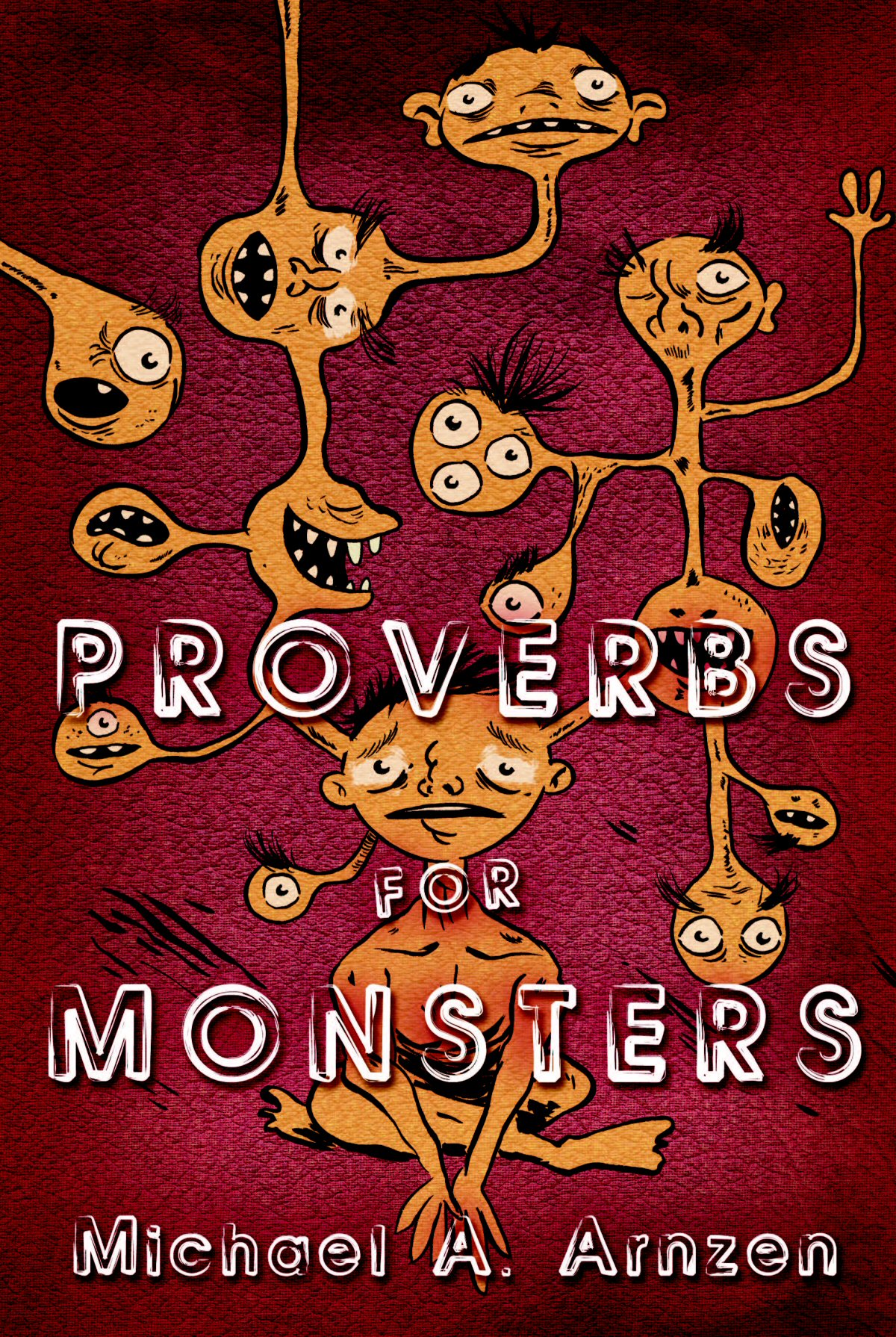
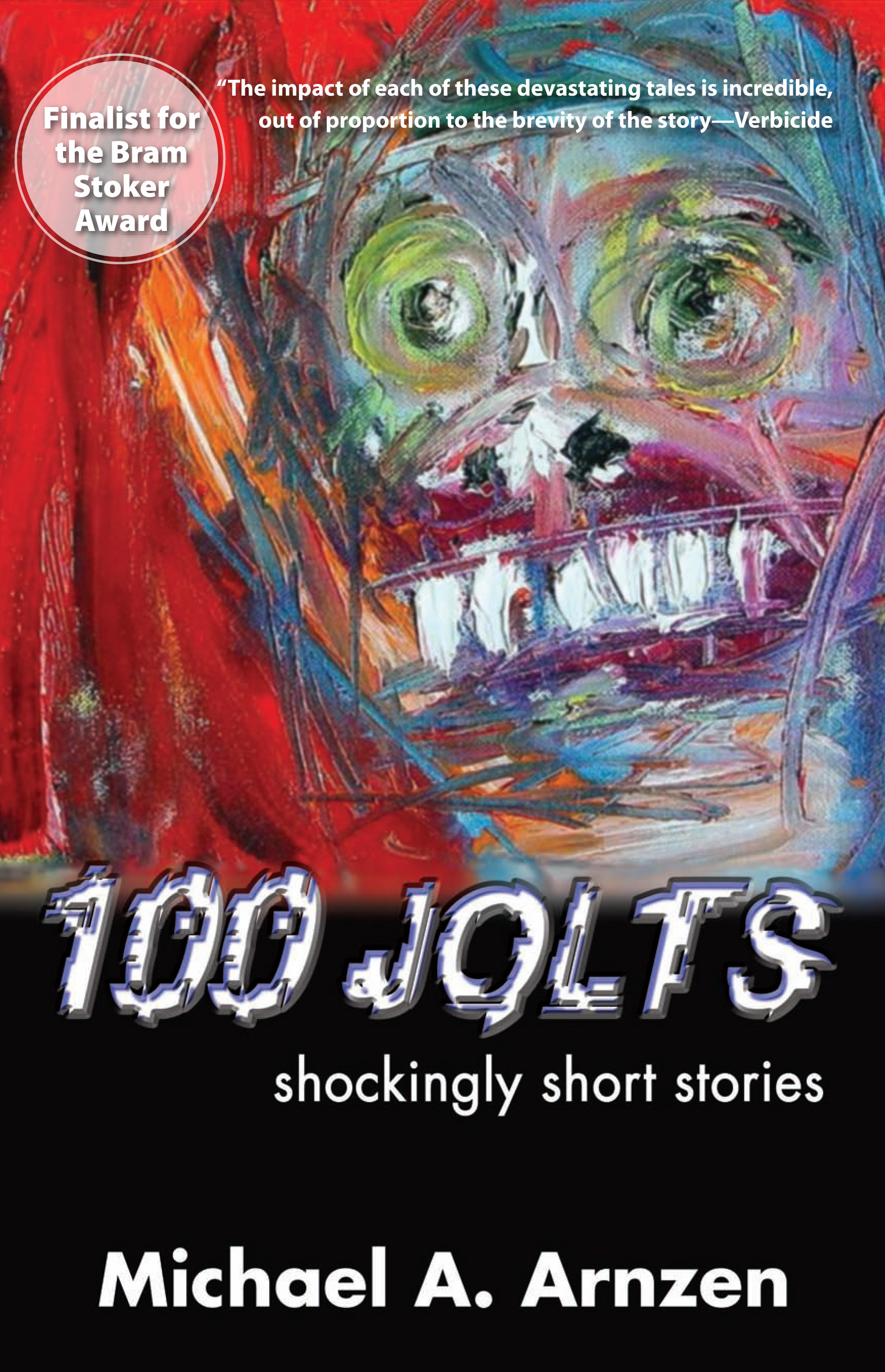
Thanks for the interview! If anyone reading this is looking over my stuff, and wondering, ‘Where do I start? What book is the best?’ then I would recommend looking into Proverbs for Monsters (for a sampler of longer fiction and poetry) or 100 Jolts (for 100 short-short horror stories). Both are in print, and I continue to get great responses from readers. Enjoy!

Poetry Drawer: Rust City by Ali Hepburn


A fissure divides the town.


On one side houses

in perfectly arranged rows,

green spaces

manicured, plants located

by design, straight lines,

undisputed symmetry,

the Garden City laid

according to intent.


Scuttling across the rift,

shoes echo dully

on worn concrete, crossing

between divided lives.

Trains hurtle below

to Elsewhere, screams

resonating the girders,

shuddering the structure

to crack open

the unreality.


The other side:

disused factories tower,

grandiose facades betrayed

by pristine paint now dirty grey

and peeling; a faded

mosaic of tiles motley

and disjointed, stained

with pigeon excrement. Iron

besieged by creeping rust

lays flaky waste to structure.


Sneaking moss paves the way

to colonisation.

Poetry Drawer: Crewe Green by Matthew Waldron


Squirrel intestines,

plucked fleshy harp strings thrum their valediction song across a gum dot constellation of rain-silvered pavement.


Bird scolds metallic,

jolted cutlery in a draw.

Wren zip wires across road,

long chain of chimes follow toward flailed wall of hawthorn through rare punctuations of road-shush cars:

splinters;

sparks of arc weld,

ghosts of colour which shower the senses.

Drone music of traffic flow, all vehicular vibrato and baritone buzz.


Sky,

slab of knife-cut blackcurrant jelly,

thrown,

slap-stuck against a tiled wall.

Roadside smudge-edge yellow bars of paint imprison leathery leaves,

cigarette packet,

a denuded Sylvanian family mouse with arms and legs positioned mid-walk in an oily rainbow-stained wash of gravel

and beckon bony finger twigs.


Profile,

fuzz-mottled with moss,

wind-rubbed by Mother Nature,

grey frieze figures in profile,

stained green;

eyes to the Heavens,

limb-stretched to-the-max,

loin cloths and muscles:

folds in wind-rippled flags.

Time Rewards Industry; Punishes Sloth:

Time? A clock no longer strikes,

hands above heart in permanent prayer.


Jackdaws,

pleated black gowns;

ironed grey waistcoats,

cackle,

crackle in the clock tower,

fire-y laughter and rebuke.

They interplay solitaire with the ‘v’-shape fascia,

pop-in,

pop-out of cavities;

punches of portals;

interpolate,

answer back with a sharp beak crack,

ratcheted-up trills of blue tits` alarm calls,

the muted warning whistle of a nest-bound blackbird.

Jackdaws,

all out,

collect,

straight as skittles,

perch on a taut,

thick liquorice strand of insulated wire.

An anchor drops out of the sky,

falls in deceptive slow spirals and glides, closer, closer;

bright gold,

washed,

sieved at the edges of a black-hearted pool;

its eye.

Books From The Pantry: Midlife Crisis by Jason Whittle: Reviewed by Inez De Miranda

The first time I heard of the concept of a midlife crisis I was a teenager, and my forty-something father had just purchased his very first motorcycle. He rode the thing a few times with either me or my mother panicking on the back seat, and then the machine quietly disappeared from our lives, never to be seen again.

The midlife crisis that Clayton Joyce goes through in Jason Whittle’s novel is a little more invasive.

It all starts with Clayton’s fortieth birthday, which he celebrates with his wife and young son.

Clayton is cool about turning forty. He won’t be having a midlife crisis, he reasons, because midlife crises are for those who are disappointed with their lives and he, Clayton, is doing just fine: running his own company, parenting a bright and healthy son and enjoying a stable marriage in which he and his wife “still had a sex life; they did it at least once a month because otherwise they’d start to think they had problems. In fact, since it was his birthday, this month’s night would be tonight.”

But after this monthly sex act – which is presented in a hilarious scene that in itself is reason enough to read this book – it does strike Clayton that he’s put on quite a lot of weight and he decides to take up jogging. That’s when things start to go wrong.

On the book cover Midlife Crisis is described as ‘a darkly comic psychological thriller’ .

At the beginning of the book, and for a fair bit into it, the comic aspect is most prominent. So prominent even that you might wonder why it’s presented as a thriller.

But that becomes obvious as the cosy, funny story starts to change: it becomes less cosy and a little more tense, and after another few chapters all cosiness had been tossed aside and you will find yourself sucked into a dark and disturbing thriller, so nail-bitingly scary that it will stop you from sleeping.

This change in atmosphere is so gradual that when I was reading the book, I didn’t consciously notice it until I stopped reading and realised I’d become quite agitated. I was anxious to learn what the hell would happen next, so I got back to the book as soon as I could. What happened next was unexpected and, I admit, rather shocking…

Midlife Crisis is a novella, so a fairly short read. The various characters are well-presented and Clayton, the main character, is particularly believable. He is a man to my heart: geeky, clumsy and neurotic, and the life he and his wife have together is an extraordinary depiction of the very ordinary.

With Clayton coming across as innocent and likeable and his life being so (sometimes awkwardly) familiar, the evolvement of his rather dull existence into a full-blown thriller is all the more poignant. Midlife Crisis might leave the reader wondering if something like this could indeed happen to an Everyman like Clayton – and if it could, could it then also happen to someone like them?

Midlife Crisis is not suitable for everyone, and definitely only for adults. There is sex, there is violence, and towards the end there is also a particularly gruesome scene where the two are combined. You’ll need a strong stomach for that one.  

But if you can handle that (or if you just scan over that one scene) Midlife Crisis offers an unusual and exciting read which will have you laugh out loud, gasp with horror and wonder about human nature.

Get your copy here 🙂