Rus Khomutoff is a neo surrealist language poet from Brooklyn.
You can find more of Rus’ work here on Ink Pantry.

Rus Khomutoff is a neo surrealist language poet from Brooklyn.
You can find more of Rus’ work here on Ink Pantry.
Distractions
Jack wears sunglasses
to ogle the young man’s
dimples reddening under
bolder and bolder quips
of the older man’s flirts
to see the smile he admires
while Matt pouts,
“I have dimples too,”
and Jack, “Let me see,”
smiles until distracted
by baby falling, crying,
hugged by mother’s love.
Darkness Safe
Darkness
except for a sunshine
beam descending
to and into
my chest
as I sit
in a wooden chair.
Eyes closed
but staring
upward, inward
through the beam
to geese flying
across the blue sky
to glide and ski
upon the lake
where heads tuck
under wings for
darkness safe
within a womb.
Old Moment
I kneel to check my car tire’s pressure,
but the tire gauge is old,
and no longer works.
What’s with that?!
Tools are supposed to work forever,
and I have a tool that doesn’t work!
Bah!
The tires frown in deflated anticipation
so I decide to squirt air in all of them
until I can buy a new tire gauge
and check them properly.
As I try to stand my legs rebel
and quiver like a pond rippling
after a stone thrown in its gut.
“Great. Here I am a capable woman
checking my own tire pressure
with a tire gauge that doesn’t work
and I can’t stand up! Shit!”
I’ll die out here. A petrified woman statue
kneeling on the pavement parking lot.
An obstacle bigger than a speed bump
for other drivers to swear at.
I am a turtle upside down on its shell.
My legs kick the air. I struggle to right myself.
I want to lie down and let the summer sun
suck the life out of me —
a dried worm rusting on the sidewalk.
I should have gone to the tire store.
I could have kept my old tire gauge.
I could have kept my young legs.
Designated Driver
The man thinks his car deserves
two parking spaces in the crowded lot
or he can’t back up well and uses
the white line as a middle guide backwards.
I want to park so close to his car door
that he can’t get in, and he’d have
to wait until I chose to show up
and exclaim, “Oh, my! I’m so sorry.
I knew I could squeeze in here.
I didn’t think you’d mind.”
Or I’d like to see if he’d open
the passenger door and crawl
over the seat and console
to plop his body behind the wheel;
all the time calling the driver
next door an asshole and bastard
even as he reads the note
under his windshield wiper
repeating his asshole and bastard
designation.
Opens to Darkness
The door opens to darkness.
If I step through,
will I fall for eternity
annoyed by my screaming
and wishing for death
and silence?
The door opens to darkness.
I want to step through
to the blank dream
of imagination quivering
for my offerings.
The door opens to darkness.
A nightmare haunted house
spotlit by scenes barred
between my fingers
covering my eyes wanting
to see but not see.
The door opens to darkness.
A snake pit writhes
just passed the strip
of light once at the threshold
before the door slams
shut.
Diane Webster’s work has appeared in “El Portal,” “North Dakota Quarterly,” “New English Review” and other literary magazines. She had a micro-chap published by Origami Poetry Press in 2022, and one of her poems was nominated for Best of the Net.

All the time thinking, he paced back-and-forth-back-and- forth-back-and-forth. Was determined to find who was doing it. The same thing every fucking day! The first skid mark always saying, Fuck, the second always saying, you, the third always saying, Fitton.
His old man had warned him that he should get used to people trying to get at him because they were jealous of what he’d accomplished. His old man it was who’d set him on the path to success in the first place. Sending him to a lesser-known public school but hammering home that the odds were massively against playing football ever paying off, whereas the right accent would pretty much guarantee him a top job.
Fitton had a voice that would cut glass. Though he steadfastly believed his sheer relentlessness was what had endowed him with the wherewithal to become a CEO.
When PQC Logistics appointed him, he’d wasted no time in making his relentlessness clear. Axing a hundred jobs during his first month in post surely some kind of record. Early mornings had prowled. Sometimes slowing to stare out of windows when blue inched up from the horizon but only genuinely moved by the fear on the faces of those who arrived to find him already there. Thought of his early starts as an act of will rather than a by-product of insomnia. Strode through empty offices shutting desk drawers that hadn’t been properly shut and straightening items of stationery left skewed on desks whilst deciding who should stay and who should go…
The final week of his third month in post was when he saw what – nothing accidental or unconsidered about it he was certain – had been left for him in the second cubicle from the left in the toilets on the first floor…
That the cleaners were to blame was his first thought. Insulting him as an act of revenge. Lowered rates of pay and a raised commitment to productivity things he’d forced their contractor to sign up to.
Deciding that if he discovered skid marks at the end of one of their shifts, they were all for the chop, Monday through to Friday he arrived between midnight and 3.45AM…
But there were never any skid marks left during those hours. Meaning the cleaners were in the clear. Why – alone in his office – Fitton gulped Gaviscon as if it was going out of style and re-configured his approach.
A fortnight of surreptitious checks narrowed the time frame of the deposit to between 3.45AM and 9.15AM. Nor did it matter whether it was one, two or three skid marks, he told himself at this point. The message was still unequivocally the same: Fuck you Fitton. Believed the fact that the message was never in the same toilet or cubicle two days running was indisputable proof that whomever it was, was intent on taunting him, teasing him, humiliating him – and promptly put the night-time security man in the frame. Harold Lever someone who smiled agreeably at all and sundry.
Fitton didn’t trust any man who smiled. With a clear view of the lobby, each night sat across from PQC Logistics in his Mercedes E Class Saloon and watched Lever make his rounds on the hour. Always waited ’til the security man’s shift was almost over before he strode in.
Seeing that all the porcelain was spic and span, Fitton chewed his bottom lip till he drew blood. Whilst doing so latched onto the idea that the day-time security woman was responsible, so following her hourly patrols relentlessly checked and re-checked the toilets on all floors.
Nothing.
Meaning that like Harold Lever, Sheila Parkes was off the hook. Meaning it wasn’t a contract cleaner or contracted site security. Meaning it had to be one of PQC Logistics’ own staff who was each day leaving him a message in shit!
Claiming that it was part of an efficiency drive, ever more desperate to find who was responsible Fitton ordered state of the art CCTV. Cameras installed everywhere. Including the entrance to the toilets on all floors. Would have had a camera in each toilet cubicle if he hadn’t anticipated the reaction of PQC Logistics board of directors to such a directive.
Throughout the installation Fitton lost weight and cultivated dark smudges beneath his eyes. Shook when he signed the release confirming completion, then spun to face the monitors occupying an entire wall of his top floor office.
With the necessary means for discovery in place process became everything. Having first patrolled to make sure all the toilets in the building were spotless he’d study the monitors scrupulously and make a dash every time he saw a worker exit a toilet –
It sounded straightforward but wasn’t since sometimes workers on different floors simultaneously left their workstations and headed for the toilets on their floor – PQC Logistics eight storeys high.
Fitton needed to be as quick as he’d been as a boy with a football at his feet and to facilitate this took to wearing lightweight Nikes rather than hand-made leather shoes.
No one mentioned his suited sprints. No one dared, though the fear of his staff no longer comforted him.
Discomforted, Fitton estimated that it’d already been several weeks since the installation of CCTV and still skid marks appeared like clockwork: Fuck you Fitton…Fuck you Fitton…Fuck you Fitton…
Well fuck you right back, I won’t give up, he assured himself relentlessly. Wouldn’t give up. Couldn’t give up. Wouldn’t, couldn’t, wouldn’t! Why after gulping more Gaviscon – all the time thinking – he resumed pacing back-and-forth- back-and-forth-back-and-forth…
Wayne Dean-Richards has worked as an industrial cleaner and an actor. Currently he works as a teacher. He says, like Bukowski, ‘These words I write keep me from total madness.’ Over a hundred stories have appeared in magazines and anthologies. The Arts Council funded a collection of his stories – At the Edge – and a novel – Breakpoints. Cuts – a second collection of stories – is available from Amazon as an eBook, as is a collection with his youngest son: A Box of Porn.

In summer days,
in the middle of a paddy field
a mango tree
among all other trees
It’s only leafy green which grows taller
protecting shade seekers.
Like Buddha’s Pipal tree
this mango tree –
an epitome of peace
where birdsong is a trance.
After school three boys
gather under it as usual
to fulfil their desires-
They dip unripe mango slices
in burning hot chutney with Pantras*,
offer it to farm workers,
quench their thirst with tube water
fresh, cool and satisfying.
They have no fears
nor do they ever shed tears
as they have all they need
air, water, food and shade.
*Pantras is a Tharu dialect for Acmella Olerace
Kuma Raj Subedi, MA / MTESL, is a lecturer and an Australian poet. His numerous creations have been published on various platforms: online and in print, such as Misty Mountain Review, Indian Review, Muse India, Sahitya Post, Scarlet Dragonfly, Aksharang, The Gorkha Times, Of Nepalese Clay, The Indian Periodical, Nepalnamcha, Poetishes, The Offline Thinker, Setopati, Poeticia, The Rising Junkiri, Sahitya Sangraha, The Writer’s Cafe etc. He often writes about issues such as women’s suffering, memories, religion, nature, migration, love and culture. He is also a member of the poetry reading groups Friendly Streets Poets and TramsEnd Poets in South Australia.


a long walk home
on a less sunny day
harmattan haze
the paper boat sail
into the wind
one-way
ticket in the mail
mass burial
of all the emotions
with no funeral
Christina Chin is a painter and haiku poet from Malaysia. She is a four-time recipient of top 100 in the mDAC Summit Contests, exhibited at the Palo Alto Art Center, California. She is 1st prize winner of the 34th Annual Cherry Blossom Sakura Festival 2020 Haiku Contest and 1st prize winner in the 8th Setouchi Matsuyama 2019 Photohaiku Contest. She has been published in numerous journals, multilingual journals, and anthologies, including Japan’s prestigious monthly Haikukai Magazine.
Uchechukwu Onyedikam is a Nigerian creative artist based in Lagos, Nigeria. His poems have appeared in Amsterdam Quarterly, Brittle Paper, Poetic Africa, Hood Communists and in print anthologies. Christina Chin and he have co-published Pouring Light on the Hills (2022).

Fireflies
Fireflies in jars
became night lights
in the summer
of my memories.
Endless Summer
The summer was endless
on muggy nights,
as a fan cooled
my thoughts.
Lemonade on a Hot Day
The lemonade tasted great
as my glass sweated drops of moisture
renewing my thirst.
Parched Garden
Cloudy skies
brought rain
to my parched garden.
Mary Bone’s poems have been published in Ink Pantry, The Human Touch Journal. Literary Yard, Visual Verse and other places.
You can find more of Mary’s work here on Ink Pantry.
To the beetle, the foxglove towers high, waving in the wind and is impossibly beyond scaling. But, when beetles learn to step out of themselves, they become bigger than they knew was possible. Foxgloves become small. Treetops can be reached if beetles are willing to believe it possible. And, should they be willing, that which was unknown comes into view – if they want to of course, only if they want to.
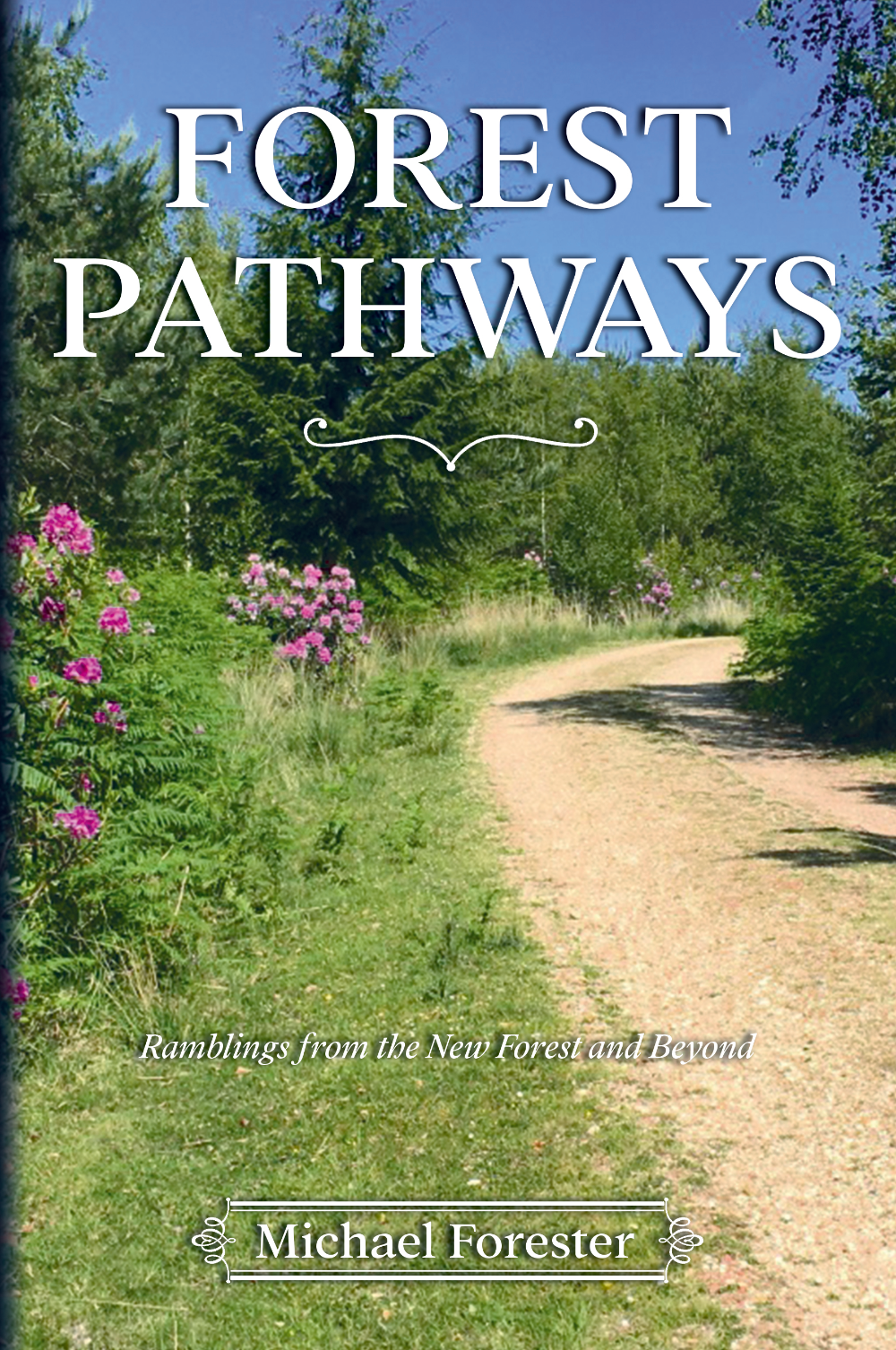
As an author, Hampshire-based Michael Forester is no stranger to us here at Ink Pantry Publishing. As such, looking back I realise that I’ve included the phrase, ‘I wish I could write like Michael’ in former reviews. Thus, this time around, I’ve pledged to abstain, instead choosing to look both deeply and critically at Michael’s writing to see precisely what makes him ’tick’. The review book in question is Michael’s latest publication, Forest Pathways (Paralight Press, 2023) and, according to the blurb, it comprises ‘essays, metaphorical stories and poetry, inspired by walks of solitude in England’s New Forest and beyond’.
To start, I thought it might be a good idea to explore Michael’s possession of descriptive powers; surely a sign of an adequate writer on any platform? So, let’s skip to Chapter Three to see how he personifies nature, herself, and what specific words he chooses to describe the end of summer, as Nature prepares herself for the colder, autumn and winter months ahead.
So, we come to Anderwood where the tall Scots pines reach up to eternity. We have come to watch the love of my life as once more she begins to prepare herself for her long sleep. We have eyes only for her as she goes about her bedding ritual. A mattress of coarse bracken she has laid upon the earth and now she begins to quilt it with the first dry leaves that tumble down in the early autumn winds.
Certainly passable, I think. But hey, let’s test this further and observe a direct communication between Michael and Nature, concerning why he’s not visited for some time.
But you had more important things to do?’ she enquired. No, I replied…nothing is more important than coming to be with you’. ‘Why then?’ I fell silent again. ‘It’s hard to explain. There’s been a listlessness about me. A drop in my energy. I can’t explain why’. ‘I know what you mean,’ she said, gesturing to the waning colour of late autumn. ‘I was depressed,’ I confessed finally…’I’m still here for you,’ she responded. ‘I’ll always be here for you. You know that, don’t you? Just like you know you always feel better when you come to me’. She was right.’
Well, that’s not bad at all. And yes, we must make a note, in sharpest pencil, that a vivid picture is easily formed from Michael’s earnest, heartfelt words. But, hang on a minute, what does his soul really feel about the coming months, where nature is about to sleep?
Sleep safely, my love. When the snow lies upon your curving uplands, we will walk your leafless lanes and wander only where the woodland creatures sleep within your nurturing arms.
Okay…well, we’ll concede that this writing is definitely adequate and we’ll also graciously admit that Michael can produce words on a page that elicit the strongest of imaginative, visual treats. A man at the height of his creative arc. Surely, nothing can diminish the light here? In Chapter Five, we hit a wall, just as winter is receding into the beautiful sights, sounds and smells of spring. Sadly, as I read, I feel every word, as if it is empathising with me and how I have felt this year.
It has been a harsh and silent winter…The words that cascade through the Summerlands have not come. I have been unable to write for some time now, perhaps for many months…No poetry; no prose. Every attempt produces jagged, awkward phrases, malformed paragraphs and stanzas that hide in shame from the angry eyes of judgement.
I wince as I read these words, because I feel that the author is writing directly to me. I am also sure that many creative souls, who are privileged enough to read this book, will identify with them also. As an author, Michael has never failed to amaze me at how effortlessly he manages to connect to his readers. Perhaps, some of this lies within his dazzling honesty? Michael is opening his heart and admitting that the creative flow is not always a beauteous waterfall of constant momentum. Sometimes, it slows to a trickle. On other days, it disappears completely, leaving us wondering where it has gone and why. Michael’s words resound so clearly, as he gradually finds renewed hope on the horizon.
There have been times in the silence of the recent weeks when I have wondered if I would ever write again. But now the words are my domain once again and I feel the power pulsing through the conduits of the soul. There is no book yet. There is only the earliest hint of a structure.
Each chapter of this glorious book shines with the wisdom of a man who has walked many different and difficult forest pathways of life. It is (at times) a brutally honest account of how the author feels mentally, emotionally and spiritually; armed with a massive arsenal of finely-chiselled words with which to convey his thoughts and feelings. Luckily for us, the author is a crack shot and hits everything he aims for. I was enchanted by the author’s viewpoint on how he felt that his best work was behind him, these darker beliefs perhaps encouraged by the fact that his books about dragons and dogs had performed admirably in the past, while his more recent wanderings into personal musings and poetry had not achieved the same commercial success. His ability to ‘ride the clutch’ in literary form on human emotions is staggering. One moment, we’re laughing and marvelling at his connection to nature and the simple joys of life. The next, he takes us upon a rougher, winding pathway; one that tests our emotional balances, as the words hit home…hard and true. Interspersed within the deeply personal thoughts are occasional artillery blasts of poetry. Once again, Michael’s aim is spot on, with his words leaving a lasting impression. Yup, he can do poetry too.
Whose skin is not dark,
Who are not gay, not female, bi, nor Trans,
Not refugees,
Nor penniless,
Who suffer no disability,
And have no special needs,
No mental illness,
Who are not homeless,
Sick, nor unemployed,
Who have committed no crime,
Who suffer no persecution for your faith;
Who, having no shrill voice,
Nor advocate,
And, choosing devotion over protest,
Knew only how to work at desk or lathe:
You, too, are loved.
‘You’ – Michael Forester
I read most of this book outside the local café in Stonehouse – usually accompanied by a cooked breakfast and mocha. I freely admit that there were some unplanned pauses to breathe. Sometimes to puff on my vape and once even to buy some cigarettes, as I was completely blown away by some of the emotional pieces that flowed from Michael’s pen. It is also apparent to my creative self that I desperately needed to read this book….right now…for my own inspiration. Often, I needed more mocha, and to check that no-one was nearby, as I wiped away a respectful tear to what my soul had just ingested. I could easily just complete this review by reproducing steady chunks of Forest Pathways, but then that would ruin things for those who also wish to ingest this incredible piece of literature into their minds, hearts and souls. I would urge everyone to do so, especially us struggling writers, seeking to leave the conventional trails and find their unique, creative pathways.
It has to be said…I wish that I could write like Michael. In truth, after a harsh winter of not believing in myself as a writer, while reading Michael’s book, I have felt the rusty hinges of creative doorways begin to give way. Multiple mochas and unhealthy puffs have given way to new self belief. Blessed inspiration has begun to flow once more. So now, I believe that I can write. How? Michael told me so. You know. Michael Forester. The bloke who writes about the most important aspects of life and truly makes a profound difference to everyone who reads his words.
When we understand we are not apart, we rise above the foxgloves and soar above the trees. We realise how the ground beetles can become kestrels – when we are ready to grow wings, that is, when we are ready.
Forest Pathways by Michael Forester
You can find more of Michael’s & Kev’s work here on Ink Pantry.

Only The Lonely
My friend tells me she wants a dog.
But not a puppy. No. An adult
dog. Seven years old. Maybe eight.
Housetrained. Leash trained. Low
energy. A lap dog. A companion.
That’s what she wants. She needs.
Companionship. A lonely little
dog. To keep her company. Yes.
Loneliness. That she knows.
She’s been lonely far too long.
Panic Attack
My friend tells me she wants a dog.
But in her group. You know. On
Facebook. Chihuahua Lovers.
That group. Today. It’s dental
issues. Chihuahuas tend to have
them. That’s what they say. Like
losing teeth. All of them. Not
a problem. I say. I take her to
PetSmart. Show her dental treats.
For tartar, plaque, gums, teeth.
Okay then. She says. No worries.
Laura Stamps is the author of 51 novels, novellas, short story collections, and poetry books, including Dog Dazed (Kittyfeather Press, 2022), The Good Dog (Prolific Pulse Press 2023), and Addicted to Dog Magazines (Impspired, 2023). Recipient of a Pulitzer Prize nomination and 7 Pushcart Prize nominations.
You can find more of Laura’s work here on Ink Pantry
Eternal Father Bless our Land,
This Land of Hope and Glory, guts and gut-wrenching stories
May we be free not cheapened or weakened as we seek a life of seeds and flowers
Keep us free from evil powers
Be our light through countless hours
Surround us like oceans do ships
Give stability to all who make and made the trip
From island to island
Guard us with thy mighty hand
Clasp hearts like the hands of our Grandparents and parents aunts, uncles, cousins, and siblings
We know your smile is more than stars winking, sunny days, and undisturbed rest
On choppy seas we did and will not fret
Wider still and wider shall thy bounds be set;
God, who made us mighty, make us mightier yet,
Out of many one people, all are blessed to bless
Out of many one people, all are blessed to bless
God, who made thee mighty, make thee mightier yet.
Vision set like moulds and starting blocks as your will renders
To our leaders, great defender
Grant true wisdom from above
May Justice, truth be ours forever,
Jamaica, land we love,
Jamaica and the land called home
Adrian McKenzie is a poet from Stoke-on-Trent, UK.
Facebook
Instagram
Bless Yuh Art
7 On The Back
Soundcloud
YouTube
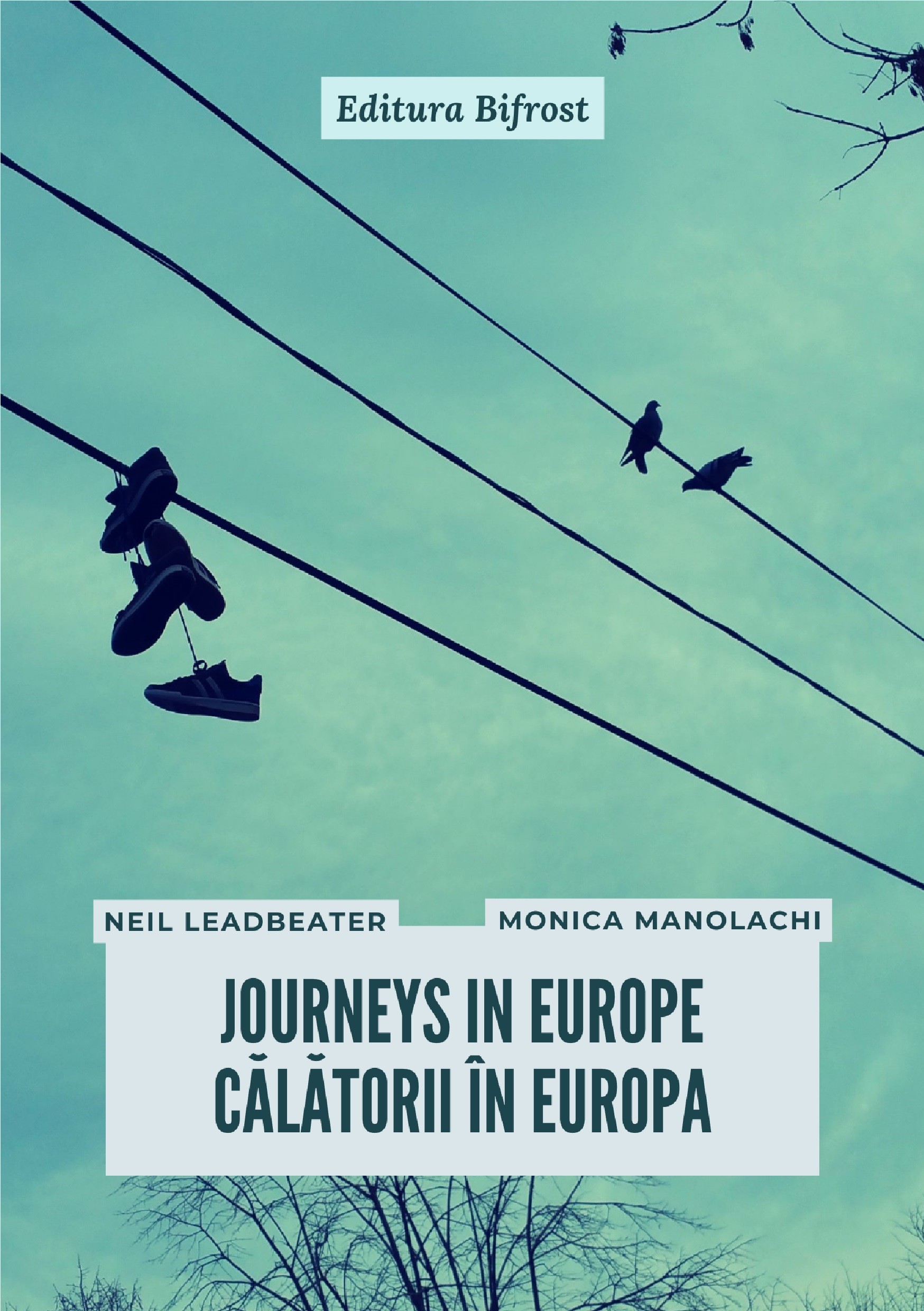
‘Rivers connect people and places. They carry water and nutrients to areas all over the globe…to travel down rivers of this length is to travel through different languages, societies and cultures’.
(Neil Leadbeater & Monica Manolachi)
Here’s an interesting and original idea. Take two prolific writers and poets, both of whom have a passion for the natural beauty of rivers. Let them create evocative literary pieces concerning two of their favourite European rivers, thus engaging a global audience into their emotional ties to aforementioned rivers; also allowing readers to feel as if they are with the authors on their personal journey. Thus, Edinburgh-based writer Neil Leadbeater and Romanian lecturer, Monica Manolachi set out to achieve this ambitious goal and completely triumphed within their creative endeavours.
Let’s begin with Neil; an author, essayist, poet and critic, based in Edinburgh, Scotland. Neil’s emotional connection to the Rhine began over sixty years ago, as he accompanied his parents down the river. According to Neil, ‘it was an idyllic time and one never to be forgotten’. The 765 miles of the Rhine flow through five countries: Switzerland, the Netherlands, Germany, France and Austria. Neil begins his poetic journey in the Dutch city of Delft.
‘Let’s go to Delft:
Home of Spierinex tapestries,
Italian-glazed earthenware
And Delft Blue China’.
Cool, I’m only four lines in and I’ve learned two things already. The Rhine flows through Delft and I now know more about the Spierinex tapestries than I did before. I also realise that I’ve seen some of these at Warwick Castle. What else about Delft, Neil?
‘Looking at Egbert van der Poel’s paintings,
Hands over ears,
We can almost hear that thunderclap
When tons of gunpowder
Stored in barrels
Exploded into fire’.
Okay, I’m now au fait with the paintings of Egbert van der Poel, especially those that depict the ‘Great Thunderclap’ of 1654, when barrels of gunpowder exploded and destroyed half the city. My ever-curious mind is loving this intake of knowledge.
‘Crossing canals,
in your blue dress and matching heels,
your mind is full of fragile things
authentic and collectable’.
(‘Delft’ by Neil Leadbeater)
My mind is now peaked by who this woman may be. I definitely want to know more. But then, I’m nosey. Neil continues his journey through The Netherlands and beyond. Perhaps we might like to explore the Rhine online to learn more about it? Neil’s poem, ‘The River on-line’ suggests otherwise.
It’s not the same river.
It can’t escape from your smartphone.
It’s out of its element
with nowhere to run.
You can’t shake hands with it,
let it in.
You can’t dive into it
or go for a swim.
Let’s move on to Germany and see Neil’s feelings on the city of Bonn, with a poem of the same name.
‘A seat of government and a seat of learning’
please be seated.
Zuccalli’s baroque Elector’s palace housing the university. My father and I, standing in front of the yellow façade. Thirty-five windows on the middle floor. The symmetry beautiful, the measurement exact.
When I grow up, I decide that I want to be an architect.
An informative opening, followed by some lines of personal remembrance – a key point captured in the mind of a young boy, relayed now for us to appreciate and ponder. This style of poetry continues for the whole journey; namely some information to tickle the mind, intertwined with personal memories of key locations along the flow of the Rhine – memories that clearly mean a lot for the poet and allow the reader into the river’s importance for him.
Moving our attention across toward Monica, we learn that she is a lecturer in English and Spanish at the University of Bucharest in Romania. As with Neil, Monica’s attraction to the chosen river stems from childhood, when her parents would take her to Sulina, a location at the mouth of the river Danube. We learn that the Danube is the second longest river in Europe, covering 1,770 miles from Germany to the Black Sea and a total of ten countries. Monica’s poetic approach sometimes mirrors Neil’s, yet hers often flows freely into a heavily visual, creative poetic form. If I had to compare, I would say that Neil’s reminds me of beautiful, detailed oil paintings, while Monica’s sometimes flow effortlessly into impressionism, offering a deep visionary, imaginative feel to them. Sometimes, the words of the two poets merge together as one, like…well, like two rivers. Anyway, more of that later, let’s sample Monica’s literary expressions within the poem, ‘Kepler’s Ghost on the Stone Bridge’.
‘A crater on Mars, another on the Moon,
a street in Regensburg and more in many other cities,
a metro station on U1 of the Vienna U-Bahn, a university in Linz, where I wrote ‘harmonices mundi’,
a space telescope and thousands of habitable zone planets –
Guys, thanks for this growing recognition’.
Okay, astronomy…cool! I’m already fascinated, as Kepler and his laws of planetary motion have been known to me since I was a young boy learning the layout of the heavens above. This poem takes me back to my youth (akin to a young Neil Leadbeater in Bonn, staring up in fascination at the baroque palace). Reading into the rest of the poem, I wasn’t aware of the specific religious persecution that Kepler was always in fear of, as he lived a bit beyond the main years of religious turmoil between Protestant & Catholic Europe, so my brain nods as another piece of information creeps in. Meanwhile, in Hungary, Monica offers a beautiful poetic moment in time.
‘We advance on the water
as the planet rows through the universe.
The river is so dark and you
like a beacon, among the tiny stars,
cannot stop laughing.
(‘One Night in Gyor’ by Monica Manolachi)
The short poem paints an iconic moment in time, leaving the reader/viewer both intrigued and fascinated to know more. That’s me being nosey again, but you must admit that these poets are creating some intriguing visuals with their words. In Budapest, Monica offers another imaginative piece to savour with her poem, ‘Kertmozi’, again to leave the reader delightfully intrigued.
‘Like an open codex
In the middle of a cloister room,
You float on the river of time
Throwing the crowns you receive
To the souls beneath the water’.
Each poem is written in English and then translated into Romanian by Monica. It’s clear that both poets have a way of expressing wide-ranging thoughts onto the page – some informative and clearly etched out skilfully in ‘literary marble’, while other pieces flow with imagination and visual dexterity across the pages of this book. For me, a strong aspect of poetry is for the creator(s) to supply my mind with any excuse to close my eyes and simply be there…on the page with the author(s) as they open up their minds, hearts and souls. This fabulous book achieves precisely this.
You can purchase a copy of Journeys in Europe here or email Neil direct: neil.leadbeater1@virginmedia.com