Inkspeak: 50 Words For Sun by Matt Hassall and Deborah Edgeley

sun


50 Words For Sun

Orangeblaze

Glimmerize

Heatgiver

Skyrose

Baskeyorb

Beamer

Rayzine

Melter

Growthdot

Planet?

Happycircle

Riser

Beamdreamer

Spaceglobe

VitaminDme

The Light

Orange Alarm Clock

Paint Splodge

Yellow Glitter

Sinker

Moon’s Buddy

Sky Baron

Dark’s Antidepressant

Cyclesphere

SkyCurtainStar

GigantaSpec

Earthcousin

Shadowcaster

Rayhub

FoeIcarus

Round

Floatylight

Fieryfiend

Sunbulb

Dreamless

Hopebearer

Heatbutton

FreckleConjurer

Returner

Spectacle Dictator

Solar Powered

Not Moon

Ouchie

Ray Party

Fizzcrackle

World’s BFF

Hat Wearer

Rainbow Accessory

Shiftworker

Jollity Injector

Pantry Prose: Hire Hari by Robyn Cain

indian

The Auntie from India knew nothing about telephone etiquette. Whoever picked up, she kick-started a fast spiel like a child who’d had a full day at the fun fair.

‘Hellooo. All okay? So hot here. . .’ Information on her various religious excursions to temples followed by social and local news moved quickly to problematic. ‘…and the thief solicitor, he’s demanding more money. I paid him that ten lukh Rupees we talked about. I reminded him we agreed the figures before he took on the case but now he is asking for more – ’

‘Auntie.’ I finally got a word in. ‘I’ll get Mum for you.’ Taking the instrument I tried handing it to Mum who was chopping the onions, mouthing Auntie.

‘Put it on loudspeaker.’ I noticed Mum grimace and knew it was because her sister regurgitates the same verbal diarrhoea. Fortunately, Mum was not timid at interjecting. ‘I told you not to pay up front.’

‘But…he came recommended,’ Auntie said defensively.

‘Probably bribed people to say it. Don’t pay the chura anymore. Solicitor indeed!’

‘But…he can’t carry on working the court case if I don’t pay another five hundred Rupees. At least that’s what he says.’

Mum cleared her throat, and leaned forward confrontationally. ‘They are like blood suckers taking everything from the poor people.’ She sighed. ‘Tell him a bit now and more when the case is finished.

‘Sister, can you transfer more money?’

‘Why do you want more when there’s still plenty in the account?’ Mum snapped.

‘Juswant…took all…he’s emptied the bank account.’

‘You gave him our pass codes? Why?’ A long cringe-making pause. ‘Why’s your son done that?’

Another slice of silence, then Mum let forth a stream of words that slapped whip-like against the air. All of a sudden it was difficult for me to breathe. A few more moments and my ears would start buzzing. Hearing Dad at the front door it was as though he’d brought fresh air with him, and I breathed again. And then wished I hadn’t. He was waving a wafer-thin airmail letter.

My sister and I are both Daddies’ girls. He is the cool moon to Mum’s hot sun, and, to tap into a cliché, our closeness is envied by all because we eat, sleep, drink and watch everything together. His startling explosive swearing shocked Mum into ending her conversation. Looking from him to Mum who’d paled, I decided it was best to remain quiet.

‘This is blackmail.’ The letter sounded like a rustling leaf in late Autumn as he scrunched it. ‘I’d rather pay someone else than be related to their kind. Marriage? What, because I have two daughters? Never!’ He continued expostulating as Mum successfully prised his hand open, retrieving the paper with its neat, densely packed lines formed by the Hindi lettering. ‘I don’t want her, or-or her worthless son, or his loutish, any-any of his associates anywhere near my family. How dare…they’re snakes. You can’t trust any of them there…and they want to come here!’

*

I helped with dinner. Multi-tasking, Mum alternated between giving me instructions and telling Dad the latest news from family and friends.

‘It’s a good family. Sorting out a marriage could help take the pressure off all of us. The engagement can be soon,’ Mum said.

‘Someone getting married?’ Shyna had descended to take a mini break from revising for her History exam.

‘Yes,’ Mum said evasively. ‘Add half a teaspoon of garam masala. And butter the roti. Hurry, they’re getting cold.’

‘If we’re going, can I wear a mustard-coloured lehenga? And get my hair straightened?’ I asked.

‘No more questions!’ Deftly flipping and browning the final roti over the gas flames, she added it to the pile.

Betair we’ll tell you when you need to know.’ Dad’s lips twisted familiarly in a wry smile, softening Mum’s impatient glare at me. Had she then stormed out he’d have given the usual unnecessary explanation: ‘Your mum is bravely keeping sane for all her family.’ Or: ‘You know she only raises her voice when she’s right and we’re wrong.’ Shyna and I can’t wait for the time when she’s wrong. The one good thing to come out of recent events was bearable captive family time after our evening meals; engrossed in their issues, Mum and Dad nagged us less.

‘Why do you believe everything she tells you? Drug dealers? That’s what happens when you spoil your children. What does she want us to do? We can’t stop him. They are not my responsibility!’ Dad gulped down half his lager and, taking the remote control off me, started flicking through the television channels.

‘They could kill him…’ Mum pointed out.

Dad scratched his bristly chin thoughtfully. ‘That’s easy over there. I hear it’s less than five hundred pounds nowadays. Stabbings used to be popular but now tablets are more popular.’

‘Oh, that’s all right then,’ Mum said sarcastically.

Mum got her way and another money order was sent to Auntie. That was months prior to sorting visas, legal papers and booking tickets to India.

Thankfully the great day of departure arrived. While we stuffed ourselves inside it, the usual amount of labelled luggage was loaded into the taxi’s boot by the driver. For once, the train was packed. Standing close, Shyna and I sent coded texts to one another and had nothing to complain about at the journey’s end.

After Mum’s luggage covered the short distance between being tagged and put on the conveyor to disappearing through the plastic flaps, we accompanied her to be frisked by security. As a female uniformed officer was patting down Mum’s salwar-clad outside leg and up the inside, she beamed back at us and said very loudly, ‘My plan will get rid of them for good.’

Thankfully it was in Punjabi otherwise there could have been a number of deductions that the airport authorities would have made – some good, some bad. And of course she may never have got to board her flight.

Startled, we looked at Dad. ‘What plan? Dad, what’s Mum talking about?’ I asked.

‘You’ll find out when your mum gets back,’ he replied and added, ‘What are my lovely girls going to cook for their old dad tonight? Only joking. How do you say, you know, when the cat is away…?’

Either side of him, we hooked an arm through his and urged him along. ‘While the cat’s away the mice will play,’ Shyna said.

‘A-ha. Tonight is special time off so we get a takeaway,’ he said. ‘And we don’t tell your mum.’

*

Our welcoming her back in Britain again was double-edged. We’d enjoyed Dad’s no rules but we’d missed Mum’s strictness. Her cases by the wall looking like open-mouthed gargoyles, we sat together listening to Mum, and it was like the three weeks without her had never been.

‘Juswant’s really in trouble. He’s got in with the drugs cartel people from the next town. I had many long talks with the family. Everybody had ideas. Bring Juswant here. Or to another of our family in America or Canada. Or marry him off so he becomes a man. Anyway, it’s going to be difficult but we can sort it all. Shyna, pass me my bag.’ A quick rummage and Mum handed an envelope to Dad. His can of lager mid-way to his lips, never made it as she took it off him.

‘What’s this?’ Perusing it, he burst out laughing. ‘Hari Hound?’

‘Are we getting a dog?’ I asked excitedly. I had been expecting one every Christmas just like in the adverts on television.

Dad pursed his lips as he scrutinised the paper without his glasses. ‘Hm. For all your life’s complicated needs, there’s Hari the Hound here to help. Need help to find your other half? Missing information? No job too small or big. Just like bloodhounds, we sniff out the problem and get any job you need doing, done. Lots of needs in that. What, because they need it?’

‘Oh, does that mean we’re not getting a dog then?’ I asked but was completely ignored.

Dad asked, ‘And what’s he going to do? You trust all this…this Hari stuff?’

‘My gut said so. Dad went to Ludhiana with me specially to check them out, and met Hari. He thought the trip worth doing.’ Mum sounded self-satisfied.

It was Shyna that dropped the bombshell the next evening. Obeying parental orders I went to fetch her. Taking the stairs two at a time my rushed entry to her room was foiled. The door was locked.

‘Shyna, what you doing?’ I pressed down on the handle and pushed but nothing budged. She never missed her favourite television soap. Hunkering down to peer through the keyhole, I just about made out her form on the bed. Not a good sign for someone as exuberant as her. Standing up and tapping lightly, I called, ‘It’s me.’ All the locks in the house were well oiled so I barely heard it turn. She let me in but returned to her previous position. ‘You okay?’

‘I’m being married off.’

‘You got to be kidding. And you’re not old enough. You’re not, are you? And they can’t really make you…can they?’ Her immediate thump on the pillow with balled fists spoke for her.

She snorted. ‘Legal age is sixteen, and I’m nearly that, and in two years you’ll be too and we’ll find out then, won’t we!’

What a horrible thought. ‘But…how do you know…I mean, when did they tell you, ’cause I’ve been around the whole time and…’ I didn’t want to believe it.

Undoing her plait, she scraped back her hair and started re-doing it tighter than necessary. ‘They don’t need to tell us, do they…anyway, I heard Mum onto one of her friends and then she and Dad were arguing about it. That’s her big plan, remember? You know what Mum’s like, she’ll make Dad do what she wants.’

‘He doesn’t always give in.’ It sounded weak even to me. ‘At least not every time.’ With anything parent-related, Shyna and I were usually thinking on the same rung of the ladder. Mum could be evasive and talk with double-tongue, keeping everything open to conjecture. Dispiritedly slipping out of my pink rabbit-headed slippers, I joined her and sat lotus style.

‘She was saying, Mum that is, that she had heard good things about “the boy”.  Makes sense now why Dad didn’t go with her to India. He stayed behind to spy on us.’ There was a catch in her voice. She rubbed at the point on her throat where it hurts if you stop yourself from crying. I always did the same.

‘We’ll have to get Dad on our side. Then they can’t make us do anything we don’t want to do.’

Shyna’s look was disparaging. ‘It’s nothing to do with “they”. You’ve been wanting a dog and have you got one? No, because Mum doesn’t want all that mess and cleaning. She’s the boss. I told you I thought they were up to something, didn’t I? And now the big day’s here. That’s probably why Auntie’s visiting.’ She twisted her lips exactly like Dad did, her voice bitter. ‘For my wedding.’ Pulling at my ponytail, she thrust it away forcefully stinging my skin. ‘Get it?’

I nodded and rubbed my cheek. ‘And she’s bringing – ’

‘Her son and a couple of his friends here,’ she completed for me. ‘I haven’t got much time. Wouldn’t mind but Dad doesn’t even like any of them. It’s all Mum’s fault.’

I didn’t understand what she was saying but I felt the dread move along my legs. My feet had already gone numb. ‘I don’t think Dad will let it happen. Besides, don’t they come here and you’ve got to be married there? Not the other way around.’

‘Doesn’t matter. They’ll make me. How can I embarrass them and say no? I think the best thing is to pretend to be sick tonight. And in the morning they can’t make me go to the airport with them. Then I’ll pack and stuff.’ All of sudden energised, she sat up with alacrity. ‘We know Mum puts her cash in the old toffee tin. You go get that while she’s watching television and I’ll check online.’ She took a noisy breath. ‘There’s bound to be places for vulnerable girls. Plus, we’re Asian. Look, go back downstairs. Tell them I’m not feeling great. Tell them I…I’ve just been sick in the toilet. Just copy me in the morning, okay?’

‘I can’t take her…it’s Mum’s money and it’s stealing.’

‘If you don’t we’re going to starve. You want to die? We aren’t going to find jobs straight away, are we? Take just a bit then so she won’t notice, eh? Look, I’m thinking on my feet here.’

I was about to tiptoe into Mum and Dad’s room, when Mum summoned us. Shyna motioned for me to go down while she hurried into the bathroom, locked the door and started coughing.

‘Where’s Shyna?’ Mum asked.

‘In the bathroom. I think she’s not well. Feeling sick she said to say.’ Whenever Mum looked at me I couldn’t do untruths. Mum passed me on the stairs to check for herself.

I don’t know how Shyna passed the lying-to-Mum test but she was believed. It’s a pity because as well as Eastenders she ended up missing out on her favourite dinner too. With the visitors from India coming, Mum had prepped loads. In addition to the saag, she’d made spicy lamb meatballs, and instead of roti to go with them, she did something unhealthy – puris. Dad and I made sure they didn’t go to waste. I even beat him by eating three fresh green chillies to his one with my dhal. It was worth it because he gave me five pounds.

As the evening wore on, my stomach started churning and I just couldn’t get myself to look at Mum and Dad. All I could think of was how much I’d miss them. When everything was cleared away and I told Shyna about Mum making a feast, she just laughed and said I wouldn’t understand even if she told me and then said, ‘It’s like the ritual of the last supper. I’m the sacrificial lamb.’

I had numerous suggestions ready to leap off my tongue, the prime-most one being telling Mum and Dad everything. In the morning, a very happy-looking Mum forced a terrible-looking Shyna to eat some dry toast. Acting like a martyr, Shyna nibbled and swallowed slowly but did whisper, ‘I’m starving,’ as well as opportunistically grabbing quick bites of mine whenever Mum had her back to us.

‘Girls, hurry up. We’re walking to the station and what with them working on our line, we can’t afford to miss our train.’ Dad was already wearing his coat.

‘But, Dad, I don’t feel – ’

‘Coat, Shyna!’ Mum interrupted with the voice, and Shyna was frozen. I followed suit hurriedly.

Safely ensconced and speeding towards Shyna’s doom and gloom future, I couldn’t help noticing the distorting effect of Mum’s face reflected off the carriage window; with the slightest of movement her expression was Machiavellian, one minute angelic the next devilish. I nudged Shyna, drawing her attention to it. She nodded obliquely.

As if she knew, Mum’s lips stretched a litter farther, deepening the creases either side of her lips. Some smiles were like laughter you couldn’t help mirroring. Our mum’s were as rare as the opportunity to lick a bar of gold.

‘You okay?’ Mum asked Shyna. Caught off guard my sister nodded. ‘You tell me straight away if I need to get you anything. I’m going to need both of you well and helping me take care of our visitors.’

‘Or we’ll never hear the end of it.’ Dad grinned but Mum’s glance wiped it off.

‘Good.’ Mum nodded, and the action caused her lime-green and orange diamond-patterned head scarf to slip. We had been waiting years to see it disappear but its colours refuse to fade. Her brows knitted together in a frown. Tutting, she pulled it up, shooting a silencing glare at us as if knowing that one of us was going to comment on how the hideous thing matched nothing in her wardrobe. The remainder of the journey was made in silence, broken only occasionally by the occasional comment from Dad about Hari Hound to Mum.

‘Ten weeks is so long,’ I couldn’t stop myself from saying when we got to Heathrow Airport. ‘I mean…every day…’ The enormity of what was about to happen had finally hit me.

‘They are not going to be with us all the time. They’ll be doing sightseeing. And going to stay with other relatives. Don’t worry…it’ll pass really quickly.’ Dad’s face didn’t match his reassuring words or tone.

Shyna spoke up. ‘Even with short stays with other relatives, it’s still a lot of days spent at ours. Aren’t they going to be stuck in their ways? Won’t they turn us into their servants?’

My sister was right. Indian hospitality was hard work.

‘You girls should have worn your Indian clothes.’ Mum seemed distracted as she looked at the signs for directions. All of a sudden she grabbed Dad’s arm. ‘We don’t all need to go. It’s only a few calls. I’ll meet you back at that cafe,’ she said to him and headed for the public telephones. She was gone for a long time but when she joined us she was like the feline who’d trapped her mouse and was anticipating the play to come.

‘You managed to get through then?’ Dad asked.

‘Yes. Everything’s sorted. I spoke to you-know-who.’ She leaned forward and when we followed her cue, she laughed and touched my cheek. ‘He said be careful here and make sure we’re not overheard. Just good precautions.’

‘Okay…but are…ahem…arrangements in hand here? Are they ready?’ Dad whispered loudly.

‘I went and checked. And Hari has been good. Efficient. All the information they need he’s given them. Including what they’ll find secreted. Just wait.’ Mum looked over at the people queuing for food. ‘I think I’m a bit hungry. Hm…a full English will keep me going until my sister and her entourage lands. Anyone else hungry? Shyna?’

We kept a close eye on the notice boards and were ready and waiting at the right place and time. Mum spotted her sister and managed a royal wave. The two young men nearest her were deep in conversation. They stopped briefly to cast an interested look in our direction.

I moved closer to Mum who put her arm around me. Something about them didn’t feel right. I could feel the knot inside my stomach and the onslaught of indigestion. ‘Mum, Shyna can’t marry either of them,’ I said urgently.

‘Marry? Who said so? Of course she isn’t.’ Mum looked from me to Shyna. ‘You’re too young for a start. What on Earth makes…’ She was looking in the distance. Airport security officers were leading the three newly arrived Asian people away.

‘Right, time to go back and kill more time,’ Mum said.

‘What’s going on, Mum? Dad?’ Shyna asked.

‘The officers must suspect them of carrying something illegal and trying to sneak it into the country. Or of course something else they shouldn’t,’ Dad said. ‘Not going too easy on whichever of them is the culprit, eh?’ He winked at Mum.

‘I totally agree with you.’ Mum nodded. Hearing her mobile ring, she answered. ‘Hello. Yes, Hari. Oh yes. Exactly as you said. Into the luggage? Uh-huh. Very good. Thank you. There’s no point in waiting for my sister, is there?’ She smiled back at Dad and pulled me close. ‘Yes Hari. I’ll definitely be recommending your unique services. The second half of the payment by bank transfer okay? Good. Bye bye.’

Inky Xmas Special: Ian McMillan

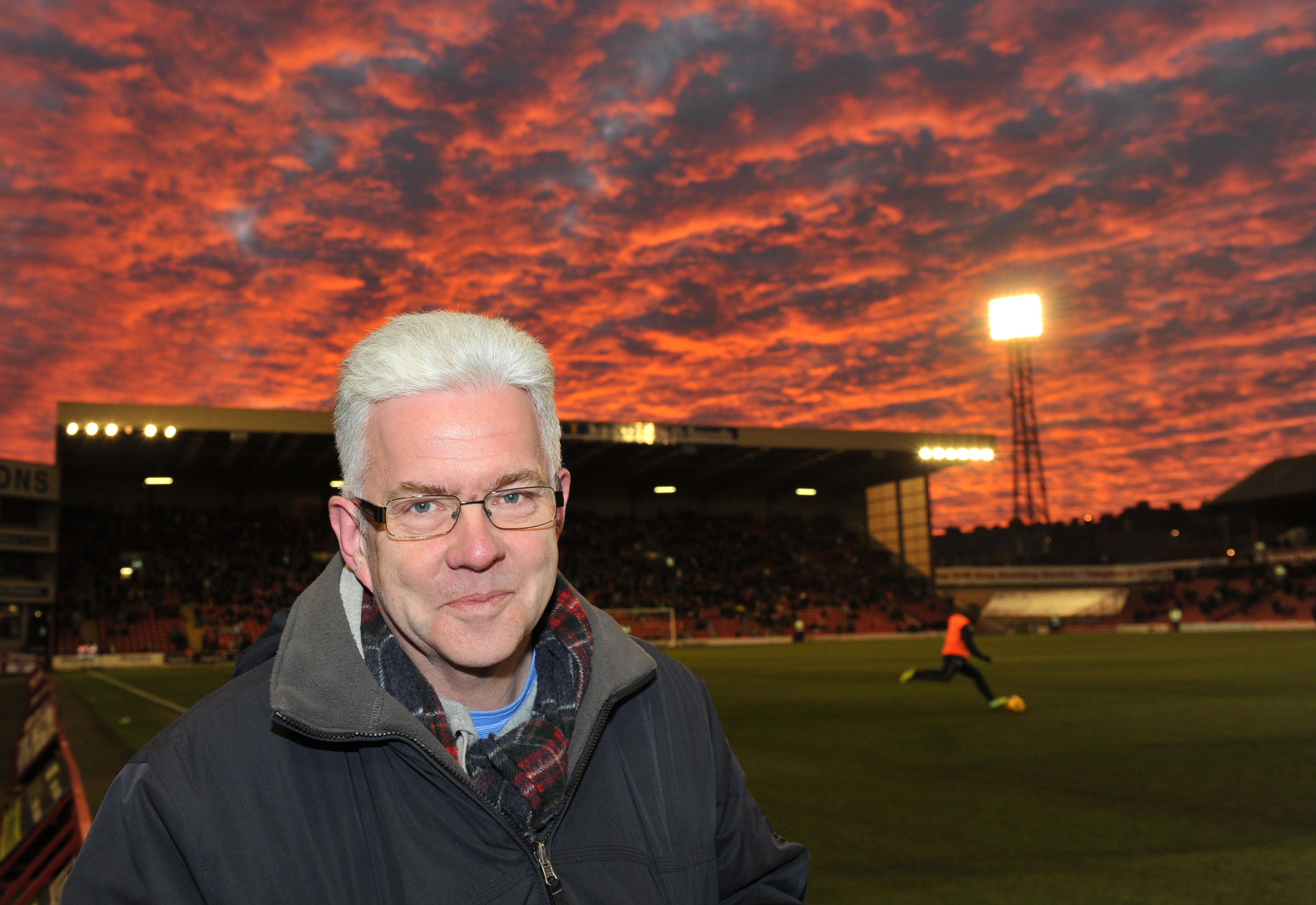
ian-mcmillan-barnsley-fc-oakwell-stadium-credit-www-turningimages-co-uk-527kb

Carol Ann Duffy described you as ‘world class, one of today’s greatest poetry performers’ and The Observer as the ‘funniest, quirkiest, sharpest poet, comedian and broadcaster in the business’. Can you tell Ink Pantry about your journey as a performance poet? How did you get to this stage of greatness?! Well, it’s been a long journey, but I think the two qualities I’ve got are consistency and enthusiasm; if you can be enthusiastic about any project you’re involved in then, that goes a long, long way.

You were a drummer in a band called Oscar the Frog, and part of a folk/poetry duo called Jaws, with Martyn Wiley. How important is rhythm in poetry? Would a poem work without rhythm? Have you a preferred form? I think rhythm is vital, from the heartbeat to the rise and fall of the sun, to the changing of how seasons, and all that, leads to the rhythm of language.

Apart from humour, what’s your secret to a good poem? It must do something that no other form could do.

Have you any advice for budding performance poets? Read lots of poems, and when you write poems, read them aloud. Go to as many open mic sessions as you can to hone your craft.

Tell us about the Circus of Poets and Versewagon. Circus of Poets was just a gang of four lads who wanted to stand up and perform, and Versewagon was an old Dormobile that we took to rural areas that may not have had a writing workshop, already.

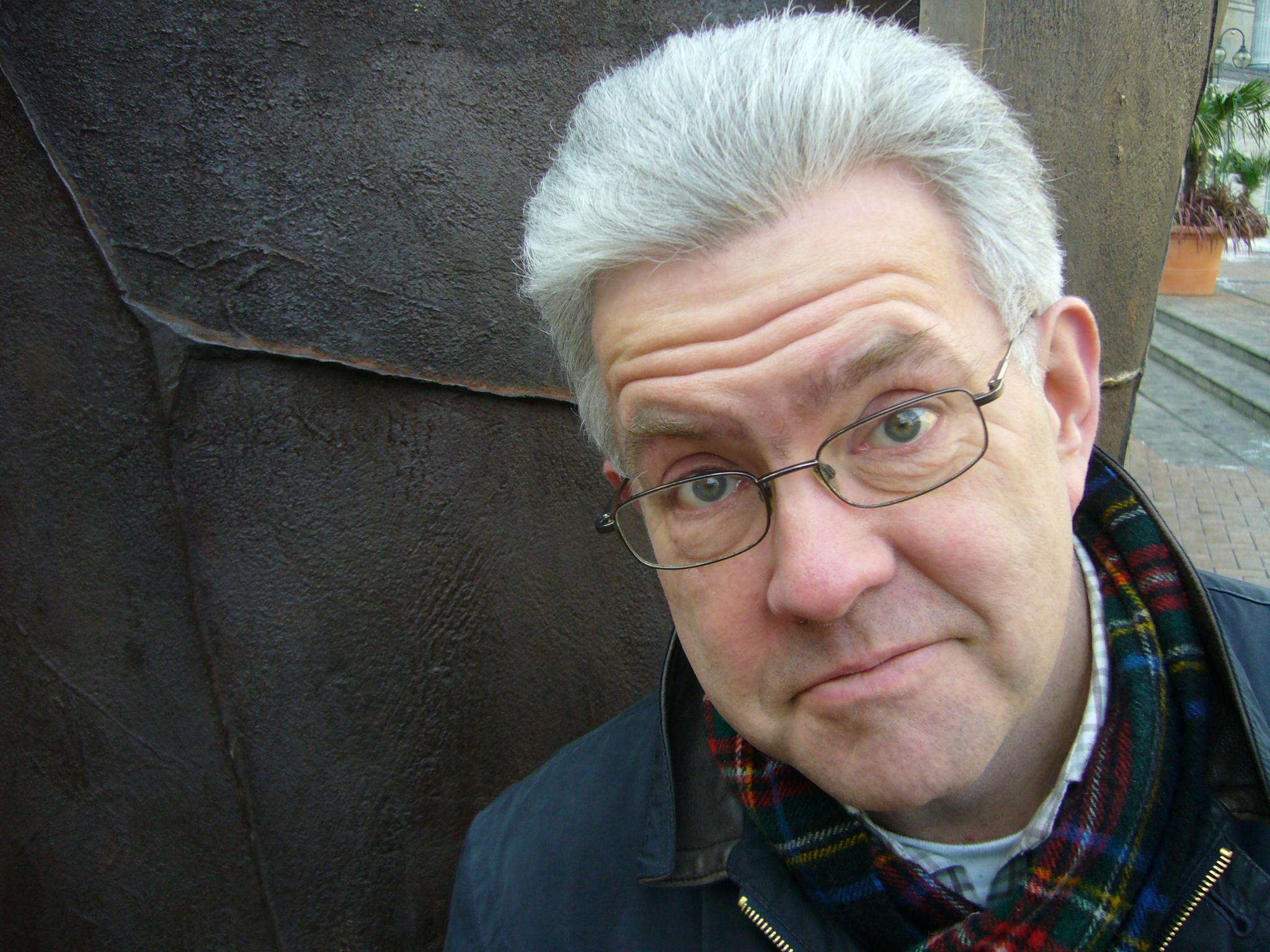
im-adrian-mealing-palm-1-3mb

Describe one of the best days of your life. So many. Too many to say.

You present The Verb on Radio 3. Tell us about a typical day on set. I arrive at 08.30, go through the script with the producer, devise and refine the questions, the guests arrive at 13.00, we record between 14.00 and 15.15, and then I record the retakes.

At Chester University, when you were guest speaker at the Cheshire Prize for Literature awards, you mentioned that you were writing a libretto for Chester cathedral. Can you tell us more about this? It’s just a new carol with my composer mate Luke Carver Goss for Chester Choral Society. I like writing with composers!

You have written for children. How different is it to writing for adults? Is it more difficult/restrictive, or just fun? Does it teach you anything? What advice would you give to artists who are considering writing for children? Maybe just write poems, and test them out: this would show you whether they’re for children or adults.

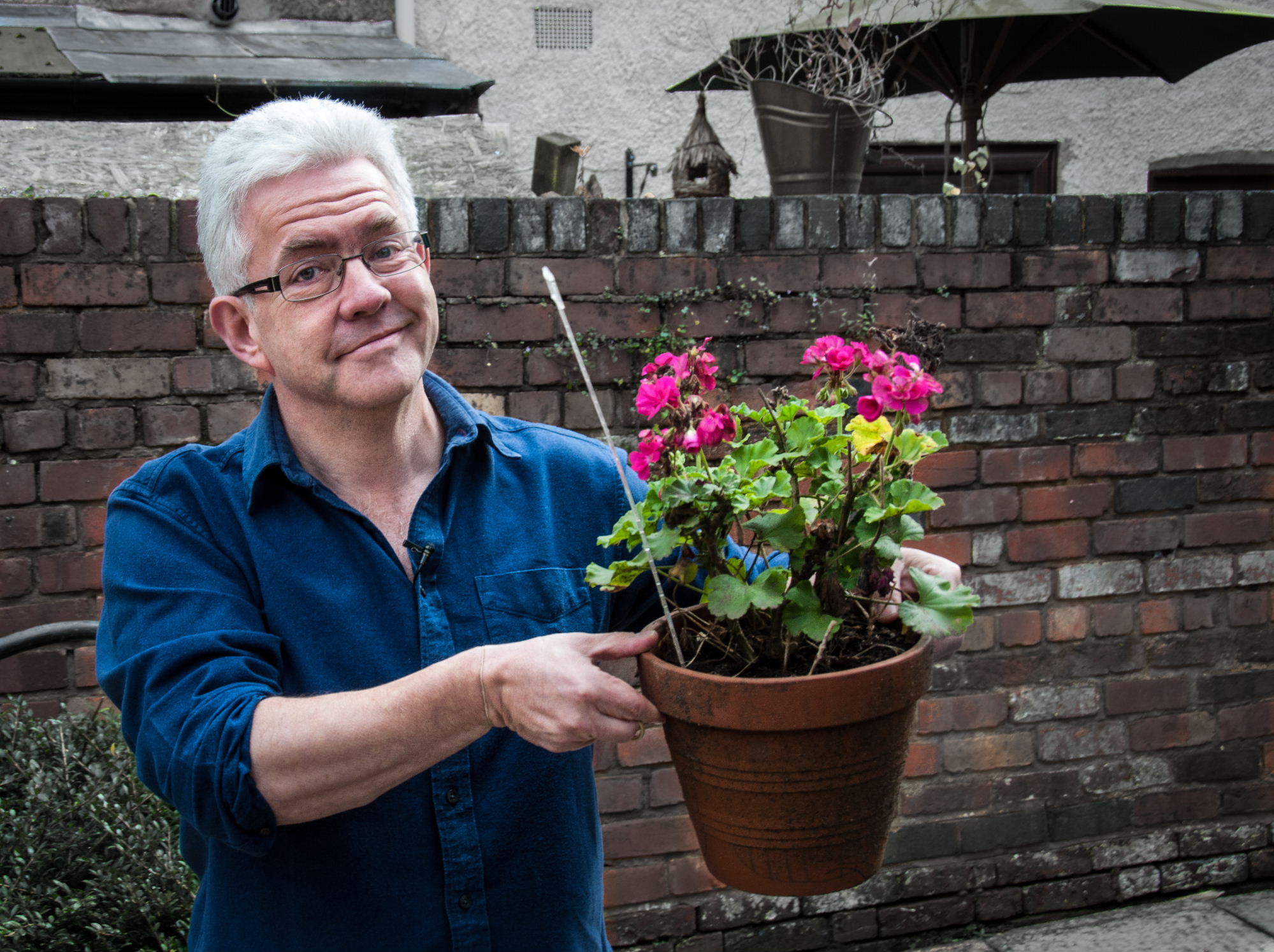
Ian McMillan's welcome to his Bewdley Festival performance!

If you could change the world, what’s the first thing you would do? Make sure that rich people paid plenty of tax and reverse the spending cuts.

What are you reading at the moment? This week’s New Yorker magazine: always a favourite.

What are your plans? What is next for you? I want to write more with composers in 2017!

Website

Twitter

Picture Credits:

Barnsley FC Oakwell Stadium

Adrian Mealing

Bewdley Festival: Ruth Bourne


Books From The Pantry: Waiting Spaces by David Hollywood: reviewed by Kev Milsom

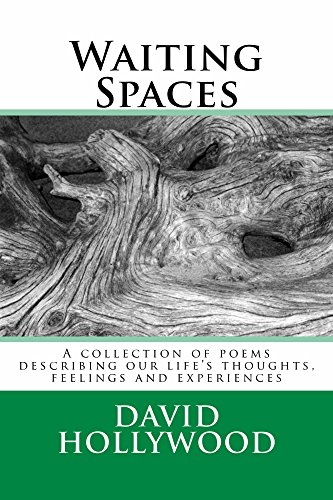
ws

‘What is contained in this book is a collection that responded to moments in time, or urges to express desperation, or are a simple observation of sometimes everyday experiences and aspirations that I yearn for. Hopefully they will sometimes gladden you, the reader, and on others annoy you, or make you sorrowful, and maybe through a couple of examples, terrify the life in you.’

Waiting Spaces: A Collection of Poems Describing our Life’s Thoughts, Feelings and Experiences covers an impressive total of seventy-eight pieces of poetry by the Irish-born poet, David Hollywood; each ranges in length from a few lines to much longer pieces.

As a reader, my initial impressions focused on the simplicity of the poetry. Sometimes, the rhyming patterns involve a basic a-b, a-b or ab-ab style, although this is by no means indicative of the whole book. Personally, I absolutely loved this element as it emphasises a key aspect of why I enjoyed the essence of this book.  

Namely, it is easy to read. It allows – and effortlessly draws – the reader into the mind of the poet’s thinking and expression, something which always personally alerts me towards the skill of the writer. For me, this is summed up in one of the two essays written at the beginning of the book, one focusing on the question of ‘What is Poetry?’ and another asking ‘Is Poetry the Poor Relative of Prose?’ In the latter introductory essay, David Hollywood creates a poem which I found to be very poignant and reflective of the book ahead.

What has happened to worn chairs and wooden tables?

With a carafe of wine and old oranges,

In a garden together with friends,

Who greet you with their welcome,

And support of each other.

It belongs to some other time!

Imagine a walk through a thin wood,

To the edge of a rise,

To discover the finest of views in the morning,

Finding dew in the middle of your thoughts,

And the sun has already started to warm.

At the end I should love the world to be elegant!

To know that my company was anticipated,

Enough to say ‘good day’,

Fine manners and good behaviour,

With the best of company,

And only that which is true and noble.

And nothing of these times!

The carefree world that the opening lines create sum up the essence of this collection of poetry, for each poem holds a tone which suggests not someone preaching their intensive views to an audience, but rather the gentle voices of friends meeting in a relaxed, tranquil setting, sharing thoughts and laughter over a glass of fine wine and enjoying the company of kindred souls. As such, everything is easy to understand and relate to. At no point does the reader wonder where they are, what is happening and why.

Ultimately, creating poetry appearing to be so simple and straight-forward perhaps runs the criticism from some quarters of lacking literary skill or craft. Certainly not so here, for David Hollywood’s words shine out from every piece, ranging from the shorter, four-line creations, such as ‘Past Tomorrows and ‘Traffic Jams’ (‘When driving in Dublin…Avoid the Quickest routes…Because they always take you…Down the slowest streets’), to longer pieces such as ‘Youths for Profits, Without Sin’, covering a wide range of thoughts and emotions, including poetry involving the complexities of love and romance, towards more philosophical and contemplative topics.

Again, within each poem, David Hollywood’s inner voice is loud, yet never overbearing…deep, yet never remote, and, as previously stated, best consumed in the company of one’s finest allies, easily inspired by exposure to excellent poetry.  

Waiting Spaces: A Collection of Poems Describing our Life’s Thoughts, Feelings and Experiences may be one of the longer titles we’ve covered here at Ink Pantry, but ultimately this collection delivers – doing exactly what it says on the tin.


Inky Interview Exclusive: Staffordshire Poet Laureate Bert Flitcroft

wordcafe06166493

Can you please tell Ink Pantry about your role as Staffordshire Poet Laureate?

As you would imagine, it’s an honorary position but the county appoint a Laureate formally, after an application and interview process. The brief is essentially to promote poetry within the County by giving readings, running workshops, etc, with existing poetry groups, and where possible to find new poetry readers and establish new poetry groups. There are also some commissioned poems to be written. Beyond that I’m free to do as little or as much as time allows.

I have chosen to devote a lot of my energy to supporting libraries. All libraries in the county are currently developing a ‘poetry space’ which can serve as a platform for local groups and schools to exhibit their writing as well as raising the profile of poetry generally as an art form.

We are also putting together at the moment The Staffordshire Poetry Collection (contemporary poems written about where people live) which will be exhibited around the County.

You ran residential poetry courses for sixth formers in Staffordshire, working with Carol Ann Duffy, Adrian Henry, and Linda France. What advice would you give to writers who are trying out poetry for the first time? How do you inspire people?

I don’t think there is one single piece of advice you can give, and I know mine is far from original, but I think the most important thing for a ‘beginner’ is not to be too ambitious in the early stages. Each person should be free to write what the need to write about personally, and then write something which satisfies themselves first and foremost. If it works for them, that’s the most important thing. There should be a joy in writing so it’s important not to make it a test and try to satisfy other people.

I also advise people to write in the early stages about what they know, from personal experience, whether that’s their job, their love life, domestic details, whatever. In doing so they will begin to ask questions and examine their lives, which for me is the first stage in ‘finding your voice’. There will be plenty of time later for ambition, philosophy, learning how to write ‘better’ poetry.

In the early stages, form and serious crafting, the technical side, are the least important things.

I’m not sure that I do inspire people in any particular way. I do know that I try to take away the fear of failure when writing poetry – that question of ‘but is it any good?’ should be replaced with ‘but does it work?’ which I feel is a more important question. And I do stress the question of joy quite often, the importance of not losing it. And I guess (obvious though it is) that there will always be something positive to say about a piece of writing: we should recognize that sitting down to write something is in itself a positive and affirming act.

After that, I would say go and start buying poetry books and subscribe to well-established magazines, read lots and lots of poetry, both traditional and contemporary, to see how other people write – that’s the only way you will ever develop a sense of perspective about your ‘work’.

Can you tell us about your time as Poet in Residence at The Southwell Poetry Festival?

Southwell is a delightful poetry festival. It has both a seriousness of purpose and a sort of intimacy, which makes it a lovely experience. I gave a reading from my two poetry collections combined with discussion, but the best part was just spending time in the (library) venue and being available for anyone  to pop in and chat about their work or poetry generally. I love that informal situation where people can just approach you and feel relaxed about it. I often think that’s where the real pleasure of being involved in the poetry scene lies.

What are you reading at the moment and what is your favourite novel?

At the moment I’m reading one of Bernard Cornwall’s historical novels, ‘Warriors of the Storm’, but essentially I’m a Trollope fan and shortly about to embark on a second reading of his complete works. I guess if I had to pick one favourite novel it would be ‘The Warden’ but it would be close call between that and E.M. Forster’s  ‘A Room With a View’.

The warden is the sort of thoroughly moral and good character I feel we should all aspire to emulate. ‘A Room with a View’ is a novel with hidden depths that spoke to me personally on so many different levels when I first read it.

Have you a preferred form of poetry to employ, or does the form naturally evolve?

No, I don’t really have a preferred form of poetry. While it’s important to understand and develop the discipline of writing in traditional forms, (know the rules so that you can break them with impunity), personally I’m more interested in what a poem is saying, as long as it is said effectively. I find that when I read a poem I like, it usually stands up to some degree of critical analysis anyway.

In my own writing I always allow the poem to find its own form, but it is surprising how often I seem to edge towards the sonnet, usually the Petrarchan, and I do like to feel that most of my poems on the page stand up to a certain amount of critical analysis.

What is your creative space like?

I have a sort of small study filled with poetry books and a PC, but I often go out to write. I need a change of scenery, so I have 4 favourite coffee bars and hotel lounges – I like a comfy armchair when I’m pondering or reading.

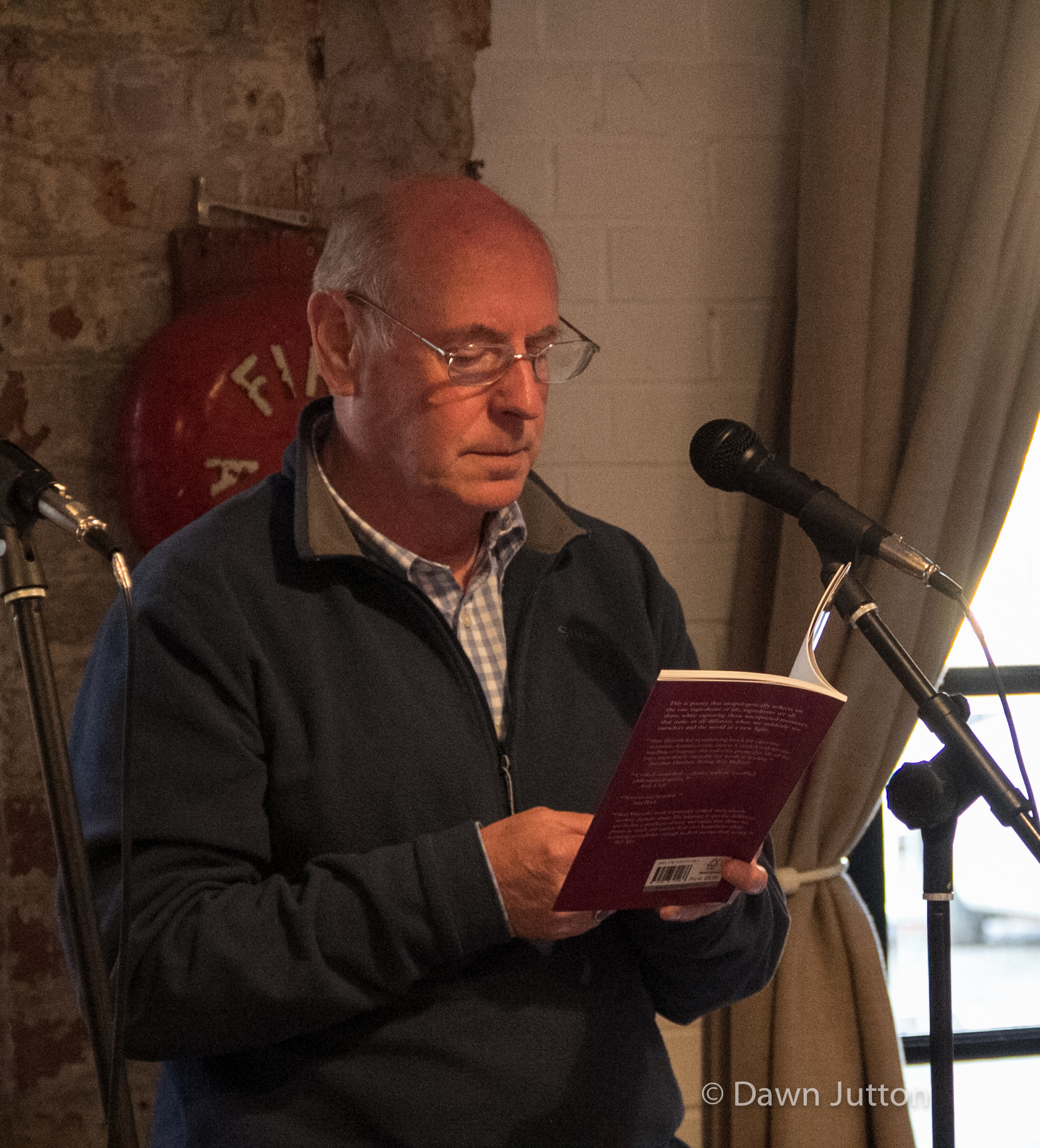
The Edinburgh Fringe Festival. What have you performed there? What other literary/art events would you recommend?

I love the Edinburgh Fringe. Blackwell’s Bookshop run a series of literary evenings with invited guest readers, both novelists and poets, sharing the stage. I was lucky enough to be invited to read and have been invited back on two further occasions to read from my two poetry collections, ‘Singing Puccini at the Kitchen Sink’ and ‘Thought-Apples’. I’m told that’s exceptional as Blackwells do heavily promote Scottish writing, so I feel quite lucky and privileged.

I will pop along to Southwell and Buxton and Wenlock when I can, but there are three festivals I go to most years (as well as Edinburgh):

The Ledbury Poetry Festival

The Ilkley Literature Festival

The Birmingham Literature Festival

Can you tell us of one of the best days of your life?

Not really. I’ve been lucky enough to have had quite a few.

Have you invented any words yourself?!

I will occasionally come up with a portmanteau word or use an adjective as a verb, that sort of thing, but I’m not sure they really count. I think it’s more valuable to come up with an original image or conceit rather than a word.

Which poets do you like and why?

Thomas Hardy, for the beauty of his rhythms, his rhymes, and the strong emotional content of his poetry.

Thom Gunn and Philip Larkin because they show how successfully you can write about motor bikes, supermarkets, the nitty gritty of everyday life.

Mary Oliver for the depth of her feeling for the Natural World.

Billy Collins for his humour and accessible style, and his randomness.

What themes keep cropping up in your work? What do you care about the most?

I care most about people and the lives we all lead, so I tend to write from emotional impulse.

Themes which do crop up I guess are marriage and family and age, but science, maths, railways and history frequently break through and become the vehicle for a poem. These things are latent interests from childhood and schooldays, so they are lodged pretty deeply. I don’t actively seek them out when writing; they seem to force their way in and take over.

Can you please share with us a couple of your poems and walk us through the ideas behind them?

Here are two poems I have become fond of, partly because people often ask me to read them again if they have heard them before, so I guess they speak to people in a pleasing way.

Sonnet to a Bacon Sandwich

You, with a nappy gripped in one hand,

flung the plate over my head.

I remember how the white bread

took its own trajectory like a startled bird.

You yelled something about pulling and weight.

Me? I was at the table waiting to be fed.

Hadn’t I been working all day?

And wasn’t that the wife’s job anyway?

These days, at each anniversary we still

chew over that bacon sandwich,

our only serious row, and how

we both had to learn to cut off the rind,

to butter each other’s bread from time to time.

To listen for the spitting under the grill.

‘Sonnet to a Bacon Sandwich’ arose out of a real incident and is one of those poems in which a single conceit becomes the focus and provides unity, but also acts as a metaphor for what the poem is really saying. As I indicated earlier, the sonnet form arose out of the content – I certainly did not set out with the idea of writing a sonnet.

Waiting for Anna

This Moses basket fresh by the bed

is waiting,

like a promise, like a Truth

about to come true.

Not for a casting off among the reeds

but for a coming

home.

To open a door, to enter a room,

is always to begin again.

Already the basket’s empty space,

the very air inside it,

is sacred.

There is nothing more to say.

Silence has a voice.

Emptiness is eloquent.

‘Waiting for Anna’ is a deeply personal poem and I think I’m fond of it as an example of how a single moment, a small thing, can capture something much bigger. And in this case it illustrates, I’d like to think, how very often ‘less is more’.

What is next for you? What plans have you got?

I have another year as Staffordshire Poet Laureate, and I have no real poetry plans beyond that. I shall be quite happy just to continue writing for the pleasure of it. If people happen to enjoy what I write and invite me along to share it that’s a lovely bonus and I’m grateful. There are a lot of good poets out there.

meagain

Bert’s website


Books From The Pantry: Butterfly Bones by Rebecca Carpenter

rebecca-author-photobutterfly-bones-ecover-with-series

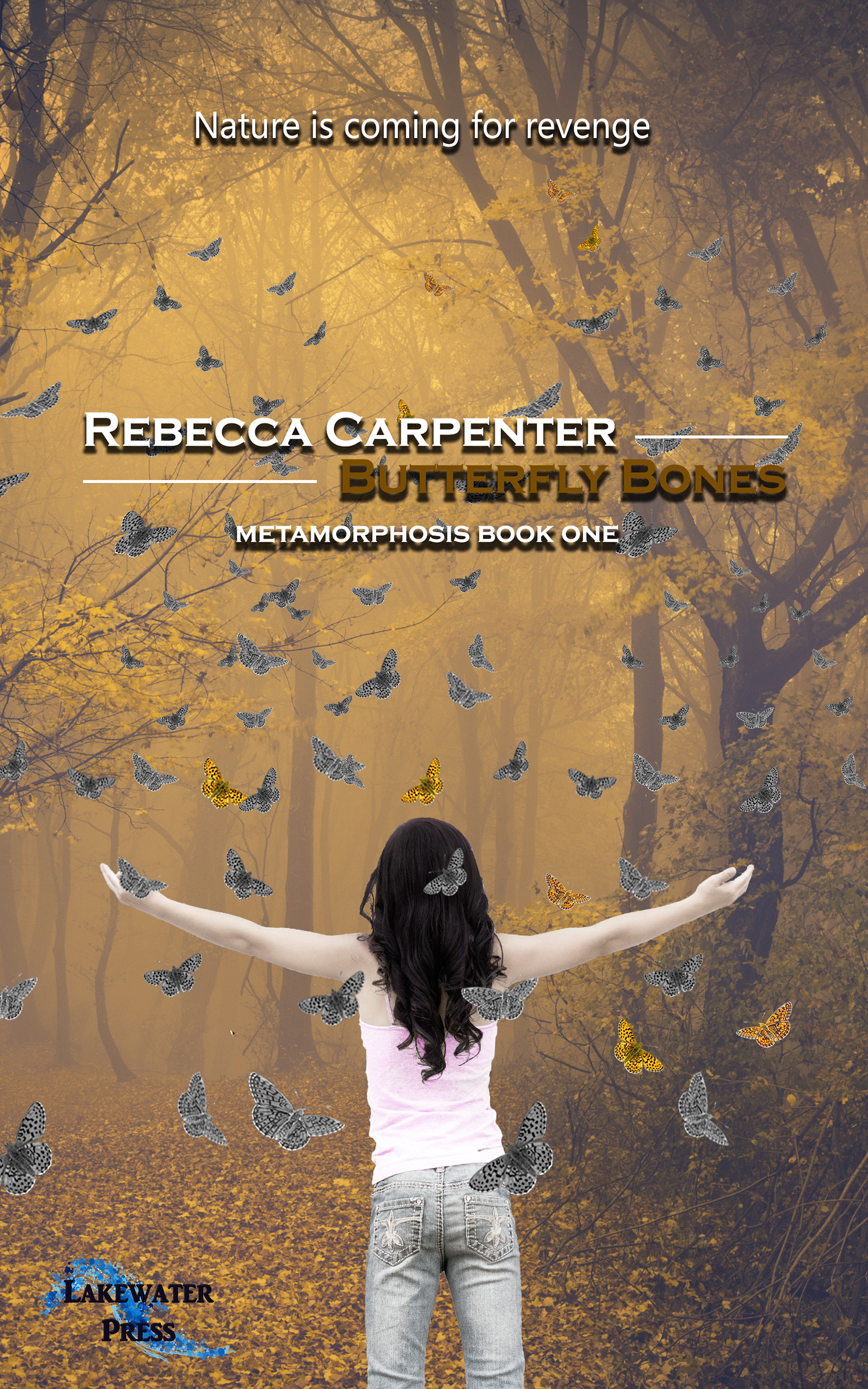
We’re delighted to welcome debut YA author Rebecca Carpenter to the shelves today. Her contemporary science fiction Butterfly Bones has just been released and is certainly making waves with reviewers. Its themes are dark, deep, and haunting, but Rebecca isn’t afraid to tackle life’s tough issues.

Rebecca, tell us about your background. How did you come to be a writer? Did you excel in English at school?

I’ve always loved writing. English was my best and favourite subject. I started writing poetry at a young age, followed by stories and song lyrics. As a teenager, I loved keeping a diary. But I didn’t become serious about writing until 2011 when I decided to write a screenplay. Two screenplays later, I wrote my memoir, The Total Deconstruction of Chloe Wilson, a young adult story about my teen pregnancy. Butterfly Bones, as well as six picture books and a middle grade novel, have since followed.

Butterfly Bones is an intense and haunting read; the main character really does have a terrible time with bullying on top of having a bone disorder. Can you tell us what made you choose such traumatic themes? And the butterflies and science – is this something you’re simply interested in?

I chose topics that are difficult, yet real. Bullying is a real problem for many teens, and those with physical or mental disabilities are at even more risk of being singled out for these differences. And honestly, this is the story that Bethany told me to write. As far as the butterflies and science, the unit I teach my pre-kindergarten class about caterpillars and butterflies is one of my favourites. The concept of starting as one thing – a larva – and then through tumultuous changes metamorphosing into an insect is truly miraculous. Applying this concept to people became something I had to attempt in my writing. I love science. Again, teaching young children, one of the best parts of my job is to explore and experiment with all kinds of things, helping my students to develop a love and respect for nature and the world around us.

The book has been described by a lot of readers as utterly unique. How on earth did you come up with such an unusual storyline?

It literally came to me from a song by The Cure, ‘Caterpillar’. I knew as soon as it came to me that I had to write it. Matter of fact, I felt driven in a way I had never felt before. I was constantly writing notes all over the place as the story developed and poured from me. I have pages upon pages of scrap paper with first draft ideas scribbled on them. I finally got smarter and bought a bunch of spiral notebooks to keep at work, home, and even my vehicle so I could better organize my thoughts.

Has becoming a published author been easy? How has the experience been for you so far?

Becoming a published author has been a five-year endeavour of revisions and tears. But the journey has made me a better writer and made Butterfly Bones a strong young adult novel.

Butterfly Bones is the first in the Metamorphosis series. When should fans expect book two? It’s well documented that writing the second book in a series can be terrifying and difficult; how have you found writing the sequel?

I’m hoping to have book two finished and ready for my editor by May, 2017. But I’ll push for earlier if possible. Writing the sequel has been difficult in the fact that I have to start all over in my writing, acting as if no one has read the first book, or that the first book even exists. Weaving the important backstory so the reader understands what’s happening is tricky. If I add too much at a time, it becomes an info dump. But not enough and the reader might be confused. And since the character doesn’t go through metamorphosis in this book, I have to dig deep to find another source of science fiction. But one of the joys of this story has been writing in multi POV, and one of the characters is told in free verse. I love poetry, and so this has been a pure delight to write.

They say now that a writer’s job is no longer just about the writing. Do you agree? What kinds of things have you done to market your book and receive reviews?

It’s all about the marketing. Writing is the easy part. I seriously think just as many writing workshops should focus on marketing as they do on craft. I don’t think any new author is ready for the work that marketing requires. The biggest thing has been creating my author brand and being active on social media. Building an audience takes time … and tonnes of patience.

What kind of books do you like to read in your free time? Any favourites? Any authors who have particularly inspired you and your writing?

I don’t have a favorite genre. But I do love to read YA. But it must be well written or I move on to something else. Due to my passion for working with children, I mostly read children’s books. Which I love. Shell Silverstein and Jan Brett are two of my favourite children’s authors. I also love a good mystery/thriller. Defending Jacob by William Landay has become my favourite thriller. I collect books about the assassination of John F. Kennedy, and I inherited a large collection of books on all the American presidents that I hope to read some day.

What’s a typical day for you? How and when do you fit in writing? Do you write in one particular spot or do you like to move around? Where do you find inspiration?

Weekdays I awaken at 5:15 a.m. and am off to start my job of running a large childcare/preschool by 6:15. I work until 5:45 p.m. and then I’m home for dinner with my hubby. Evenings are spent reading submissions for a small press, editing manuscripts for clients, or writing. Then it’s off to bed and it starts all over again. Weekends I do as much writing as possible, but if I have an editing job, it takes precedence and requires most of that time.

For those who are pursuing the dream of publication, what advice might you offer them?

Never give up. Keep writing. Keep reading in the genre that you’re writing. And always look for opportunities to learn and hone your craft. It took me five years to publish Butterfly Bones – five years of learning how to be a better writer and how to write a stronger story.

What other talents do you have? Any party tricks you can tell us about? How about the best day of your life?

I’m a great cook and love to bake. My husband calls me his “gourmet chef”. I collect cook books and get excited about trying new recipes. Homemade marinara sauce is one of my trademarks. I enjoy crafts like wreath making, and I dabble in pencil sketches. I took tap dance as a child and like to strap on a pair of tap shoes and drive my hubby crazy with all the noise. The best day of my life was the day I married my husband, Cory. He makes my life interesting and makes me laugh every day. He’s my best friend and I’m sure we have many best days ahead of us.

If you want to find out more about Rebecca and her writing check out her website, and of course, grab a copy of Butterfly Bones whilst you’re cruising the internet – not only is it well worth the read, but if you buy a copy in December, the publisher will enter you in a draw to win a Kindle!


Books From The Pantry: Sightings by Elisabeth Sennitt Clough, reviewed by Colette Victor


sightings-3

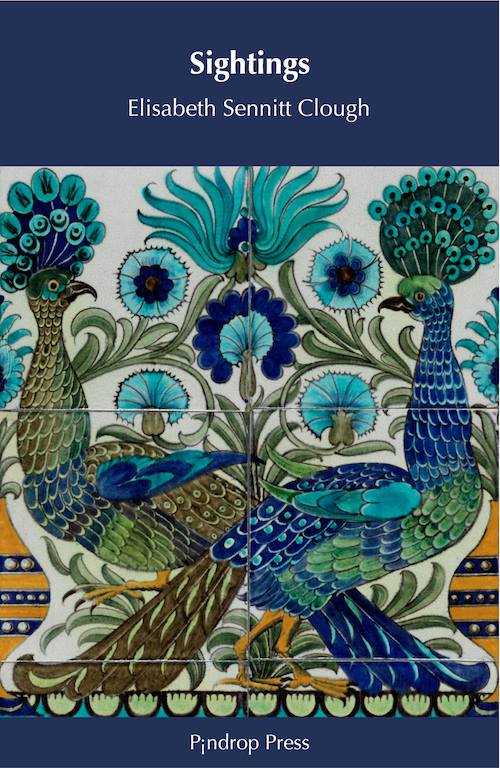
In between the neat black letters on the white pages of Elisabeth Sennitt Clough’s collection of poems, Sightings, crawl glowing beasts and scaled monsters, the ghost of a father, a fire-haired mother and the ‘small pink son she gave away’ as well as a brute of a stepfather. The poet tells of girls so inconsequential their own mothers forget about them, and boys with small gold hairs like tinsel on their arms. She brings her subjects alive through her use of rich sensory imagery and lines that are so precise they make your heart ache. This the kind of poetry you can’t help walking away from with goose flesh all over your body for its honesty, its rawness and the poet’s disarming willingness to bare all. Sennitt Clough, as she states so eloquently herself in ‘The Glass Collar’, brings her childhood to therapy in this collection of unforgiving poems. In ‘Threshold’ the art teacher remarks that the girl’s art contains a subtle anger, but there’s nothing subtle about Sennitt Clough’s anger. And yet, at the same time, it’s fragile too, ready to break into a thousand shards at any moment, like the glass collar in the poem by the same name. In the title poem ‘Sightings’ she tells of a peacock that is the rarest of gifts. Sennitt Clough’s collection is just such a peacock, the rarest of gifts, one you cannot walk away from unchanged.

Elisabeth Sennitt Clough was born in Ely and now lives in Norfolk with her husband and three children. Her pamphlet Glass was a winner in the Paper Swans inaugural pamphlet competition and her debut collection Sightings is forthcoming from Pindrop Press. Her poems have appeared in The Rialto, Mslexia, Magma, Stand and The Cannons’ Mouth.

www.elisabethsennittclough.co.uk

Colette Victor is a twice published author. Both her books, the YA novel Head Over Heart (Chicken House, 2014) as well as the literary novel What To Do With Lobsters In a Place Like Klippiesfontein (Cargo Publishing, 2015) were finalists in two well-respected debut novel competitions. Her novels have been translated into German.

www.colettevictor.be

Inky Interview: Performance Poet Steve Pottinger

sofa

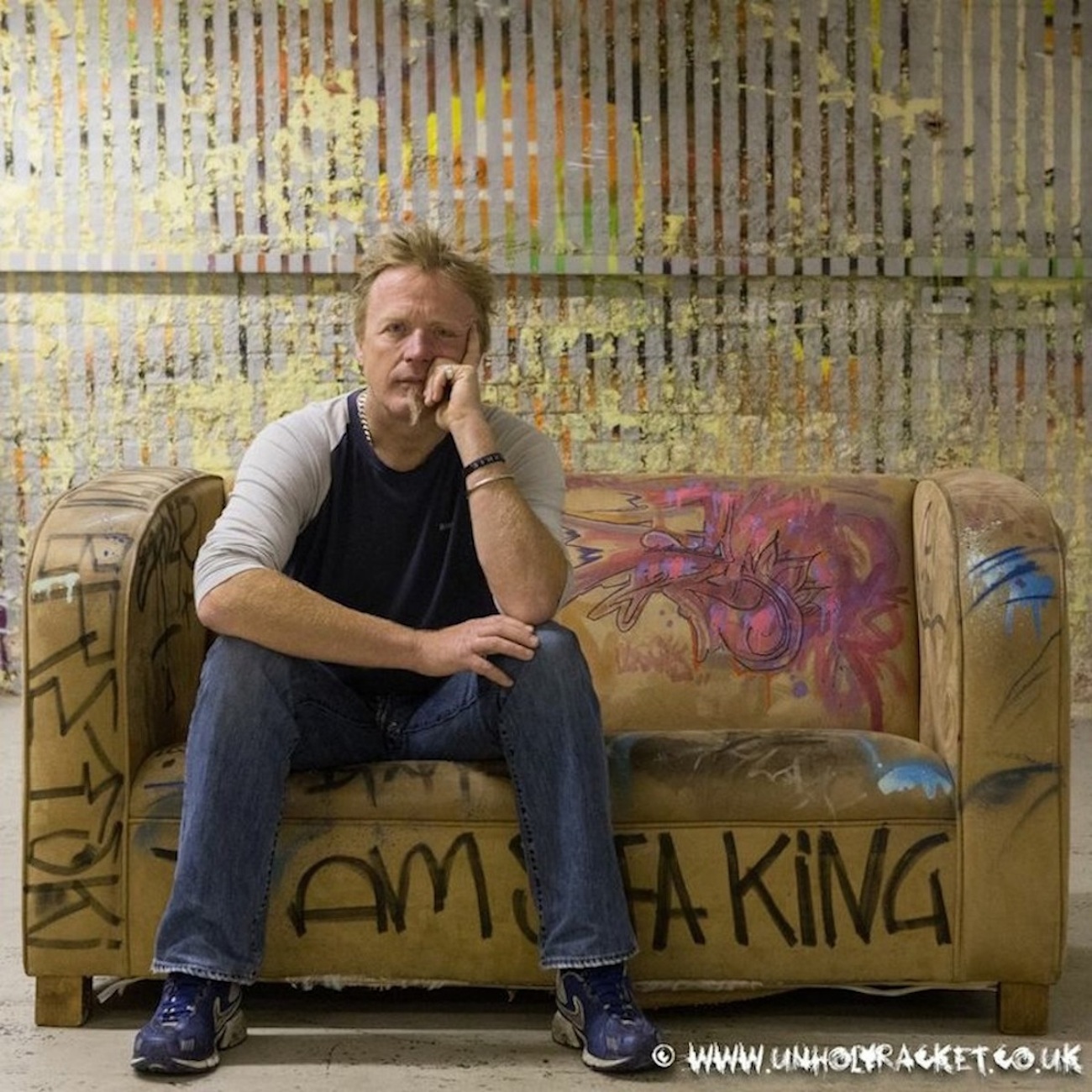
Can you please tell Ink Pantry about your journey as a performance poet?

Like a lot of poets, I started by sharing my work with a group who met in a pub near where I lived at the time. I found it terrifying and exhilarating in equal measure. Soon after, I was lucky enough to work with poet Joolz Denby, who taught me a huge amount about stagecraft and performance. Since then I’ve continued to learn from watching and listening to other poets and developed my own style on stage, my own way of delivering my work. As in any field, persistence and good fortune have definitely played their part.

Have you any tips for budding performance poets?

Watch, listen, learn. Get up and read. If it goes well, try and work out why. If it doesn’t, do the same.

You recently had great success with your excellent poem about Brexit called ‘Stabberjocky’, mixing Lewis Carroll’s verse with political satire. Love your invention of the word ‘Machiavelliadastardly’! Do you think humour helps people to engage and think about important issues? Has ‘Stabberjocky’ been set to music now?

Humour certainly helps me engage with important issues, which is why I so often take a wry, slightly offbeat approach to serious subjects. I want to engage people, and I don’t believe you do that by a) shouting at them, or b) hitting them over the head with a list of everything that’s wrong in the world. That wouldn’t spark my interest, so why would it do so for anyone else?

‘Stabberjocky’ has been set to music by the wonderful and generous Birmingham music collective Swoomptheeng, and you can listen to it here:

Stabberjocky

Are politics a recurring theme in your work? What do you care about the most?

If you’ve access to power and wealth and influence, it’s easy to take it for granted. A goodly proportion of my work looks at life from the perspective of those who don’t enjoy the privilege of that access. In an era where politicians seem more ready than ever to dismiss people who aren’t like ‘us’ as unworthy of being treated with respect, I try and offer a quiet reminder of our common humanity. I’m utterly passionate about the importance of that.

You have several poetry collections published. Can you tell us about them?

My first two collections were pamphlets I got printed up, stapled together by hand while sitting in my front room listening to music, and sold in pubs and student unions. I then had two collections published by AK Press, who saw me doing a performance spot supporting Chumbawamba and thought my work deserved a wider audience. Latterly, Island Songs was published by Ignite Books in 2012, and in Spring 2014 this was followed by More Bees Bigger Bonnets, which I think is my best work yet. (They’re both on sale via my website, btw!)

Can you tell us about the poetry scene that you are part of? Which festivals/poetry venues have you performed at? Which would you recommend?

I don’t know that I’m part of a scene – I just write my work and try to find places to read it! I believe in taking poetry out into the big wide world, sharing it with people, and hopefully overturning their preconceived ideas of just what poetry is. One of the most wonderful things about poetry is that anyone can have a go at it,  say what they want to say, and find their voice. I love the moment when somebody ‘gets’ that.

I’ve performed at festivals as diverse as Beautiful Days and Rebellion, and in the upstairs rooms of pubs and poetry evenings from Brighton up to Glasgow. I still enjoy the romance of life on the road, and getting up in front of an audience to share my work, listen to other poets, and make some sort of connection. There are very few places I wouldn’t recommend, and I’ll keep those to myself!

Tell us about your creative process.

It varies a lot. Sometimes I wake up in the middle of the night, or first thing in the morning, with a poem that’s just about fully formed and just needs me to write it down before I distract myself with the business of the day. Almost always, those will have been about subjects I’ve actively been chewing on for a while, but got nowhere with. More often, I’ll find a line or two, or an image, which provides a way to sidle up on the poem I’m trying to snare. I’m a great believer in allowing my subconscious to filter though my draft ideas while I go and do something entirely unrelated – riding my mountain bike, or going for a swim – before coming back to hew them into shape.

What’s your favourite book and why?

I have a real soft spot for detective novels and could spend days reading one after another. But if you left me on a desert island with just one book, it would have to be Beauty Douglas, the collected poems of Adrian Mitchell. A friend gave me a copy of it when I was at uni, and Mitchell’s work never fails to inspire me with its range of subject matter and style, with its joy, hope, love, and anger. It also reminds me to retain a sense of humility about my own work.

Can you share with us a couple of examples of your own poems and walk us through the ideas behind them?

I always hated English classes where you had to analyse a poem – write about the cumulative effect, sibilance, metaphor and the like. It felt like ripping a butterfly apart to see how it worked. So this question made my blood run cold. Here’s a broad outline of the motivation behind two of my poems, both from Island Songs.

Spring

In life, we all too often opt for – or are offered – simple binary choices. A thing is good or it’s bad. Something is black or it’s white. You’re with us or you’re against us. And so on. In my experience, this rarely does a subject justice. Worse than that, it encourages the belief that the world is a simple place, easily understood through these choices. It isn’t.

In my poem ‘Spring’ I wanted to unravel the complexity of my thoughts about war, to bring into play and up for discussion a host of issues: our society’s readiness for war, media spin, the bravery of troops, the realpolitik of politicians, the grief of families, and our complicity as an audience who watch the violence via our TV. I also wanted to put all that in perspective, set it in a longer time frame than the 24-7 of the rolling news. So I wove my poem against the backdrop of the turning of the seasons, the fact the world moves on, and the fragile yet inextinguishable nature of hope, symbolised here by the delicate white blossom of the hawthorn every Spring.

Tumbling Stumbling Pachyderm Blues

After throwing a complex political poem at you, here’s a love poem. I often approach my poems at a tangent, hoping to find a way in to the subject which will engage listeners or readers without triggering a here-we-go-again response from them. This is a poem about love, and hope, and about reassuring a partner whose fear is leading them to expect disappointment, who is seeing the worm but not the apple.

If you could change the world, what is the first thing you would consider?

What a question! What would I do? End the need for foodbanks? Make a hippie out of Donald Trump? Close down the Daily Mail? So many possibilities.

Who inspires you?

I don’t have many heroes – I’m aware most of us have feet of clay. But I’m genuinely inspired, every day, by people’s generosity, kindness, resilience, and fortitude, their drive, their love, and their optimism. At our best, we’re wonderful, loving little monkeys, and I take great heart from that.

Tell us about one of the best days of your life.

I can’t. We’d both blush.

What is next for you? What are your plans?

There’s some old saw about life being what happens while you’re making other plans. All things being equal, I’m hoping to put together a new volume of poetry, as well as a book of short stories, and do gigs in places I’ve never been. There’s also the likelihood of an interesting collaboration with a couple of other poets, which I’m very excited about, and the distinct possibility of a visit to Edinburgh Fringe. Oh, and some days out on the motorbike in beautiful countryside would top it off nicely. And maybe a beer.

Steve’s Books

Website

Twitter

Inky Interview Special: Rosie Garland

credit-absolut-queer-photography-1

As In Judy (Flapjack Press) is your new collection of poetry, which is out in December. What kind of themes did you explore and what inspired you at the time?

I’ve always been something of a cuckoo in the nest! And that’s what gets my mojo working. I write about people who won’t (or can’t) squeeze into the one-size-fits-all templates on offer and the friction that occurs when they try.

I’m not interested in creating narrow worlds. Increasingly, we seem to inhabit a world where ‘queer’ or ‘unusual’ is anything that strays a millimetre from mom ‘n’ pop, church-sanctioned procreative sex. Personally, I don’t think ‘normal’ exists. It’s not real, it’s just common.

Sarah Waters described you as a ‘real literary talent’. As well as novels, you have written many award-winning short stories. Can you talk us through your creative process? Do you have a clear idea of what you want to say, or does your writing evolve organically? What is it about literature that you love?

I am very grateful for the wonderful things people have said. I’m trying very hard to let the compliments sink in.

However many #MyWritingProcess blogs I read, I’m inspired and warmed at the variety of creative strategies we use to get ourselves writing. I don’t think it matters at all if someone is a morning/afternoon/nocturnal writer, or whether you prefer a pencil, an iPad or grind your own ink from freshly roasted acorns.

It’s more important to find what works for you. I don’t have a single process. I’m pretty flexible. Let’s face it, there are 1000 ways to derail my writing (shopping, housework, TV, social networking, etc, let alone my inner critic screaming how useless I am and stopping me hearing those compliments!). Anything that gets me writing and not putting it off is the key.

I’m not alone in being terrified of the blank page and a routine with small steps helps get the creative juices flowing. I’ll start a writing day with warm-ups (e.g. journaling, free writing). Then it’s easier to take on a heftier task like editing a chapter. An athlete wouldn’t run a marathon from cold. My take is that a novelist functions in much the same way.

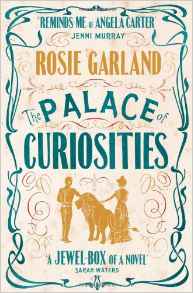
palace

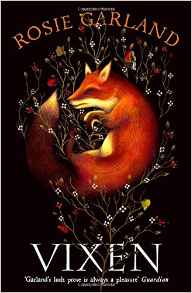
Your novels The Palace of Curiosities and Vixen are beautiful works of art, inside and out. I remember seeing Vixen for the first time at the Darkness and Light: Exploring the Gothic exhibition at the John Rylands Library in Manchester last year, thinking, what a gorgeous cover! After I read Vixen, the cover seemed to encapsulate the emotions portrayed throughout the novel. How important do you think book cover design is and do you always have a clear idea of each cover?

Thank you so much! And you’ve guessed it: I am passionate about book cover design. Ezra Pound said ‘a book should be a ball of light in the hand’. Why limit that to the words? A good book delights, engages, surprises, and even challenges a reader. I love it when a cover does that too. It can intrigue, press itself into the imagination, and stand out on the shelf. It can whet the appetite. Follow you around. Not to mention spur the action of picking the book from the shelf…

vixen

The cover of Vixen is a beautiful example, designed by Alex Allden at HarperCollins from an original painting by Scottish artist Lindsay Carr. I am not a designer so I steer well clear of that department. I have absolutely no input into the design – I simply want to love it. My task is to get the words right, and that’s what I stick to.

The cover for my next novel, The Night Brother, is proving to be very exciting – the cover design commission was chosen for the Bridgeman Studio Award 2016. It is rare and exciting to have a new piece of artwork commissioned for a work of fiction. I was stunned to discover that the callout received almost 1000 entries, with 20 countries represented. I’m moved that so many artists found their imagination sparked and wanted to see their work on the cover of my book.

I am delighted that Romanian artist Aitch has won the commission. I really warmed to the interplay of darkness and intense colour in her work. After all, night can be the backdrop against which fireworks burn their brightest.

night-brother

You have been described as ‘one of the country’s finest performance poets’. Can you please tell us about your journey as a performance poet? What advice would you give to aspiring performance poets?

One of my happiest memories is of being read to as a small child by my grandmother. I like to offer that simple pleasure to grown-ups, where words leap off the page and take on a magical life of their own. Personally (and it is my personal opinion) all I ask from a poem is that it speaks to me. I don’t demand that it rhyme, or not rhyme. Just that it connects with me in a way that touches me as a human being.

I know it’s not every writer’s cup of tea, but I love the buzz of interacting with readers, whether that’s at a festival, in a bookshop, or a museum at midnight. So, one suggestion for aspiring poets is to get out there and support spoken-word events (throw a rock and you’ll hit a poetry or live literature event where you are). Learn from the good poets as well as the not-so-good ones. Take a deep breath and read at an open mic. Keep going.

And as for advice, to quote W.P. Kinsella: ‘Read! Read! Read! And then read some more.’

Which themes keep cropping up in your writing? What do you care about?

I guess this connects with question 1!

There always have been, and always will be, creative folk who explore alternative themes. It’s never been an easy path, and that seems to be part of the territory. However, I don’t explore these themes as some kind of pose, or to be challenging for the sake of it. I write what I write because that’s what comes knocking.

Sure, I can produce something that doesn’t fire me up (I’ve tried), but my heart’s not in it. There’s the rub: I write where my passions reside. I’ve chased myself in circles trying to second-guess what a publisher ‘might’ want and it was a disaster. There’s no point twisting yourself into shapes trying to please. Maybe it’s one of the reasons it took me so long for my novels to get published.

If you could change one thing about the world, what would it be?

Be excellent to each other. Never more important than now…

Excellent

Palace of Curiosities is set in the 1850s. How did you start researching the period? Have you any advice for new writers? What is it about Victorian life that appeals to you?

Ah, the ‘research’ question! Research is fun, fab, and, like high-fat food, best taken in moderation. The way I see it, the art of good research is when the reader barely notices its presence, only that everything feels right. Of course, the basics must be in place (no iPods in Victorian times). Of course, I need to research the period assiduously. But it’s vital to know when to stop.

Personally, I don’t care if an arrow is fletched with swan feather, eagle feather or magpie feather. I want to know who is shooting it, who dies, and why I should give a damn. To quote Tom Clancy: ‘Tell the goddam story’.

What are you reading at the moment? Can you recommend any book diamonds?

I love recommendations from friends, and here are two recent ones. Sharon Olds has just published a collection of Odes. Oh my goodness – I am blown away by them.

And at the other end of the scale, I’m reading a sci-fi classic Grass by Sheri S. Tepper. I’ve never come across this author before, and she writes wonderfully. I’m already drawn in by the characters, and I’m only three chapters in.

Can you tell us a bit about your forthcoming novel The Night Brother, which is out in June 2017?

Thank you for asking! My next novel, The Night Brother, is due out June 2017, with The Borough Press. To say I’m excited is the understatement of the year.

The novel is set in Manchester. I’ve wanted to write a novel based there for a long time. I love the place, with its industrial heritage, amazing architecture, and radical history.

Once again, I have created a story that takes place in the past; this time in and around 1910. In the early part of the 20th century, Europe was teetering on the edge of the upheaval of a World War, the rise of new political movements, not to mention the struggle for women’s rights. I’ve picked a moment right before it all tips over. I’m fascinated by times when the world is on the cusp of change.

The two central characters are siblings: Herbert – who prefers the nickname Gnome – and Edie. As in my previous two novels the characters speak in first person. I like to let my creations tell their own story, rather than getting in the way myself.

I do feel shy about bigging up my work (surprise!) so I’ll let my editor take over – ‘Edie and Gnome bicker, banter, shout, and scream their way through the city’s streets, embracing its charms and dangers. But as the pair mature, it is Gnome who revels in the night-time, while Edie is confined to the day. She wakes exhausted each morning, unable to quell a sickening sense of unease, and confused at living a half-life.

Reaching the cusp of adulthood, Edie’s confusion turns to resentment and she is determined to distance herself from Gnome once and for all. But can she ever be free from someone who knows her better than she knows herself?

Exploring the furthest limits of sexual and gender fluidity, this is a story about the vital importance of being honest with yourself. Every part of yourself. After all, no-one likes to be kept in the dark.’

And it is already available to pre-order! Here’s the link (blatant plug alert):

Night Brother

Have you a favourite memory of your days as a vocalist with The March Violets?

It’s a difficult question as there are so many to choose from. But as you’re twisting my arm, here goes. In 2007, three of the original four band members – myself, Si Denbigh and Tom Ashton – talked about reforming the band to record some new songs and put on a one-off show.

We had no idea if anyone out there was interested. After all, it was 25 years since the last March Violets gig. Let’s face it, if no-one had turned up, we’ve had got a clear answer. But the Homecoming gig in Leeds, December 2007, was an astonishing success. Hundreds of people, all happy to see us back on stage, and none of them shy about showing their appreciation. They loved the old numbers, and even more delightfully, the new material too. What’s not to like?

Added to that, our fans old and new made it very clear that they weren’t about to let us go away again. So we started touring and recording, and the rest is history. To this day we haven’t seen or heard a bad review. Or even a lukewarm review. That’s a hell of an achievement – and a clear message that people are pleased to see us back. Very pleased indeed.

Tell us about one of the best days of your life.

It’s got to be the day the editor of Mslexia, Debbie Taylor, phoned to tell me I’d won the Mslexia Novel Competition with The Palace of Curiosities. Not because I think it’s the best thing I ever wrote (it isn’t), but because it was the day that changed everything.

Because it’s been a long, and at times demoralising, trek to publication.

Here’s the short version: I was with a reputable London agency for twelve years, and gave them four and a half novels. But however hard I tried (and did I try), nothing seemed good enough. My stuff was too weird, too odd. My agent stopped replying to my emails. My confidence was shot. I was at the point of giving up on writing fiction.

I realised that if I was going to get anywhere it would be under my own steam. In 2011, Mslexia magazine announced their first ever Novel Competition. Go on, I said to myself. One last fling. I dusted off novels #3 and #4 and sent them in. Both made the shortlist of ten. I was astounded: maybe I could write fiction, after all. Then novel #4 (published as The Palace of Curiosities in 2013) won outright. Within a week I had an enthusiastic new agent. Within a fortnight she had seven publishers in a bidding war over a novel I’d been told was unpublishable.

If I learned anything it is to keep going, especially when it’s tough. Someone out there loves your work – but they need to see it. So get it out there. Do it now.

Who inspires you and why?

How long have you got? I’ve been asked this question a gazillion times and I’ve yet to find a snappy answer. It’s impossible! Which is good. I’ve been inspired by so many people working in such a variety of art forms that there simply isn’t room to list them.

What is next for you? What are your plans?

2017 already looks like a busy year and I wouldn’t have it any different. I’m not happy unless I’m engaged in a number of projects – although I’m still learning the art of getting that number right…

From December 2016 onwards there are launch events across the UK for As In Judy.

As In Judy launch event

There will also be a book tour to launch The Night Brother in June 2017. I can’t wait.

I’ve also just found out that I have been awarded a Hawthornden Fellowship for 2017! It’s a great honour. I’ll be in a Scottish castle on a writer’s retreat during March and April. Who knows what I might come up with. Watch this space!

If I didn’t sing, I’d be miserable. As well as The March Violets, I’m working on a brand new musical project with multi-instrumentalist Éilish McCracken (Rose McDowall, Sgt Buzfuz, Slate Islands, Ida Barr). We are calling it the Time-Travelling Suffragettes! I’m inspired by the enduring influence of Music Hall and its power to subvert whilst being thoroughly entertaining. So, armed with banners, a twinkle in the eye and a spanner for throwing into the works, we have travelled to the present day to perform updated versions of nineteenth-century classics such as ‘The Boy I Love Is Up In The Gallery’, ‘I’m Shy Mary Ellen’ and ‘Hold Your Hand Out, Naughty Boy’ – and many more. We had our debut in November at Cherie Bebe’s Burlesque Revue, and the audience loved it. There will be more.

Drop by my pretty new website and check out the gig page!

Rosie Garland’s website


Inky Interview Exclusive: Award Winning Performance Poet: Bakita KK

bakita-kk

Can you tell Ink Pantry about your journey as a performance poet?

Performance poetry is something that has been a relatively recent step for me. I tried in 2013 and was quite overwhelmed (because I had a massive public speaking fear) so after a handful of performances, I stopped and didn’t perform again until March 2016. 

I think I will always be (first and foremost) a poet who dives between the page and the stage. I have been writing on and off for many years. What led me down the performance poetry route was when I started to shift my poetry from being a ‘Dear Diary’ (self-indulgent) type of expression to a social commentary. The aim of my poetry is to encourage people to reflect on their position in the world and how they contribute to it.

What are you working on at the moment?

At the moment I am working on two (audio) poetry collections: L Words and Childlike.

Childlike looks at six different situations/experiences through the child’s perspective. I feel that children see and experience so much but their points of view and feelings are rarely considered or are often dismissed. I want to explore this through the collection. 

L Words is inspired by the different types of love we all feel… some of which are easier to express, acknowledge and admit than others.  

In December I will be recording the collection at The Truth Sessions’ studio. 

What themes keep cropping up in your work? What do you care about the most?

A recurring theme in my poetry is definitely identity. A perfect example is ‘Black + Female’, the poem that I performed at the Worlds and Music Festival (which meant I met you guys at Ink Pantry). I am constantly forced to consider my identity (and the labels that are associated with it) as I navigate myself through life. In my poetry I explore the tensions between expectations/stereotypes, my internal dialogue and social constructs. 

Who inspires you?

Poetry wise the person who most inspires me is Anthony Anaxagorou. I love how he challenges what it means to be a poet and how he incorporates history into his pieces. He is a reminder that poetry and expression need not be solely (or at all) self-indulgent and that there is a duty to shine a light on misinformation and injustice even if/especially if it does not directly affect you. Anthony Anaxagorou provokes thought and encourages his readers and listeners to do their own research – every time I hear him perform I just want to soak up all the knowledge he has shared! I discover so much and he makes me hungry for more information.

Another inspirational person is Chimamanda Ngozi Adichie; her TED talk ‘The Danger of a Single Story’ is the main reason why I decided to be more open and critical of events in the world and how I am complicit in contributing to them. Watching her talk was also the catalyst for me giving my first ever talk (at the Female Speaking Academy). That talk has led to an incredible year for me (numerous poetry gigs, delivering my first creative writing workshop and receiving a commendation in the Words & Music Festival poetry competition). She is also an incredible writer. I especially love Americanah

Both Anthony and Chimamanda (calling them by their first names is my way of claiming that one day we will be friends!) confront me with the fact that to be silent is to be complicit. I don’t know if that is always their aim when they speak or write, but that is the impact they have on me. I strive to use my voice to speak out; I often fail, but it doesn’t mean I will stop striving. 

Can you give a couple of examples of your work and walk us through the ideas behind them?

Well I touched on ‘Black + Female’ earlier, so I may as well continue! ‘Black + Female’ is my response to all the black women who are asked to choose – choose between their race and their gender. In this often hostile world, there are movements fighting to combat injustices, but they often neglect intersectionality and ask black women to choose.

‘Should I tear my pigment from my uterus? Carve my cervix from my melanin?’

As the above line suggests, to separate my gender from my race is impossible, ridiculous and painful, but people do often insist that a choice be made, or insist that we ignore or prioritise one element over the other. ‘Black + Female’ sheds light on the biological benefits that come from being both black and female – why should black women be called to choose when our combination is so wonderful?!

The second poem is inspired by mum and is called ‘I Am’. In 2013, my mum pulled me up on my overuse of the phrase ‘I can’t wait until…’ She told me that I was always trying to skip, hop and jump to the next thing/grand event without taking note of what I had achieved. I was ultimately wishing my life away with ‘I can’t wait’ because I was trying to speed through days (sometimes weeks) until the next big thing. Her words roamed around my mind for a very long time (and still do). I say ‘I can’t wait’ much less nowadays. Although I didn’t truly embrace what it meant to be present until 2015; my mum inspired the poem ‘I Am’, which I wrote in 2013. 

‘I had has had its time; it lacks the knowledge of I Am

I will be is dependent; it longs for the certainty of I Am

I Am has the greatest perspective

I Am is where the decision can be made

Immerse yourself in Yes I Am.’

(Extract)

If you could change one thing in the world, what would it be?

I would change the internal dialogues that we have with ourselves. I want people to reflect on and challenge the internal dialogue that they have with themselves, about who they are, their place in the world and how that internal dialogue affects their interactions with others. 

What are you reading at the moment?

Anthony Anaxagorou’s Heterogenous and Roxanne Gay’s Bad Feminist.

Have you got any advice for aspiring performance poets?

Talent (or at least our idea of it) is overrated. Talent is often tied to a notion of being naturally gifted at something. This year there have been numerous occasions when people have told me ‘you are a natural, so talented’ after they have seen me perform. They have no idea that I avoided any type of public speaking for about eight years, because it terrified me so! It’s the reason I have left ‘shy poet’ in my Twitter bio, as an acknowledgement of how much practise (and many ‘umms’ and stutters on the stage) I had to put in to not feel like a shy poet on stage – sometimes I still feel like a shy poet, I just manage to hide it better and sometimes I find it impossible to hide at all!

Aspiring performance poets, if you see someone you aspire to be like do not be daunted by what seemingly appears to be ‘natural performing talent’. A talent is a skill, which needs to be honed and practised. Set aside time for writing and be prepared to read/perform your pieces when you don’t ‘feel’ ready. My advice is, if you’re in two minds about performing, just go for it. Sign up to open mic nights and seek out spaces where you will be with like-minded poets.

Tell us about one of the best days of your life.

One of the best days of my life was last year, when I fully embraced ‘I Am’ and went on a month’s solo tour of Western Europe. I learnt so much about myself, I dived into being truly present and I learnt what it meant to go with the flow (I am typically the type of person who makes a plan to be spontaneous)! It was incredible.  

What plans have you for the future? What is next for you?

Over the next few weeks, my main focus is on completing and recording the collections L Words and Childlike.  

Earlier this month I delivered my first creative writing workshop, so hopefully there will be more opportunities to deliver workshops. Next year I am going to travel around Eastern and Southern Africa (which I am incredibly excited about, but I can wait)!

Twitter

Upcoming Events