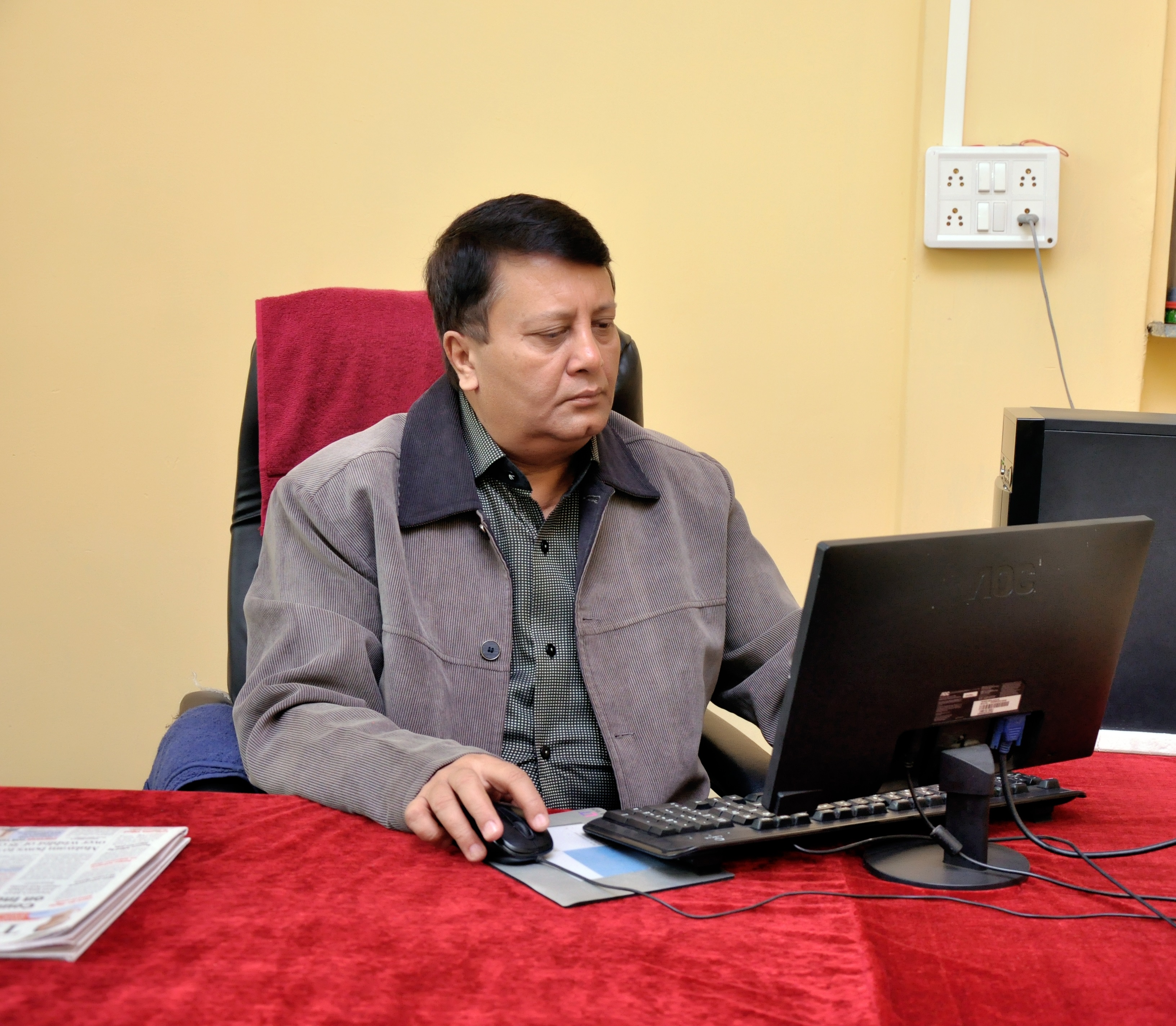
Inky Interview Exclusive: Former Cheshire Poet Laureate John Lindley

You were appointed Cheshire Poet Laureate in 2004, and Manchester Cathedral Poet of the Year in 2010. Congratulations! When did you first discover your passion for words?

Almost as soon as I could speak it seems I was making up little songs. I’m not sure that’s particularly unusual. It’s what many children do. I became an avid reader and certainly essay writing – or ‘composition’ as it was referred to – was a joy to me. I began writing poetry (badly) in my early teens.

You have written many poetry collections including Scarecrow Crimes (New Hope International, 2002), House of Wonders (Riverdane, 2008), and The Casting Boat (Headland, 2009). Your new prizewinning collection, Love and Crossbones, will be launched in 2018. Can you tell us about this? Where is the launch?

I was fortunate to be shortlisted in an international poetry competition following my entering the initially required submission of 20 pages of poetry. The 3 prizewinners were to be published. On receiving the balance of my collection I learned after the judge’s selection that I had won 3rd prize. SPM, the publishers, missed the scheduled publication date and the launch at The Poetry Cafe in Covent Garden at the end of June had to be cancelled. The book is now due for publication on 25th July 2018. Whenever it happens, I intend holding an eventual local launch in Congleton whatever other plans there may be.

You are an experienced performer, having read at many festivals, including Buxton, Edinburgh Fringe, and Ledbury. What were Bunch of Fives and Fourpenny Circus about?

These were 2 touring shows that attempted to combine original poetry with elements of theatre. The first involved poets Joy Winkler, Jo Bell, Andrew Rudd, Harry Owen and myself. Fourpenny Circus was the same cast minus Harry who was, by then, living in South Africa. We had Action Transport’s director Kevin Dyer working with us and sets and scenery were employed. The shows were far and away the most ambitious projects I’ve been involved in.

Tell us about your cinematic based show Reel To Real.

It’s a one-man show in which my poems, all taken from my cinema-themed collection, Screen Fever, are performed, accompanied by or integrated with projected film footage. Thankfully, it’s been very well received and seems to be a show that appeals to both poetry enthusiasts and, because of its subject matter, to those with little or no interest in poetry; those who would not normally attend a more conventional reading. I’ll be performing it again at The Old Saw Mill in Congleton on 13th September as part of Congleton’s Heritage Festival.

In Embers and Sparks (Riverdane, 2014) you go in search of Dylan Thomas, as poet Phil Williams puts it, ‘the legends, photographs, artefacts, and recordings echo through John’s rhymes.’ Could you please share with us one of the poems, and walk us through the inspiration behind it?

Routine
Laugharne 1949

Not waking to the wall of his wife’s back,
he wakes instead to her risen absence,
coughs twice, shakes the last dimp from the pack,
scratches a match, lights up, smokes his first since

last night’s last breath before sleeping. Rising,
he reads the morning away, buttons up,
climbs forty-one steps, breathes hard, starts walking
to his parents’ house, reaches their door, raps.

With no cross words but the one they work on,
he and his father read the clues, fill in gaps
in their relationship with pencil. Then
Dylan crosses to Brown’s for beer and gossip.

At two, in the shed warmed by anthracite
and Cat’s love, he nags a poem’s forming frame,
takes an hour to take a comma out,
another hour to put it in again.

That evening he shipwrecks in a warm tub,
a rack of boiled sweets bridging his crotch,
then supper and the cliff road to the pub
under the heron’s and the cormorant’s watch.

Not another sound on the darkening path
bar the odd cough and the scuff of his tread
but close behind him he detects the breath
of a poem that trails him from the writing shed.

Then, the kids in bed, Caitlin follows on
to Brown’s where he entertains and she mocks him
till, for better or worse, she and Dylan
make it home, make tea, make love or mayhem.

I would imagine that anyone familiar with Laugharne will recognise the geography of this poem: the Boathouse where Dylan lived with his wife Caitlin and their children in the last 4 years of his life; his nearby writing shed; his favourite pub, Brown’s Hotel, and the Pelican house opposite which he’d moved his parents into. ‘Routine’ (the poem’s title) isn’t a word one would normally apply to Dylan’s often chaotic life but it seems to me that there was a semblance of it in the first few months of his move back to Laugharne before things truly began to fall apart for him. I like to write in a variety of styles and chose straightforward quatrains with a regular rhythm and an ABAB rhyme scheme for this poem, perhaps to try to convey that sense of relative order in his day-to-day workings then. I preferred, though, not to end-stop many of the lines and to employ quite a few slant rhymes to aid the flow of the poem and to avoid it falling into a style more mechanical and predictable than I felt appropriate for it.

You provided distance learning workshops for writers in Africa as part of the British Council’s Crossing Borders project. How wonderful. Tell us more.

It was a British Council funded project run by Lancaster University. A number of writers were involved, covering various genres such as novel writing, playwriting and, in my case, poetry. We were providing distance learning via set tutorials to adult writers across Africa. At one point I was asked to visit Nairobi to run face-to-face workshops for a week with a group of students and to give a public reading. It was a thrilling experience and I’m grateful that I was given that opportunity.

As a creative writing tutor, have you any snippets of advice for writers? Do you ever get writer’s block? If so, what do you do?

‘Read poetry’ is my advice. It’s remarkable how many aspiring poets read no-one but themselves. I’d recommend reading a broad range – funny, serious, rhymed, free verse, ancient and modern and the stuff in between. It should be a pleasure, not a chore. Anthologies are a good start. Not every style encountered will be liked, of course, but I believe it’s good to be open-minded.

I suffered a long period – 3 or 4 years – of writer’s block in the early 90s. Keats’ dictum that “If poetry comes not as naturally as the leaves to a tree it had better not come at all.” didn’t resonate with me. I finally ended the block by making a determined attempt to immerse myself in poetry again: reading, attending workshops and readings and generally trying hard to reconnect to a poetry scene which I’d been neglecting.

You recently performed at Holmes Chapel library as part of a band, and have a CD available called Wasteland. How did this come about?

I’ve always written songs but, with not really considering myself a singer/musician, have generally looked on songwriting as of decidedly secondary interest to my poetry. About a year ago I began to think that I would like some of those songs to see the light of day, rather than exist as merely lyric sheets with accompanying chords that would surface only at the occasional jam session I’d take part in at the pub. I had a tremendous amount of help from others I recruited to play on, record and produce the CD. The idea of doing live performances, before or after the album was done, never entered my head. We’ve done two so far with another in the pipeline but I certainly don’t view this as a new line of work for me! All proceeds from CD sales are for charity so it’s been good that money continues to be raised through these gigs.

What advice would you give to your younger self?

Believe me, Deborah, he wouldn’t listen. He was a rebellious little bugger.

You also held workshops with people in prison. It must have been so rewarding?

Very much so. Demanding and challenging too, though. I was offered a 3 year residency at Lichfield Prison but enjoy the variety of my freelance work so much, I turned it down.

Tell us a story in five words.

My dog and coffee calls.

What kind of work did you collaborate on with American artist Daniel Bonnell?

I came across his work when searching for a suitable cover image for my collection, The Casting Boat. The title poem is one about a search for faith and I found some of his Christian paintings online and was particularly taken with them. I approached him for permission to use one them and a correspondence began. He liked my work and, despite knowing that I was an atheist, suggested a collaboration in which I would write poems in response to 50 of his paintings. It was a fascinating enterprise for me. From time to time I give designated performances of some of the poems and talk of the collaboration against a projected backdrop of Daniel’s paintings. These readings have usually been in churches and, a couple of years ago, I was booked to give the reading at a national preachers’ conference. It was hugely enjoyable. The show’s title, Crossing the Divide, signifies Daniel’s and my distinct worlds – American/English, Painter/Poet , Believer/Atheist – meeting. Another happy outcome was that one of the poems, Annunciation, that I wrote during this project won the International Religious Poetry Competition, the result meaning that they found themselves with a fully-paid up, card carrying atheist as Manchester Cathedral Poet of the Year! I’ve included the poem in my forthcoming collection, Love & Crossbones.

What are you reading at the moment?

Adventures of a Ballad Hunter by John A. Lomax. It was originally published in 1947 and has recently been republished. It’s an account of the extensive folk song collecting and field recordings that the author undertook in the first half of the 20th century. He amassed hundreds of ballads, blues, spirituals, cowboy songs and more that would otherwise have been lost forever. This kind of thing fascinates me.

I’m currently reading too Required Writing: Miscellaneous Pieces 1955 – 1982 by Philip Larkin. Larkin remains one of my favourite poets despite myself holding polar opposite views to those he held on so many things.

Apart from your book launch of the excellent Love and Crossbones this year, what’s next for you? What plans have you got?

My plans, alongside my regular workshops and open mic events I run, are for the Reel to Real performance in September I mentioned, a collaborative show as part of Goosfest 2018 in which I’m working with a duo performing Bob Dylan songs, a few day’s WWI project work in a Crewe primary school in November, a weekend’s workshop course in Southport for OU students and some other bits and pieces. Other things get fitted in as they come along. I’m not always sure what’s coming next which, as I do this for a living, can be both exciting and a little worrying at times! I presume it’s the same situation for many others who, like me, work freelance.

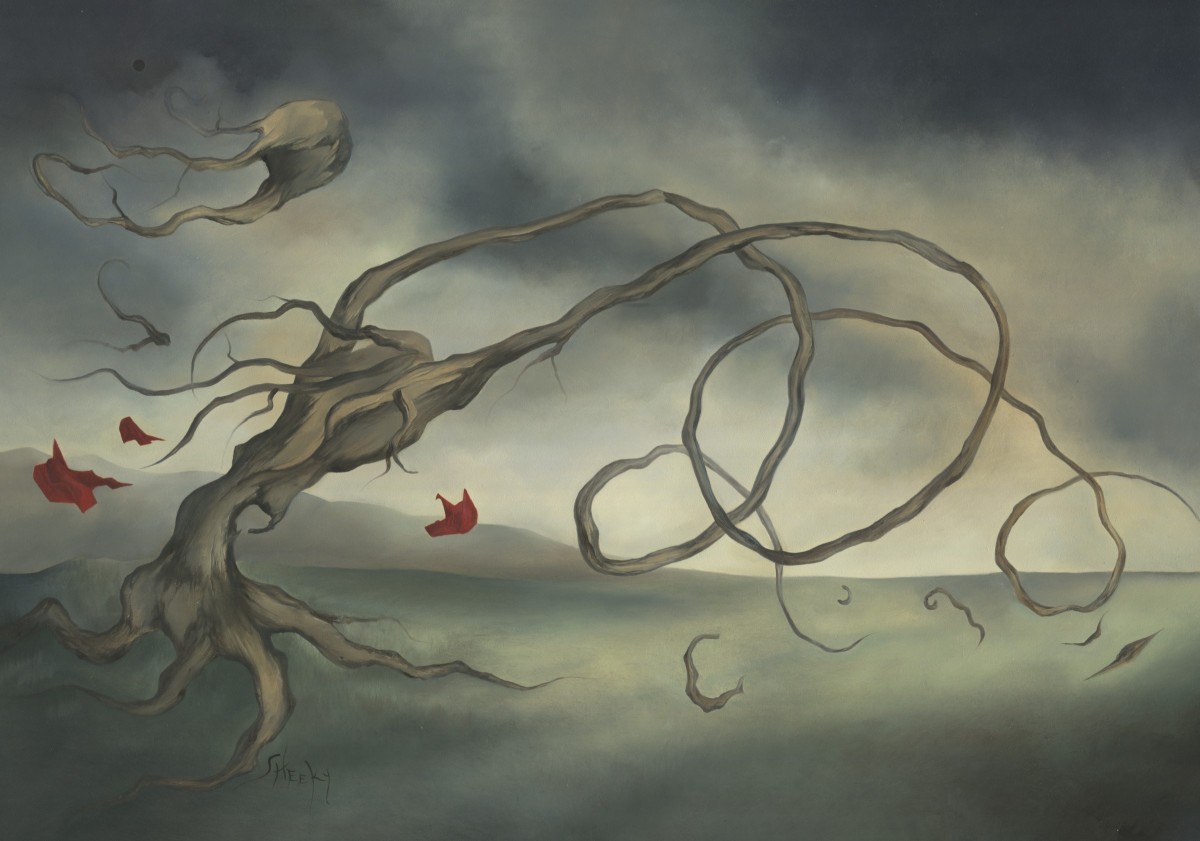
I’m to be one of the contributors to a project John Gorman in Liverpool has set up, the Quality of Mersey, in which I will attempt to write a poem about the River Mersey’s source in Stockport – my birthplace. I’m also to write a poem for Mark Sheeky’s exhibition at Stockport Art Gallery based on one of his paintings. You know and work with Mark, of course, Deborah. I hope to be busy too when Love & Crossbones is published and launched in putting together and delivering a series of readings from the book.

John Lindley’s Website

Books From The Pantry: Isn’t Forever by Amy Key: Reviewed by Claire Faulkner

Amy Key’s new collection, Isn’t Forever, published by Bloodaxe Books, is hypnotic and addictive. I became intoxicated by the verse. It’s full of poems that have a beautiful, almost dream like quality to them. They’re unique, strong and inspiring at the same time.

I particularly enjoyed the use of language in this collection. Sometimes harsh, sometimes with humour, but always with remarkable depth and insight.

Baby, wait a lifetime before you love somebody’ took my breath away. It has the lines:

Today I woke wishing for a baby.
I woke thinking – next year I will be married.
Strange since I’m not a mascot for such things.

It finishes with:

Starlight tastes less like snow than you might think
and I woke with a temporary sense of what love is,
like getting away with a good lie.
I am watching my breath mist up the windows
thinking – I made this.

The poem, ‘She lacks confidence, she craves admiration insatiably. She lives on the reflections of herself in the eyes of others. She does not dare to be herself’ is collaged from self help and agony aunt websites, and I adore the lines which give the reader advice:

Take a self-appreciation holiday.
Build a fortress
around your best self.
When you hear your worst
selves yelling from the ornamental moat of your
self-esteem. Ghost them.

Beauty, love and the female body are recurring themes throughout the collection. ‘No one should be scared of pleats’ is an amazing cento based on the words of Coco Chanel. It has the wonderful lines:

I don’t have to explain my creations; they have explained themselves

and

If I built aeroplanes, I would begin by making one that was too beautiful.

In ‘Two cats’, one of my favourites in the collection, Key demonstrates an elegant nature of vulnerability with the lines:

I whispered love to both cats
and tried to pay them equal attention. The vet prescribed
a hormone diffuser to take the edge off their fretfulness
and I worried about its effect on me. I had trouble both
sleeping and waking and was often in tears.

Hauntingly beautiful are the lines from ‘The Garden’:

I encountered a surface that was not safe to stand on
it was between me and the garden.
The garden said take as much time as you need.
It said you don’t even have to tell me.

I find myself intrigued by Amy Key’s style and words. The poems felt real to me, and one more than one occasion they made me pause for breath. I was delighted and surprised by them. It’s a stunning collection.


Photography by Jamie Drew

Get your copy of Isn’t Forever by Amy Key

Inkphrastica: Song of Freedom Oasis by Rus Khomutoff (Words) & Now That’s What I Call Blue by Mark Sheeky (Oil Painting)

Usurp of the jonquil intervoid
happenstance arrival pending
a severing of the apparent encore
distant cries and
blossom bones enduring eternity
a face of genius in
full measure of the spectacular now
the explicit nevermind
of bulletproog passingness
always unfinished
song of freedom oasis
buying exits

Artwork: Now That’s What I Call Blue by Mark Sheeky

Rus Khomutoff’s Poetry

Books From The Pantry: Gwithyas – Door To The Void by Isha Crowe: Reviewed by Kev Milsom

We don’t get many visitors. In fact, we don’t get any, ever. The midwife who helped deliver my sisters and me was probably the last one. Ordinary people don’t like to mingle with lunatics in a haunted house on a cursed hill.’

I’m always a little tentative when it comes to the literary genre of fantasy.  Raised devoutly on the writings of Mr Tolkien, the ‘bar’ has been set to a high level and sadly, many books I have encountered within this genre tend to lose me by page seven, as my poor memory struggles to remember all the names of characters and locations, often difficult/impossible to pronounce, but words which would score very highly in a game of Scrabble, with a sixteen-letter name of a wizard, introduced on page two, or the seven-syllable location on page one, wherein lies the magic pot/sword/wand/banana required to fulfil the main quest.

Thankfully, by page three of Isha Crowe’s new book, Gwythias – Door To The Void, I was already hooked – most noticeably because Isha’s writing is outstanding and draws the reader completely into the book…but much more of that later. First, grab your enchanted swords/daggers/spears/catapults/bananas and travel with me to the starting point; the plot itself.

The story focuses on a lad aged sixteen, named Peregrine Zircon Gwithyas. At first glance, Peregrine is no likely hero. Nor is his world an easy one to handle, for weirdness surrounds and engulfs him, like flames around a well-toasted marshmallow. Peregrine lives in an old, creepy house with his parents and two sisters, being the eldest of triplets. Nothing too odd there, perhaps, except that his sisters have a decidedly odd – perhaps even slightly reptilian – appearance and a fascination with ouija boards.

‘My sisters have bulbous heads that are way too big for their emaciated bodies, eyes that resemble rabbit droppings, and lips that are so thin and dry that they remind me of parchment. They have no eyebrows or lashes, and their grey, wrinkly scalps boast only a few brittle tufts of hair. I reckon they must have an undiagnosed genetic disorder, because they don’t actually look like girls; more like clumsily put together nightmarish interpretations of human beings.’

Their father is also blessed with ‘the odd’, although he mostly secretes himself away in his study/library and has an unnatural obsession with thimbles. Mother is also of little help, perhaps because she tries too hard to rectify the balance of normality within the Gwithyas household; mostly by obsessing over nosing online at houses, well beyond the reach of the family budget. Speaking of the Gwithyas household, there is another important member not to be overlooked, who resides in an ancient, seven-storey tower which stands in the back garden. Herein, lies ‘Nanny’; a lady of undeterminable age who may be just short of her 90th birthday, or someone easily old enough to remember the coronation of Queen Victoria in 1837 and events much earlier in time.

Thus begin the mysteries of the novel, guiding the reader easily into the odd world of the Gwithyas family and provoking some key questions early on: ‘Why is Peregrine so geeky and awkward?’… ‘What powers does he truly possess within his ‘bony, greasy acne-skinned and carrot-coloured haired’ frame?’….’What is the Void and who/what lurks there? and ‘How old exactly is ‘Nanny’, why does she live in a tower & why on Earth does she need to be becalmed by magical spells once a day, just to stop her from turning into something from ‘The Exorcist?’

Such is the complex world of young Peregrine Zircon Gwithyas, but – like all good stories – it’s about to get a whole lot more intense with a storyline that never fails to disappoint and ultimately could lead to the collapse of the human race and life as we know it.

As stated before, the writing is spot on – just right and well balanced. Unlike some previous books I’ve encountered in this genre, Isha’s writing truly allows the reader into the storyline, where the focus is upon the created characters and the development of a solid plotline, rather than an attempt to create complicated, often impenetrable, worlds with plotlines that fail to match the ambitiousness of the characters themselves. It takes good, genuine writing skill to pull this off and, most importantly, to create a piece of literary work which effortlessly encourages the reader to keep turning pages. Isha establishes and maintains the story as the most important character in the book, ultimately allowing the reader to care about what happens to the cast within the storyline and live it with them.

Magic, horror, teenage angst, love, family, potential Armageddon… this book has it all. Much recommended for young adults; indeed, all age groups.

‘It’s all in the mind. My mind. Tiny little fingers, paper-white with blazing red claws, scratch over the door frame, feeling their way out. Or in. Out of the Void, and into my world.’

‘We are coming, Gwithyas.’

‘No.’

Get your copy of Gwithyas: Door To The Void by Isha Crowe

Poetry Drawer: Let Me Be Weak by Stephen Mead

A half hour, an hour.
No one has to know.
You can fold your hands
about my wrists
as though they were stems.
You can hold your arm
about my back,
the shoulders,
the hips/
and lean me right over.
I’ll be malleable satin.
I’ll be soft water showering.
I’ll surrender, submit,
passive but for passion
and a will that,
for awhile, just
needs to yield.

Feel.
These are my edges,
and with them I’ve buffed days.
I’ve reflected the hard facts.
Yet I trust you will not snap
what time itself
has yet to.

Inky Interview Special: Stephen Mead, Poet and Multi-Media Artist from Albany NY

Poetry Drawer: Lowering The Lights by Stephen Mead

Poetry Drawer: A Lesson in Composition by Robert Beveridge

As I slipped into sleep, I wrote
a poem in my head with an expensive
fountain pen on silk.

                           When I awoke
I discovered it had been a dream,
the writing done with a leaky
inconsistent ballpoint on toilet
tissue, and I was left to reconstruct
what I could, a project
too often abandoned.

Inky Interview Special: Poet (& Noise Maker) Robert Beveridge, from Akron, Ohio

Poetry Drawer: The Drowned City by Robert Beveridge

Poetry Drawer: Three Human Traits by Professor John J. Brugaletta

THREE HUMAN TRAITS?

“Love, faithfulness, and compassion…. These are attributes

modern studies of the human mind do not attribute to us,

at least without converting them first into forms of self-

interest.” Marilynne Robinson


1. LOVE

We use the word to mean our feelings about
lust and the act of it, someone’s restored car
or living room, our dog, our freedom
(whether we have it or not), days off work,
being at a rollicking party, or alone in silence.

So it’s meaningless, that overused cliché,
without specifying devotion, friendship, or
intimacy. With field filled with
pretty young women, men often assume
the ever-ready default: coitus.

But the father who pushes his son out of
the way of a speeding car and being hit
himself damages that skeptical assumption.
We have platonic love—or some of us do.

2. FAITHFULNESS

And yet how strong the urge to intimacy
the straight man has when faced with
a woman whom most would call beautiful.
But some resist the urge because they thought
it loathsome to betray their wives’ trust.

Or what of the captive soldier, tortured
to reveal his country’s military secrets,
but who stands fast for years? You see
that there can be a trait called faithfulness.

3. COMPASSION

The word gives rise today
to a perverse type of faith in
the selfishness of humankind.

We automatically roll our eyes
at the briefest mention of
altruism; and then we are
treated to a secular sermon on
the hard nose versus the soft heart.

It’s true that a long caravan
is safer than a lone traveler,
but it’s also true that the man
who falls on a hand grenade
dies to save his compatriots.

So the perverse argument fails
to prove compassion a ghost.
We are left then with explaining
the inexplicable, the man
who died to save his friends.

Inky Interview Exclusive: Professor John J. Brugaletta from California State University, Fullerton

Inky Articles: Professor John J. Brugaletta: Two Hypothetical Poles Of Thinking While Writing Poetry

Poetry Drawer: Sonic Threshold of the Sacred: To William Carlos Williams: by Rus Khomutoff

What waxes wanes
the enforced reincarnation hour
and green quartz veins
over the mind of pride
nonentities
Nowhere you!
Everywhere the electric!
the golden one
living in a poetic world, devouring words
these are the thoughts that run rampant
love paves the way to our existence

Inky Interview Exclusive: Rus Khomutoff, a Neo-Surrealist Poet From Brooklyn

Poetry Drawer: Prisoner of Infinity: To Felino A. Soriano by Rus Khomutoff

Inky Interview Exclusive: Mark Sheeky on his new book release: 21st Century Surrealism: A Guide For Artists and Creative People

Congratulations on your new book release, 21st Century Surrealism: A Guide For Artists and Creative People. Can you give us a brief synopsis?

Thank you dear Editor, and hello and welcome to your readers. It is this tone that begins 21st Century Surrealism, because it’s a friendly book that takes the reader by the hand, and along a journey that explores art and creativity, and what art is all about. I began with a look at Surrealism as an art movement, and a look at why it worked so powerfully when it did, and why it died out as a powerful force in contemporary art. 21st Century Surrealism isn’t a history book, it’s more of a book about creativity itself, thoughts on what makes some art good, and some not, and makes the case for the art of the imagination; why it worked a century ago, and why it can work today.

I should point out that I was careful to include all art forms. Surrealism was originally a poetic movement, not a visual art movement, so the book isn’t specifically about painting or writing or music, but about general creative principles that can be applied to any sort of creative thinking.

The structure of 21st Century Surrealism has three main chapters: A Study Of Scarlet, The Tomb, and The Gardens of Elysium. Why did you choose this structure? How is the first chapter related to Sherlock?

This was my first non-fiction book, and so I had an infinity of structures of choose from. I wanted a tone that was fun and friendly, that felt, while you read it, that your mind was exploring an exciting new world. One reviewer commented that it was like an academic book written by a poet, which is a great compliment. The book argues that art should be exciting, emotive, and have a structure that is engaging, so it should itself embody its own principles. Any book about aesthetics should at least embody its own conclusions!

The Study Of Scarlet is a play on words. The first chapter is a study, an analysis, and perhaps the scarlet matter is the mind and the heart, but also I found a few quotes by Sherlock Holmes (well, Sir Arthur Conan Doyle) that sum up some important and useful principles. One quote concerns the mind needing to store only the right components. We can only invent something using the palette of our experiences, the words and images in our heads, so the things we put there (Dali called this ‘eye food’) are very important for a creator.

In A Study Of Scarlet, you discuss several aspects to conscious thought. How would you describe conscious thought, and how do you apply it to art?

One important part of the book is a look at how the mind works because this is really important for imaginative people. Surrealism was based on a theory of the unconscious, so anything that analyses surrealism must analyse consciousness too. Consciousness is simply being aware of our thoughts, that is all. There might be a thing called the unconscious, a realm of thoughts that we are not aware of, but we must become aware of it at some point otherwise it might as well not exist. Ultimately, I make the case that dreams and strange imagery are no more or less ‘conscious’ or genuine than any other thought. Surrealism as a principle is a fraud. Imaginative thoughts are not more or less conscious than any other, and not better or worse for it either.

How important do you think emotion is in creating art?

This is a difficult question. In some ways emotion is vital because all good art moves us, so art needs to be emotional, but the emotions in an artwork are made by the dialogue between the artist and the audience. An unfeeling artist can still move a sensitive audience. We can feel sad at a broken cup, for example. I make the case that the good artist needs to feel and understand what he or she is trying to convey though, and not leave things to chance, so, for the perfect artist, sensitivity is vital. Emotional sensitivity is as vital to an artist as eyesight is to a painter.

Do you think art needs a political/social/philosophical message, or is it enough to just feel emotion from it?

Art with a political/social/philosophical message is often emotional… and it will help the audience understand it. Perhaps art that lacks those things must only be personal, but even then we must understand the experiences of the artist and the message. Is it possible to have art without a message that is still emotional? I imagine a Rothko painting, with flat coloured bands. People can be filled with emotions by those paintings, and perhaps they are picking up what the artist felt when he painted it (this is the aim of abstract expressionism). Isn’t that a personal message? Even in that most simple and most abstracted form of art?

Can you share with us an illustration from the book?

The book cover is from your own painting entitled God Being Killed By Thesists And Athiests. Can you walk us through the idea behind it, and why you chose it as a book cover?

The painting was about a battle between theism and atheism, with religion on the left, and atheism on the right. The interesting thing about the painting for me is that it has two different emotions and viewpoints, religious and areligious, at the same time, and appears as one or the other depending on your viewpoint. The crucifix on the horizon is either Christ representing rebirth, or a gravestone representing death. In visual terms the painting is also a battle between blue and red, light and dark, and many other contrasts. It is a dramatic and challenging painting that looks like what people think of as a ‘surrealist’ work, and so it made for a perfect cover.

The back cover is another one of your paintings, The Paranoid Schizophrenia of Richard Dadd, which is one of your best selling prints. Why do you think people are fascinated by this image? How do you apply your concepts in 21st Century Surrealism: A Guide For Artists and Creative People to this image?

The Paranoid Schizophrenia of Richard Dadd is fascinating partly because there is a lot in it, there are always things to discover. It is based on, and is an homage to, ‘The Fairy Feller’s Master Stroke’ by Dadd, and that painting is crammed chock-full of things: faces, plants, fairy creatures. People love images that are loaded with things for them to see and discover. Another influence on the work was Bosch’s ‘Garden of Earthly Delights’. One of the principles in 21st Century Surrealism is that more information makes work better, and the Dadd painting, and Bosch too, really sums that up.

When and where is the launch for 21st Century Surrealism: A Guide For Artists and Creative People?

I’m lucky enough to have a solo exhibition of my artwork in Stockport War Memorial Art Gallery this September, so the opening of that that will mark the official launch for this book. The exhibition itself will be called 21st Century Surrealism, and I’ll exhibit 21 paintings, including the original ‘God Being Killed By Theists And Atheists’. Some fabulous poets will be taking part in the exhibition too. Former Cheshire Poet Laureate John Lindley, Nantwich poet Helen Kay, and many poets from the extensive Write Out Loud group will be writing new poems to accompany the paintings. The exhibition will open with a launch event on Saturday September 15th at 2pm. A special poetry reading event will take place at 2pm on September 22nd, which will be filmed. The whole exhibition will be open to the public daily from September 15th until October 2nd.

What is next for you? I’ve heard on the grapevine that there is another book coming soon…

So much is coming. I have a new book for the autumn called Deep Dark Light, which is an odd combination of poetry, philosophical ideas (each on one page, like poems) and a surrealistic story. It is structured like a musical symphony in text, so is an unusual, experimental work, that is perhaps similar in structure and feeling to one of William Blake’s visionary books.

I have two music albums coming out this year too: The Modern Game is a pop album with a theme of how technology is affecting the world, and as the musical half of Fall in Green, Testing the Delicates is a ground-breaking recording which combines poetry and classical piano to convey a narrative about mental health, and what it means to care. My video show for YouTube, ArtSwarm, will continue every fortnight too, and, if I have time, I will find time to paint something.

Get your copy of 21st Century Surrealism: A Guide For Artists and Creative People by Mark Sheeky

Mark Sheeky’s Website

Inky Interview Special: Author Joseph S. Pete

Your literary or photographic work has appeared in over 100 journals. Can you tell us about your journey towards being a writer? What subjects do you photograph? Do you combine words and pictures?

As a bookish person, I’ve aspired to be a writer since childhood. I read constantly. I keep paperbacks in my jacket pockets and my pants pockets so I can read at any time I am not otherwise occupied. I even pocketed paperbacks at my wedding, just in case. Understanding at an early age that few are fortunate enough to write literary fiction full-time, I sought out a career in the media so I could write for my day job, to develop the muscle memory. I first started photographing as a necessity for publications with limited resources, where I needed to both photograph and write up assignments. I’ve since evolved into a prolific shutterbug, and am most interested in architecture, urban landscapes, urban decay, graffiti, and natural landscapes. My iPhone photo albums are largely devoid of people–for whatever reason, I’m more drawn to art, architecture and the like. I seldom combine words and pictures, but my writing and photography sometimes draw inspiration from the same subjects.

You are an Iraq War veteran. How much has this experience fed into your work?

Iraq was rough. I often strive to tell war stories, and experiment by trying to tell them through different forms. It’s something I feel I have to do justice to as a storyteller.

You are also an award winning journalist. How did you get into journalism? Have you advice for any of our followers who want to enter this field?

In high school, I wrote an earth-shattering investigative exposé on how high school athletes used the dietary supplement creatine and how it was potentially harmful. Earlier in May, I received a prestigious Peter Lisagor Award from the Chicago Headline Club at the ritzy Union League Club in the Loop after watching a video presentation about the acclaimed Chicago Tribune journalist Anne Keegan, whose first high school story had been about birds nesting at the school, which somehow stirred up controversy with notoriously open-minded administrators. Anyone interested in entering the field should just amass clips, and use them to persuade editors of their writing chops. It’s largely all about what you can do. That being said, the transition from dead trees to online has taken more than a pound of flesh, and the carnage continues until they settle on a new, more viable business model. I’ve been sickened to see so many of my talented colleagues laid off, or just given up on a career that seems to be circling the drain and certainly has endured a great deal of political scorn over the last few years.

You were named poet laureate of Chicago BaconFest. Interesting! Can you tell us about this? What is the literary scene like where you live?

I get nervous reading my work at half-empty coffeeshops but somehow wasn’t daunted to read a dumb joke poem in front of thousands of people at the UIC Pavilion, including comedian Hannibal Buress and Chicago Bears players. I was also a runner-up in the PBR Art Contest for poetry, earning me a three-month supply of that hipster swill. For some reason I imagined a worker would dolly a few cases of Pabst Blue Ribbon to my door; instead, they sent a paltry check.

Northwest Indiana is the New Jersey of Chicago–it has a surprisingly vibrant literary scene that includes afew journals, the Zine and Small Press Festival in Michigan City, many lovingly crafted zines at cafes and boutiques, writers groups, the Indiana Writers Consortium Steel Pen Conference, open mics and more. Neighboring Chicago definitely has one of the best literary scenes in the country, with at least a few live lit events every week. Plenty of big-name authors pass through. I’m going to see National Book Award winner Jesmyn Ward at the Chicago Humanities Fest in Hyde Park.

What is it you love about the short story form? What about poetry? Any preference?

Short stories are one of the most digestible and accessible forms of literature, a narrative contained in a convenient package. I love the soaring heights of language poetry can ascend to. No preference. They’re both great expressions of creativity.

What do you care about? What themes keep cropping up in your writing?

I write a lot about industrial decline, abandonment, alienation, war, despondency, injustice and other themes. While my work may be thematically dark, it’s typically leavened by a lot of humour.

Describe a typical day in your life.

It’s a grind. I write, write, write for my newspaper…at a bar, a fellow reporter recently introduced me as the “journalist who wrote the entire Times of Northwest Indiana and produced 12 stories a day.” That’s a comedic exaggeration, but not by much. I write journalism by day and write literature by later at night, often working on short stories or poems into the wee hours of the morning. I read as much as possible, try to walk as much as possible, and frequent plays, museums and other cultural events on the weekends.

If you could change one thing about the world, what would it be?

There’s so much that’s so profoundly wrong with the world, from poverty to inequality to sexism to racism, to senseless gun violence. If you put a gun to my head, I would probably call for more appreciation for media, literature and the arts. I say that partly out of self-interest but truly believe, however Pollyannaish it may sound, that most of the world’s problems could be solved if people read a book a week, kept up with the news, developed empathy for other people, and maybe spent a few hours volunteering. So many intractable issues seem to be at least partly the result of ignorance.

Who inspires you and why?

This is perhaps the toughest question. Any author I’m reading, any painter whose work I’m looking at. It takes bravery to create art in a cruel, indifferent world.

What advice would you give to your younger self?

I was miserable for most of my youth but haven’t since attained any wisdom of note. Mostly, I would encourage my younger self to not be such a perfectionist with literature and just write. My biggest regrets are failing to submit to literary journals like Canvas at Indiana University because I held them in such high esteem and held myself in such low esteem that I didn’t think I was worthy. Now they’re gone and I missed the chance to develop as a literary writer, whether they accepted my work or passed on it with stale, dashed-off form letters that are almost always more error-ridden than the cast-aside submissions.

Tell us a story in five words.

Fiction: Baby shoes, never worn

Have you been on a literary pilgrimage?

I’ve frequently sought out literary sites, such as the Thurber House in Columbus, the James Whitcomb Riley mansion in Indianapolis and Jean Shepherd’s childhood home in Hammond, Indiana. I’ve frequented places like the American Writers Museum in Chicago and The Things They Carried exhibit at the National Veterans Art Museum. The closest I probably ever came to a pilgrimage proper was my cross-country road trip to Fort Lewis by Seattle, which I fancied was a modern-day version of On The Road even though it was far less exciting.

Do you have any advice for other writers?

As someone who suffers from Imposter Syndrome, no matter how widely I’ve been published, I probably shouldn’t be proffering advise on this subject. But read, write and read a lot. That’s the ticket. Read widely, and keep trying to incrementally improve. Reading’s the key thing.

What are you reading at the moment?

Katey Schultz’s Flashes of War, F. Scott Fitzgerald’s lost short story collection I’d Die for You, Alison Moore’s The Lighthouse, Michael DeForge’s Very Casual, Sam Graham-Felsen’s Green, Nathaniel Rich’s King Zeno, Tatjana Soli’s The Lotus Eaters, Eimear McBride’s The Lesser Bohemians and Alan Moore’s Swamp Thing. I’m also a professional book reviewer for a national magazine and read tons of books for work.

What is next for you? What plans have you got?

Novels, plays, maybe even screenplays. I’m been slowly but surely working my way up to longer works, and we’ll see how it goes. I’m trying. Everybody’s trying.

Pantry Prose: The Young Man and the Sand (a contemporary homage to Ernest Hemingway) by Joseph S. Pete