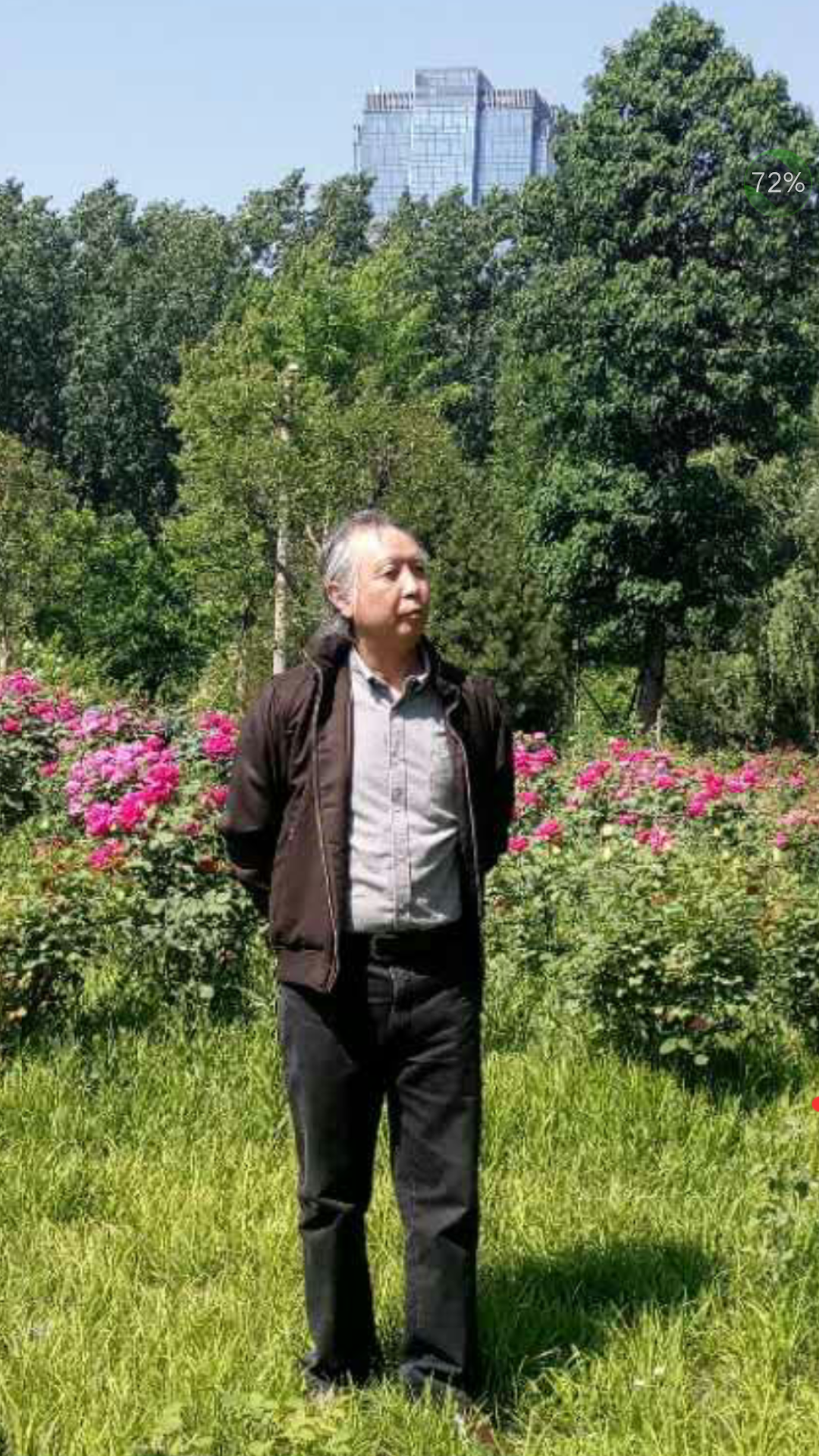
Inky Interview Special: Emily Oldfield


You are Editor of HAUNT Manchester. What is your idea of the Gothic? Walk us through a typical day in your world.

At HAUNT, I’m treating The Gothic with the broadest approach possible. Our tagline, revealing Manchester’s mysterious side, emphasizes an approach which celebrates the alternative and unusual, whilst looking at possible Gothic influences. From Manchester’s architecture to its myriad of subcultures, there is plenty of Gothic inspiration here and HAUNT seeks to celebrate the city as a Gothic tourist destination too.

The International Gothic Association 2018 conference came to Manchester this year, held at the same time as The Gothic Manchester Festival, so the city certainly has Gothic credentials. Plus it’s the home of The Manchester Centre for Gothic Studies (based at Manchester Metropolitan University) which HAUNT works with, and has shown that the general public really can get a great deal out of engaging with The Gothic. From dark walking tours to Halloween in the City, there is something for everyone here.

So my idea of the Gothic is a constantly evolving form, one that is capable of captivating audiences, as well as capturing cultural undercurrents and dark depths that society sometimes smooths over. To me, the Gothic is the weird and wonderful with some added weight to it.

There is no typical day in the life of a professional Goth! I typically work from the Manchester Writing School building, along with my colleague Helen Darby – who first developed HAUNT as a concept – and Andrew Turbine, who heads our spooky social media. We also have had great contributions from the likes of Lucy Simpson, Matt Foley, J.J Wray, Xavier Aldana Reyes, and many more. I also have a crow on my desk…Edgar Alan Crow, no less! A day could consist of anything from writing articles about the Gothic and alternative histories of places in the city, to interviewing the organisers behind Gothic nightlife, plus working with a range of Gothic-inspired writers.

Although my role does also consist of editing the work of others, I love contributing plenty of writing of my own to HAUNT – as there is a culture blog, plus sections for Events, Walking Tours, Places, Nightlife and Shopping – all with their own Gothic or unusual twist. I absolutely love it.

What is one of most interesting memories since working for HAUNT?

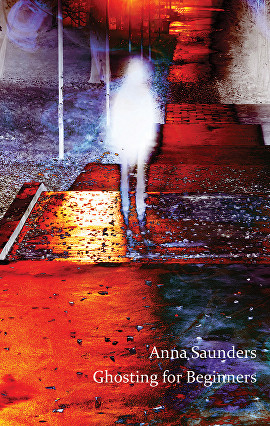
There are two stand-out moments for me. One has to be the launch event for HAUNT Manchester – because HAUNT is a network, not just a website… so connecting people interested or involved in the Gothic from across the city and wider North West. We held the event back in June in The Writing School Building (70 Oxford Street), with Helen Darby significantly behind what was a Gothic get-together of glorious proportions. It featured decoration from The Hungry Dog Emporium Of Curiosities (including a selfie coffin!), music from the ArA DJs , Helen and I wore beautiful Gothic-styled corsets from the city’s own Kiku Boutique and the turn-out was enormous. It was wonderful to celebrate the passion for the Gothic with so many people, and confirmed to us that there certainly is an appetite for HAUNT Manchester. We also gave speeches and I read my poem ‘Ghosted’.

Another stand-out moment is going to visit the Sophie Lancaster Foundation, a charity based in Haslingden which works both nationally and internationally to Stamp Out Prejudice Hatred and Intolerance Everywhere (SOPHIE). It was set up following the tragic death of Sophie Lancaster, who was from the town where I grew up (Bacup) was murdered in 2007, aged just 20- targeted due to her alternative appearance. We were interested in partnering up with the Sophie Lancaster Foundation to support and spread their message of tolerance and acceptance. Meeting Sophie’s mum, Sylvia Lancaster, was a profound experience and we talked about the ways in which HAUNT can work with the charity. I have since written an article which talks about the charity’s development of  Black Roses
resources for schools and colleges.

You are a mental health activist. Tell us more.

I am completely determined that mental health should be treated with parity to physical health. Furthermore, talking about the mind is a massively beneficial thing and needs to be integrated as standard practice, for everyone. To open your mind is both a brave and beautiful thing.

Through a lot of life I have faced anxiety, depression and was severely ill with Anorexia. There were times when I never ever thought I would see beyond it. It has taken time, the support of so many fantastic people and pursuing my passions, which showed me that life is so full, crammed with opportunities and deserves to be enjoyed by everyone. Every single person has the capacity to feel, experience and turn what they face into good.

The recovery process and these realisations for me, made me even more determined to emphasize this to other people. You always can get more out of life – that’s a tantalizing and terrifying thought! There is so much out there for you. I have worked with and written pieces in the likes of I Love MCR, Student Minds, Cathartic and more, exploring mental health themes and accessibility.

What kind of poetry do you write? Would you share a poem with us?

It’s hard to describe poetry as a ‘kind’ – as I’m a bit of a maverick, the things I do seem to crawl in and out of definitions! I guess I’d like readers to make up their own minds, but there certainly is a dark, observational strand when I write. I particularly like to explore the occurrence of oddity of the everyday, the unnerving nature of feelings and the simultaneous power and strangeness of human connection. 

Setting Fire to Seat Naze

They torched the hill until it smoked
Heather hardening to coral, crumbled to ash.
The binoculars you never let me borrow
hung like pistols from my hands.

Your fingers captured in the distance
the stretch of flame from base to summit
which you held like an egg on either tip
like the pin from the object before you’d thrown it.

This was the length of adult patience
This was the length of National Service
This was the length of time in the living room
Before the cry ‘get your tea whilst it’s still worth it’

Your turn from the window I remember most
Like a match-head catches the sandpaper sleeve
But doesn’t light, reduced to the slow grind
Like salt over grandma’s potatoes and beef
For this was the evening we ate in silence
Breaking bread, I saw your fingers tremble
And World at War you’d left on the box
‘We shall fight in the hills; we shall never surrender.’

Do you do any other forms of writing?

My jobs all involve article writing – I am also the Editorial Assistant at I Love Manchester, where I cover content celebrating the city and its cultural achievements. I also have written poetry and lyrics to be performed with bands (including St Lucifer, Room 1985 and Vieon on AnalogueTrash) and I am a music writer at Louder Than War and Bittersweet Symphonies. I have written some unnerving short stories, but I’m not sure if they will see the light of day…

What are you reading at the moment?

I am reading The Gallows Pole by Benjamin Myers – a fascinating alternative history of the North. It follows the story of the Cragg Vale Coiners in 18th century Calderdale, an area not far from where I grew up and studied as part of my dissertation (looking at the impact of West Yorkshire on the work of Ted Hughes and Sylvia Plath).

Do you believe in life after death?

I’m wavering, but that’s not necessarily a bad position.

Tell us a story in five words….

She gave them her hair.

(Photography: David Fox)

Poetry Drawer: Holding Time In Their Arms by Fabrice Poussin

It was but for a brief instant within their embrace
They brought time to a standstill
And created eternity within a twirling sphere.

Statues of remote eras almost forgotten
Precious stones of ancient lands gently sculpted
Blue veins pulsating at the rhythm of the universe.

The artist seeking perfection for the masterpiece
They hold each other flawlessly on a pedestal
In the changing mists atop Olympus.

curves espousing resting hearts upon their chests
they may be asleep within the deep glee of the moment
their souls smiling as the world continues it waltz.

Pressed onto the day of a private encounter
They recall a time when all things were one
Building in a fleeting memory an everlasting lifetime.

Pantry Prose: The No-Show by Robert Steward

Lisbon, Portugal 2003

I examine my watch; it’s ten past eight in the evening. My student should’ve
been here by eight. Maybe he’s just late. I check my watch again just to make sure, and that familiar feeling takes hold: he’s not going to show up. I can’t be certain, but with every minute that passes, it becomes more and more apparent. That’s when I start praying – praying to the teaching gods – for a no-show.

My student’s Spanish, from Valencia. He has his own business here in Lisbon and works all the hours God sends. He’s pale, serious, with black Brylcreem hair, which matches the colour of his suit. He always looks tired and stressed and has a five o’clock shadow. Sometimes I wish he’d go home to his wife and relax instead of coming here.

It’s now twenty past eight.

Come on, please!’ I say under my breath.

I might get to watch the football after all.

I sit at my desk, hoping. My eyes wander round the classroom. Among the posters of smiling students is a microphone sticking out the wall.

I wonder if Berlitz ever use that,’ I ponder. ‘Maybe they check to see if you use the method.’

I close my coursebook, International Express, which I borrowed from another school, but then re-open it again not to tempt fate.

Oh no – footsteps!

I hold my breath. The footfalls come closer and closer, louder and louder, with purpose. I try to prepare myself for the worst: the false smile, the Hi!, the Sorry I’m late, the That’s okay, don’t worry, the –

Phew. It’s the cleaner!

Olá,’ I say with a pang of relief.

Olá.’ He smiles and walks past the door.

In our lessons we talk about business, usually with the radio on. I find the background music creates an ambiance. But sometimes I lose myself in the song. I try to be present and conscious while he talks about his work, shuddering efforts to repress a yawn. But my attention wanders to wherever the music takes me: a beach, a road trip, meandering through an old city. I find myself nodding occasionally and feigning an expression of interest.

Oh my gosh. It’s half past eight!

I go to the reception.

Laura looks busy behind her computer – probably surfing the Internet. Behind her, five clocks show the time in different parts of the world: New York, Rio, London, Moscow and Australia.

He’s a bit late today, isn’t he?’ I tell the receptionist. ‘Did he call or leave a message?’

Er, let me see.’ She bites her lip. ‘No, he didn’t.’

That’s unusual.’

Maybe he’s stuck in a meeting.’ She pulls back a curl of blonde hair behind her ear.

Yeah, maybe. Are there any other classes tonight?’ I scratch my head.

No, just your one.’

Right.’ My voice tails off, collecting my thoughts. ‘Could you call me when he comes? I’ll just be in the classroom with the television.’

You want to watch the football, eh?’ Laura smiles.

Yeah, it’s the UEFA Cup final tonight.’ I grin back.

Força Porto!’ she lightly punches the air.

I didn’t know you liked football.’

Everyone loves football in Portugal.’ She smiles and shows me her Porto Football Club coffee mug.

I hurry down the corridor into the other classroom. On the table are a Shrek DVD and a baseball cap, and in the wastepaper bin a McDonald’s Happy Meal carton – evidence that the manager and the head of studies were here earlier. I reach up to switch on the television. First, there’s a fuzzy, grainy image, then the football comes on. The volume is high.

Deco toma la bola de volea pero su tiro se va abierto,’ the commentator yells, as Deco volleys the ball wide of the Celtic goal.

I grab the remote control from the table and turn it down. Then, I take a chair, turn it round so it faces the television and sit down.

I can’t believe my luck. All I need now is a bifana steak sandwich and a bottle of Super Bock!

What’s the score?’ Laura pokes her head round the door.

It’s nil-nil.’

Sorry?’ she frowns.

Zero-zero.’

Ah!’ she says, coming into the classroom. ‘Which team is Porto?’

I thought you said you supported them. Porto are wearing the blue-and-white striped shirts and Celtic are in green and white.’

Just then, Deco chips the ball to Alenichev, who volleys it from ten yards out; the goalkeeper parries the shot, but Derlei reacts quickest, slamming the ball into the net.

Derelei!’ the commentator yells. Goooool!’ he continues for about half a minute.

Goooool!’ Laura joins in with her arms in the air. Força Porto!’

She makes circular motions with her hands as if she were a Hawaiian dancer.

I don’t believe it!’ I say with my head in my hands. ‘Just before half-time as well.’

Derlei jumps over the Carlsberg advertising hoarding and runs behind the goal with his arms out-stretched, his face beaming. The Seville stadium becomes a sea of blue and white, bleached by the floodlights. The fans jump up and down and hug each other.

English teams are rubbish! English teams are rubbish!’ Laura sings like a child.

Celtic aren’t English, they’re Scottish.’

I didn’t know you were Scottish?’

I’m not, but –’

So why do you want Celtic to win?’

I don’t know,’ I say, scratching my head. ‘I just do. Anyway, I like their manager, Martin O’Neil. Is that the phone ringing by the way?’

Oh merda!’ Laura says, and runs out the room.

To be honest, I’m not sure who I want to win. I secretly like Porto – especially Deco, their creative midfielder. And I like their manager too – Mourinho. He’s so arrogant that he reminds me of Brian Clough, one of the best English football managers of his time. But, I still find myself supporting Celtic – maybe I do have Scottish blood.

In the second half, Celtic start brightly. Agathe crosses the ball into the penalty area from the right-hand side, and Larsson heads the ball, looping into the far corner of the goal.

Goooool!’ the commentator yells, a bit shorter this time.

Yes!’ I shout a little too loudly.

This time the stadium becomes a sea of green and white. There are scarves, flags – Scottish and Irish, big green hats.

What’s happened?’ Laura asks, running into the classroom.

Celtic have equalised! ‘It’s one-one!’

This is confirmed by the action replay: the ball slowly hitting the bottom of the post and going into the net.

Then five minutes later, Deco avoids a tackle, cleverly slips the ball to Alenichev, who beats the goalkeeper from close range.

Alenichev!’ the commentator yells. Goooool!’

Goooool!’ Laura mimics the commentator. This goes on for a full minute.

I don’t believe it. Every time you come into the room, Porto score.’

Laura laughs, but suddenly her face changes: ‘Was that the intercom?’

I didn’t hear anything.’

I’ll just check and see,’ she says, and leaves the room.

Celtic have a corner.

Thompson crosses the ball into the penalty area, and Larsson, unmarked, powerfully heads the ball into the net.

Larsson!’ yells the commentator. Goooool!’

The crowd erupts in the stadium.

Get in there!’ I shout, fist pumping the air.

I hear something above the din.

Robby! Robby!’

It must be Laura.

I crane my neck round the classroom door. Laura trots down the corridor, holding her beige cardigan together, her shoes making a light clapping sound on the vinyl tiles.

What’s wrong?’ I frown.

It’s your student,’ she says, slightly out of breath. ‘He’s just called on the intercom, and he’s coming up right now.’

What?’ I reply, incredulous. ‘But it’s quarter past nine! What am I supposed to do – teach him for fifteen minutes?’

She nods sympathetically, then pauses for a moment. ‘I know,’ she whispers. ‘I’ll tell him you’ve already gone.’

What? You can’t do that!’ I say in a low voice, a little tempted by the idea.

Yes, we can,’ she says. ‘You’re only supposed to wait half an hour for a student, and then you can go.’

Really?’ My voice rises up nearly into a falsetto. ‘But, he’s coming up now and he’ll see me.’

Go and hide in there.’ She persists, pointing to the classroom with the television.

Hide?’ I protest, knowing this will be a new low for me.

Come on, quickly,’ she says. ‘Then we can both go home early.’

I half-reluctantly go into the classroom and turn off the television.

I don’t believe it – hiding from a student, so I don’t have to teach them. What depths have I sunk to?

I try not to make a sound and find myself cowering behind the classroom door, my breathing shallow.

What if he finds out? I fret. It would be so embarrassing!

Boa tarde, Laura.’

It’s my student. Hearing his voice makes me feel even worse.

Boa tarde, senhor. Desculpe mas…

I can just about hear Laura apologising to my student, and I cringe with guilt. I bet he knows I’m here hiding from him. I’ll never be able to look him in the eye again!

I catch my reflection in the glass panel of the door; my teeth clenched together as
if I’d just dropped a precious vase on the floor.

The voices stop. But I daren’t move.

What’s going on?

I wait in silence; it’s almost deafening. My stomach is clenched, my mouth is dry; my heart beats so fast.

Boo!’ Laura pokes her head through the classroom door.

Oh!’ I jump. ‘You gave me a fright.’

Laura starts laughing.

Your face!’

Very funny.’ I frown. ‘So what did he say?’

Nothing much,’ she replies. ‘But, he did seem a little disappointed, though.’

Oh well,’ I say, feeling a pang of apprehension, but that soon goes as I turn the television back on to see if the match has gone into extra time.

Poetry Drawer: Dinner at the Kitchen Island by Kevin Casey

The bird I’ve brought home, snatched from its roost
in the grocery store rotisserie,
lies trussed and supine on the kitchen island–
to be eaten by myself and whomever’s here,
now that the children are of driving age,
and only silence and shadows remain
impatient to greet me at the door.

From the darkness of the living room,
my seventeen-year old daughter emerges,
standing opposite at the counter
in the reticence she’s fixed toward me
for a week. And without a word or glance,
we begin to dismantle the bird.

White meat pulled from tendons, dark meat scraped from bone,
we crack joints in our accidental dinner,
unknitting ligaments, greasy fingers
raised to mouths, until our meal is done,
and she lopes back up the stairs, back to her life,
with the carcass reduced to a capsized keel
of cartilage and bone stranded on the island,
stripped to that treasured, elemental moment.

Inky Interview Special: Kevin Casey

Poetry Drawer: Quotidian by Kevin Casey

Inky Interview Special: Pebble Poet Jim Young: with Claire Faulkner


Can you introduce yourself to our readers? How long have you been writing for?

I am 69 years old and I live with my wife near the coast at Mumbles, Wales, UK. I am addicted to swimming in the sea every day of the year. Some of my poems are inspired by the sea, but the range and styles of my poetry is eclectic.

I love the idea of finding a poem somewhere. What inspired you to leave poetry on pebbles?

Being in the sea every day at Rotherslade Bay, and seeing the large number of benches there for visitors to sit and admire the view, prompted me to leave poems on pebbles there for everyone to read.

Where do you leave them? How many have you left?

I have left 10 to date. The number is constrained by the number of seats, but there are many more seats on the enjoining bay Langland, and I think I will start leaving them there as well.

Is there a theme to your work?

There is no theme to my work other than the “spirit” that moves me to write. I average a poem every two days. Once I have leeched the emotion from my mind, the writing is almost spontaneous and I do not “craft” my poems.

Have you had any feedback from people who have found them?

Yes, the people I speak to think it is such a great idea. I spoke to an elderly couple who had one of my pebble poems on their sideboard at home and their granddaughter loved it. I hope it will provide the idea that poetry is for everyone and not just book readers.

Will you be leaving many more?

I think I will continue to leave them at the seaside. The ink does fade after a few weeks, and I will replace them with new ones.

What or who inspires you to write?

I was born and live in Dylan Thomas’s “ugly lovely” town. His poetry is exemplifies “tight”word-craft. The poet who inspires me more than any other is RS Thomas. I do not have a car and walk everywhere all year around in all weathers, and, also, I have run a Photoblog since 2005, so every single day something, or the feel of a day’s events, inspires a poem. When I relax in my armchair after my swims I find things “come to me” unbidden along with the words and rhythm to express them. I call it the muse in my mind and the bard in my bonce. It is slightly uncanny the way it works.

Which writers / poets do you read?

I read all sorts of poets and poetry. I buy them all from the local Oxfam charity shop and I am enthralled and intoxicated by the different smells that fall from each book, and my imagination sees the previous owners in their time.

What are you reading at the moment?

Philip Larkin and T S Eliot, with Shakespeare’s sonnets waiting in the wings.

Do you have some poems which you would like to share with us?

Upon the Pyre of the World

At the sunset of the fishes,
upon the pyre of the world,
my: I told you! I told you!
Will wash no more dishes,
when the half-mast flag’s unfurled.
Adieu, adieu, adieu,
my beloved Gaia girl;
for we are floating down the Ganges,
upon the pyre of the world.

Music Returns To Auschwitz and a Lone Voice Sings

such longing, such an aching lamentation.
why do you not scream out, or
laugh in an inconsolable madness
and release me from the gibbet
of your anguish?
that i could manage,
that i could cope with.
and, no, i do not want to forget,
but there is beauty in the purity of the
voice that impales the pain;
it holds me spellbound.
i weep now for all mankind;
doomed, doomed, as we are,
doomed to relive a myriad deaths
and shades of suffering
before the end.
oh, i bleed down these ochre walls,
as i relinquish into a sea of wailing
all of my sorrow;
i dread what yesterday will bring
unto the ‘morrow;
it lacerates my sadness
to hang empty upon the night air,
and i wail and wail, but to no avail;
for alas is never enough;
is it?

The Sea Swimmer in Winter

(The Sea Swimmer in Winter on YouTube)

Beyond the breeze,

under the winter sun,
the sea is calling me,
calling me,
calling me.
Seething in the breath,
of the north wind’s spume,
in the push and pull of the tides.
That’s where my secret abides.

The blue jelly fish have pulled back
to where the cormorant stands on end.
As a grey seal bobs with ebony eyes,
and the snows press down the bay.
My knees compose some purple prose,
that will last me through the day.

Harder the winter,
larger the spring in my step,
where I see, in the icy briny,
that perennial phoenix of spring.
That frisson of flight,
born in the glassy might
of the quenching, churning tides.

Baptised, reborn, each shingle day,
in my way, in my bay, away
in the dappled waves of my sea,
my sea
my sea,
my sea

Away in the dappled waves of my sea,
my sea.
When I am dried by the sun and wind,
then, only then, am I alive.
As alive as live can be.
Alive as the roaring sea.
Alive as a swimmer in winter.
In the sea where he’s meant be.

In the sea where he’s meant be.

Jim on Twitter

Poetry Drawer: Love in the Time of Cold by Laura Potts

Before the dawn that walks the northern morning from the moors;
before the swans sing winter on and cough the fog upon the ponds,
we ask that through the Christmas mist and bells that bring December in
you pause and long-remember this: ever through the blizzard lives

the hospice on the hill, sleeping in the heart of dark beneath the stars
and still. How that leaping garden laughs; how that wind will never gasp away
the ashes of our past that live until the last; how those staff with candle-eyes
will guard our sleepers through the night. And as the nurses lull the light

the sentry sets above and bright-as-life upon the skies: ever does that crust
of moon push a light into those rooms, and pull away the dusk and gloom.
Oh how soon the seasons turn, and how the folk will come and go and once
will leave to not return, and how that tree will never know defeat against

the snow. Know only that the flowers grow and show their Sunday best,
and bow towards that sleeping house, and death is that much less

This poem was first published on The Poetry Society’s Young Poets Network and was commended in the Wish List challenge in 2018.

Inkphrastica: The Shore Of Forever: Ken Pobo (Words) & Mark Sheeky (Oil Painting): Part 3 of an Ingmar Bergman Triptych

I stuff a clock in forever’s mouth
which it chews up,
spits out—time, a Giant Hogweed,
poisonous to touch, can even

blind you. My Aunt Stokesia
says she wants forever.
It means Heaven
where she’ll be—
that will be heavenly.
When forever calls, a salesman
who gets his foot in the door
and won’t stop talking—ever—

she freezes, wants to stop
time, the one thing it can’t do.
Death pops in,
a jack-in-the-box clown.
She runs to the basement and locks

the door. I’m already there.
I never liked clowns. I keep death
from claiming me one pill at a time.
I’m a shore,
the water dried up.

The Shore of Forever by Mark Sheeky: Oil Painting for sale

Inky Interview Special: Poet Ken Pobo From Pennsylvania

Inky Exclusive: Interview with multi talented artist Mark Sheeky

Poetry Drawer: Six Poems by Linda. M. Crate

all it’s many flaws

i hate that my jaunt
home from work
is in the
darkness
i like the hours,
but not the creepy men
who sometimes
are drawn to me like a moth
to the light;
and i’ve double backed,
walked slower,
and taken different ways
home
to shrug people off
but it’s exhausting always being
on the look out
it’s tiring always having to think
of the worst case scenario—
they insist that there’s
no such thing as rape culture,
but if that were true
i wouldn’t be holding onto my keys
like a weapon
every time i leave my house;
don’t give me your ignorance or your perspective
give me a change so i can believe that
“not all men” are truly accepting
of our culture as is,
and all it’s many flaws.

eyes that never see

i saw a white moon
folded backward
origami
in a hazy blue sky
folded over
a peach lily
caught by the beauty
i gave pause
from my mundane task at work
of taking the trash out,
and i looked around to see
if anyone else
was dazzled by this beauty;
but none of them even noticed
some are given eyes
with which they never see
others have lost their sight and they
can see—
always rushing by
going nowhere fast
i cannot help but wonder
how some people, like me, are given eyes
to witness;
and others eyes that never see.

i wasn’t brave

the cigarette smoke
was dancing
in the air,
and she sat there all
charisma and elegance;
and i envied and admired it
both at once—
i remember the apple tini
with it’s carmel draped across
the top like a gauzy shawl
it was delicious,
and i closed my eyes
before opening them again
to drink everything in;
i remember she was wearing
the black beret and had made her
eyes cat eyes
with that liquid
eye-liner
that i’ve never mastered—
i think that was the moment i knew
that i had fallen for her,
but i was never brave enough to say
it out loud;
especially not to her,
and definitely not to me.

step on a crack, break you own back

i wasn’t paying attention
lost in a thought
i tripped over the crack in the sidewalk
flew forward several feet,
but managed
somehow to keep my footing;
i am good at not
falling
sometimes
in a way that i don’t know if it’s a talent
or just dumb luck
too mute to tell me a thing—
i scold myself
to be more careful,
but i doubt it’ll be the last time
it happens;
my mind is a curious thing always slipping away
from what they tell me is reality
pushing me forward
when they want to push me backward—
right now i’m paying attention,
but later
i may trip over that same crack again;
and this time i may curse
those who made the sidewalk for making it
so tricky
when it should be a perfect shade of straight
instead of curved, irregular
and able to trip over.

addicted to both

shooting star
makes me pause
everything
is noticed
for a reason
either to rescind from chaos
or descend into it,
and i am always good at reaching
my fingers into the cosmic
cookie jar;
what can i say?
i’ve always liked cookies
a trait that
my mother gave me,
and i used to be better at self-control,
but sometimes it tastes too good
to stop;
i would rather be addicted to
the soft goodness
of a chocolate chip cookie
than the body of a man who doesn’t reciprocate
my love
as it so happens
i am addicted to both.

some days his name still hurts

my skin was the equator
his the north pole
i guess i should’ve known
the coldness of his death
would never inhabit
any bones
especially not the firey
song of love,
but when you care for someone
as deeply as i did;
you disrobe from any fabric of logic
start reaching for straws
your fingers are never long enough
to reach
pray the gilded cage is something more
than a pretty lie
even though it can’t be—
and when he finally leaves you,
you ugly cry
like a sky full of gray clouds
christening the ground with silver pearls;
you wonder how you wandered
on the knives of his lust
without realizing it wasn’t love, blaming
yourself for a broken heart
until you wise up
when he does the exact same thing;
then you become all fire and fury
passionately defensive wanting to knock
all his teeth down his throat
until one day you wake up and the pain is gone
although some days his name still hurts.

Inky Interview: Pennsylvanian Native Author Linda M. Crate

Poetry Drawer: Loch by Mitchell Krockmalnik Grabois

I’m in a swamp of toxins
in the American South
Somewhere through water lies Panama
Somewhere through water lies
Europe

where East German
and Bulgarian swimmers
fill their bodies with steroids
and threaten to overthrow me

I’m on the medal stand
and won’t get off
Brutal men will have to drag me off

I am golden
forever golden

Inky Interview: Author Mitchell Krockmalnik Grabois from Denver, Colorado

Flash In The Pantry: Serotonin Reuptake by Mitchell Krockmalnik Grabois

Flash In The Pantry: Mandela Warp: A Moment in History by Mitchell Krockmalnik Grabois

Flash In The Pantry: Cooking Shows by Mitchell Krockmalnik Grabois

Flash In The Pantry: Still Wet by Mitchell Krockmalnik Grabois

Poetry Drawer: At McDonald’s by Gabriella Garofalo

At McDonald’s, where sweet poisons
Lure you through dead garish lips,
Different jolts, different shades outside:
Some say ‘God’s hands’, some ‘springs of dark’
But we don’t bother, no time to waste
Over difference or metaphysics
For we thrive among probs, cads,
Mist, bikes, fatsoes, even a dirty blonde
Who had her trees deported from beds to beds,
Oh and look, do you remember the handyman
Who shouted no and got slain, how sad!
But the silence of the trees stayed with us,
That and the grudge against moves and peeves –
O trees, my dear trees, if I ever remind our life
I can’t bad-mouth you, my narcissistic trees,
Although you bend too much to pat the river,
Although still waters are your private looking glass,
You never play dirty when darkness skips
The hands I’m stretching out
So I’ll leave you alone and darkness I’ll exile
To those cathedrals where natural born raptors
Look ready to christen him in bliss and water –
Now you shut up, I know they’re different,
Love kicking and breathing,
Life a palsied ghost eager to scaring
Or eating up blue funk:
A loving child taught me so on a wintry day,
I got it fast, that’s why the raptors
Can’t grab me, so please don’t fret,
Let them smile sweet, let Mummy say
‘Know what? We call it life’ –
Life that restless bite?
Funny while running back I feel for them
My raptors that can’t bite,
I mean, honest, I grasp the difference
But they can’t, such crying shame –
Oh, and beware all that green getting so fast to your head,
My dear darling trees.

Inky Interview Special: Italian Poet Gabriella Garofalo

Poetry Drawer: Asymmetry At Full Blast by Gabriella Garofalo

Poetry Drawer: And All Of Them: To A.S.J. by Gabriella Garofalo