World Poetry Day at the Pantry: The Old Typesetter’s Drawer by Faye Joy

maple

Gaping walnut shells

gleaned from harrowed earth.

Rounded flint stones rolled by rain and wind.

A partial shell ear

encrusted spirals

and the tracery of a wintered maple leaf.


A rusted bobbin

a kitten’s lost toy,

a tiny green origami bird,

weathered glass fragments

a single earring

and a pair of blue plastic action man bootees.


Along with a jay’s

shimmering cobalt

feather, these random oddments

my found storybook

compartmented. Some

found at the edge of fields or freshly dug black soil


where marbles glint low,

as fingers scrub off

long years of weed-blocked obscurity,

and brittle oyster

shells reveal a past;

this fertile blackness once the host of ancient seas.


Poetry Drawer: A Nod to Shakespeare’s Sonnet, no: 73 by Faye Joy

Bare Tree

It’s that time when you may find me grim.

When absent leaves will render branches bare

and sodden pigeons seek forlorn retreat.

Only a lonely troubadour thrush sings.

You see me hunched against the morning chill

as condensation dribbles down, I make

a sideways swipe to foil the downward run

as gentle room heat slowly ghosts all trace.


You stand behind me though I do not hear,

your whispers stray as memory wanders past.

You know I seek to find the long lost thread,

touch me once more that I may feel your warmth,

then, as my towelled hand wipes the glass, I think

I catch a glimpse, so faint – you leave again.


Lyrical Craft: Interview with musician Mick Masser by Deborah Edgeley

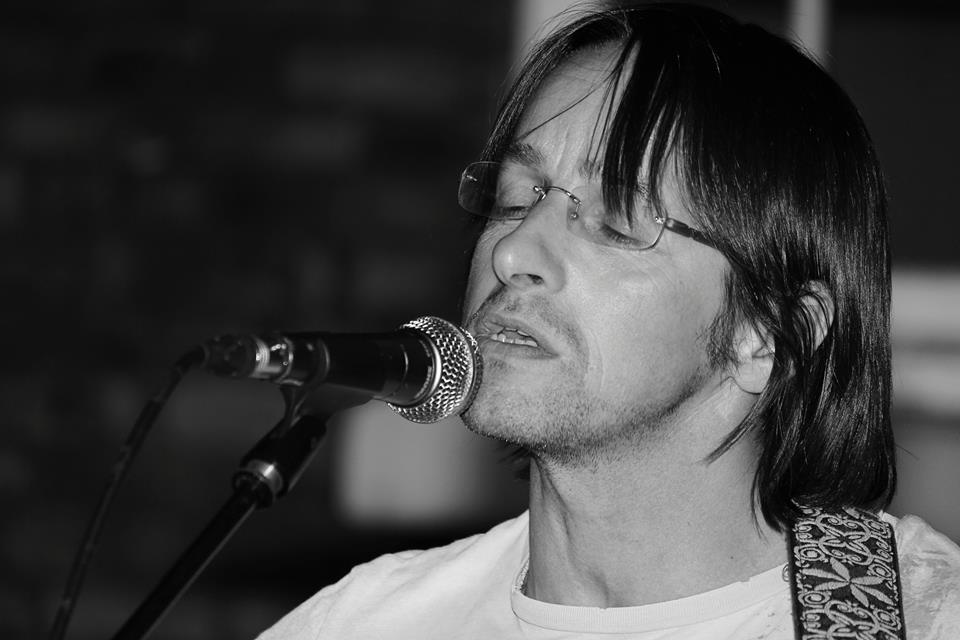
MICKMICK 2

Can you tell Ink Pantry about your Video Theatre?

My Video Theatre project had varied reasons for its emergence; personal and professional reasons dictated a new start. When I left Sheffield, I no longer had a band or studio. I’ve always wanted to ‘get on with it’, and also finding the right band can be a long and disappointing task. Moreover, studio allows for your full imagination and bands have been a skeletal idea – like acoustic versions of an idea. I wanted to draw on all my musical inspirations in a flexible, eclectic way. It has allowed me to explore with complete freedom from classical to dub, prog and pop. Anything! I like the holistic, and wanted to explore my interest in the elements of all the arts, hence each song has its own symbolic video that relates to the lyrics via a collection of animated stills. I play with the relationships relating the translation in a kind of vice versa symbiosis. So metaphors become literal and so forth. It’s fun!

I didn’t want it to be a simulation so I make it obvious that it’s a studio production. I mix the tracks via PA at volume; very dry so it has a live flavour. The beats are basic and percussive and the sounds are cut and paste loops, like how dance music is created. The bass parts are BIG and done as performance with traditionally played bass, which for me is crucial. The organic flavour creates the juxtaposition against the laptop; the irony – Primitively Modern: the title of the project. The overall content explores this concept throughout from Mayan history to modern issues. The stuff we talk about round the campfire!

You have been writing lyrics for many years. Can you give us a history of your journey as a songwriter? 

My journey as a lyricist has emerged from the punk ideal. Allowance to speak. Having something to say was the motivation to play. An observational approach has diversified over the years and inspiration now comes from spiritual issues and imagining being born under a paving slab!

Can you share with us a couple of your own favourite lyrics?

There are many of my lyrics I like. The crap gets thrown away. One of my faves is anecdotal; simple but big like a haiku. ‘Rooms in houses uncannily did this to me.’ This comes from a focus on idiosyncrasy/constructs. ‘Rooms in Houses’ is from a collection of songs called ‘Common Scenarios of Quite a Strange Man’.

Who inspires you, lyrically? 

Again, loads of inspiring lyrics and writers. Peter Gabriel’s US album is lyrically beautiful, and the Lighthouse Family say some nice things. In contrast, I like the inarguable and simple statements that Discharge used to make too. Hawkwind’s single sentence ‘Space is there’ is, of course, implosively poetic.

Do you read a lot? What book has affected you the most?

Never get time to read. A Kestrel for a Knave has done much to shape the way I think, particularly the implications in institutionalised learning. Billy’s skills and motivations are not on the curriculum. When he finds his true interest, he’s an A-star pupil.

You live on a boat, away from the rat race. Is this the perfect, peaceful setting for a creative person? 

Paint a picture of your day for us.

I live two lives on the boat; week on, week off with my boys. This is a good symbiosis because my domestic week grounds me from a workload that has me awake at ridiculous times and drinking too much coffee. It is delightful when I get to do boater things. I like the resourcefulness such as having solar energy, sawing logs, etc. The relaxing moments with candles, fire and hooting owls are well earned. Of course, my ever changing ‘garden’, I’ve no doubt, is unconsciously calming and inspiring.

Do you think like a poet, perhaps in images, or do ideas come first, then images?

I think in an integrated way, but the visual arts have much to do with the abstraction. It’s all about juxtaposition, texture, composition. I work lyric to maximise meaning in a mind map way and choose words that strengthen a previous reference; like an echo. Put simply…moon, dark, night, stars, etc. It seems obvious but clearly when writing it’s more interesting than that. It has to be, of course!

How do you motivate yourself to write? Or is it an innate passion that constantly needs release?

I used to sit and sing nonsense with guitar and catch/shape lyric as it spilled out. These days, I build soundscapes starting with experimental sounds and loops as well as conventional playing. The ‘painting’ in turn inspires lyric and story.

What do you care about? Which themes keep cropping up in your work?

Spiritual freedom, harmony, peace and being happy. I used to have a lot to say. Now I change the world from where I can actually do something about it – from within. I trust my feelings. I try to be nice. I’m absolute about boundaries. If I’m uncomfortable, I have the right to leave and not have to answer for it.

Tell us about one of the best days of your life.

I have two best days: the days my boys were born. I love them to bits – as you do! They map my future and fill me with purpose. They grow and provide me with continually changing interest.

Any plans for future projects?

Every intention for continual future projects. I have irons in a few fires. I’ve been enjoying writing top lines with harmony for some great producers recently and now have an opportunity to travel too. The variety is great stimuli and takes me to fresh musical/lyrical places (mainstream with a touch of craft). Such co-writes yet again present new landscapes from the imaginations of other artistes, thus stimulating new lyric territory. It helps give my own work a rest and recharge. My Video Theatre remains paramount as it is the vehicle for my deepest thoughts and experiences. It also grants poetic licence unlike the former, which comes with a label brief. Quite difficult at times.

https://www.facebook.com/thevideotheatre/?fref=ts


Inky Interview: Open University’s Dr Mike Johnson by Patricia M Osborne

OLYMPUS DIGITAL CAMERA

When it comes to writing, what is your preferred genre?

Definitely poetry! I love the play between condensed and yet multiple possibilities of meaning that poetry can offer. I often aim at ‘crossover’ poems i.e. ones that may appeal to a wide age-range and/or push through genre borders.

How easy is it to fit your writing around your work?

Surprisingly difficult: because teaching Creative Writing requires a spectrum of constructive critical perceptions, it can be difficult to get over these when starting my own pieces. Sadly, my first reaction to something just written is often, ‘Hm, I have read something like this before.’

Is there a special time or place you like to write and what motivates you?

In bed, early morning for getting first ideas down, then re-drafting can be any-place, anytime (and endless). Motivation comes from literally anywhere: general life events, partially heard conversation on the train, TV, radio, music, reading (of course), the Internet and so on.

Who is your favourite poet and why?

Wow! That is a difficult one. But if you are going to restrict me, I would have to say Stevie Smith, because she was so unique.  Rules (both structural and semantic)  were meant to be broken for her and she could convey so much in a few words. ‘Not Waving But Drowning’ is a most incredible poem.

As a writer it is also important to be a reader. What are you reading right now? What are some of your favourite books?

For poetry, see above: plus (in no particular order), S T Coleridge, Steve Sneyd, Emily Dickinson, Edward Lear and Miroslav Holub. For prose: favourites are Solaris – Stanislaw Lem, short stories by J L Borges, Cat’s Eye – Margaret Atwood,  Frankenstein – Mary Shelley, the Alice books – Lewis Carroll. (These lists do tend to change frequently.)

I am currently reading Music at Midnight  a biography of the 17th century poet George Herbert by John  Drury: ‘Enjoy your Symptom’ –  cultural criticism by Slavoj Zizek: and the poetry of Edwin Morgan. I have just finished Extreme Metaphors – by J G Ballard.

Which three words best describes you?

Philosophical. Creative. Dog-lover.

What are you working on at the moment?

I am revising some visual and non-visual poems for a crossover collection coming out later this year, plus about five poems which are at various stages of completion.

Can you tell our readers about Semiotics and Visual Poetry?

Visual poetry draws upon both visual and verbal semiotic modes i.e. they are an example of what is termed multi-modality. Here’s some provisional definitions:

  • semiotics = the theory of codes or signs
  • semiotic channel = sight, sound, the sense of movement e. kinaesthetics, touch, taste, smell.
  • semiotic mode = conventionalised codes for communication
  • multi-modality = more than one semiotic mode used simultaneously.
  • visual art = any direction, non-discrete, iconic
  • Verbal art = specific direction, discrete, symbolic .

What I’m doing at the moment is using the semiotic channel of sight i.e. the written word (specifically the semiotic mode known as the English language). To process this semiotic mode, you are drawing upon your knowledge of the conventions of English, as your brain is busily accepting or rejecting possibilities of meaning. Hopefully, what you receive from my writing is not too distant from what I am trying to convey! Let’s look at a visual poem:

SUNSET


                  O


h o r i z      n

      h o r i z O n

                                                     h o r i z O n


h o r i z      n

When you process this visual poem, you are simultaneously invoking two semiotic modes: the title ‘Sunset’ is verbal, with a relatively limited meaning. However, the variations in the word ‘horizon’ and the letter ‘O’, which feature in a different position in each line, act out meaning i.e. they are potentially verbally, visually and kinaesthetically meaningful, as they simulate the sun’s movement caused by the Earth’s rotation. I particularly like the fact that a blank space conveys potential meaning, too!

When analysed, the processes of realizing multimodal artefacts turn out to be a surprisingly sophisticated series of mental activities.

Re:Bus, below, again utilises the left to write and top to bottom of the page conventions of English, but despite seeming to be more complicated is probably less sophisticated than ‘Sunset’. (The title is a pun, another technical term for the inclusion of visual elements in a written text is a ‘rebus’ and one reference in this poem is a bus.) I won’t cover all elements, because they should be fairly obvious.

The clock face suggests Time.

The N suggests I.

l8 (= late), d8 (= date) and 4 got 10 (= for-got-ten), common-places of texting, include numeric shapes, which are converted to sounds, then to meaning in a different context.

The image of the Earth is used both literally and metaphorically (and hyperbolically).

The twisted arrow  suggests  ‘turn’ and ‘up’.

2 – a shape becomes a sound, then meaning in a different context.

The cross is used in a similar way to the numbers – a shape becomes a sound, then meaning in a different context..

The tick is used in the same way – a shape becomes a sound, then meaning in a different context..

The strange image (  * ˜ *  ) hopefully suggests a bear. (A koala bear in fact – this is my favourite bit of the poem).

The two bent lines are meant to be a ‘knee’, from which you remove the k, then add a d.

Finally, the last line features a quarter being indicated past a three, plus the image of a bus.

RE:BUS

‰  was getting  l8,

had   N   4 got 10  the right  d8?

Where on  ü were they;

would they   È 2day?

Bgan  2  get  nervous, † and franP,

couldn’t  (  * ˜ *  )  2B  thought  T  H  I  C  K:

no   ╗←─k+d   2 fuss,

they missed the  3→¼ v!


Time was getting late,

had I forgotten the right date?

Where on earth were they;

would they turn up today?

Began to get nervous, cross and frantic,

couldn’t bear to be thought thick:

no need to fuss,

they missed the quarter past three bus!

Rather like explaining a joke, this explication of multi-modality ends up squeezing some fun out of the almost instant set of realizations actually achieved, but I hope it has been useful – and that you enjoyed the poems! Here’s two more that use alternative visual effects to work on yourselves:

THE ICEBERG THAT SANK THE TITANIC

Well,

it wasn’t

my fault, I thought

I had the ocean to myself:

drifted off the ice-shelf, was

 hhhhhhhhhhhhhhhhhhhhhhhh

enjoying  the  sensation  of  a  casual,  carefree

melt. Who would have thought, in the wide

North Atlantic? Out of the mist came the

Titanic! Yes, changed my life – as I

said to the wife – my big chance

to  become  a  celebrity.

Next time  you see

a movie with

some ice in

that’ll

be me.

AUTUMNFALL

leaf


leaf                                                                                          leaf

leaf


leaf                                                  leaf

leaf


leaf                                          leaf


leaf

leaf


leaf                                                                  leaf

leaf

leaf

leaf      leaf                              leaf

leafleafleafleafleafleafleafleafleafleaf

leafleafleafleafleafleafleafleafleafleafleafleafleafleaf

leafleafleafleafleafleafleafleafleafleafleafleafleafleafleafleafleaf

leafleafleafleafleafleafleafHEDGEHOGleafleafleafleafleafleafleafleafleaf


http://www.open.ac.uk/blogs/WritingTutors/

http://www.open.ac.uk/blogs/WritingTutors/?p=907


World Book Day at the Pantry: Boy by Roald Dahl: reviewed by Kev Milsom

Boy

‘This is not an autobiography. I would never write a history of myself. On the other hand, throughout my young days at school and just afterwards, a number of things happened to me that I have never forgotten…I didn’t have to search for any of them. All I had to do was skim them off the top of my consciousness and write them down. Some are funny. Some are painful. Some are unpleasant. I suppose that is why I remembered them so vividly. All are true.’

At some point, probably within our earlier years of life, countless of us will have been captivated and enthralled by the words of Roald Dahl – a gifted writer who brought his imaginative stories to life with a succession of memorable fictional characters in books such as: ‘Charlie and the Chocolate Factory’, ‘The BFG’ & ‘James and the Giant Peach’.

A lesser-known book of the author – who would have celebrated his 100th birthday in 2016 – is a 1984 autobiography, simply entitled ‘Boy’. Within these pages lie a multitude of adventures and tales from the author’s childhood during the 1920’s and 30’s. It is also the first half of Roald’s autobiographical accounts, being followed by his amazing story during World War II in a book entitled ‘Solo’ – a thoroughly recommended read.

Boy’ begins in his father’s native Norway and gives a fascinating account of the Dahl family.  At times, even though the accounts are true, it’s difficult not to get caught up in Roald’s writing style and wonder if he is building up more fascinating characters for a new novel. Tales abound, such as how his father lost an arm aged 14, yet successfully managed to adapt without it and never saw it as a problem in life…the only mild inconvenience ever aired being the fact that he could never manage to remove the top from a boiled egg.

Clearly, school years play a pivotal role in Roald’s childhood and it is here that we gleam fascinating insights into life during the 1920’s. In particular the reader is witness to the cruel barbarity of life within the interior of educational facilities; mostly undiscovered by the parents of the poor children enduring often-terrible treatment by vicious teachers.

Not that Roald was an angel. Carried along by his words, the reader is exposed to the planning and operation of ‘The Great Mouse Plot of 1924’ – a true escapade of naughty boys doing naughty things.  With a suitably wincing expression we can also discover how adenoids were removed in the 1920’s and also how Roald nearly lost his nose when the entire Dahl family decided to drive an early, massive car along tiny country lanes, complete with just an hour’s driving lesson. (No tests required back then).

The writing style of the book is magnetic, but then it’s Roald Dahl and perhaps we might expect nothing less from a writing master. However, there is something magical occurring between the pages of ‘Boy’. Writing this in 1984, Roald was already 68 years of age and yet the writing appears fresh; spoken like a child in a child’s wondrous, enquiring voice.

Through his words we witness the horror of public schools, with often-vile headmasters and the rigmarole of ‘fagging’. Yet we also hear of pleasant, inspiring teachers. We also visit the Norwegian fjords and delight in Roald’s innocence at encountering such natural beauty, alongside his loving, caring family.

By the time we reach the final pages of the book we have walked alongside Roald through his entire childhood and watched him arrive at a responsible adulthood, just prior to the outbreak of war in 1939. The fact that this is the easiest of processes is due to the beautiful writing structure of Roald Dahl.

Always the story-teller.

 ‘The writer walks out of his workroom in a daze. He wants a drink. He needs it. It happens to be a fact that nearly every writer of fiction in the world drinks more whisky than is good for him. He does it to give himself faith hope and courage. A person is a fool to become a writer. His only compensation is absolute freedom. He has no master except his own soul and that I am sure is why he does it.’ 


Books from the Pantry: Boy by Roald Dahl: reviewed by Kev Milsom

Boy

‘This is not an autobiography. I would never write a history of myself. On the other hand, throughout my young days at school and just afterwards, a number of things happened to me that I have never forgotten…I didn’t have to search for any of them. All I had to do was skim them off the top of my consciousness and write them down. Some are funny. Some are painful. Some are unpleasant. I suppose that is why I remembered them so vividly. All are true.’

At some point, probably within our earlier years of life, countless of us will have been captivated and enthralled by the words of Roald Dahl – a gifted writer who brought his imaginative stories to life with a succession of memorable fictional characters in books such as: ‘Charlie and the Chocolate Factory’, ‘The BFG’ & ‘James and the Giant Peach’.

A lesser-known book of the author – who would have celebrated his 100th birthday in 2016 – is a 1984 autobiography, simply entitled ‘Boy’. Within these pages lie a multitude of adventures and tales from the author’s childhood during the 1920’s and 30’s. It is also the first half of Roald’s autobiographical accounts, being followed by his amazing story during World War II in a book entitled ‘Solo’ – a thoroughly recommended read.

Boy’ begins in his father’s native Norway and gives a fascinating account of the Dahl family.  At times, even though the accounts are true, it’s difficult not to get caught up in Roald’s writing style and wonder if he is building up more fascinating characters for a new novel. Tales abound, such as how his father lost an arm aged 14, yet successfully managed to adapt without it and never saw it as a problem in life…the only mild inconvenience ever aired being the fact that he could never manage to remove the top from a boiled egg.

Clearly, school years play a pivotal role in Roald’s childhood and it is here that we gleam fascinating insights into life during the 1920’s. In particular the reader is witness to the cruel barbarity of life within the interior of educational facilities; mostly undiscovered by the parents of the poor children enduring often-terrible treatment by vicious teachers.

Not that Roald was an angel. Carried along by his words, the reader is exposed to the planning and operation of ‘The Great Mouse Plot of 1924’ – a true escapade of naughty boys doing naughty things.  With a suitably wincing expression we can also discover how adenoids were removed in the 1920’s and also how Roald nearly lost his nose when the entire Dahl family decided to drive an early, massive car along tiny country lanes, complete with just an hour’s driving lesson. (No tests required back then).

The writing style of the book is magnetic, but then it’s Roald Dahl and perhaps we might expect nothing less from a writing master. However, there is something magical occurring between the pages of ‘Boy’. Writing this in 1984, Roald was already 68 years of age and yet the writing appears fresh; spoken like a child in a child’s wondrous, enquiring voice.

Through his words we witness the horror of public schools, with often-vile headmasters and the rigmarole of ‘fagging’. Yet we also hear of pleasant, inspiring teachers. We also visit the Norwegian fjords and delight in Roald’s innocence at encountering such natural beauty, alongside his loving, caring family.

By the time we reach the final pages of the book we have walked alongside Roald through his entire childhood and watched him arrive at a responsible adulthood, just prior to the outbreak of war in 1939. The fact that this is the easiest of processes is due to the beautiful writing structure of Roald Dahl.

Always the story-teller.

 ‘The writer walks out of his workroom in a daze. He wants a drink. He needs it. It happens to be a fact that nearly every writer of fiction in the world drinks more whisky than is good for him. He does it to give himself faith hope and courage. A person is a fool to become a writer. His only compensation is absolute freedom. He has no master except his own soul and that I am sure is why he does it.’ 


Books from the Pantry: Dark Amelia by Sally O’ Reilly: reviewed by Natalie Denny

Dark Ameila

Anyone who has loved two men at once knows that it’s not an abundant feeling, but mean and sweaty and undignified.’

Aemilia Bassano is an extraordinary woman in an ordinary time. Well educated and witty, possessing a sharp and brilliant mind, yet at the mercy and limitations of her gender. The story is set in the reign of Queen Elizabeth, a time when men wore entitlement like a cloak, ruling their wives and mistresses with iron fists. Reared in the court environment and a favourite of the Queen, Aemilia is in a privileged position for someone of humble origins. This is courtesy of her role as mistress to Lord Hunsdon, cousin to the Queen and a married man, who has treated Aemilia favourably for six years.

Aemilia is outspoken, talented and beautiful, attributes that are rare, making her unforgettable and highly sought after. When she meets William Shakespeare, after initial resistance, a tumultuous and all-consuming love affair begins. The result of this is a pregnancy which changes everything for her. Lord Hunsdon, unable to keep Aemilia at court and under the illusion the child is his, sets Aemilia up with a gambling husband and small house to rear the child, bringing her love affair with Shakespeare to a premature end. Aemilia refuses to tell Shakespeare that Henry, her son, is his own flesh and blood and they live separate lives until fate brings them together.

The events that follow centre around a mother’s love and devotion to her son, the downfalls of desire, and also serves as a cautionary tale to the consequences of anger. There is a strong feminist narrative throughout with Aemilia constantly questioning society and her place in it. The story often referred to throughout is of Lililth, said to be Adam’s first wife, who was created equal and refused to be subservient to Adam. There are many comparisons to Aemilia and Lilith; a woman scorned but also a woman determined to do anything to get what she wants.

The language is coarse yet poetic, the imagery visceral and honest, painting a devastating picture of Tudor London and the struggles of women of that time.

This is a story of witchcraft, women’s liberation, love and loyalty. Aemilia is loosely based on a real individual whose poems were said to be the first published by a woman. It’s an interesting story with many twists and turns that you don’t see coming. If you’re a fan of historical fiction with a twist this book is for you.

http://www.myriadeditions.com/books/dark-aemilia/

https://twitter.com/sallyoreilly


Lyrical Craft: Inky Interview with musician Jonathan Tarplee: by Deborah Edgeley

JT Liverpool


Your album Attachment Theories. Love the title. Does it set the theme, if you like, for the rest of your songs on the album? Or is your album a mixture of allsorts?

Well, both! There are songs on there about love, lust, warmongering leaders, wanting to escape from things, about nature, all kinds of things. I thought if one thing connects them all it’s the idea of Attachment; to people, nature, relationships between the powerful and their underlings and so on, but I made it plural because the album is not really a cohesive whole, conceptually. It’s as if each song has a different tone, theme or is a different ‘theory’ if you like. I’m glad you like the title, thanks!

As a songwriter, what do you care about most? What themes keep cropping up in your work?

   I think you have to write about what you care about for it to work and for you to be happy with your work in the long run, or I do anyway. I’ve sometimes tried to sort of craft a song in a more contrived way but it never really works. For me at least, it has to come from the heart and the guts, or I’m just not happy with it. Simon, the bassist in my band pointed out that water is a recurrent theme in my songs. I do love rivers, the sea, the rain. All seem full of endless bounty and mystery to me.

Could you give us a couple of examples of your own favourite lyrics?

I think that song lyrics are not really like poetry, they don’t really work on their own, they are at one with the music and don’t really make sense without it. Now that my excuse is out of the way though, I’m pretty pleased with the second verse of my song ‘Galleries’. It goes;

             Now the air is moving, as slowly as the night.

             The moonlight swims and the angels swing from star to satellite.

              Now I am a-gliding, to where the sun will rise,

             The bluebird calls, a feather falls, the hills are hypnotised.

You live on a barge and recently experimented with home recording in your Boat Saloon. How important is your creative space and has it influenced your work? Do you get inspired more being surrounded by water and nature?

Yes, this is an ongoing experiment with home-recording and I’m hoping to be able to release another album of songs later this year if it goes well. I love living on my boat, and love living with the seasons and being close to nature, but I’m not sure how important it is in terms of how my music turns out. If I lived in a city-centre flat, would my music be much different? I’m not really sure. Music making, and listening, is a very internal experience for me, something often done in the middle of the night, alone. Having said that, as someone who is influenced at least as much by American music as by British music, I’ve noticed that a lot of music from the States feels much more spacious, like the country itself, compared to the often small-town, kitchen-sink stuff of say UK Indie bands, and I love both types,  but I suppose that must mean your surroundings make a difference!

Do you like poetry?

I love poetry and think it can move you on a simultaneously intellectual and spiritual way like no other art form. I really should read more though, I’m a dabbler and not knowledgeable in poetry. The last time I read a great deal of poetry was when I saw my Mum’s copy of The Rattle Bag. I borrowed it and really devoured the poetry in there and nearly all of it really inspired me, immensely. I feel a lot of the time though that life is a race against time and I must get my music out there while I’m young enough to spend many hours working on music, practicing guitar and rehearsing and writing songs, as well as travelling from stage to stage. So reading more books, poetry, watching more films and stuff are things I think I can do when I’m too told to move as much! I know I am wrong, but I am still going about my life in this way… a lot of things are on hold!

How important are lyrics in music? Are they always necessary? Does music stand alone or does the listener need a suggestion through lyrics of what the song is about?

I sometimes think the best, purest music would surely not need any words. I think music is pure emotional energy; to me it is not a thing or a product or a piece of art that represents feelings, music IS the feelings, it is spirituality, it is the voice of the Cosmos. It’s the feelings or energy of the music and words together that count. I love songs though, I love lyrics. I went to see Simon Armitage and he was asked about song lyrics, and he came up with the best answer to this I’ve heard. He said something about a lyric, it might have been from a Morrissey song or something as I remember, but the important thing he said was that the lyric on it’s own was clichéd and crass, but when listened to together with the music in that song, it created an incredible epiphany that would not have been possible without both the words and music.

Which authors inspire you and why?

 A book which really inspired me greatly is called ‘Pip Pip: A Sideways look at Time’ by Jay Griffiths. I don’t believe in the concept of ‘genius’ but if I’m wrong then Jay Griffiths is the closest thing to genius that I have come across. You really need to read it a few times and it’s hard to explain how multi-layered it is, but I suppose it’s a kind of frenzied intellectual/spiritual essay on contested ideas of time. It is deeply pro-nature and deeply feminist among other things, but so much more as well.

I’m also slightly embarrassed that I’ve got into reading all Mark Billingham’s Tom Thorne novels. I definitely never saw myself as a reader of detective books, but I was intrigued as I knew of the author, as a comedy-lover, as a stand-up comedian. The first book of his I read was free so I just read it out of curiosity because I love comedy so much! These books are very much in-genre and clichéd if you like, but his character development is superb. Thorne is a sort of broken man but one you can really identify with, he as much a victim of modern bureaucracy and business-speak as he is of the people trying to kill him. There’s also a kind of earthy repugnance to these stories too which remind me of great horror films. I really enjoy the roller-coaster ride they take you on!

When composing a new song, do you think of melody first and then lyrics, or is it vice versa? Or does it just depend?!

It just depends. Some start with a riff, a whole tune, a lyric, sometimes it all just comes out in one go and I think those tend to be the best ones.

Your band The Blue Yellows have a song called ‘No Tobacco, no Jesus’. Quirky! What are the ideas behind the title?

That goes back to Jay Griffiths again! I think it was in a travel book she wrote. She was writing about how some of the Christian missionaries would travel to remote areas and ‘convert’ the locals with the help of gifts of cigarettes and other things. One of the tribal chiefs was quoted, on being asked about whether they had really given up thousands of years of their beliefs in forest spirits and so on, saying something like ‘well put it this way, “no tobacco, no hallelujah!” . Of course, I mis-remembered the quote and turned it into a silly song!

 Share with us one of your favourite memories of performing your work.

There’s nothing that beats rocking out with your band and completely losing yourself, forgetting who you are and what you are and just being at one with the music. Some of the funniest times are at festivals though, there are often little toddlers and they will dance their little socks off. They don’t care whether you’re cool or not, they just react to the music. I remember playing a festival in the pouring rain and there was this tiny toddler sat right in front of us, cross-legged on the grass under a transparent umbrella in the streaming rain, just staring at us, enthralled and amazed at what we were doing. Hilarious!

Website: http://jonathantarplee.com

Blueyellows recordings: http://www.blueyellows.co.uk/

”Idiosyncratic yet highly articulate lyrics married with welcoming guitar melodies”, The Musician.

“Passionate, humorous, communal sounding expressions.. engaging”, Oliver Arditi.

“Mesmerizing guitar skills”, WillsImmusic Blog.

“Powerful voice”, Here Comes The Flood.

“Beautifully crafted songs with bite and edge”, Mind, Body & Boogie festival.

“Full of Melody & Honesty”, Nigel Stonier.


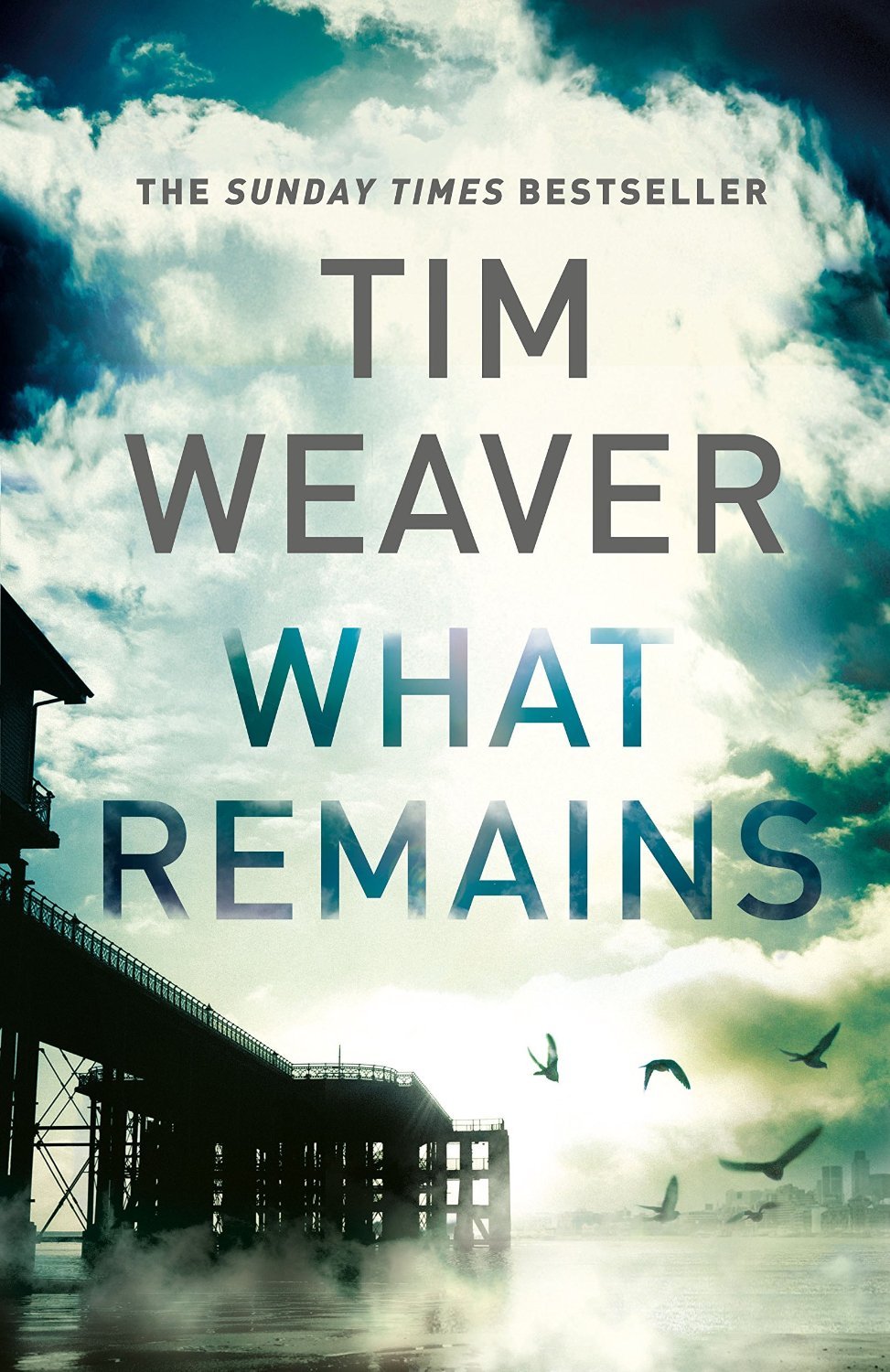
Books from the Pantry: What Remains by Tim Weaver: reviewed by Inez de Miranda

TW What Remains Cover

I read this for the book club I recently joined. It’s not something I’d have chosen if I’d seen it in a shop or library, but neither is it the kind of thing that would make me recoil in disgust.
What Remains is the sixth novel in a series of crime novels featuring private investigator David Raker. I have never read the previous five books and it’s possible that I would have appreciated this novel more if I had.

The story is set in London and starts on 14 January 2014 when Raker meets up with ex-police officer Colm Healy, who he knows from previous adventures. Raker has been helping Healy, who is in a desperate situation after losing his job, becoming homeless and alienating his ex-wife and children. The trigger for Healy’s demise has been the unsolved case of the murder of a young, single mother (Gail) and her little twin daughters. Healy cannot let go of this case, and is more interested in talking about the murder case with Raker than in sorting out his own life. Healy drags Raker into re-investigating the case.

The main story is told in first person by David Raker, but it’s really Healy’s story. Raker seemed more like a prop than a fully developed character and I found his devotion to Healy over-the-top and implausible. Perhaps if I’d read the previous books in the series and had a little more background on their relationship I would’ve understood it better, but in What Remains it was just weird.

There is a second storyline which occasionally interrupts the main story and is conveniently printed in italics. It describes how a mysterious man lived with Gail, the murder victim, and her daughters in the flat where they died.

What Remains is written in an entertaining and accessible style, but because of its many twists and turns it’s not an uncomplicated read.

Thriller fans will enjoy its many exciting, high-tension scenes, narrow escapes and baffling mysteries. The mysteries intrigued me enough to try to ‘solve’ them while reading the book. The author skilfully guided me into thinking up a totally wrong solution. Once my error became clear, I was astonished. I couldn’t think of any other explanations than the one I’d come up with, and I wondered how the author had managed to mislead me so completely. I was duly impressed and kept reading, desperate to get to the bottom of the mystery – quite like poor old Healy.

*Spoiler alert*
The following paragraphs contains (minor) spoilers, so if you plan to read this novel you might want to skip this part of the review.


The reason I’d missed all the hints and signs that led to the true solution of the mysteries was that they weren’t there. Everything and everyone that had to do with what really happened to Gail and her daughters is only brought up in the last third or so of the book, which annoyed me. It was like reading a list of ingredients for a gooey chocolate cake, and then, when you reckon you’re finally going to read how to prepare that cake with those ingredients, you are told how to steam broccoli instead. My admiration for the author’s skill in misleading his reader evaporated and I became a lot less interested in finding out what had happened. Even more disappointing was the solution of the second mystery (Gail’s boyfriend): This was resolved with the old let-down of ‘It was all a dream’.


*End of spoiler*

I wasn’t incredibly impressed with What Remains but it did keep me moderately entertained throughout.

It reads a bit like an action film, so I think it will appeal to people who like a lot of action and courageous characters who work their way out of various predicaments – and judging from the glowing reviews this novel gets on Amazon and in various newspapers, there are plenty of people like that.