Inky News: Event: Symposium on Mildred Taylor’s Roll of Thunder, Hear My Cry by Sarah Layzell Hardstaff

mississippi

It’s no exaggeration to say that one of the most exciting moments of my life was receiving the course materials for the Open University’s EA300 module in children’s literature. It was the start of an epic quest that is still ongoing as I work towards my PhD in children’s literature.

One of my favourite things about EA300 was the balance of classic and contemporary children’s literature. One notable novel on the course list which falls into both categories is Mildred Taylor’s Roll of Thunder, Hear My Cry, now in its fortieth year in print.

mild

I’m currently helping to organise a symposium to celebrate Taylor’s novel, which will take place on Friday 23rd and Saturday 24th September at Homerton College, Cambridge. We’ll be taking Roll of Thunder as our starting point for wider discussion on children’s literature, literature in the classroom, and issues such as diversity, representation and authenticity in books for young readers.

We’re also hoping to bring together a broad group of people to join in these discussions, so whether you’re a writer, teacher, student, academic or librarian, why not come along?

You can find out more about the event here:

http://www.educ.cam.ac.uk/events/conferences/rollofthunder40/


Inky Articles: Berenice Smith on Page Design

B book


Berenice Smith is a print and digital designer with a Masters in Graphic Design and Typography. She runs her own design practice in Cambridge (http://www.berenicesmith.com/) and is a partner with Dialogue (http://www.dialoguecreative.co.uk).


We often judge books by their covers but many readers forget to pay attention to the page design. Unlike the shining cover, the page design carries the bags of words, gently helping the reader through the information inside. Dr. Watson to Sherlock’s start, if you like. Just like Watson, it should be reliable, quietly invisible but occasionally challenging. I have been reading The Shock of the Fall by Nathan Filer. In this fascinating first person narrative, the changing format and typography is part of the plot. Many readers and writers are astonished to know that a designer even touched the inner pages. But yes, we do! Even e-books. A reference or educational book requires more navigation and perhaps a ‘how to use the book’ section. Clear titles, section headings and features. Designers will select typefaces according to the hierarchy of content. How the format works in print and the transition to an eBook is an important consideration too. What does the designer do and how can you apply it to your book?

Technical details. A designer will consider the trim of the page and the number of pages. Your printing method and budget may decree a certain number of pages and your designer will keep this mind when looking at typefaces (as different fonts are not equally sized) and overall page sizes. A good designer will know the differences between different printing techniques such as litho and print on demand and how this affects colours and photos.

White space. Margins and gutters (the gap where the book is bound) matter even though they do not contain any text. Does the text require two columns? What is a suitable line length? Does the text have any extracts and should these require indenting? How does this white space affect the balance?

The typeface. I believe that the typeface used in a book can decrease or increase the enjoyment of a book. A book may require more than one but getting the balance right is critical to the success of the page design. Incidentally a typeface is a set of typographical symbols and characters. It’s the letters, numbers, and other characters that let us put words on paper (or screen). A font, on the other hand, is traditionally defined as a complete character set within a typeface, often of a particular size and style. Fonts are also specific computer files that contain all the characters and glyphs within a typeface. • Way finding. Navigating a book can take the form of running heads, folios, page numbers, sets of features such as quotes, tips, mapping end notes or footnotes.

Prelims and endlims (also referred to as front and end matter). Fiction books are making use of what may have been a notes section in the past. Book group questions, extracts from future novels and interviews can be found in this section. How does the overarching page design relate to these important introductions and lasting impressions? Any good book be it written to help you learn or to entertain when you curl up in bed, you can be certain that page has been designed. And if you don’t notice it, then the designer has done a good job!


Inkspeak: The Traveller by Mark Sheeky

icey


Frozen gloves,

crisp with glass

crazed with flakes of transparent wonder.


Snow in cracks on eyebrows bent low.

Light blue eyes look back

at eyes of thunder.


An explosion of mist-breath

curls and dances in cold static air.


Words float like fish

that swim in the winter world there.


”Goodbye…”


The house before is dark brown wood,

roof heavy, with snow and memory.


Each deep look is understood,

as he turns, from ice to sundown’s flood.


Inky Interview Special: Poet Jim Bennett by Kev Milsom

JIM

Hello Jim. Many thanks for agreeing to this interview. I’m sure that our readers will benefit greatly from your extensive experiences within poetry and creative writing. Can I start by asking you about the earliest foundations of your writing? Were English & English Literature subjects that came naturally to you at school, and who were your very first creative & literary inspirations?

I was adopted by a working class Liverpool family that had no educational expectations for me. I managed to live up to that by abandoning school from the age of eleven. I seldom went and when I did it was in the front door and out of a window. I hated school because I was bullied mercilessly by pupils and teachers but I loved learning and had discovered what I wanted to do at about the age of seven, when I read a book of poetry. I went to my dad and told him that I wanted to be a writer. He thought about it seriously and instead of dismissing it suggested that the way to be a writer was to first read, and that is what I did, and still do. He gave me a notebook and suggested I wrote down things that I thought were well written; this included words I had not come across before and phrases that I thought were very descriptive. So in all respects, my dad provided the seed of my first creative development. I tried to read everything that came to hand. I still do that, and these days average about forty novels each year, 200+ books of poetry and as many poetry journals that come my way. I often wonder how he had thought to give that advice as he had left school at thirteen to work as a tea boy on the docks in Liverpool and hardly read a book in his life, but his insight helped me lay the foundations for my writing. Although I like to recognise quality in what I am reading, I probably learn more from weak writing. That first book of poetry I had read was by John Betjeman, and his publication a few years later of Summoned by Bells kept him very high on my reading list until I discovered Beat and the New York School and moved away from traditional poetry.

In my ’60s & ’70s school days, I remember poetry being largely devoted to the works of Shakespeare and Tennyson. When I heard a poem by the Liverpool poet, Roger McGough, aged eleven, it blew my mind open as it felt like he was talking directly to me. Could you share some words on what it was like to be a part of the massive Liverpool creative scene in the 1960s, and to be writing/performing poetry with a very distinctive, ground-breaking style at such an early age?

For me, the Liverpool style in the early 1960s was much diffused, but became more focused after the arrival of Allen Ginsberg in 1965. I was thirteen when he came to Liverpool on a reading tour, and stayed there for a short time. I had started going to readings in O’Connor’s and other places, long before I was old enough to do so, taking the floor with my early poems – a couple of which have hung around. Roger and Adrian Henri were often there, but they were just part of a much larger scene I was involved with, including music, poetry and spilling over into all aspects of performing and visual arts. So when Allen Ginsberg said that Liverpool was ‘the centre of the creative universe’, there were not many who would have disagreed with him at that time, certainly not me. His visit was during one of my long absences from school, so I was able to hang out and listen to the dark conversations related to Beat; what it meant, how to capture it, bottle it, smoke it, etc. When Allen left Liverpool, he took a lot of people with him to attend the first big Albert Hall poetry event in London. As I was so under age at the time, I was not able to go. It was this event, captured in Peter Whitehead’s documentary ‘Wholly Communion’ that changed the perception of poetry in the UK and began the process of redefining poetry and its relevance.

As for myself, I performed in many of the open mic events around Liverpool and was invited to read in featured spots at some. I was also involved in the folk scene and went to many of the folk nights, still prolific due to the British Folk revival, which again Liverpool had taken to its heart. The other thing to be remembered is that ‘performance poetry’ was ridiculed by many in the poetry world and thought to be trivial, or of little value. Even the Liverpool Poets who had been included in two major anthologies that helped them break through (McGough, Henri and Patten) had a struggle to be taken seriously, and the word ‘popular’ was often applied in an arch way as a put-down.

Even back then I was experimenting with delivery styles and I had a vision of the spoken word as akin to a song without music. I saw poetry as part of the folk scene, a way to engage with an audience with words, and even today I still think about it like that and it continues to inform the way I perform my poems. I sometimes get told that I deliver too slow, or too fast, or exaggerate a pause, but in fact I am delivering the words to an internal melody that I think goes along with it. I can also point detractors to the fact that I have won numerous slams and awards for performance.

Could you share some thought with our readers about the processes involved in the construction of your poetry, Jim? 

Most poems start with the germ of an idea, something seen, heard, remembered, and I collect those together. But then I have to decide what the theme of the poem is to be and how the elements I want to write about will approach the theme. Just as an aside, this is the root of ‘show don’t tell’, as the various elements of the poem need to be informed by the theme. Quite often the theme will not appear in the poem at all although taken as a whole that is actually what the poem will be ‘about’. I look for juxtaposed elements that will bring something new to the idea or illustrate it in a different, unusual or surprising way. I then over-write the poem getting the general feel for it, when I believe that it is approaching the ideas I want to engage then I start to reduce it. This process continues until I have the raw structure of the poem. At that point I start to consider the final form it will take. I have, of course, simplified the process here, but generally some aspects of this process are involved with every poem I write.

The exception to this are commissions; poems written to order or for a specific purpose come from the root idea provided in the commission. I enjoy commissions and see them as a challenge. I also enjoy working with other poets and I often work on collaborations with a friend who is a very fine poet. When I am conducting courses, I feel it is only fair that when I set a task for students I should do the same. So I do have a lot of stimuli and write a fair bit.

Are you a spontaneous writer, whereby inspirational thoughts have to be completed while you are creatively ‘in the zone’, or are you a writer who likes to mull and ponder over ideas, editing and refining them over time?

Well, both at different times, is the only truthful answer. At one time, back in the late 70s, I morphed into a punk poet, and for a while MC’d at Eric’s Punk Club in Liverpool. At that time, I would spontaneously generate poetry improvised from words shouted up by the audience. I carried on doing it in performance for years, and sometimes the results were better than others but it was always entertaining. The results were awful but, thankfully, the nightmares they left behind are fading now. To give a flavour of this, I did it at a reading a year ago. I was challenged (by my son) to see if I could still do it, and it was recorded. And this is it, written down exactly as said with the addition of breaking it into lines and stanza. No further alterations have been made. It has lots of faults, but I was interested in the subtext that in some ways must inform a lot of what I write. So here it is warts and all.


I started writing this on the day I was born

language came and books read

sixty years of sunsets and smiling at strangers

walking maps and dreaming

as I watched my children play this poem grew


and the words settled somewhere

with images of life like protein photographs

of all the people in my life that mattered to me

and the places that I lived and the ebbs and flows

that brought me to this place to write some words


that come in an instant and let me say this is poem

dedicated to everyone who helped me make my way

you are there between the lines with all my life

with everything I came to be

whoever you are perhaps you will know


these are the spontaneous

thought as I touch the cave paintings of my childhood

and the hieroglyphs of adolescence

the monuments of my later years

before they crumble into dust


I have never developed this further but may do so at some point. At the moment it stands with its flaws. This was created in the moments that it took to say it, and the ideas it generates touch on all my writing I think.

More generally I prefer to craft a poem. Develop it and take it through generations to a final product. Poetry is and has always been a way to explain how life works, the big themes, and this is as true today as it was when Donne was writing. The ethos of teaching literature has changed and the available texts have also expanded. Fifty years ago, Hughes and Heaney, although alive and writing at the time, had not broken through into the public consciousness. We have also seen the cross pollination of culture through multiculturalism, so this has also broadened the available texts. For me, though there is still a problem with some aspects of teaching poetry, I think more care should be shown in the selection of texts as popular does not necessarily relate to exemplar.

Can I ask for your personal thoughts on how poetry has changed within the last fifty years? Do you feel that the breadth and range of poetry taught to students has expanded during this time, especially compared to the poetry and literature that children/students were exposed to in the first half of the twentieth century? 

The teaching of poetry in the first half of the 20th century was also supported with a grounding in classics, which made the poetry more relevant to the curriculum. Later, as teaching became modernised and moved away from the traditional method, poetry had less relevance to both teachers and pupils. For me, poetry becomes relevant when the teachers encourage the students to question it in different ways. A poem is a map to an unknown land; what the poet intended is mainly irrelevant, and the students should be encouraged to find their own path to what it means to them. Approached in this way, a poem is an adventure and an expression of creativity by both the poet and the reader.

University courses are a little different. Courses in creative writing and poetry have become very popular in recent years. Many focus on the students’ self-analysis and the production of a portfolio, with the emphasis on some courses being towards the linguistically innovative. In my courses I tend to steer towards the Black Mountain Poets, New York Poets, Imagism and, of course, Beat, together with the Modern British Movement. Many of the online courses I offer through the Poetry Kit (www.poetrykit.org) attract poets of all standards, from beginners wanting to see if there is anything in poetry for them to experience and well known poets who want to give their writing a boost. My starting point with all courses is to find great poems that the student has not read before.

But back to your original question, the start of it asked how poetry has changed in the past 50 years, and for me the main change has been the internet. This has allowed many more poets to find a medium for sharing their poetry; the result has been an explosion of outlets for poetry, and as long as you never expect to be paid for it or for it to be read by anyone, then the world is your bivalve mollusc saltwater clam. If you just want to be published and call yourself a poet then you can, someone somewhere will publish you, or if not you can do it yourself.

Wider development of poetry is also evident in popularity of open floor events, which give much wider opportunities for poets to find an audience.

Poetry in the centuries up to and including the early 20th Century basically followed trends and styles, so you had Romanticism, Symbolism, Imagist, and Modernism. But once you get to the mid and later part of the 20th Century, the proliferation of styles broadens so that there is no real dominant style. Elements of all of those previous styles persist together with Post-Modernism (a catch all for many different styles of linguistically innovative poetry), Confessional Poetry; the list goes on and on. In many respects that makes it a very diverse and interesting time to be writing poetry.

As a teacher of Creative Writing, what are the most important lessons that you seek to get across to young, enthusiastic writers, Jim? 

This is very difficult to answer because there are as many answers as there are people. If someone is taking a course then their enthusiasm for the subject should be taken for granted, though it will express itself differently for everyone. The big problem is to try and guide without blunting that enthusiasm. I suppose the things I find myself saying mostly relate to craft, which is a distinct part of the writing process. Bringing the ideas together that help create the poem or other text is only a small part of the overall creative process. This is the point at which many people stop, thinking that the piece is done but really what should follow is the hard work that enables the writing to reach its potential and its audience, and this means possibly rewriting, revision, editing, tweaking.

I believe that attention should be paid to the tools we use, the most important of which are words. So reading is as important as writing; explore how people use words and find the best word for the job in hand. Listening to the rhythms of speech and how one word sits with others. This does not mean using the most obscure word; for me, the simplest most direct way of saying something is the best, but knowing a variety of possible ways to present what you want to say allows you to explore the possibilities available to you. Having a limited vocabulary limits the way you can express yourself.

I also ask writers to work within limitations of form so that they can learn about how the right words can be used to achieve an effect, so sonnets, villanelles, pantoums all have a place in the development of a writer who is serious about their craft. Doing these as challenges and bringing in some fun elements without being too serious about the outcome seems the best approach. Many poets who work only with free form try to dismiss fixed form as no longer relevant to them, but really there is so much to learn from using fixed forms. It is a bit like an artist painting in oils using a limited pallet, not through choice, but because they do not know about the missing colours. Using a similar analogy, an artist like Picasso first learned to paint in very traditional forms before setting his creativity free; the same is true of Van Gough and many others. So for a poet, even if they intend to write exclusively in free form, learning to manipulate lines through the use of fixed forms can help to develop skills in word selection and use, phase and line to best effect.

Another important aspect is reading good poetry by great poets. There are many to choose from but the ones I always recommend are Bob Dylan, Billy Collins, Charles Bukowski, Frank O’Hara, Allen Ginsberg, Emily Dickinson, Gertrude Stein, Robert Frost, Ezra Pound, Wendy Cope, Liz Lochhead, William Carlos Williams, Elizabeth Bishop… (the list changes depending on the needs of the students and the course.)

From reading a selection of your poems, Jim, I’m immediately struck by the wealth of detailed, mental images that start flowing into my mind. For me, your words have a powerful ability to make this happen. Are you artistic or creative in other areas, such as art and music, and/or do you take pleasure & inspiration from other creative arts?

I do write songs and have done since I started. In fact, the very first thing I ever wrote was a song. Visual art, film, plays are all part of the input that helps me relate to the world. I have written many ekphrastic poems and poems with intertextual relationships to a broad cultural base. If you live in the world and have an interest in hard and soft culture, it is difficult to get away from those influences, and I don’t think I would want to.

I would also add in science, the natural world, and perhaps the fundamental aspects of cosmology, understanding time and our relationship with it. Philosophy and psychology are areas I have studied, and I see the influences of those in my poetry, although I must say that I do not proselytise or try to foist any philosophical viewpoints as that is not the purpose of what I do.

When it comes to writing, do you have a specific location where your creative inspiration feels happiest. Also, are you a writer who feels happiest typing on a computer, or someone who utilises a variety of notebook and pens?

The simple answer is no, I keep to a writing schedule and write wherever I am. I do not have much truck with ‘waiting for inspiration’. For me, that is an excuse for a day off. My problem is forcing myself to stop writing. There are clear and easy techniques to ensure that I am ready to write, and I keep to those. I keep a PUKA PAD notebook with me at all times together with a small pen and this is used to jot down odd ideas, words, conversations, things seen, anything really that takes my fancy. I also collect things, postcards, odd things that pique my interest.

I usually write for several hours each morning, and later in the day deal with correspondence. Most writing starts as notes in my notebook, and it is when ideas start to coalesce that I use a computer.

Poems such as ‘Radio Days’ and ‘It was November’ create a wonderful pathway back to your past memories which, as a writing student, fascinates me by the glorious ease in which you make the words come to life. Is there an aspect of writing that you find positive and therapeutic, Jim, and is this a ‘spark’ that compels you to keep maintaining the creation process? 

Thank you for your kind words, but the answer is no, there is no therapy in writing for me. I am not even sure what that really means. Poetry described as therapy or ‘heartfelt’ is usually a turn off for me. I made a career choice to be a poet and that is what I did and continue to do and I have never really done anything else. All my life experiences, and that includes direct experience and those things assimilated through reading, watching and listening, are all just grist to the mill of my output. I wonder, having written that if it is true or not, but consciously that is how I think it is. I do find it satisfying to be able to earn a living at something I would do anyway and I love being involved with the facilitating of courses. Since 1997, I have been involved with the Poetry Kit website (www.poetrykit.org) and that explores new poetry through the Caught in the Net series, and keeps me in touch with competitions, awards and new magazines.

I’d like to thank you again for sharing your thoughts with our readers, Jim. It’s been a personal joy to read some of your work and to learn from it. In conclusion, could you share some thoughts on what has been inspiring you to write during 2016 and are there any major writing plans for 2017?

I finish between six and twelve poems each month, sometimes more, sometimes less, then after I have the basic poem, I leave it for a while then return to it after a few months and see it to completion, so I hope to continue to do that. I have a suggestion for a pamphlet from a publisher, and I am working on an edition of selected poems for US publication in 2017. I enter competitions and submit to journals each month so I hope to carry on in the same vein. I also enjoy readings and although I do not often turn up at open floor events, I am happy to get invitations and try to accommodate them when I can.

Poetry Kit

Indigo Dreams


Books From The Pantry: Any Means Necessary by Jack Mars: reviewed by C. S. Evans

Mars

Any Means Necessary is Jack Mars’ debut novel; a political thriller about a terror plot targeting no less than the President of the United States. Nuclear waste has been stolen with the aim of creating a dirty bomb, and Luke Stone, an ex-SEAL now embedded within the ranks of the FBI, is called upon to stop the jihadists.

What follows is a fast-paced thriller with plenty of intrigue and backstory thrown in. We learn a lot about our hero’s past and follow him as he struggles to keep his family safe, while carrying out the task to which he has been assigned – even when that means bending the rules to breaking point.

For a first novel, this is an ambitious and complicated plot. There are many characters to get to grips with; as well as our ‘good guys’, Mars gives us some insight into the lives and motives of the other main players – the terrorists, the politicians, even those within the FBI trying to keep Luke Stone on a leash. The events which unfold rapidly from the first chapter are also quite a challenge to keep up with, and I found myself having to flick back a few pages to stop getting a little muddled at times! In addition to this, you have to suspend belief in what’s feasible when it comes to some of the ‘stunts’ our protagonist has to execute. Somehow, such ideas seem less acceptable from the pages of a book than on the big screen from Hollywood. Incidentally, this novel would probably make a great movie given a decent cast to make it more believable.

The dialogue is mostly snappy, without gratuitous profanity, but the narrative contains excess use of words like ‘BOOM!’ and ‘BAM!’ for my liking. I’m also not sure I can forgive Mars for using the line ‘Come with me if you want to live’ either!

If I had to name the worst thing about this book, it’s the cliff-hanger ending. By all means, hint at the possibility of future visits to your characters, but don’t dangle parts of a new plot in front of us and then cut us off.

For all my criticisms, I did really enjoy this novel. It delivered what it promised – racing action, moments of great tension and shock, and plenty of intricacies and twists to keep you turning the pages in the small hours. For a debut, it points towards a great writing future for Jack Mars.


Inkspeak: If Bach Had Been a Beekeeper by Charles Tomlinson, guitar by Dave Hulatt


Musical-Bee


If Bach had been a beekeeper

he would have heard

all those notes

suspended above one another

in the air of his ear

as the differentiated swarm returning

to the exact hive,

and place in the hive

topping up the cells

with the honey of C major,

food for the listening generations,

key to their comfort

and solace of their distress

as they return and return

to those counterpointed levels

of hovering wings where

movement is dance and the air itself

a scented garden


Poetry Drawer: Coming Back From Hope by Ian M Parr

……and Ewan sang, “I found my love
by the gasworks croft,”
and we both knew
salt smoke choke our nostrils,
coke grit between our teeth
and believed
and Ewan sang, “kissed my girl,”
and we both knew
kiss and fondling homeward
down some cobbled alley.
…..and Ewan sang, “I am
a freeman on Sunday,”
and we both raised our eyes to Werneth Low
finding life’s stepping stones to Kinder
via Jacob’s Ladder,
grey Grindsbrook.  
Days on Crowden,
frozen Bleaklow,
bright Mam Tor to Rushop Edge,
beloved Mount Famine,
larks and curlews for companions.  
Begin at whatever place you please.  
But always we come back from Hope.
Wherever we hiked, we always came back
……..from Hope
.”   

“Hope” is in Derbyshire as are most of the places named.

Italics are from the voice of Gladys Axon, wife of John Axon GC and subject of the 1958 radio programme, “The Ballad of John Axon”.

Inky Interview: Joanne Hall by Inez de Miranda

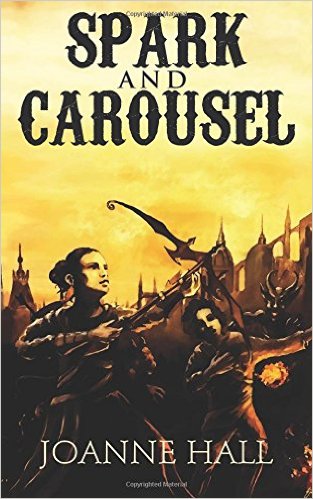
spark carousel

You are an editor, chair of BristolCon, a bestselling writer and very active on social media in all those functions – how do you manage to combine so many activities?

I am a wearer of many hats, and to be honest, I’m not entirely sure (other than by avoiding housework wherever possible). I’m lucky that I really enjoy everything I do, so it doesn’t feel like work, and if I get tired of, say, editing I’ll go and work on a novel for a couple of hours. It is hard work, though – anyone who tells you that full time writers spend their afternoons sipping gin in the garden has never been one! I work every day, including weekends and holidays, and often on into the evening if I can.

You became a full-time writer in 2003. What made you take this decision and are you happy with how it is working for you so far? What would you do differently if you knew everything you know now?

I was in a job I hated and I could feel it sapping my creativity every time I walked in through the doors, so I saved up a bunch of money and told everyone I was taking six months off to write. Then I kind of accidently on purpose never went back to work… I would say I’m very happy with it – there are times when it’s been financially very tough, and I’ve felt like a terrible person for putting myself and my long-suffering partner through what was essentially a decade of fairly dire poverty, but we’re coming out of that a bit now. It’s not something that I would recommend everyone to do – if you’ve got children or you need the security of a regular wage I’d absolutely recommend NOT giving up your day job. But I wouldn’t change it – I think it’s helped me to become a better writer, more confident, and it’s also made me aware of just how far a person can stretch very little money, which is a useful life skill!

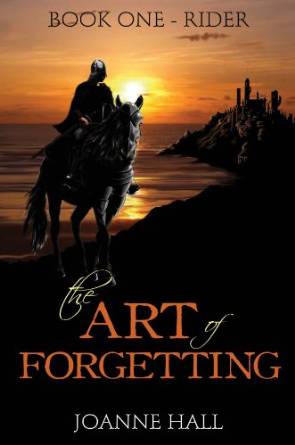
It was only a few days before I sent you this interview that your novel The Art Of Forgetting: Rider is now an Amazon bestseller on both sides of the Atlantic. Many congratulations! Did you eat cake to celebrate? Oh, and, do you have a theory about how you managed this achievement? (Bragging is allowed.)

We didn’t have any cake but I did have a big bar of Dairy Milk and a little boogie around the lounge. The number one on Amazon came off the back of a big Bookbub promotion organised by my publishers, Kristell Ink, who have to take most of the credit because they work incredibly hard. It’s nice that it managed to stay at number one for a few days, and it’s had a knock-on effect of driving sales of my other books, so that’s all awesome.

You are one of the editors of the recently published anthology Fight like a Girl, a collection of short fantasy and sci-fi stories featuring female fighters. What is your personal opinion about the representation and characterisation of different genders in SFF? Does this opinion impact your own writing and if so, in what way?

I confess, it wasn’t something I paid much attention to until I started looking for it, but now I’m thinking more about the representation of genders in my own work, it stands out like a sore thumb for me when I read a book that has no female characters, or a book where all the women are relegated to roles as tavern wenches or prostitutes, or exist only as a prize for the hero. What I want to see when I read fantasy and SF is women with agency, doing stuff and making their own decisions, and when I read a book where that doesn’t happen, it annoys me. It’s lazy writing, to relegate an entire sex to bystanders in your story, and it’s not hard to include Women Doing Stuff. Even if you’re writing about a strict patriarchal society, it doesn’t mean that women don’t exist, or that they don’t have opinions to be expressed.
Luckily there aren’t as many books like that published now as there were, say, in the 1970s, which makes the odd book that has no active women in it stand out even more.
It’s made me more conscious than ever, not only of trying to make sure I include a variety of women in a variety of roles, but also making sure that some of the more traditionally ‘female’ roles are occasionally taken by men. Because why not?

Continuing the women in SFF topic: as a female fantasy author, what are your thoughts about the position of women authors in the fantasy and sci-fi genres?

This might get long, sorry in advance…

We have come a long way, again, since the 70s. I don’t know why I tend to default to the 70s, probably because I was born then and it seems like a long time ago. 😉 But we still haven’t come quite far enough. Just this morning there was yet another ‘List of Essential SFF’ going around on Twitter that comprised of seventeen men and one woman, and this happens on a pretty-much monthly basis. We KNOW there are heaps of incredible women writing heaps of incredible SFF, but they’re not getting on these lists; they’re not getting onto the display tables in big high street booksellers; they’re not getting on awards shortlists (or not nearly as much as they should). And when I speak to male friends (predominantly) and ask them to scrutinise their own reading, even those that are passionate supporters of women in SFF have come back to me and confessed that they tend to read far more men than women. So my two big issues are – why is this happening, and what can we do about it?

It’s my belief, based on no scientific basis whatsoever beyond observing the industry from all sides for a very long time, that in the first place women don’t put themselves forward as much. They don’t submit as many novels and short stories, they don’t put themselves forward for panels or readings as much as men do. And this might go right back to ‘little girls should be seen and not heard, and little girls certainly shouldn’t show off’. It might not. Whatever the reason, there appears to be an intrinsic reluctance for women to put themselves forward, which leads to less women on panels, less women being published, less female best sellers, less female award nominees – it just goes on and on.
In the last ten to fifteen years it’s got better, and more people have made a conscious effort to promote women’s SFF writing, but still, when you see lists every month telling you that all the important, cutting edge SFF has been written and continues to be written almost exclusively by men, it’s disheartening and demoralising to women as a group. That’s why representation is so vital – to demonstrate that there ARE women out there at the cutting edge of SFF writing brilliant things and saying brilliant things on panels and winning awards and selling millions of books.

Which brings me in an extremely roundabout and rambly way to the second question of ‘What can we do about it?’ And the answer to that one is a bit simpler. Read women. Review books by women. Talk about female writers you have enjoyed. Encourage women to submit stories, and then publish them. Make sure women are represented; in your reviews, in your anthologies, in your awards shortlists, in your reading. It’s really not hard. I’ve been running a Discoverability Challenge on my blog (www.hierath.co.uk) for about three years, challenging people to read 12 new-to-them female authors per year and review the ones they have enjoyed. If you love reading and you read loads of books, it’s not hard to read twelve new female authors a year. And it gets people talking and making recommendations, which is great.

Can you tell us about how the anthology Fight Like a Girl was conceived and put together?

Fight like A Girl was born on Twitter and instigated by Danie Ware. It was born out of frustration with those issues addressed at length in the previous answer, and Danie said how great it would be to have an anthology on the subject of fighting women that was entirely written by women. And it kind of snowballed from there – it’s not only a collection that’s entirely written by women, it’s also edited by women (myself and Roz Clarke), the cover is by Sarah Anne Langton, and it’s published by Kristell Ink, who are a publisher owned and run by two women (Sammy HK Smith and Zoe Harris). So it’s like a stick of rock – there’s women all the way through!

About your most recent novel Spark and Carousel – the old cliché questions: what was your inspiration for this story?

Well I’d recently finished writing The Art of Forgetting and I wanted to write something that was a bit lighter and more of a romp, with more magic in, and I knew I wanted to set it in a city because I hadn’t really done that before. Every book is about looking to see if I can stretch myself in a slightly new direction and try things I haven’t done before.

I have read this book, and my favourite character was Allorise. Without giving too many spoilers, can you tell us how she was developed? I love her name, too, did you make it up?

Yes, I made it up. It just sounded right in my mouth for a frilly, flouncy, spoiled posh girl who wants her own way – though the way she went about getting her own way was obviously pretty dark and nasty! I didn’t want her to be out-and-out bad, she needed to have some motivation for the way she acted, and just because she’s well-off doesn’t mean that she has that many more options in life than a street kid like Carousel. So they had that similarity between them, of being shut in and deprived of agency, but Allorise obviously handled her situation in a much more extreme and dangerous way. It was fun to see how far she would actually take things. I think that’s what’s entertaining about her, is that nothing is too far for her, there’s not a point where she’ll take a breath and go, ‘hey, maybe this is a bad thing I’m doing’! She’s a very extreme character, which makes her tremendously fun to write. I enjoy writing characters who aren’t overburdened with morals…

And finally, are you working on or do you have plans for a new novel or novel series at the moment? If you are, can you give us a teaser?

I’m working on a few things at the moment, but the next thing I have coming out is The Summer Goddess, which is due out this winter from Kristell Ink. It’s kind of a stand-alone sequel to The Art of Forgetting and it’s set in the same world.

Blurb:

When Asta’s nephew is taken by slavers, she pledges to her brother that she will find him, or die trying. Her search takes her from the fading islands of the Scattering, a nation in thrall to a powerful enemy, to the port city of Abonnae. There she finds a people dominated by a sinister cult, thirsty for blood to feed their hungry god.


Haunted by the spirit of her brother, forced into an uncertain alliance with a pair of assassins, Asta faces a deadly choice – save the people of two nations, or save her brother’s only son.

Thank you for having me!

Amazon

Facebook

Twitter

Inky Interview: Joanne Hall by Inez de Miranda

spark carouselforget

You are an editor, chair of BristolCon, a bestselling writer and very active on social media in all those functions – how do you manage to combine so many activities?

I am a wearer of many hats, and to be honest, I’m not entirely sure (other than by avoiding housework wherever possible). I’m lucky that I really enjoy everything I do, so it doesn’t feel like work, and if I get tired of, say, editing I’ll go and work on a novel for a couple of hours. It is hard work, though – anyone who tells you that full time writers spend their afternoons sipping gin in the garden has never been one! I work every day, including weekends and holidays, and often on  into the evening if I can.

You became a full-time writer in 2003. What made you take this decision and are you happy with how it is working for you so far? What would you do differently if you knew everything you know now?

I was in a job I hated and I could feel it sapping my creativity every time I walked in through the doors, so I saved up a bunch of money and told everyone I was taking six months off to write. Then I kind of accidently on purpose never went back to work… I would say I’m very happy with it – there are times when it’s been financially very tough, and I’ve felt like a terrible person for putting myself and my long-suffering partner through what was essentially a decade of fairly dire poverty, but we’re coming out of that a bit now. It’s not something that I would recommend everyone to do – if you’ve got children or you need the security of a regular wage I’d absolutely recommend NOT giving up your day job. But I wouldn’t change it – I think it’s helped me to become a better writer, more confident, and it’s also made me aware of just how far a person can stretch very little money, which is a useful life skill!

It was only a few days before I sent you this interview that your novel The Art Of Forgetting: Rider is now an Amazon bestseller on both sides of the Atlantic. Many congratulations! Did you eat cake to celebrate? Oh, and, do you have a theory about how you managed this achievement? (Bragging is allowed.)

We didn’t have any cake but I did have a big bar of Dairy Milk and a little boogie around the lounge. The number one on Amazon came off the back of a big Bookbub promotion organised by my publishers, Kristell Ink, who have to take most of the credit because they work incredibly hard. It’s nice that it managed to stay at number one for a few days, and it’s had a knock-on effect of driving sales of my other books, so that’s all awesome.

You are one of the editors of the recently published anthology Fight like a Girl, a collection of short fantasy and sci-fi stories featuring female fighters. What is your personal opinion about the representation and characterisation of different genders in SFF? Does this opinion impact your own writing and if so, in what way?

I confess, it wasn’t something I paid much attention to until I started looking for it, but now I’m thinking more about the representation of genders in my own work, it stands out like a sore thumb for me when I read a book that has no female characters, or a book where all the women are relegated to roles as tavern wenches or prostitutes, or exist only as a prize for the hero. What I want to see when I read fantasy and SF is women with agency, doing stuff and making their own decisions, and when I read a book where that doesn’t happen, it annoys me. It’s lazy writing, to relegate an entire sex to bystanders in your story, and it’s not hard to include Women Doing Stuff. Even if you’re writing about a strict patriarchal society, it doesn’t mean that women don’t exist, or that they don’t have opinions to be expressed.
Luckily there aren’t as many books like that published now as there were, say, in the 1970s, which makes the odd book that has no active women in it stand out even more.
It’s made me more conscious than ever, not only of trying to make sure I include a variety of women in a variety of roles, but also making sure that some of the more traditionally ‘female’ roles are occasionally taken by men. Because why not?

Continuing the women in SFF topic: as a female fantasy author, what are your thoughts about the position of women authors in the fantasy and sci-fi genres?

This might get long, sorry in advance…

We have come a long way, again, since the 70s. I don’t know why I tend to default to the 70s, probably because I was born then and it seems like a long time ago. 😉 But we still haven’t come quite far enough. Just this morning there was yet another ‘List of Essential SFF’ going around on Twitter that comprised of seventeen men and one woman, and this happens on a pretty-much monthly basis. We KNOW there are heaps of incredible women writing heaps of incredible SFF, but they’re not getting on these lists; they’re not getting onto the display tables in big high street booksellers; they’re not getting on awards shortlists (or not nearly as much as they should). And when I speak to male friends (predominantly) and ask them to scrutinise their own reading, even those that are passionate supporters of women in SFF have come back to me and confessed that they tend to read far more men than women. So my two big issues are – why is this happening, and what can we do about it?

It’s my belief, based on no scientific basis whatsoever beyond observing the industry from all sides for a very long time, that in the first place women don’t put themselves forward as much. They don’t submit as many novels and short stories, they don’t put themselves forward for panels or readings as much as men do. And this might go right back to ‘little girls should be seen and not heard, and little girls certainly shouldn’t show off’. It might not. Whatever the reason, there appears to be an intrinsic reluctance for women to put themselves forward, which leads to less women on panels, less women being published, less female best sellers, less female award nominees – it just goes on and on.
In the last ten to fifteen years it’s got better, and more people have made a conscious effort to promote women’s SFF writing, but still, when you see lists every month telling you that all the important, cutting edge SFF has been written and continues to be written almost exclusively by men, it’s disheartening and demoralising to women as a group. That’s why representation is so vital – to demonstrate that there ARE women out there at the cutting edge of SFF writing brilliant things and saying brilliant things on panels and winning awards and selling millions of books.

Which brings me in an extremely roundabout and rambly way to the second question of ‘What can we do about it?’ And the answer to that one is a bit simpler. Read women. Review books by women. Talk about female writers you have enjoyed. Encourage women to submit stories, and then publish them. Make sure women are represented; in your reviews, in your anthologies, in your awards shortlists, in your reading. It’s really not hard. I’ve been running a Discoverability Challenge on my blog (www.hierath.co.uk) for about three years, challenging people to read 12 new-to-them female authors per year and review the ones they have enjoyed. If you love reading and you read loads of books, it’s not hard to read twelve new female authors a year. And it gets people talking and making recommendations, which is great.

Can you tell us about how the anthology Fight Like a Girl was conceived and put together?

Fight like A Girl was born on Twitter and instigated by Danie Ware. It was born out of frustration with those issues addressed at length in the previous answer, and Danie said how great it would be to have an anthology on the subject of fighting women that was entirely written by women. And it kind of snowballed from there – it’s not only a collection that’s entirely written by women, it’s also edited by women (myself and Roz Clarke), the cover is by Sarah Anne Langton, and it’s published by Kristell Ink, who are a publisher owned and run by two women (Sammy HK Smith and Zoe Harris). So it’s like a stick of rock – there’s women all the way through!

About your most recent novel Spark and Carousel – the old cliché questions: what was your inspiration for this story?

Well I’d recently finished writing The Art of Forgetting and I wanted to write something that was a bit lighter and more of a romp, with more magic in, and I knew I wanted to set it in a city because I hadn’t really done that before. Every book is about looking to see if I can stretch myself in a slightly new direction and try things I haven’t done before.

I have read this book, and my favourite character was Allorise. Without giving too many spoilers, can you tell us how she was developed? I love her name, too, did you make it up?

Yes, I made it up. It just sounded right in my mouth for a frilly, flouncy, spoiled posh girl who wants her own way – though the way she went about getting her own way was obviously pretty dark and nasty! I didn’t want her to be out-and-out bad, she needed to have some motivation for the way she acted, and just because she’s well-off doesn’t mean that she has that many more options in life than a street kid like Carousel. So they had that similarity between them, of being shut in and deprived of agency, but Allorise obviously handled her situation in a much more extreme and dangerous way. It was fun to see how far she would actually take things. I think that’s what’s entertaining about her, is that nothing is too far for her, there’s not a point where she’ll take a breath and go, ‘hey, maybe this is a bad thing I’m doing’! She’s a very extreme character, which makes her tremendously fun to write. I enjoy writing characters who aren’t overburdened with morals…

And finally, are you working on or do you have plans for a new novel or novel series at the moment? If you are, can you give us a teaser?

I’m working on a few things at the moment, but the next thing I have coming out is The Summer Goddess, which is due out this winter from Kristell Ink. It’s kind of a stand-alone sequel to The Art of Forgetting and it’s set in the same world.

Blurb:

When Asta’s nephew is taken by slavers, she pledges to her brother that she will find him, or die trying. Her search takes her from the fading islands of the Scattering, a nation in thrall to a powerful enemy, to the port city of Abonnae. There she finds a people dominated by a sinister cult, thirsty for blood to feed their hungry god.


Haunted by the spirit of her brother, forced into an uncertain alliance with a pair of assassins, Asta faces a deadly choice – save the people of two nations, or save her brother’s only son.

Thank you for having me!

Amazon

Facebook

Twitter

Poetry Drawer: This Time by Clair Chapman

mersey

I left my joie de vivre down by the Mersey,
The sun shone and the wind whipped and I knew.
I didn’t look back to see if she had found it,
I left it on the riverside with you.

This city’s broken hearts for generations,
Through famine, music, slavery and love.
But still she never fails to show her beauty,
As she takes your trembling hand inside her glove.

When she takes your joy to add to all others,
You don’t feel it till you’re back amongst your own.
You still live in the town that you were born in,
But somehow you can never call it home.

My soul lies still along the Mersey,
It’s up there with my heart and joie de vivre,
And everytime I go back there to find them,
I swear that this time…
This time…
I’ll never leave.