Poetry Drawer: The Raven Prince by Janine Crawford

High in the mountains,
The jet black raven
Sits in the
Stunning white snow.

The Raven Prince.
They call him,
The one who
Sits and watches,
The one who stands out,
From the pristine, crystallized snow.

Hearing his cries,
For he is lonely,
The Raven Price,
Calling out for a loved one.

The Raven Prince.
They call him,
The one who
Sits and watches,
The one who stands out,
From the pristine, crystallized snow.

The Raven Prince,
Is the only raven,
With Majestic,
Black feathers.
The Raven Prince.
They call him,
The one who
Sits and watches,
The one who stands out,
From the pristine, crystallized snow.

Hearing his cries,
The Villagers
Turn and look
Up in the mountains.

The Raven Prince.
They call him,
The one who
Sits and watches,
The one who stands out,
From the pristine, crystallized snow.

The Raven Prince’s,
Black feathers,
Glisten with the,
Light reflected off the snow.

The Raven Prince.
They call him,
The one who
Sits and watches,

The one who stands out,
From the pristine, crystallized snow.
The Raven Prince,
Is…
The Raven Prince…

Books From The Pantry: Northern Lights by Philip Pullman: Reviewed by Natalie Denny

His Dark Materials is my favourite story. I was twelve when I was first invited into Philip Pullman’s magical and macabre world with the first book in the trilogy, Northern Lights. I remember hiding from my friends so they would not make me do something as arbitrary as talk to them or run around the playground. I was hooked from the first page, having discovered the book in my school library.

Lyra is a young, wild little girl living in her beloved Jordan college, raised by scholars and belonging to the streets she runs free in. Oxford is her world, one different from our own; most noticeably is that each person here comes in a pair. A daemon, Pantalaimon, is Lyra’s lifelong companion that shifts in animal shapes depending on their mood.

Lyra’s only familial contact is her mysterious and stern uncle whom she is in equal parts terrified and enthralled by. When children start disappearing from her neighbourhood, Lyra gleefully embraces the story of the GOBBLERS, a group that capture children for a purpose that surpasses her worst nightmare. When her best friend Roger is taken, it ceases to become a game.

Lyra meets the beautiful sophisticated Mrs Coulter, a friend of the college, and one of the only glamorous women Lyra has ever seen. Lyra knows something isn’t quite right when she starts living with Miss Coulter as her assistant, and decides to run away. Armed with a truth telling device known as an alethiometer, Lyra is inducted into multiple worlds of armoured bears, witches, aeronauts and relentless adventure in pursuit of her dear friend, Roger, and her uncle, who she believes is key to everything

The writing in this book paints pictures. Every sentence is carefully crafted to convey the wonder of the worlds they inhabit. The book deals with issues of religion, friendship, love and destiny. We follow Lyra as she takes on enemies that should crush her. She is, after all, just a child. There is something very special about Lyra, and the friends she makes along the way will stop at nothing to protect her.

This is a young adult book but the themes are very mature and transcend the age spectrum. The Book of Dust was released this week and there is a reason I have cleared my diary to read it. Philip Pullman is a master of his genre and Northern Lights, the first book of the fantastic trilogy, is certainly one I recommend.

Inky Interview: Children’s Author Steven Goodwin

You have just published Zombie Kitten, a collection of poems and rhymes for children, illustrated by R. Kay Derricutt. Tell us about your journey towards this publication.

I have been writing poetry, rhymes and stories since I was young and never did anything with them, they just sat gathering dust in drawers or on old computers that I keep stored in the loft. Around fifteen years ago I wrote a long poem titled The Truth About Cinderella. Everybody I showed it to (which only really included family and close friends) enjoyed it and urged me to send it for publishing. I was always reticent about this, showing a complete stranger is leagues away from showing a family member. I am still fighting this demon, allowing other people to read my work is a little daunting even now. I was unsure really how to go about publishing, I did not have a clue who to send it to, so it just remained with me and did not see the outside world. Around three years ago, after a New Year’s resolution, I decided it was time to stop thinking and start doing something, so after a lot of internet searches I sent Cinderella off to a few literary agents and publishers, but I heard nothing. This was something I expected, but I was still not completely put off. Self-publishing was something that intrigued me, and along with eBook publishing, it was getting easier and cheaper, so I decided to take the plunge and try and publish it myself. It was a steep learning curve and at first I didn’t have a clue what I was doing, but I was determined to get it published. I started writing more and more and buoyed by the nice comments people were leaving me, I decided to publish a paperback book. One of the only negative comments I had received from The Truth About Cinderella was that it was not illustrated, so I knew my next one should be. Culinanucobold became my first illustrated book. I discovered a website called Fiverr and an illustrator on there, that I liked the look and style of his artwork, and we got to work. I am immensely proud of it. This was followed by The Frog Dragon. I received a little help along the way by Ian Barker who also I found online. He helped with some editing, and narrated both of my illustrated books and Cinderella for Audible.

While I was publishing these I joined a writers group, the Crewe and District Writers’ Circle, and over time I gained in confidence. I am still what I would describe as an enthusiastic amateur, although I love writing and performing poetry, it still remains a passionate hobby of mine and not a full time occupation. Zombie Kitten was in the pipelines during some of this time. It’s been a project that I have worked on for around 18 months in fact. I had hoped to have it finished for Halloween 2016, but I had problems with finding an illustrator. Finally this year, Helen Kay (one of my writer circle friends) put me in touch with her son, Ryan. He had finished his A-Levels and was waiting for his results before going off to University. We chatted a few times about the style I was after and he agreed to illustrate Zombie Kitten. Once he had finished, I began the arduous task of putting it all together into the book that is now available. It’s been a long journey, but I am so pleased with the final results.

What is it you love about poetry?

I mainly write poems and rhymes for children, although I have been challenging myself and writing along more adult themes recently. I have two children of my own and in the past wrote a lot for them. I am not sure what it is that I love about poetry, but I know I love the way it gets my kids involved in reading. I enjoy poems like Jabberwocky, even though some of the words were made up, they make sense to the reader. I enjoy the way a poem can say more in 20 words than a novel could in 2000. It is like a monster in a really good horror that you barely see, your mind and imagination can fill in the gaps that the poet scaffolds.

Can you share with us a couple of your poems and the inspiration behind them?

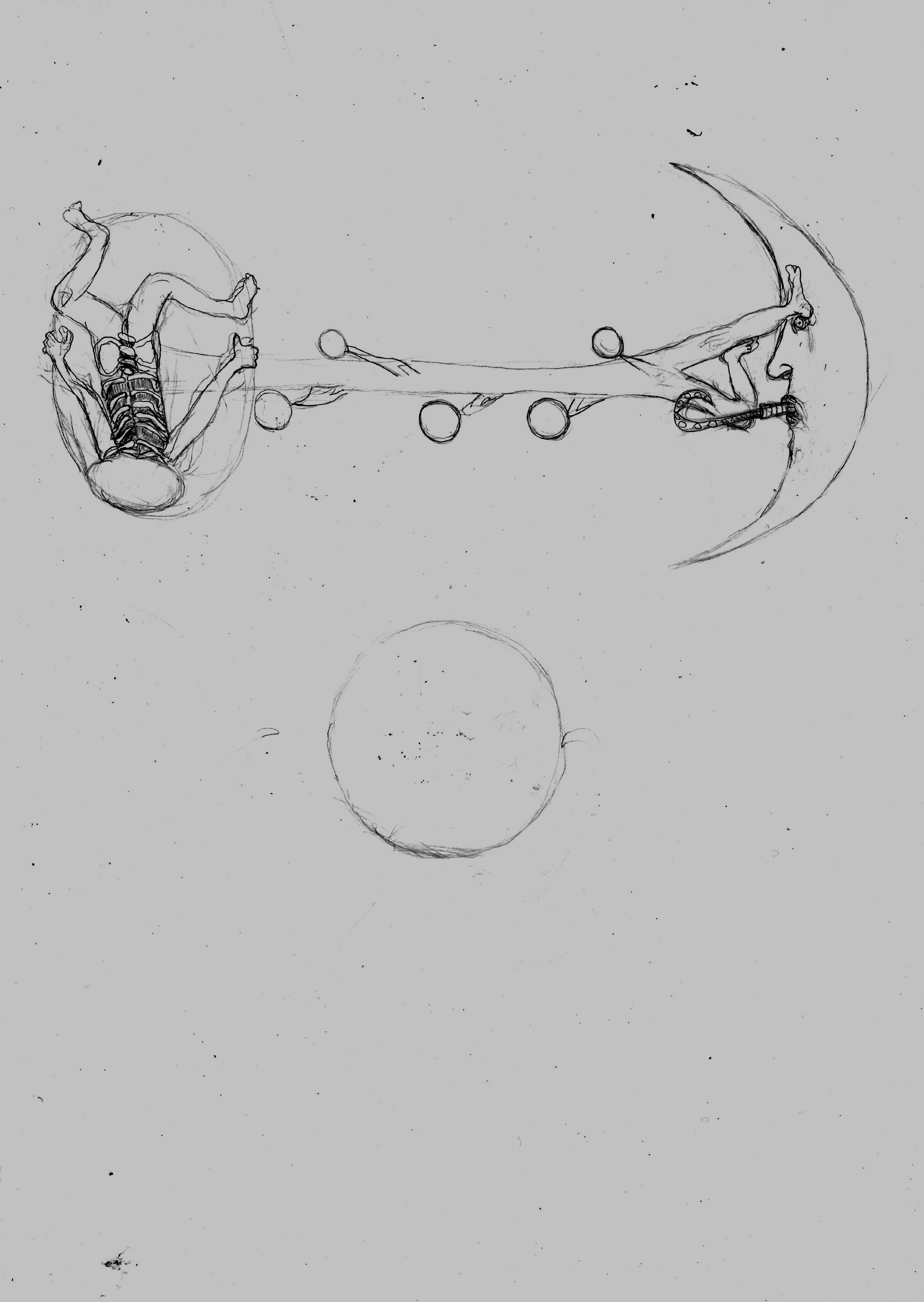
This poem is about the moon. I wrote it for Mark Sheeky’s Artslab show on Redshift Radio. The theme of the week was obviously the moon. and so I wrote this as a challenge to myself to try and come up with something I would find interesting. I do find Mark’s programme is a good way for me to challenge and push myself to write. I feel that the one thing I have learnt in the last few months is that to get better at something you need to keep doing it. You discover what works and what doesn’t, and slowly I think I am improving. I still have a long way to go though.

Luna

Perigee to apogee

Your eccentricity is fact

Your radius, circumference

Volume, Gravity, and Mass

We know your vital grey statistics

Your craters mapped and sized

We even visited you, some people say

At least half a dozen times

But your origins, Luna lineage

We haven’t got a clue

But we know our tidal forces,

Would be nothing without you

Our close night-time companion

In the dark our only light

You watch over our insanity

When the loonies come to fight

We prayed to you in history

Tracked your movements for our time

Plotted out our months for you

Even made you our divine

Your ever presence is a comfort

Our first hint we’re not alone

On this little green-blue marble

We like to call our home

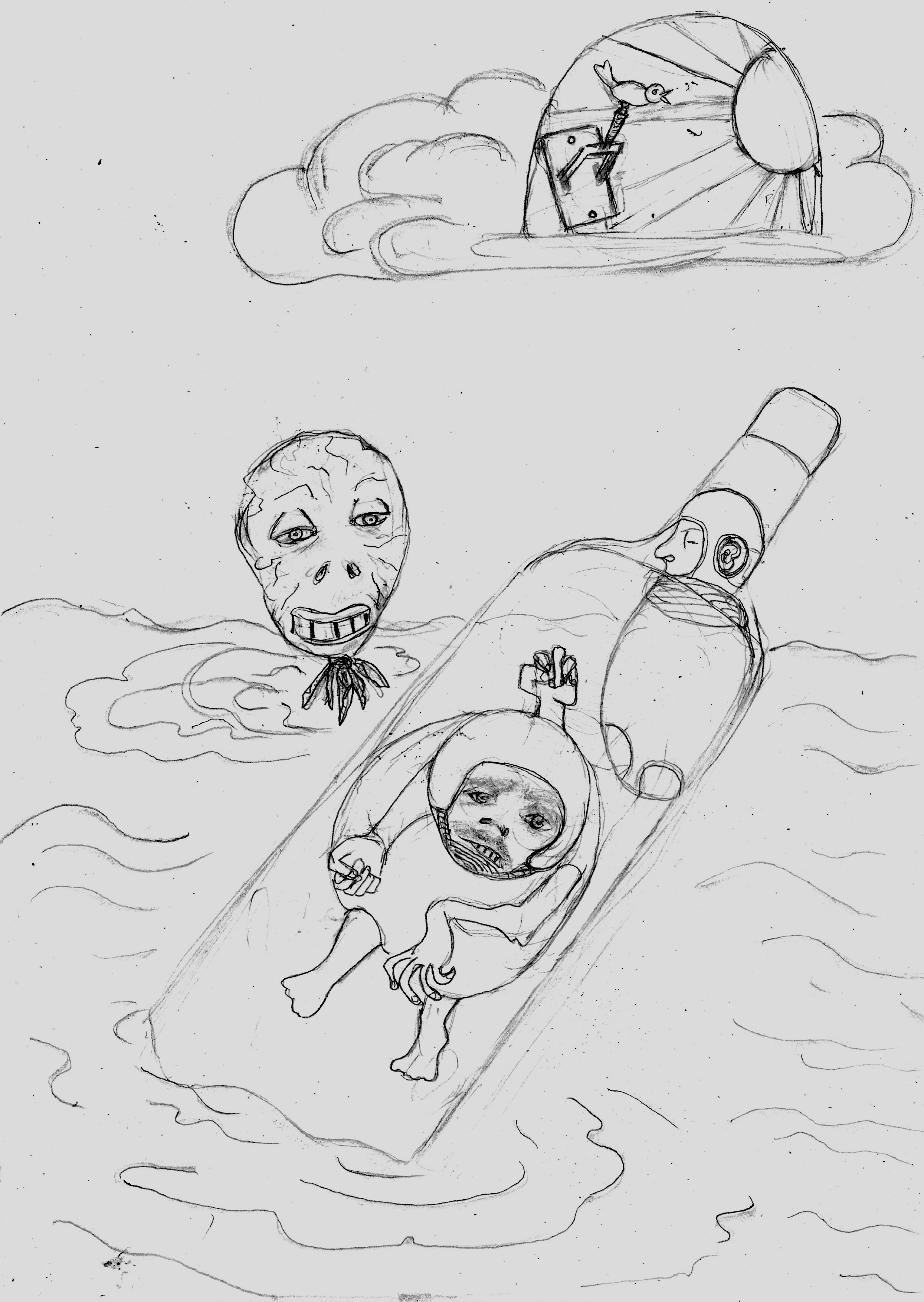
This next one is titled Snowmen. I wrote Snowmen over twenty years ago. I remember coming up with it when I worked at The Merlin, a pub in Crewe. I was bottling up and sorting out the empty bottles from the night before in the freezing cold shed at the back of the pub. It was an extremely cold day and this silly rhyme about snowmen popped into my head. I had loads of verses going around in my head, but had to finish the bottles. When I got back inside and thawed ,I wrote down as much as I could remember. Over the years I have refined it and changed some things, but this remains pretty much the same poem I wrote in the bottle shed all those years ago.

Snowmen

I’d like to tell you a story

A story you won’t believe

It’s a story about snowmen

A story that’s true indeed

You think you know the truth about snowmen

But you don’t know it right

Because the truth about snowmen comes

When you’re tucked up at night

‘tis a truth that not many grown-ups know

A truth not full of fluffy snow

Where snowmen are all good and nice

And sit out in the cold and ice

You see the truth about snowmen is

They are not too good at all

They come to life this time of year

To ruin Christmas for us all

They come down undercover

On parachutes of snow

Then silently lie in waiting

’til the time is right to go

Not all snowmen are the same

Some are worse than others

And never mess with small snowmen

Cause they’ve got bigger brothers

The worse snowmen are the ones with pipes

Because they’re the generals see

They give the orders to attack

Then hide behind a tree

A snowman has his allies

He never works alone

Jack Frost and bad old Frosty

Always love the snow

They work together well

These two good close friends

But only when its winter

‘til the bitter end

The things they do at Christmas

Would make your straight hair curl

They climb into the slumbering house

And leave things in a whirl

They spread their muddy footprints

And leave icy patches too

They freeze pipes in the toilet

And then block up the loo

They un-defrost the turkey

So it takes an age to cook

And nick the good jokes from the crackers

When no-ones ‘round to look

But perhaps the worst thing about snowmen

Is when no-ones hereabouts

They pinch all the roast potatoes

And leave nothing but the Sprouts

So if you ever made a snowman

And then one day it’s gone

Keep a lookout for old Frosty

He’s not melted in the sun

And that’s my story over

That’s the end and that’s the truth

Only one thing that is lacking

And that’s the missing proof

What themes keep cropping up in your writing? What do you care about?

I am not sure if I have a common theme that goes through my poetry but I sometimes try to find a quirky angle to fit in around a real life experience. Whether this always works I don’t know, but that is my intent. I do tend to try and write about something I know about.. My wife says I’m sometimes a little too biographical, but I suppose that’s normal. Even in Zombie Kitten there are a few poems that draw from real life. ‘Why I Don’t Like Mushrooms’, ‘Why Clothes Are Itchy’ and ‘Ghost Rider’ are three that draw on real experiences.

If you could change one thing about the world, what would it be?

I would make my books compulsory purchases, I mean I don’t really know. If I was being serious, I would probably say something like ‘I would make money obsolete’. Trade would be based on need and not commerce. We would help everybody, equally, and no matter what race or religion or sexuality, everyone would have an equal share. Society has a fair way to go to get there and perhaps I watch too much Star Trek, but this would be nice.

Who inspires you and why?

There are many writers that I really enjoyed growing up, from Roald Dahl and his Revolting Rhymes to Spike Milligan’s fantastic On The Ning Nang Nong. Every night me and my wife read to our two children. It was always three books and bed, and we all enjoyed Julia Donaldson’s Gruffalo. I was inspired by these to try and write my own stories and rhymes.

I am also inspired by screen writers like Aaron Sorkin and Quentin Tarantino. I love long wordy scenes in films, filled with dialogue that is clever, rich and funny, and sometimes thought provoking.

What are you reading at the moment?

I should really lie at this point and say something worthy, but I am currently reading a James Patterson Bookshot book called Killer Chef. I will soon be reading the new Dan Brown book once I order a copy. I have enjoyed his other books. I also won a copy of Jo Cox’s Biography More In Common, which I will read at some point.

Tell us about one of the best days of your life.

I should really say something along the lines of my wedding day, or the days my children were born. Those were all excellent and I will cherish them forever, but I think one of the best days of my life has to be the day I met Mickey Mouse for the first time. This year is my fortieth birthday and I have always been a fan of Disney. I have wanted to go and visit Disney World in Florida for so long. So over the last few years we have saved for this holiday of a lifetime, and this summer my family and I finally went. I tried to keep a lid on my excitement, tried not to let my expectations overwhelm me and end up being disappointed. I was not disappointed at all. Now before flying over I wanted to see everything and I enjoy going on rides, but meeting the characters was never a priority. In my head I just thought it would be like meeting a mascot at a football game. I was wrong, so very wrong! I met Mickey Mouse, dressed in his Sorcerer’s Apprentice outfit. My disbelief was well and truly suspended, I was a kid again. The whole experience was amazing and I would go back in a heartbeat.

What is next for you? What plans have you got?

I started a novel two years ago and would really like to get that finished. I write weekly for Mark Sheeky’s Artslab radio programme, and could probably edit and put out a pamphlet of pieces that I have written for that. I also have amassed some more poems for kid,s so if Ryan is free, I would love for him to illustrate another book for me. I also did some story telling at Nantwich Food Festival this year to groups of young kids, and really enjoyed it. I would love to go to local libraries and do some more of that, reading my poems and stories. If local libraries and schools would like me to do a session, I would be more than happy to try that again.

Facebook

Website

Amazon

Inky Interview: Author Kate Coe: with Isha Crowe

When and why did you start writing? What inspired you to do so? Were there particular influences, literary or non-literary, that had an impact on your writing? And what was this impact?

When I was about six, I was walking to school with my aunt, and I turned to her very seriously and said, “Auntie, how many worlds do you have in your head?” She, very amused, had to break it to me that most people don’t walk around with multiple stories floating in their brains…I’ve got old diaries with scribbles in, scrapbooks of pictures, cut-out dolls that I can still remember some of the stories for, pages of plays I wrote when inspired by the latest pantomime I’d been to…I read everything I could get my hands on, graduating from fairytales to fantasy from the local market stall, and most of the fiction section in the library, and just kept writing.

I don’t really know where it all came from; I didn’t have any particularly strong influences beyond being a bookworm. I just made up stories a lot, and eventually they got complicated enough that I had to write them down – and then kept writing more!

Ink Pantry was set up by Open University Creative Writing students, so our readers are interested in the educational background of other writers. What is yours? Did you study creative writing-related courses or subjects? What else did you study? Did your studies help or hinder your development as a writer?

I have a confession: I was, and still am, awful at English Language as a subject. While I’m excellent at understanding a piece – I’m an editor as well as a writer – I can’t for the life of me tell you how someone’s doing it, or what language technique they’re using to create that effect! I can point out the problems, work out where something’s weak, suggest ways to improve it – but I have absolutely no idea how I do any of that. I did do English Literature for A-Level, but I’m afraid I wasn’t very good at that either; I did Classical Studies at university and then went into libraries and web development, and while everything contributes to inspiration and characters, I don’t think either profession is particularly known for its production of writers….

That said, I have had what I think is the best training you can have as a writer: lots of practice! I also read a LOT growing up, and on average manage about a book a week now (although of course there’s always more on my TBR pile that I was to get to). I’d honestly say that those two things are the best training a writer can have: see how other people are doing it, and try it yourself.

Can you tell us about how you got published?

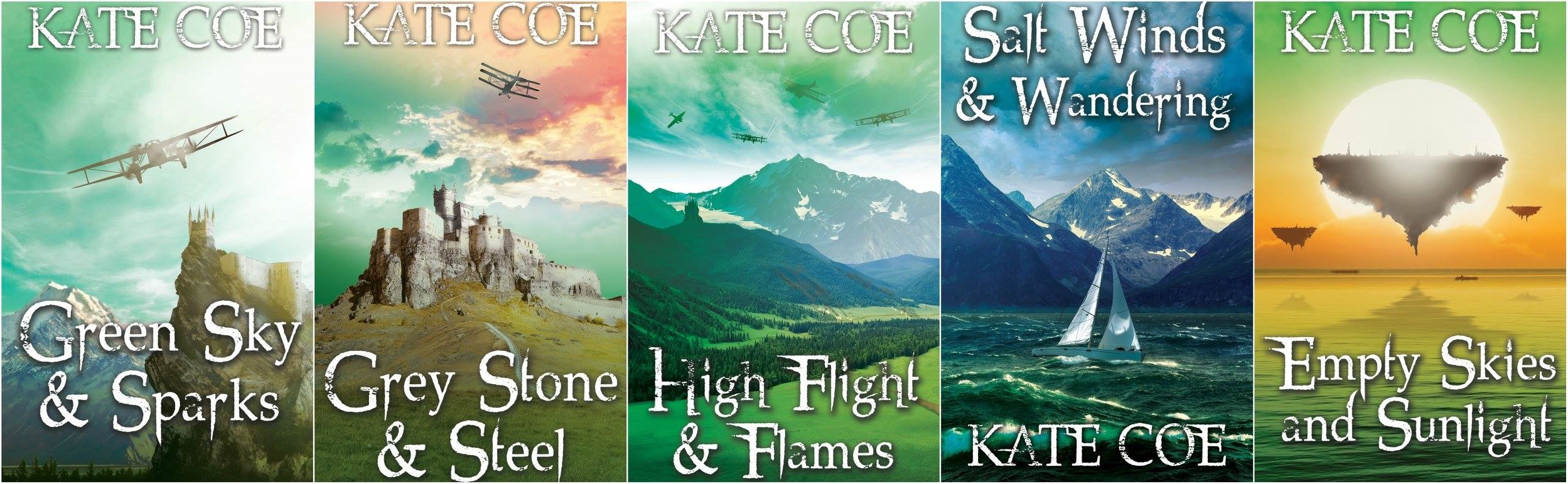
Green Sky & Sparks is my first published work, and I knew (five years ago) that I was on to something of a losing streak with traditional publishing, as at that time they didn’t take novellas. It actually made my life a lot simpler; I could narrow it down to publishers that did take novellas! I had a poke on the internet, found Grimbold, liked the look of them, submitted, chewed my fingernails for a few months and got accepted! Since then I’ve been submitting short stories to a variety of places (and some have even been accepted, yay!) and I’m currently starting my more traditional publishing journey by collecting rejections. I’m only on 16, though, so I’ve got some way to go.

Your blog Writing & Coe has a page devoted to gaming, so I assume gaming is a hobby of yours? Is this board games, card games, computer games or all of those? How does gaming influence your writing, or vice versa (if at all). Have you ever taken part in developing a game? If yes, what was your part and how was it doing that? If not, is that something you’d like to do in the future?

I do several various types of gaming! I play board games with friends; my favourite is Forbidden Desert, which is a co-op game and mostly ends in death by sand, by thirst, by storm – despite that, it’s great fun. I do also like puzzle and exploratory computer games – my favourite is Portal (mostly because of the sarcastic AI) and I play a lot of Civilisation. However, my big passion is for role-play games, and I’ve been lucky enough to be able to run several games in the Dresden Files universe. I’m not currently playing any RPGs but I’d highly recommend it as a hobby; as a writer, I absolutely adore them! If you play, you get to explore someone else’s world, act and react, create your own backstory, interact with your fellow-players…and if you’re a games master, you get to build a world and then see your players take it in a completely unexpected direction! I love building something, putting in mythology and hints and ideas, and then seeing where my players go with it – it’s like writing, except you have no control over the characters! (That’s a good thing in games…usually).

I very much enjoyed reading the first four novellas in your Green Sky series, and I’m very happy that the fifth is waiting for me on my e-reader! Is the fifth one the last, or can we expect more stories from the green-skied world? Why is that sky green, anyway?

I’m so glad you are enjoying them! The sky is green because I was a teenage writer who just had to make my world special, and that was the thing I came up with – and it stayed because, well, why not? It has now led to some interesting disputes about what colour that makes the sea (the consensus is blue/grey due to the properties of water, by the way). There are ten novellas in total, each following a different character and story – some reoccur, as in Empty Skies, which follows a character you meet in the very first book, and some are completely new characters or places, which means you get to see more of the wider Green Sky world.

How do you feel about the characters in your series? Do you have favourites, who are they and why are they your favourite? Are there others that you really dislike and if so, for what reason?

Toru is my absolute favourite, if only because he is a pain in the butt! Originally, Green Sky & Sparks was a lovely cliche’d story about a boy on a quest, and a magical girl who fell in love with a different boy. I mostly scrapped that one and focused on the quest, and Catter turned up. And then he got to Meton, and met Toru, and…well, they fell in love. I pretty much stared at the page and said, “You were meant to fall for the girl! What are you doing?!” But it made the story a hundred times better, and Toru continues to have a way of stealing the page whenever he’s involved, so he has remained my favourite throughout the series.

Everyone in Green Sky is very nice so I don’t really have anyone I dislike; I’ve written a couple of nastier personalities (mostly selfish) which has been harder, but even they are understandable. However I do have characters in other stories that I do dislike – but then so does my main character, which makes for some wonderfully spectacular arguments!

You call this genre ‘sparkpunk’. Did you invent this name yourself? How did you get the idea to mix fantasy with technology in your writing? Did you intend the Green Sky series to be a series, or was did it start as a single story and expand from there?

Sparkpunk was a label coined by my friend @vcorva; we decided that it wasn’t really Steampunk – it lacks the Victoriana, and, well, the steam – but that it was Renaissance + electricity….and so sparkpunk was born! The technology was actually part of the genesis of the story – why couldn’t you have a world with technology and magic? What if magic was just another trade, with limitations…and so technology was actually the game-changer? What if someone built a flying machine? And so Toru appeared, and Catter’s story began to unfold.

Green Sky & Spark was a single story, and then I wondered what the next one would be, which led to the sequel Grey Stone & Steel (which was too long, and got split into two, resulting in High Flight & Flames as the third book). From there, I had wanted to know what happened next (book 4) and had a bit of story that I’d written but never used – and that was expanded into book 5. Book 6 came from a random character tangent; Book 7 from a dream of maps. 8 and 9 were based on specific characters, and 10 winds the whole thing up! So it was never intended to be a series, but just unfolded into one.

On reading the books I found the fourth one to be very different from the previous three. It was much more dreamy and still. Is this intentional, and if so, what was the reason for writing so differently?

It wasn’t intentional, although I think it is a result of the type of story – books 2 and 3 are a war story, even though they are very character-focused. The remaining books in the series all have different characters and feels as well; each is centered around a different type of story, a different person. I find the differences interesting as I don’t necessarily see them when I write – only when I finish and am able to step away!

What else have you written, are you writing, or do you intend to write? Which of these are/will be readily available for reading? And which would you most recommend to readers who enjoyed your Green Sky books?

My current WIP is a 1920’s urban fantasy with zombies, which promises to be spectacular, and I’m currently submitting my latest finished piece (with the working title of No Man’s Land) to agents so we’ll see what happens there. There are a couple of Green Sky short stories published in various anthologies, some freebies on Writing and Coe, and more books in the Green Sky series coming out shortly! Keep an eye on the blog for dates and news.

Beyond that, if you like Green Sky then I’d highly recommend A Long Way To A Small Angry Planet by Becky Chambers (she’s the only other character writer I’ve come across so far!) or anything by Emma Newman, who is just fabulous.

Is there anything else you’d like to add to share with the readers of Ink Pantry?

I’m over at Writing and Coe and Twitter if anyone has any questions about writing, editing, gaming, or anything else in general, and thank you for having me on Ink Pantry!

Books from the Pantry: The Curtain Twitchers of Oakley Place by Deborah Hodgetts: reviewed by Shirley Milsom

In this quaint idyllic village lurked the watchers, perched in their places of safety looking out into the bleakness of the day. Their eyes pierced the depths of my soul, clawing and drawing my safety from within. I had just moved to this leafy village in the depths of the Buckinghamshire countryside, from the chaos of the big smoke. I thought I had escaped those Curtain Twitchers; those beings of solitude entrapped and entrapping like thieves of your sanity. To the visitors who were just passing through this village, everything was blissful and most delightful; all curtains perfectly still and no sign of this eerie presence or its destructively dark drawing fear.

So begins the debut novel The Curtain Twitchers of Oakley Place by Deborah M Hodgetts, a writer more used to poetry, and published on both sides of the Atlantic. The novel follows the main character, Barney Lumsden, as he moves from the chaos of day-to-day living in London, to what he hopes is a much quieter pace of life, in a village called Oakley Place, set in the heart of Buckinghamshire. Unfortunately, Barney’s hope for a peaceful existence are dashed when he finds himself enmeshed in a web of intrigue and confusion when a travelling circus and funfair arrive in the village.

Oakley Place was a pleasant enough place but as you may expect there was quite an eclectic mix of individuals living here. It was a cross between those born and bred here and, as we were known, the interlopers. In certain places in the village I had sensed that there was a love-hate divide between the two categories of villagers. Generally, the main of the village folk were the salt of the earth and just as you would expect. However, as predictable as you may assume, you also had to contend with a minority of the high and mighty or the downright lost in the gene pool.

From personal experience, the shift from writing poetry and taking on the mighty challenges of constructing mystery novels are daunting. In her first foray into this difficult genre, Deborah shows literary promise, her descriptions and use of prose allow images to spring from the pages, especially when describing locations. It is clear to see from her particular writing style that Deborah’s foundation has been in poetry, and she uses this to her advantage.

Through the passage of time his essence had merged with the earth‚ and like the roots of a mighty oak‚ it had spread across the whole village. It travelled through deep veins within the earth – leaching out like a poison, which filtered into the very rivers, streams and air. It polluted the lifeblood of Oakley Place.

At times the story follows a hectic trail involving a wide variety of colourful characters at a fast pace, to this end the reader will need to be on their toes at all times.

Life is just full of infinite possibilities, but LOVE always holds the key.

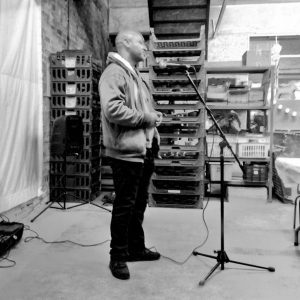
Poetry Drawer: The Missing Man by Giles Turnbull

Poet Giles Turnbull writes: In addition to blindness, poor control of my diabetes also led to kidney failure. I received a transplant in 2013 and all looked good. Then on 4 July 2014, a year after the transplant, I fell down the house stairs and didn’t remember anything else until mid-September, at which point I had received one dose of chemo and had one more ahead of me, plus some radiotherapy.

The immunosuppressant meds that I take to stop my body rejecting the new kidney left me vulnerable to other infections. One had crossed my blood-brain barrier and I had brain lymphoma. I wasn’t in a coma or anything, I just had zero memory, short or long term; I couldn’t have told you my name let alone that I wrote poetry!

But all is good now. Every 6 months I visit the hospital for a check-up, and each time they ask how my memory is. Apparently high dose chemo and radiotherapy can lead to early onset dementia. I enjoy reading novels like Elizabeth is Missing by Emma Healey, and Still Alice by Lisa Genova, because I like to know what might await me. This is how I imagine myself, hopefully many years hence.

The Missing Man

There’s just a blur where it used to sit

between my ears and above my sneeze.

My mission is a puzzle

that started with an assignment —

I’m a contract killer?

Maybe it was a push in my aching back,

maybe just a prompt,

but it melted into the laughing dawn,

left me clueless about 8am,

where I’d been with whom —

I’m sure they were poets,

they have an unmistakable flavour and scent

that clings to my shirt,

of sniffer dog’s feet

and parrot’s feathers.

Somebody is watching me

while I wash my face,

eyes that enquire how long I’ve been wiping,

what I’m trying to erase

… I have not the foggiest.

I cannot remember what I am

supposed to use this soggy cloth for,

it cries occasional tears along my cheek

before returning to the bowl

and sinking back to sleep.

Books from the Pantry: Natural Colours by Mel Woodend: reviewed by Claire Faulkner

Mel Woodend’s fourth poetry collection is inspired by nature and the limitless rainbow of colours found within. It’s an interesting and refreshing theme for a collection of work. Emotions and colours are often linked, and this beautiful collection of deeply rich poems encompasses what we feel when we see natural colours all around us. Reading them has been a pure joy.

Comprised of four sections, reflecting the elements; air, earth, fire and water, Mel takes the reader on a journey through their five senses. The language used is evocative and beautiful throughout. A line describing a rainbow in ‘After the Rain’ stayed with me long after I first read it:

Nature’s apology for bleak downpour

a gift from the sun as it

shines brightly once more.

Beauty travelling miles

Included in the collection are two blackout poems, sometimes referred to as ‘found poetry’ or used as writing exercises, when the writer takes an article and discovers something new within it. ‘Pink Moon’ is a perfect example of when this style works well.

‘Autumn Leaves’ is both desperately beautiful and sad at the same time. Imagery and grief come flooding through through this poem, and the lines:

Autumn leaves litter an angry sky

and

October death scattered all around

were powerfully effective, and haunted my own imagination and memories.

A favourite of mine from this collection was ‘The Snow Carpet’. A delightful poem about the joy that crisp white snow can bring out in people:

Sparkling with a thousand tiny diamonds entwined in its fibres

The snow carpet invites sledgers and skiers to its smooth surface

And children shouting and playing and throwing snowballs…


Another line which struck me as simple, yet perfect was from ‘Kitchen Colours’:

I smell the warmth of home

in my Mother’s kitchen.

And describing her Mother’s cooking:

Loving hands carefully stirring a saucepan of something delicious.

Mel is an extremely talented writer who has developed a marvellous collection of work. The poems are full and deep, covering a range of topics, but keeping the theme of natural colours and emotion to the forefront. It’s a wonderful read. I urge you to go and get a copy of it, and add it to your book shelf.

Mel’s Website

Books From The Pantry: Forest Rain-Spiritual Learnings for a New Age: by Michael Forester: reviewed by Kev Milsom

It was in the summer of the millennium year that I began to write from the heart. For almost twenty years, I had written of profit and capital…but until that fateful year, I had now known what it was to bow my head to the calling of life contract and karma…I watched, incapable of acting to prevent it. I had nowhere to go then, but into the printed word. From that August onward, I poured the substance of my energy onto the page’.

Amongst the various forms of creative writing to choose from, one form can be invariably tough, as it crosses into the potentially dangerous waters of ‘this is what I think’; used primarily in internet blogs, autobiographies and ‘self-help’ books. The upside of this can be that we gain personal insights into the internal ‘machinery’ of the author, however, the downside can be that the writer comes across as someone insisting/demanding that we listen to their words, accompanied by a sense of superiority and egotistical arrogance.

Luckily, for all readers of fine words, the author Michael Forester is a superbly gifted writer; employing a precise set of joyous communicative skills – in his 2017 book Forest Rain – Spiritual Learnings For A New Age – as he seeks to relay some complex and detailed ideas towards his readers.

For Michael, this is a departure from his fictional work, such as Dragonsong & The Goblin Child and Other Stories (both released in 2016) but he traverses any potential ‘minefields’ attached to this writing genre with ease, relaying personal thoughts and philosophical foundations without any edge of pushiness or demand. As such, the reader never feels pressured into any form of ‘conversion’ and is kept at a safe, observational distance.

Michael’s writing style is simplistically beautiful – a combination of life writing chapters, separated by heartfelt poems that add texture and depth to his prose. Often emotionally charged and highly personal, again it is Michael’s polished skill as a writer that allows us into his world for a ‘peek’, yet never do we feel as if we are nosing. For example, from a chapter entitled ‘Lessons From The Death of a Marriage’:

We did not see it at first. It came as to a tree in canker. The discolouration of our love took time to become visible, for the branches to lose their sap and harden…those around us, then and now, tell us that our union wore that autumnal look for years…we, ourselves, were the last to see it, for neither of us would acknowledge the impending death of love. So tightly had the cords been wound, that to cease to love, to cease to be together, was inconceivable to either of us.’

Forest Rain is riddled with excellent writing, beautifully communicated and luxuriously gift-wrapped for our senses. Again, as with the above quotation, it would be easy to overburden, or inflict the reader with a sense of personal intrusion, but Michael keeps us just at arm’s-length throughout the 148 pages of this book, as he relays a combination of monologues pertaining to his life events & thoughts, alongside a varied example of exquisite and pertinent poetry; some longer pieces and others only a few lines in totality, such as ‘Flying Fish’:

And we are but flying fish

breaking the surface for a moment

to bask in the reflected glory

of a transient elevation.

In many ways, this resembles an autobiography, yet the reader is taken on a far deeper journey, as if the author is inviting us deeper into his own personal world, opening up doors that few writers would dare to reveal to their literary audience. Again, the key is balance…too much insight and we may feel that we are intruding into Michael’s personal world. Too little insight and we may feel that the project has been both pointless and unnecessary. Because the nature of the topics covered by Michael hold such fascinating human interest, we remain keen to hear his voice.

Of course, it is also vitally important with this genre that we like Michael; else we are covering 148 pages of words without remotely caring about the source. If he gets on a ‘soap box’, do we hang in there? If he comes over as selfish and overbearing, where’s the motivation not to put the book down and turn the television on? Thankfully, Michael comes across as a lovely, warm, genuine man and not just because of his chosen words that he places down upon paper. This is not a sales job…we are not being asked to buy into anything, merely to listen and attempt to understand his personal journey through life and the lessons he has learned from his journey, both positive and negative, so that we may gain understanding and growth.

As such, we start page one as a stranger and become a trusted friend long before the final line is done. This is not a book saying ‘Listen to me!’…it’s two people chatting about life in front of a pub log fire, safe and secure in the knowledge that we are in the finest company and all is well with the world…able to broach any subject, such as dealing with oncoming deafness, how angry humans can be, the mysteries of love, and even the impending death of a father suffering with Parkinson’s Disease.

I know that soon you will go gently. It has never been your way to rage and you will not rage now at the dying of the light…then, when the rituals are done, when they have fussed over your shell to their hearts’ content, when they have cried their tears…then it is you and I that shall rise from the table and take our leave. We shall walk within the forest. For we never did. We shall stand in the storms together. For we never did…We shall each hold the heart of the other. For we never did. We shall, each of us, see the soul of the other. For we never did. And once, just once, we shall each of us say unto the other, ‘I love you’. For we never did.’

This book is an absolute gem and I feel honoured to have read it. I sincerely wish that I’d written it.

Get your copy of Forest Rain 🙂

Inky Interview: Author Michael Forester: with Kev Milsom

Hello Michael! Many thanks for agreeing to this interview. I’m sure our readers will benefit greatly from your valuable input as a writer and author. Can I start by asking you about your earliest creative influences? Within writing, who were the authors who first ‘spoke’ to you as a younger soul?

Greetings to you and your readers, Kev! And thank you for the opportunity of sharing with you.

Creative influences: this is a really intriguing question. Over the years there have been many, many influences. The earliest I can remember was the Bible, as I had a religious (Christian) childhood. Later, I remember particularly George Orwell’s The Road to Wigan Pier which I read at the age of 21. Orwell has remained a literary Guru to me. My latest release A Home For Other Gods has been described as a follow on from Nineteen Eighty-Four.

By the millennium year, the time I started to concentrate exclusively on creative writing, there were two books in particular that stood out as beacons: Robert Pirsig’s Zen and the Art of Motorcycle Maintenance, superb for its creative and intellectual excellence; Isabel Allende’s Paula for it’s unequalled emotional power. Back then I said that if I could ever get close to writing like either of these giants, I would be satisfied. Of course, I’m still trying!

I’m thoroughly enjoying your wonderful book, Forest Rain. How different in style is this book to your other publications and how did the initial seeds of inspiration begin to grow for this project?

Most people, on seeing the range of books I have written, express surprise at how different they are. You can see them at Michael’s books. I did not set out to write an eclectic range of books, but I’m happy that it worked out that way. Everything I write, whether metaphorical fiction, life writing or spiritual learnings, comes from the heart. I simply let out what wants to come out. Forest Rain is certainly a good example of that. It’s origins are covered in the forward to the book, which is titled ‘How This Book Came to be Written’. Essentially, I experienced a nervous breakdown that transformed into a breakthrough – a spiritual awakening that profoundly changed the direction of my life.

Forest Rain touches upon some very personal and deep philosophical elements, Michael. How important is philosophy and faith within your own life and do you envisage creating more books in the future, specifically within this genre?

Some years ago, out walking with my family, we passed a wheat field. Up close it looked haphazardly planted. A little further on, the path rose up and we looked back. The wheat was planted in a clearly discernable pattern of rows, all neatly laid out. You could even see where the tractor had made its turns at the end of the field. That image has always stayed with me. I’m 61 years old in this current lifetime now. As I experienced the journey from where I started to where I am now, events seemed haphazard, random and illogical as they occurred. But when I look back over the journey, I see much method, logic and planning that was always there, but could not be seen without perspective. I cannot separate ‘faith’ from ‘life’. To me, they are the same.

As to future books, yes, it is entirely possible that there will be more like Forest Rain. When I wrote it, in partnership with Komar, to whom it is dedicated, I understood that there would be five books. The next, Forest Dawn, is written, though will need a little revision. The third, Forest Pathways, is about half written. The fourth, Forest Clearing, is not yet started. The fifth title is Journey’s End. I shall leave it to you to work out when that one will be written! Forest Rain was released in February 2017. I don’t yet have a date for when Forest Dawn will be released – a lot depends on the level of interest Forest Rain engenders.

I’d like to ask you about your particular idiosyncrasies as a writer. For example, is there one particular place that you enjoy writing in? A particular time of day/night? Do you write with pen/paper, or are you firmly of the computer/word processor persuasion?

The location for setting down the words is unimportant. That said, I do much writing in Tenerife, where I spend as much of the winter as I can. What is important, though, is the making of mental space for the material to flow through. If I fill my time with communication and the receipt of information (conversation with others, the TV, etc.), I squeeze out the creative material that would otherwise come. To avoid that, I make time for meditation, both in the formal sense and also informally. For the latter, I love to spend time in my beloved New Forest, here in Hampshire, UK. The Forest has long been a source of inspiration and power to me. It is often when I walk, or even drive here, that the creative themes for my writing appear.

I always carry a notebook, or the material is lost. It is later that I settle to the keyboard to translate them into words. Keyboarding is hugely important, of course, but it is one step away from the pure creativity of receiving the material conceptually that will eventually become a book, that I love so much.

Whist on the topic of inspiration, is there a particular pattern to the ways in which you are inspired to write. Do your ideas tend to stem from a single, quick idea or are they prone towards being drawn out over time, gradually growing in size and breadth?

It can be either. For example, I write much poetry. There are four poetry chapbooks at Michael’s Books. Sometimes a poem, for example, ‘Solstice’, which I have just released on my Facebook page, will appear virtually fully formed, and all I do is set it down on paper, or keyboard.

On other occasions it will take months or even years to work a theme up to its full capacity. A Home For Other Gods started life as a short story that I never seemed to feel satisfied with. Eventually, after many drafts, I was happy with the story, but realised it could be a much bigger work. Once I saw the concept it took two periods of three weeks each, writing up to fifteen hours a day, to produce the first draft of the novella itself.

Aside from writing, what other creative arts interest you, Michael? Are you proficient in art or music, or do you draw great pleasure/relaxation from other creative muses?

I am close to profoundly deaf. Music has been inaccessible to me for thirty years now, though following a cochlear implant operation in 2016, that may eventually change. However, I am deeply interested in film, which, I regard as essentially literature in visual form.

Outside of writing, what are some of your other interests in life? How do you ‘switch off’ from the world? Are there specific, favourite geographical or historical locations that amplify your peaceful state?

My beloved hearing dog, Matt, is a huge priority. Now at 14 years of age, his time is drawing to a close. I am careful to take maximum opportunity for time with him every day with him that remains. He is at my feet as I type this, even now! Of course, walking in the New Forest is a favourite pastime for both of us, as well as being the source of much of my inspiration. You can read more about Matt in my book If It Wasn’t For That Dog which tells the story of our first year together in a hearing dog partnership.

Thank you so much for sharing your insights, Michael. To conclude, can you share some thoughts on your upcoming projects and what life holds in store for 2017 and 2018?

I have a full diary for this year. Much of my time will be devoted to book signings and events, such as the New Forest Show, where I will be exhibiting my books.

Bookings for 2018 have already started. In January I have an invitation to undertake a tour on (mostly) the Eastern Side of the USA. So far, it comprises Washington. Maryland and Chicago. That will be followed in February by a visit to Ho Chi Min City, Vietnam, where I am invited to deliver a keynote speech to an educational conference. I will follow on from there to The Philippines for a follow up tour to the visit I paid there in February this year details are at Michael Forester Website. There were many venues we had to disappoint on the last trip due to the typhoons, so it will be a good opportunity to make good on the expectations of many folk there.

As to the writing itself, I am working towards the release of my first full-length novel, Vicious. Billed as ‘a novel of Punk Rock and the Second Coming of Christ, Vicious is the first of a trilogy that explores the nature of belief against a background of eschatology.’

Thanks so much for having me, Kev. It’s been a pleasure to join you.

Poetry Drawer: End Of by Ali Hepburn

He was the worst person

who ever lived.

Languid silence brewed

between them, louder

than the everyday drone

of the dishwasher.

Tomorrow he will close the door

with finality, but today

weather the rain

of sharp looks.

Fault left a metallic

taste in the air,

stifling like petrichor

without rain; a November

thunderstorm musty and stale

with the scent of something

not-quite-dead.

Light entered the window

at the wrong angle, always,

defying closed blinds,

hitting possessions scattered

like mocking props from

the lives they had enacted.

Grey words:

I can’t do this anymore.

Tea left on the counter.

Untouched. Tepid.