In the sensual, fleeting twilight of autumn, a man feels an urgent energy to connect deeply with the world and find love. He disdains artificial tourist spots, finding vitality instead in the crowded, noisy, and authentic heart of the city—its bustling markets, dusty streets, and the conspiratorial silence that allows passion to bloom.
He finds a kindred spirit in a bold, new colleague who appreciates his humour and style. Their romance becomes a pilgrimage through the urban landscape, a rebellion against societal judgement, culminating in a single, perfect night of the first snowfall. After being expelled from a hotel by a morally outraged owner, they embrace the winter night as their true sanctuary, finding a deeper freedom and connection on a silent, snow-covered lake. Their intense, seasonal love affair reaches its natural completion with the dawn, as winter firmly establishes its reign, leaving behind the permanent, gleaming memory of a passion that burned at the very edge of the season.
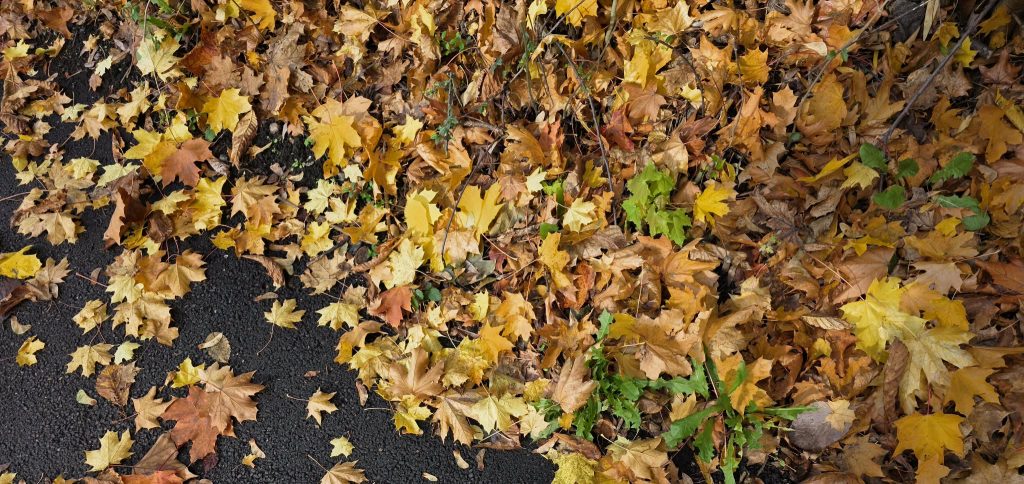
As Autumn, that seasoned artist, performed its final act, plucking the last of the stubborn, curled leaves from their tenuous hold and painting the mornings and evenings with the damp, grey chill of transience, a strange and familiar energy would stir within him. It was a quiet madness, a siren call that pulled him from his solitude and sent him wandering, not to escape the world, but to fall more deeply in love with its beautiful, crumbling heart. This was his season of confluence, a time to find a kindred spirit with whom to walk, their hands gently entwined, over carpets of desiccated chinar leaves, listening to the crystalline whispers of their passage. Together, they would devour the steam and spice from humble stalls, their warmth a defiance against the encroaching cold, and lose themselves in the vast, forgiving anonymity of fog-shrouded landscapes. He imagined they would be pilgrims on old buses and matadors, sitting tight, their closeness a haven as they would rattle through the city’s teeming, honking bazaars. He held no affection for distant, polished tourist attractions, those anodyne stages for borrowed wonder. Nor did he seek the seclusion of generic natural resorts, where every vista felt predictably picturesque. No, his heart was tethered to the city’s one conspiratorial attribute: its boundless, non-judgmental grace. The city never scowled upon those falling in love, upon those stealing moments of tenderness in its shadowy corners. It was a silent, knowing accomplice to the sacred, sensual world awakening within. He cherished its particular silence, not an absence of sound, but a resonant quietude found beneath the urban din, a deep, sonorous hum that seemed to stir the very core of his being, arousing a universe of sensation. He loved the press of the crowd, the democracy of huddled bodies grazing shoulders, a fleeting, intimate communion of strangers. He found poetry in the puffs of steamy breath exhaled into the crisp air, a visible sign of life’s persistent furnace, and in the raw, guttural calls of hawkers, the honest music of survival. The cacophony was his liturgy. The relentless traffic, the impatient honking, the unceasing hiss of the marketplace; all of it a roaring tribute to a world stubbornly, gloriously, and passionately alive.
The approach of winter settled in his spirit as a paradox; a tremor of disquiet intertwined with a boom of sensual energy. It unsettled him, for it bred a desperate yearning to make love, not merely in the physical sense, but to commune with another soul in the shared, desperate warmth against the coming silence. He was no hunter; the notion of hounding another for this solace was anathema to his nature. His heart sought a reciprocal grace, a silent understanding in another who appreciated his particular way of wanting this all; this layered, fragile confluence of body and spirit.
Yet, this disquiet was inseparable from a deep sensuality, for the late autumn, poised on the very verge of winter, was nature’s own most sensual season. He perceived the world as donning a final, breath-taking raiment of colour, a last, defiant flush on the cheek of the year before the pallor of sleep. And in this, he divined a universal truth: that the last moment of energy before a great silence, before a symbolic death, always carries within it a ferocious will to fight, to struggle, to be. Before the austere reign of winter could claim everything, the last, grand fire of autumn simply had to burn.
And then, as if the season itself had conspired to answer his yearning, he found her at his workplace, a soul who seemed to have been woven from the very fabric of that autumnal light. Her attention alighted first upon the quiet and elegant language of his attire, before settling with delight upon the cadence of his humour. She was bold in her spirit and held a firm conviction: that those who could not wield humour might possess a life, but had yet to discover the art of living it.
New to that place, she found herself drawn into what she would later recall as those first, ridiculously light moments, shared outside the makeshift canteen, bathed in the feeble, gilded sun of late autumn. For him, that light was a perpetual sensual delight, and in it, she appeared ethereal. He possessed that rare aura, an alchemy of wit and warmth that could hold anyone spellbound, and he knew, with a desperate, private certainty, how profoundly he needed the company of such a beautiful lady to relish the season’s poignant descent.
Slowly, inevitably, they collided, not as two strangers, but as two long-separated pieces of a single, broken case, their edges remembering a former wholeness. He believed, with every fibre of his being, that in this season of fleeting warmth, the intense romance was found not in wandering through a solitary, pleasing feeling, nor in dying in a romantic gaze from afar. It was in the sacred, tangible truth of touch: the meeting of hands, the proximity of a seated form, the shared, unique warmth that was the only true bulwark against the coming cold.
He had always maintained a quiet distance from those at his workplace who held court on morality, who spoke in hushed, grave tones of the body’s inherent dispositions as a weakness to be disciplined, a fire to be banked. He avoided their glances that passed judgment on the flirtatious behaviours of others, glances that betrayed a secret bitterness born not of virtue, but of opportunity never granted. And now, in the thrall of this autumn, he cared for their opinions not at all. For he carried within him a singular philosophy: that our mortal journey is, in its essence, a long, slow mourning of our own decline, a procession toward the inevitable end. Except, and this was the sacred exception, in the season of Autumn, and in the first, hushed couple of snowfall. In this hallowed interval, the tyranny of the clock was undone. In this season, he did not merely pass through time; he commanded it. He passed for time, and time, in a miraculous suspension, did not pass for him.
She, in her bold and luminous wisdom, named him the moutt of her heart’s desire: the vagabond, the tramp of her most seditious longings. In doing so, she did not merely accompany him; she became the living embodiment of his autumn, rendering tangible what he had always known it to be: a cathedral of passion, a sanctuary of sensuality, a hymn of love-making. A walk with her through the colonnades of chinar trees transformed the leaf-draped landscape; the crisp sound beneath their feet became a symphony, the air itself turned breathtaking, and the moment etched itself into eternity. Alone, it had been merely leaves on the ground; with her, it was a ceremony.
Together, they travelled the valley, but theirs was a pilgrimage of the authentic. His soul thrived in the bastiyan, the congested, pulsating quarters filled with the glorious noise of people simply going about their lives. He loved the narrow, dusty streets, even those that carried the pungent aroma of the city, where dogs dozed in lazy patches of sun, hawkers cried their wares, and every face bore the unmistakable signs of a life being lived. He cherished the small, the cramped, the intimate, for vast things and open spaces made him feel insignificant and restless, a solitary speck under an indifferent sky. Therefore, they chose public places for their most private devotions. A bus ride rattling through the heart of unknown villages became a shared secret. Endless walks through the alleys and streets of Srinagar, smelling equally of dirt and love, with no destination but the journey itself. Sometimes, they would venture into the open, autumn-dry fields spread like a tawny sea between two beautiful villages, particularly when the fog descended with sudden, ghostly grace in the late autumn mornings. Sometimes, a shikara ride offered its gentle rocking solace. And sometimes, the sheer, irrepressible sensual energy would drive them to walk a full, trembling circle around the Dal Lake, until, spent and breathless, they would inevitably find themselves drawn to the steam and solace of a cheap roadside stall, relishing not just the food, but the profound poetry of their shared existence.
All the wandering, all the whispered confessions and shared warmth, culminated in what he would later recall with a sigh as the most beautiful night of his life, a night that held his heart suspended on the precipice of exquisite feeling. It was the night of the first snow, the precise pivot where autumn yielded to winter, a threshold etched in ice and silence. They had chosen to consecrate this celestial turning together, sequestered in a hotel room poised to witness the predicted descent. There, they watched the snow begin its silent ministry from their window, a scene rendered bewitchingly visible by the fading house lights scattered along the gentle slope beneath them and the hazy halos of the street lamps. Each flake was a slow-motion promise, weaving a tapestry of pristine white over the grime and memory of the world. The atmosphere within grew thick with a surreal sensuality, the quiet intimacy of their watch a counterpoint to the hushed frenzy outside. They were observers of a world being forgiven, wrapped in a shared, warming silence.
This sacred hour deepened, blurring the line between dream and reality, until the moment, just before the clock could strike its symbolic midnight, when a sudden, stark knock landed upon the door. It was a sound like the crack of fate’s cold hand, shattering the fragile crystal of their seclusion. A voice, foreign and imperative, called his name from the other side, demanding that he come out.
The voice that shattered their peace was a guttural roar, coming from a man both massive and animate with a furious righteousness. He was burly, perhaps in his late forties, with a beard that flowed down to his chest like an avalanche of condemnation. He stood there like an enraged angel from the snowy outer world, who had just landed on earth and found himself incarnated as a mortal vessel of wrath. He announced himself as the owner of the hotel, and without preamble, he began to spew the putrid lexicon of a moral order he believed they had defiled, a litany of the degeneration of the place to which they all, in his eyes, tragically belonged.
“What evidence do you have to prove she is your fiancée?” he bellowed, his words a cold blade thrust into the warmth of the room. “Can we call her family to prove that?”
The threat hung in the air, more chilling than the winter outside: the police. It was at this moment, faced with the annihilation of their beautiful night and the exposure of their love to the cold, bureaucratic machinery of judgment, that a slight, defiant courage finally stirred within him.
“I am shocked,” he replied, his voice finding a steadiness that belied the tremor in his heart, “why did it take until midnight to tell me that. You could have denied me a room in the evening.”
The owner was struck silent, the simplistic logic a pinprick to the bloated balloon of his righteousness. For a moment, there was only the sound of the falling snow. Then, deflated and thus enraged anew, the man hollered again, gesturing with a large, fleshy arm towards the door, banishing them into the very night they had been cherishing.
And that expulsion became the sweetest, most triumphant part of their adventure. For they understood what the owner could not: that night transforms a place, stripping away the lifeless conformity of the day to reveal a living wilderness. Most people, cowed by the unknown, see no beauty in the darkness, believing only the garish light of day holds the meaning of life. But the night unfolds the real intrigue of existence; the whispers, the secrets, the raw, unvarnished truths that the blunt light of day simply fades into non-existence.
They found themselves shortly under a streetlamp, its glow a solitary halo in the vast, accepting darkness. Thick, chiming snow fell, slowly accumulating, painting the world in a deep and silent white. They had no cover, and they loved it. The snow had not trapped them; it had liberated them. The night beckoned, a vast conspiracy that mocked the owner’s wounded moral ego. It was the night that shielded them now, and the snow that sang their anthem.
They walked onto a bridge, their laughter a soft counterpoint to the crisp crunch of snow under their boots, a percussion of pure joy. In the middle of that span, between one bank and the other, suspended in time as they were in space, they stopped. They kissed, and held each other, as the night played on its grand, dark instrument. Even the waters of the Jhelum flowing beneath seemed to still their murmur, holding their breath to let the softer, more sacred song of the snowflakes sing louder. It seemed the very night had conspired to sculpt this moment for them, and the entire, silent universe stood as its witness. The shining, snow-covered brims of the streetlights were their congregation, the slowly sagging branches of the trees, bowing under the weight of fresh, pristine white, offered a solemn benediction. And as if summoned by the same enchantment that guided the falling flakes, a rickshaw materialised from the void of the white darkness, pulling up before them.
“Where are you going?” the driver asked, his voice a rasp woven from the fabric of the night itself.
“Take us to Dalgate,” he replied, joining her in the rickety cabin. As they journeyed through the muffled, sleeping city, he confessed to the driver their expulsion and the sudden appearance of this chariot in their hour of need. To this, the driver responded with a quiet, mythic gravity, “I am the Owl of the night,” claiming his role as a nocturnal guardian of wayward souls.
They walked the Dal Lake pavement then, as if no two lovers had ever walked there before. The snow, falling in relentless, elegant veils, might never have looked so profoundly beautiful, and they were certain no one had ever loved so freely within it. They were beyond care, beyond the fear of any further chastisement. Their world was their own.
Yet, the night had one more spectre to offer. At Gate 4, another burly, bearded man obstructed their path. But this man was different; his eyes held a pragmatic kindness, his voice the soft lilt of commerce, not condemnation. “Houseboat lodging for the night,” he offered, mentioning its English name to lend it legitimacy. They consented; their trust forged in the crucible of the night. But then he introduced a trick of circumstance, a whisper of necessary deception. “There are a few drunkards on the Gate, and they are watching us,” he said, his voice low. “I will first take the madam in my small boat. You will wait for me at the next gate. I will reach there in ten minutes.”
A new silence descended, thicker than the snow. A plan was laid, a temporary separation demanded by the harsh optics of the world. He agreed, his heart a tight drum in his chest, watching as she was guided away into the misty blackness over the water, leaving him alone once more under the patient, falling snow. He trusted him, for a while. But without her, the night began to speak in a different, older tongue, a dialect of sharpened cold, gnawing fear, and loneliness that exists at the very heart of adventure. Each second stretched into a minute, each snowflake a silent accusation. The world, so recently a conspirator in their romance, now felt vast and indifferent, and he was merely a man waiting on a frozen shore, his courage fraying at the edges.
Then, a shadow resolved upon the water; the boatman was ferrying back, as promised. And she was there, a silhouette against the dark lake, her presence a calming breath upon the storm of his thoughts. As he stepped into the small, rocking vessel, he felt the connection snap back into place. The night was no longer a void but a sanctuary once more, its language restored to one of whispered secrets and shared warmth. As the boatman prepared to turn towards the waiting houseboat, he found his voice, softened by the cold but firm with resolve. “Wait,” he said. “Before you take us to your houseboat, take us wherever you can into the lake. Let the journey take the whole night, if you don’t mind. We will pay you.” It was not an escape anymore, but a claiming. They would not be merely hidden; they would be immersed. They would make the entire, sleeping lake their chamber, and the endless, falling snow their roof.
Beneath the decorated canopy of the shikara, they huddled, a single silhouette against the immense, velvet dark. The boatman, now their silent Charon, rowed them deeper into the heart of the lake, where the world dissolved into a sublime nothingness. There was only the faint, ghostly loom of distant lights, the almost-silent sigh of the falling snow, and the rhythmic, hypnotic sound of the oars dipping into the black, placid water; a liquid whisper marking their passage into the void.
The lake itself transformed; no longer a body of water, it became the full, dark cosmos, its boundaries erased, its depth interminable. And this vastness was matched only by the sensual warmth blooming inside their own bodies, a private universe of feeling as infinite as the one that surrounded them. The scattered lights on the surrounding hills glimmered like distant constellations, sparkling jewels adorning the breathtaking aspects of the night.
Eventually, the houseboat received them, its wooden hull a capsule of warmth in the cold expanse. But the night did not end at the door; it merely changed its key, continuing its silent sonata for them outside the fogged-up windows. Inside, they held each other with a fierce tenderness, a final shedding of the world’s layers. They wanted nothing in between them; no cloth, no past, no future, no judgment, only the pure, unmediated truth of skin against skin, breath mingling with breath, in the sacred and embracing silence of the night.
The morning came with a changed face upon the earth. A severe, brilliant whiteness had erased the world they had known, silencing the intimate whispers of the night beneath a blanket of stark, unyielding light. As he watched the new sun glare off the snow, the signs of the season’s end dawned upon him with a quiet, inevitable weight.

Dr Ghulam Mohammad Khan was born and raised in Sonawari (Bandipora); an outlying town located on the wide shores of the beautiful Wullar Lake. Ghulam Mohammad believes that literature is the most original and enduring repository of human memory. He loves the inherent intricacies of language and the endless possibilities of meaning. In his writing, he mainly focuses on mini-narratives, local practices and small-scale events that could otherwise be lost forever to the oblivion of untold histories. Ghulam Mohammad considers his hometown, faith, and family to be the most important things to him. His short stories have appeared in national and international magazines like Out of Print, Kitaab, Indian Literature, Muse India, Indian Review, Inverse Journal, Mountain Ink and more. His short story collection The Cankered Rose is his forthcoming work. Presently, he teaches as an Assistant Professor at HKM Degree College Bandipora, Kashmir.
You can find more of Dr Ghulam Mohammad Khan’s work here on Ink Pantry.