
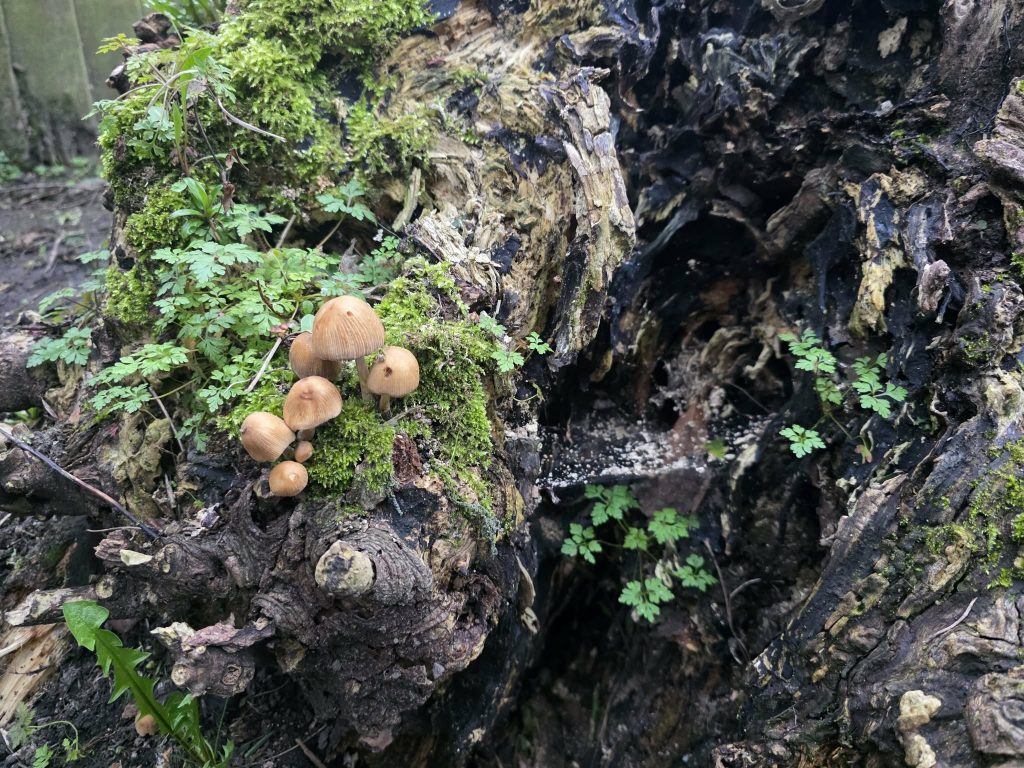
A Grey Day
It is a grey day in November as I sit here, across from a sleepy woods,
The trees as naked and denuded as barstool dancers.
The trees shoot out limbs and branches that crisscross as they puncture the sky,
And the limbs are as sharp as the Popsickle sticks that I sharpened against the sidewalk
when I was just a wee bitty kid who would got lost in the sharpening.
The dreariness of the woods in November overwhelms me,
Suffocates me.
The trees outside my window are moldy and lifeless,
The bark on their outer shells tracks like naked ancient ribs that transgress up and down
the trunks, which feel leaden and stiff and impermeable.
It’s a long afternoon in one’s life.
Time tumbles around the nude trees and comes to rest in a seemingly dead or extraneous
branch or a limb.
The world is dormant, waiting.
Outside another condo unit, Christmas trees lights are visible.
They shine pathetically against the dark urgent grey of the day.
It is a dead time of the year.
My soul feels dead.
Limbs and branches spread from the trunks of the trees
Like veins carrying sap.
The River
The wily Des Plaines River flows and seeks its way south,
Originating in Wisconsin and toddling through northern Illinois
Until it reaches Ryerson Woods, where I am now standing
In utter delight and astonishment at its quiet and slurky beauty.
It is a modest river.
It is not the Mississippi.
It is a river of quiet charms and hidden wisdom.
It makes its shy and incandescent way, taking its time.
The river is much cleaner than when I was a kid and could smell its putridness as I
approached it at Dam No. 2 in Des Plaines.
I stand near the riverbank and gaze north, and before me, a tree of mystery has
plummeted into the river, its limbs and branches broken and bending into the
plane of the quiet river and interrupting the silent wisdom of the river.
The dead limbs are black and tangled together like a neurosis of nature as if they
had some mysterious incestuous spirit.
Before me, a great blue heron perches on one of those dead limbs, its neck like a
stovepipe, its body as slim as a whisper, its legs like pencils.
A leftover from the Age of the Dinosaurs.
The sight of the bird flies me against reason and memory.
I walk farther north, tracking with the river, and see that about a quarter mile further,
The river bends elegantly to the west and takes its current and due course,
The bend is impossibly sophisticated, and trees tip like sharp-eyed witnesses to hover
and protect the river.
I think immediately of the Potawatomi people who once danced and fished and canoed
on these ancient waters,
And lived on land that we absconded, that we took without asking, that we took with
mischievous treaties written in obscure and legalistic language that should and
does cause shame.
I hike along the river in the ghostly footsteps of those Potawatomi and hear the faint and
cursed echo of their ancient presence and the chant of spirit that refers the
river to evanescent enchantment.
The river glides with resurrectionist spirit and rids me of the ancient screams of
significance.
The river glides like making love, with thoughtful and steadfast and regal insouciance
and lack of care for the ways of us mere humans.
The river holds secrets that barge into my soul and calm my dispossessed head.
I fall to my knees and feel en-humbled.

Christopher Johnson is a writer based in the Chicago area. He’s done a lot of different stuff in his life. He’s been a merchant seaman, a high school English teacher, a corporate communications writer, a textbook editor, an educational consultant, and a free-lance writer. He’s published short stories, articles, and essays in The Progressive, Snowy Egret, Earth Island Journal, Chicago Wilderness, American Forests, Chicago Life, Across the Margin, Adelaide Literary Magazine, Blue Lake Review, The Literary Yard, Scarlet Leaf Review, Spillwords Press, Fiction on the Web, Sweet Tree Review, and other journals and magazines. In 2006, the University of New Hampshire Press published his first book, This Grand and Magnificent Place: The Wilderness Heritage of the White Mountains. His second book, which he co-authored with a prominent New Hampshire forester named David Govatski, was Forests for the People: The Story of America’s Eastern National Forests, published by Island Press in 2013.
You can find more of Christopher’s work here on Ink Pantry.